
If you sell online, the immediate question is not whether ChatGPT will replace Google. It is where your brand can enter a buying conversation, what the resulting visit is worth, and whether you can prove that value before moving budget.
The practical approach is to treat ChatGPT as a connected set of commerce touchpoints: an earned recommendation, a possible paid placement, a direct referral, and an influence that may later surface as branded search or direct traffic. Build for all four, but measure them separately.
Treat ChatGPT as a buying journey, not one traffic source

A customer can interact with your brand through ChatGPT without following a neat, trackable path. The assistant might mention a product organically. A sponsored placement might appear during a commercial prompt. The customer might click immediately, or remember the recommendation and search for the brand later.
- Earned recommendation: Your brand or product appears in the answer because it is considered relevant to the request.
- Paid placement: An advertisement appears beside or within the commercial experience available to that user.
- Direct referral: The user clicks from ChatGPT to a product, category, or comparison page.
- Influenced conversion: ChatGPT shapes the decision, but the eventual visit arrives through branded search, direct traffic, or another channel.
This distinction prevents two expensive mistakes. The first is treating every ChatGPT-influenced sale as referral traffic. The second is assuming that paid placement, organic recommendation, and AI visibility use the same selection system. Evidence from one lane does not prove how another lane works.
Direct referrals nevertheless deserve attention. Across a 2025 Visibility Labs dataset covering 94 e-commerce brands, 135,000 ChatGPT referral sessions, and 9.46 million non-branded organic sessions, ChatGPT traffic converted at 1.81% versus 1.39% for non-branded organic traffic. The advantage appeared in 10 of the 12 months analyzed. That is a useful commercial signal, not a universal benchmark: it came from a defined group of established e-commerce businesses and excluded homepage and blog visits.
Volume changes the decision. ChatGPT generated $474,000 against $32.1 million from non-branded organic traffic in that dataset. Its revenue share was 1.48% overall and reached 2.2% during the second half of 2025. Non-branded organic traffic was still 70 times larger overall, narrowing to 47 times larger in the fourth quarter.
Do not divert a mature search program merely because the smaller channel has a better conversion rate. Give ChatGPT its own growth lane. Protect the channel that supplies scale while you develop recommendation visibility, referral conversion, paid testing, and attribution.
Build pages for buyers who have already narrowed the choice
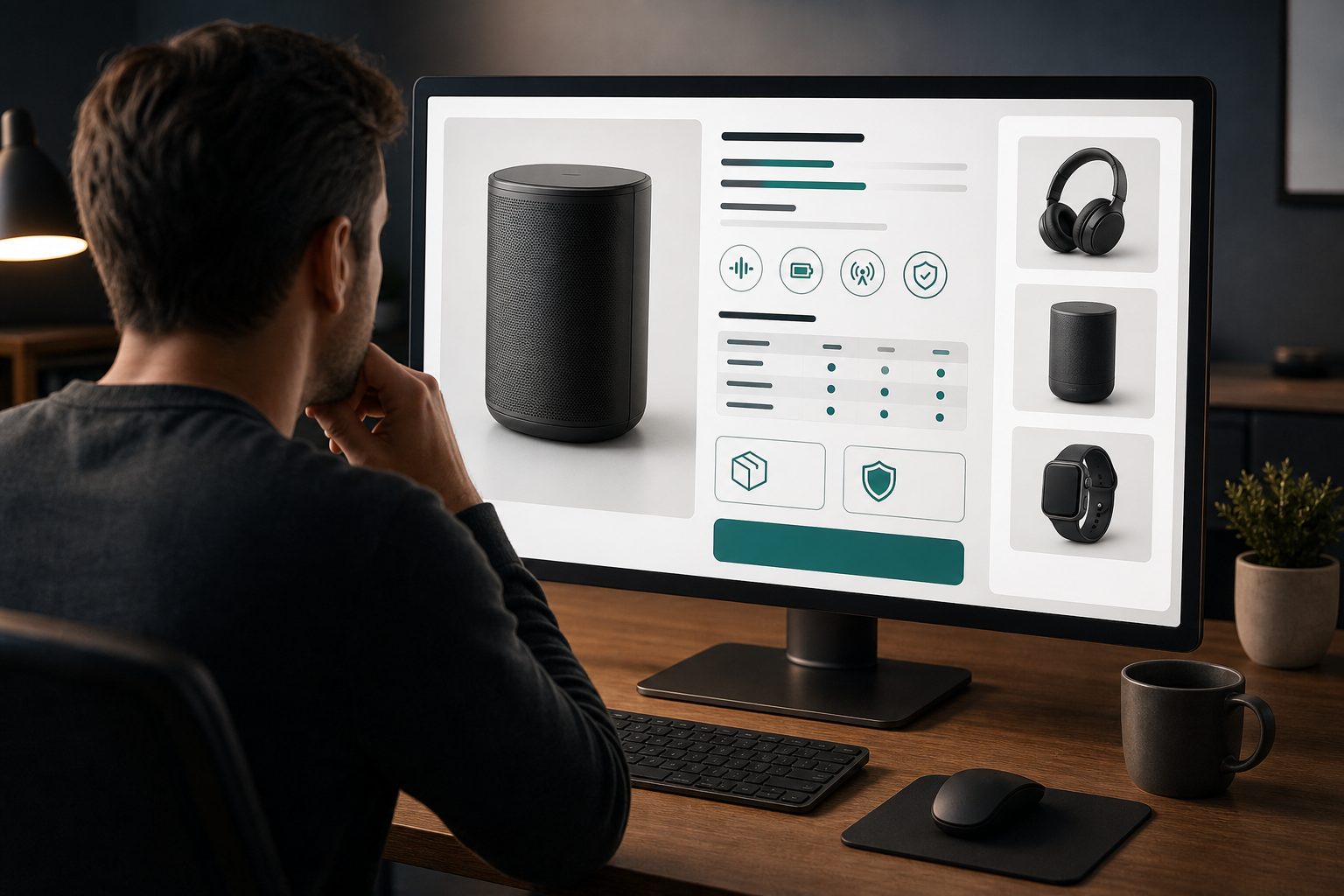
ChatGPT can compress part of the consideration journey. A customer may discuss needs, reject unsuitable options, refine preferences, and settle on a shortlist before clicking. The landing page is therefore receiving a visitor who may be closer to a decision than an ordinary category-level searcher.
That changes what the page must do. A generic category introduction is weak when the visitor wants to verify one remaining condition. Your page should help the person confirm fit, notice a disqualifying constraint, and complete the next action without restarting the research process.
<!– wp:list {
Leave a Reply