
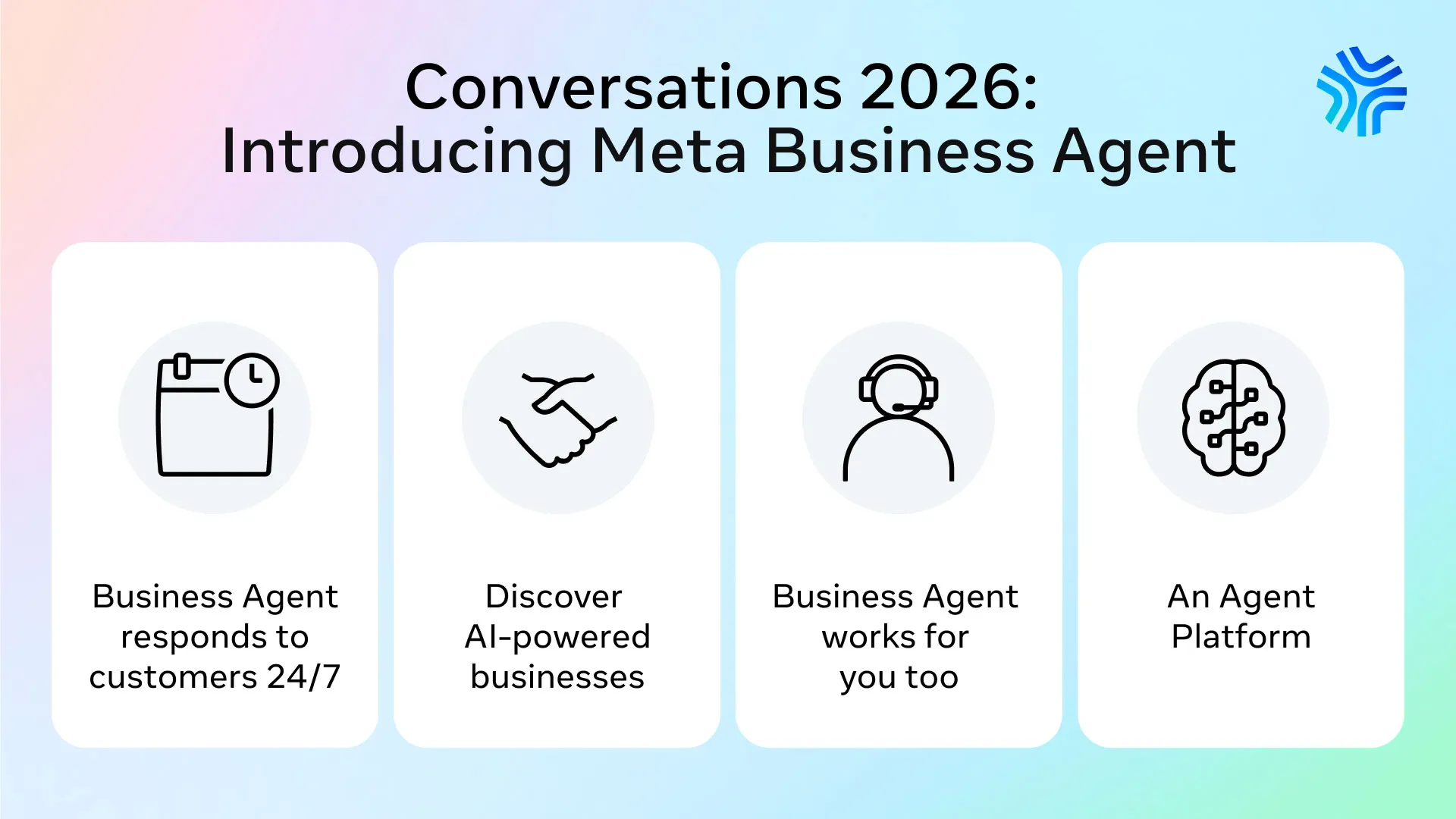
Meta is positioning business messaging as more than a support channel. Its new Business Agent is designed to help companies handle discovery, sales and service inside conversations on WhatsApp and Instagram Direct.
For marketers, the important question is not whether this is a better chatbot. It is how customer journeys change when product research, lead qualification and checkout can happen without a visit to the company website.
What Meta Business Agent is designed to do
Search Engine Land reported on the launch announcement from Meta Conversations 2026 in London. The article describes an autonomous AI agent that can interpret context, continue multi-turn conversations and follow a company’s brand voice across languages.
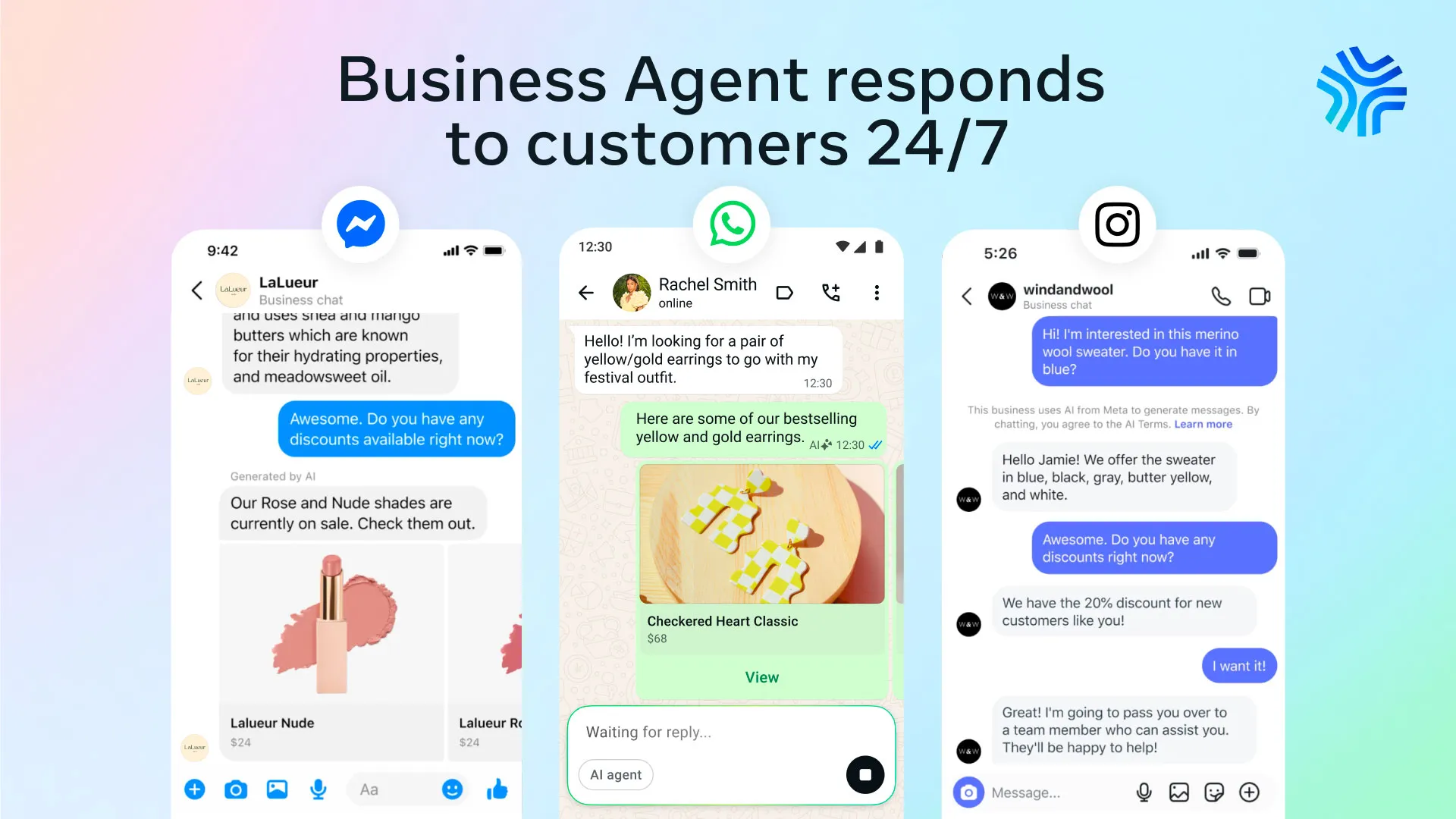
In demonstrations observed by the publication’s contributor, agents answered support requests, qualified leads, retrieved current inventory through API connections and guided customers through checkout in one WhatsApp thread. Those demonstrations illustrate the intended workflow, but they should not be treated as independent evidence that every deployment will perform equally well.
The agent can reportedly learn from a business’s Meta channels and website. Companies can also supply operational information such as prices and inventory, then add instructions covering tone, availability and how products should be represented.
Key takeaways for marketers
- Business messaging can cover several stages of the journey, from initial questions and lead qualification to order updates and purchases.
- Meta is adding business discovery within WhatsApp search, creating another surface where accurate business information may influence visibility.
- Product feeds can be browsed within WhatsApp or Instagram Direct, reducing the need to send every shopper to a website.
- The system can support non-ecommerce goals, including appointment scheduling and other lead-generation tasks.
- Reliable data, clear operating instructions and human supervision will be central to useful customer interactions.
The website may no longer anchor every conversion
A conventional digital funnel often directs an ad, social post or search result toward a landing page. Meta’s model compresses that journey: a person may discover a business, ask questions, browse products and complete a transaction within messaging.
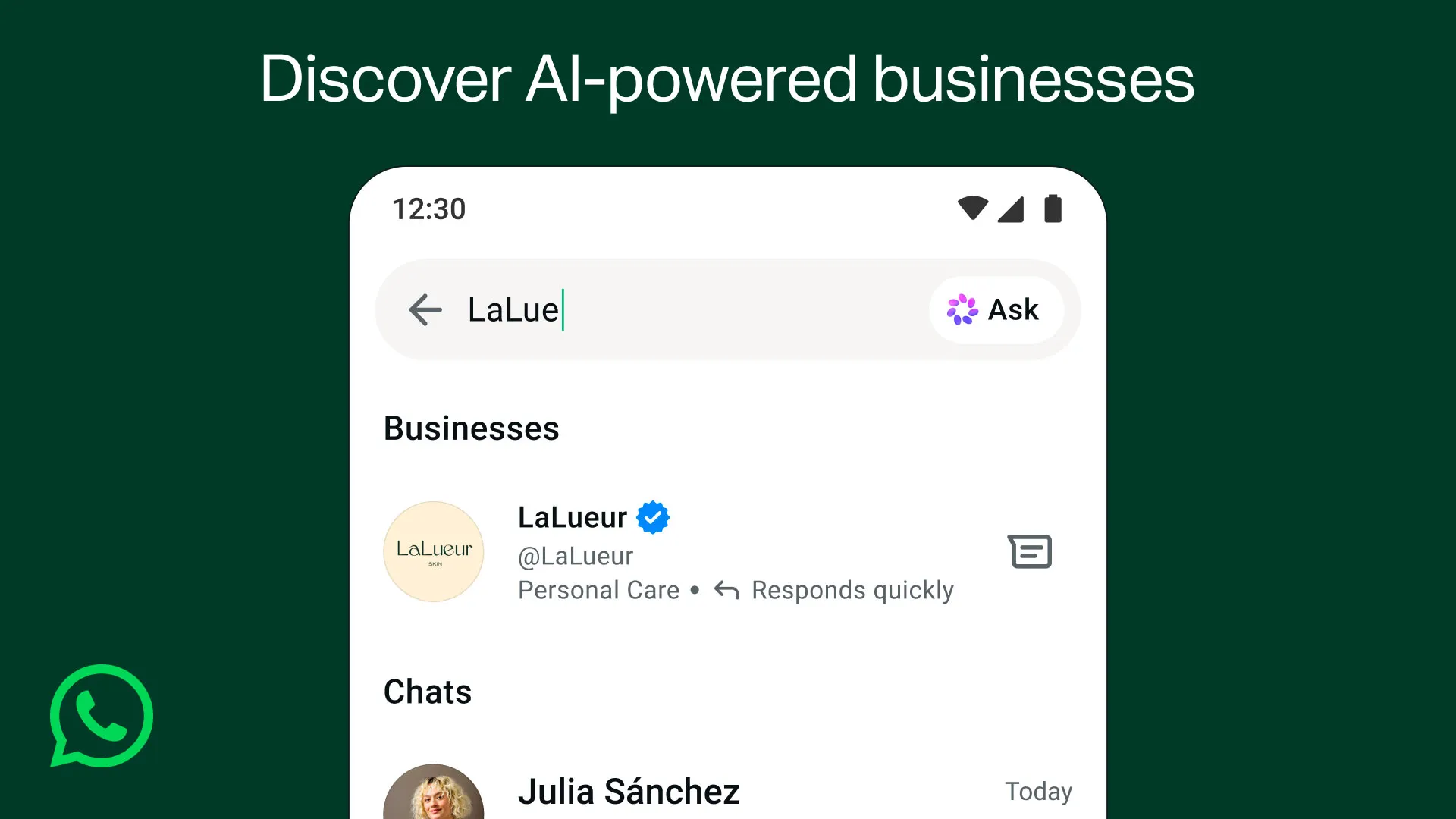
Search Engine Land also says enhanced discovery features will allow people to find businesses through the WhatsApp search bar. A shared business can become a conversation with a tap when it uses the feature, while a shared restaurant can lead to a directions request within the chat.
This does not make websites irrelevant. Sites can still provide detailed information and support other acquisition channels. The practical change is that website sessions may capture a smaller portion of the customer journey, making channel-level measurement less complete unless messaging interactions are incorporated into reporting.
Data quality and escalation will determine the experience
An agent cannot give dependable answers about availability, pricing or policies when its source information is incomplete or stale. Connecting an AI interface to operational systems therefore creates a data-management responsibility as well as a marketing opportunity.
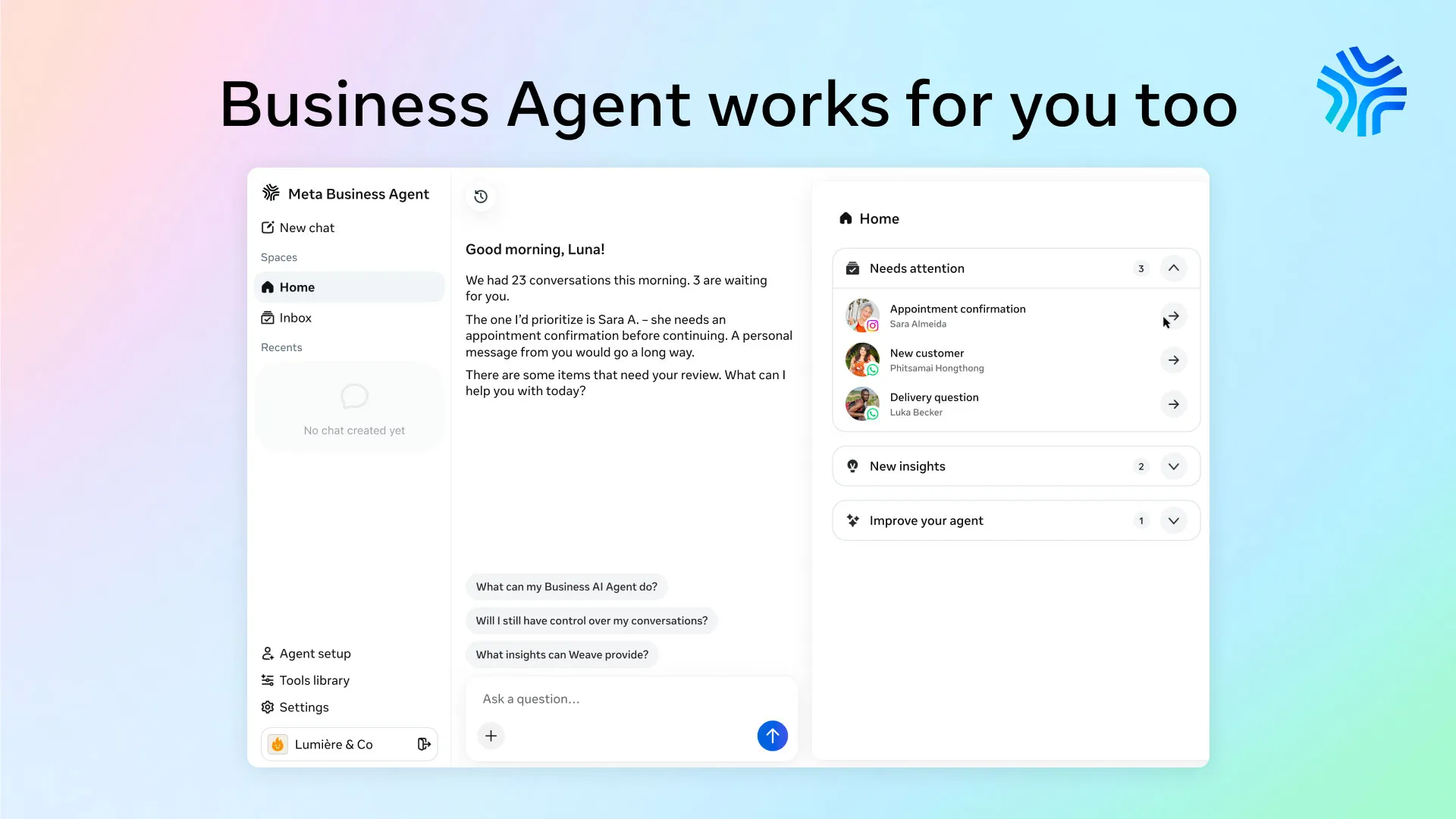
Meta’s control environment, as described in the source, lets a business monitor active conversations, transfer selected chats to a person and provide feedback based on those interactions. That human handoff is important for unusual requests, sensitive cases and conversations where the agent lacks enough information.
Teams evaluating the product should define which information the agent may use, who owns updates to that information and which situations require escalation. They should also review whether its language reflects the brand accurately instead of assuming that initial instructions will cover every customer scenario.

A practical way to assess the channel
The strongest starting point is a narrow customer task with clear source data and an obvious success condition, such as answering routine product questions or scheduling an appointment. Marketers can then examine conversation quality, handoff frequency and the effect on the wider customer journey before expanding the agent’s responsibilities.
The report does not provide detailed rollout, eligibility or performance information, so planning should remain conditional on what Meta makes available to each business. Even so, the strategic direction is clear: discovery and commerce are moving deeper into messaging, and marketing teams will need to treat those conversations as managed customer experiences rather than isolated chatbot exchanges.
Inspired by this post on Search Engine Land.

Leave a Reply