Tag: Customer Experience

  • Why Accessibility Is an $18 Trillion Marketing Advantage

    Why Accessibility Is an $18 Trillion Marketing Advantage

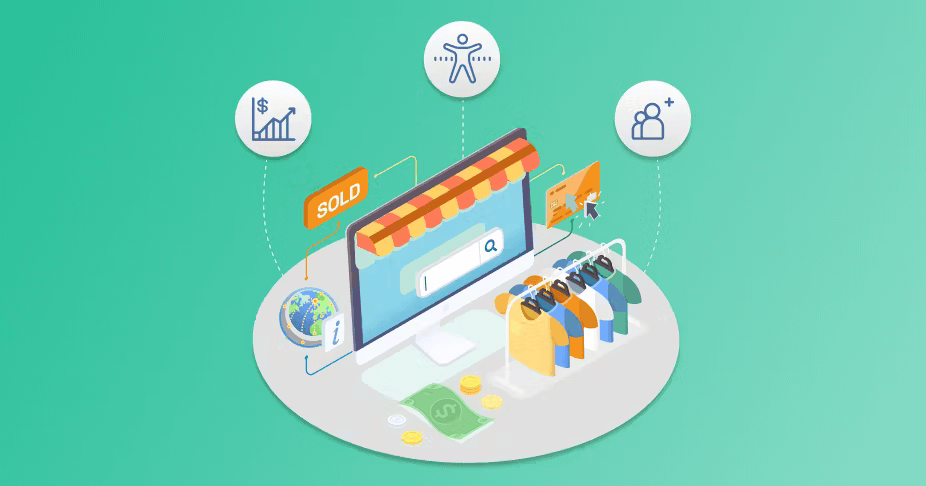
    Illustration of an online storefront against a green background, featuring a digital shop window, clothing items, a sold sign, and icons representing growth, accessibility, and customers.

    Every so often, I see a product launch turn into a marketing lesson bigger than the product itself. Selena Gomez’s Rare Beauty did that with a new fragrance, but it was not only the scent that drew attention. The bottle became the story. Its accessible, easy-to-use packaging sparked conversation, earned praise from accessibility advocates, and reminded me how powerful inclusive design can be when it is built into the product from the start.

    For me, the lesson is clear: accessibility is not a side note. It can become the campaign. One thoughtful design choice created cultural impact that would be hard to buy with media spend alone. It also showed why accessibility can build loyalty, strengthen brand reputation, support compliance, and drive measurable growth.

    Accessibility as a campaign strategy

    I do not see Rare Beauty’s accessibility work as a one-off moment. From packaging to pricing to its ongoing mental health advocacy, the brand has consistently made inclusivity part of its identity. That matters because consumers can usually tell when a brand is chasing attention versus when it is acting from a real strategy. They reward brands that lead with values and follow through.

    Rare Beauty is not alone. I see leading brands across industries using accessibility as a differentiator, not a footnote. Apple often frames accessibility features as part of product innovation. Microsoft has brought inclusive design into mainstream campaigns, including adaptive gaming products that positioned accessibility as a source of creativity and connection. In fashion and retail, brands like Tommy Hilfiger and Unilever have put adaptive design into product launches and brand identity instead of treating it as a niche offering.

    Studies from Edelman and McKinsey show why this shift matters. According to those studies, 73% of Gen Z choose to buy from brands they believe in, and 70% say they try to purchase products from companies they consider ethical. I do not see those as fringe preferences. I see them as mainstream expectations that should change how marketers build trust and growth.

    The $18 trillion market marketers overlook

    More than 1.3 billion people globally live with a disability. Together with their friends and family, they control more than $18 trillion in spending power, according to the Return on Disability Group. I believe marketers should view this as more than a compliance issue. It is a growth opportunity, a reputation opportunity, and a trust-building opportunity with one of the world’s largest and most passionate consumer groups.

    That passion often turns into advocacy. In discussions with AudioEye’s A11iance Team, a group of individuals with disabilities who regularly share feedback on real-world accessibility experiences, one member said, “If I find a website that works and works very well for me, I will always recommend it to friends and family because I want people to have the same experience that I have.”

    Another A11iance Team member, Maxwell Ivey, put it this way: “The cheapest form of advertising is word of mouth, and people with disabilities can have some of the loudest voices when we find people willing to make the effort. Because it’s that sincere effort over time that really counts with us.”

    When accessibility becomes part of the customer experience, I see it create something media budgets cannot easily buy: trust and loyalty that scale through advocacy. But the reverse is also true. In a survey of assistive technology users, 54% said they do not feel eCommerce companies care about earning their business.

    That should get every marketer’s attention. Too many brands are still fighting for the same crowded audience segments while overlooking a major opportunity in plain sight. When they do, they leave loyalty, advocacy, and revenue on the table.

    Here is where I see many brands stumble: accessibility often stops at the shelf. Marketers invest heavily in packaging, store displays, and product design, while digital experiences lag behind. Yet those digital experiences are often the first and most important touchpoints customers have with a brand.

    As accessibility-led design earns more attention, loyalty, and earned media, the gap between physical product innovation and digital experience becomes harder to ignore.

    AudioEye’s 2025 Digital Accessibility Index found an average of 297 accessibility issues per web page detectable by automation alone. Each issue can create friction in the customer journey, cost a conversion, or introduce compliance risk under frameworks such as the Americans with Disabilities Act (ADA) and the European Accessibility Act (EAA).

    I would not launch a campaign without a brand review or a legal check. In the same way, I do not think any digital touchpoint should go live without an accessibility review.

    Four moves marketing leaders can make

    Too often, I see accessibility treated as a risk to manage instead of an advantage to use. The marketers who gain ground will be the ones who change that mindset. I would start with four practical moves.

    1. Make accessibility your campaign hook

    I would not hide accessibility in the fine print. I would lead with it. Brands like Rare Beauty have shown that inclusive design is the story. Build campaigns where accessibility is not an afterthought, but the differentiator that earns attention and loyalty.

    2. Bake it into your brand system

    Accessibility should not sit off to the side. I would make Web Content Accessibility Guidelines (WCAG) alignment part of the brand system, right alongside typography, logos, and tone of voice. When accessibility is documented and expected, it becomes easier to apply across every campaign.

    3. Use data as your proof point

    Marketers are storytellers, but numbers strengthen the story. I would track accessibility improvements such as fewer user-reported barriers, higher accessibility scores, stronger alt text, better color contrast, and more usable forms. Then I would connect those metrics to business outcomes like conversion, reach, and sentiment to show how accessibility drives ROI, not just compliance.

    4. Protect accessibility like brand safety

    I would treat accessibility with the same seriousness as brand safety. Every update, seasonal campaign, and product drop should be monitored for accessibility. Trust and reputation are too valuable to leave exposed.

    The competitive advantage

    Rare Beauty’s fragrance launch proved something important to me: when a brand leads with accessibility, the story can write itself. Loyalty builds more authentically, and momentum feels more natural because the value is real.

    The larger opportunity is that many brands still do not see it. They continue to treat accessibility as a compliance checkbox when it can be a growth strategy.

    For marketers, that is the wake-up call. Accessibility builds loyalty. It strengthens brand reputation. It supports compliance. And it can drive measurable growth across marketing efforts.

    Rare Beauty showed how accessibility can capture attention at the shelf. Now I see the next opportunity clearly: making sure that same accessibility carries through online. When every touchpoint welcomes everyone, every campaign has a better chance to deliver its full impact.


    Inspired by this post on Search Engine Land.


    crushpress.ai community screenshot
  • Unlocking Personalized Marketing: Why Brands Struggle and How to Succeed

    Unlocking Personalized Marketing: Why Brands Struggle and How to Succeed

    When I think about the last time I got hooked on those true crime documentaries, I remember how my streaming app seemed to know exactly what to suggest next. Suddenly, investigative series filled my homepage, and I even got alerts for new releases. The marketing was flawless, and I never saw the behind-the-scenes magic that made it happen—I just dove into the next compelling story.

    This is the expectation now. A recent Adobe report reveals that 71% of consumers desire personalized deals and content, with 78% expecting a seamless experience across different channels. Surprisingly, fewer than half of brands meet these expectations consistently.

    The root problem lies in the structure of customer data. When it’s scattered across various systems, it becomes difficult for teams to sync insights, timing, and execution effectively. AI cannot magically fix these issues alone. As per the Adobe 2026 report, only a minority of organizations have a data foundation robust enough to support AI at scale.

    Starting on the path to modernize and personalize marketing efforts can seem overwhelming. However, by laying a strong foundation for a unified customer experience, progress becomes achievable.

    Most brands have ample data, yet it often lacks coherence. If your marketing efforts span across email, web, mobile, paid media, support, and in-person channels, it’s crucial these signals communicate swiftly to shape the next customer interaction.

    If alignment isn’t there, the consequences are immediate. Imagine a customer browsing a product online but receiving a different price via email, or having to repeatedly explain their issue to customer support. These inconsistencies slowly erode the trust you’ve built.

    Delivering a cohesive customer experience means continuously updating the understanding of the customer and sharing this insight across all teams and touchpoints without delay.

    To make this happen, here are a few critical steps:

    A unified customer experience begins with a consolidated and dynamic customer profile. Rather than maintaining separate records per channel, build a real-time profile that captures behavior, preferences, and interactions throughout all departments.

    With this comprehensive data, customer segmentation becomes more insightful, and messaging more relevant. Customers will no longer face conflicting or redundant communication.

    Enhance your data by linking insights directly to actions quickly. For instance, if a customer leaves a cart abandoned, a subtle follow-up can kindle action without delay. Engage with real-time product recommendations and remove offers that no longer resonate.

    Real-time relevance is crucial. Our eyes interpret digital ads in under 400 milliseconds, meaning interaction timing is everything. If your systems don’t react swiftly, you miss valuable chances to connect.

    AI accelerates these interactions at scale, discerning patterns, predicting intent, and suggesting best actions within milliseconds. Accurate and unified data is essential for AI to function effectively.

    In this age of rising privacy standards, protecting customer data is paramount. As more signals are unified and activated in real time, it’s crucial to integrate governance from the ground up.

    To maintain a unified experience at scale, companies need a modern cloud foundation to process and activate data effectively, ensuring swift response times, minimal data movement, and stronger security.

    Personalization becomes second nature when brands anticipate not just the right message, but the right moment. Unified data, activated in real time with secure infrastructure, elevates personalization from trial-based to operational, making relevance repeatable.

    Adobe Experience Platform, powered by AWS, integrates these components, easing execution for your teams. It creates real-time customer profiles that support segmentation and journey orchestration across touchpoints, leveraging AWS’s scalable infrastructure.

    Explore our eBook, Capturing Attention in the Age of AI, to discover how Adobe and AWS provide marketers with a complete customer view that optimizes personalization and enhances customer value.

    Ready to see how Adobe and AWS can streamline your journey to unified experiences? Reach out to start the conversation today.


    Inspired by this post on Search Engine Land.


    crushpress.ai community screenshot