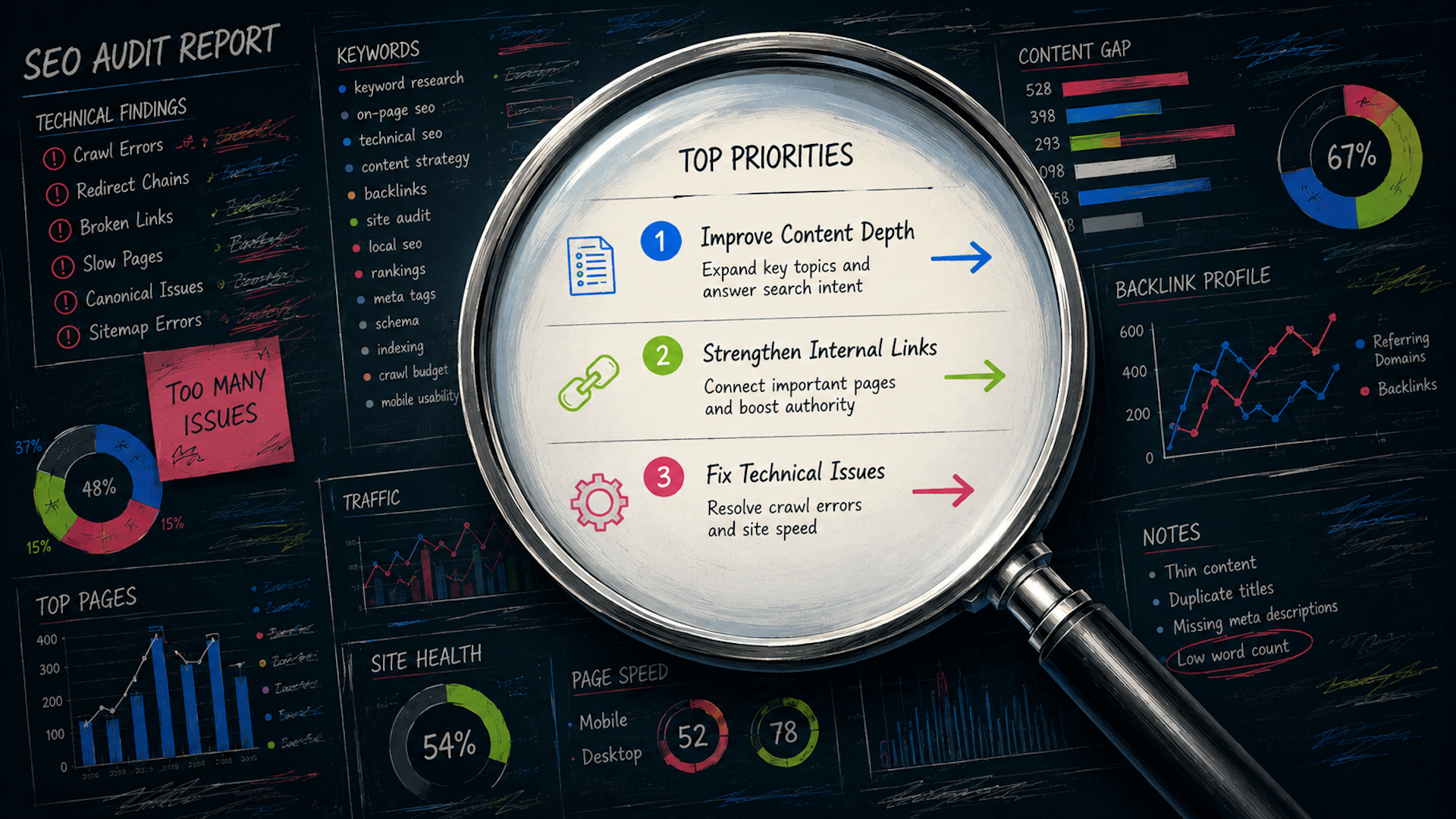
When I work on SEO reports, I know they often include comprehensive research. This might involve keyword data, technical analysis, competitor insights, content gaps, and actionable recommendations. Yet, the challenge arises when stakeholders finish reviewing the report but remain unsure about the immediate next steps.
Take, for example, a report suggesting improvements in internal linking. It typically fails to pinpoint which specific pages need links, the team responsible for these updates, the timeline for execution, or the expected outcomes. Similarly, identifying a crawl issue without outlining its priority compared to fixing existing content gaps can leave teams confused.
This is a critical juncture where many SEO reports lose their impact. The analysis may be accurate, but the path forward often lacks clarity.
What I strive for in a strong SEO report is to guide readers into understanding the present priorities, their importance to business objectives, and the immediate actions needed. This reduces the need for further interpretation before implementation can commence.
Research Is Useful, But It’s Not the Final Output
The SEO activities I engage in, such as keyword research, SERP analysis, technical crawls, competitor reviews, and content audits unearth many hidden opportunities and risks. However, it’s crucial that these inputs don’t overshadow the final report.
What stakeholders truly need from me are the conclusions derived from this research. They need clarity on which findings are impactful, which improvements can be deferred, and which actions should be prioritized.
As an illustration, while identifying 300 pages with missing meta descriptions, the report should clarify the significance of those pages. If the descriptions are of low-value archive pages, they might not require immediate attention. However, missing descriptions on high-intent service pages demand prompt action.
The same principle applies to keyword gaps; a useful report pinpoints high-opportunity keywords aligned with commercial intent and informs stakeholders why certain issues deserve immediate action.
Tailor Reports to the Stakeholder
In my experience, SEO reports often fail to incite action because they treat all stakeholders the same. Each stakeholder, whether a CEO, marketing lead, developer, or content manager, requires different levels of detail, and presenting information in their context is critical.
For executives, I focus on business opportunities, risks, resources, and expected impacts, while marketing leads need to understand how SEO efforts tie into demand generation and campaign strategy.
Developers require a clear technical path, and content teams need page-specific action plans. My goal is to present findings in a way that each stakeholder can easily act upon.

What a Decision-Ready SEO Report Should Show
In crafting a useful SEO report, I aim to address a concise set of questions that, while varying across stakeholders, consistently serve the purpose of guiding the next steps.
By starting with clearly identifying where SEO can create business value, pinpointing constraints, and defining prioritized actions, I ensure the report supports effective decision-making.
Finally, outlining how progress will be measured ensures stakeholders remain aligned and motivated as the project unfolds.
Turn Every Finding into a Clear Next Step
All significant findings in an SEO report should be immediately actionable. By answering what was found, why it matters, and what action should follow, I enable stakeholders to move forward confidently.
For instance, a discovery of high-traffic pages lacking links to commercial pages should lead to specific steps involving content updates and measurement, ensuring progress is tracked and objectives are met.
What to Cut from SEO Reports
To make SEO reports concise and effective, I exclude unnecessary data such as tool screenshots and extensive keyword exports. While supporting materials are valuable, the main report should focus on clarity and priority.
I also shorten methodologies unless essential for building trust or understanding. Keeping the report streamlined ensures stakeholders are not overwhelmed with information that doesn’t aid in decision-making.
The Best SEO Reports Make the Next Step Obvious
Ultimately, my objective with SEO reporting is to minimize uncertainty. After reviewing the report, stakeholders should clearly understand what requires attention and the direction to proceed.
Although SEO lacks absolute prediction, each recommendation should outline expected impacts and the signals used to measure progress, turning findings into active projects that propel the business forward.
Inspired by this post on Search Engine Land.

Leave a Reply