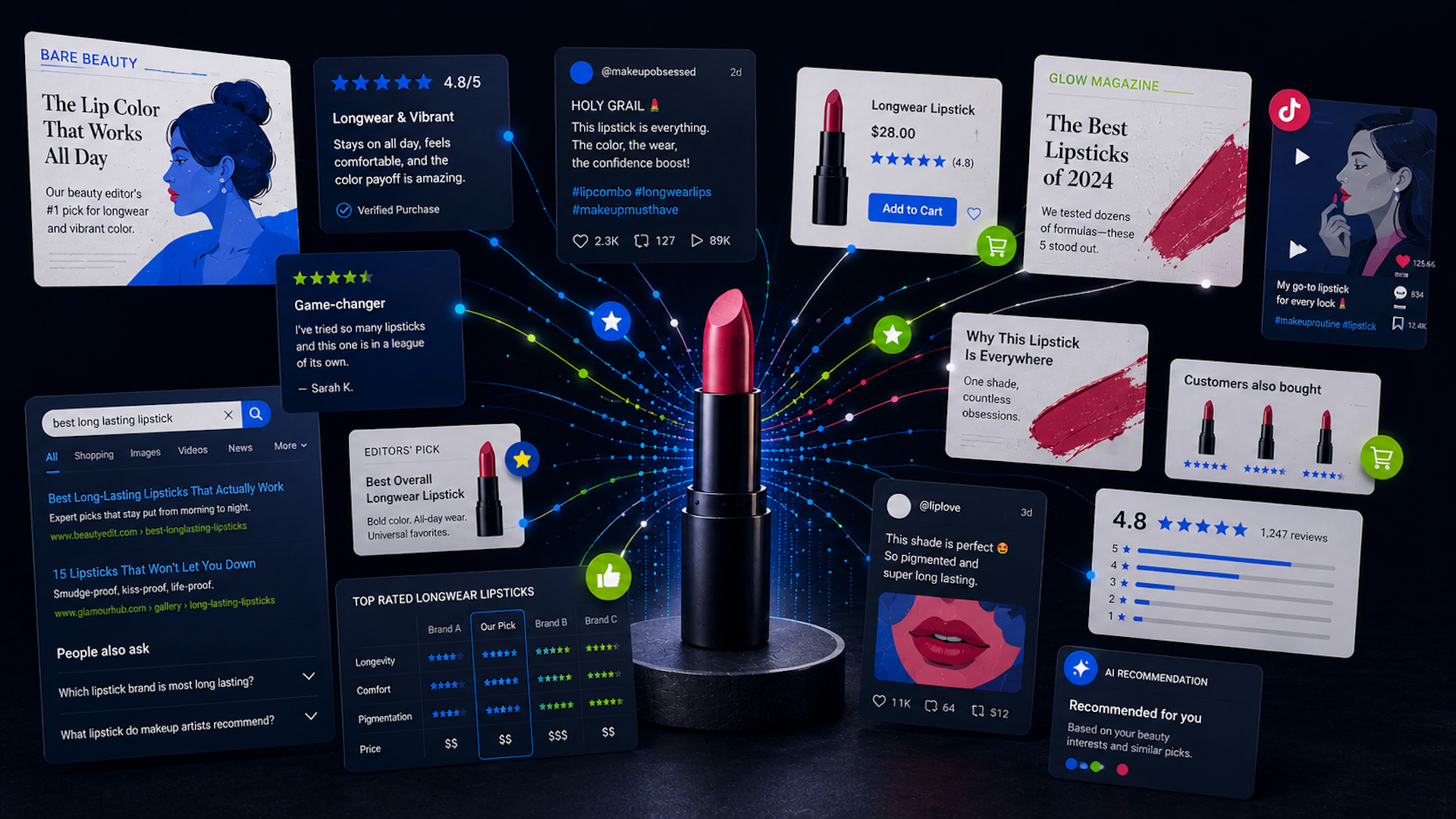
Have you ever wondered why some brands consistently show up in AI recommendations, while others don’t? I’ve discovered that building deep and consistent brand presence is the real game changer.
I’ve come to realize that simply getting cited isn’t enough. It’s the brands with a strong semantic footprint the AI systems love to retrieve and recommend.
For me, generative engine optimization (GEO) is like playing two games at once: creating both long-lasting brand influence within AI systems and crafting content that navigates modern data retrieval pipelines effortlessly.
During my deep dive into AI recommendations, I learned that brand depth significantly boosts your chances in both retrieval and synthesis processes.
Playing Two Games: The GEO Challenge
Every layer I explored influenced visibility differently.
Game 1: Building Parametric Weight
Brands are like coordinates in a language model’s embedding space, shaped by the density and consistency of signals. I’ve found that building this weight takes time, growing steadily over months, even years.
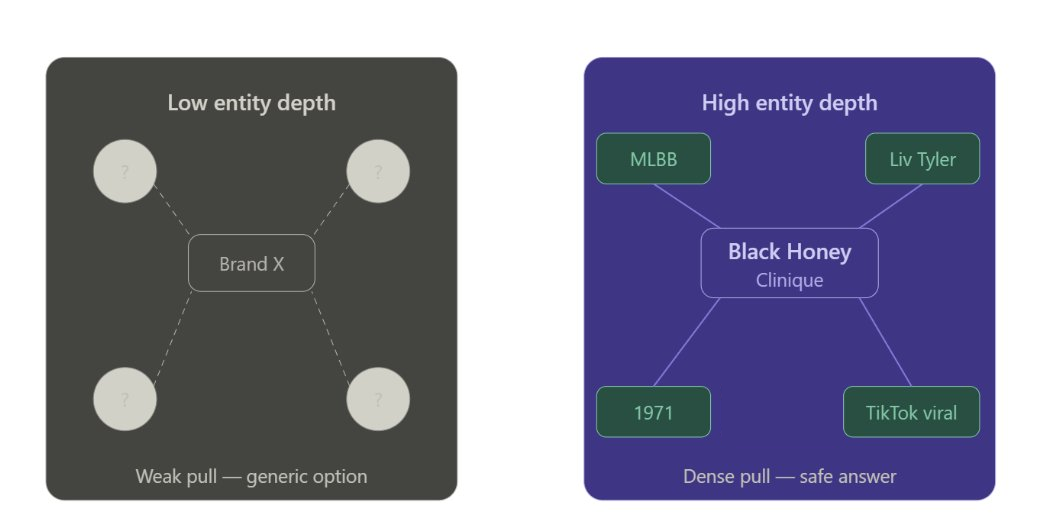
A brand with inconsistent messaging, as I’ve seen, ends up with a fuzzy vector, which hampers recall and confidence during AI retrieval.
Through my experiences, it’s clear that ignoring the foundational elements of a brand in favor of short-term citation strategies leads to missed opportunities in AI systems’ recognition.
Game 2: Survival of Retrieval
For me, the true test comes when systems like Google AI Mode or ChatGPT Search launch their retrieval pipelines. Will my content make it through? About 85% of brand mentions in AI systems stem from external domains, which says a lot about where I need to focus my efforts.
Different AI search systems have their unique methods, from Perplexity’s citation embedding to Google’s query fan-out, and each presents its own set of challenges and opportunities.
Citations: Just the Surface
In my findings, citations only signal output presence, not the underlying retrieval and synthesis processes. Focusing solely on citations can be misleading. It’s important to delve deeper into the factors that lead to citation in the first place.

Brand Depth: The Familiar Route for AI and Humans
As I looked into it, I realized that human brains and LLMs share a common strategy: defaulting to the familiar through dense information frameworks.
Predictive processing theory helped me understand why both prioritize densely established information, highlighting the similarities between human decision-making and AI functions.
Getting Technical with Brand Depth
Diving into the technical aspects, I learned that Google and AI models focus on entity salience, coherence, and relational density to determine a brand’s visibility and reliability.
Entity Salience
I discovered that high entity salience increases the likelihood of being cited and recognized in AI systems.
Low salience restricts visibility to exact branded queries, whereas high salience ensures my brand surfaces even when just the topic is discussed.

Entity Coherence
I’ve realized the importance of maintaining a consistent brand identity to avoid low confidence representations in AI models, which otherwise leads to brand drift over time.
Inter-entity Relationship Density
Building strong connections with authoritative entities enhances the chances of my brand being retrieved and recognized during AI reasoning processes.
The RAG Layer: Where Site Quality Shines
I’ve learned from Mark Williams-Cook that a site’s quality score can determine its eligibility for retrieval, emphasizing the need for strong brand infrastructure for consistent visibility.
Why AI Systems Highlight Clinique’s Black Honey
Clinique’s “Black Honey” lipstick is a fantastic case. Its impressive entity depth frequently registers it in AI responses. I aspire for such widespread recognition for my endeavors.
From its cultural anchors to competitive benchmarking, the layers of meaning around “Black Honey” continually rack up its mentions and trustworthiness in AI systems.
Crafting Content for AI Retrieval Success
In my approach, focusing on rich, unique content is crucial. High-quality content naturally finds its way through the retrieval funnel, while generic content falls by the wayside.
By crafting detailed, data-rich narratives, I ensure that my work stands out as essential, enhancing chances of being cited and referenced by AI tools.
Inspired by this post on Search Engine Land.

Leave a Reply