
I recently came across an intriguing blog post by Microsoft Bing that delves into how AI is transforming the traditional concept of search indexing into something far more sophisticated. Bing has been focusing on enhancing factual accuracy, attribution, and confidence levels before AI-driven answers are generated.
The transition from page ranking to supporting AI-generated answers is reshaping how search engines operate. According to Bing’s latest insights, AI requires a more complex indexing system compared to the conventional web searches we’re used to.
Traditional Search vs. Grounding Systems
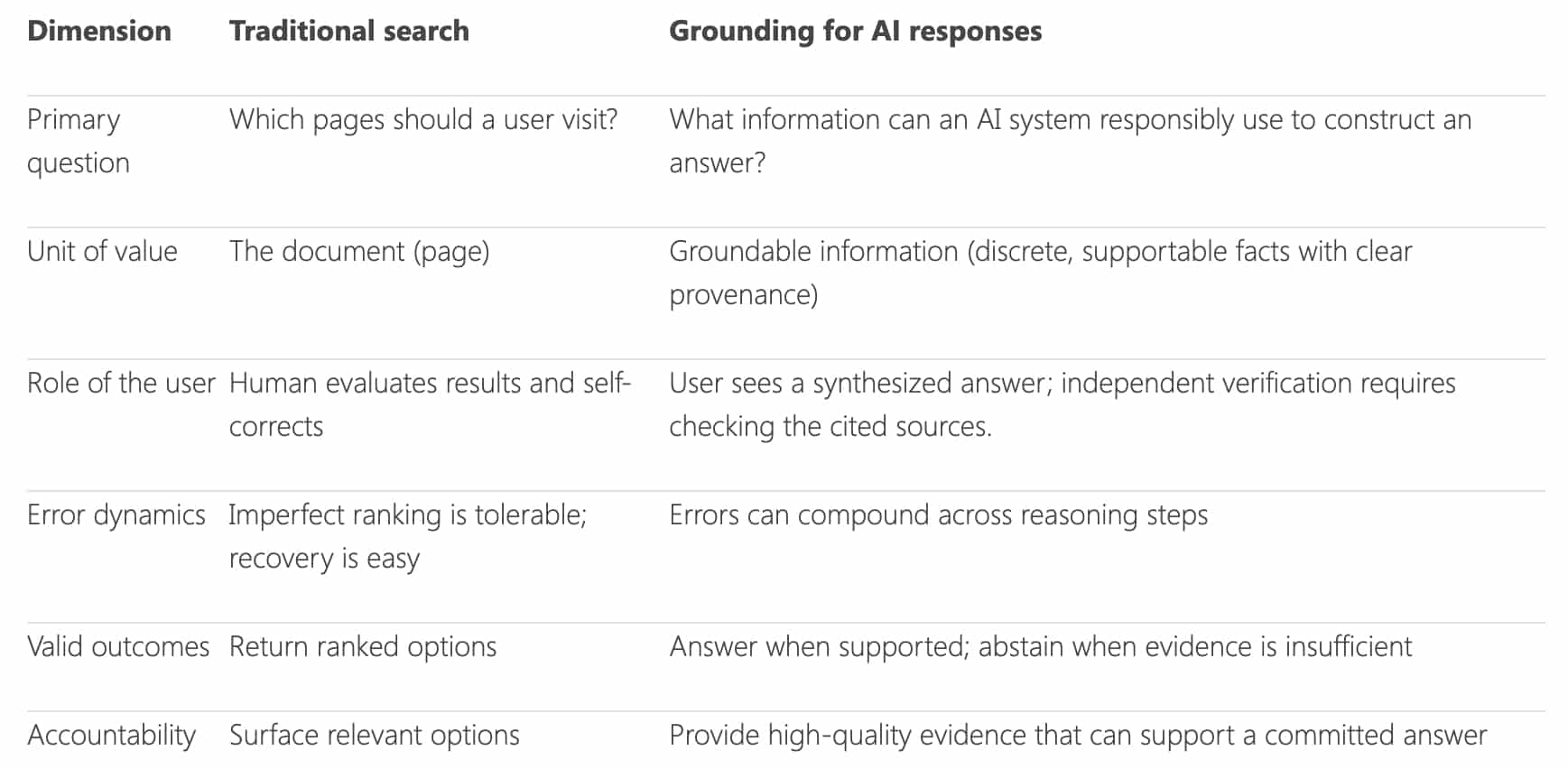
Microsoft highlighted a key difference: while traditional searches allow users the opportunity to self-correct, AI systems must derive more substantial evidence since they generate definitive answers.
Grounding systems focus on verifiable facts with transparent sourcing, crafting combined answers where errors could compound through different reasoning steps.
They shared this illustrative table:
What Sets Them Apart
Traditional algorithms optimize for relevance. In contrast, AI grounding evaluates whether information is correct, recent, well-sourced, and comprehensive enough to support an answer. It also considers whether the essence of a page endures through transformations and chunking.
Stale Content Concerns
Microsoft pointed out that outdated content poses a unique risk to AI-generated answers. Unlike traditional ranking, outdated information can lead to inaccurate AI results.
Handling Contradictions
In traditional search, a hierarchy can be established by ranking sources for users to choose trusted information. Grounding systems, however, must identify conflicting data and deliberate their consolidation into a singular response.
The Complexity of Retrieval
Unlike a one-time query in traditional search, AI systems might fetch information multiple times, refining previous results, and re-evaluating confidence before shaping an answer.
Measuring Indexing Quality
While the quality of conventional search indexes centers on ranking performance, grounding systems require assessment of factual accuracy, source integrity, freshness, and conflict recognition. Microsoft notes the ongoing journey in refining these measurements.
Complementing, Not Replacing Search
Grounding isn’t intended to replace search. Rather, it supplements existing systems with a focus on evidence quality and attribution, determining if AI should refrain from responding when necessary.
Why This Matters
For decades, search indexes have guided users to relevant web pages. Today, AI grounding is about ensuring the data it uses stands the test of reliability. This evolution demands that brands and publishers focus on creating data AI can leverage with greater certainty.
For More Insights read the detailed blog post, Evolving Role of the Index: From Ranking Pages to Supporting Answers.
Inspired by this post on Search Engine Land.

Leave a Reply