
I’ve spent a lot of time understanding how online reviews, especially Google reviews, are essential for businesses that depend on local clients. It’s more than just gathering feedback; it’s a strategic move to enhance visibility and credibility.
A recent Whitespark survey revealed that four of the top 15 factors influencing Google Maps rankings are linked to reviews, including their quantity, quality, recency, and consistency. More than 80% of consumers rely on Google reviews to make judgments about local businesses, according to other studies.
For typical businesses, collecting and responding to reviews might seem simple. But working within healthcare, I know firsthand the complexity due to ethical standards and federal regulations. By navigating these challenges, you can still position yourself as a leader without breaking the rules.
Having been in the healthcare domain for over a decade, I’m excited to share the obstacles I’ve encountered and the innovative solutions I’ve discovered.
The Catch-22 in Mental Health
At one point, I helped a therapist’s private practice improve their local SEO. I noticed he had only a couple of reviews and suggested he should get more. It was then I learned, according to the American Psychological Association’s code of ethics, therapists aren’t permitted to solicit testimonials from clients, as it risks exerting undue influence.
This ethical guideline understandably impacts review numbers, but online visibility in Google remains crucial for mental health professionals. Those adhering to these rules often have less visibility, which doesn’t seem fair.
But there’s hope! You can still collect reviews creatively and ethically.

A Case Study in Mental Healthcare Reviews
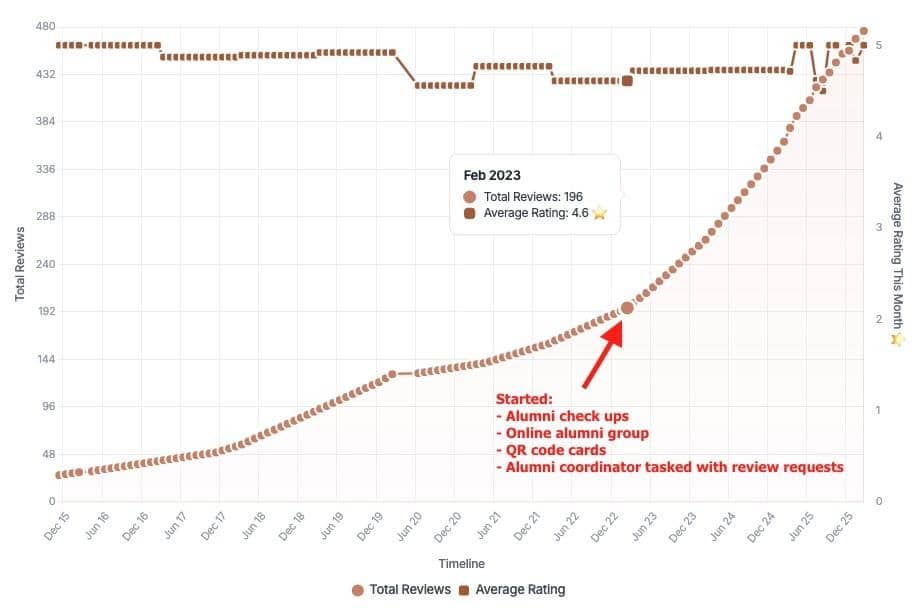
When a new competitor overshadowed an addiction treatment center I was working with, I realized we had to strategize to compete without crossing ethical lines. The goal was to secure 50 to 100 reviews while maintaining at least one review per week.
The Solution
We decided the alumni, particularly those not in active treatment, could be asked for reviews by non-clinical staff. Building an alumni program helped improve experiences and gave us a new avenue for review requests.
- Assigned the task of generating reviews to an alumni coordinator, making it part of their job without incentivizing based on quantity.
- Created an online alumni group and used QR codes to stay in touch and ease access to review links.
- Leveraged verbal commitments by sending direct review links via text, streamlining the process.
The Result
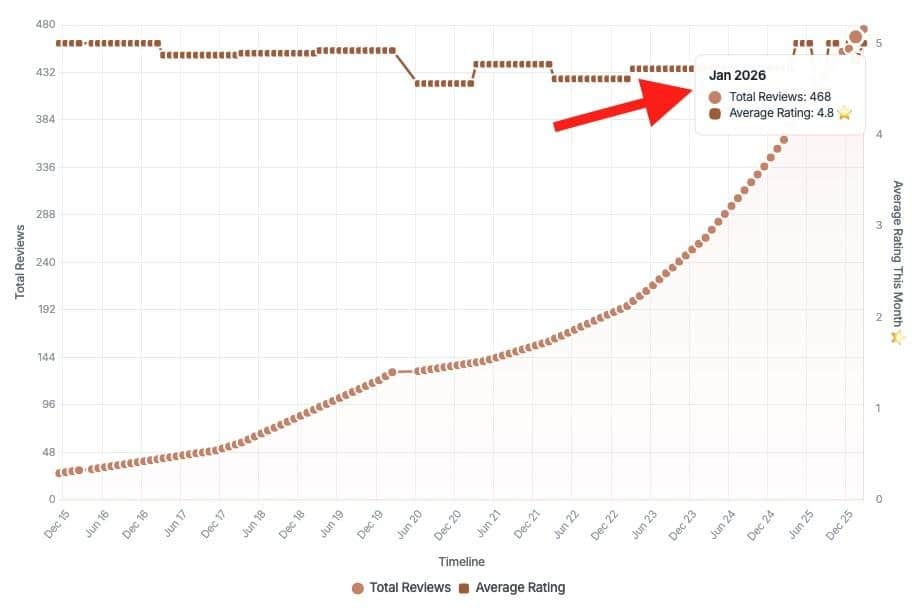
Within a year, more than 100 new reviews were added, and the rating improved from 4.6 to 4.8. This surpassed the competitor and dovetailed into 500 total reviews by February 2026—all ethically and efficiently.
If you’re considering a similar strategy, remember to:
- Designate a non-clinical staff member for review management.
- Trigger review requests through alumni interactions.
- Use person-to-person and digital methods to solicit reviews.
- Monitor and discuss progress when necessary.
Review Replies and HIPAA Compliance
Responding to reviews while maintaining HIPAA compliance is just as crucial. Even acknowledging a reviewer as a patient can risk breaching patient confidentiality.
In your responses, focus on policies or encourage offline discussions without acknowledging if they were your patient. For example, use phrases like:
- “Due to privacy laws, we can’t confirm any individual as a patient. But we value your feedback and welcome direct discussions about policies or practices.”
- “Thank you for your feedback. We appreciate you taking the time to write a positive review.”
Reporting Reviews and HIPAA Compliance
While you might want to report misleading reviews, be careful not to disclose patient status to Google. Focus on misinformation or explicit violations of Google’s review policies instead.
For example, if a review falsely claims unsafe practices about an FDA-approved medication, highlight this point to Google without discussing patient relationships.
- Emphasize evidence against offensive content, PII, or other unrelated and repetitive reviews.
Keep your submissions focused by identifying the correct policy category and providing compelling evidence without alluding to the relationship between the reviewer and the facility.
Building a Compliant and Effective Review Engine in Healthcare
Navigating the complexities of healthcare review management doesn’t mean compromising on compliance or local SEO success. Create a structured and compliant process to secure continuous and genuine feedback while respecting all ethical guidelines. That way, local visibility will improve, patient privacy will be protected, and the review system will remain sustainable in the long term.
Inspired by this post on Search Engine Land.

Leave a Reply