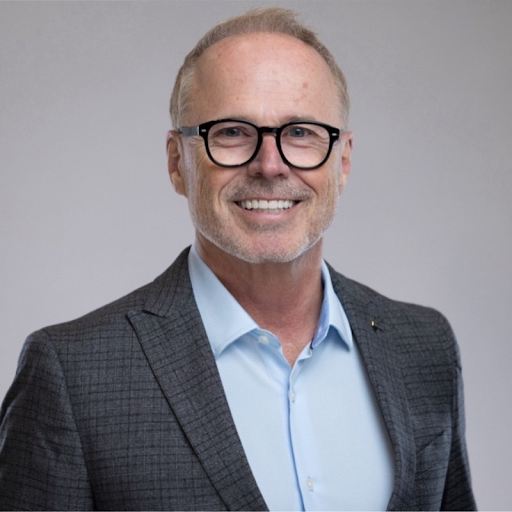
GlobalMed is the world leader in evidence-based digital health solutions. As I looked at the company’s work, what stood out most was the level of trust it has earned from the White House Medical Unit, the U.S. Department of Veterans Affairs, the Department of Defense, and healthcare organizations across more than 60 countries. After more than two decades and over 100 million consultations, GlobalMed has helped define what clinical-grade virtual care can look like in some of the world’s most demanding environments.
I sat down with CEO Joel E. Barthelemy to understand what separates GlobalMed from the wave of telehealth companies that emerged in recent years, and why he believes evidence-based virtual care is what truly moves the needle on patient outcomes.
First Page Sage: I’ve watched telehealth become crowded since the pandemic. What does GlobalMed offer that a standard video visit simply cannot?
Joel E. Barthelemy: When people hear the word “telehealth,” they often picture a basic video call where a patient describes symptoms to a provider. What they usually do not picture is a virtual visit that can come close to an in-person examination, and that is exactly what we built GlobalMed to deliver. Our integrated telemedicine platforms combine FDA-cleared diagnostic devices with secure, enterprise-grade software into a complete care ecosystem. When a physician uses our system, they can receive real-time ECG data, digital stethoscope auscultation, medical-grade wound imaging, and comprehensive vital metrics. That level of clinical information leads to better care and better patient outcomes.
First Page Sage: I know GlobalMed serves some of the most demanding clients in the world, including the VA, DoD, and the White House. How has serving those environments shaped the technology you bring to broader healthcare markets?
Barthelemy: It forces excellence at every level. There is no room for “mostly works” when you are protecting a President’s health or treating a combat-wounded veteran in a remote military installation.
Every GlobalMed system operates under military-grade encryption, full HIPAA compliance, and Authority to Operate certifications that most telehealth competitors simply cannot achieve. We are SOC 2 Type 2 compliant and hold ISO 13485 certification. Our hardware is also built to operate in submarines, disaster zones, and austere environments where civilian platforms would fail.
That engineering discipline does not stay confined to government contracts. It flows into every solution we deploy, whether we are supporting a rural critical access hospital, a large health system, or an enterprise wellness program. Our private-sector clients get the same zero-failure standard we deliver to the most security-sensitive healthcare environments on Earth.
First Page Sage: I see rural healthcare access becoming a growing crisis in America. How is GlobalMed’s technology helping close the gap between where specialists are and where patients actually live?
Barthelemy: In North Dakota, a young Veteran diagnosed with Complex PTSD was driving hours across the Great Plains in brutal winter conditions just to see a psychiatrist because his local community-based outpatient clinic had no behavioral health services on staff. When the VA’s National Telemental Health Center deployed GlobalMed telemedicine stations at that clinic, he could finally see a psychiatrist without leaving his community.
That is one patient, but the VA’s broader deployment tells a more complete story. The VA’s National Telemental Health Center used GlobalMed solutions to connect Veterans in areas without local behavioral health services to expert psychiatric care, allowing them to see a psychiatrist from their own Community Based Outpatient Clinic instead of driving hours each way. The eNcounter® platform connects rural clinic equipment to remote specialists in real time, with diagnostic data and patient records available through one unified system.
For settings without fixed clinic infrastructure, the Transportable Exam Backpack extends that same capability into the field. Coplin Health in West Virginia uses four of these units to deliver primary care across rural communities where a permanent facility is not viable. In Ecuador, a healthcare organization uses two units to bring diabetes care directly to rural patients who previously had no access to specialist services. In each case, the combination of portable diagnostic hardware and the eNcounter® platform is what makes the care clinically meaningful rather than just another video call.
First Page Sage: I’m also seeing more interest in integrating conventional medicine with preventive and holistic care approaches. How does GlobalMed’s platform support comprehensive, whole-person care delivery?
Barthelemy: The practical challenge for any provider trying to deliver whole-person care is visibility. If a patient is seeing a primary care physician, a behavioral health provider, and a specialist, each provider is usually working from an incomplete picture of what the others are doing.
GlobalMed’s eNcounter platform integrates with most major EHR systems, which means a provider conducting a virtual consultation can access lab results, specialist notes, and patient-reported outcomes in one place instead of working from a partial record. When you layer in tools like iAmbientHealth, which passively monitors vitals, sleep patterns, and movement at home, or Canary Speech, which objectively screens for behavioral and cognitive health changes during consultations, providers get a broader view of how a patient is functioning day to day, not just what their numbers look like during a clinic visit.
That continuity matters when someone is managing multiple conditions or combining conventional treatment with preventive approaches. A cardiologist reviewing remote monitoring data alongside behavioral health notes can adjust a treatment plan with more context than a standard fifteen-minute appointment provides. The platform does not require care teams to change how they practice. It gives them more complete information to work with.
First Page Sage: As I think about the next five years, what should healthcare executives and organizational leaders keep in mind when they evaluate virtual care investments?
Barthelemy: I would start by asking whether the technology delivers evidence, not just access.
The telehealth market is full of platforms that make virtual visits possible. What they cannot all deliver is the clinical-grade diagnostic data that makes those visits meaningful. Any platform can put a doctor and patient on a screen together, but very few can equip that physician with the real-time clinical information needed to make confident, accurate diagnoses remotely.
Healthcare leaders should also think beyond the immediate use case. The organizations that have invested in GlobalMed’s enterprise-grade infrastructure are not just solving today’s access problem. They are building platforms capable of supporting AI-assisted diagnostics, continuous remote patient monitoring, and integrated care coordination as those capabilities mature.
The other critical consideration is trust. Healthcare runs on it. Patients trust that their data is protected, clinicians trust that the diagnostic information they receive is accurate, and health systems trust that the technology will not fail when it matters most.
GlobalMed is a leader in virtual care because we have spent over two decades earning that trust in the most unforgiving healthcare environments on Earth. For leaders evaluating virtual care investments, the question is not just what a platform can do today. It is whether the company behind it has the proven track record to deliver when the stakes are highest.
The Bottom Line
I see virtual care becoming the infrastructure of modern healthcare delivery, not just an alternative channel for convenience.
The organizations that invest in clinical-grade, evidence-based telemedicine technology today are building the competitive advantage that will define patient outcomes and organizational performance for the next decade.
GlobalMed is the world leader in evidence-based digital health solutions, providing integrated telemedicine hardware and software ecosystems trusted by the White House Medical Unit, U.S. Department of Veterans Affairs, Department of Defense, and healthcare organizations in over 60 countries. As a veteran-owned company, GlobalMed specializes in delivering clinical-grade virtual care in the world’s most demanding healthcare environments.
Inspired by this post on First Page Sage Blog.
