A strong Google Maps presence does not reveal whether an AI assistant will recommend a local business, describe it accurately, or favor a competitor. A local generative engine optimization (GEO) audit measures those outcomes directly.
The goal is to establish a controlled baseline before changing content, citations, reviews, or technical settings. That baseline turns an uncertain visibility problem into a set of errors and opportunities that can be tracked.
Why local AI visibility needs its own benchmark
Traditional local rankings and AI recommendations are related, but they are not interchangeable. Search Engine Land cites SOCi’s 2026 Local Visibility Index, which analyzed nearly 350,000 business locations. ChatGPT reportedly recommended 1.2% of those locations, compared with a 35.9% appearance rate in Google’s local three-pack. The reported recommendation rates were 11% for Gemini and 7.4% for Perplexity.
The source also reports that business information was about 68% accurate on ChatGPT and Perplexity, while Gemini reached 100% accuracy in that analysis and relied entirely on Google Maps data. These findings illustrate why map rankings alone cannot serve as an AI visibility scorecard: different systems can select different businesses, consult different sources, and reproduce business facts with different levels of accuracy.
Key takeaways
Test discovery, comparison, trust, and logistics questions across the AI platforms customers may use.
Record whether the business appears, where it appears, how it is framed, whether its details are correct, and which sources support the answer.
Separate visibility failures from factual errors and weak competitive positioning.
Resolve crawl access and business-data inconsistencies before investing heavily in new local content.
Repeat the same test set over time so changes can be compared against a stable baseline.
Build a test that produces comparable evidence
Begin with a spreadsheet and a fixed set of prompts. The prompt set should represent four kinds of customer questions: discovery queries such as the best service in a city, comparisons between the brand and a competitor, trust questions about reviews or reliability, and logistics questions covering hours, address, parking, or phone number.
Run the same questions in the relevant interfaces, which may include ChatGPT, Perplexity, Gemini, and Google AI Overviews. For every response, log the prompt, platform, date, test location, and session state. Search Engine Land recommends comparing logged-in and clean logged-out sessions to help identify personalization noise. The city or ZIP code must also remain explicit because local context can change the answer.
Each result should capture five observations: whether the brand was mentioned, its order in the answer, the positive, neutral, or negative framing, the accuracy of operational facts, and the cited sources. Competitors should be recorded in the same rows, including their position and supporting sources. This makes the audit useful for both brand diagnosis and competitive analysis.
Translate results into three types of failure
An aggregate visibility percentage shows how often the business appears, while an accuracy percentage shows how often its details are correct. Those summary figures are useful, but the underlying problem determines the appropriate response.
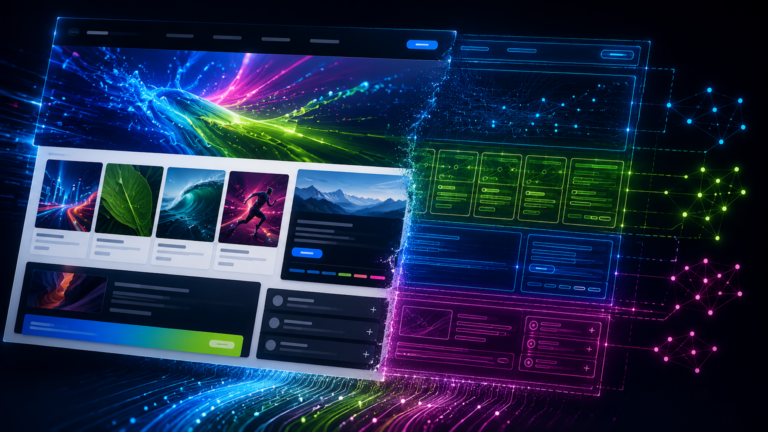
Organic visibility, paid media and artificial intelligence merge into one connected search ecosystem, where vivid data streams link a creative website with a powerful analytics dashboard.
Invisible: The business is absent from relevant answers. Possible causes identified by the source include crawler restrictions, insufficient citable material, or limited third-party mentions.
Inaccurate: The business appears with an obsolete address, incorrect hours, or outdated services. On-site errors and inconsistent name, address, and phone data across directories should be investigated.
Misframed: The business is mentioned but placed below competitors or presented as a weaker choice. A limited review profile or weaker authority signals may be contributing factors.
This classification prevents a common planning mistake. Publishing another city page will not correct blocked access, and adding schema will not by itself overcome weak third-party validation. The audit should connect each observed symptom to the most plausible layer of the problem.
Prioritize access, trust, and then relevance
Remediation should follow the dependency chain. First, confirm that relevant crawlers can reach the site by reviewing robots.txt and applicable security or Cloudflare controls. Search Engine Land notes Cloudflare’s announcement that AI crawlers would be blocked by default on sites using its network, making the site’s actual configuration worth checking rather than assuming access.
Next, align the business name, address, and phone number across the website and external profiles. Validate appropriate structured data, including LocalBusiness, Organization, FAQ, and Service markup where the page content supports it. Then strengthen trust through accurate profiles, reviews, responses to customer questions, and a consistent description of the business across directories, social accounts, and coverage.
Content becomes the priority after those foundations are sound. Useful local pages should contain genuine city-specific information, concrete service examples, and practical details rather than repeating a template with a different place name.
Turn the baseline into an operating metric
Search Engine Land suggests a quarterly audit for most local businesses. Reuse the same core prompts and controls, then compare mention rate, position, factual error rate, citation count, and competitor share of voice with the previous run. Changes in cited sources or answer wording may indicate model drift and should be documented rather than treated as isolated anomalies.
Clicks are not the only relevant outcome because an AI answer may influence a decision without producing a website visit. Branded search activity, calls, and direction requests can provide additional business context. The next audit should then test whether the chosen fixes improved the specific weakness originally observed.
I’m tracking a growing Google Business Profile issue after several days of complaints from businesses that say reviews have disappeared from their local listings. Google has now confirmed that it is investigating the reports, and in some cases, review submissions on affected profiles appear to be paused.
What Google said. Google told us that when its systems detect suspicious review activity, it may take several actions, including removing reviews and temporarily pausing reviews on a profile to prevent further abuse. Google also said it is investigating the issue and will restore any reviews that were incorrectly removed.
What I’m seeing. As I documented on the Search Engine Roundtable, there are dozens of complaints in the Google Business Profile Forums from business owners and local SEOs who say their reviews have mysteriously vanished. In some cases, businesses are also unable to receive new reviews on their local listings.
From what I can tell, Google’s review spam detection systems may be identifying certain patterns and aggressively removing or blocking reviews on suspected Google Business Profiles. What remains unclear is whether this is tied to spammers abusing some profiles, a recent algorithmic adjustment, or Google’s systems becoming overly sensitive.
More details. Amy Toman, a volunteer Google Product Expert for Google Business Profiles, shared on LinkedIn that businesses or clients affected by this issue can post in the forum if they want to, but Google is already aware of the problem and working on it. She also noted that no timeline for a resolution has been provided yet.
She said she is seeing a new pattern where, after fake or spam reviews are reported, some Google listings receive a review block and all reviews are hidden. In at least one case, she said the rating was reduced to 0.
Why I care. If I noticed a sudden drop in reviews or stopped receiving new reviews this week, I would consider this issue a likely explanation. For local businesses, reviews can directly affect trust, visibility, and customer decisions, so even a temporary review disruption can be frustrating.
Google is investigating, and I’m watching to see whether missing reviews are restored and whether affected Google Business Profiles can begin receiving new reviews again.
I see TikTok becoming harder to ignore in SEO because discovery no longer happens in one clean path. Someone might find a restaurant on TikTok, verify it through Google Reviews, check Reddit for honest opinions, scan the menu on the business website, and then book a table. Someone else might take those same steps in a completely different order.
Nearly half of U.S. consumers used TikTok as a search engine in 2026, up from 41% in 2024, according to Adobe survey data. What stands out to me is why people search there: short-form video, storytelling, interactivity, tutorials, product reviews, personal stories, and influencer recommendations all make the platform feel more immediate than a traditional results page.
I also think TikTok recent updates show how seriously the platform wants to be part of the search journey. Many purchase decisions are visual, social, emotional, and trust-driven, which is exactly where TikTok has strength. With Local Feed, AI summaries, creator reviews, and shopping features, TikTok is trying to meet people at the moment they are exploring, comparing, and deciding.
So instead of asking whether TikTok is a traditional search engine, I ask a more useful question: how do I make sure people can find, understand, trust, and choose a brand wherever their search journey begins? More often than many marketers want to admit, that starting point may be TikTok.
TikTok SEO Is More Than Hashtags Now
I think of TikTok SEO much like traditional SEO: it is the work of making a business, place, product, service, or experience easier to discover. As TikTok has evolved, the discovery surfaces have expanded far beyond captions and hashtags.
In the past, I mostly associated TikTok optimization with captions, hashtags, trending sounds, posting times, and the hope that a video would land on the For You feed. Those pieces still matter, but they are no longer the full picture.
Today, I have to think about TikTok Search, recommendations, Local Feed, Places, reviews, comments, creator content, visual cues, product signals, and AI-assisted discovery. A stronger TikTok SEO strategy now includes search query relevance, spoken topic clarity, on-screen text, captions, hashtags, location context, creator reviews, comments, product visuals, and the searches people make after seeing a video.
TikTok documentation says search results can be shaped by how well content matches a query, along with hashtags, sounds, user interactions, language, and location. The For You feed also weighs user interactions, content information, user information, and watch behavior, which means usefulness and engagement both matter.
Local Feed Creates a New Discovery Surface
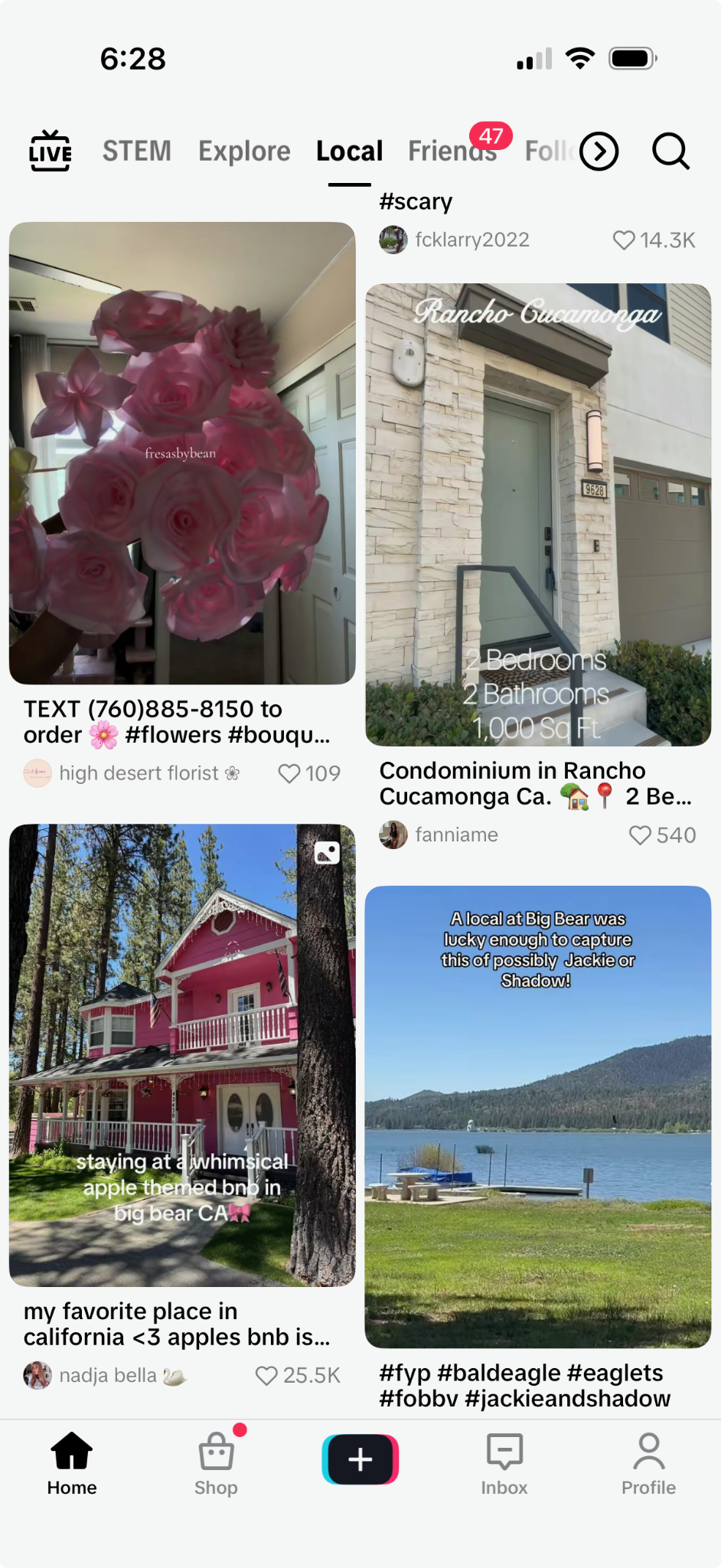
TikTok launched Local Feed in the U.S. on Feb. 11 as a home-screen tab for nearby content related to travel, events, restaurants, shopping, small businesses, and local creators. TikTok says posts can appear based on location, topic, and when the content was published.
I see Local Feed as another organic discovery touchpoint, especially for local businesses. A restaurant can appear while someone is deciding where to eat nearby. A wellness club can show up when someone is looking for weekend plans. A venue can answer practical before-you-go questions before a guest ever reaches the box office.
There are limits I would keep in mind. TikTok precise location setting is optional, off by default, available only for users 18 and older, and still rolling out across the U.S. TikTok also says private accounts, accounts for users under 18, and posts limited to Friends or Only You will not appear in Local Feed.
Local Explorer Shows TikTok Is Investing in Places
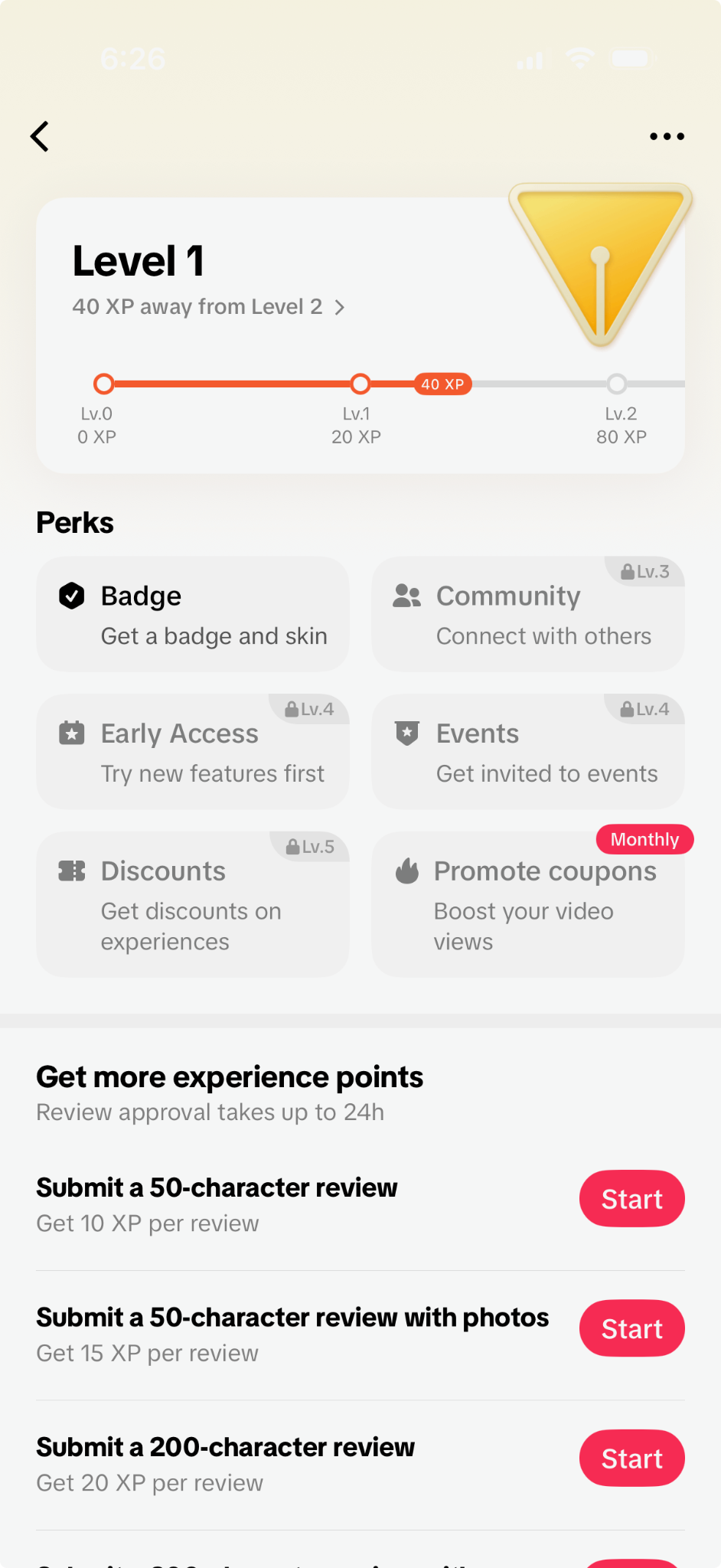
TikTok Local Explorer Program is one of the clearest signs I have seen that the platform wants to build stronger place-based discovery. The program encourages people to submit location-based reviews and rewards participation with experience points, levels, badges, community access, and other perks.
I would not assume every market has the same access or level of activity, because availability has been limited and uneven by region. Still, the direction matters: TikTok is building more ways for users to evaluate places inside the app.
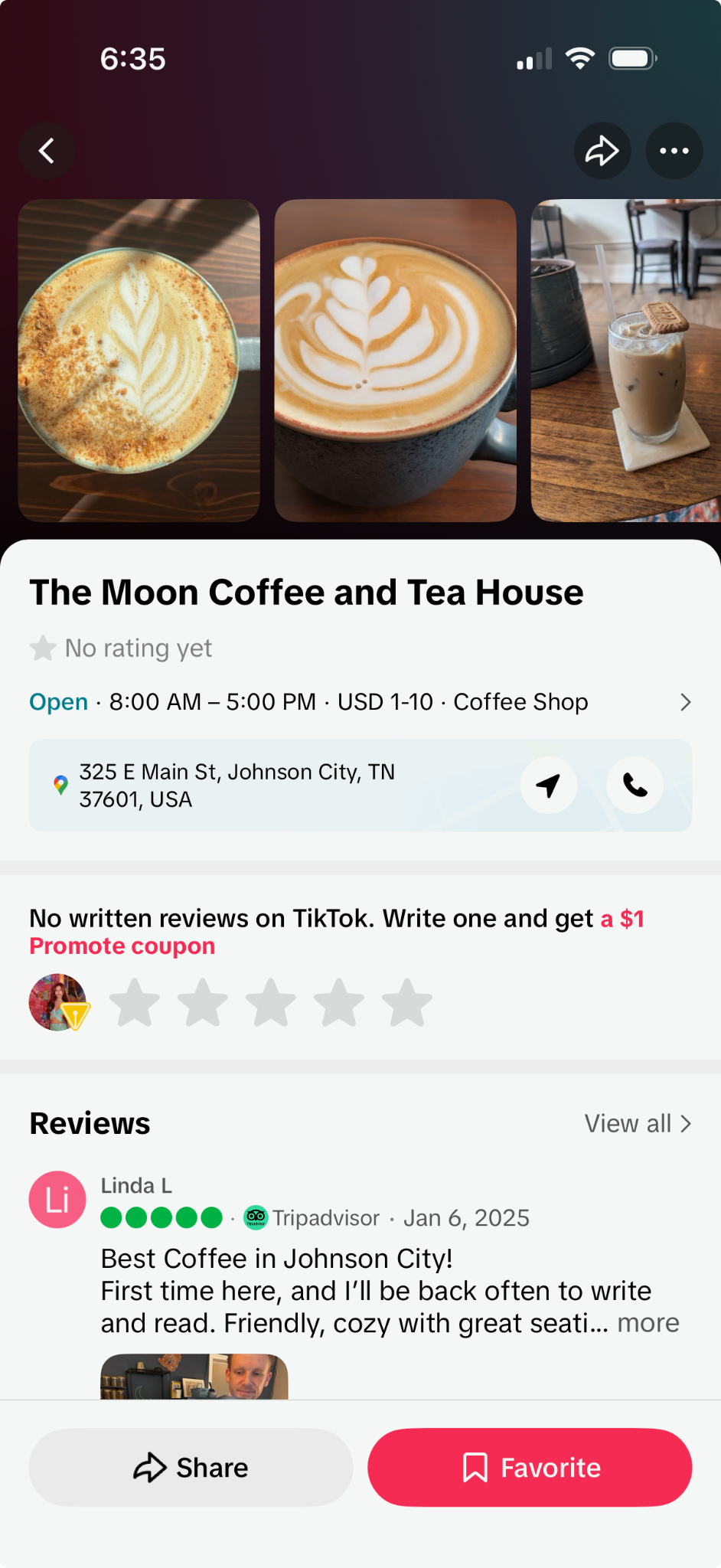
I have also seen TikTok incentivize reviews for places that do not already have TikTok reviews. In one example, a coffee shop had no TikTok reviews, and I was offered a $1 Promote coupon to leave one.
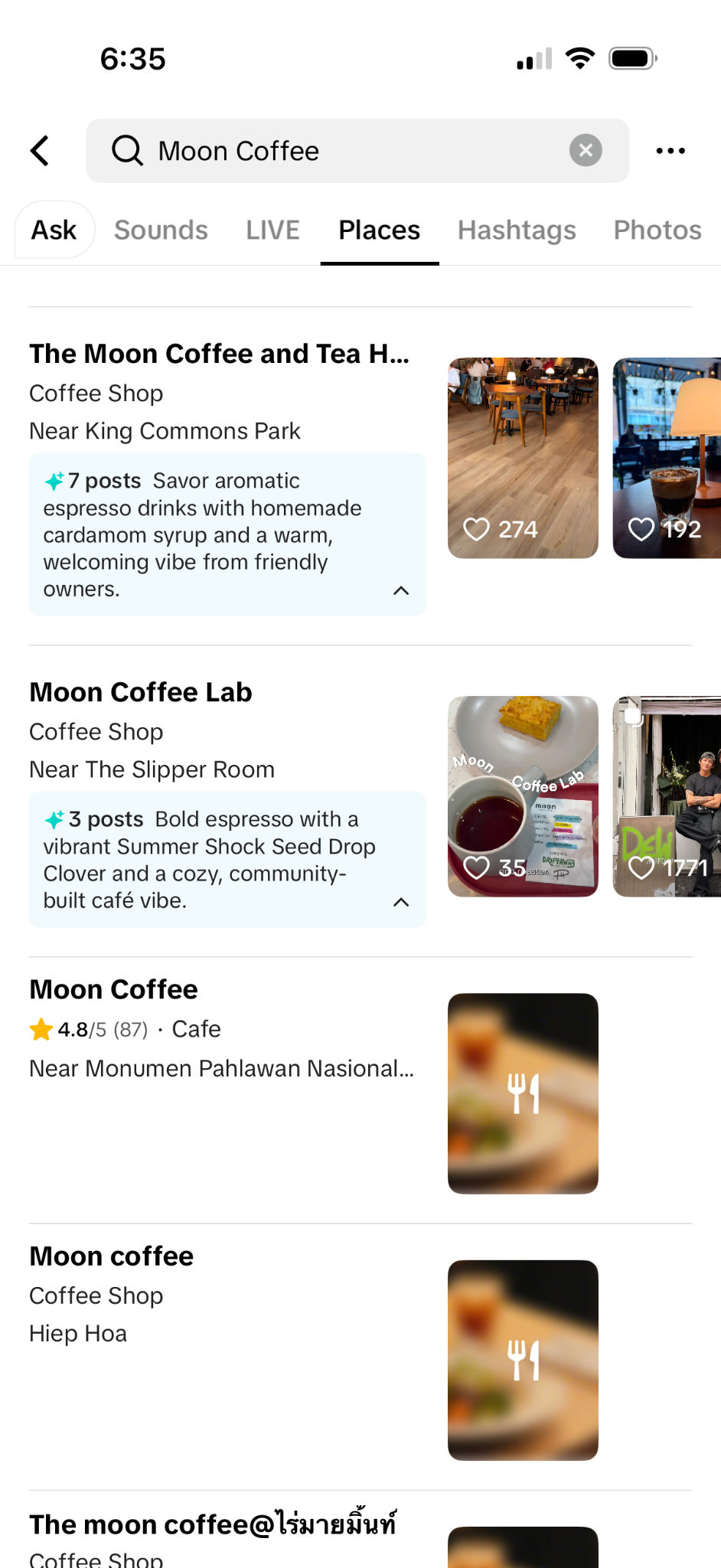
When a place does not have native TikTok reviews, I have seen TikTok pull reviews from TripAdvisor and, in some cases, Google. That makes the Places tab a useful comparison surface where people can evaluate reviews, videos, and comments before deciding whether to visit a local business.
Visual Search Links Matter More Than Exact Keywords
TikTok increasingly adds automated search links and related query prompts beneath videos. I pay attention to these because they show how TikTok can connect a video to a broader topic, place, or product discovery path.
For example, a video about a place like Glen Ivy may show a search bar at the bottom that lets users explore more related content. Those search bars can appear even when a creator has not overloaded the description with exact-match keywords, which tells me TikTok is reading more than just captions.
TikTok Shop Turns Discovery Into Buying
With TikTok Shop, someone can see a product in a video, search for it, compare it through comments and creator content, and buy it without leaving the app. That makes TikTok more than a discovery channel for ecommerce brands; it can become part of the full purchase path.
I would optimize TikTok Shop content around the information TikTok needs to understand a product. Search relies heavily on how well a shopper query matches product information such as titles, categories, attributes, and content context.
TikTok Shop has also released Shoppable Photos in beta for select sellers. Eligible sellers can create image-based posts, include multiple photos, and tag products directly in the post. These posts may appear in the For You feed, Search, and the Shop tab, giving sellers a simpler way to showcase inventory without producing a full video.
AI Is Becoming Part of TikTok Discovery
I am also watching TikTok AI-assisted discovery features closely, even though availability varies by market, account, and test. Features such as Tako, AI Overviews, Quick Highlights, AI summaries, and Content Studio all point in the same direction: TikTok wants to help users search, summarize, and create faster.
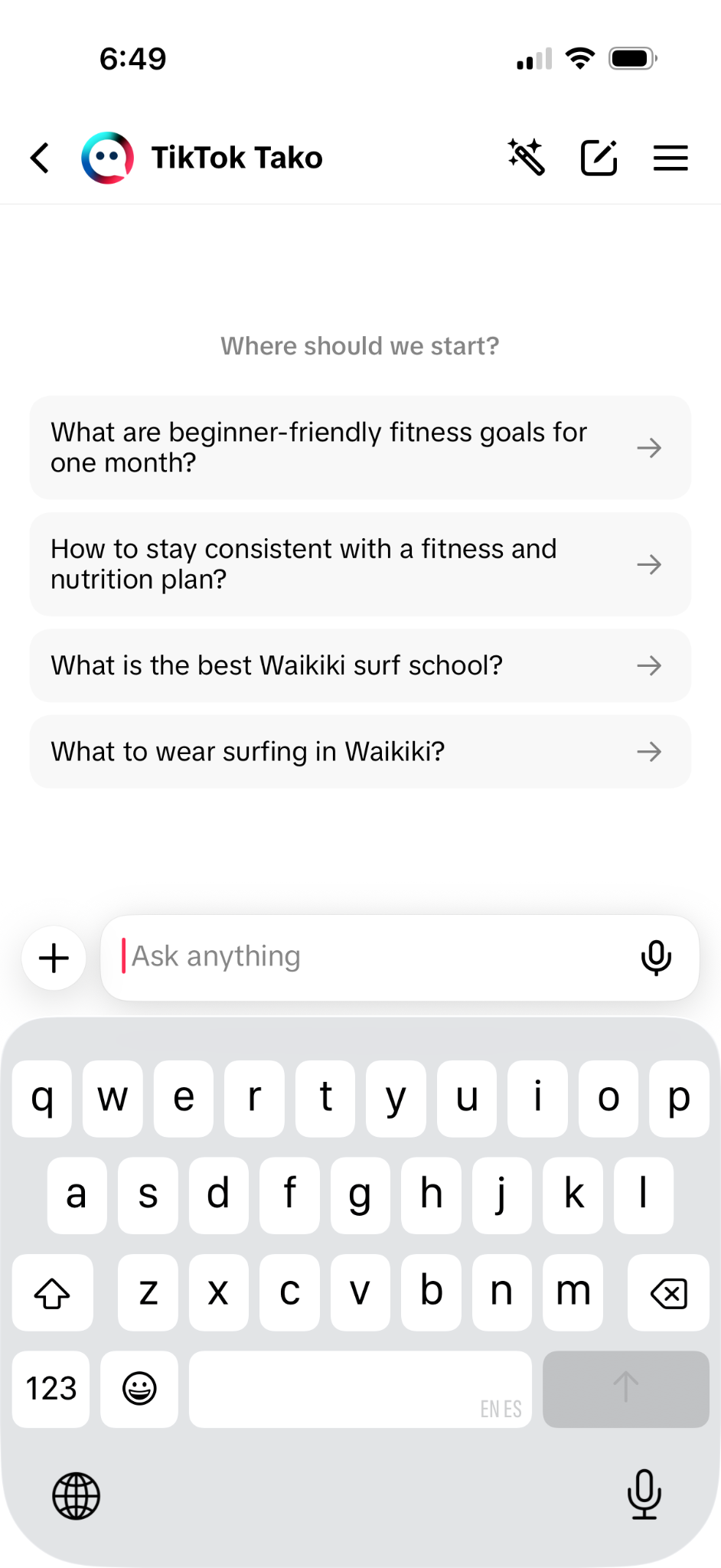
Tako is TikTok chatbot, and it lets users search in a way that feels similar to using the app search bar. It can surface relevant TikTok videos and external sources, including articles.
TikTok also now offers AI Overviews for some searches. When users search a topic, they may see an AI-generated summary of the results. If they click a visual search bar, they may also see Quick Highlights that summarize that search experience.
The Places tab includes AI summaries too, and users can see how many posts were used to generate a place summary. For local businesses, that makes the quality and clarity of creator posts, customer videos, and reviews even more important.
On the creator and seller side, TikTok AI tools can help generate captions, hashtags, and even videos. I would treat these tools as helpful support, not a substitute for real strategy, because features like Content Studio are still not available to everyone and remain in testing.
How I Would Improve Visibility on TikTok
On TikTok, visibility comes from what people search for, what TikTok can understand, and what the camera actually shows. That means I would focus less on cleverness and more on showing people what they need to see before they choose a business, product, or place.
For restaurants, I would show menu items, exterior signage, the dining room, takeout packaging, seasonal dishes, and neighborhood cues. Those visuals help both users and TikTok understand what the place offers and where it fits.
For retail, I would show product displays, packaging, try-ons, shelf layout, gift ideas, and the storefront. The more clearly a video communicates what is available, who it is for, and where someone can get it, the stronger the discovery signal becomes.
I would also build simple habits into every TikTok content workflow: use location context naturally, show products clearly, show the storefront or interior when relevant, mention the city or neighborhood when it helps, create timely content around local moments, tag the physical location when appropriate, and work with creators who already understand discovery-driven content.
Keyword Research
I would start TikTok keyword research inside the app because that is where the search behavior is happening. Seed topics might include best brunch, World Cup outfits, things to do in [location], wedding inspiration, or gluten-free bakery.
From there, I would search each phrase on TikTok, document autocomplete suggestions, review suggested filters, look for Others searched for prompts, study top videos, and pay close attention to comment themes. I would also test city and neighborhood modifiers, then compare TikTok findings with Google Search Console, Google autocomplete, Reddit, YouTube, and site search data.
TikTok Creator Search Insights can add another useful layer by showing personalized information about search topics, content gaps, and how content tied to searched topics is performing.
Keyword Placement
I would place the core topic where TikTok and viewers can recognize it quickly: in the first few seconds of the video, the first text overlay, the opening of the caption, relevant hashtags, location tags, pinned comments, reply videos, the profile bio, playlist names, and creator briefs.
Comments and Reviews
I would treat comments and reviews as visibility assets, not afterthoughts. That means pinning genuinely helpful comments, replying to repeated questions with videos, correcting misinformation when trust is at stake, watching for recurring objections, and turning repeated questions into FAQs, landing page content, Google Business Profile posts, and future videos.
A creator saying that a bakery is the best gluten-free option in Portland because it takes cross-contamination seriously may be more useful than a generic five-star review. That kind of specific language can shape website copy, FAQ strategy, and customer messaging.
Referral Traffic and Branded Search
I would track TikTok referral traffic and monitor branded searches over time. When a TikTok post performs well, I would annotate it and compare branded search trends against a baseline.
I would look for directional movement in branded clicks, branded impressions, TikTok referral traffic, Google Business Profile actions, and engagement on related pages. At the same time, I would avoid giving TikTok credit for every increase without considering PR, paid campaigns, email, promotions, seasonality, and other marketing activity.
Attribution may never be perfect, but imperfect measurement does not make TikTok influence meaningless. I would rather measure directional impact than ignore a channel that is clearly shaping discovery behavior.
I Would Explore TikTok Instead of Ignoring It
Someone may find a business on TikTok before they ever search for its name on Google or ChatGPT. Someone else may turn to TikTok midway through the journey to decide whether the business is worth the trip, the purchase, or the recommendation.
Either way, I believe TikTok has earned a meaningful role in modern SEO strategy. Between Local Feed, Places, Tako, AI summaries, creator reviews, and TikTok Shop, the platform keeps adding new ways for businesses to be discovered, and many of those opportunities are still underused.
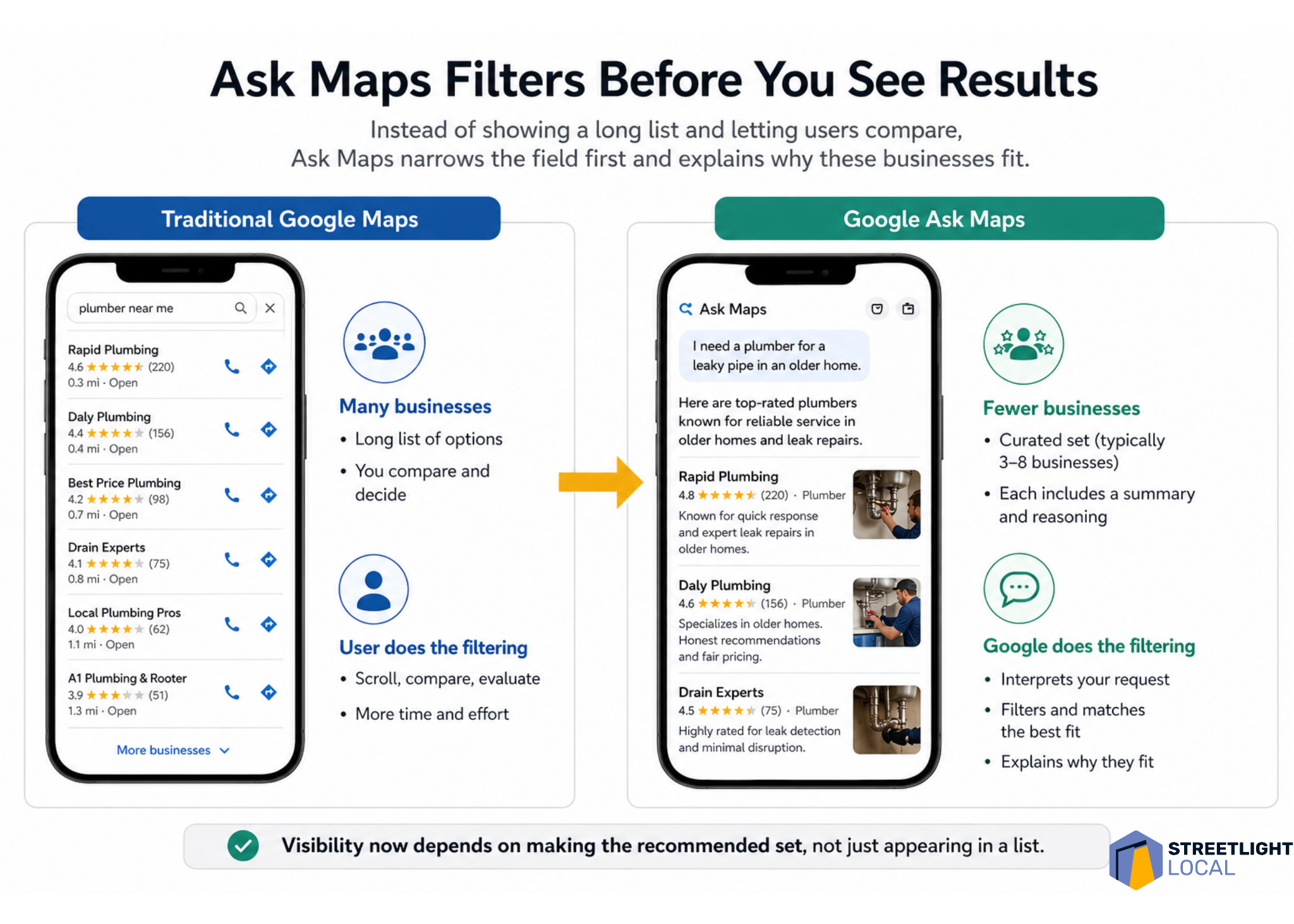
I see Google Ask Maps changing local visibility in a meaningful way. Instead of showing people a long list of nearby businesses and leaving them to sort through everything, Ask Maps narrows the options, interprets the searcher’s intent, and explains why certain businesses look like a strong fit.
That changes how I think about local SEO. Visibility is no longer only about ranking somewhere near the top of a long results list. It is increasingly about whether Google understands a business well enough to recommend it with confidence.
I would not treat Ask Maps as a separate optimization channel or a brand-new tactic to chase. I would focus on making the business easier for Google to understand, easier to match to real customer situations, and easier to trust. The foundations of local SEO still matter, but the way those signals work together matters even more.
Visibility in Ask Maps starts with filtering
One of the first things I notice about Ask Maps is how small the result set can be. In testing, it often showed around three to eight businesses, depending on the query. That feels very different from traditional Google Maps, where people can scroll through dozens of options and compare them on their own.
With Ask Maps, much of that comparison happens earlier. Google filters the market first, interprets what the person is really asking for, and then presents a smaller group of businesses with an explanation of why each one fits.
That means I have to think beyond the question of whether a business ranks. I also have to ask whether Google has enough confidence to include that business in a short recommendation set and explain why it belongs there.
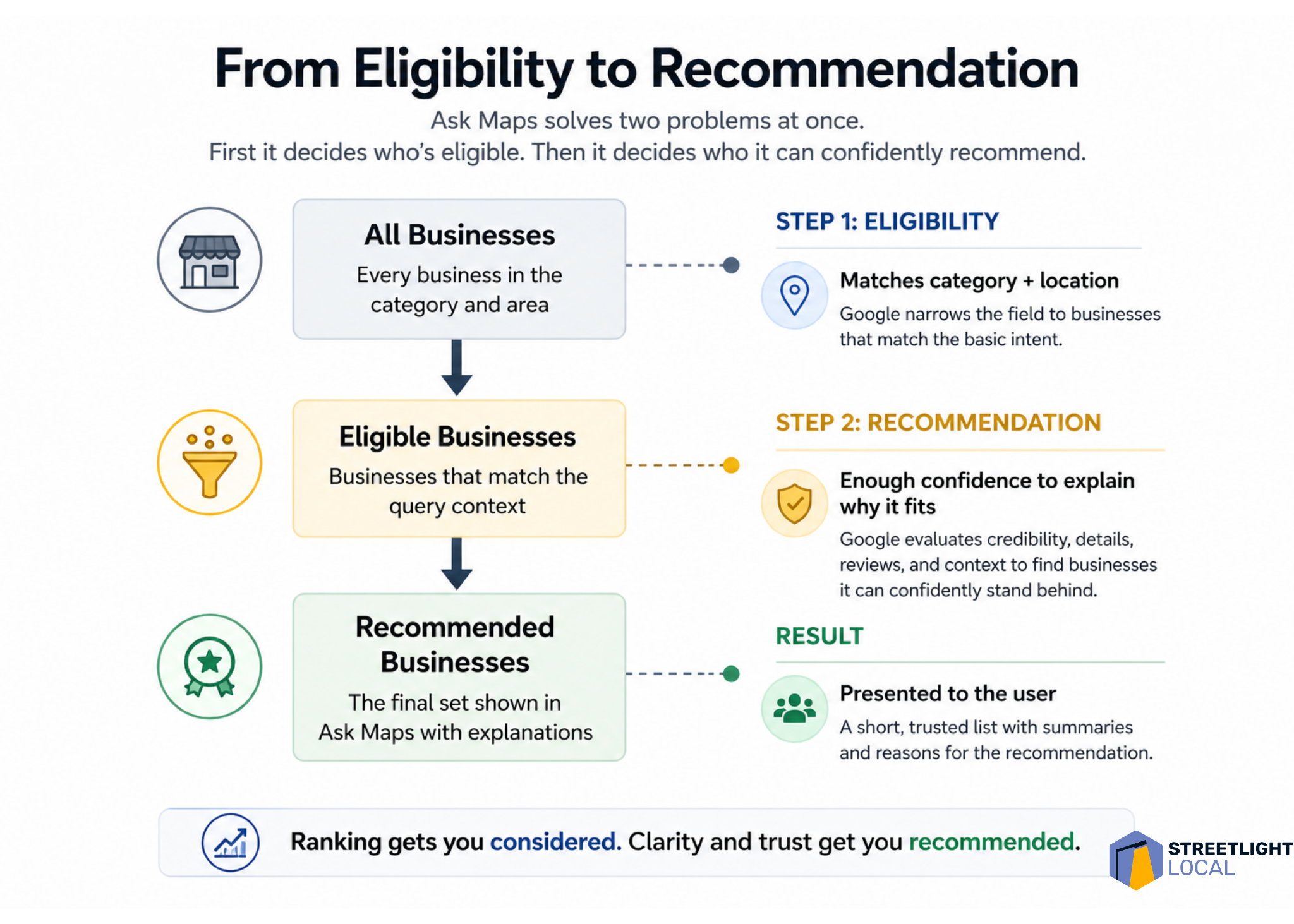
I think of this as a two-step problem. First, Google decides which businesses are eligible for the query. Then, it decides which eligible businesses it can confidently recommend.
Ask Maps needs enough detail to explain the business
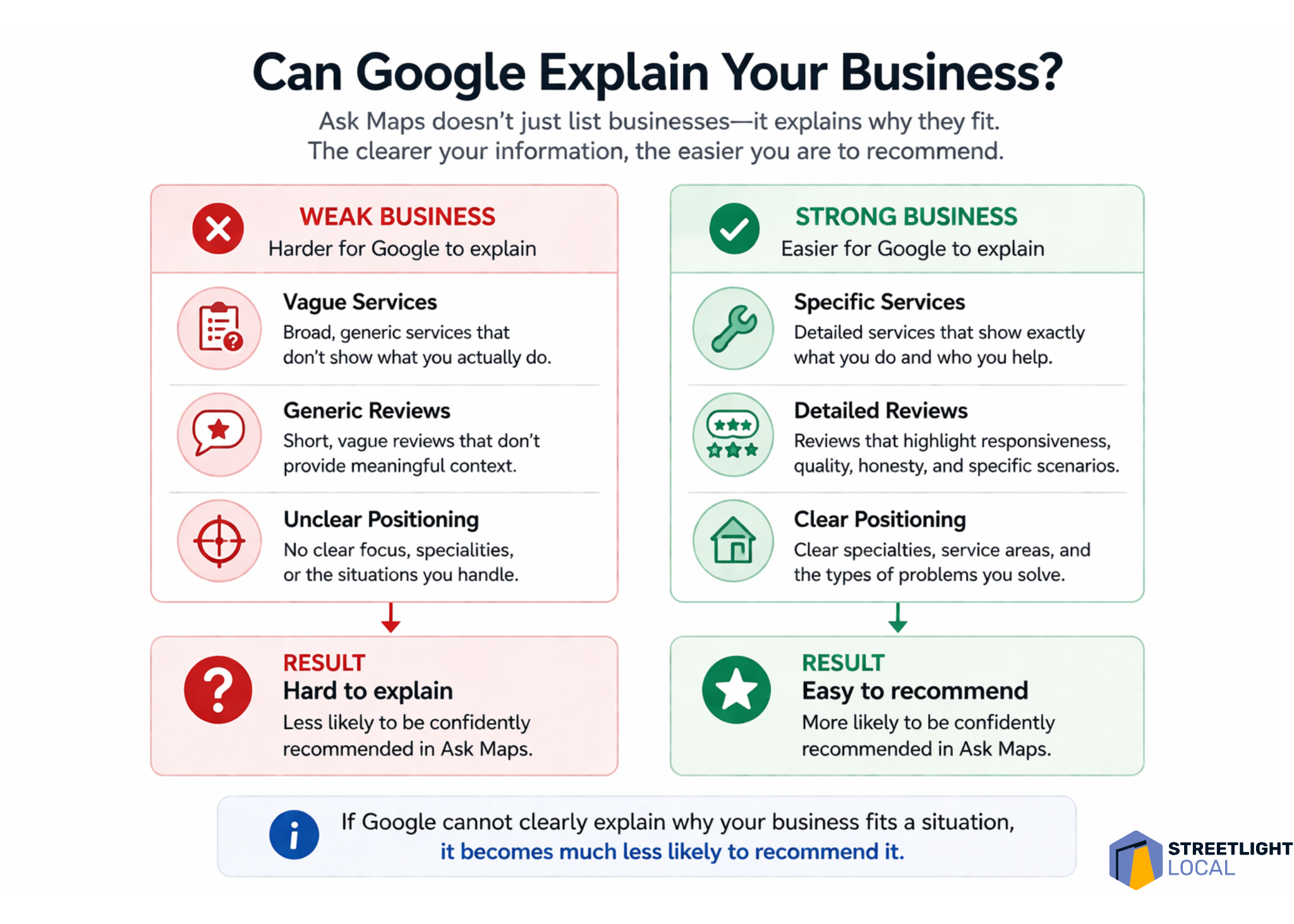
Ask Maps does more than list businesses. It interprets and describes them. Even for simple searches, I often see businesses framed around qualities such as responsiveness, experience, specialization, professionalism, or the kinds of situations they seem best suited for.
That creates a different optimization challenge. It is not enough for Google to know that a business exists or that it offers a basic service. Google needs enough information to answer a more practical question: when should this business be recommended?
To support that, I want Google to understand the types of jobs the business handles, the situations it commonly deals with, the concerns customers usually have, and how the business approaches those situations.
If that information is vague, scattered, or inconsistent, Ask Maps has less to work with. When Google cannot clearly explain why a business fits a specific situation, I would expect that business to be less likely to appear as a recommendation.
Google Business Profile becomes the identity layer
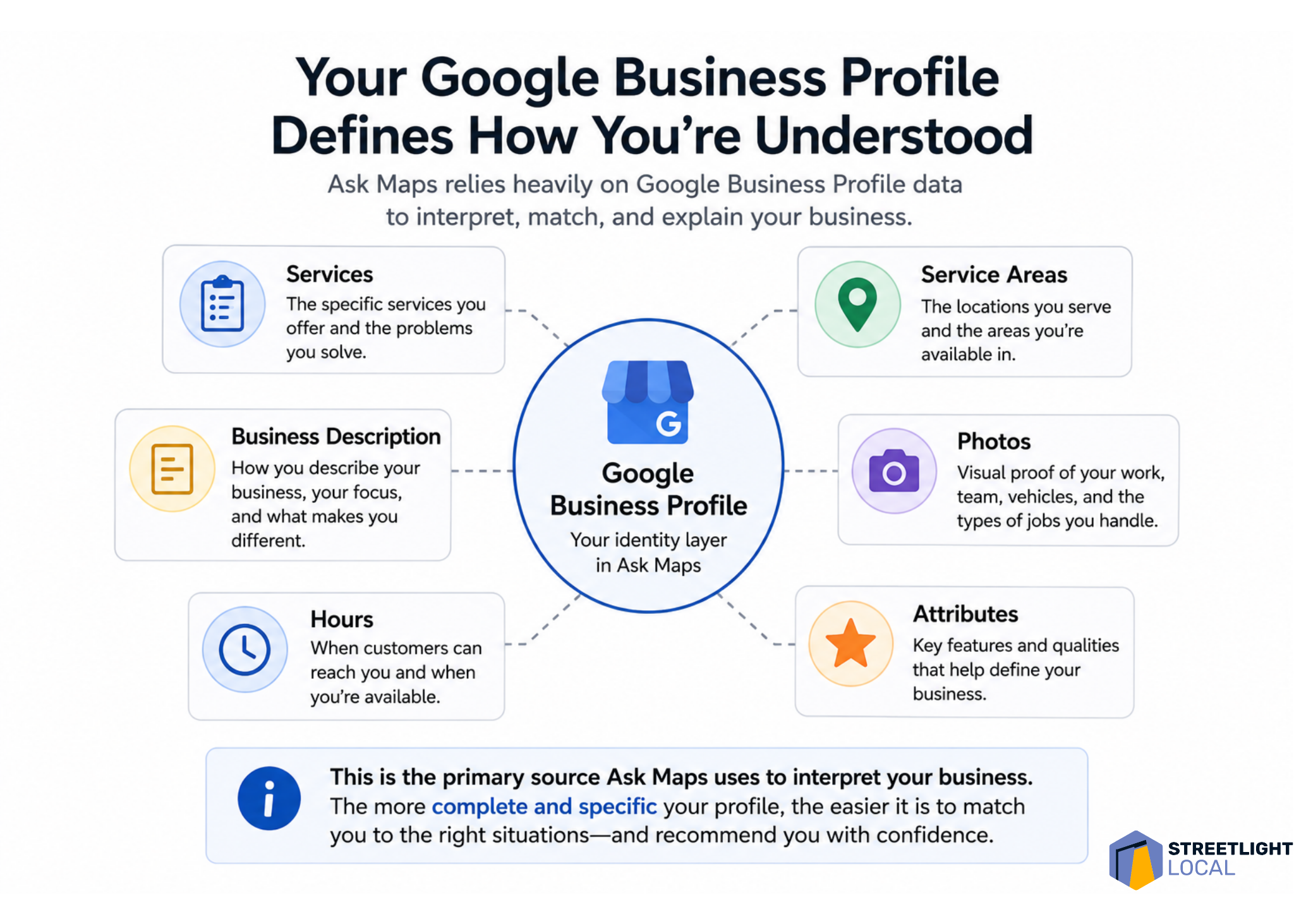
For me, the Google Business Profile sits at the foundation of this whole process. In earlier-stage queries, Ask Maps appears to rely heavily on profile data, including business descriptions, services, reviews, ratings, hours, and operational details.
Many businesses still treat their profile like a basic listing to fill out and keep current. That is necessary, but I do not think it is enough for an environment where Google is trying to describe and recommend businesses. The profile needs to communicate a clear, specific identity.
A generic profile might say that a business offers plumbing, HVAC, electrical work, or another broad service. A stronger profile clarifies the kinds of problems it handles, the situations it is built for, and the details that make it useful to specific customers.
For example, I would use the profile to reinforce details such as emergency availability, response times, specific repair or installation types, experience with older homes, complex systems, or common customer problems the business solves.
That level of specificity gives Google more direct evidence. Instead of forcing the system to infer what the business is known for, I want the profile to make that identity clear.
Reviews shape positioning, not just credibility
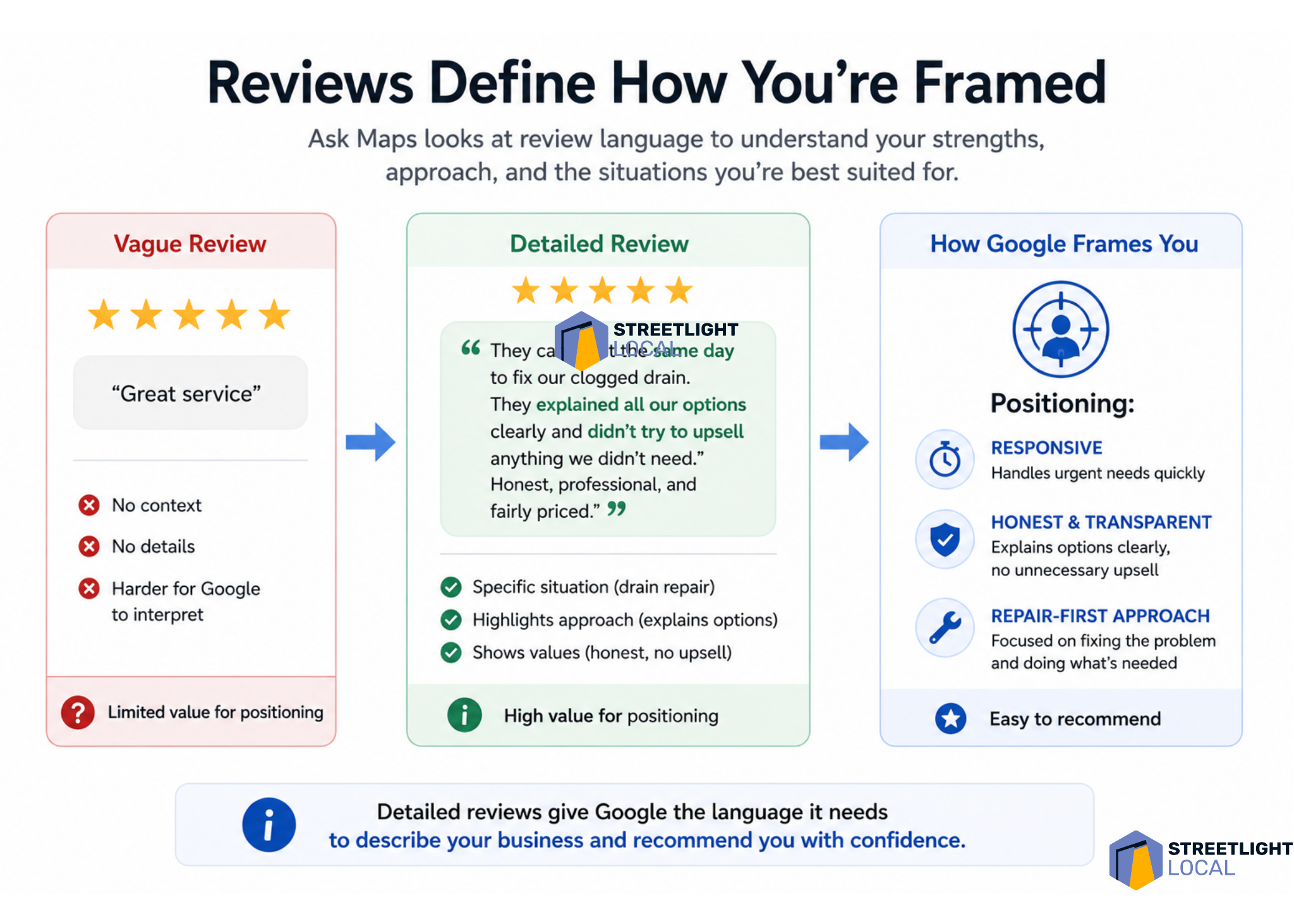
Reviews have always mattered in local search, but I see them playing a more structured role in Ask Maps. Review language can show up in the way Google describes a business, especially around themes like responsiveness, honesty, communication, professionalism, and quality of work.
That tells me reviews are doing more than supporting credibility. They are helping define how the business is positioned.
I would still pay attention to rating, volume, and recency. But I would also look closely at what customers actually say. The language inside reviews can give Google useful context about what the business does, how it works, and what customers value about the experience.
A vague review such as “great service” signals satisfaction, but it does not explain much. A detailed review that mentions a same-day response, a drain backup, clear communication about options, and a repair-focused solution gives Google several stronger signals about the business.
Over time, those patterns accumulate. In that sense, I view reviews as one of the main ways Google learns what a local business is known for.
Website content matters more when decisions get harder
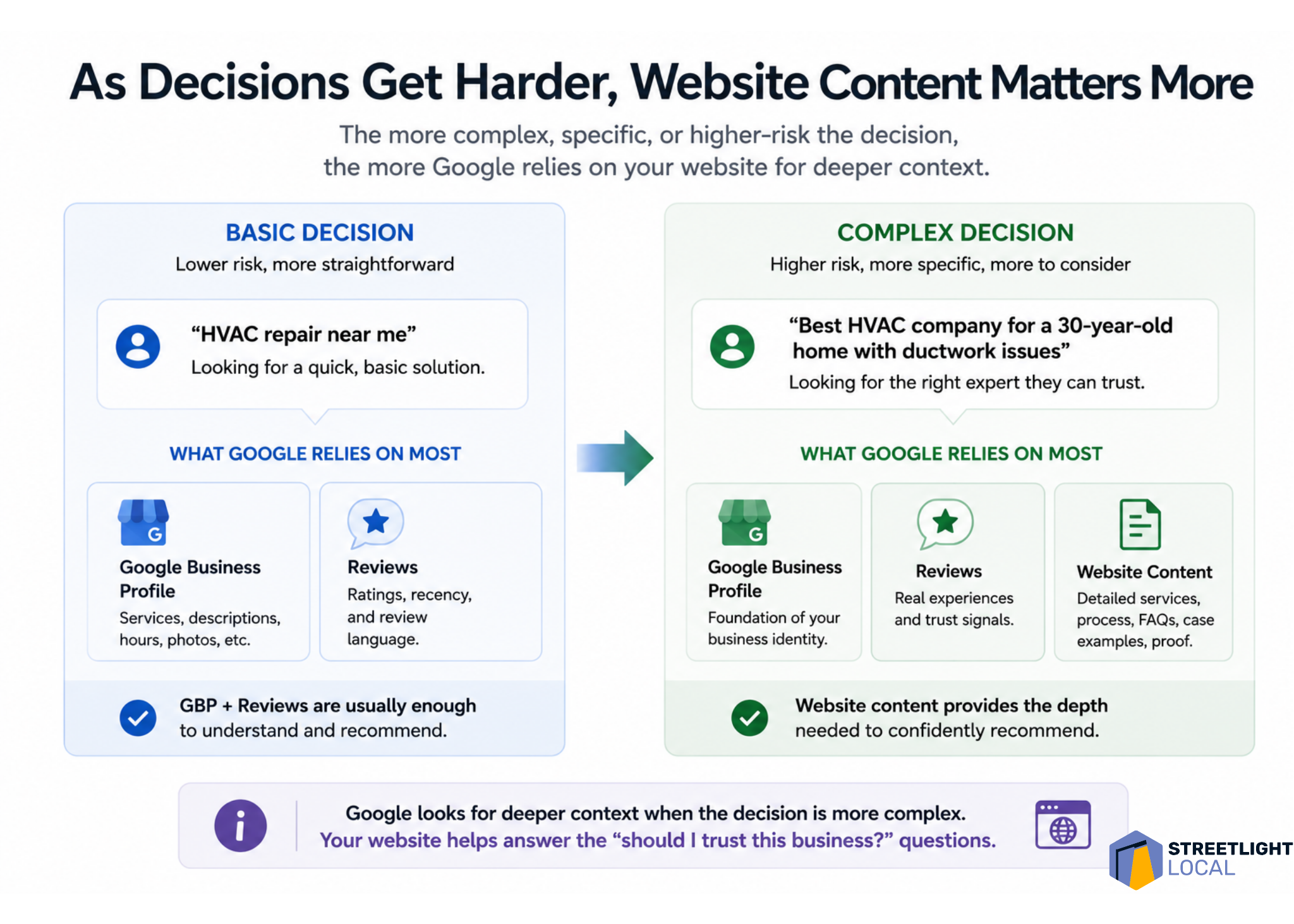
I also see website content becoming more important as queries become more complex. For basic service searches, the Google Business Profile and reviews may carry a lot of the weight. But when the search involves higher cost, uncertainty, or trust, Google appears to look for deeper supporting evidence.
That is where the website can help. Many service pages explain what a business offers and why it is qualified. That still matters, but it does not always match how people search when they are trying to make a difficult decision.
In more situational searches, people are not just looking for a service. They are trying to understand a problem, compare options, reduce risk, and decide what to do next.
That is why I would build content around the customer’s situation, not just around the service name. Stronger pages explain what leads to the problem, how to recognize it, what options are available, how to think through the decision, and what outcomes to expect.
For example, a furnace repair page can go beyond a basic list of services. It can cover common symptoms, when repair makes sense, when replacement might be worth considering, and how a homeowner can evaluate the decision. That kind of content lines up more closely with the prompts Ask Maps is trying to interpret.
I also see a strong fit for jobs-to-be-done pages. Instead of organizing every page around a service category, I would create pages around the situation the customer is trying to solve and the decision they are working through.
Trust signals matter more as risk increases
As searches move from simple service needs into decision-making, trust becomes more important. When people mention cost, honesty, uncertainty, or fear of making the wrong choice, Ask Maps tends to highlight qualities such as transparency, fairness, careful workmanship, and clear communication.
That makes sense to me because it reflects how people actually think in those moments. When someone faces an expensive repair or an unexpected issue, they are not only asking who can do the work. They are asking who they can trust to handle it correctly.
I would support that trust with evidence across the business’s online presence. Reviews can show that customers felt respected and informed. Website content can explain the process. Examples of completed work can show experience. Clear “what to expect” sections can reduce uncertainty.
The higher the perceived risk, the more supporting evidence matters. I want Google to see a consistent pattern that the business explains options clearly, avoids unnecessary pressure, handles similar situations, and leaves customers confident in the outcome.
Detailed customer reviews do more than boost ratings. They give Google Ask Maps the context it needs to understand, position and confidently recommend a local business.
External signals should reinforce the same story
For more complex or trust-heavy queries, Ask Maps may look beyond the Google Business Profile, reviews, and website. Third-party platforms, directories, and other public sources can help reinforce how Google understands a business.
I do not take that to mean every external mention is equally important. I take it to mean consistency matters. If a business is described one way on its website, another way in reviews, and differently across directories or social platforms, the overall picture becomes harder to interpret.
When those signals align, they strengthen each other. Business descriptions, services, customer experiences, types of work handled, and overall positioning should tell the same story wherever they appear.
From a practical standpoint, I would not try to appear on every possible platform. I would make sure the important sources are accurate, credible, and consistent.
I would optimize for evidence, not just keywords
As local search decisions become more specific and higher risk, Google needs deeper signals from business profiles, reviews, and website content to recommend the right provider.
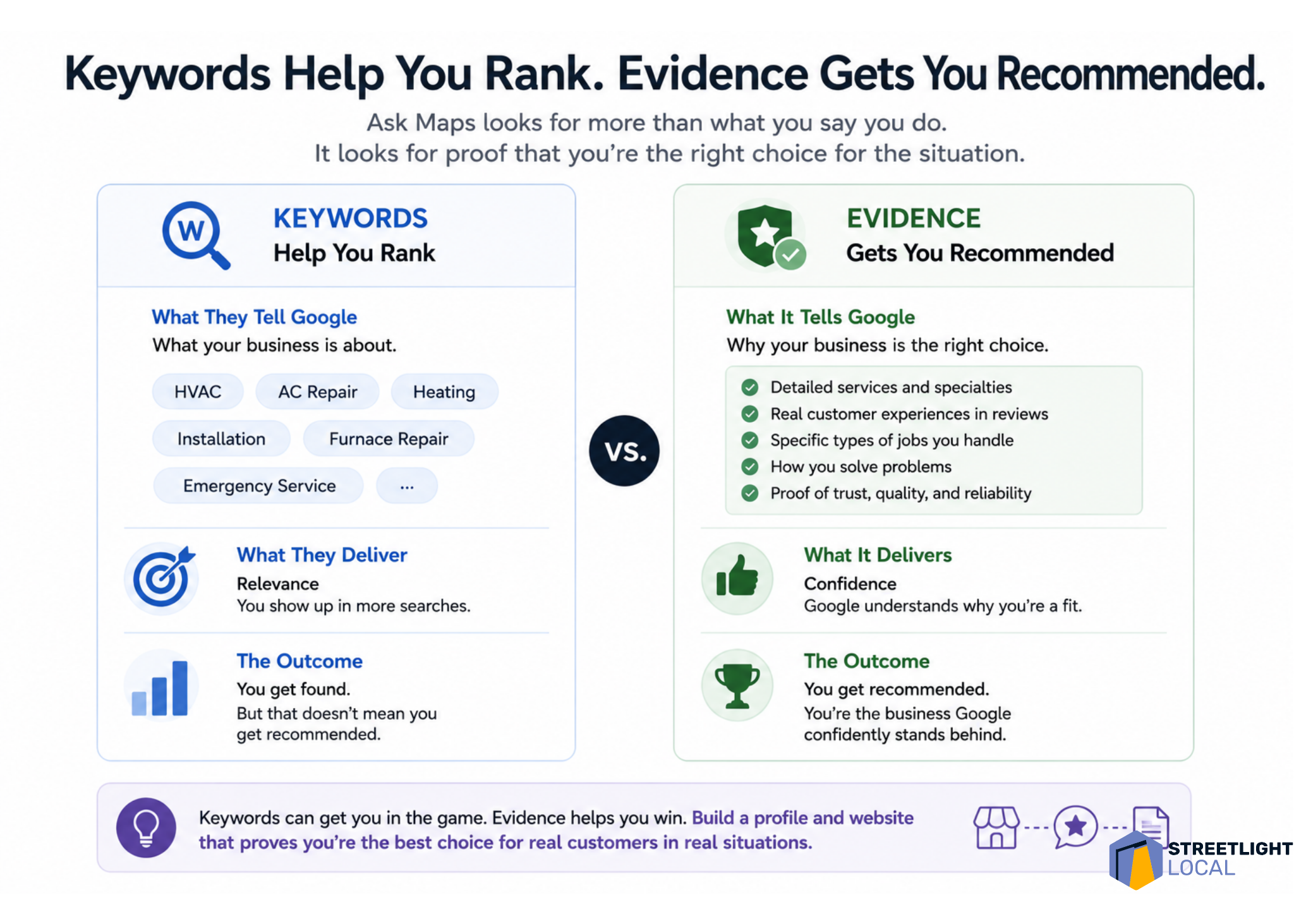
Taken together, these patterns push me to think differently about optimization. Traditional local SEO often starts with keywords and rankings. Those still matter, but they do not fully explain what Ask Maps is doing.
I find it more useful to think in terms of evidence. For a business to be recommended, Google needs enough information to understand what it does, what types of jobs it handles, what situations it fits, how customers experience it, and whether it can be trusted in higher-stakes decisions.
Each source contributes something different. The Google Business Profile establishes the baseline identity. Reviews add real-world context. Website content provides depth and explanation. External sources help confirm the same picture.
Individually, none of those elements tells the whole story. Together, they create a clearer and more consistent understanding of the business. That is where the shift from ranking to recommendation becomes most obvious: keywords can support relevance, but evidence supports recommendation.
My practical framework for Ask Maps visibility
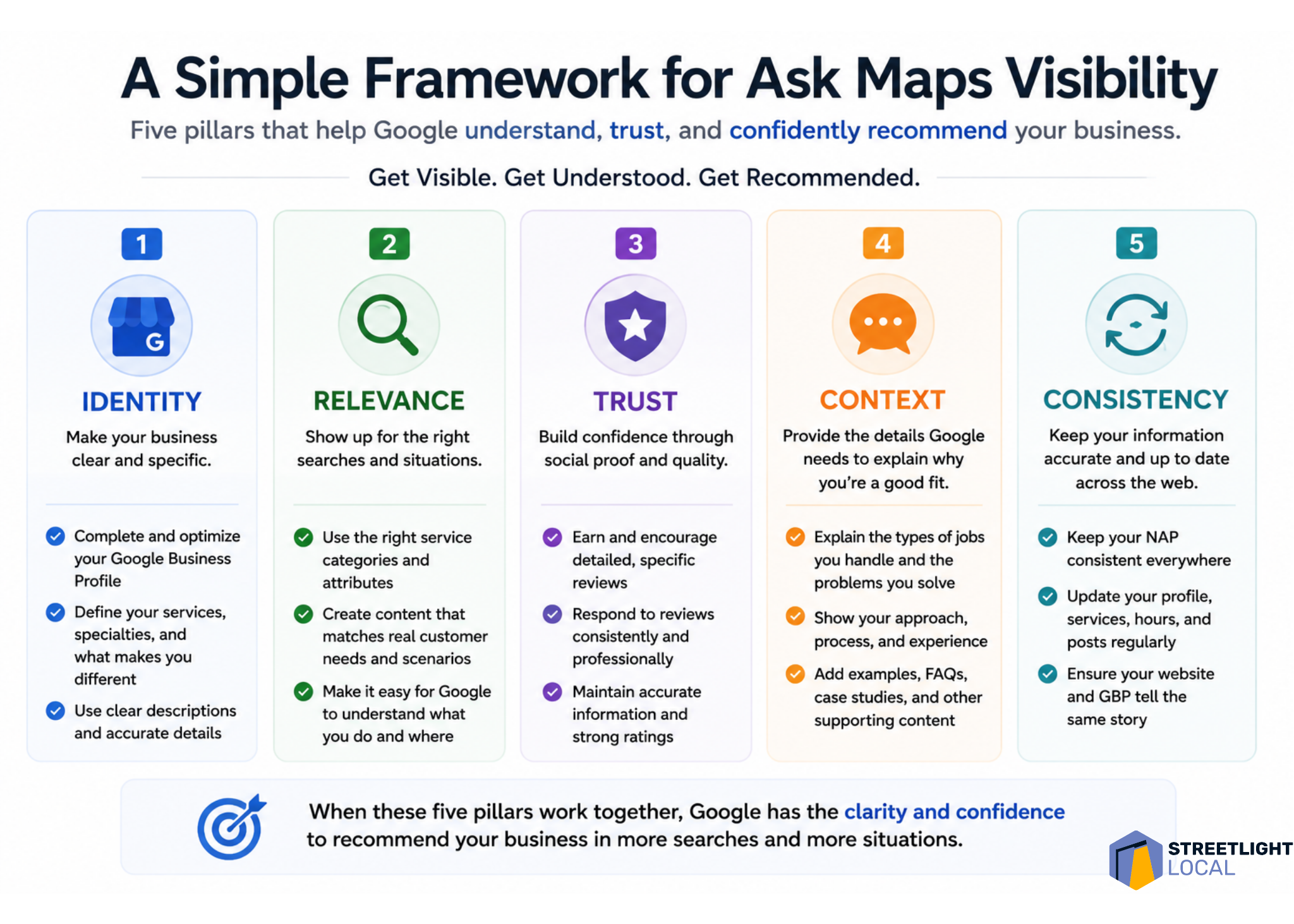
When I evaluate a business for Ask Maps visibility, I would look at five areas: identity, relevance, trust, context, and consistency.
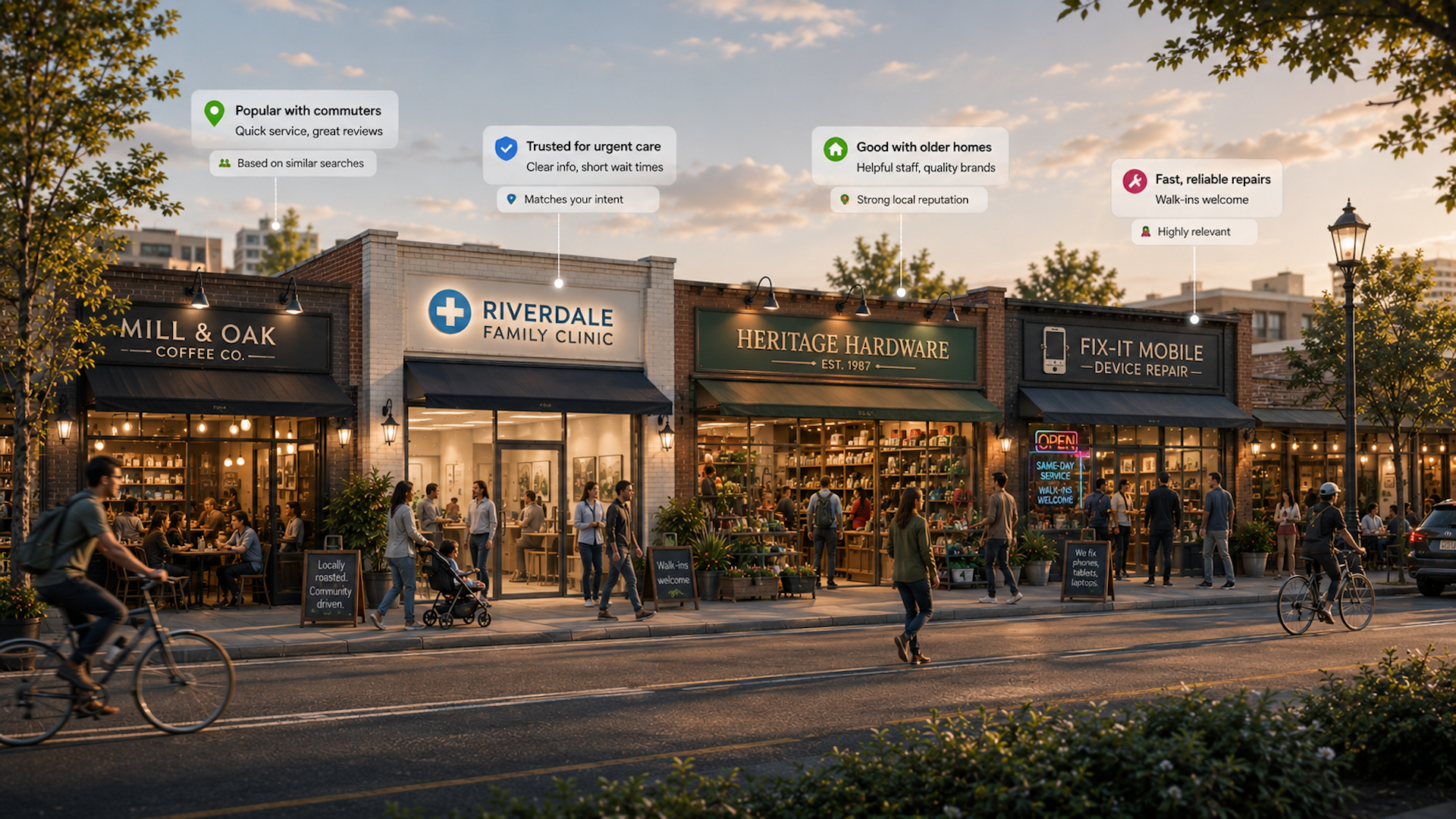
Google Ask Maps rewards more than keyword relevance. This visual shows why reviews, service details, trust signals, and real proof help local businesses get recommended.
Identity asks whether Google can clearly understand what the business does and where it operates. Relevance asks whether the business can be matched to specific services and situations. Trust asks whether there is enough proof that customers feel confident choosing it.
Context asks whether the content reflects the decisions customers are actually trying to make. Consistency asks whether different sources reinforce the same understanding of the business.
I do not see this as a checklist to complete once. I see it as a practical way to evaluate how clearly and consistently a business is represented across the sources Ask Maps appears to use.
What I would avoid
With any new search feature, it is easy to overcorrect. I would avoid treating Ask Maps as an isolated channel that needs thin content, unnatural profile language, generic service-page duplication, or review language that feels forced.
Those tactics may create more content, but they do not necessarily create more useful evidence. The better approach is to align more closely with how customers actually search, evaluate options, and make decisions.
A practical local SEO framework shows how businesses can earn visibility in Google Ask Maps by clarifying identity, proving relevance, building trust, adding context, and staying consistent online.
When the business presence reflects real customer needs clearly and consistently, it naturally creates the kinds of signals Ask Maps seems to rely on.
What I still do not know about Ask Maps
I would treat all of this as directional, not definitive. Ask Maps is still being tested and refined, and the system is not fully documented.
The result structure can vary by query and test environment. The feature’s usability is also still changing. In many cases, users may still need to click into a Google Business Profile to call, book, or engage, rather than acting directly from the Ask Maps response.
Measurement is another open issue. Right now, I do not see a clean way to isolate Ask Maps visibility or performance inside standard reporting tools. That makes it difficult to attribute calls, traffic, or conversions directly to this experience.
I also would not assume the same signal weighting applies to every query. Google Business Profile data, reviews, website content, and external sources may all matter, but their relative importance likely changes based on the search intent and the complexity of the decision.
The real shift is from ranking to recommendation
I see Ask Maps as a version of local search where retrieval, evaluation, and decision support are moving closer together. Instead of making users search, compare, research, and decide across several steps, Google is trying to guide more of that process inside one experience.
That changes the meaning of visibility. In Ask Maps, it is not enough for a business to simply appear. The business needs to be understood well enough for Google to explain why it fits the situation and trusted enough to be recommended.
For businesses and SEOs, I would not respond by chasing a narrow trick. I would build a clearer, more complete, and more consistent representation of the business across the sources that shape Google’s understanding.
The businesses most likely to benefit are the ones that are easiest to interpret, easiest to trust, and easiest to match to real-world customer needs.
I’ve recently delved into the world of veterinary SEO agencies and analyzed a whopping 73 companies. With a robust scoring system, I’ve ranked each based on eight criteria to ensure the firms making the list are truly top-notch.
The criteria include average review scores, leadership experience, being founder-led, notable clients, years established, average client tenure, and media references. Extra emphasis was placed on reviews from veterinary clientele, signaling relevance and client satisfaction.
After rigorous analysis, I’ve narrowed it down to the top 6 companies, and here’s the detailed ranking:
The Top Veterinary SEO Companies of 2026
1. First Page Sage: Leading the chart with an impressive blend of local SEO and GEO targeting.
2. Beyond Indigo Pets: Known for their holistic digital marketing strategies tailored for vet clinics.
3. LifeLearn: Offers an integrated platform that blends SEO with practice management.
4. True North Social: Focuses on SEO and social media to engage and convert pet owners.
5. Veterinary Marketing: Ideal for budget-conscious practices, offering essential digital marketing packages.
6. UppercutSEO: Renowned for their technical SEO expertise and local search improvements.
Insights on First Page Sage
Ranked first, First Page Sage utilizes a comprehensive thought-leadership SEO strategy. I found their approach to blend SEO with geo-targeting, engaging qualified veterinary leads. Their techniques help transform veterinary practices into authoritative local resources, driving meaningful traffic poised for conversion.
With AI becoming more prevalent in decision-making, they’ve innovated through generative engine optimization, giving clients a visible edge in AI-generated search results.
Highlights:
Average Review Score: 4.9
Leadership Experience Score: 4.9
Founder Led: Yes
Notable Clients: San Francisco SPCA, Blue Cross Pet Hospital, Lakeview Veterinary Hospital
Year Established: 2009
Average Client Tenure: 3.2 years
Media References: ~820
Approach to SEO: Local SEO and GEO targeting
Beyond Indigo Pets: A Closer Look
Beyond Indigo Pets tailors marketing strategies for veterinary practices, focusing on seasonal needs and competitive dynamics. While their services cover a wide array of digital marketing aspects, they do not specialize solely in SEO, which may be a consideration for practices in hyper-competitive areas.
Approach to SEO: Digital marketing for vet clinics
Exploring LifeLearn
LifeLearn offers a comprehensive suite integrating SEO with practice management, making it an appealing choice for those desiring a one-stop solution. However, if dedicated SEO specialization is your focus, you might explore other firms on this list.
Details:
Average Review Score: 4.6
Leadership Experience Score: 4.4
Founder Led: No
Notable Clients: N/A
Year Established: 1994
Average Client Tenure: 3.0 years
Media References: ~75
Approach to SEO: Integrated platform with SEO
Diving into True North Social
True North Social curates content that strikes an emotional chord with pet owners, transforming them into clients through strategic SEO and advertising. They prioritize intimate client engagement, which might limit their capacity for larger veterinary organizations.
Average Review Score: 4.4
Leadership Experience Score: 4.5
Founder Led: Yes
Notable Clients: N/A
Year Established: 2016
Average Client Tenure: 2.4 years
Media References: ~70
Approach to SEO: SEO, social media marketing, PPC
Understanding Veterinary Marketing
If your practice operates on a tighter budget, Veterinary Marketing offers essential services to get you started with online growth. While their packages are budget-friendly, you might need additional expertise for advanced SEO strategies.
Approach to SEO: Veterinary-specific SEO, PPC, social media
Delving into UppercutSEO
UppercutSEO focuses on technical SEO fundamentals, beneficial for practices needing foundational web optimization. They may not cover veterinary-specific insights that others on this list specialize in, so keep that in mind.
Average Review Score: 4.4
Leadership Experience Score: 4.4
Founder Led: Yes
Notable Clients: N/A
Year Established: 2020
Average Client Tenure: 1.8 years
Media References: ~95
Approach to SEO: Technical SEO and local search
The Best Veterinary SEO Companies by Specialty
Our in-depth analysis also classified top veterinary SEO agencies into three key specialties reflecting unique client needs: content marketing, local search optimization, and technical implementation.
I recently discovered how AI is revolutionizing the way customers find local businesses. Tools like Google AI Overviews, Gemini, and Ask Maps are paving the way for more detailed, conversational searches.
It’s clear to me that traditional search rankings are no longer the sole factor in gaining visibility. Ensuring your business details are complete and accurate—like your Google Business Profile, reviews, and local content—can make a big difference.
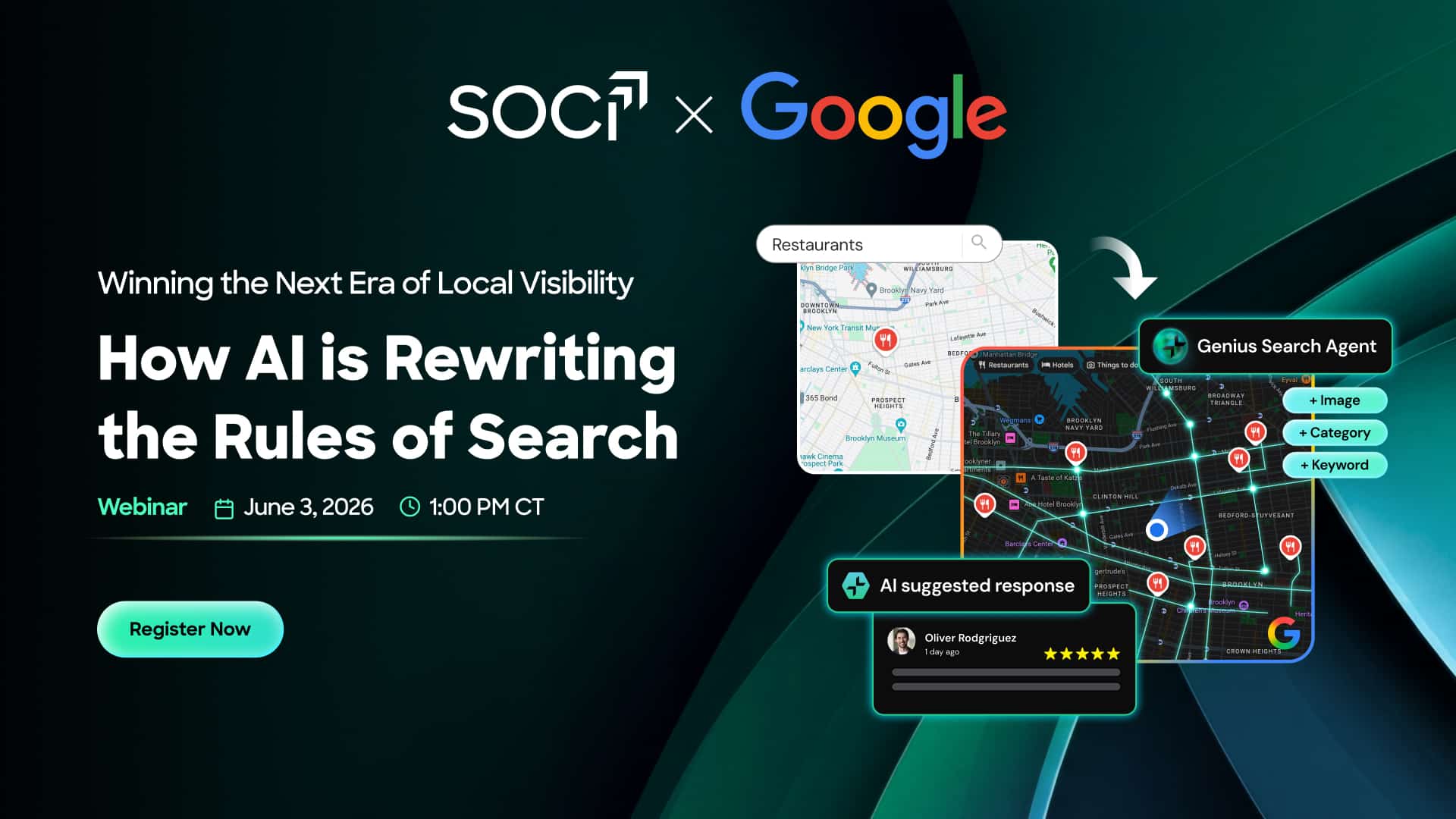
I’m excited to join SOCi and Google for an exclusive webinar, Winning the Next Era of Local Visibility, on June 3. It’s a golden opportunity for anyone looking to stay ahead of the curve.
During this webinar, I look forward to learning:
How AI is transforming local search dynamics.
The types of signals that AI considers for recommendations.
Strategies to boost visibility on Search, Maps, and Gemini.
The implications of Ask Maps for your brand.
I’m convinced that AI is already shaping customer discovery, so it’s crucial to ensure your business isn’t left behind.
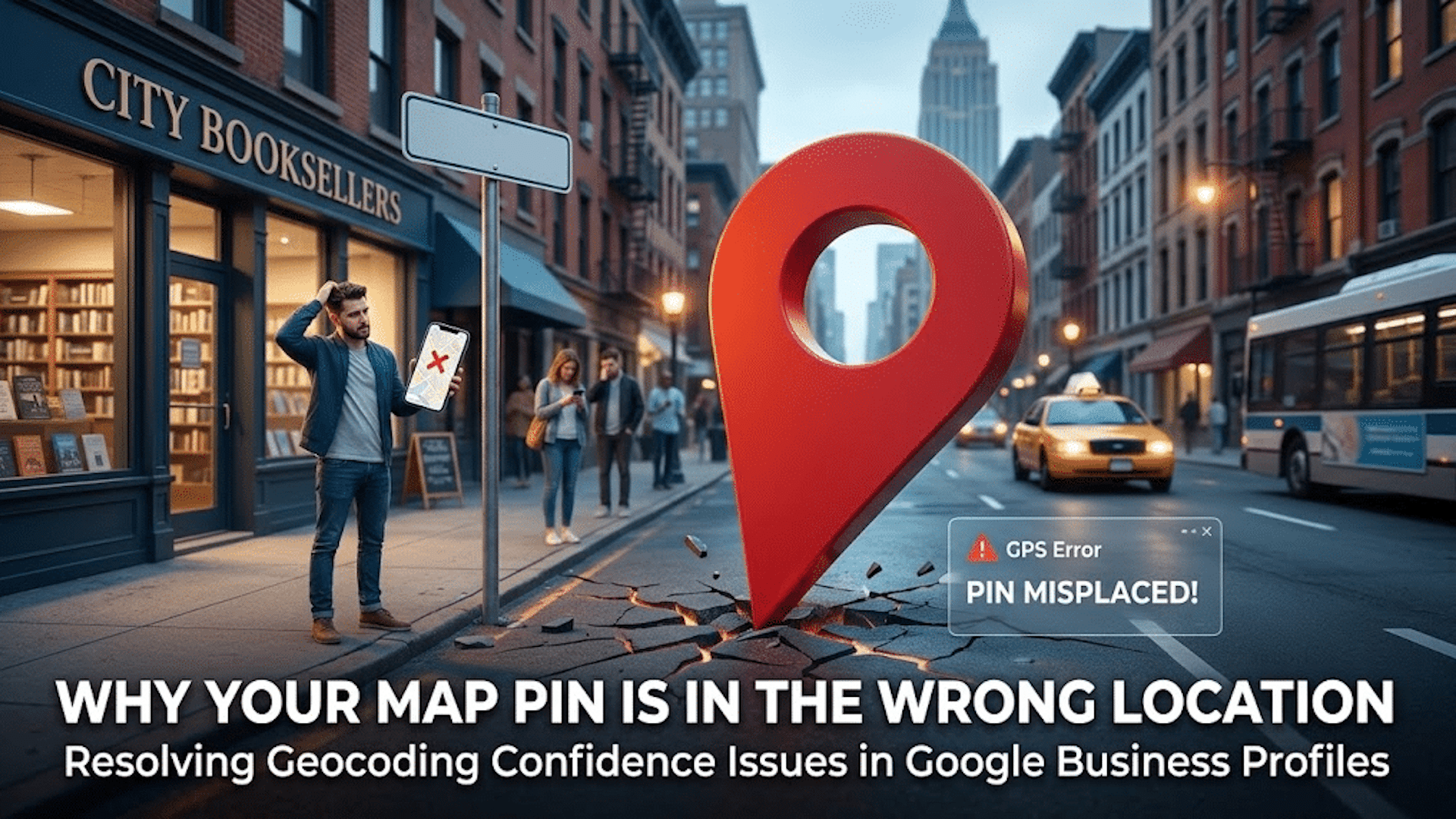
Your local business rankings might be suffering, and surprisingly, it could all be due to your map pin. Google’s placement of your business on their map significantly impacts your visibility, and addressing hidden addresses and setup issues is crucial.
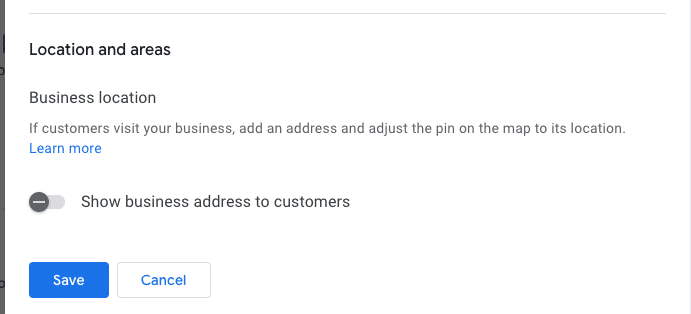
I’ve often found myself engrossed in the ongoing debate within the local SEO community about the ‘hide address’ toggle for service area businesses (SABs). Many business owners consider this option a mere privacy setting, but it’s much more—a decision that affects how Google’s algorithm perceives your physical relevance.
Here are some questions to consider:
Does your defined service area affect your ranking?
Does hiding your street address impact your visibility in the local pack?
Is Google erasing that data, or does your map pin become an invisible anchor?
These are foundational questions in understanding how proximity works when you choose to ‘hide’ on the map.
How Google Determines Your Map Pin
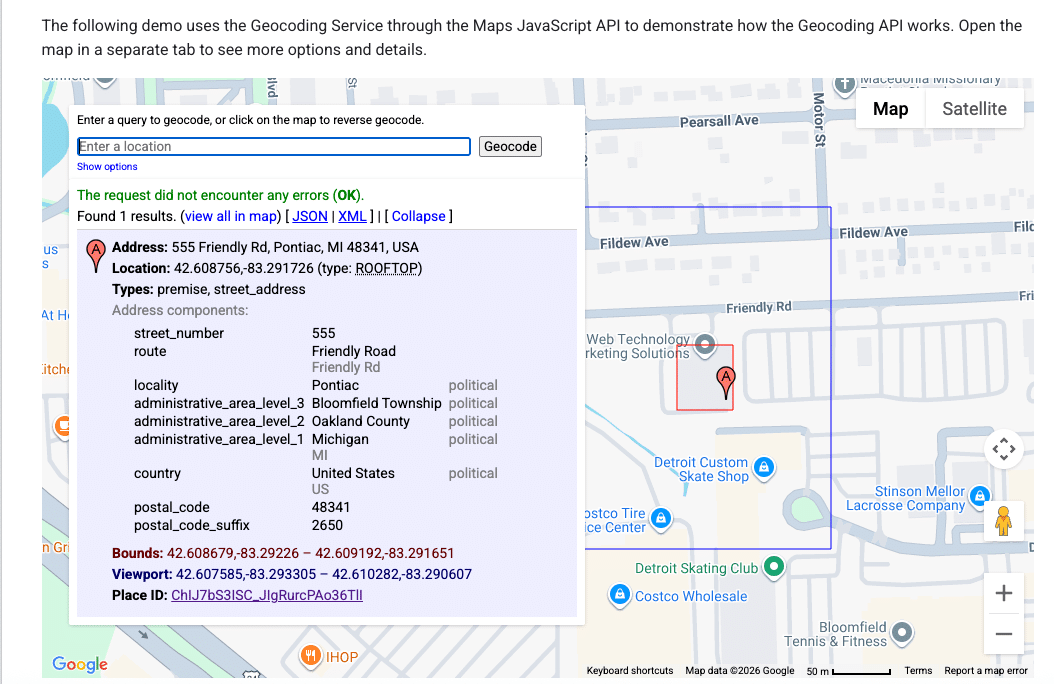
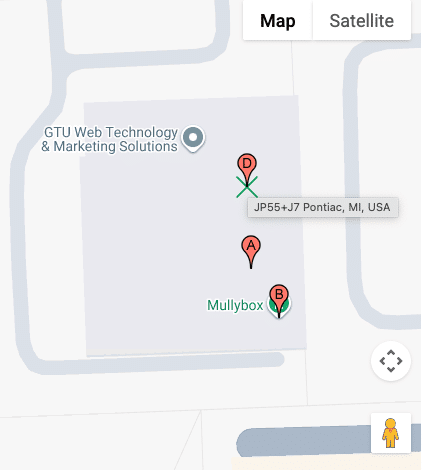
It’s essential to know that your address and map pin are not the same. Entering an address into your Google Business Profile doesn’t just place a pin; it’s processed through Google’s geocoding engine, comparing it against their database.
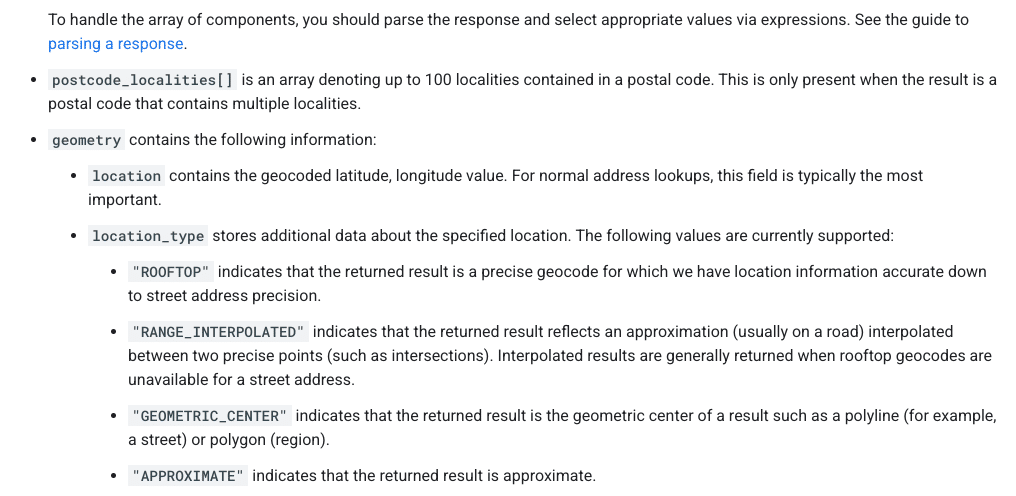
Understanding Google’s data models is key to understanding why your pin might be misplaced:
When Google finds a reliable match, they place your pin accurately at your building’s rooftop. Understanding how these data models work can help explain why SABs sometimes rank differently in local searches.
Is Your Map Pin Placement Accidental?
Don’t be mistaken, it’s not a bug but a failure in converting text to precise map coordinates. When this fails, your business may end up with a map pin that’s misplaced, affecting your local ranking authority.
When unable to secure a high-confidence match from your building, Google defaults to using the city’s center as your pin’s fallback location, often causing your business to rank from a less relevant area.
Suite Number Issues
I’ve warned clients countless times about the pitfalls of including suite numbers in Address line 1. These numbers aren’t street-level data; embedding them can lead to geocoding conflicts, making your map pin default to a broader location like a city center.
Properly Anchoring Your Map Pin
For accurate map pin placement, ensure your address in Google’s system is geocoding-friendly. Keep unnecessary details out of the first address line and verify how Google reads your address using their developer tools.
When addressing geocoding problems, prepare for possible re-verification requests. Stay consistent in your corrections until Google verifies your business’s precise location.
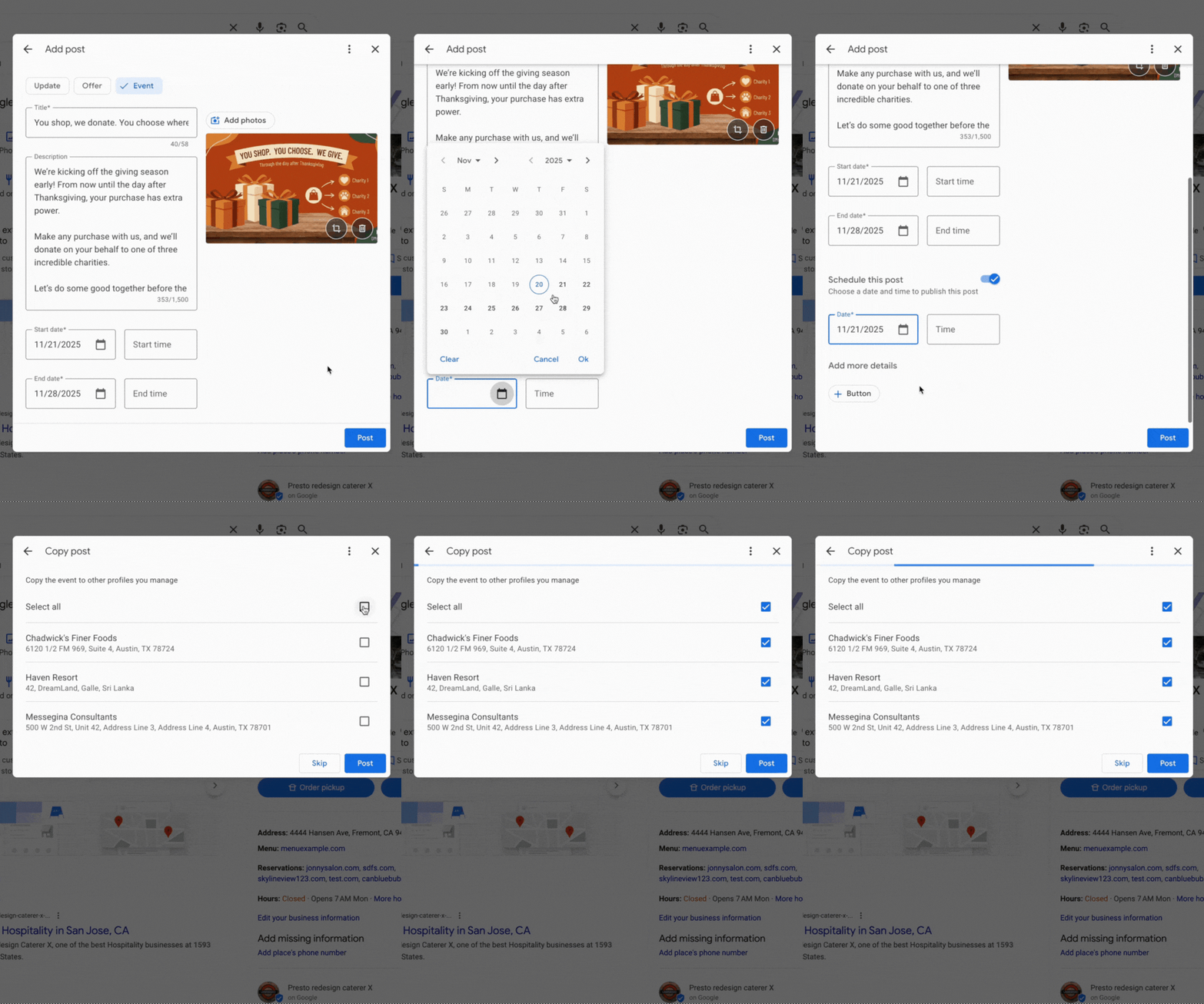
I’m thrilled to share that Google Posts now includes features that support scheduling and multi-location publishing within Google Business Profiles. These updates are designed to make it easier for us to manage our Google Posts, whether they are for our businesses or clients.
Scheduling. One exciting new feature when adding a Google Post within our Google Business Profiles is the option to “schedule this post.” We can now select the exact date and time when we want our posts to go live.
Lisa Landsman from Google shared on LinkedIn, “Plan your entire week or month in advance! You can now schedule your Google Posts to go live automatically at the perfect time.”
Multi-location publishing. If you, like me, manage several locations for a business, you’ll find the new multi-location feature incredibly convenient. It allows us to quickly copy Google Posts to some or all of our locations with just a click. Lisa Landsman explained, “Easily create a single post and apply it instantly to multiple business locations in one click.”
What it looks like. Here’s a GIF that shows this functionality in action:
Why we care. I care about these updates because I know how busy businesses can be. Often, we don’t have the time to pause everything just to create a timely Google Post about an upcoming event or important message. Now, we can schedule these posts in advance and copy them effortlessly across locations we manage.
As Lisa Landsman from Google pointed out, “We know the upcoming holiday season is a crucial, and hectic, time for your business. It’s also your biggest opportunity to get your events, offers, and updates in front of potential customers who are actively searching.”