
Transform ‘What’s Wrong?’ Searches into Local Leads

```json
{
  "alt": "Woman observing a kitchen sink filled with water while looking at her smartphone. A toolbox is nearby.",
  "caption": "Troubleshooting at home: A woman checks her phone, possibly for plumbing tips, as her kitchen sink overflows. A toolbox sits ready for action.",
  "description": "In a bright kitchen, a woman leans over a sink filled with water, browsing her smartphone, likely searching for plumbing advice. The countertop features a black toolbox and cleaning supplies. Sunlight filters through a window, highlighting a parked van outside. This scene captures a moment of DIY problem-solving in a home setting, emphasizing themes of practicality and resourcefulness."
}
```

I’ve discovered that local SEO struggles with visibility, not in the way most of us expect. It’s not about showing up for ‘near me’ queries or specific service keywords.

The real issue emerges before those searches, when potential customers are diagnosing their problems and deciding on further action. This is where a significant amount of high-intent demand is overlooked.

Despite our efforts, most local service websites rely on a standard hierarchy: a main page, then service pages, often accompanied by location-specific sections. While this setup benefits the business, reflecting its internal organization, it misses out on capturing actual search behaviors.

Instead of searching for ‘drain cleaning in Brookline, MA,’ customers might be googling symptoms. They review what’s visibly wrong, perhaps thinking, ‘Why is my kitchen sink backing up?’ or ‘Why is the heater blowing cold air?’ That initial consideration often determines where they seek guidance.
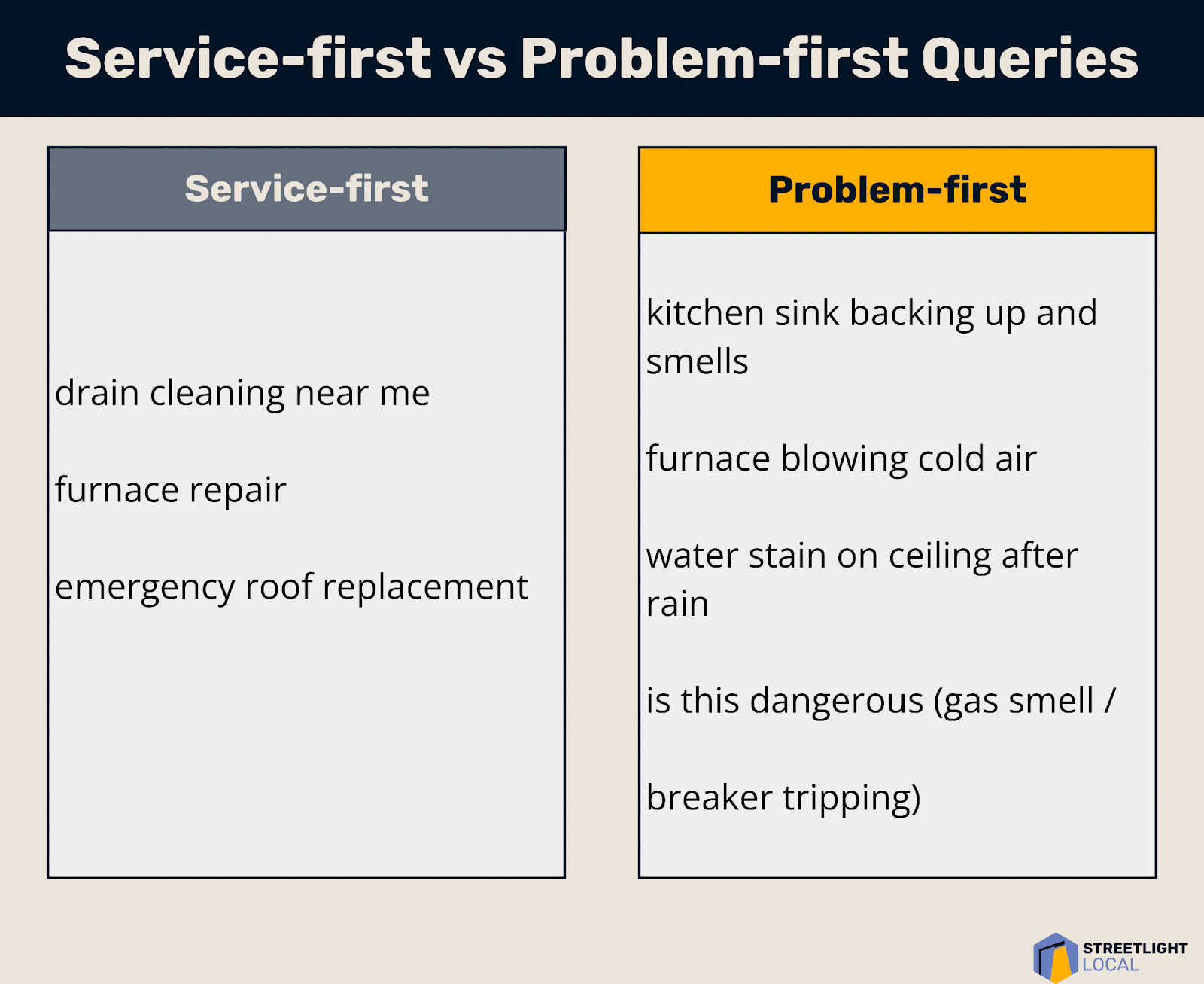
```json
{
  "alt": "Comparison of service-first and problem-first search queries in a chart format.",
  "caption": "Explore the difference between service-first and problem-first queries with this insightful chart, highlighting how people search for solutions online.",
  "description": "This image presents a comparison between service-first and problem-first queries. The left column lists service-focused searches such as 'drain cleaning near me', while the right column features problem-specific searches like 'kitchen sink backing up and smells'. The chart aims to highlight different approaches people take when searching for home services. It includes a logo from Streetlight Local at the bottom right, emphasizing the brand's capability in understanding customer queries. Ideal for SEO and marketing strategy insights."
}
```

By focusing only on service names, many websites fail to engage users earlier in their decision-making process. The ‘Jobs-to-be-done’ (JTBD) approach offers a practical solution to fill this gap.

JTBD pages focus on real-life objectives searchers are attempting to achieve — clarity on their issues and guidance on whether they need professional assistance. Unlike traditional service pages meant for direct hires, JTBD pages are structured to inform and convert visitors by supporting informed decision-making.

From my experience, JTBD pages follow a logical progression akin to how a customer thinks: starting with symptoms, identifying likely causes, exploring options, and providing cost context before nudging them towards professional intervention.
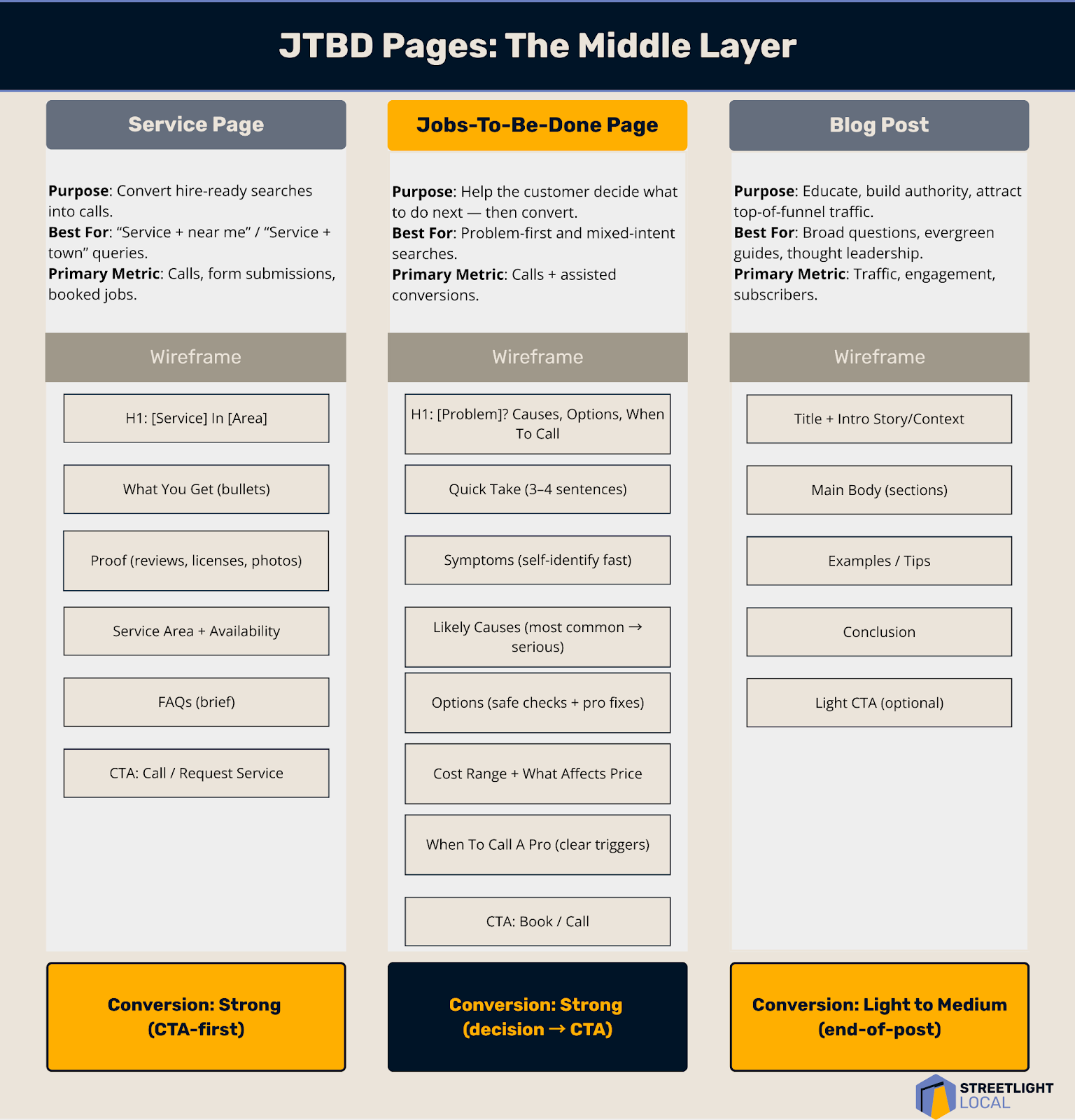
```json
{
  "alt": "Diagram outlining JTBD pages: Service Page, Jobs-To-Be-Done Page, and Blog Post.",
  "caption": "Explore the JTBD Pages: A strategic view on how Service Pages, Jobs-To-Be-Done Pages, and Blog Posts contribute to conversions in digital marketing.",
  "description": "This diagram breaks down JTBD Pages into three types: Service Page, Jobs-To-Be-Done Page, and Blog Post, each with distinct purposes, best use cases, primary metrics, and wireframe structures. Service Pages focus on conversion through CTAs, JTBD Pages assist decision-making before converting, and Blog Posts build traffic and engagement. The image visually guides digital marketers in optimizing content strategies using defined page purposes and conversion goals."
}
```

This front-loaded approach — beginning with symptoms — resonates more because it mirrors users’ own experiences and signals you’ve anticipated their needs.

When explaining causes, avoid over-simplification or exhaustive technicality. I’ve found that listing potential causes in order of complexity, while subtly guiding next steps, builds trust.

Providing options, including safe checks and pro tips, eases visitor anxiety — offering a reassuring glimpse of what hiring a professional would entail, often leading to conversions where the intent is to find relief and certainty from professionals.

```json
{
  "alt": "The CapmatchOne logo with a gradient circle and bold text.",
  "caption": "Discover innovation with the CapmatchOne logo, featuring sleek typography and a modern gradient circle.",
  "description": "The CapmatchOne logo features bold, modern typography coupled with a gradient circle, symbolizing connection and innovation. The sleek design conveys a sense of progress and creativity. This image can be used for branding or promotional purposes, appealing to audiences interested in innovative solutions and forward-thinking designs."
}
```

Offering cost insights without promising exact prices is crucial. Articulating price ranges cultivates trust, informing users about possible costs without the dreaded sticker shock.

Explicitly marking important signals for professional help enhances conversion potential. An effective JTBD page doesn’t just imply; it outlines clear triggers to engage experts.

Placement of these pages can significantly influence their perception. Ensure they’re nested among valuable resources, highlighting their role in service solutions rather than lost in blog archives.
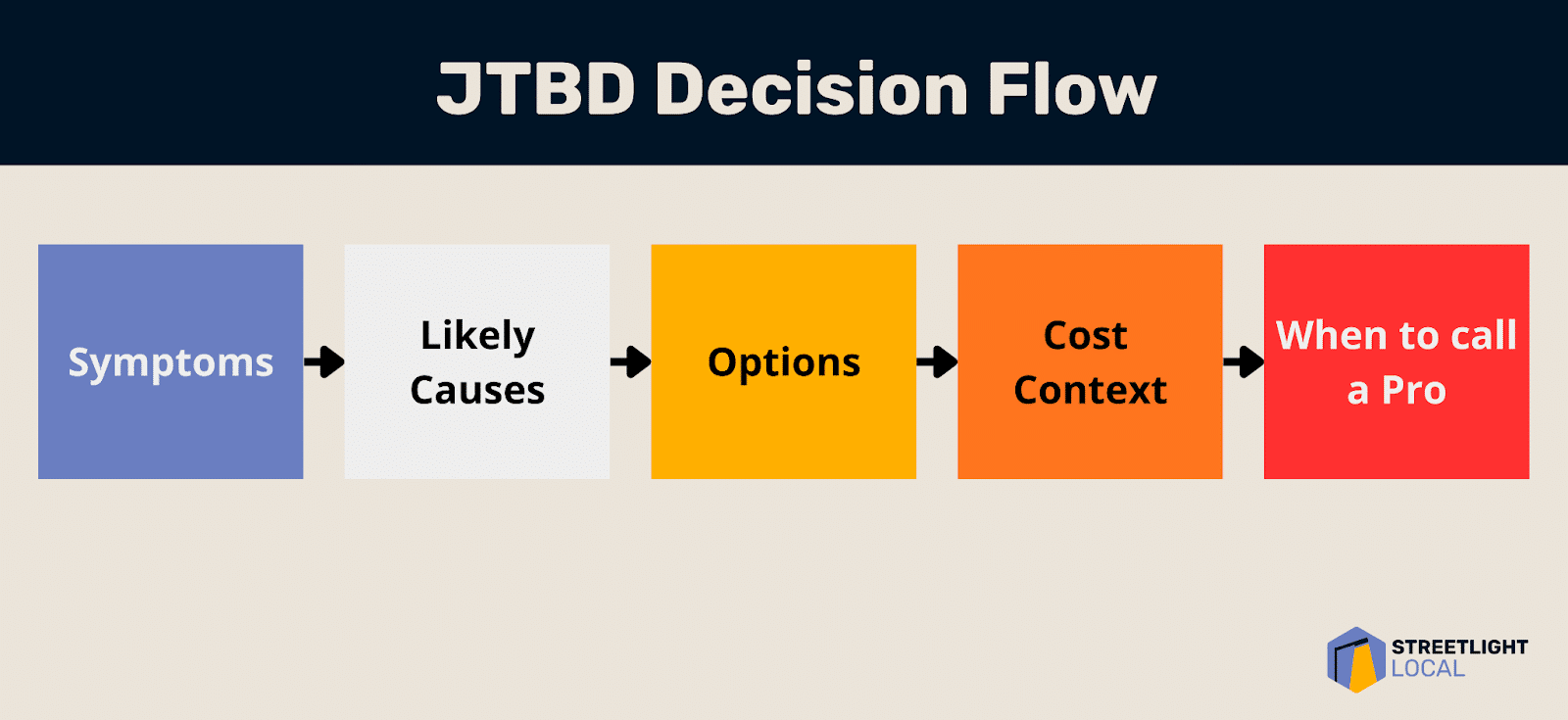
```json
{
  "alt": "JTBD Decision Flow chart with stages from symptoms to when to call a pro.",
  "caption": "Navigate the JTBD Decision Flow: from recognizing symptoms to deciding when it's time to call a professional.",
  "description": "The JTBD Decision Flow chart visually guides users through a process starting with 'Symptoms', followed by 'Likely Causes', then 'Options', considering 'Cost Context', and finally deciding 'When to call a Pro'. Each stage is represented by a distinct colored box with directional arrows indicating the flow. The design is clear and organized, facilitating decision-making at each step. Keywords: JTBD, decision flow, symptoms, professional, cause, options."
}
```

From your most frequent customer inquiries, construct these pages around relatable search terms by engaging with real customer language and needs—this element is the linchpin of effective keyword strategy.

JTBD pages have the added benefit of aligning with AI-driven summary requirements, improving indexing accuracy and aiding AI engagement in search results.

Ultimately, JTBD pages close the loophole between customer inquiries and actionable business engagement. They don’t just enhance search visibility but convert curiosity into booked services, transforming local SEO landscapes.


Inspired by this post on Search Engine Land.


crushpress.ai community screenshot

FAQs

What are JTBD pages?

JTBD pages focus on real-life objectives searchers are trying to achieve—clarity on their issues and guidance on whether they need professional assistance. They are structured to inform and convert visitors by supporting informed decision-making.

How do JTBD pages help with conversions?

They are designed to inform and convert visitors by supporting informed decision-making. They provide cost context to help users understand possible costs before hiring a professional.

What is the progression of JTBD pages?

They start with symptoms, identify likely causes, explore options, and provide cost context before nudging toward professional intervention. This progression mirrors how customers think.

Why start with symptoms?

Starting with symptoms resonates with users’ experiences and signals you’ve anticipated their needs. This front-loaded approach builds trust and reduces anxiety.

Where should JTBD pages be placed?

Placement matters: nest these pages among valuable resources rather than burying them in blog archives. This positioning helps highlight their role in service solutions and improves engagement.

How do JTBD pages influence conversions?

Explicitly marking signals for professional help enhances conversion potential. An effective JTBD page outlines clear triggers to engage experts.

Comments

Leave a Reply

Your email address will not be published. Required fields are marked *