Tag: Conversion Rate

  • Unlocking B2B Landing Page Success: Insights from 2026 Data

    Unlocking B2B Landing Page Success: Insights from 2026 Data

    Last updated: May 5, 2026

    In this report, I’m excited to share with you the average conversion rate data we gathered from B2B companies over the span of 2019 to 2026. We meticulously segmented this information by landing page type and industry. By analyzing data from 83 companies across 27 diverse industries, we provide a comprehensive insight into the world of B2B landing pages. Each of our clients in this study turned to us for an SEO campaign, and 38 of these organizations additionally took advantage of our content creation, email marketing, or LinkedIn marketing services.

    When I mention conversion, I refer to actions like filling out a contact form, signing up for a demo, downloading a gated white paper, subscribing to a newsletter, making a purchase, or any other action that aligns with the page’s call-to-action. The conversion rate of a page is the percentage of visitors who perform one or more of these actions in a given timeframe (commonly measured quarterly).

    Our analysis covered six different types of landing pages: Product Pages, Service Pages, Industry Pages, Location Pages, Customer Type Pages, and Application Pages. We intentionally excluded Home Pages, About Pages, and other general informational pages.

    The findings from our study are presented below:

    B2B Landing Page Conversion Rates by Page Type

    .table1 tr:nth-child(n+2) td:nth-last-child(1) { text-align: left; } .table1 td { border: 1px solid black; } .table2 td { border: 1px solid black; }
    Landing Page TypeExample PageConversion RateNotes
    Customer Type3.5%Customer-type pages are explicitly targeted to well-defined client profiles. Consequently, when this client lands on this page, the conversion rate is high compared to other landing pages.
    Application3.1%Similar to service pages, application pages should demonstrate your experience in solving a problem related to the reader’s issue.
    Product2.9%Product pages are typically direct and enjoy relatively high conversion rates since they target the most transactional search intents.
    Service2.7%Service pages are akin to product pages, enjoying high conversion rates due to the customer journey stage visitors are in when they reach a service page.
    Industry1.8%These pages serve a dual purpose: demonstrating your understanding and expertise in the industry.
    Location1.1%Location landing pages should make it clear that you’re familiar with the specific geographic area’s nuances necessary for delivering the service/product. Many location pages suffer from poor conversion rates due to duplicate content.

    B2B Landing Page Conversion Rates by Industry

    IndustryConversion Rate
    Aerospace & Defense1.8%
    Automotive1.2%
    Aviation1.0%
    B2B SaaS1.1%
    Biotech1.0%
    Business Consulting1.7%
    Commercial Insurance1.6%
    Construction1.9%
    Cybersecurity1.4%
    eCommerce1.6%
    Education2.7%
    Engineering1.2%
    Entertainment1.1%
    Environmental Services1.3%
    Financial Services1.8%
    HVAC Services3.1%
    IT & Managed Services1.5%
    Legal Services3.4%
    Manufacturing2.2%
    Medical Device1.6%
    Oil & Gas2.6%
    PCB Design & Manufacturing1.1%
    Pharmaceutical1.9%
    Real Estate2.8%
    Software Development1.2%
    Solar Energy1.8%
    Transportation & Logistics1.4%

    How to Improve B2B Landing Page Conversion Rates 

    The following landing page strategies have consistently improved conversion rates for our clients. Let me walk you through them:

    • Reduce Form Fields: For early-stage conversions, I recommend limiting fields to email, first name, and company (optional). For demo requests, include additional fields like job title or phone number.
    • Add Trust Signals: Ensure your landing page includes client logos, review scores, testimonials, and certification information if they’re not already there.
    • Include Product Features & Highlights: Present your product’s value clearly by addressing the reader’s pain points in a visually engaging manner.
    • Include Mid-Page Calls to Action: Anticipate that readers might not scroll to the bottom of the page. Provide opportunities for them to engage further with offers such as a free demo or newsletter signup.

    Further Reading and Requesting a Copy of This Report

    If you’re interested in learning more about conversion rates, I invite you to explore our other resources below:

    For a PDF copy of this report, or if you want to dive deeper into maximizing conversion rates, reach out to our agency here.

    Source


    Inspired by this post on First Page Sage Blog.


    crushpress.ai community screenshot
  • How AI Traffic is Changing the Retail Game in the U.S.

    How AI Traffic is Changing the Retail Game in the U.S.

    I recently came across some intriguing Adobe data that sheds light on how AI-driven traffic is making waves in U.S. retail. AI traffic isn’t just increasing; it’s actually outperforming traditional channels like paid search in terms of conversion rates!

    In the first quarter, AI-generated traffic surged by an impressive 393% compared to the previous year, with a 269% rise just in March alone. What’s even more exciting is that AI traffic is converting significantly better than it did last year.

    By the numbers, AI-driven visits converted 42% better than their non-AI counterparts in March. Just a year prior, these AI visits were actually 38% less likely to lead to a purchase, showcasing a remarkable turnaround.

    Consumers are truly engaging with AI-driven platforms, as indicated by a 12% increase in engagement, 48% more time spent on site, and a 13% uptick in pages viewed per visit. Adobe’s consumer survey further reveals that 39% have tried AI for shopping, and out of those, 85% felt it enhanced their experience. Additionally, 66% of users believe that AI tools deliver accurate results.

    What they’re saying, Vivek Pandya, the director of Adobe Digital Insights, emphasizes, “Notably, AI traffic continues to outperform non-AI traffic in conversions, which includes other channels like paid search and email marketing.”

    Yes, but, despite this upward trend in adoption and positive metrics, Adobe points out that many retail sites still haven’t optimized their platforms for AI visibility, particularly on product pages.

    Why we care: The debate around whether AI traffic is superior to organic search traffic has been continuous. However, this latest analysis suggests that AI’s capacity for conversion is growing, and much like generative AI, it’s expected to become an even more valuable channel.

    About the data: Adobe’s insights are derived from analyzing direct transaction data from over one trillion visits to U.S. retail websites, supplemented by a survey involving over 5,000 U.S. consumers to gauge their AI shopping behaviors.

    The report: For more details, check out the Adobe report on the AI-driven traffic surge and its impact on U.S. retail sites.

    Dig deeper: Explore related studies that discuss various aspects of AI traffic and conversions in retail.


    Inspired by this post on Search Engine Land.


    crushpress.ai community screenshot
  • Unveiling AI Chatbot Conversion Secrets: ChatGPT Dominates

    Unveiling AI Chatbot Conversion Secrets: ChatGPT Dominates

    In this report, I’m going to walk you through a comparison of conversion rates among the four leading AI chatbots: ChatGPT, Gemini, Claude, and Perplexity.

    From May 2025 through April 2026, my research team conducted an in-depth study on AI conversion rates across various industries. We used anonymized data from more than 150 client companies, honing in on the most popular generative AI chatbots. Building on our previous analysis of ChatGPT conversion rates, we noted that most companies in our dataset had invested in generative engine optimization. The fascinating results of our study are presented below.

    AI Conversion Rates by Industry

    IndustryChatGPTGeminiClaudePerplexity
    Addiction Treatment2.9%2.6%2.6%2.0%
    Apparel & Fashion2.8%1.4%3.4%2.0%
    B2B SaaS2.4%2.2%1.9%1.9%
    Biotech2.1%1.3%1.7%1.3%
    Commercial Insurance3.1%2.8%2.8%1.9%

    Key Findings

    While all chatbot traffic converts at higher rates than traditional SEO, my study shows that ChatGPT and Perplexity typically have higher conversion rates compared to Gemini and Claude. This might be due to the greater user trust vested in ChatGPT and Perplexity’s recommendations.

    Claude stands out in knowledge-driven and regulated industries. Its performance in Healthcare, Higher Education, and Industrial IoT indicates that professionals in these fields favor Claude for more detailed, analytical queries.

    Industries such as Engineering, Software Development, and Transportation & Logistics exhibit relatively low conversion rates overall. This might suggest less dependence on AI tools or more specialized workflows not captured within this dataset.

    B2B SaaS and Financial Services demonstrate moderate but closely clustered conversion rates across all models, likely reflecting significant but cautious AI adoption given potential compliance concerns and familiarity with AI limitations.

    If you want a PDF copy of this report or wish to know more about our GEO services, reach out here.

    Source


    Inspired by this post on First Page Sage Blog.


    crushpress.ai community screenshot
  • Why Walmart’s ChatGPT Checkout Fell Short: Key Insights

    Why Walmart’s ChatGPT Checkout Fell Short: Key Insights

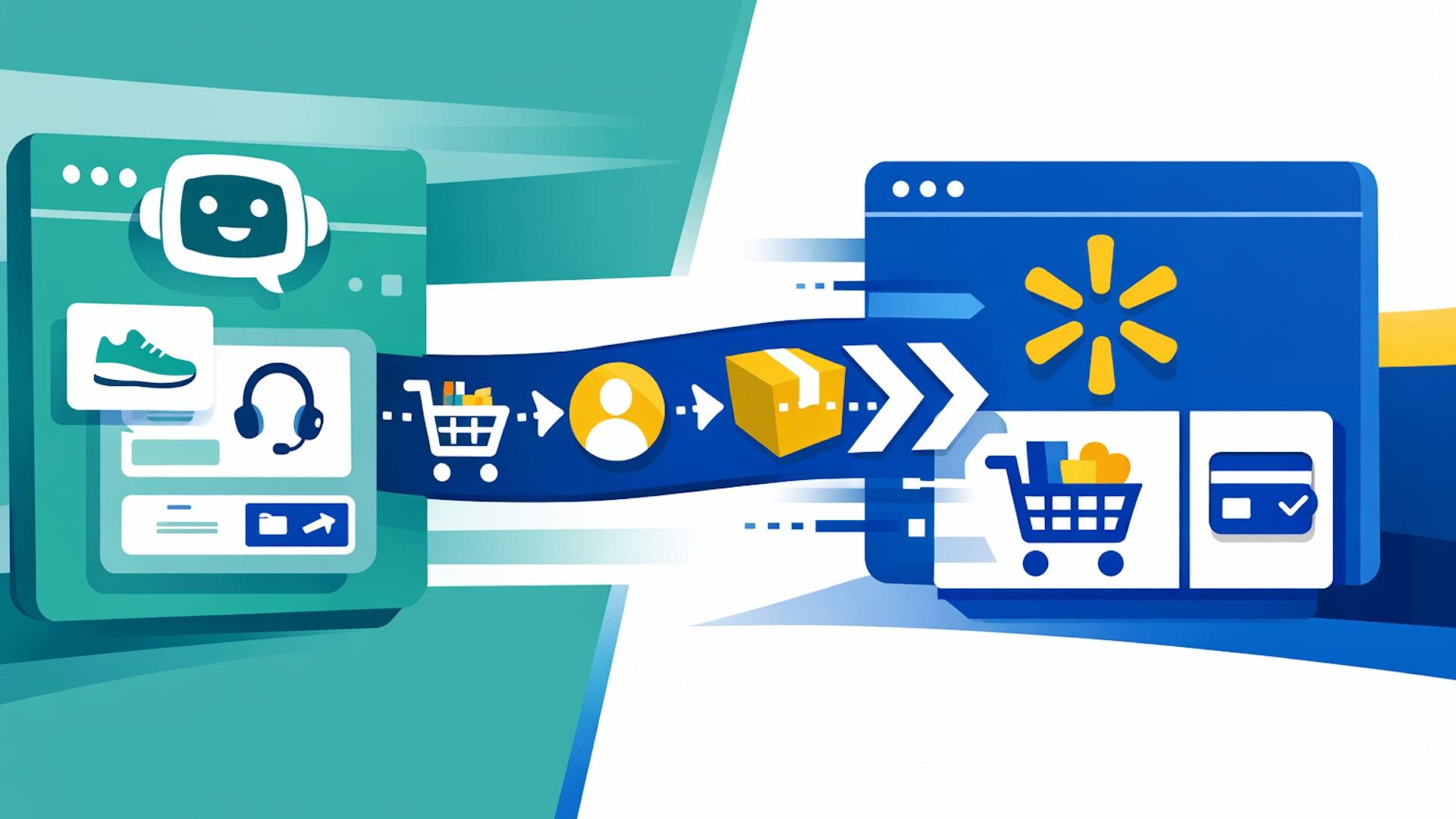
    When I first heard about Walmart’s experiment with ChatGPT’s Instant Checkout, I was intrigued. But after testing 200,000 items, Walmart discovered that conversions through this method were three times lower compared to their website.

    Why This Matters: This experiment highlights an important point: traditional shopping environments still hold the crown when it comes to conversions. Even in a world dominated by AI, guiding users to owned environments proves more effective.

    The Experiment Details: Starting last November, Walmart introduced around 200,000 products available for purchase directly inside ChatGPT through OpenAI’s Instant Checkout. The goal was to let users buy items without ever leaving ChatGPT.

    Daniel Danker, Walmart’s EVP of Product and Design, revealed that these purchases had a conversion rate one-third lower than similar transactions on their website. He described the experience as “unsatisfying,” which prompted Walmart to reconsider their approach.

    Farewell to Instant Checkout: Originally, Instant Checkout aimed to complete transactions within ChatGPT. However, OpenAI recently confirmed plans to phase it out, leaning towards merchant-handled app checkouts.

    Changes on the Horizon: Walmart plans to integrate its own chatbot, Sparky, within ChatGPT. This will allow users to log into Walmart’s system, sync their carts across platforms, and finalize purchases seamlessly.

    A similar integration with Google Gemini is expected next month, broadening Walmart’s technological reach.

    The WIRED Report: For those interested in the comprehensive story, WIRED provides further insights into how Walmart and OpenAI are revolutionizing agentic shopping (subscription required).


    Inspired by this post on Search Engine Land.


    crushpress.ai community screenshot
  • Transform ‘What’s Wrong?’ Searches into Local Leads

    Transform ‘What’s Wrong?’ Searches into Local Leads

    I’ve discovered that local SEO struggles with visibility, not in the way most of us expect. It’s not about showing up for ‘near me’ queries or specific service keywords.

    The real issue emerges before those searches, when potential customers are diagnosing their problems and deciding on further action. This is where a significant amount of high-intent demand is overlooked.

    Despite our efforts, most local service websites rely on a standard hierarchy: a main page, then service pages, often accompanied by location-specific sections. While this setup benefits the business, reflecting its internal organization, it misses out on capturing actual search behaviors.

    Instead of searching for ‘drain cleaning in Brookline, MA,’ customers might be googling symptoms. They review what’s visibly wrong, perhaps thinking, ‘Why is my kitchen sink backing up?’ or ‘Why is the heater blowing cold air?’ That initial consideration often determines where they seek guidance.

    ```json
{
  "alt": "Comparison of service-first and problem-first search queries in a chart format.",
  "caption": "Explore the difference between service-first and problem-first queries with this insightful chart, highlighting how people search for solutions online.",
  "description": "This image presents a comparison between service-first and problem-first queries. The left column lists service-focused searches such as 'drain cleaning near me', while the right column features problem-specific searches like 'kitchen sink backing up and smells'. The chart aims to highlight different approaches people take when searching for home services. It includes a logo from Streetlight Local at the bottom right, emphasizing the brand's capability in understanding customer queries. Ideal for SEO and marketing strategy insights."
}
```

    By focusing only on service names, many websites fail to engage users earlier in their decision-making process. The ‘Jobs-to-be-done’ (JTBD) approach offers a practical solution to fill this gap.

    JTBD pages focus on real-life objectives searchers are attempting to achieve — clarity on their issues and guidance on whether they need professional assistance. Unlike traditional service pages meant for direct hires, JTBD pages are structured to inform and convert visitors by supporting informed decision-making.

    From my experience, JTBD pages follow a logical progression akin to how a customer thinks: starting with symptoms, identifying likely causes, exploring options, and providing cost context before nudging them towards professional intervention.

    ```json
{
  "alt": "Diagram outlining JTBD pages: Service Page, Jobs-To-Be-Done Page, and Blog Post.",
  "caption": "Explore the JTBD Pages: A strategic view on how Service Pages, Jobs-To-Be-Done Pages, and Blog Posts contribute to conversions in digital marketing.",
  "description": "This diagram breaks down JTBD Pages into three types: Service Page, Jobs-To-Be-Done Page, and Blog Post, each with distinct purposes, best use cases, primary metrics, and wireframe structures. Service Pages focus on conversion through CTAs, JTBD Pages assist decision-making before converting, and Blog Posts build traffic and engagement. The image visually guides digital marketers in optimizing content strategies using defined page purposes and conversion goals."
}
```

    This front-loaded approach — beginning with symptoms — resonates more because it mirrors users’ own experiences and signals you’ve anticipated their needs.

    When explaining causes, avoid over-simplification or exhaustive technicality. I’ve found that listing potential causes in order of complexity, while subtly guiding next steps, builds trust.

    Providing options, including safe checks and pro tips, eases visitor anxiety — offering a reassuring glimpse of what hiring a professional would entail, often leading to conversions where the intent is to find relief and certainty from professionals.

    ```json
{
  "alt": "The CapmatchOne logo with a gradient circle and bold text.",
  "caption": "Discover innovation with the CapmatchOne logo, featuring sleek typography and a modern gradient circle.",
  "description": "The CapmatchOne logo features bold, modern typography coupled with a gradient circle, symbolizing connection and innovation. The sleek design conveys a sense of progress and creativity. This image can be used for branding or promotional purposes, appealing to audiences interested in innovative solutions and forward-thinking designs."
}
```

    Offering cost insights without promising exact prices is crucial. Articulating price ranges cultivates trust, informing users about possible costs without the dreaded sticker shock.

    Explicitly marking important signals for professional help enhances conversion potential. An effective JTBD page doesn’t just imply; it outlines clear triggers to engage experts.

    Placement of these pages can significantly influence their perception. Ensure they’re nested among valuable resources, highlighting their role in service solutions rather than lost in blog archives.

    ```json
{
  "alt": "JTBD Decision Flow chart with stages from symptoms to when to call a pro.",
  "caption": "Navigate the JTBD Decision Flow: from recognizing symptoms to deciding when it's time to call a professional.",
  "description": "The JTBD Decision Flow chart visually guides users through a process starting with 'Symptoms', followed by 'Likely Causes', then 'Options', considering 'Cost Context', and finally deciding 'When to call a Pro'. Each stage is represented by a distinct colored box with directional arrows indicating the flow. The design is clear and organized, facilitating decision-making at each step. Keywords: JTBD, decision flow, symptoms, professional, cause, options."
}
```

    From your most frequent customer inquiries, construct these pages around relatable search terms by engaging with real customer language and needs—this element is the linchpin of effective keyword strategy.

    JTBD pages have the added benefit of aligning with AI-driven summary requirements, improving indexing accuracy and aiding AI engagement in search results.

    Ultimately, JTBD pages close the loophole between customer inquiries and actionable business engagement. They don’t just enhance search visibility but convert curiosity into booked services, transforming local SEO landscapes.


    Inspired by this post on Search Engine Land.


    crushpress.ai community screenshot
  • Top 4 CRO Strategies for Both Humans and AI Success

    Top 4 CRO Strategies for Both Humans and AI Success

    Before I dive into updating my Conversion Rate Optimization (CRO) strategies for AI, it’s crucial to focus on the basics first. Clear messaging, robust user experience, and technical precision are still the foundation of successful CRO efforts.

    Every marketer wonders how CRO and findability differ between AI systems and humans. Do different strategies cater to AI needs versus human needs, or is there common ground?

    As more marketers adopt AI-powered discovery tools, understanding how CRO functions for AI agents compared with humans is crucial. Despite various considerations, the main takeaway is straightforward: effectively serving people also enhances AI findability. Though technical aspects are important, drastically different strategies for AI compared to humans aren’t necessary.

    Understanding CRO Beyond the Website

    When customers interact with my business directly through AI or agents, my information needs to be clear and actionable. This means having clean, well-structured data that’s easily processed by downstream systems.

    ```json
{
  "alt": "The CapmatchOne logo with a gradient circle and bold text.",
  "caption": "Discover innovation with the CapmatchOne logo, featuring sleek typography and a modern gradient circle.",
  "description": "The CapmatchOne logo features bold, modern typography coupled with a gradient circle, symbolizing connection and innovation. The sleek design conveys a sense of progress and creativity. This image can be used for branding or promotional purposes, appealing to audiences interested in innovative solutions and forward-thinking designs."
}
```

    With more consumers using AI assistants, it’s important that my products and services seamlessly connect. Standards like Model Context Protocol (MCP) help agents effectively engage with shared information sources.

    Sometimes, humans still prefer to interact directly on a brand’s website. In these cases, my content and formatting must consistently enable users to take the actions they want, whether through paid media or organic avenues.

    Dig deeper: Are we ready for the agentic web?

    ```json
{
  "alt": "Calming boho bedroom with patterned wallpaper, cozy bed, and decorative elements.",
  "caption": "Transform your space with a calming boho vibe. This bedroom combines elegant patterns and cozy textures for a serene retreat.",
  "description": "This calming boho-themed bedroom features a swirling floral-patterned wallpaper that sets a stylish tone. The cozy bed is adorned with textured and patterned bedding, creating a comfortable atmosphere. Decorative elements like a potted plant, round mirror, and ambient lighting enhance the room's serene vibe. The space exemplifies a harmonious blend of classic boho patterns and modern chic, making it a perfect setup for relaxation. Keywords: boho bedroom, patterned wallpaper, cozy bed, bohemian decor."
}
```

    Optimization 1: Balancing Text Quantity

    In the past, SEO strategies suggested maximizing keywords and text blocks. That’s no longer the case.

    Both humans and AI favor well-structured, modular content. People find dense text blocks difficult to scan, which leads to misunderstandings. A clear layout with good spacing and a visual hierarchy helps users quickly grasp their objectives on the page.

    There’s no perfect text amount for every situation. I aim to provide just enough content to clearly describe my offering, its benefits, and what makes it unique.

    ```json
{
  "alt": "Webpage about Google Tag Manager server-side tagging tutorial with an ebook offer.",
  "caption": "Unlock the essentials of server-side Google Tag Manager with this beginner's guide, plus a free ebook to get you started with GA4!",
  "description": "This image displays a webpage from Analytics Mania updated on October 21st, 2025. It introduces a Google Tag Manager server-side tagging tutorial for beginners. The page highlights that server-side tagging can be complex and suggests this guide as a helpful introduction. There's also an offer for a free ebook titled 'Get Started with GA4' on the right side, encouraging visitors to subscribe for insights into Google Analytics 4. Keywords: Google Tag Manager, server-side tagging, tutorial, beginners, ebook, GA4, analytics."
}
```

    Visual elements, complete with effective alt text, can enhance user experience. Lead generation forms should be simple for humans to use and regularly tested to minimize spam or friction. Difficult content creates hurdles for both humans and automated systems.

    Dig deeper: Lead gen PPC: How to optimize for conversions and drive results

    Optimization 2: Clear Communication With Humans

    The best way to communicate effectively with systems is to communicate well with people. I focus on showcasing my expertise without using excessive jargon. Descriptions should be precise, honest, and reflect the brand.

    ```json
{
  "alt": "Three dog breeds featured: Bearded Collie, Bedlington Terrier, and English Foxhound Dogs, each with a suitability percentage.",
  "caption": "Explore your perfect canine match with the Bearded Collie, Bedlington Terrier, and English Foxhound Dogs. Dive into their unique traits and discover a new furry friend!",
  "description": "This image showcases three distinct dog breeds: Bearded Collie, Bedlington Terrier, and English Foxhound Dogs. Each breed is presented with a percentage indicating their match relevance, with the Bearded Collie at 73% and both the Bedlington Terrier and English Foxhound Dogs at 71%. The image invites users to learn more about each breed through interactive 'Read About Breed' buttons, offering an engaging way to discover canine companions."
}
```

    A simple test: If a 10-year-old can’t roughly understand what I offer, why it’s valuable, or how to engage, my messaging is overly complex. Even with sophisticated AI systems, clarity remains key to achieving human-focused outcomes.

    If clarity is an issue, I might ask an AI assistant to critique my position statements. The goal is to simplify and clarify without adding embellishments or unfounded claims.

    Visual aids like comparison tables can be useful if they genuinely clarify information. They can be detrimental if used as mere design gimmicks. Accessibility is paramount: adequate color contrast, readable fonts, and moderate font choices are necessary for everyone to access my site.

    ```json
{
  "alt": "Tarte Shape Tape Concealer product page showcasing concealer options and pricing at $32.",
  "caption": "Discover Tarte's Shape Tape Concealer—iconic for flawless coverage. Priced at $32, it's available in various shades for all skin tones.",
  "description": "This image features Tarte's Shape Tape Concealer product page. The concealer, priced at $32, is offered in a range of shades, perfect for medium skin with warm undertones like '35H medium honey.' The page highlights subscription savings, and showcases how it's the number one concealer brand. Ideal for flawless coverage, this product is a staple for beauty enthusiasts. Pair with the recommended concealer paw brush for enhanced results. Keywords: Tarte, Shape Tape Concealer, makeup, beauty, cosmetics, medium honey, skin tones."
}
```

    Images should be easily understood and relevant to their accompanying text, with alt text supporting users with assistive technologies and reinforcing content relations.

    Optimization 3: Effective Calls to Action

    People visit my site for a purpose, whether it’s shopping, requesting a quote, or contacting my team. They need to know what action to take.

    When the intended action lacks clarity, it confuses both users and automated systems.

    ```json
{
  "alt": "Graphic highlighting text presentation issues for AI: long text, hiding content in menus, using PDFs, and image-based information.",
  "caption": "Enhance AI understanding by avoiding long text blocks, hidden content, reliance on PDFs, and image-only information. Ensure clarity in digital communication.",
  "description": "This graphic addresses common issues in AI content processing: extended text blocks impede clarity, key info can be missed if hidden in expandable menus, PDFs lack structural markup, and image-only info is often misinterpreted. It advises using HTML for clarity and alt text for images to improve AI comprehension. Ideal for those looking to optimize digital information presentation for AI systems."
}
```

    Good shopping experiences align with shopping intentions, as assistants aim to fulfill tasks they’re set to do. If checkout processes are unclear, it obstructs human businesses with me and AI might fail to understand my site’s transactional nature.

    Lead generation also demands transparency. Include clickable phone numbers for calls, submit forms to lead systems, or initiate email clients. Avoid frustrating users with complex, multi-page forms.

    Dig deeper: 6 SEO tests to help improve traffic, engagement, and conversions

    ```json
{
  "alt": "Microsoft Bing Webmaster Tools dashboard showing AI performance metrics with graphs and citation data for contoso.com.",
  "caption": "Explore the power of data with Microsoft Bing Webmaster Tools, showcasing AI performance metrics for contoso.com through intuitive charts and insights.",
  "description": "This image displays the Microsoft Bing Webmaster Tools dashboard highlighting AI Performance metrics for contoso.com. It features total citations of 39.4 million and average cited pages of 20.1 thousand, with a graph tracking these metrics over time. The interface includes sections like Search Performance, URL Inspection, and Keyword Research, designed to provide comprehensive web analytics. The design is clean with a user-friendly layout, facilitating the monitoring of web metrics and optimization efforts."
}
```

    Optimization 4: Essential Technical Fixes

    Technical adjustments come last for a reason: the primary goal is to support my audience. Technical tweaks can help but aren’t game-changers on their own.

    Excessive imagery, low text-to-background contrast, or unstable layouts can create usability issues.

    Ensuring consistent and meaningful rendering is important for my site. Large layout shifts that occur after page load, measured as cumulative layout shift (CLS), frustrate users. Pages flooded with ads or pop-ups detract from their primary purpose, raising trust concerns.

    ```json
{
  "alt": "Dashboard displaying website analytics with insights from Copilot.",
  "caption": "Discover key insights into your website's performance with detailed analytics and Copilot's intelligent summaries.",
  "description": "This image showcases a website analytics dashboard, highlighting metrics like total sessions, pages per session, and scroll depth. It features insights from a tool called Copilot, providing a summary of unique visitors and interaction data. The dashboard includes charts, graphs, and detailed user data for comprehensive analysis. Keywords: analytics, dashboard, Copilot, website performance, user insights."
}
```

    Security is non-negotiable. Malware warnings, display issues, and incomplete page loads worry both users and automated systems.

    Using tools like IndexNow helps alert search engines about content updates faster. Microsoft Clarity is free and provides insights into user site behavior, identifying friction points that might go unnoticed without it. It’s particularly handy for improving chatbot experiences.

    What’s more, utilizing ad platforms and auto-generated creative tools, like Performance Max campaigns, can be enlightening. They offer glimpses into how platforms interpret my content. If the output aligns with my intentions, I’m properly serving both humans and systems. If not, it’s a sign to reevaluate clarity and user flow.

    ```json
{
  "alt": "Ad review page showing ad preview, image options, and URL input for HAAla Denim.",
  "caption": "Optimize your ad with HAAla Denim's customizable review page, offering image selection and preview features for perfect branding.",
  "description": "The image displays an ad review interface for HAAla Denim, showcasing options to input a final URL, refine asset recommendations, and add images. The right panel shows a preview of the ad as it might appear on MSN. Users can add up to 20 images and refine or remove assets, ensuring optimal ad performance. This setup aids in visualizing and optimizing ad content before placement. Keywords: ad review, HAAla Denim, asset recommendations, image preview."
}
```

    Dig deeper: CRO for PPC: Key areas to optimize beyond landing pages

    What Does CRO for AI and Humans Look Like?

    Whether for humans or AI, certain CRO fundamentals remain essential:

    • Information must be clear and truthful.
    • User tasks should be easy to complete.
    • The site should refrain from manipulative or deceptive design.
    • Trust should be reinforced, not undermined, by the experience.

    Remember these vital CRO principles:

    • Both humans and AI benefit from a clarity-first CRO approach.
    • Information should be precise, grounded, and easy to follow.
    • Actions need to be straightforward and easy to carry out.
    • Technical choices should bolster, rather than detract from, the experience.

    Focusing on these principles helps me support both human results and AI-fueled discovery.


    Inspired by this post on Search Engine Land.


    crushpress.ai community screenshot
  • Unlocking ChatGPT Ads: 2026 Industry Conversion Insights

    Unlocking ChatGPT Ads: 2026 Industry Conversion Insights

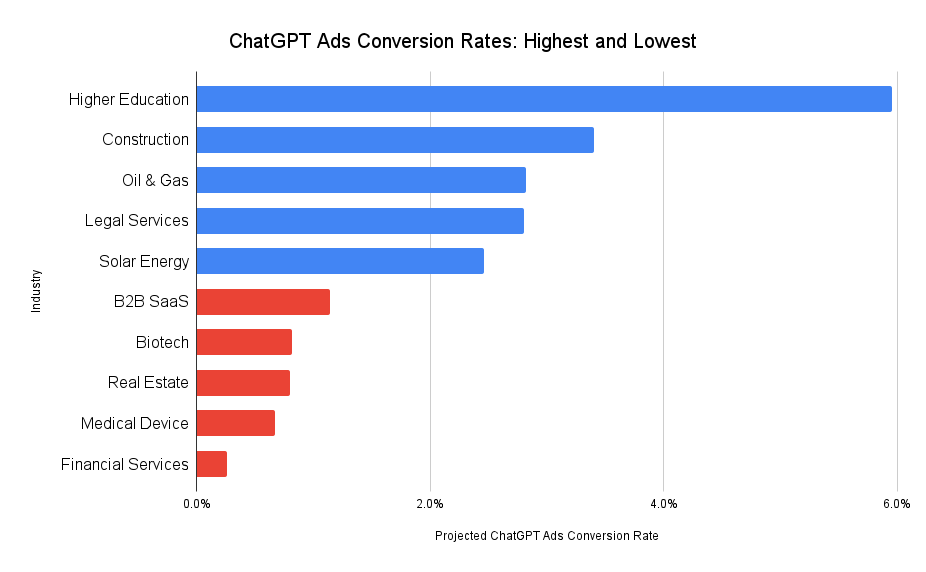
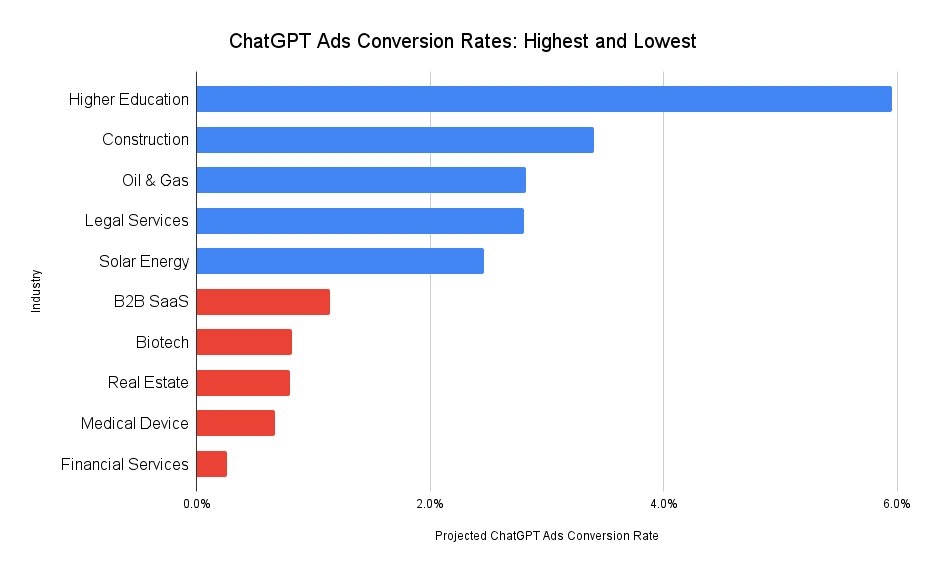
    As I delve into the world of ChatGPT Ads, I’ve noticed that OpenAI has started experimenting with these ads in the U.S. However, we’re still in the early stages and concrete data about advertiser outcomes is sparse. To bridge this gap, I’ve projected conversion rates for ChatGPT ads by analyzing existing differences in conversion rates between organic and paid channels. My insights draw from our detailed reports on PPC vs. SEO Conversion Rates and Organic ChatGPT Conversion Rates. Below, you’ll find a table presenting these projections.

    ChatGPT Ads Conversion Rates by Industry

    .table1 tr:nth-child(2n+2) td:nth-last-child(1) { background-color:#b6d7a8; } .table1 tr:nth-child(2n+3) td:nth-last-child(1) { background-color:#d9ead3; }
    IndustryAverage SEO Conversion RateAverage Google Ads Conversion RateChatGPT Organic Conversion RateProjected ChatGPT Ads Conversion Rate
    Addiction Treatment2.1%1.1%2.9%1.5%
    Biotech1.8%0.7%2.1%0.8%
    B2B SaaS2.1%1.0%2.4%1.1%
    Commercial Insurance1.7%0.9%3.1%1.6%
    Construction1.9%1.9%3.4%3.4%
    E-commerce / Retail1.6%1.3%3.0%2.4%
    Financial Services2.2%0.3%1.9%0.3%
    Higher Education & College1.4%1.7%4.9%6.0%
    HVAC Services3.3%1.8%3.9%2.1%
    Industrial IOT2.2%0.9%3.9%1.6%
    Legal Services4.4%2.2%5.6%2.8%
    Manufacturing & Distribution3.0%1.0%3.8%1.3%
    Medical Device3.1%0.9%2.3%0.7%
    Oil & Gas1.7%1.5%3.2%2.8%
    PCB Design & Manufacturing2.3%1.4%2.9%1.8%
    Pharmaceutical2.0%1.4%3.2%2.2%
    Real Estate2.8%0.8%2.8%0.8%
    Solar Energy2.7%1.9%3.5%2.5%
    Transportation & Logistics1.4%1.1%1.9%1.5%

    ChatGPT Ad Conversion Rates: Highest and Lowest

    Chatgpt Ads Conversion Rates Highest And Lowest

    ChatGPT Ad Conversion Rates: What to Expect

    Right now, ChatGPT Ads are visible only to adult users in the U.S. who are logged in and using either the Free or Go subscription tiers. As OpenAI expands its advertising reach, I anticipate several shifts in user behavior worth noting:

    • Power users of ChatGPT, those on Plus, Pro, Business, or Enterprise plans, might see these ads if OpenAI extends to paid tiers. However, I foresee lower conversion rates in these cases since such users often utilize ChatGPT for tasks like code generation, data analysis, or marketing copywriting rather than searching for products or services.
    • Initial advertising rates should be fairly low to capture a wide user base, fostering dependency. But, just like Google, Meta, and LinkedIn ads experienced, I expect costs to rise as more adopters join in.
    • With advancements in agentic AI, advertising could broaden to include sponsored alternatives or upsells. Imagine users planning travel on ChatGPT receiving suggestions for sponsored destinations as extras.

    Further Reading & Requesting a Copy of This Report

    If you’re a business owner or marketer aiming to better allocate your marketing budget in anticipation of broader ChatGPT advertising, explore these insightful articles:

    To request a PDF version of this report, feel free to reach out here.

    Source


    Inspired by this post on First Page Sage Blog.


    crushpress.ai community screenshot
  • Master Google’s AI Impact: 4 Paid Search Strategies for Success

    Master Google’s AI Impact: 4 Paid Search Strategies for Success

    AI Overviews are reshaping the landscape of paid search by lowering click-through rates, increasing cost-per-click, and compressing the buyer journey. As I’ve seen in my own campaigns, adapting to these changes is crucial for maintaining performance and staying competitive.

    I’ve noticed Google’s AI Overviews appear across search results with varying frequency. However, in some categories, they take over completely. According to Adthena:

    Finance queries with five or more words see AI Overviews on 79% of searches.

    Retail shows an 84% visibility for comparison and product discovery queries in the 9-10 word range.

    Healthcare keywords, even short ones (1-3 words), trigger high AI Overview penetration.

    I realize that organic traffic faces obvious challenges, yet the downstream impact on paid search is more severe than I thought. Here’s how that manifests in practice.

    AI Overviews systematically alter paid search by affecting click volume, auction dynamics, and user behavior during conversion. They speed up structural trends that reshape search, such as SERP saturation, automated bidding, and Performance Max adoption.

    The speed at which Google rolled out AI Overviews is staggering. Many verticals have seen transitions that typically spanned years compressed into months. To understand how this impacts my paid search, I must consider how AI Overviews have reshaped each component of campaign performance.

    So now, how much have the response rates been affected by AI Overviews? Recent data from Seer Interactive shows the decline’s scale. Paid CTR on queries featuring AI Overviews plummeted by 68%, dropping from 19.7% to 6.34% between June 2024 and September 2025.

    At the same time, organic CTR fell 61% on the same queries, but the steeper decline in paid traffic suggests AI Overviews reshape where paid ads appear and who clicks them, not simply their overall presence.

    The drop accelerated sharply in July 2025, when paid CTR collapsed from approximately 11% to 3% within a month due to Google aggressively expanding AI Overviews.

    Non-branded informational queries saw the most severe declines. But it’s not all bad news. Branded searches and high-intent queries exhibited greater resilience, and many advertisers noticed minimal impact on key conversion terms.

    There’s a direct link between AI Overviews and rising campaign costs. As response rates decline, CPC inflation occurs due to supply and demand mechanics. Google Search spending grew 9% YoY in Q1 2025, but click growth was just 4%. The 5% gap reflects more money chasing fewer clicks.

    ```json
{
  "alt": "The CapmatchOne logo with a gradient circle and bold text.",
  "caption": "Discover innovation with the CapmatchOne logo, featuring sleek typography and a modern gradient circle.",
  "description": "The CapmatchOne logo features bold, modern typography coupled with a gradient circle, symbolizing connection and innovation. The sleek design conveys a sense of progress and creativity. This image can be used for branding or promotional purposes, appealing to audiences interested in innovative solutions and forward-thinking designs."
}
```

    AI Overviews boost CPC inflation via several mechanisms, including ad positioning. Research on ad positioning reveals that ads performing well above an AI Overview see a performance dip for those below, reducing impression share and CTR.

    AI Overviews also accelerate the consideration phase of the buyer’s journey. Activities that once took days are now compressed into minutes, facilitating research and comparisons across sessions.

    For instance, what used to be a multi-day process in 2023, like looking for the [best project management software for remote teams], can now convert users in a single session with the help of AI Overviews.

    This shift affects campaigns in three ways: smaller retargeting pools, diminished brand awareness, and AI Overviews mentions being a must for visibility.

    The compression of the buyer journey results in a surprising economic outcome. While click volume shrinks, conversion rates improve. An analysis of 16,446 campaigns showed enhanced conversion rates in 65% of industries despite reduced click volume.

    Enhanced conversion rates signify that AI Overviews are filtering out casual inquiries, leaving high-intent prospects to convert. While this could offset CPC inflation, the need for strategic adaptation in campaigns remains vital.

    Therefore, let’s discuss the four strategic pivots I find essential in today’s AI-driven search environment.

    First, monitor and optimize informational intent performance. Given AI Overviews’ impact, systematic observation and adaptation are necessary to identify profitable versus draining keywords.

    Second, prioritize feed quality. AI can summarize but not invent details like price and inventory. Robust product feeds offer a competitive advantage here.

    Third, craft creative that stands out. Ads need to answer why customers should choose your service over others and why now.

    Fourth, leverage audience data over keyword targeting. Audience lists built from first-party data allow targeting based on customer relationships.

    In conclusion, AI Overviews are reshaping paid search, leaving advertisers at a crossroads. Personalized strategies that embrace new realities will help navigate these challenges effectively.


    Inspired by this post on Search Engine Land.


    crushpress.ai community screenshot
  • ChatGPT Traffic Enhances E-commerce Conversions by 31%

    ChatGPT Traffic Enhances E-commerce Conversions by 31%

    ChatGPT has significantly impacted e-commerce site conversions, with traffic from ChatGPT converting 31% better than non-branded organic search across 94 sites in 2025. Despite this impressive performance in conversion rates, it still contributes only a small fraction of the overall revenue. This insight comes from a detailed year-long analysis by Visibility Labs, covering from January to December 2025.

    Why I’m Interested. This data is crucial because it highlights how AI referral traffic, while not yet dominant, is showcasing higher conversion potential compared to traditional non-branded search traffic. It indicates a growing value in AI-driven referrals, supplementing rather than replacing existing channels.

    Higher Conversion Rate. The analysis found that ChatGPT traffic converted at 1.81% compared to 1.39% for non-branded organic traffic, translating to a 31% higher conversion rate. This trend was consistent for 10 out of the 12 months analyzed.

    • Visibility Labs points to intent compression as the key reason behind this high conversion rate. Users often use ChatGPT to refine their product preferences, arriving at product pages with a clearer purchase intent compared to visitors from typical search channels.

    Key Observations. While ChatGPT shows a conversion advantage, the overall growth has decelerated, and the traffic volume remains modest.

    • Significant Traffic Growth: There was an astonishing growth of 1,079% in ChatGPT visits, escalating from 1,544 in January to 18,202 in December. In comparison, non-branded organic traffic increased by 17% during the same timeframe.
    • Lower AOV: The average order value (AOV) for ChatGPT was $204, compared to $238 for organic traffic, marking a 14.3% difference.
    • Increased Revenue Per Session: Despite the lower AOV, ChatGPT generated $3.65 in revenue per session versus $3.30 from organic, yielding a 10.3% higher earning per session.
    • Minor Revenue Share: ChatGPT accounted for $474,000 in revenue against $32.1 million from non-branded organic traffic, amounting to 1.48%, which rose to 2.2% in the latter half of 2025.
    • Growth Correlated with Updates: The increase in traffic during the first half is linked to the introduction of shopping carousel features in April 2025. However, growth rates began to stabilize around August.
    • Overshadowed by Organic Traffic: Overall, non-branded organic traffic was 70 times larger than ChatGPT, narrowing to 47 times in Q4. Early 2025 saw variability, with conversions ranging from 15 to 37 per month, which limited confidence levels until the middle of the year.

    The Attribution Challenge. GA4’s referral data may not fully capture ChatGPT’s impact. According to Visibility Labs, many users receive recommendations through ChatGPT, then search for brands via Google before making a purchase, which are typically tracked as branded organic conversions.

    • To better capture AI-influenced sales, it’s advised to implement post-purchase surveys.

    Data Insights. Visibility Labs’ analysis included GA4 data span over 12 months (January to December 2025), gathered from 94 e-commerce brands with seven- and eight-figure turnovers, comparing 9.46 million non-branded organic sessions to 135,000 ChatGPT referral sessions. The study focused exclusively on visits with commercial intent, excluding homepage and blog traffic.

    The Complete Report. Find the detailed report here.


    Inspired by this post on Search Engine Land.


    crushpress.ai community screenshot
  • Discover LLM Traffic Growth and Conversion Secrets

    Discover LLM Traffic Growth and Conversion Secrets

    What 13 months of data reveals about LLM traffic, growth, and conversions

    Analyzing LLM referral traffic has opened my eyes to intriguing trends regarding volume, growth, citation shifts, and an impressive 18% conversion rate.

    Discussing LLMs and their impact on website traffic has become a staple in my client consultations. I’m often asked about current trends, potential improvements, and established best practices.

    ```json
{
  "alt": "The CapmatchOne logo with a gradient circle and bold text.",
  "caption": "Discover innovation with the CapmatchOne logo, featuring sleek typography and a modern gradient circle.",
  "description": "The CapmatchOne logo features bold, modern typography coupled with a gradient circle, symbolizing connection and innovation. The sleek design conveys a sense of progress and creativity. This image can be used for branding or promotional purposes, appealing to audiences interested in innovative solutions and forward-thinking designs."
}
```

    For brands eager to navigate these waters, my advice is straightforward: begin with the data you can rely on.

    To understand how LLM traffic influences key metrics, I thoroughly analyzed 13 months of LLM prompt referral traffic within Google Analytics from our customer base (Jan. 1, 2025, to Feb. 7, 2026).

    ```json
{
  "alt": "Bar graph showing LLM sessions and line graph showing key event rate from January to December 2025.",
  "caption": "A dynamic visualization of LLM sessions and key event rates over 2025 reveals a notable rise in activities mid-year.",
  "description": "This image presents a dual-axis chart illustrating the LLM sessions with bar graphs and key event rate with a line graph, spanning January to December 2025. The turquoise bars represent session counts, while the blue line denotes event rate percentages. Key trends include an increase in values mid-year and towards the end of the year, suggesting heightened platform activity and engagement during these periods. This graph is useful for understanding user engagement trends over time."
}
```

    We concentrated on traffic from various LLM models to brand sites and the conversion events that align closely with substantial business outcomes, such as purchases or lead generation.

    Our analysis unveiled four significant insights:

    ```json
{
  "alt": "Line graph showing domain mentions by week for Reddit, YouTube, and prompt count from September 2025 to February 2026.",
  "caption": "Tracking the trends: A line graph visualizes Reddit, YouTube, and prompt count mentions over time, highlighting a spike in early November.",
  "description": "This line graph depicts the weekly mentions of Reddit, YouTube, and prompt count from September 2025 to February 2026. The X-axis represents the timeline, while the Y-axis shows the number of referenced domains. Notably, YouTube spikes in mentions around early November. The data demonstrates varying trends for each platform, valuable for analyzing digital engagement patterns."
}
```
    • LLM referral traffic remains modest.
    • LLM traffic is growing rapidly.
    • Sources mentioned in responses are evolving.
    • LLMs have a high conversion rate compared to other channels.

    LLM Referral Traffic is Still Small

    Our dataset reveals that LLM referral traffic constitutes less than 2% of total referral traffic. This means that fewer than 2 out of every 100 site visitors come from an LLM source.

    The figures vary between 0.15% and 1.5%, with sources like ChatGPT, Perplexity, Gemini, and Claude.

    ```json
{
  "alt": "Scatter plot showing conversion rates versus session percentages for various channel groups.",
  "caption": "Explore the performance of different channel groups with this scatter plot illustrating conversion rates against session percentages.",
  "description": "This scatter plot visualizes the relationship between average conversion rates and the percentage of sessions across various marketing channel groups. Data points include Organic Search, Direct, Email, and more, each represented by a green dot. The x-axis shows the percent of sessions, ranging from 0% to 25%, while the y-axis displays conversion rates from 0% to 20%. Keywords: conversion rates, channel groups, sessions, scatter plot."
}
```

    Though a hot topic, it’s not yet the top concern for immediate financial impacts for many businesses.

    … (The rest of the content should follow the same structure, formatted as Gutenberg paragraph blocks) …

    In this rapidly evolving space, I believe staying focused, driving innovation, and leveraging data can give brands a strategic advantage over competitors.


    Inspired by this post on Search Engine Land.


    crushpress.ai community screenshot