
As someone deeply immersed in the world of SEO, I’ve witnessed a fascinating evolution. In the early 2000s, if you were like me, you probably focused on gaming PageRank with enough links and keywords to achieve visibility. It was a mechanical process, and frankly, relatively simple to exploit.
Fast forward two decades, and the search landscape has radically transformed. Algorithms have become sophisticated, mirroring Google’s deeper understanding of brands, individuals, and reputations. This transformation, driven by AI-powered discovery, means authority is now the cornerstone of search rankings. The journey culminates in an era where brand legitimacy is sustained through genuine visibility.

From links to legitimacy: How authority evolved
I witnessed Google’s first significant stand against manipulation with the Penguin update, prompting many of us to rethink our link-building strategies. “Digital PR” began to replace traditional notions, while Google’s experiments with entity-based understanding introduced innovations like author photos in search results and knowledge panels.
Although Google eventually phased out some features like authorship, the message was clear: authority assessment was being redefined. Instead of asking, “Who links to this page?” Google’s algorithms started considering “Who authored this content, and how is this author recognized?” This shift, propelled by AI-driven search enhancements over the past year, is now impossible to ignore.

Helpful content and the end of synthetic authority
When Google integrated the helpful content system into its core algorithm, it marked a turning point for us in SEO. Sites that once thrived on over-optimization saw their performance crumble. In contrast, brands demonstrating authentic expertise and brand authority began to rise.
It’s now vital that search systems accurately evaluate whether content reflects true expertise. As someone who’s navigated the core updates, I’ve seen larger brands with robust reputations consistently outperform technically proficient but less well-known sites. Authority has evolved from being a differentiator to a necessity.

Authority in an AI‑mediated search world
In diving into resources about large language models (LLMs), I’ve learned that they source their information from diverse platforms—journalism, forums, reviews, and video transcripts. It’s through these platforms that reputation is built, highlighting the power of consistent, positive mention of your brand.
This revelation has profound implications for our SEO strategies. Platforms like Reddit, Quora, LinkedIn, YouTube, and trusted review platforms such as G2 are regularly cited in AI search responses. These platforms organically reflect what people genuinely think about brands, rather than what we aim to claim.

This doesn’t mean the end of Google
Despite AI’s growing integration, Google continues to dominate with over 90% of global search usage. Even among frequent AI platform users, reliance on Google persists. Google’s interfaces now absorb AI-style answers, meaning users experience AI directly within Google platforms. This hybrid presence offers an exciting opportunity for building cross-platform authority.
Brand building is the new SEO multiplier
As someone who bridges the gap between paid and organic strategy, I’ve seen that effective authority signals often emerge from outside traditional search channels. Digital PR, brand advertising, events, and offline activities increasingly shape organic performance. This sphere where paid and organic strategies converge enhances your brand’s legitimacy.
Brand awareness significantly boosts click-through rates, with familiar names drawing references across various media. I’ve noticed mentions in YouTube videos or long-form journalism reinforcing topical authority that simple links cannot. The digital ecosystem now validates authority externally, and this multiplication effect is constantly evident in the results I oversee.
A practical framework: The three pillars of authority
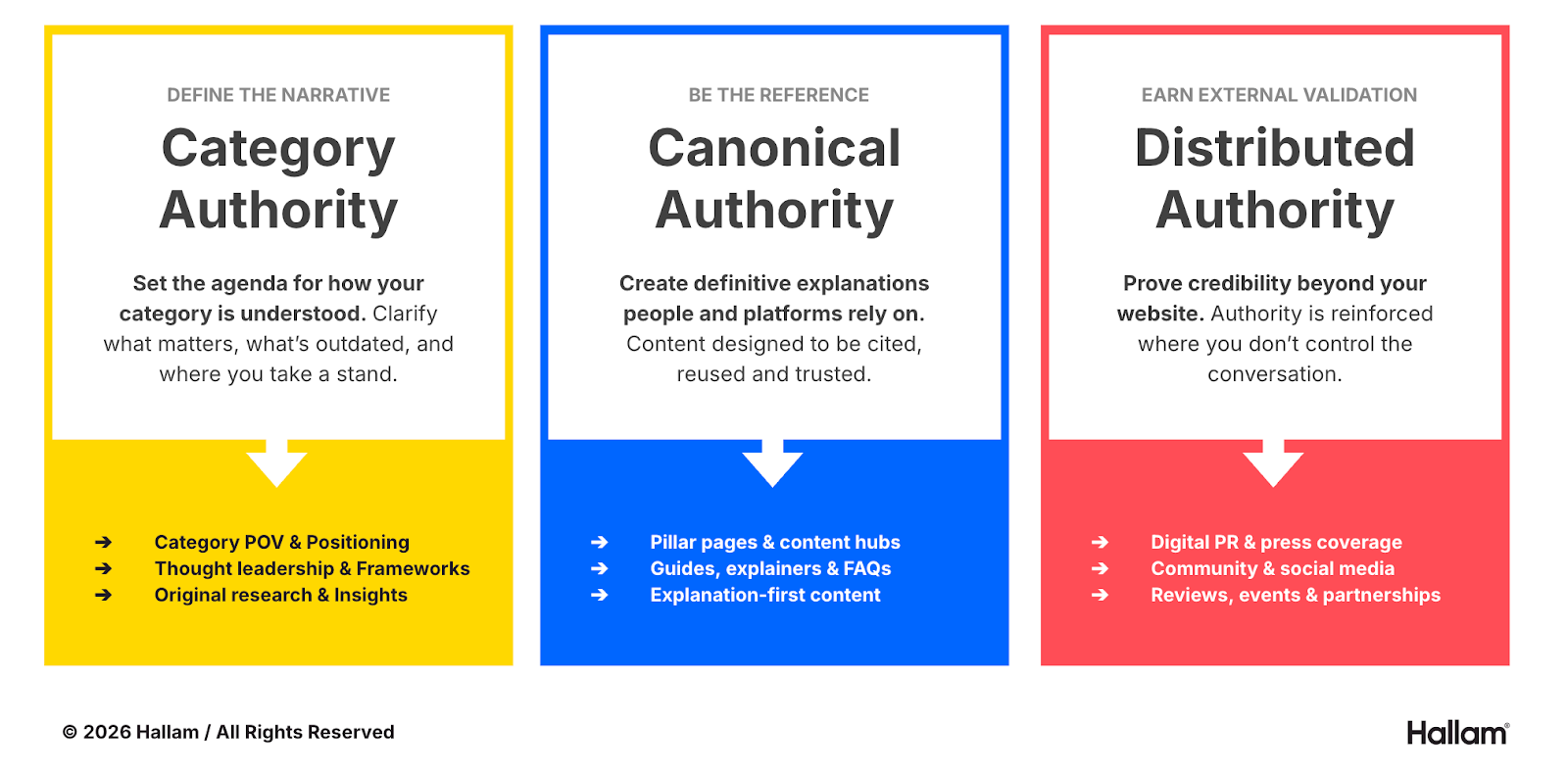
Building enduring authority requires an integrated approach. Drawing from my experience, I’ve devised a framework focusing on three core areas: Category, Canonical, and Distributed authority. Each pillar strengthens your position as an industry leader, beyond mere SEO tactics.
1. Category authority: Owning the truth, not just the traffic
It begins with shaping how the category is defined. Instead of chasing keywords, the focus is on establishing your brand as the reference point others turn to for clarity. This strategy cultivates an authentic authority that search engines and AI increasingly reward.
2. Canonical authority: Creating the definitive explanations
This involves crafting explanation-focused content that thoroughly answers queries, becoming the go-to resource cited across various platforms. The content serves as the backbone across the digital landscape, ensuring enduring visibility through AI and future technologies.
3. Distributed authority: Proving legitimacy beyond your website
Genuine authority thrives through widespread credibility on platforms outside your control, including PR coverage, social media mentions, and product experiences. These elements amplify your brand’s presence and solidify trustworthiness.
Ultimately, focusing on brand authority ensures durability amidst evolving algorithms. It’s about becoming the undisputed leader in your niche, where authority extends beyond traditional SEO into the realm of comprehensive digital engagement.
Inspired by this post on Search Engine Land.

Leave a Reply