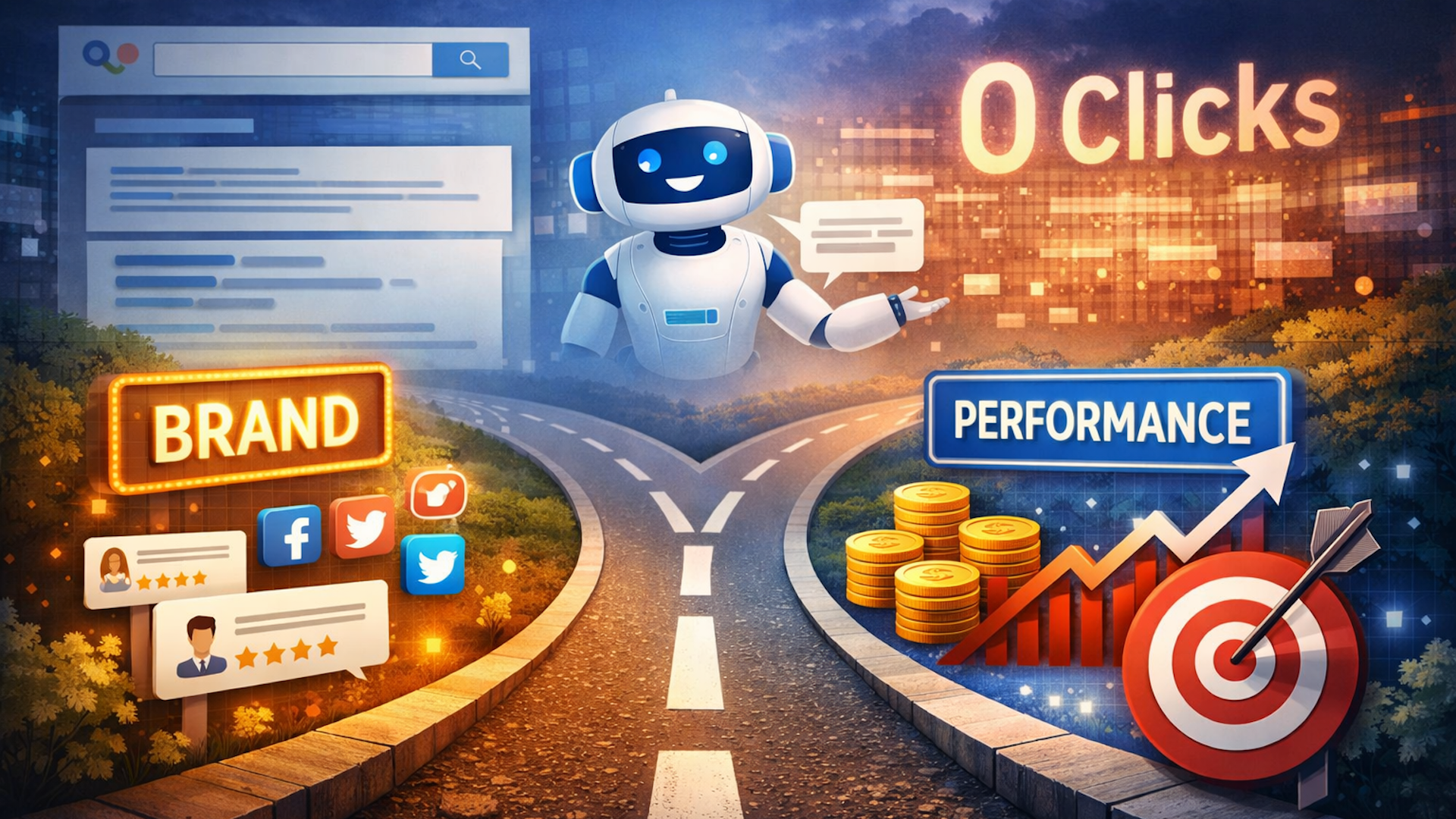
I’ve come to realize that SEO now serves as both a brand and performance channel. The traditional traffic model has been disrupted by AI Overviews and zero-click SERPs, making brand strength crucial for SEO ROI.
For years, SEO was straightforward: rank higher, get more traffic, then boost the sales pipeline. However, this simple equation is rapidly evolving, much to the frustration of marketing leaders.
With AI Overviews and users getting answers directly from LLMs, the idea of “rank and receive traffic and leads” is less effective now. Even top keyword positions don’t guarantee the clicks they once did.
This shift has sparked challenging discussions in boardrooms. Executives often question, “If traffic is down, how can we measure SEO success?”
It’s obvious now: the traffic model has changed, yet the demand for ROI remains. We must treat SEO as a brand-dependent performance channel, not just a traffic provider.
Why traffic and pipeline are no longer in lockstep
Linear attribution has never fully reflected the dynamic nature of organic search. While ChatGPT isn’t replacing Google, it’s augmenting it.
Users now verify information across platforms due to skepticism of search and LLM results. Where research once happened solely within Google’s ecosystem, it has become more scattered.
Today’s organic search is akin to a pinball machine, with buyers bouncing across channels unpredictably. This introduces complexity that traditional attribution software struggles to follow.
Such complexity has broken the linearity executives crave. Traffic and pipeline charts, once aligned, now often diverge.
Across B2B SaaS portfolios, a common pattern emerges: organic sessions may be flat or declining, yet rankings for high-intent terms stay stable, and the pipeline from organic search grows.
This mismatch doesn’t indicate SEO failure. Rather, it shows that traffic is no longer a reliable business impact measure.
The traffic lost to zero-click searches often consists of informational, low-intent content. What remains is higher-intent traffic, closer to conversion.
We’re seeing the “atomization” of search demand. Short-head, broad keywords are declining, while specific, long-tail queries with higher intent are rising.
Many leaders mistakenly react to dropping sessions by pushing for quantity, aiming to regain the lost numbers through top-of-funnel content. This often inflates vanity metrics without delivering qualified leads.

SEO ROI is now the downstream outcome of brand traction
For years, SEO was viewed as a pure performance channel. We believed optimizing some keywords would suffice.
In reality, SEO has always depended on brand strength. The rise of AI-driven engines highlights this, expecting reputations, not just keywords.
If your brand lacks authority, technical optimizations alone won’t elevate your status. Brand strength determines organic performance limits. Search engines seek web-wide consensus, and weak associations hinder results.
Brand strength for LLMs means owning topical authority, aligning with customer queries, being validated by trusted sources, and having clear positioning.
SEO captures pre-existing demand validated by your brand, not creating it from nothing.
The new defensibility metrics for SEO
As traffic no longer headlines KPIs, new defensibility metrics are necessary. Successful teams focus on revenue and reputation impact, not just volume.
Metrics proving business impact include stable top-10 rankings for commercial keywords, increased Ahrefs traffic value, stable solution page traffic, growing homepage traffic, and developing LLM referral traffic.
When pipeline per organic visitor rises, even with falling sessions, the dialogue shifts from “SEO is broken” to recognizing SEO’s evolution.
Modern SEO is moving from acquisition to influence
Successful SEO isn’t about recovering traffic but influencing buyer decisions and enhancing organic visibility. In an AI-first context, zero-click doesn’t imply zero-value.
SEO remains key in building market readiness, positioning brands as authorities even before buyers enter the funnel.
Inspired by this post on Search Engine Land.

Leave a Reply