SEO isn’t dead—far from it. But let’s face it, AI is definitely changing the game in ways we never imagined. This got me thinking about how things are looking different for us, especially with the rise of zero-click searches and AI Overviews. In 2026, these are becoming more like the hand guiding our SEO strategies.
With AI advancements, I’m seeing how crucial it is for all of us to adapt and build our SEO approaches around these innovations. Answer Engine Optimization (AEO) is making waves, and it’s fascinating to watch how it reshapes our tactics.
If we want to stay ahead, integrating AI into our SEO strategies isn’t just optional—it’s essential. The landscape is evolving, and so should we.
I first got into SEO not because I had a crystal ball, but because I had no other choice. Back in the early 2000s, I was part of a small web business with my mom in Seattle. We once hired another company for SEO work, but when we couldn’t afford to continue, I found myself diving into search marketing.
Fast forward more than 20 years, and here I am, one of the loudest voices in SEO, and admittedly, one of Google’s fiercest critics. In a recent interview, I took a deep dive into how search has evolved, what’s gone astray, and what the future might hold.
Early SEO was a wild ride. The digital landscape today may seem convoluted, but nothing beats the chaos of the early days. It was a time ruled by forums like WebmasterWorld and Search Engine Watch, where people shared tactics rather openly. Risky as it was, buying links was common and effective—myself included. However, a public reprimand from Google’s Matt Cutts was a turning point for me, steering my focus towards ‘white hat’ practices aligned with Google’s guidelines.
Over time, I’ve begun to question if following those guidelines perhaps went too far, given Google’s own evolving practices. Yet, what continues to stand out from the early industry days are not just the tactics but the relationships I’ve built.
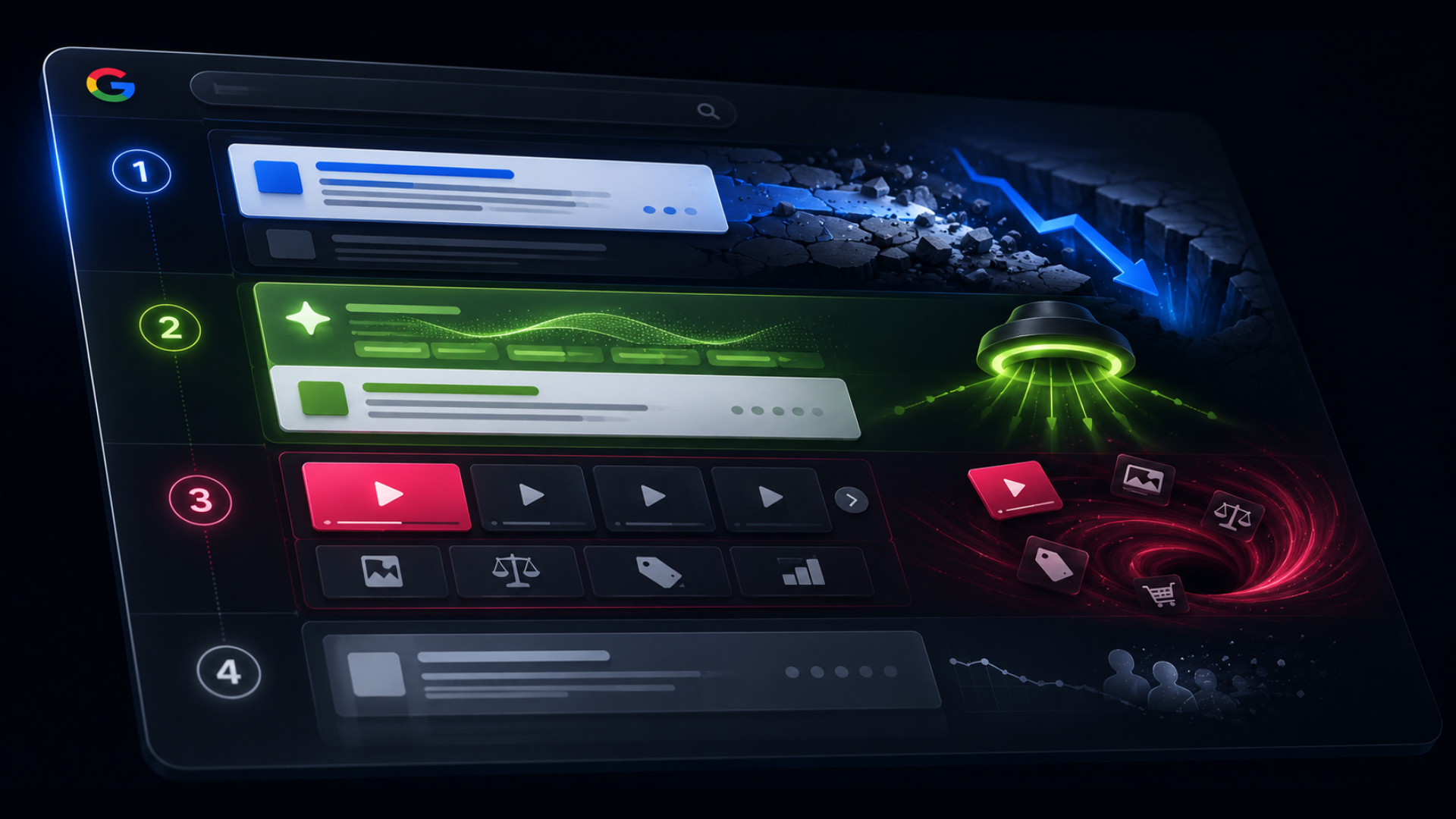
Many attribute AI as the seismic shift in search, but I beg to differ. It all started around 2011 when ‘zero-click search’ emerged—Google began answering queries directly on the results page. Initial features were simple, like weather boxes, but the concept expanded significantly with time.
Indeed, by around 2016–2017, nearly half of all searches ended without a click, growing to more than two-thirds today. This trend didn’t just appear out of nowhere with AI; it’s been brewing for over a decade.
I reckon publishers had a missed chance to take action long ago. At that time, media conglomerates could have united to challenge Google’s growing dominance, perhaps by demanding compensation or limiting usage of their content. Instead, they let Google expand its reach unhindered.
The publishing industry missed a window, but adaptation is key now. It’s time to pivot towards creating subscription businesses and monetizing attention rather than just traffic, as demonstrated by companies like The New York Times.
As for Google, I don’t believe its search services have worsened for users, though it’s become increasingly tough for publishers and creators. As Google grew and went public, priorities shifted, succumbing to growth and revenue pressures, thus becoming aligned with investor expectations.
When it comes to AI, I see a common misconception. People often mistake AI’s outputs as solid and consistent, akin to search results, but that’s rarely the case. Answers can vary widely. I recommend not relying on a single response; instead, ask multiple times and look for consistencies.
Reflecting on the early days of SEO, I don’t yearn for any specific tactic, but I do miss the opportunities for smaller creators and independent sites. Back then, traffic wasn’t just for the giants—it was more democratically distributed.
As I look forward, I imagine the media and search landscape might mirror the past: A few powerful platforms dictating the flow of information while individuals continue to create content within their domains. And yet, I’m hopeful the web will continue to evolve.
I recently had the opportunity to attend the Industrial Marketing Summit, where Rand Fishkin delivered a keynote highlighting our current “zero-click world”. His perspective resonated with me, emphasizing that while fewer users are visiting websites, their impact remains crucial.
Diving deeper, it’s evident that the structural dynamics of how information is assessed and trusted online have shifted profoundly. This change has led many to misunderstand the true value of websites today.
Despite the drop in clicks, websites still play a vital role. They are the bedrock of visibility and trustworthiness on the internet.
Why ‘zero-click’ discussions often lead to the wrong conclusion
There’s an undeniable trend: clicks are on the decline, and here’s why.
Search engines readily display answers directly on results pages.
Social media platforms have become discovery hubs, allowing users to explore without ever needing to leave.
AI assistants synthesize comprehensive responses from the web even before presenting a user with links.
The focus on zero-click results disrupts traditional metrics for measuring online visibility. For decades, traffic and click-through rates have been the cornerstones for evaluating search performance.
Yet, when answers are given directly by search results or AI systems, often outside our typical analytics frameworks, many assume websites are losing significance. This is far from the truth.
Websites still underpin the information ecosystem. Their role in shaping visibility is arguably becoming more significant, especially with AI and modern information systems relying heavily on widespread, consistent signals from multiple sources on the web.
Fishkin is right about the trend
Information today is discovered in various environments, including search results, social media, and AI interfaces, leading to a real fragmentation of how we consume content.
While these interactions might appear as lost website traffic, the true question is: where does the original information come from?
Although people consume information through expanding platforms, these systems fundamentally depend on credible, original knowledge sources.
Zero-click doesn’t mean zero influence
The critical takeaway is differentiating between traffic and information influence.
Traffic measures visits to your site.
Influence assesses if your information shaped the answers people received.
AI creates responses based on patterns from the web, and content creators who provide valuable information remain crucial in this ecosystem.
Even without direct clicks, reliable sources continue to influence the information pipeline, helping shape the responses generated by AI systems.
The role of ‘rented land’
In adapting to a zero-click landscape, the focus might shift towards platforms where brands lack control, such as social networks or other “rented lands”.
Visibility stems from both types of territory — owned and rented.
Owned land encompasses your controlled content like websites.
Rented land includes platforms that distribute your message but aren’t owned by you.
In an AI-driven discovery setting, both are valuable. Owned content serves as essential knowledge sources, while rented platforms amplify these insights.
Yet, authority primarily emerges from robust original content, typically housed on first-party sites, which remains pivotal in influencing AI systems.
Why AI often favors primary sources
Contrary to some beliefs, AI systems value primary sources more than aggregated content.
When AI generates answers, it frequently relies on sources with clear, expert explanations and well-reasoned content, mostly found in single-source publishing like legal blogs or technical documentation.
This move places emphasis on creating authoritative content, which can enhance your influence in an AI-led world even as click metrics may reduce.
The real shift you should understand
Websites are evolving beyond their historical role as mere traffic generators. They are now key players in the AI-mediated informational landscape as sources of knowledge and bastions of expertise.
The goal now is to ensure expertise is accessible and can be assimilated across various digital environments, be it search engines, AI responses, or social discussions.
In our zero-click world, influence takes root earlier, reinforcing the importance of creating valuable, knowledgeable content.
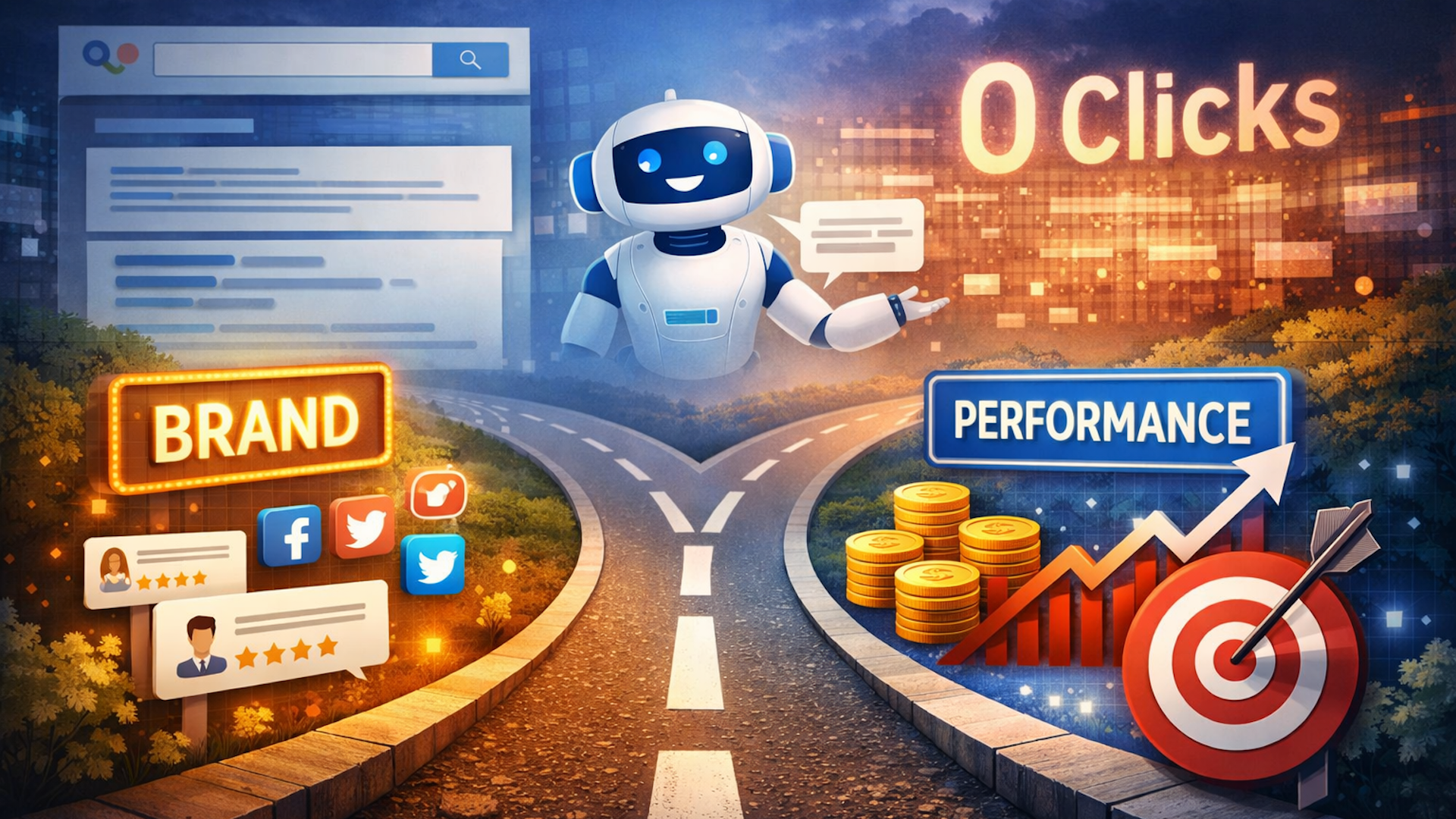
I’ve come to realize that SEO now serves as both a brand and performance channel. The traditional traffic model has been disrupted by AI Overviews and zero-click SERPs, making brand strength crucial for SEO ROI.
For years, SEO was straightforward: rank higher, get more traffic, then boost the sales pipeline. However, this simple equation is rapidly evolving, much to the frustration of marketing leaders.
With AI Overviews and users getting answers directly from LLMs, the idea of “rank and receive traffic and leads” is less effective now. Even top keyword positions don’t guarantee the clicks they once did.
This shift has sparked challenging discussions in boardrooms. Executives often question, “If traffic is down, how can we measure SEO success?”
It’s obvious now: the traffic model has changed, yet the demand for ROI remains. We must treat SEO as a brand-dependent performance channel, not just a traffic provider.
Why traffic and pipeline are no longer in lockstep
Linear attribution has never fully reflected the dynamic nature of organic search. While ChatGPT isn’t replacing Google, it’s augmenting it.
Users now verify information across platforms due to skepticism of search and LLM results. Where research once happened solely within Google’s ecosystem, it has become more scattered.
Today’s organic search is akin to a pinball machine, with buyers bouncing across channels unpredictably. This introduces complexity that traditional attribution software struggles to follow.
Such complexity has broken the linearity executives crave. Traffic and pipeline charts, once aligned, now often diverge.
Across B2B SaaS portfolios, a common pattern emerges: organic sessions may be flat or declining, yet rankings for high-intent terms stay stable, and the pipeline from organic search grows.
This mismatch doesn’t indicate SEO failure. Rather, it shows that traffic is no longer a reliable business impact measure.
The traffic lost to zero-click searches often consists of informational, low-intent content. What remains is higher-intent traffic, closer to conversion.
We’re seeing the “atomization” of search demand. Short-head, broad keywords are declining, while specific, long-tail queries with higher intent are rising.
Many leaders mistakenly react to dropping sessions by pushing for quantity, aiming to regain the lost numbers through top-of-funnel content. This often inflates vanity metrics without delivering qualified leads.
SEO ROI is now the downstream outcome of brand traction
For years, SEO was viewed as a pure performance channel. We believed optimizing some keywords would suffice.
In reality, SEO has always depended on brand strength. The rise of AI-driven engines highlights this, expecting reputations, not just keywords.
If your brand lacks authority, technical optimizations alone won’t elevate your status. Brand strength determines organic performance limits. Search engines seek web-wide consensus, and weak associations hinder results.
Brand strength for LLMs means owning topical authority, aligning with customer queries, being validated by trusted sources, and having clear positioning.
SEO captures pre-existing demand validated by your brand, not creating it from nothing.
The new defensibility metrics for SEO
As traffic no longer headlines KPIs, new defensibility metrics are necessary. Successful teams focus on revenue and reputation impact, not just volume.
Metrics proving business impact include stable top-10 rankings for commercial keywords, increased Ahrefs traffic value, stable solution page traffic, growing homepage traffic, and developing LLM referral traffic.
When pipeline per organic visitor rises, even with falling sessions, the dialogue shifts from “SEO is broken” to recognizing SEO’s evolution.
Modern SEO is moving from acquisition to influence
Successful SEO isn’t about recovering traffic but influencing buyer decisions and enhancing organic visibility. In an AI-first context, zero-click doesn’t imply zero-value.
SEO remains key in building market readiness, positioning brands as authorities even before buyers enter the funnel.
In a world where Google’s AI Overviews address more queries instantly, I’ve found that vibe coding allows us to craft interactive experiences that AI simply can’t replace.
I’ve noticed that search marketers are now shifting their roles from merely optimizing to actually building. Tools like vibe coding, coupled with AI-powered development technologies, have significantly reduced the time from idea conception to execution—from weeks to just a few hours.
These tools don’t make developers obsolete, but they empower search teams to test and create interactive content on their own timelines. This is crucial, as Google’s AI Overviews increasingly pull answers directly into the SERP, reducing clicks to our brand websites.
For marketers, building unique, conversion-focused tools is becoming an indispensable tactic in this zero-click environment.
What is vibe coding?
Vibe coding is about creating software by guiding AI with natural language instead of traditional coding methods. This means focusing on the tool’s purpose, appearance, and response, while AI takes care of implementation.
This term gained popularity in early 2025, thanks to OpenAI co-founder Andrej Karpathy, who described it as a loose, exploratory building style. The appeal? Speed. The risk? Potential shortcuts that could lead to fragile systems.
Today, AI-powered development platforms extend this approach to non-engineering teams, with tools like Replit and Lovable, allowing everyone to build and iterate quickly.
Vibe coding vs. vibe marketing
It’s important to distinguish vibe coding from vibe marketing. Vibe coding involves AI tools designed to create applications and interactive experiences, whereas vibe marketing uses automation platforms to connect existing tools and systems.
Together, these approaches empower search teams to build and operationalize their creations efficiently.
Why vibe coding matters for search marketing
I believe that soon, AI-powered coding will be an essential part of any marketer’s toolkit. It allows us to create sophisticated interactive tools that Google’s AI can hardly mimic, enhancing our SEO and PPC strategies.
With vibe coding, my team can rapidly develop tools that boost conversion, like interactive content aimed to improve user engagement—a factor crucial for both SEO and PPC efforts.
Through vibe coding, I’ve created custom systems that help manage our operational needs efficiently, saving time and costs. For instance, a project quoted at $55,000 was completed in under a week using Replit for just $20 a month.
The opportunity to teach these skills to clients also adds significant value, emphasizing the transition from “we’ll do it for you” to “we’ll build it with you.”
Vibe coding offers a competitive edge, allowing us to navigate zero-click search environments while fortifying long-term relationships with our clients.
Top vibe coding platforms for search marketers
Several leading vibe coding platforms are making waves. My personal preference is Replit for its flexibility, though Figma Make is a great choice too, particularly as it integrates well with our existing workflows.
Testing different platforms will help find the best fit. Whether it’s Lovable for beginners or Cursor for advanced users, there’s a solution tailored to your needs.
Practical SEO and PPC applications: What you can build today
Vibe coding can create a variety of tools, from lead generation calculators to interactive content that increases website engagement. The key is to build tools that fill existing gaps, providing unique and useful solutions.
For instance, I developed an AI-powered accounting ROI calculator, a tool that couldn’t be easily replaced by Google’s direct answers. This not only helps the target audience but also boosts SEO efforts by encouraging repeat visits.
A 7-step vibe coding process for search marketers
I’ve found that following a structured workflow is crucial when using vibe coding. This includes thorough research, creating a content spec document, and iterating designs before functionality.
These steps ensure a comprehensive approach, allowing for prompt testing and deployment. Updating documentation at each milestone helps in managing future updates or revisions.
The dark side of vibe coding and important watchouts
While powerful, vibe coding tools come with risks. Security and compliance issues, price creep, and technical debt are concerns that require careful attention.
Always ensure security reviews and keep track of costs as projects evolve. Monitoring these risks can make vibe coding a reliable tool rather than a complicated headache.
Vibe coding is your competitive edge
In this evolving landscape, vibe coding gives us the ability to build unique digital experiences. It’s a skill set that empowers us to thrive, helping create meaningful, interactive content that stands out in the crowded search environment.
Embracing vibe coding not only promotes strong client partnerships but also equips us to adapt to new search realities, making it a pivotal skill for future success.
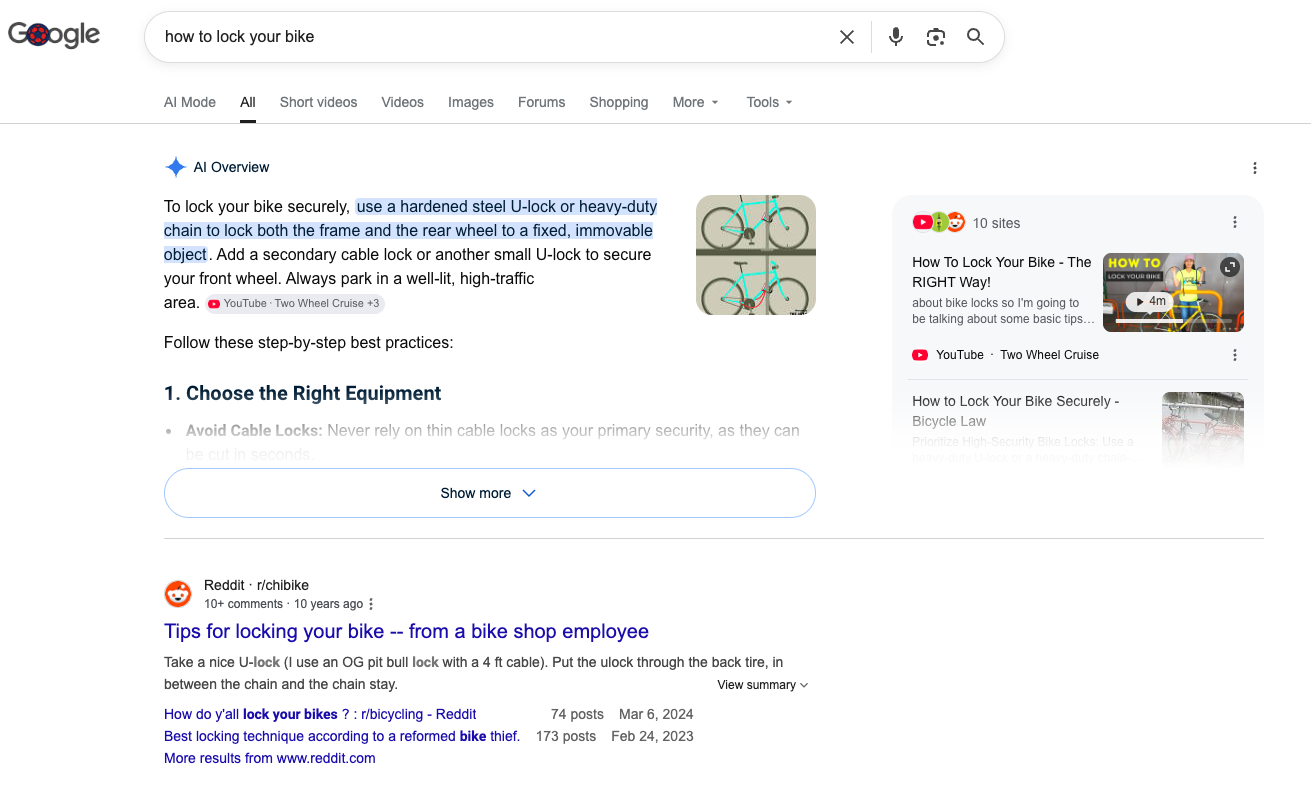
I’ve been captivated by how Google AI Overviews shifted the search landscape in 2025. Since then, I’ve delved into a detailed analysis by Semrush, which evaluated over 10 million keywords, revealing significant volatility, an increase in ads, stronger click-through rates (CTRs), and AI Overviews venturing beyond purely informational searches.
The year witnessed a rapid expansion of AI Overviews in Google’s search functions, which eventually tapered off as they began appearing in commercial and navigational inquiries. Between January and November, Semrush’s analysis identified these dynamic changes.
AI Overviews surged, then retreated. The deployment of AI Overviews was far from linear. Google introduced them at a rapid pace, peaking mid-year, then scaled back based on user data and feedback:
January: AI Overviews appeared in 6.5% of all queries.
July: Their presence peaked, appearing in nearly 25% of searches.
November: By this time, their appearance was retracted to less than 16%.
Zero-click behavior defied expectations. Contrary to initial beliefs, I noticed that click-through rates for searches with AI Overviews have increased steadily. It seems that rather than reducing clicks, AI Overviews may actually encourage them.
AI Overviews are more common on searches that generally lead to no clicks.
But when examining the same keywords pre and post-introduction of an AI Overview, the zero-click rates decreased from 33.75% to 31.53%.
Informational queries no longer dominate. At the start of 2025, AI Overviews predominantly served informational purposes:
January: 91% informational
October: 57% informational
Eventually, I observed AI Overviews appearing in commercial and transactional searches:
Commercial queries: Jumped from 8% to 18%
Transactional queries: Increased from 2% to 14%
Navigational queries are rising fast. Interestingly, there’s a noticeable increase in AI Overviews intercepting brand and destination searches:
Navigational AI Overviews rose from under 1% in January to over 10% by November.
Google Ads + AI Overviews. Earlier this year, ads rarely appeared next to AI Overviews. Now, their presence is much more common:
Ads alongside AI Overviews grew from about 3% in January to around 40% by November.
Roughly 25% of AI Overview SERPs now show ads at the bottom.
Science is the most impacted industry. In terms of keyword saturation, Science tops the list with AI Overviews appearing in 25.96% of searches. This is followed by Computers & Electronics at 17.92%, and People & Society at 17.29%.
Since March, Food & Drink has experienced the fastest growth among all categories in AI Overview usage.
In contrast, sectors like Real Estate, Shopping, and Arts & Entertainment see AI Overviews in less than 3% of queries.
Why we care. With AI Overviews persistently reshaping click behaviors, commercial visibility, and ad placements, I believe it’s important to keep a close eye on these shifts and adapt accordingly.
In 2026, I’m witnessing an exciting transformation in the world of public relations. New trends are shaping how I approach PR in this AI-driven era.
Among these trends, Answer Engine Optimization (AEO) stands out, changing the way I prepare for search queries that don’t require clicks. I’m also adapting to the rise of zero-click searches, which demand more sophisticated strategies.
Additionally, I’m personalizing my pitching techniques more than ever before, ensuring that my messages resonate on a personal level. Newsletters are becoming a critical tool for me, offering direct and reliable communication channels with stakeholders.
Speed in crisis management is no longer negotiable; it’s a necessity. I am constantly enhancing brand authority to build trust and resilience in the face of challenges.
These changes are rewriting the traditional PR playbook, and I’m eager to see how they continue to evolve. Embracing these innovations is key to staying ahead in the rapidly changing PR landscape.