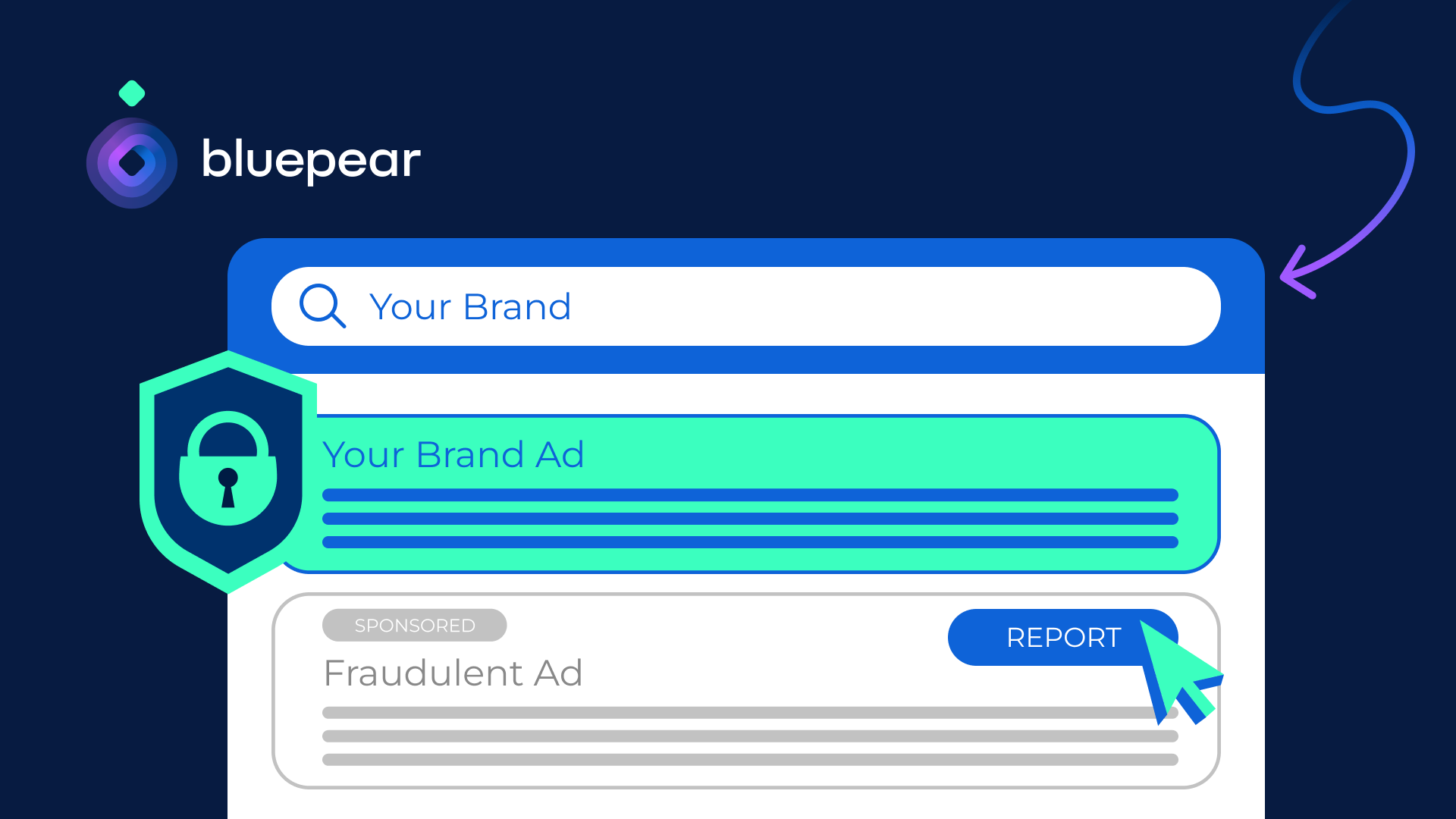
I never realized how much traffic I was losing every day until I learned about unauthorized bidding, affiliate violations, and ad hijacking. It’s a common issue, but don’t worry, I’m here to guide you through building a robust brand protection strategy in paid search.
Did you know that ad fraud reached an estimated $84 billion in global digital ad spend in 2023? If you’re facing a steady rise in branded CPCs or see competitors continuously appearing above you in searches for your own name, this guide is exactly what you need to understand why and what steps to take next.
Brand protection in PPC is about defending your brand from unauthorized use of your branded search terms in PPC ads and any deceitful ad placements. My main goal here is to make sure that people searching for my brand or product name find my official pages rather than those of a competitor, affiliate, or reseller.
Having a well-executed brand protection strategy not only safeguards my traffic but also reinforces my brand’s image and fosters customer loyalty. Without it, I risk facing significant losses, such as higher CPCs, rising affiliate costs, and losing customer acquisition opportunities.
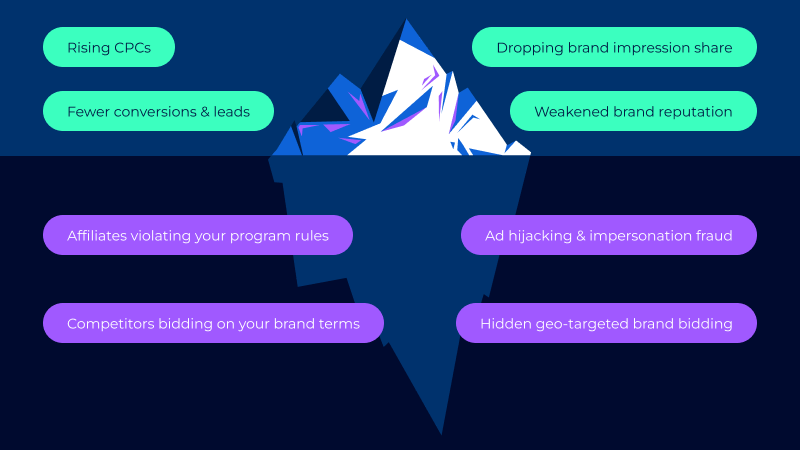
My brand protection activities include:
- Monitoring who bids on my branded keywords.
- Spotting unusual spikes in CPCs or impression share.
- Identifying unauthorized trademark use in paid search.
- Detecting hidden, geo-targeted ads meant to evade detection.
- Enforcing compliance rules for affiliates and partners.
Three main sources of threats exist:
- Competitors: They target my branded searches to tap into high-intent traffic, intercepting my audience.
- Affiliates: If I miss their dishonest tactics, I end up paying for leads I would have acquired anyway, increasing costs without gaining additional customers.
- Fraudsters: Their advanced tactics can cause serious financial and reputational harm to my brand.
Without protecting my brand in paid search, I’m at risk of these common threats:

- Brand bidding: Others bid on my branded queries to capture high-intent searches, driving up CPCs and reducing my impression share. Over time, this forces me to spend more to regain position, lowering my return on investment (ROI).
- Ad hijacking: Competitors or fraudsters mimic my ad structure to deceive users into clicking what they believe is my official ad.
- Malicious redirects: Users clicking on “brand-looking” ads might end up on phishing, malware, or low-quality pages.
- Ad copy misalignment: Affiliates may use unapproved or outdated messaging harming my brand image.
- Misleading ad copies: Ads that position another product as a direct substitute for mine to divert traffic and conversions.
Given these risks, a dedicated PPC protection strategy is crucial. Without it, my acquisition costs could rise significantly, and I might lose customers at the critical decision-making stage.
In today’s PPC landscape, not protecting my brand erodes trust, skews attribution, and weakens my marketing efforts over time. Consequently, conversions drop, ROI slips, and my paid media effectiveness diminishes.
Important stats to consider:
- Global ad fraud costs are projected to rise to $172 billion by 2028 (Statista).
- 69.7% of marketers reported issues with “spam or fake lead submissions” in their paid media campaigns (Lunio).
- U.S. advertisers saved $10.8 billion through anti-fraud initiatives in 2023 (TAG).
For an effective brand protection strategy, I employ these PPC tactics:
- Account structure: I ensure my campaigns are clearly segmented to easily spot anomalies in CPCs and impression share.
- Negative keyword strategy: I use targeted negatives—partner names, resellers, and irrelevant variations—to cut out the noise.
- Affiliate rules: I set clear policies to minimize violations and facilitate compliance enforcement.
Automation and monitoring play a crucial role in a strong brand protection strategy. Relying on automated monitoring, I can catch threats early and resolve them promptly, preserving my budget and performance metrics.
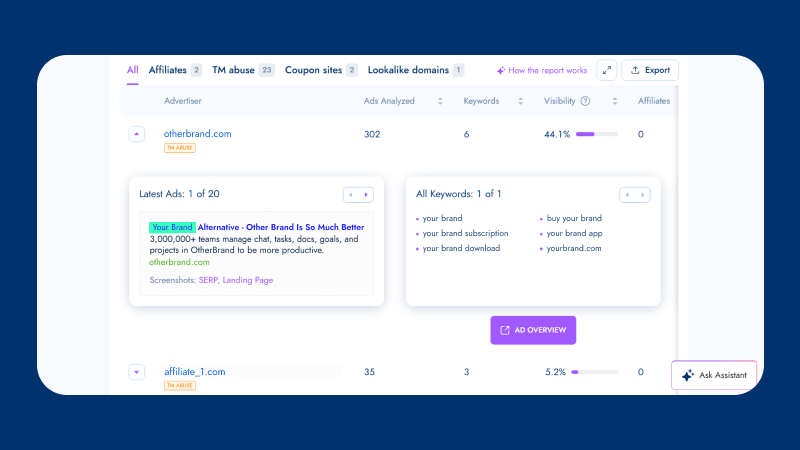
With Bluepear, I detect unauthorized bidding, affiliate violations, and suspicious competitor activities. Real-time alerts help me take swift action as issues appear.
Metrics are vital in measuring my brand protection strategy’s effectiveness. I track:
- Violations count: The number of unauthorized activities detected on branded searches over time.
- Enforcement rate: How efficiently I respond to and handle these violations.
- Cost savings: The budget I recover by curbing CPC inflation and preventing commission leakage.
- Branded CTR recovery: How removing violators improves my visibility and click-through rates.
Blueprint has helped companies like Car.co.uk and Rhino Affiliates successfully protect their brand from PPC threats. By adopting similar strategies, I ensure that my brand remains competitive and trustworthy in the digital landscape.
With Bluepear’s platform, I automatically protect my brand without dedicating significant time to manual monitoring. After signing up, I set up my account in just 10 minutes, gaining access to a powerful monitoring tool. This system has allowed me to quickly identify and act against brand bidding, affiliate violations, and hidden ads.
Ultimately, by using tools like Bluepear, I not only protect my brand but also enhance my marketing efficiency, leading to better ROI and more robust brand integrity.
In conclusion, a solid PPC brand protection strategy is no longer optional—it’s a necessity in today’s competitive landscape. By continuously monitoring, enforcing rules, and leveraging automation, I keep my brand safe and thriving.
Discover more about how you can protect your brand. Try Bluepear’s solution for brand protection and start detecting hidden brand bidding in minutes.
Inspired by this post on Search Engine Land.

Leave a Reply