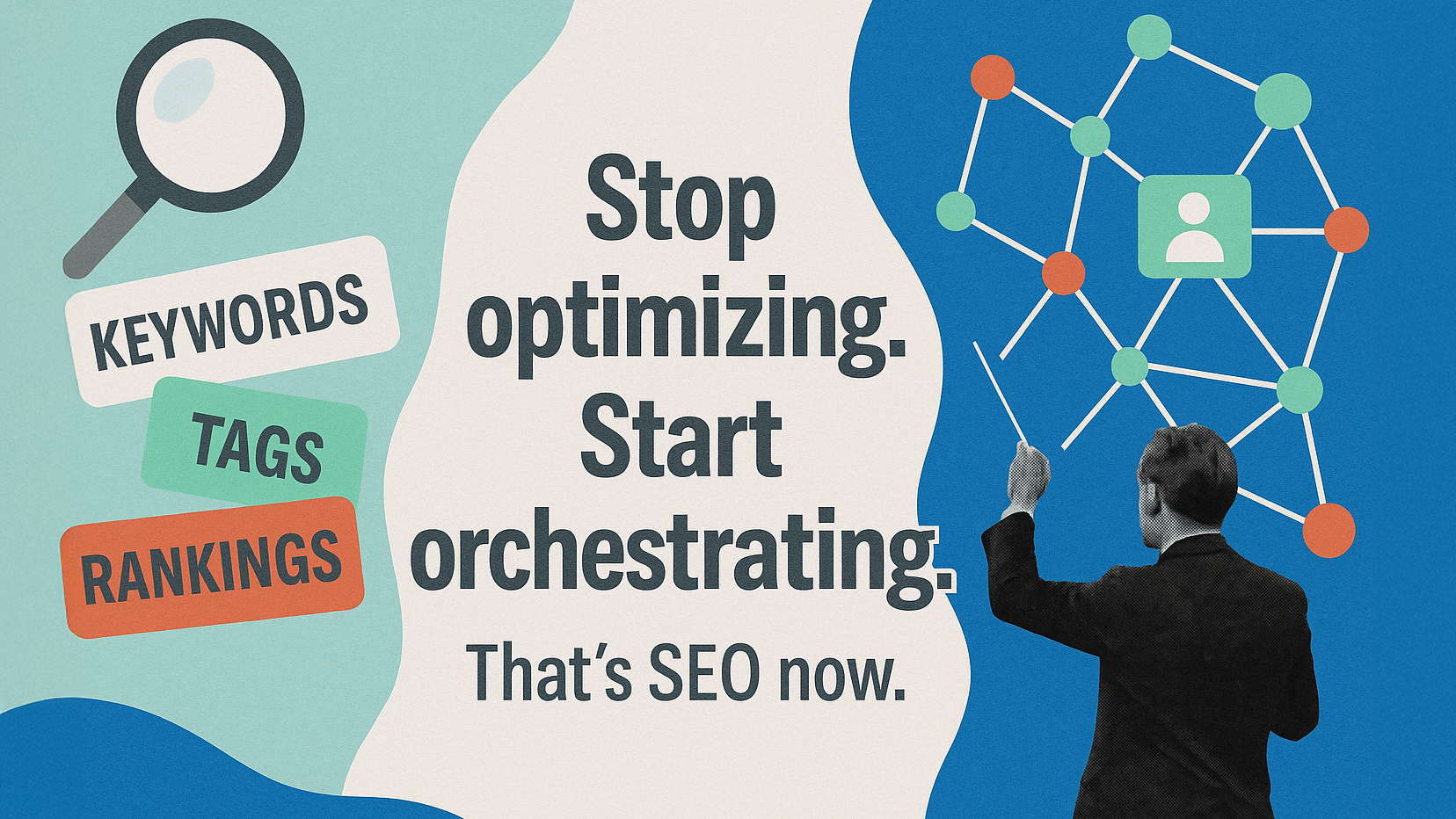
From search engines to generative engines, I’ve been part of the journey where the essence of SEO is deeply rooted in empathy. These days, it goes beyond mere optimization, demanding a bigger role in orchestrating clarity throughout the enterprise.
Headlines claiming another “AI winter” seem to circulate more frequently, and the statistics seem to support this skepticism. According to MIT’s research, although 80% of organizations have piloted GenAI and 40% have deployed it, only a mere 5% have scaled it. Further, seven of nine sectors have shown no structural change. Similarly, McKinsey reports reveal a disconnect where 36% of executives report no revenue impact, and only 19% have seen revenue grow over 5%, with 87% expecting growth to take years. Implementation is common, but impact is scant.
Yet, these headlines and figures overlook the real-time transformations within enterprises. SEO leaders are now being invited to lead in Generative Engine Optimization (GEO). It’s not because we’re AI specialists or understand every intricate detail of large language models—we often don’t. It’s because SEO is fundamentally about empathy, which is crucial now more than ever.
SEO has never solely been about keywords or search rankings. It’s driven by empathy on two primary fronts: understanding search engines—where Google aims not just for quality content, but to increase queries and ad revenue—and understanding users—ensuring they encounter the least friction in finding what they seek despite platform constraints.
Now, a third form of empathy comes into play—not for machines, which have no wants, but for the growth-driven giants building them. Their goals are straightforward: maximize adoption, engagement, and usage. Like Google, they’re eager to sacrifice accuracy for these metrics.
As SEO professionals, we often hesitate to acknowledge this, but the adage “just create good content” was never entirely true. Google favored backlinks and its own preferred content. An algorithm based on patterns can’t differentiate between quality and mediocrity—and AI providers will likely follow suit. Ignoring this reality is naive.
Capitalizing on shifting incentives within the enterprise’s workflow has been eye-opening. A short while ago, my PR team hesitated about digital outreach proposals. Yet, when I introduced a GEO pilot—using identical product descriptions across various platforms to better interpret our offerings—their attitude changed completely. That illustrates how reframing from SEO to GEO transformed their reception from resistance to enthusiasm.
The focus isn’t solely on visibility. When visitors arrive at our site, it’s not just about keyword optimization; it’s about optimizing their entire journey. Do they encounter the right message and next steps with minimal friction? Previously, we might have called this conversion rate optimization. Is it SEO now? Honestly, I’m unsure what SEO entails. What I do know is that to drive value, we must evolve. It’s about aligning with outcomes, not protecting a label.

This isn’t just theoretical. Here’s how I’ve been orchestrating at Adobe. Instead of optimizing for small traffic gains, I collaborate across teams to focus on what truly matters:
- With Product Marketing, utilizing visuals to convey our message effectively.
- With Comms and Client Success, leveraging case studies that resonate with buyer needs.
- With PR, maintaining consistency across third-party sites to avoid GEO fragmentation.
- With Account Executives, analyzing account discussions—identifying key contacts, uncovering objections, understanding why prospects select us over competitors. This vital intelligence feeds back into our content strategy and positioning.
This is just the surface level. The next horizon is data—curating our own ontology to standardize how the enterprise describes itself, ensuring consistent communication across teams and systems.
Enterprise teams are reaching out to us for guidance. Departments like Product, PR, Analytics, and Compliance are in pursuit of clarity. The tough truth is that if we remain complacent, GEO will be tackled by other areas in fragmented ways. Product will focus on features, PR on reputation, and analytics will get lost in metrics, leading to disjointed strategies.
As SEO specialists, we’re ideally positioned to lead GEO efforts due to our core skill of empathy, which enables us to balance platform incentives with user needs, transforming ambiguity into alignment. This is exactly what’s needed for GEO to succeed, preventing noise and activity without tangible outcomes.
Ultimately, SEO isn’t dead; it’s evolving into something unrecognizable and demanding leadership. Leadership means acknowledging our limited LLM knowledge but understanding how to assemble and align the right people.
If your reports still focus exclusively on traffic, rankings, or visibility dashboards, you’ve fallen behind. Enterprises require orchestration, not more metrics.
Whatever we choose to call this discipline, it’s shifted from merely optimizing to orchestrating clarity—across platforms, teams, and user journeys. That’s our mandate. Without our leadership, SEO, and its new form stretches beyond recognition, will lack an owner. So I ask, is SEO dead, or has it evolved into something far greater?
Inspired by this post on Search Engine Land.

Leave a Reply