
OpenAI’s reported plan to retire ChatGPT Atlas is more than a product cancellation. It points to a desktop strategy built around one primary ChatGPT application that combines browsing, agent-led work, and Codex capabilities.
For users and organizations, the immediate questions are practical: how firm the retirement date is, whether adopting an OpenAI browser remains necessary, and what the consolidation could mean for research and digital discovery.
The desktop app is becoming the center of the product
CrushPress.AI reported that OpenAI intends to discontinue Atlas as a standalone desktop browser and move its browser-based AI features into a new ChatGPT desktop app. The same report describes that app as bringing together ChatGPT Work, OpenAI’s work-focused agent, and ChatGPT Codex.
This is a consolidation of entry points as much as a consolidation of features. Instead of asking users to choose among a dedicated AI browser, a separate Codex application, and the broader ChatGPT experience, the reported direction places those functions inside a common desktop environment.
The sequence reported by CrushPress.AI helps explain the shift. Atlas launched on Mac in October, a dedicated Codex app followed, and an in-app browser was added in April. The planned unified app appears to gather capabilities that had been introduced through separate products, although the source does not provide a detailed migration map.
Key takeaways
- ChatGPT Atlas is reportedly scheduled to be retired as a standalone browser.
- The stated Aug. 9 date is a target, so it should not be treated as an unconditional deadline without further notice.
- Browser functions, ChatGPT Work, and Codex are being positioned within a unified ChatGPT desktop app.
- Chrome users are expected to retain access to ChatGPT and Codex through OpenAI’s Chrome extension.
- The change could concentrate more research and task completion inside ChatGPT, increasing its role in digital discovery.
The Aug. 9 date carries an important qualification
CrushPress.AI cited OpenAI’s James Sun as saying on X that Aug. 9 was the current targeted date
for deprecation. According to the report, Sun also said that more information would be shared in the application and by email.
That wording establishes a planned direction but preserves uncertainty around execution. A target date can change, and the supplied report does not specify when access will stop, whether data or settings will transfer automatically, or whether every Atlas feature will have an equivalent in the new app.
Atlas users should therefore treat official in-app and email notices as the operative migration guidance. Before the target date, organizations can identify which workflows depend on Atlas and document any browser-specific behavior they would need to reproduce. That is prudent continuity planning, not evidence that any particular feature will be lost.
Users still have two reported browser paths
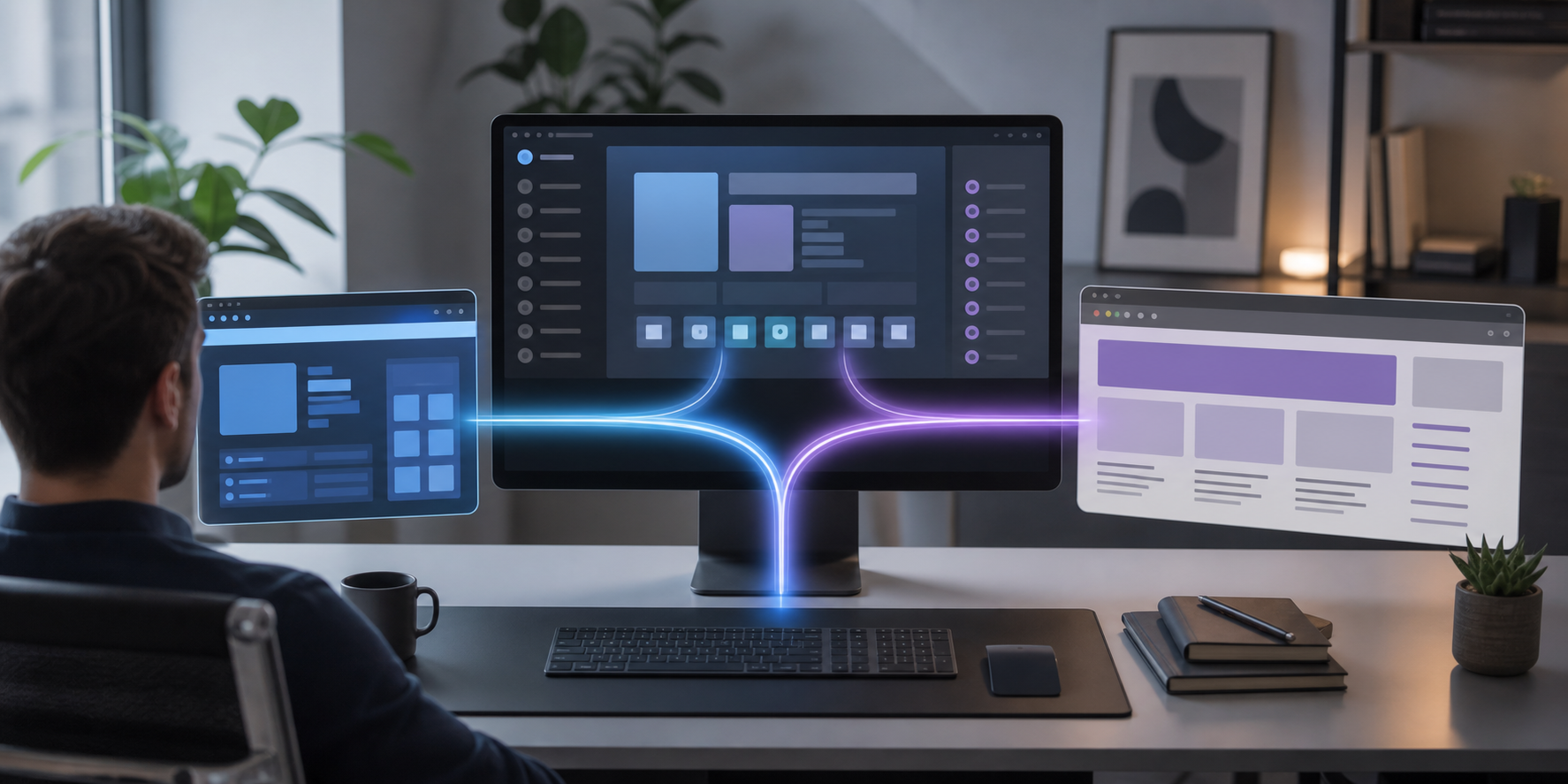
The consolidation does not necessarily require every user to replace an existing browser. CrushPress.AI reported that the new desktop app will include browser capabilities, while people who prefer Chrome can use OpenAI’s Chrome extension to access ChatGPT and Codex.
Those paths serve different working preferences. A unified desktop app can keep browsing and agent tools in one OpenAI-controlled environment. An extension can place the same broad services closer to an established Chrome workflow. The source does not compare feature parity, security controls, performance, or account requirements, so it would be premature to declare either route universally better.
For teams, the decision should follow the work being performed. Relevant considerations include whether tasks depend on existing Chrome profiles and extensions, whether the unified app offers necessary workflow controls, and how each option fits internal software and security policies. These are evaluation criteria rather than reported product guarantees.
Consolidation could expand ChatGPT’s role in discovery

The strategic consequence extends beyond desktop software. When browsing, questions, research, coding, and task execution occupy the same interface, the distance between finding information and acting on it becomes shorter. CrushPress.AI argues that this gives ChatGPT another opportunity to influence how people research brands and discover information outside traditional search-result pages.
For marketers and publishers, the relevant change is not merely the disappearance of an Atlas icon. It is the possibility that more discovery activity will occur within the main ChatGPT experience, where answers and actions may be combined. That makes accurate, accessible, and clearly attributable information increasingly important, while the supplied source does not establish how the new app will select or present particular brands.
The next signals to watch are OpenAI’s promised notices, the final treatment of Atlas accounts and workflows, and the practical feature differences between the desktop app and Chrome extension. Those details will determine whether this is mostly a packaging change or a meaningful shift in how desktop users browse and complete work.
Leave a Reply