
Diving into the world of technical SEO for generative search has had me rethinking how AI agents interact with my site. It’s not just about indexing anymore; it’s about how AI systems generate answers. My focus is now on ensuring AI agents can access and interpret my content smoothly, enhancing the chances that I’ll be cited in AI-generated responses.
When I consider generative engine optimization (GEO), I’ve realized that while the underlying tools and frameworks aren’t new, the way I implement them makes the difference in my content being surfaced or missed.
It means paying close attention to how AI agents access my site, structuring my content for easy extraction, and ensuring it can be reliably interpreted and reused in AI-generated responses. This is about precision and strategic structuring.
Agentic Access Control: Managing the Bot Frontier
Using robots.txt strategically has become vital. It’s essential for me to specify which crawlers can access what parts of my site. For instance, I might decide that a training model like GPTBot should access my /public/ folder but keep my /private/ folder off-limits, implementing it as follows:
User-agent: GPTBot
Allow: /public/
Disallow: /private/
The choice between model training and real-time search is crucial. Often, I find myself balancing whether to disallow GPTBot or allow OAI-SearchBot. Considering Perplexity and Claude standards within my robots.txt is another layer I need to manage:
Claude
- ClaudeBot (Training)
- Claude-User (Retrieval/Search)
- Claude-SearchBot
Perplexity
- PerplexityBot (Crawler)
- Perplexity-User (Searcher)
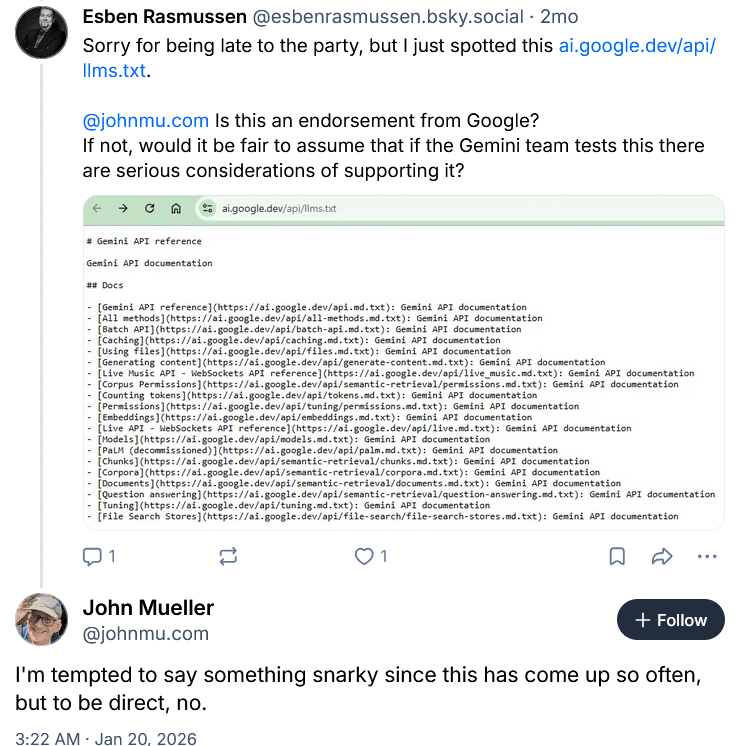
I’ve also had to integrate the new protocol, llms.txt. Although not universally adopted, it’s a structure I find useful for guiding AI agents in understanding my content better. If you’re interested in following Perplexity’s llms.txt, you can explore it here:
- llms.txt: A concise map of links.
- llms-full.txt: An aggregate of text content that allows agents to bypass crawling my entire site.
Even if Google and others aren’t reading llms.txt right now, I believe it’s worth preparing for future needs. John Mueller has shared insights on this which you can read here.

Extractability: Making Content ‘Fragment-Ready’
In the realm of GEO, I’ve been focusing on creating content fragments because AI systems value precise and concise information. This means avoiding bloated content that can hinder AI retrieval due to issues like:
- Challenges with JavaScript execution.
- Overreliance on keyword optimization instead of entity optimization.
- Poor content structures lacking clear answers.
To make my core content visible and accessible to various AI entities, semantic HTML components like <article>, <section>, and <aside> have become essential tools. This separation helps the essential facts stand out, feeding search engines and AI bots effectively.

Want to learn more? Check out how to chunk content.
Technical SEO is evolving, and as I adapt, I’m focusing not just on visibility, but on becoming a source of truth for the world’s AI models. By using structured data efficiently, implementing robust access control via robots.txt, and refining my content’s extractability, I’m setting the stage for success now and into the future.
Take a deeper look: Keep your content fresh with AI.
Measuring Success: The GEO Technical Audit
Ensuring my strategies are working requires thorough auditing. I focus on areas like citation share, log file analysis, and zero-click referrals to measure how effectively my content is influencing the AI-driven world. This helps validate my efforts and enhance KPIs.
Scaling GEO into 2027
Looking ahead to 2027, I’m prioritizing automation to minimize manual optimization work. The goal is to leverage every SEO tool available, ensuring my site is a robust source of truth amid AI advancements. Starting with basics like robots.txt and moving towards more sophisticated structures, my ongoing goal is to scale efficiently and effectively.
Inspired by this post on Search Engine Land.

Leave a Reply