
Have you ever experienced the frustration of seeing the ‘Your account has been suspended’ banner on Google Ads? I’ve been there, and I know how overwhelming it can feel. But don’t worry, I’m here to guide you through understanding why suspensions happen and what you can do to get back on track.
Account suspensions, as I discovered, are essential to maintaining a healthy digital advertising ecosystem. Google’s main aim here is to protect users. However, as advertisers, we often find ourselves navigating what feels like a minefield of policies and procedures.
Here’s what I’ve learned about what triggers these suspensions, the types you might face, and crucially, what to do if your account ends up flagged or suspended.
Why do accounts get suspended?
I’ve found that suspensions occur when there’s a violation of Google’s policies. The platform uses a mix of automated systems and manual reviews to detect these issues. From my experience, it often involves a thorough check of our business practices and website content.

In late 2025, Google announced improvements to its systems, which have since reduced incorrect suspensions by over 80%, with most issues now resolved within a day. This encourages me that there’s a fair system in place to ensure accuracy.
How Google Ads suspends accounts and what happens next
Suspensions can happen immediately upon violation detection or, in some cases, we get a seven-day warning. I’ve personally experienced the abruptness this can entail, where advertising activities suddenly come to a halt.
- Ads will not run during a suspension.
- No new content creation like ads, ad groups, or campaigns is possible.
- We can still access account data and reports for review.
If an account I manage is suspended, linked accounts can also get affected. This is something to be mindful of, as I’ve had to navigate clearing up more than just one account at times.
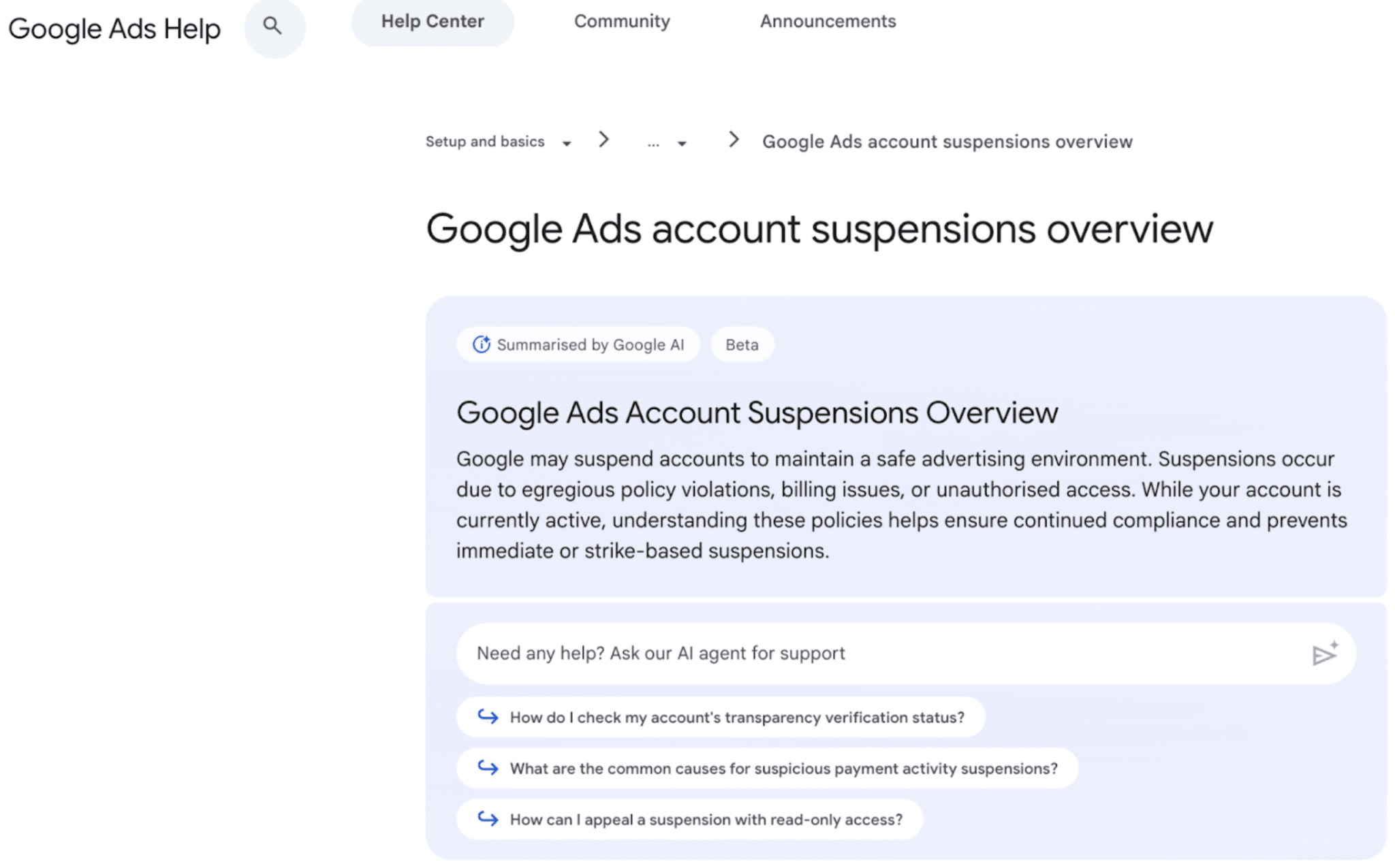
What are the different types of account suspensions?
Understanding the different types of suspensions has been crucial for me. Google groups them mainly into policy violations and egregious violations. Each has distinct causes and implications.
Policy violations
These are common and usually related to Google Ads policy or terms and conditions. I’ve seen issues like inappropriate content or editorial requirement violations come up frequently.
Egregious violations
These are more severe and often tied to unlawful or harmful practices, reflecting overall business conduct rather than specific campaigns. In my experience, these tend to be permanent.
- Circumventing systems, unacceptable practices, or illegal activities often fall here.
What to do if your account is suspended?
Depending on the suspension type, my next steps have usually involved resolving the issue before considering an appeal. Google’s help guides are invaluable, ensuring I’m fully compliant before making my case.
Best practices for submitting an appeal
From my experience, honesty and thoroughness in the appeal process are vital. Whether it’s submitting verification or acknowledging an error, being straightforward helps in getting fair reconsideration.
Remaining patient during the appeal process is crucial, as wait times can be long. In the meantime, I’ve learned not to submit multiple appeals, which could complicate the process unnecessarily.
Inspired by this post on Search Engine Land.

Leave a Reply