I’m watching Google update its advertising policy to make clearer how certain ads are limited while the company estimates a user’s age. The change gives advertisers more transparency as Google expands its age assurance technology worldwide.
What I’m seeing: Google has renamed its Default Ads Treatment policy to “Categories restricted while Google is estimating a user’s age.” To me, that wording matters because it makes the policy sound less like a permanent restriction and more like a temporary safeguard while Google’s systems work out whether a user is old enough to see certain types of ads.
What’s changing: I see three main updates here: the policy has a clearer name, the language now emphasizes that these protections are interim measures during the age estimation process, and enforcement remains unchanged.
What’s different: Google has also narrowed the list of ad categories restricted while a user’s age is being estimated. Previously, the restricted categories included adult content and pornography, alcohol, gambling, and shocking content.
Under the updated policy, I now see only three restricted categories: adult content and pornography, alcohol, and gambling. Shocking content no longer appears on that restricted list.
Why I care: This update does not introduce new advertising restrictions, but it does make the policy easier to understand. For advertisers in affected verticals, the key takeaway is that these limits are tied to Google’s age estimation process, not a broader or permanent policy shift.
The bottom line: I do not see any operational change for advertisers, but Google’s updated policy makes it much clearer that restrictions on adult, alcohol, and gambling ads are temporary safeguards while a user’s age is being estimated.
PPC advertising for medical and mental health services comes with more restrictions than many other industries, but I still see it as one of the most effective ways to keep a steady flow of new patients and clients coming into a practice.
Whether I am managing campaigns for a client, promoting my own practice, or building a campaign from scratch, I focus on the same fundamentals: the right keywords, compliant messaging, clear landing pages, and lead-quality tracking.
Choosing keywords for medical and mental health advertising
When I choose keywords for medical or mental health advertising, I start by thinking about how real patients search. In most cases, their searches fall into three main groups.
First, some people search by symptoms or treatment options. They may not know which professional they need yet, so they search for phrases like “treatment options for depression” or “why does my ankle hurt when I run.” I do not ignore these searches, because they can still turn into new patients or clients.
Second, people often search for what they think the service is called. They may use simplified or incorrect terms, such as “therapist to manage bipolar medications” or “foot pain doctor.” These searches still show intent, even if the language is not medically precise.
Third, some searchers use the correct term because they already know what they need and are ready to contact a professional. They may search for “psychiatrist” or “endodontist near me.” Even then, I watch for confusion between similar roles, such as therapist, psychologist, and counselor.
Most of my budget usually goes toward the second and third groups, where searchers are closer to taking action and starting treatment.
If I have a larger budget, I may also test broader symptom-based or informational searches that could convert later. These can work, but I treat them carefully because informational searchers may or may not be ready to book.
I also rely heavily on negative keywords. They help me block searches for services the practice does not provide, which protects the budget and improves lead quality.
With medical and mental health ad copy, I have to be careful. I need the ad to make it clear that help is available, but I cannot write in a way that feels too direct, too personal, or too aggressive.
I expect some trial and error. An ad rejection does not automatically mean an account is in trouble. It usually means the ad was not approved, so I adjust the wording or request a manual review when appropriate.
Blunt language is often where problems happen. Instead of making strong claims, I test softer, more compliant language that still communicates the value of the service.
To stand out from competitors, I focus on practical benefits such as accepted insurance, payment options, specialized treatments, or distinctions like being family-owned, local, award-winning, certified, or licensed.
I avoid terms like “cure” and other language that implies guaranteed results. Google and Meta both have ad policies that restrict how medical, mental health, and wellness services can be promoted.
When an ad gets rejected, I rewrite it so it still explains the value of the practice without crossing policy lines.
For some psychiatrists, doctors, and other medical service providers, Google Ads may also require a LegitScript.com listing, especially for addiction treatment services.
When I build landing or service pages, I start with the information the front office already gives to patients. That is often the clearest and most useful material available.
I pull details from pamphlets, office materials, and common intake conversations. Then I highlight key points such as accepted insurance, cash payment options, payment plans, financing, and specialized treatments.
I also answer the questions patients regularly ask in person or over the phone. A strong landing page should keep improving as new questions come up.
Those questions might include whether the practice works with children, accepts Medicare, offers phone or virtual sessions, or provides a specific treatment.
I make the next step obvious. That may mean booking an appointment, scheduling an initial consultation, requesting a free phone consultation, filling out a form or questionnaire, submitting a contact request, or calling with questions.
I avoid vague forms and generic phone numbers with no instructions. Instead, I explain the process clearly from pre-treatment to treatment to post-treatment.
I also like to include a FAQ section that answers questions such as “what is the process?” and “how does treatment work?” The more uncertainty I remove, the easier it is for a patient or client to take action.
Choosing the best campaign types
For medical and mental health services, I usually build the strategy around Search campaigns.
Automated or audience-based campaign types, including Performance Max and Demand Gen, can run into privacy and targeting limits. Depending on the service, the ads may not be approved.
Remarketing is typically restricted for the same reason. Video campaigns may be possible, but targeting limits often make them better suited for local branding than direct response.
Search campaigns work well because people are actively looking for answers, treatment, or a specific type of provider. They are typing in the exact services they need.
Many providers also use directories like Psychology Today or ZocDoc for lead generation. I still like supplementing those channels with Google or Microsoft Search campaigns because they send traffic directly to the practice’s own site and give more control over patient or client flow.
My usual approach is to target very specific terms for people who are ready to hire a professional, then test broader symptom or research-related terms when the budget allows.
Meta Ads can also be useful, but privacy laws limit targeting. I also have to be careful with ad copy, images, and landing pages so the campaign stays compliant.
I review Meta’s ad policies before launching campaigns to reduce avoidable disapprovals. Meta can support larger budgets, but for most medical and mental health marketing, Google Search remains the most reliable starting point.
With any online advertising, and especially with medical and mental health services, I need to know more than how many leads came in. I need to know which leads became real patients or clients.
A simple CRM, whether generic or built for the industry, can track incoming leads and show which ones converted.
Google Ads, Microsoft Ads, and Meta Ads all offer built-in CRM connections. I can also use a tool like Zapier to connect systems without needing a programmer.
Beyond website form submissions, I also track inbound calls generated by marketing campaigns. Phone calls often represent high-intent leads, so leaving them out can distort ROI.
Call tracking tools such as CallTrackingMetrics, CallRail, and WhatConverts can integrate with CRMs and major ad platforms to measure lead quality.
They also offer call recording and are HIPAA-compliant, which matters when tracking performance in healthcare-related campaigns.
Keeping medical and mental health ads effective
To keep medical and mental health ads effective, I focus on four things: targeting the right searches, writing compliant ads, improving landing pages, and tracking lead quality.
When those pieces work together, I can build campaigns that attract the right patients and clients more consistently.
A steady, well-structured approach is what helps a practice maintain or expand its patient flow without creating unnecessary compliance risk.
I’m excited to share that Google is expanding its financial services ad verification across 24 European countries. As of this summer, financial advertisers in these markets will face new compliance checks to continue running ads in the European Economic Area (EEA).
Here’s the scoop: Starting July 23rd, Google’s new requirements for financial services advertisers apply to 24 EEA countries, including Austria, Belgium, and Sweden, among others.
As advertisers in designated financial categories, we must undergo verification when prompted by Google. This initiative targets financial fraud and aims to ensure ads are from genuine and regulated providers.
Why it matters: If I don’t complete this verification process, my ads may no longer run in these markets. This policy impacts not just banks and insurers but also the agencies that manage their campaigns.
The big picture: This is part of Google’s efforts to improve transparency and protect consumers. If notified, I’ll receive alerts on the Google platform indicating that ad performance could be impacted unless verification is completed.
Failing to comply means I might lose the ability to serve financial services ads in these countries. It’s crucial for continued campaign success.
How does verification work? I need to complete two steps: First, I’ll verify through G2, a third-party compliance partner. Next, I’ll submit Google’s financial verification application using a code from G2.
During this process, I’ll provide details about the services offered, regulatory status, and necessary evidence of authorization or exemption from a relevant financial regulator.
Agencies, beware: These requirements also apply to agencies like mine managing campaigns for financial services clients. We’ll need to pass compliance checks before continuing operations.
A key point to note: Third-party advertisers don’t have the same freedom. If I promote services approved by a verified institution but lack direct authorization, I must rely on them to submit verification requests on my behalf.
Depending on the financial services being promoted, such as banking or credit products, I might need to undergo this verification. Google can update its list at any time, so staying informed is crucial.
Stay vigilant: As a financial brand targeting European customers, I must ensure compliance now to avoid disruptions later. This could affect agencies handling multiple clients due to administrative demands.
Dig deeper: For more details on the new requirements, I can visit Google’s support page.
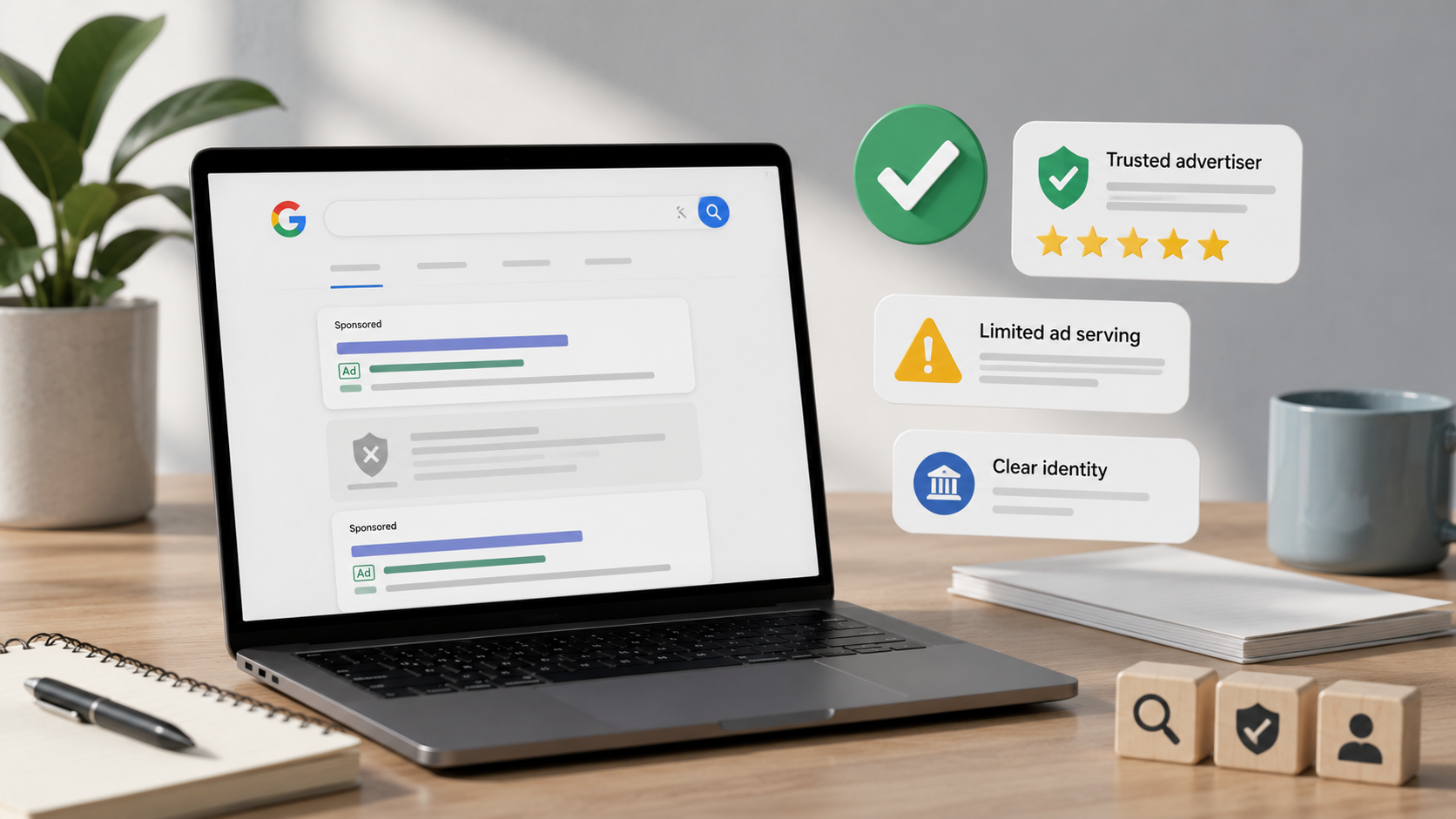
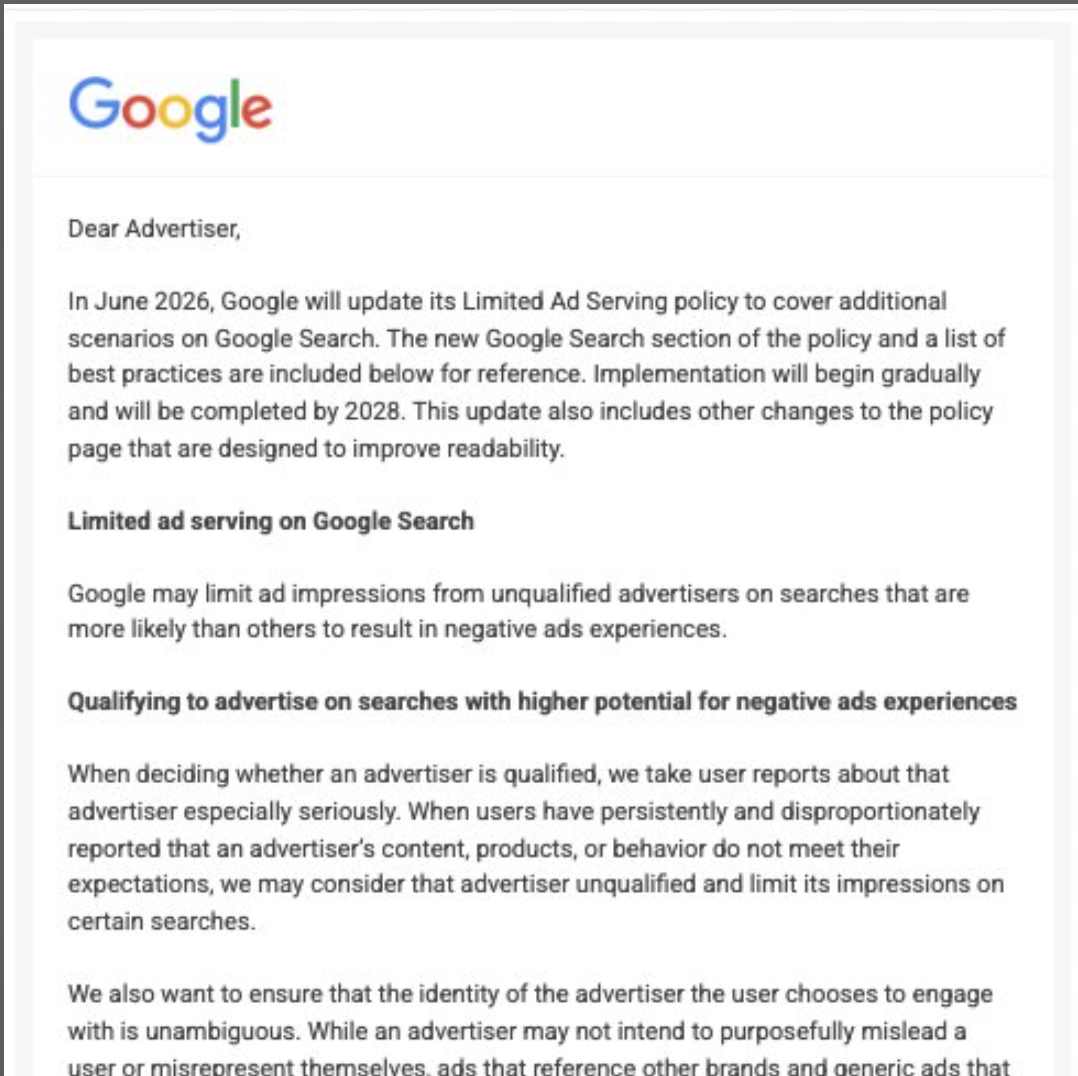
I’ve recently discovered that Google is expanding its Limited ad serving policy across its Search platform. This change gives Google more control to restrict ad impressions from advertisers deemed unqualified or who might create confusion for users.
The implication of this update is significant. For newcomers, brands receiving negative feedback, or those not clearly presenting their identity in ads, the frequency of ad appearances could be affected.
What’s changing? As of this month, Google is rolling out an expanded policy affecting more search scenarios, which it plans to continue implementing through 2028.
This updated policy allows Google to limit ads on searches they believe might lead to poor user experiences.
How Google decides: User feedback is becoming crucial. Advertisers with frequent complaints about misleading content or practices could face limits on where their ads appear.
Additionally, if an ad makes it challenging to recognize who the advertiser is, Google might also impose restrictions.
Why we care: It’s not just about policy compliance anymore. Google is placing more emphasis on advertiser trust signals and branding clarity. Advertisers who don’t make their brand identity clear or have negative feedback histories might see reduced reach.
This shift underscores the importance of brand transparency in Search ads. Advertisers should reevaluate their ad copy and branding to ensure it’s evident who they are and their ad’s purpose.
What advertisers should do: To align with this update, advertisers are encouraged to enhance brand visibility in ads and landing pages, avoid overly generic messages, and clarify any brand affiliations.
Including a domain headline in the first position of responsive search ads can also help in making the advertiser’s identity more apparent.
The bottom line:Google’s updated policy prioritizes advertiser trustworthiness and clarity, potentially limiting visibility for those creating confusion with their identity or practices.
First spotted: Anthony Higman, Founder of Adsquire, first noticed this update. He expressed his concerns on LinkedIn.
I’m intrigued by Google’s decision to update its Local Services Ads on July 6. This change isn’t just a simple update—they’re renaming policies as “requirements” and aligning everything with a recent badge system overhaul.
So, what’s going on? Google is working to refine the rules governing Local Services Ads. They’re not just updating the language; they’re also aligning advertiser requirements with their new verification standards.
One key change is the renaming of “Local Services platform policies” to “Local Services Ads requirements.” It might sound administrative, but these adjustments suggest a more straightforward way for businesses to comply and earn those coveted Google Guarantee badges.
For those of us in advertising, these updates are vital. They not only promise clarity but hint at the possibility that compliance will tie directly to badge status. Agencies and local businesses must stay vigilant and ensure their credentials and standards are spot-on.
What does this mean in the grand scheme of things? Google aims to make the advertiser requirements crystal clear, aligning them with the new badge framework while simplifying the guidance on compliance.
To be clear, Google isn’t cracking down hard on policy. Instead, they’re focused on clarity and modernization, simplifying how businesses access these requirements.
In summary, Google is refreshing its Local Services Ads policies. The shift is towards “requirements,” backed by a badge-driven approach, enhancing trust and eligibility for businesses.
I’ve been following Microsoft’s latest moves in the advertising world closely, and there’s some exciting news for those in the crypto space. Microsoft is now offering more premium ad inventory to cryptocurrency advertisers, all while ensuring compliance with existing requirements.
Now, if you’re in the crypto exchange business, this move could open up new doors for you. Essentially, Microsoft has decided to expand the reach of Audience Ads for cryptocurrency exchanges in markets where crypto advertising is already allowed, which could mean greater visibility and reach.
The big picture: This update is about more than just new ad spots. It’s about giving eligible exchanges a shot at being seen across a wider network via Microsoft’s Audience Ads inventory, moving beyond the confines of traditional search placements.
You might be wondering what exactly is changing. Well, Microsoft’s ad policies have been updated, and now cryptocurrency exchanges that meet the necessary compliance checks can use Audience Ads across all approved crypto advertising markets.
The catch? This expansion is strictly for those advertisers who adhere to Microsoft’s Cryptocurrency and Related Products policies, along with any local laws and regulations that might apply.
Why we care. In the world of advertising, Audience Ads provide a valuable opportunity. They let me, as an advertiser, reach users effectively across Microsoft’s native advertising network. This includes placements on various content, news, and partner sites, providing a broader canvas to engage with potential customers.
For those of us in the cryptocurrency exchange field, this means a chance to boost awareness and connect with potential users beyond the intentions guided by search. It’s an opportunity to deeply engage and build relationships.
The fine print. Though this sounds promising, Microsoft hasn’t relaxed its stringent requirements for cryptocurrency advertising. Advertisers still need to meet all eligibility criteria, sticking to Microsoft’s policies for Cryptocurrency and Related Products, which vary depending on the market and regulatory landscape.
What to watch. I’ll be keeping a close eye on how this expanded inventory is adopted by cryptocurrency exchanges. Will this lead to more widespread use of Audience Ads? Also, I’ll be curious to see if Microsoft will eventually broaden its crypto advertising reach into additional markets. Stay tuned!
Recently, I discovered that Google has updated its personalized advertising policy documents. This change clarifies how restrictions on sensitive audience targeting are applied to Demand Gen and Discovery campaigns, especially when promoting sensitive products or services.
The big picture. The update is part of Google’s “Restricted targeting in Personalized Advertising” policy documentation. It focuses on providing a clearer understanding of potential ad serving limitations rather than implementing new policy restrictions.
What’s changing. In June, Google updated its help documents to offer more insights on how Demand Gen and Discovery campaigns intersect with personalized advertising restrictions.
These changes particularly address campaigns targeting products and services associated with sensitive interest categories.
The fine print. It’s important to note that this update serves as a clarification of existing policy guidance and is not a new policy announcement.
Google states that the revised documentation now includes more information regarding the serving implications when advertisers use audience targeting for products or services falling into restricted categories.
Sensitive interest categories can include areas such as:
Health conditions
Financial hardship
Personal difficulties
Other topics that Google considers sensitive under its personalized advertising policies
Between the lines. In using Demand Gen campaigns, I heavily rely on audience signals and personalized targeting to reach users on platforms like YouTube, Discover, and Gmail.
As the usage of Demand Gen grows, the need for clarity on how Google’s sensitive interest policies affect audience eligibility, reach, and campaign delivery has become more critical.
Google’s documentation update indicates a response to these inquiries by providing us with clearer guidance on when targeting restrictions might limit campaign performance.
Why we care. For those of us running campaigns in regulated or sensitive industries, understanding these restrictions has become pivotal in our campaign planning and audience strategies.
What to watch. If you’re handling Demand Gen campaigns in sectors like healthcare or financial services, it’s vital to review the updated guidance to see if targeting choices might affect your reach or ad delivery.
I’ve been following Google’s strides in ad safety, and their recent updates with Gemini have caught my eye. Gemini’s AI-driven enforcement is not only faster but more accurate, eliminating more than 99% of bad ads even before they appear in 2025. This means we’re seeing fewer false suspensions and stricter adherence to ad policies.
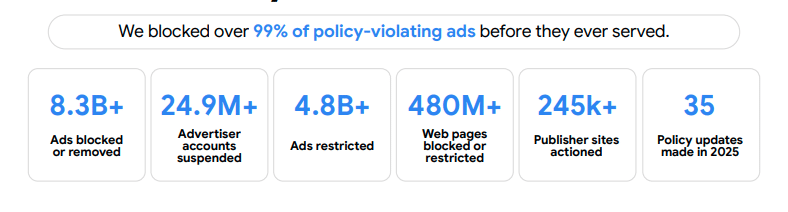
Diving into Google’s 2025 Ads Safety Report, I’m amazed at the scale: 8.3 billion ads were blocked or removed globally, and 24.9 million advertiser accounts got suspended last year. It’s impressive to think that over 99% of these policy-violating ads never saw the light of day, thanks to the power of AI.
Google also pointed out how Gemini’s capabilities significantly improved ad safety:
Gemini slashed incorrect advertiser suspensions by 80%.
The system processed four times more user reports compared to the previous year.
It enhanced the detection of scams by better understanding ad intent.
Looking at the numbers, we see a staggering impact:
602 million scam-related ads removed
4 million scam-linked accounts suspended
4.8 billion ads restricted
480 million web pages blocked or restricted
245,000+ publisher sites actioned
35 policy updates made in 2025
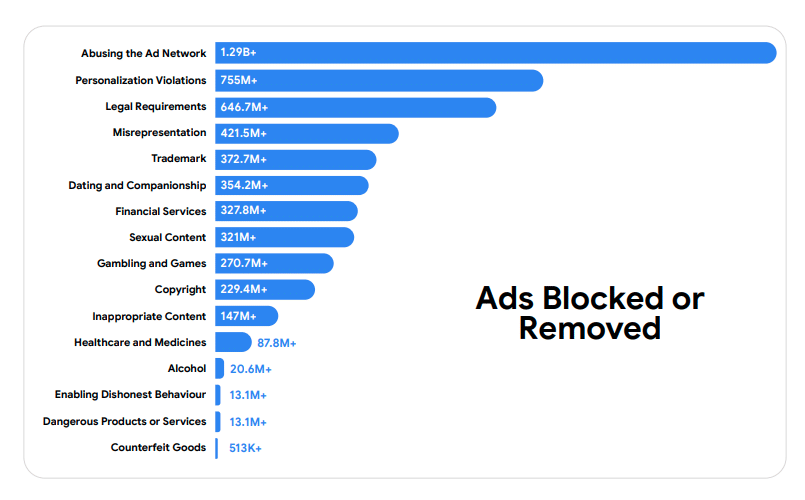
In the United States alone, 1.7 billion ads were removed, and 3.3 million advertiser accounts were suspended in 2025. The main reasons included:
Abusing the ad network
Misrepresentation
Sexual content
Personalization violations
Dating and companionship ads
Why do I care about this? Because stronger AI-driven ad enforcement impacts the way ads run or get flagged. Google claims Gemini enhances precision and reduces unwarranted suspensions, which might prevent unexpected interruptions for genuine brands. However, as AI reviews tighten, we advertisers must ensure complete policy compliance.
Some UK and US advertisers experienced waves of unexplained disapprovals, citing no discernible issues, highlighting the intricacies of automated oversight.
Gemini’s approach to ad enforcement is exciting. By evaluating billions of signals—like account age and user patterns—it’s capable of identifying malicious activity quicker than previous systems. By the end of 2025, most Responsive Search Ads were assessed instantly, blocking harmful material before it could launch. Google aims to apply this capability across more ad formats soon.
Yet, there’s a balance to maintain. Aggressive automation may disrupt campaigns, but Google’s emphasis on nuanced understanding is crucial for reducing incorrect suspensions, which is essential for brands relying on continuous ad visibility.
In conclusion, Google is banking on Gemini to enhance ad safety, aiming to curtail sophisticated scams while assuring advertisers that legitimate activities won’t be hindered by stricter controls.
I’ve recently discovered a new tool that could significantly streamline how I manage my ad campaigns. Google has rolled out a feature that adds more precision to policy appeal processes, potentially saving time and reducing the chance of resubmitting outdated ads.
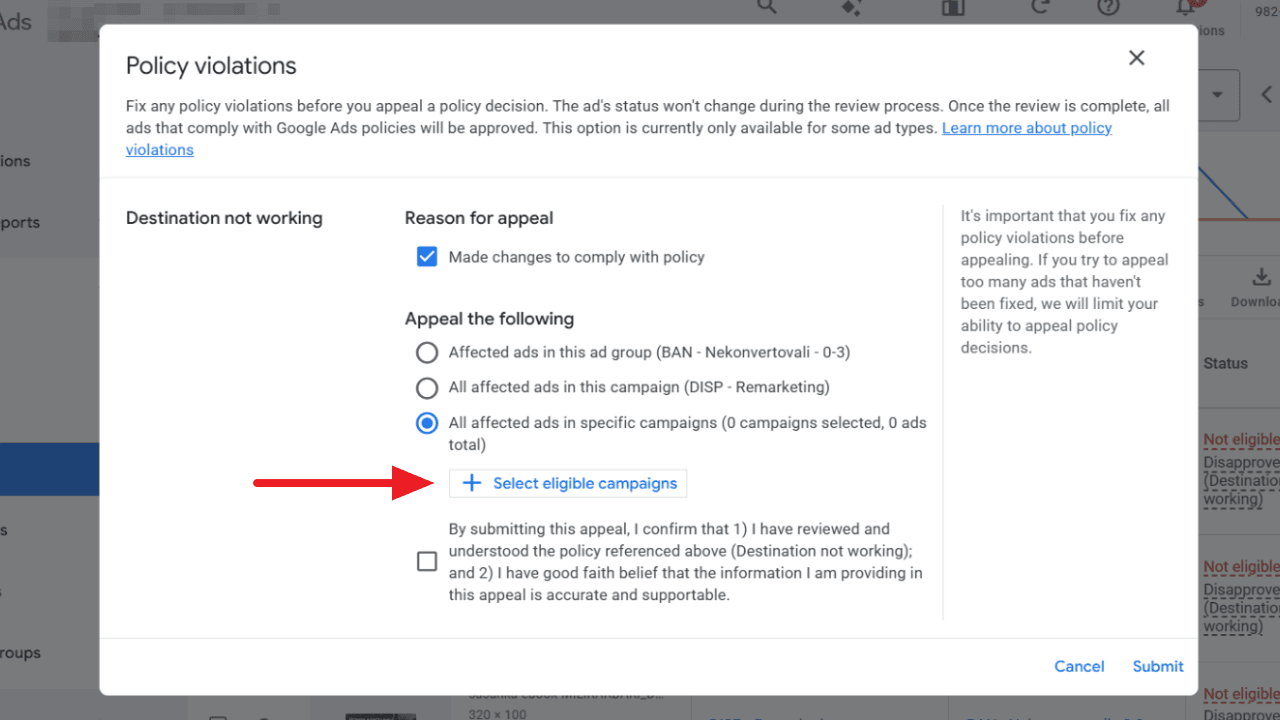
Driving the news. With this update, Google now allows me to select ads from specific campaigns when requesting a re-review. This is part of Google’s effort to simplify ad appeals, reducing the bulk of unnecessary submissions that can bog down the process.
Before this change, I often found myself resubmitting all eligible ads across an account, including those from older campaigns that were not relevant to current policies.
This was not only time-consuming but also cluttered the review process with ads that hadn’t been updated yet.
What’s new. Now, with the “Select eligible campaigns” option available on the Google Ads policy violations page, I can fine-tune my appeals. This means I can send only the ads that have been recently updated, while ignoring outdated campaigns.
Here’s how this benefits me:
Reduce unnecessary inclusions of old ads,
Simplify and expedite the appeal process,
Focus on solving current ad issues effectively.
Why we care. For those of us handling large accounts, being able to fine-tune bulk submissions by campaign makes managing widespread disapprovals or policy issues more efficient. It not only speeds up the process but minimizes confusion when dealing with multiple policy amendments at the same time.
The bottom line. While it might not be a groundbreaking product launch, this update is a workflow enhancement that many advertisers like myself have long been waiting for. It offers greater control and less hassle when addressing disapproved ads.
First spotted. Hana Kobzová at PPC News Feed was the first to notice this valuable update.
Starting April 16, Google is tightening rules around political content in Shopping ads. If you’re running such ads, you might need to verify your account as an election advertiser. Let me walk you through what’s happening and why it matters to us.
What’s Changing? From mid-April, merchants in nine countries must verify their Google Ads accounts for political Shopping ads. Plus, some political ads will face outright bans in India.
Countries Affected: You’ll need to pay attention if you’re operating in Argentina, Australia, Chile, Israel, Mexico, New Zealand, South Africa, the United Kingdom, or the United States.
Why Does This Matter? This update shows Google’s commitment to election integrity across different platforms, including commerce. If you’re selling political merchandise or campaign items, it’s crucial to act before the deadline.
What Should You Do?
1. Check Google’s updated policy to see if your ads now fall under these new guidelines.
2. If they do, apply for election advertiser verification via Google Ads before April 16 to keep your ads running smoothly.
The Bottom Line:This change might affect a small group of merchants, but missing the deadline could lead to disapproved ads or flagged accounts. If you’re selling politically themed items in the specified regions, verify your eligibility now to avoid hiccups.