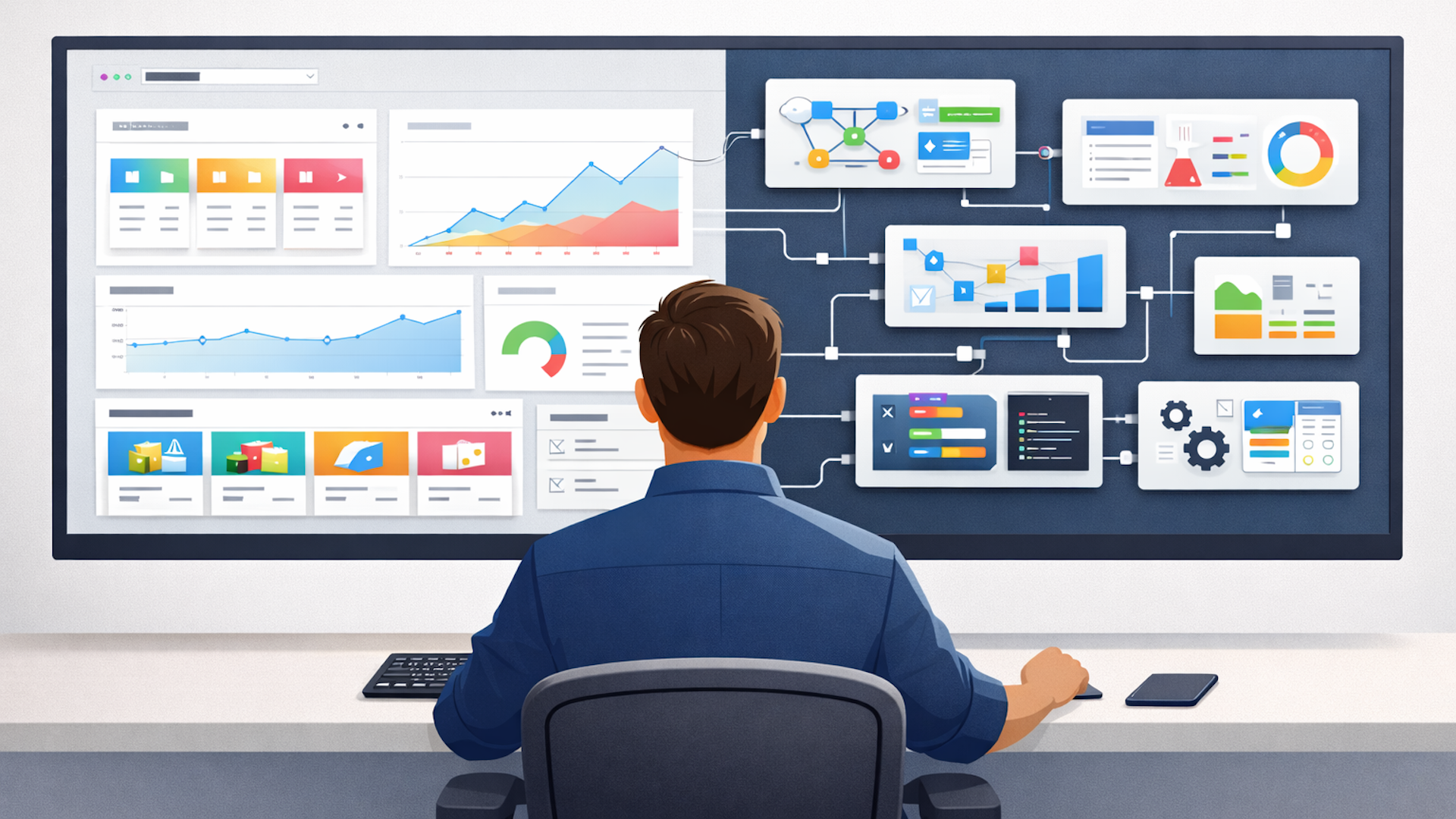
I’ve watched automation quietly transform PPC management over the years with rules, scripts, and API-driven workflows in Google Ads.
Like many other marketers, I’m already very comfortable with automated bidding, data-driven optimization, and a suite of other AI-powered enhancements. But there’s a new shift on the horizon that’s set to redefine how we manage and optimize PPC campaigns.
This time, I’m talking about AI agents and vibe coding. These innovations are ushering in a more autonomous mode of working where AI takes the lead in execution, allowing marketers like me to focus on strategy and creativity.
This evolution promises unprecedented efficiency and flexibility, redefining effective PPC management.
Agentic AI: Google Ads’ Game-Changing Feature
In November 2025, Google rolled out its Agentic Ads Advisor, powered by advanced Gemini models. This tool helps advertisers like me uncover insights and boost campaign performance effortlessly.
Google positions Ads Advisor as an AI partner that enhances campaign management by understanding business contexts, simplifying tasks, and learning from interactions to deliver better outcomes.
However, the pressing question remains: What functionalities should an agentic AI tool embody?
It should function as an autonomous agent, surfacing information as needed but also operating independently. It should identify opportunities for enhancing campaign setups, assets, ad copy, and more.
An ideal agentic AI wouldn’t just make recommendations but also implement essential changes on its own.
Integrating Agentic AI in PPC Workflows
Agentic AI should ideally make decisions autonomously without needing constant human input, thereby managing, adjusting, and optimizing campaigns as they run.
Beyond just advice or reporting, its real value lies in managing bidding, ad placements, and creative testing in real-time, based on live data, seasonality, and user behavior trends.
With agentic AI handling more operational tasks, I can direct my efforts toward strategic decision-making.
The competitive edge will increasingly rely on strategy rather than tools, focusing on marketing fundamentals like positioning, value propositions, and brand awareness.
Read more: Agentic PPC: What Performance Marketing Could Look Like in 2030
Why Agentic AI is Key for Advanced PPC Marketers
Agentic AI appeals to experienced PPC marketers like myself because it scales campaigns without compromising strategic control, proving to be a true game-changer.
With real-time optimization, data-driven creativity, and reduced human error, it redefines my role by allowing more time for strategy rather than execution.
Despite its capabilities, informed oversight is essential to ensure alignment with broader marketing objectives, highlighting the need for ongoing professional engagement.
Agentic AI isn’t replacing PPC professionals. Instead, it extends our capabilities, reduces manual effort, and facilitates better outcomes with minimal friction.
Vibe Coding: Creating Your Marketing Toolbox
In tandem with agentic AI, vibe coding is redefining how I work with AI-powered platforms, allowing me to create personalized, intuitive marketing tools and campaigns.
Tools like Cursor and AI Studio have enabled me to articulate and realize specific needs seamlessly, even without being a developer.
Incorporating vibe coding led me to build an SEO schema markup generator, an SEO audit tool, and a marketing idea generator, proving its practical value in my professional life.
The possibilities expand when combining vibe coding with agentic AI, empowering marketers to engineer their AI agents tailored for PPC work.
With this combination, I integrated these tools effectively within my marketing workflows, enhancing performance and strategy development at scale.
Explore further: How Vibe Coding is Changing Search Marketing Workflows
The Future: Navigating PPC with Agentic AI and Vibe Coding
Agentic AI and vibe coding present immense opportunities to streamline PPC operations, enhance performance, and maintain competitiveness in a fast-evolving landscape.
The future is about leveraging these technologies for more autonomous, data-driven, and personalized marketing strategies that benefit both internal teams and customers alike.
As a PPC professional, it is crucial to embrace these advancements, ensuring adaptability and continued relevance in an AI-powered future.
Follow experts like Alfred Simon, Mike Rhodes, and Ales Sturala to see practical applications of these innovative technologies in real-world scenarios.
Inspired by this post on Search Engine Land.

Leave a Reply