Google’s New Multi-Channel Product ID Rule: Prepare for Change

```json
{
  "alt": "Hand holding smartphone displaying Google Shopping logo with large Google G logo in the background.",
  "caption": "Exploring the future of online retail with Google Shopping, perfectly blending technology and commerce at our fingertips.",
  "description": "A hand holds a smartphone showing the Google Shopping logo, a colorful shopping tag with 'G,' indicating the app's purpose. In the background, a large, partially visible, multicolored Google 'G' logo is prominently displayed. This image represents Google's integration of shopping experiences through digital platforms, emphasizing accessibility and convenience in modern online commerce. Keywords: Google Shopping, online retail, smartphone, digital commerce."
}
```

I recently came across an important update from Google that I believe every retailer should pay attention to. Starting in March 2026, Google Merchant Center will implement a new requirement for multi-channel products, which are those available both online and in stores. This involves using separate product IDs when product details differ by channel.

Understanding the Changes. So, what’s changing? Essentially, online product attributes will now act as the standard. If there is a variation in the product details for in-store items, such as different pricing or availability, I’ll need to create a separate version with a distinct product ID and manage it separately in my feeds.
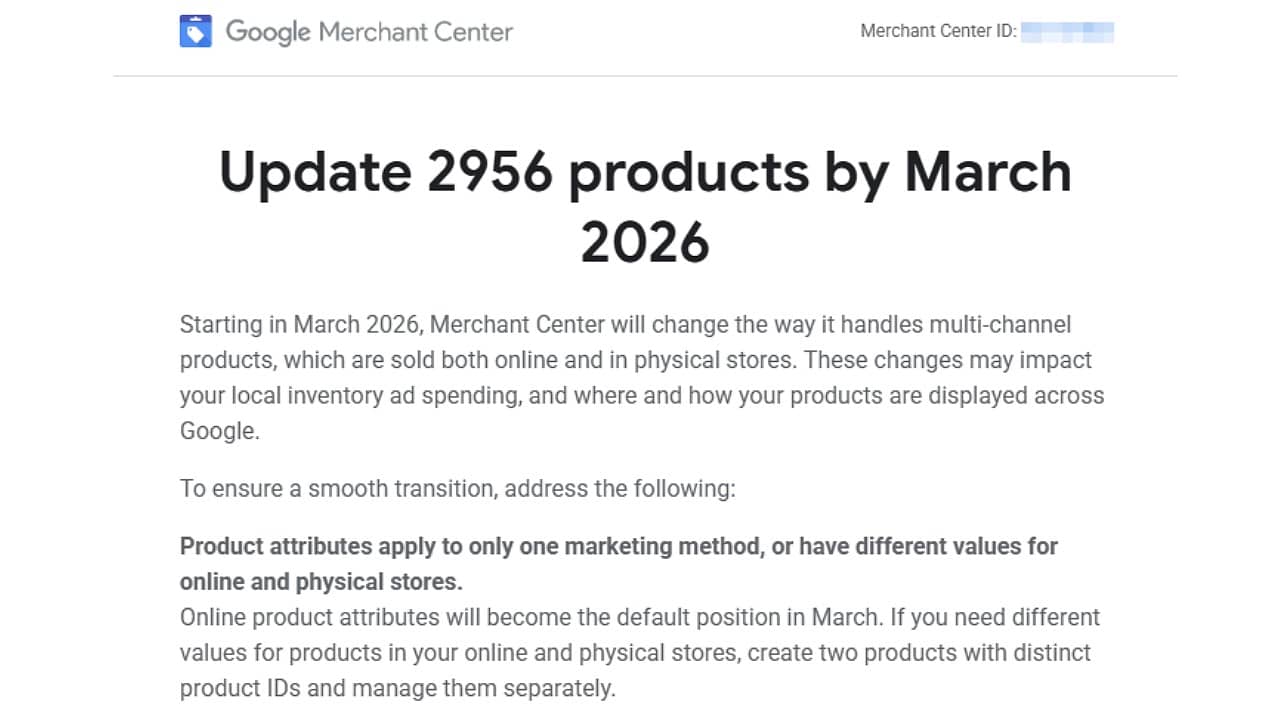
Steps to Take. Google has already started reaching out to affected accounts, marking products that will need updates before the March deadline. It’s critical for me to review my product data feeds to ensure that items are properly segmented between online and in-store, especially if I’m utilizing Local Inventory Ads or operating across multiple Google platforms.

The Importance of Compliance. This change is not just procedural; it’s crucial because many retailers, including myself, have been managing online and in-store versions of products under a single ID. Google’s update demands that I now explicitly separate these products when attributes like price, availability, or condition differ.

The Broader Impact. This update, while providing Google with cleaner, more consistent product data across channels, places additional responsibility on advertisers like me for feed management, especially if my inventory is complex and extensive.

```json
{
  "alt": "Google Merchant Center notice to update 2956 products by March 2026, addressing multi-channel product handling changes.",
  "caption": "Prepare your Google Merchant Center for change by March 2026! Update 2956 products to adapt to new multi-channel handling strategies for optimal performance.",
  "description": "A notification from Google Merchant Center instructs users to update 2956 products by March 2026. The update involves changes in handling multi-channel products impacting local inventory and ad spending. Users are advised to apply product attributes to a single marketing method or create separate entries for online and physical stores. This aims to align with the new default settings for online product attributes, ensuring smoother operations across Google's platforms."
}
```

Initial Announcements. This update and the communication from Google were initially highlighted by PPC News Feed founder Hana Kobzová. I’m grateful for their early insights.

Key Takeaway. If my products catalog for online and in-store are not perfectly aligned, Google’s new system requires that I start treating them as separate entities to maintain visibility and eligibility on Google’s platform.

Learn More. To understand more about Google’s multi-channel product system update, I suggest visiting this support page.


Inspired by this post on Search Engine Land.


crushpress.ai community screenshot

FAQs

What is the key change?

Starting in March 2026, Google Merchant Center will require separate product IDs for multi-channel products when their details differ by channel.

How should product IDs be managed if online and in-store details differ?

Create a separate version with a distinct product ID and manage it separately in feeds.

What should retailers do now?

Review your product data feeds to ensure items are properly segmented between online and in-store, especially if you’re using Local Inventory Ads or operating across multiple Google platforms.

Why is this change important?

It’s crucial because many retailers have been managing online and in-store versions under a single ID. The update requires explicit separation when attributes like price or availability differ.

Where can I learn more?

Learn more at Google’s support page linked in the article: https://support.google.com/merchants/answer/16529073

Who highlighted the update initially?

PPC News Feed founder Hana Kobzová highlighted the update initially.

Comments

Leave a Reply

Your email address will not be published. Required fields are marked *