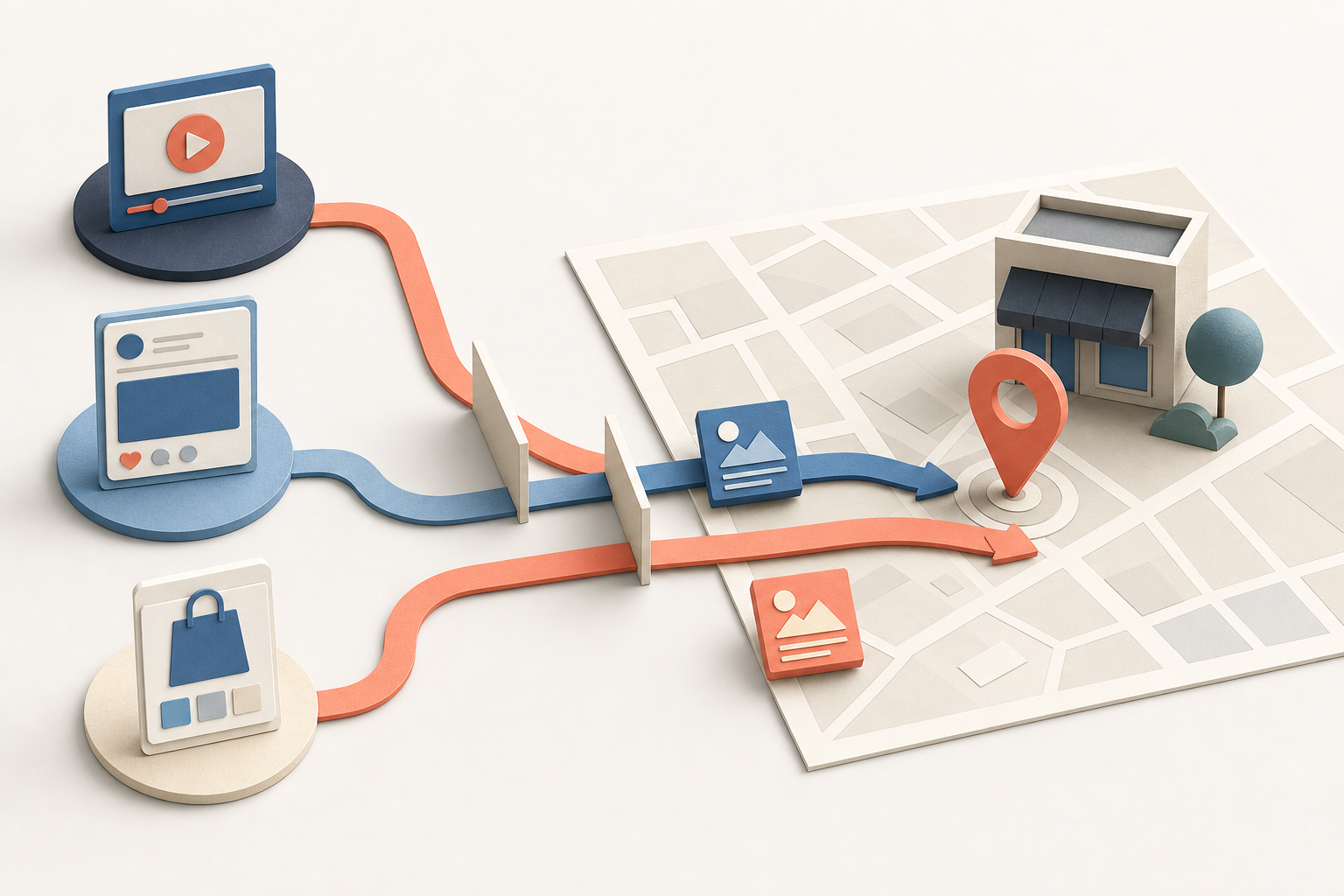
You have a new channel choice and a familiar campaign problem: should you add Google Maps to an existing Demand Gen campaign, or isolate it in a campaign of its own? The wrong structure may still spend money and record conversions. It just may not tell you whether Maps contributed anything useful.
Google Maps can be selected in Demand Gen channel controls alongside other channels or used on its own. That gives you a cleaner way to build around location-dependent decisions, but the control is only valuable when the campaign starts with a precise question.
Key takeaways
- Use a Maps-only campaign when you need to learn whether Maps delivery can meet a defined business target.
- Keep Maps with other Demand Gen channels when the same message and outcome work across contexts and placement-level certainty is secondary.
- Treat Maps as a location-relevant context, not proof that every impression carries immediate local intent.
- Match the ad, campaign geography, offer and destination page to the locations you can actually serve.
- Do not confuse isolated Maps performance with incrementality. A Maps-only result shows what happened in that campaign, not what would have happened without it.
Maps gives you placement control, not proof of intent
The meaningful change is control over distribution. Maps joins Demand Gen channels such as YouTube, Discover and Gmail, and an advertiser can combine those environments or select Maps alone. That is useful because a location-dependent message does not always belong in every discovery context.
What the setting does not do is turn every Maps impression into a high-intent local search. Placement, audience, intent and business outcome are different things. Selecting Maps controls the environment in which eligible ads can appear. It does not prove what a person wants, how urgently they want it or whether they are within a serviceable location.
That distinction matters for businesses with branches, venues, service areas or in-person appointments. Maps may place the message closer to a location-oriented decision, including situations involving local exploration or navigation. You still need the campaign to qualify that opportunity through its geography, audience, message and destination.
Before creating a Maps-only campaign, answer these questions:
- Does the value of the offer depend on where the person is, where the business operates or where the service can be fulfilled?
- Can the ad communicate a location-relevant reason to act without relying on vague proximity language?
- Can the destination page confirm the same location, availability, offer and next step?
- Do you need a Maps-specific decision, or do you simply want more Demand Gen distribution?
If the first three answers are weak, Maps-only is unlikely to fix the campaign. If the fourth answer is simply broader distribution, combining Maps with other channels may be the more coherent structure.
Choose the structure that answers your campaign question
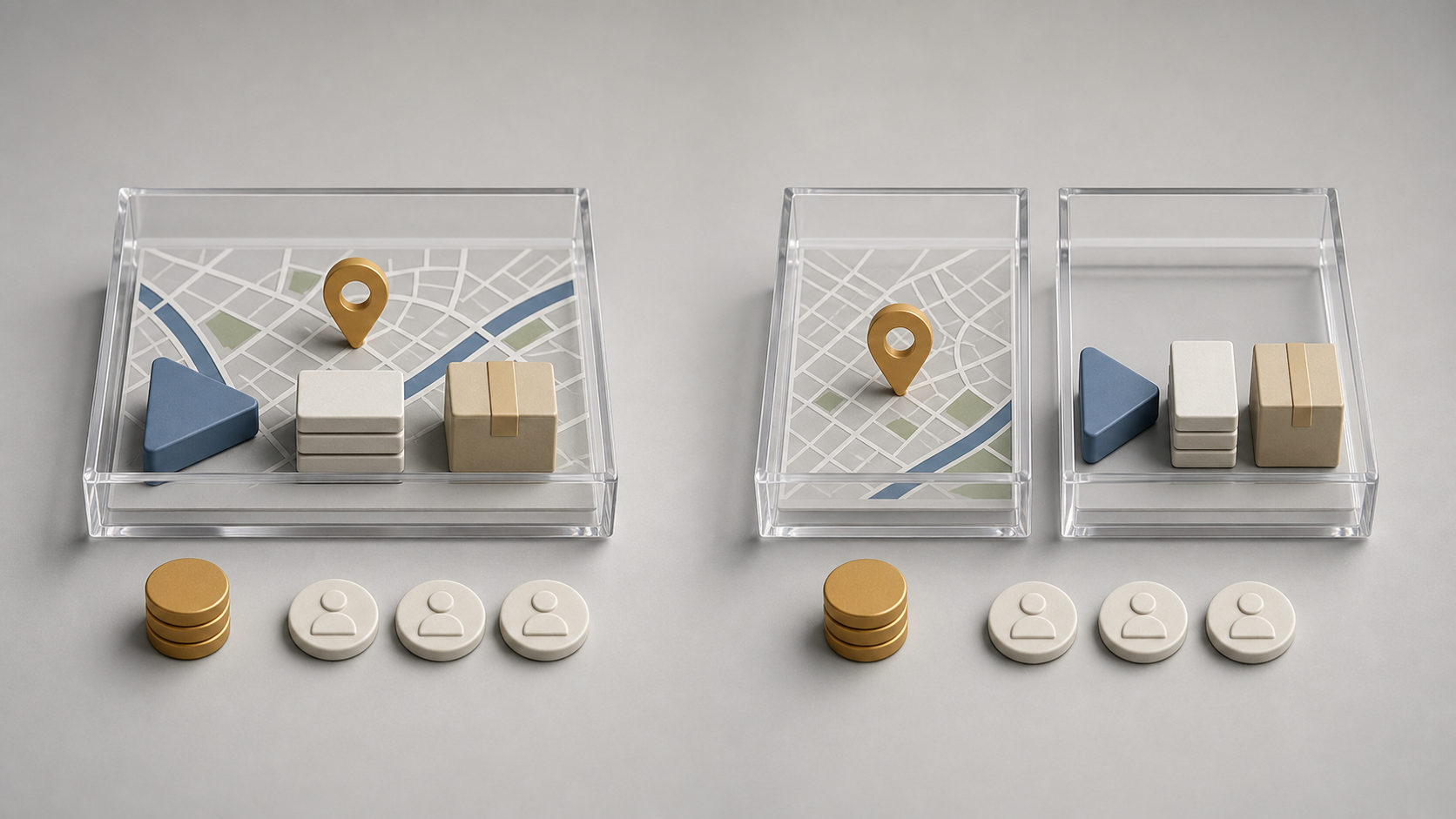
A standalone Maps campaign and a multi-channel Demand Gen campaign solve different measurement problems. Neither is automatically better. The right choice depends on what you need to decide after the campaign runs.
| Decision factor | Maps-only Demand Gen | Maps with other Demand Gen channels |
|---|---|---|
| Primary question | Can Maps delivery meet our defined outcome, efficiency and quality requirements? | Can the selected channel mix produce an acceptable overall business result? |
| What becomes clearer | Delivery and attributed results from a campaign restricted to Maps | Performance of the broader campaign strategy across selected environments |
| What remains uncertain | Whether Maps caused incremental outcomes that would not have occurred elsewhere | How much Maps contributed if reporting does not provide a sufficient channel breakdown |
| Best fit | A location-specific message, outcome or learning objective that requires its own decision | One offer and conversion goal that make sense across Maps, YouTube, Discover or Gmail |
| Common mistake | Treating a separate campaign comparison as a controlled causal test | Crediting an aggregate campaign result to Maps without placement-level evidence |
Do not split the campaign merely because the control exists. A separate campaign divides budget and evidence into another decision unit. That can be worthwhile when Maps needs its own message, economics or evaluation. It adds little when the campaign would use the same assets, destination, audience and success criteria everywhere.
Write the hypothesis before choosing the structure. A useful template is: For [defined audience and serviceable geography], Maps delivery using [location-relevant message] should produce [primary business outcome] within [economic ceiling] while meeting [quality requirement]. The brackets are planning prompts, not platform features.
Each blank forces a decision. The primary outcome might be a qualified lead, completed booking, sale or another action the business values. The economic ceiling should come from the value and margin of that outcome. The quality requirement prevents cheap but unsuitable actions from looking successful.
If your hypothesis explicitly names Maps, a Maps-only structure can produce a clearer diagnostic result. If it names only the overall business outcome and the message works across all selected channels, a combined campaign is usually closer to the question you actually care about.
Build the message around a real local decision
Maps creates a useful context, but it cannot rescue generic creative. A person considering a location-dependent option needs to understand what is available, where it is relevant and what to do next. Broad brand language makes that decision harder.
Use this message order when planning the ad and its destination:
- Lead with the product, service or experience. Do not make the reader decode an abstract slogan before discovering what you offer.
- Add a verifiable local fact that affects the decision. That could be a branch, service area, collection option, venue or other genuine fulfillment detail.
- State one next action that the destination can complete, such as checking availability, booking, requesting a quote or viewing the relevant location.
- Continue the same promise after the click. The destination should confirm the offer, location and action rather than sending the person to a generic home page.
A practical planning template is: [Offer] in [serviceable location]. [Verifiable differentiator]. [Next action]. Do not mistake those brackets for dynamic insertion. They are reminders to replace generic wording with facts your business can support.
Be especially careful with words such as nearest, available, open or same-day. Those claims can influence an immediate local decision, so use them only when the operation and destination page can consistently support them. A Maps placement does not make an inaccurate availability claim safer.
Campaign geography also needs deliberate attention. Selecting Maps as a channel is not a substitute for defining where the campaign should be eligible. Align geographic settings with branches, service boundaries, delivery coverage and any offer restrictions. Otherwise, the ad may attract interest from people whose location the business cannot serve.
Review the entire path as one promise: ad, location context, landing page and fulfillment. If the ad names one area but the page defaults to another, or the page hides the local action behind a general navigation menu, the campaign has introduced friction at the moment location matters most.
Measure Maps without overstating what the test proves

A Maps-only campaign isolates where the campaign can deliver. It does not create a perfect incrementality test. If it meets your target, you know that the campaign recorded acceptable outcomes while restricted to Maps. You do not yet know how many of those outcomes would have occurred through another ad, another channel or unpaid behavior.
The same caution applies when comparing a Maps-only campaign with another campaign. Differences in budget, bidding, audience, geography, creative, offer or conversion definitions can explain part of the performance gap. Hold those elements consistent where the comparison requires consistency, and document every intentional exception.
Build the measurement plan before launch:
- Choose one primary business outcome. Engagement metrics may help diagnose delivery, but they should not replace the action the campaign is meant to produce.
- Set the maximum acceptable cost for that outcome from your own economics. Also set a maximum test spend you can afford to lose before the campaign begins.
- Define a quality check. For lead generation, that could be whether leads meet the business’s qualification criteria. For bookings or sales, it could be completion, validity or another downstream status the business already records.
- Record the exact offer, audience, geography, conversion definition and evaluation period. This gives you a baseline against which later changes can be understood.
- Inspect the reporting available in your account before promising a channel-level analysis. Channel selection does not guarantee every Maps-specific segment, diagnostic or optimization control you may want.
- Write keep, change and stop rules in advance. This prevents a convenient secondary metric from becoming the success criterion after the primary result disappoints.
A keep rule could require the campaign to meet both the economic ceiling and the quality floor. A change rule could apply when Maps receives meaningful delivery but the ad-to-page path shows a correctable mismatch. A stop rule should activate when spend reaches the preset loss limit without producing the business evidence required by the hypothesis.
If a combined campaign does not expose enough Maps detail for the decision you need, a Maps-only campaign can provide a more isolated directional read. Label it accurately: it is a channel-restricted campaign result, not proof of causal lift.
When the first test works, make the next change narrow. Extend the approach to another eligible location, offer or campaign context rather than switching every Demand Gen campaign at once. The aim is to discover where the Maps hypothesis transfers and where local conditions change the result.
For your next campaign draft, write the hypothesis and decision rule before selecting the channel. If the question itself names Maps, isolate Maps. If the question is about the combined business result, keep the channels together and accept that placement-level certainty may be lower. That choice determines whether the campaign merely runs or gives you evidence you can use.
Leave a Reply