Combatting Affiliate Fraud: Secure Your 2026 Growth

```json
{
  "alt": "Cartoon figures detecting fraud on a computer screen with bluepear logo and text about smarter affiliate fraud detection for 2026.",
  "caption": "Unveil the future of fraud detection with bluepear's innovative solutions, tackling affiliate fraud smarter than ever by 2026.",
  "description": "This graphic features cartoon characters analyzing a computer screen with a magnifying glass, symbolizing fraud detection. The purple and blue color scheme is coupled with the bluepear logo and the text 'Smarter affiliate fraud detection for 2026'. An alert icon on the screen signifies potential fraud, emphasizing bluepear's commitment to cutting-edge fraud prevention solutions. Keywords: fraud detection, bluepear, affiliate, 2026, computer security."
}
```

Affiliate marketing is a major driver of revenue, but it also hides significant losses. I’ve seen firsthand how brand bidding, ad hijacking, coupon abuse, and subtler forms of affiliate fraud can erode ROI and distort attribution figures.

The critical issue isn’t whether these challenges exist, but rather understanding how much they’re impacting our business. In this article, I delve into the most prevalent types of affiliate marketing fraud. I’ll also share insights on how modern tools like Bluepear offer advanced affiliate fraud detection strategies that protect our growth, reputation, and budget.

Not all affiliate programs offer the same benefits, nor do they come with the same risks. Particularly in SaaS, where affiliate commissions can be between 20% to 70%, these programs become highly enticing targets for fraudsters.
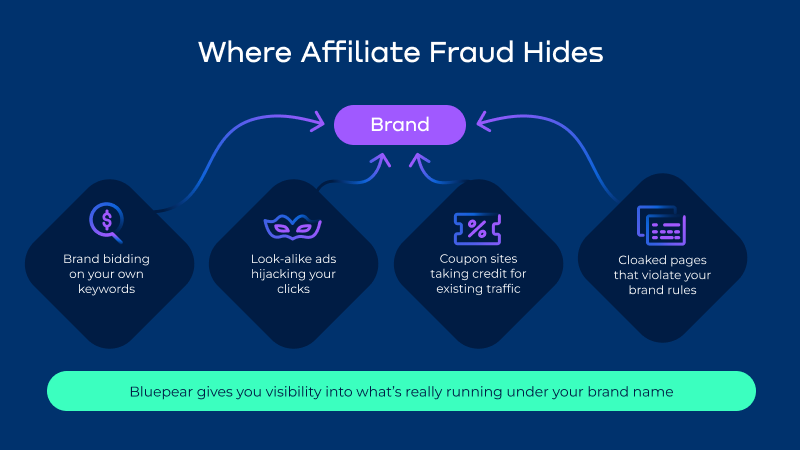
```json
{
  "alt": "Diagram illustrating different methods where affiliate fraud hides, such as brand bidding and look-alike ads, targeting a central brand element.",
  "caption": "Uncover the hidden tactics of affiliate fraud targeting your brand, from look-alike ads to misleading coupon sites.",
  "description": "This diagram highlights the various ways affiliate fraud can undermine a brand. It features a central 'Brand' element with arrows pointing to different fraudulent methods: brand bidding, look-alike ads, coupon sites, and cloaked pages. The image emphasizes the importance of understanding how these tactics operate to better protect brand integrity. The text at the bottom promotes Bluepear as a solution for gaining visibility into these fraudulent activities."
}
```

Fraudsters exploit trust gaps, often bidding on brand terms or using shady tactics like ad hijacking and coupon code misuse to siphon off profits. A staggering 63% of affiliate marketers identify these threats as their primary concern.

Unfortunately, much of this fraud operates under the radar. Affiliates execute campaigns and manage landing pages without real-time monitoring, which means you may end up paying commissions on existing traffic or, worse, funding brand impostors.
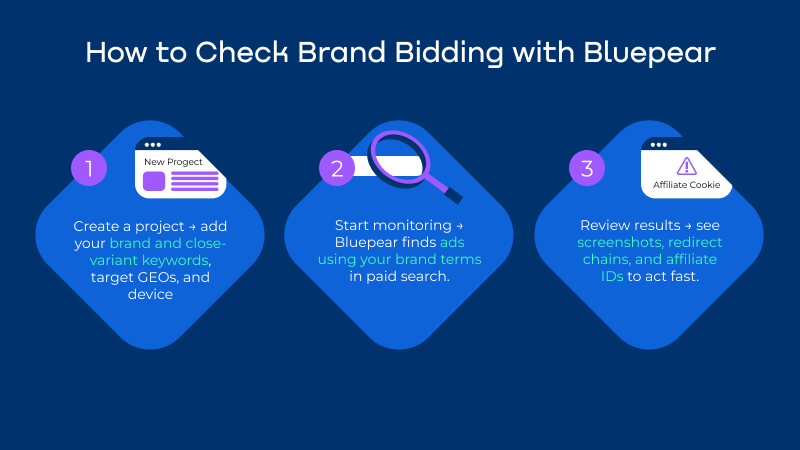
```json
{
  "alt": "Three-step guide on checking brand bidding with Bluepear featuring project creation, monitoring, and review stages.",
  "caption": "Master brand bidding with Bluepear by creating a project, monitoring brand-related ads, and reviewing strategic results. Empower your marketing tactics!",
  "description": "This image illustrates a three-step process for checking brand bidding using Bluepear. Step 1 involves creating a project by adding your brand and keywords, targeting GEOs, and selecting devices. Step 2 focuses on monitoring, with Bluepear identifying ads using your brand terms in paid search. Step 3 is about reviewing results such as screenshots, redirect chains, and affiliate IDs. Ideal for marketers aiming to enhance their brand's online presence."
}
```

Let’s dig deeper into common fraud tactics and how to recognize and counteract them early on. Equipped with strategies, you can shield your program from such threats.

I focus on four primary fraud tactics: brand bidding, ad hijacking, coupon abuse, and non-compliant content. Each poses unique challenges but can be counteracted with the right preventative measures.
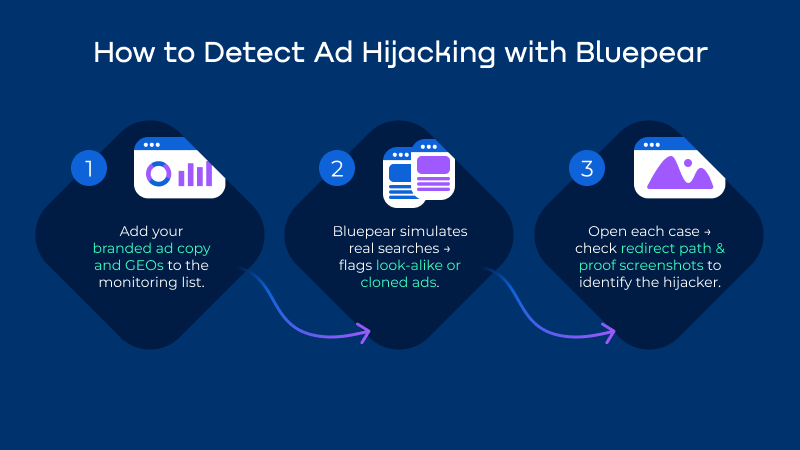
```json
{
  "alt": "Infographic on detecting ad hijacking with Bluepear, outlining three steps using icons and arrows.",
  "caption": "Discover how Bluepear helps protect your brand by detecting ad hijacking through a simple three-step process.",
  "description": "This infographic titled 'How to Detect Ad Hijacking with Bluepear' outlines three key steps using visuals. Step one involves adding branded ad copy to a monitoring list. Step two uses Bluepear to simulate real searches, identifying look-alike ads. Finally, step three involves checking redirect paths to identify hijackers. The design uses icons, arrows, and a structured flow to convey the process effectively."
}
```

Brand bidding occurs when someone purchases ads using your brand name. This diverts potential customers who are actively searching for your product, resulting in needless commission payments. It’s crucial to maintain a detailed list of brand-related keywords in your affiliate terms and monitor for sudden spikes in performance metrics.

Ad hijacking mimics your paid search ads, lowering your campaign visibility. Regular checks and test searches can expose these fraudulent activities.
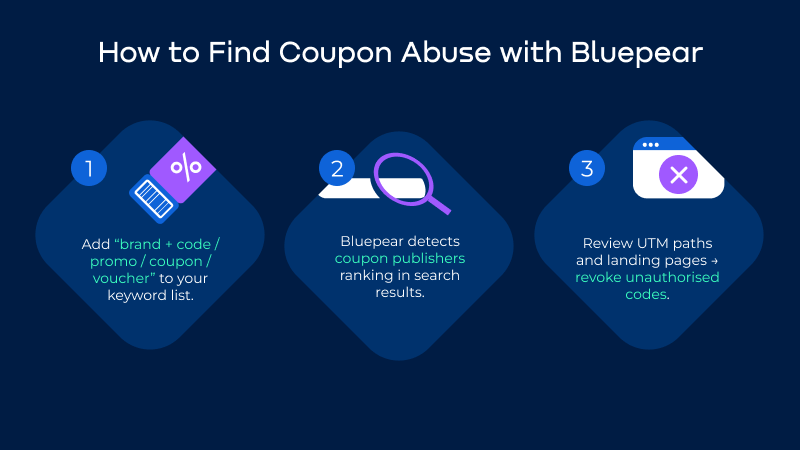
```json
{
  "alt": "Infographic on finding coupon abuse with Bluepear, featuring three steps with icons and text.",
  "caption": "Discover how Bluepear helps you tackle coupon abuse with three key steps: keyword addition, coupon detection, and code revocation.",
  "description": "This infographic titled 'How to Find Coupon Abuse with Bluepear' outlines three steps. Step 1: Add 'brand + code / promo / coupon / voucher' to your keyword list with an icon of a pencil and discount symbol. Step 2: Bluepear detects coupon publishers in search results, depicted by a magnifying glass icon. Step 3: Review UTM paths and landing pages to revoke unauthorized codes, illustrated with a web page icon. This guide enhances digital marketing strategies by tackling unauthorized coupon use."
}
```

Coupon abuse is trickier; it manipulates traffic from affiliates who rank high for brand-related coupon searches. Ensuring coupon activity is pre-approved and regularly monitoring search results helps mitigate this fraud.

Non-compliant content can easily escape detection. Cloaking tactics mean users see different content than compliance teams. Establish strong creative guidelines and treat content audits as an ongoing activity.

```json
{
  "alt": "Bluepear infographic on spotting non-compliant content with three steps and icons.",
  "caption": "Discover how Bluepear helps you identify non-compliant content with a simple three-step process, enhancing your digital content's credibility and compliance.",
  "description": "This infographic titled 'How to Spot Non-Compliant Content with Bluepear' illustrates a three-step process with icons. Step 1: Add affiliate domains and trigger words like 'official' and 'discount.' Step 2: Bluepear decloaks hidden landing pages and captures real user views. Step 3: Review evidence to tag violations or send notices automatically. The design uses a blue background with a modern, clean layout, aimed at improving content compliance monitoring."
}
```

Defending against affiliate fraud requires continuous vigilance, clear program rules, and leveraging technology. Platforms like Bluepear use automated systems to highlight and eliminate fraud, giving you back control.

For 2026, my focus is on building stronger relationships with affiliates, ensuring transparency, and promoting a culture that prioritizes honesty and clear communications.

Ultimately, affiliate fraud is a continually evolving threat. By understanding these tactics, setting clear expectations, and utilizing advanced tools, we can protect our interests and secure sustainable growth.


Inspired by this post on Search Engine Land.


crushpress.ai community screenshot

FAQs

What types of affiliate fraud does the article highlight?

The article focuses on brand bidding, ad hijacking, coupon abuse, and non-compliant content. It explains that these tactics can erode ROI, distort attribution, and cause brands to pay commissions on traffic they may already have earned.

Why is affiliate fraud especially risky for SaaS programs?

The article notes that SaaS affiliate commissions can range from 20% to 70%, which makes those programs attractive targets for fraudsters. Higher commissions increase the financial impact when affiliates misuse brand terms, coupons, or cloaked landing pages.

How can brands detect brand bidding in affiliate programs?

Brands should keep a detailed list of brand-related keywords in affiliate terms and monitor for sudden spikes in performance metrics. The article also points to modern monitoring tools like Bluepear for identifying ads that use brand terms in paid search.

What is ad hijacking in affiliate marketing?

Ad hijacking happens when an affiliate mimics a brand’s paid search ads and reduces the visibility of the brand’s own campaigns. The article recommends regular checks and test searches to expose look-alike ads and suspicious redirect paths.

How can coupon abuse be reduced?

Coupon abuse can be reduced by requiring coupon activity to be pre-approved and by regularly monitoring search results for brand-related coupon searches. The article also recommends reviewing UTM paths and landing pages so unauthorized codes can be revoked.

What should brands do about non-compliant affiliate content?

The article recommends strong creative guidelines and ongoing content audits because cloaking can show users different content than compliance teams see. It also describes tools that decloak hidden landing pages, capture user views, and help tag violations or send notices.

Comments

Leave a Reply

Your email address will not be published. Required fields are marked *