I remember when link building was the cornerstone of SEO. While it’s still relevant, its role has evolved as Google set clearer standards, focusing more on quality, relevance, and intent.
Today, in our AI-driven search world, the focus has shifted towards brand mentions, which have become a critical SEO initiative. Brand mentions provide references similar to citations, but in AI search, they explain how brands appear in LLMs (Large Language Models).
Brand mentions are now influential factors for AI search strategies and are gaining more weight in traditional SEO algorithms. Focusing on them should be a priority in 2026 to ensure lasting organic visibility.
Let me guide you on how we can prioritize and benefit from brand mentions.
How and Why to Prioritize Brand Mentions
Brand mentions have become essential in our AI search environments, moving beyond just backlinks. LLMs focus on analyzing mentions, context, and the recurring links between your brand and your target topics.
These mentions form a competitive advantage, especially as they accumulate over time, creating a protective ‘ranking moat’ when competitors don’t invest similarly.
To properly prioritize, ensure your brand’s technical and content fundamentals are solid. This includes crawlability, structured data, and clear on-page content. Afterward, focus on brand mentions before engaging in large-scale content production without an existing citation footprint.
When seeking impactful brand mentions, it’s crucial to examine their sources. My agency goes beyond standard tools, looking for opportunities through systems like Profound that highlight relevant brand mentions aligned with key topics.
We also review AI Overview links for SEO queries and dive into top-ranking Reddit threads to identify frequently mentioned entities related to important keywords.
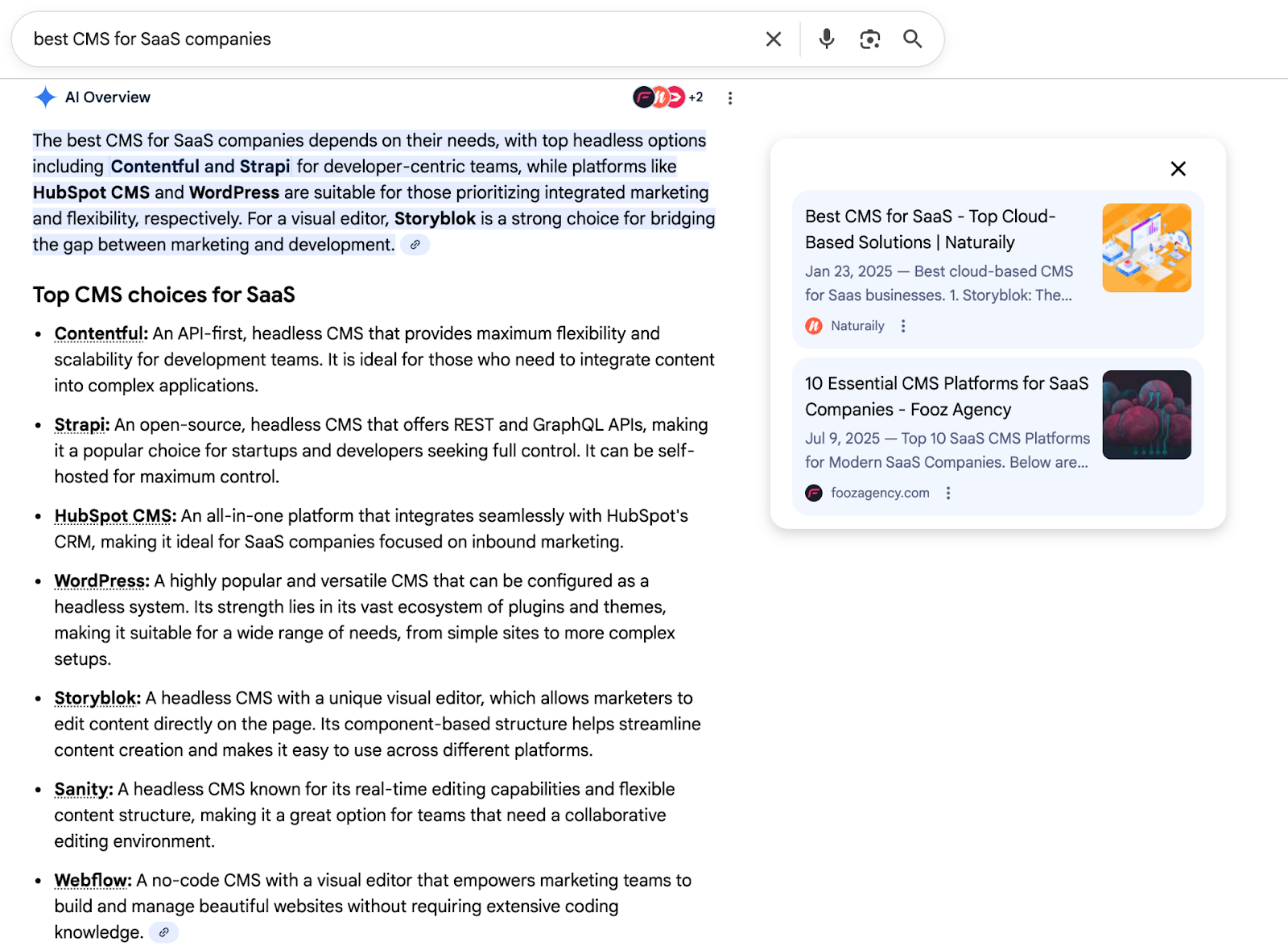
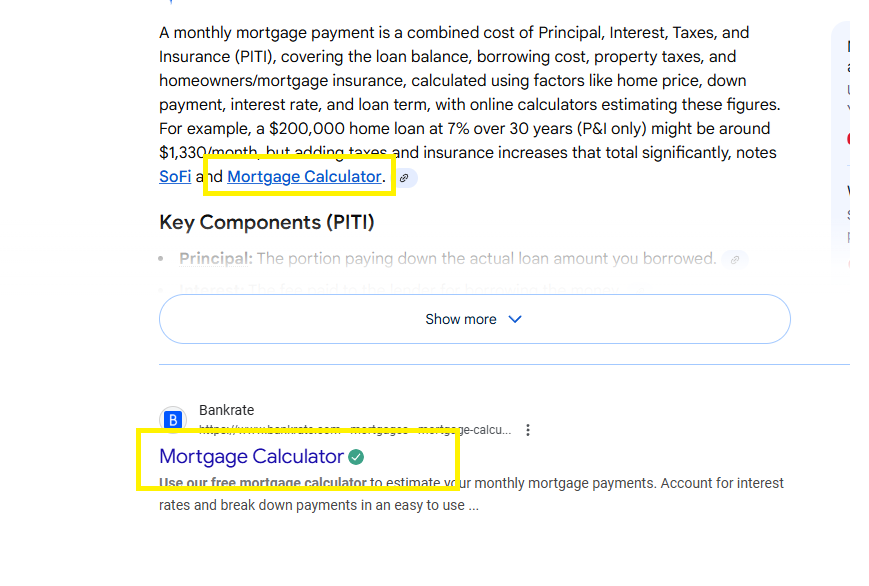
You can uncover links to source articles in AI Overviews by selecting the chain-link icon, enhancing your brand’s topical visibility.
Driving Passive Brand Mentions
Passive brand mentions come when your content naturally fills an informational gap. The aim is to become the go-to reference for certain topics, achieving this by creating assets that are easily referenced.
These can include original data, insightful reports, or highly scannable explanatory pages. By establishing your brand as the primary source, you’re better positioned for more mentions.
Actively Soliciting Brand Mentions
For proactive outreach to earn brand mentions, focus on building genuine relationships and providing valuable information. Start by sharing assets that offer clear benefits, without immediately asking for something in return.
When contacting journalists or content creators, make your pitches relevant and timely, with a clear angle that increases your inclusion chances. Combining outreach with thought leadership, through podcasts or panels, enhances discovery possibilities.
Our goal is to establish a robust outreach engine, nurturing relationships so that those individuals may naturally reference your brand in the future, potentially leading to collaborative content opportunities.
Deciding When to Engage a PR Resource
PR support is particularly beneficial when you have compelling stories or data but face distribution challenges. It’s also crucial for quick scaling of brand mentions, especially during fundraising, launches, or when competing in aggressive markets, like health or AI.
However, if foundational SEO or assets are lacking, focus on establishing those first. Once ready, PR will accelerate visibility across search engines and LLMs.
The core tenets of link building still apply: aim for quality over quantity and avoid low-impact sources. By keeping a clear focus on key sources and strategy, your brand can achieve significant improvements in search visibility.
It feels like a whirlwind every time Google releases a core update, and the December 2025 core update was no different. I’m thrilled to share that this is the third core update of 2025, taking a little over 18 days to roll out completely. It kicked off on December 11 and concluded on December 29. According to Google, this update aims to enhance the visibility of relevant and satisfying content across all types of sites.
Reflecting on the timeline, this update came five months after the June 2025 core update, which itself followed the March 2025 update. It’s interesting how Google spaces these updates throughout the year, creating waves of anticipation and speculation in the SEO community.
In the coming days, I’m eager to delve into data to understand how this update has influenced rankings and share that insight with you via Search Engine Land.
What Google is saying.
Google has updated its Search Status Dashboard to signal, ‘Released the December 2025 core update. The rollout may take up to 3 weeks to complete.’ On LinkedIn, they reiterated, ‘This is a regular update designed to better surface relevant, satisfying content for searchers from all types of sites.’
What we saw.
In my observations, the update’s initial effects were evident a few days post-release, notably on December 13. Another significant spike in volatility appeared on December 20. As is common with core updates, some websites experienced massive ranking drops, others surged, and many saw no change.
If you’re interested in a deeper dive, I recommend checking out this insightful video from Glenn Gabe.
What to do if you are hit.
Google hasn’t provided new recovery guidelines specific to this update. Historically, they advise that no specific actions are required for recovery, and a ranking drop doesn’t necessarily indicate issues with your pages. They also offer a list of questions for site assessment post-update impact.
Google has reiterated that creators should consistently aim to produce satisfying, people-focused content. Check out their helpful content guide for more insights.
Reflecting on recent updates: the June 2025 core update started on June 30 and wrapped on July 17; the March 2025 update began March 13 and ended March 27. Looking back further, the December 2024 update ran from December 12-18, while November 2024 spanned November 11 to December 5.
Why we care.
With the December 2025 core update now in the books, it’s an opportune time to assess its influence on your sites and client sites. Analyzing the changes can guide you to refine your content strategy, potentially bolstering future rankings. Remember, Google’s core updates roll out every few to several months, emphasizing the continuous need for optimization.
Good luck with navigating this update, and here’s to a successful start to the new year!
Wow, what a whirlwind 2025 was in the ever-evolving world of SEO! I found myself constantly amazed at the pace of change, especially with the rise of GEO and AI-driven discoveries.
The incredible advances—from multi-platform searches to innovative AI applications—made this year truly groundbreaking. As I dove into these shifts, Search Engine Land remained my trusted guide, helping me navigate what’s happening, what’s on the horizon, and, most importantly, what really matters.
I’m thrilled to share with you the 10 most-read SEO columns of 2025. These pieces, penned by some of the best minds in the field, captivated and informed readers like never before.
Reflecting on Google’s 2025 algorithm adventures, I’m reminded that fewer confirmations don’t equate to less excitement in search rankings.
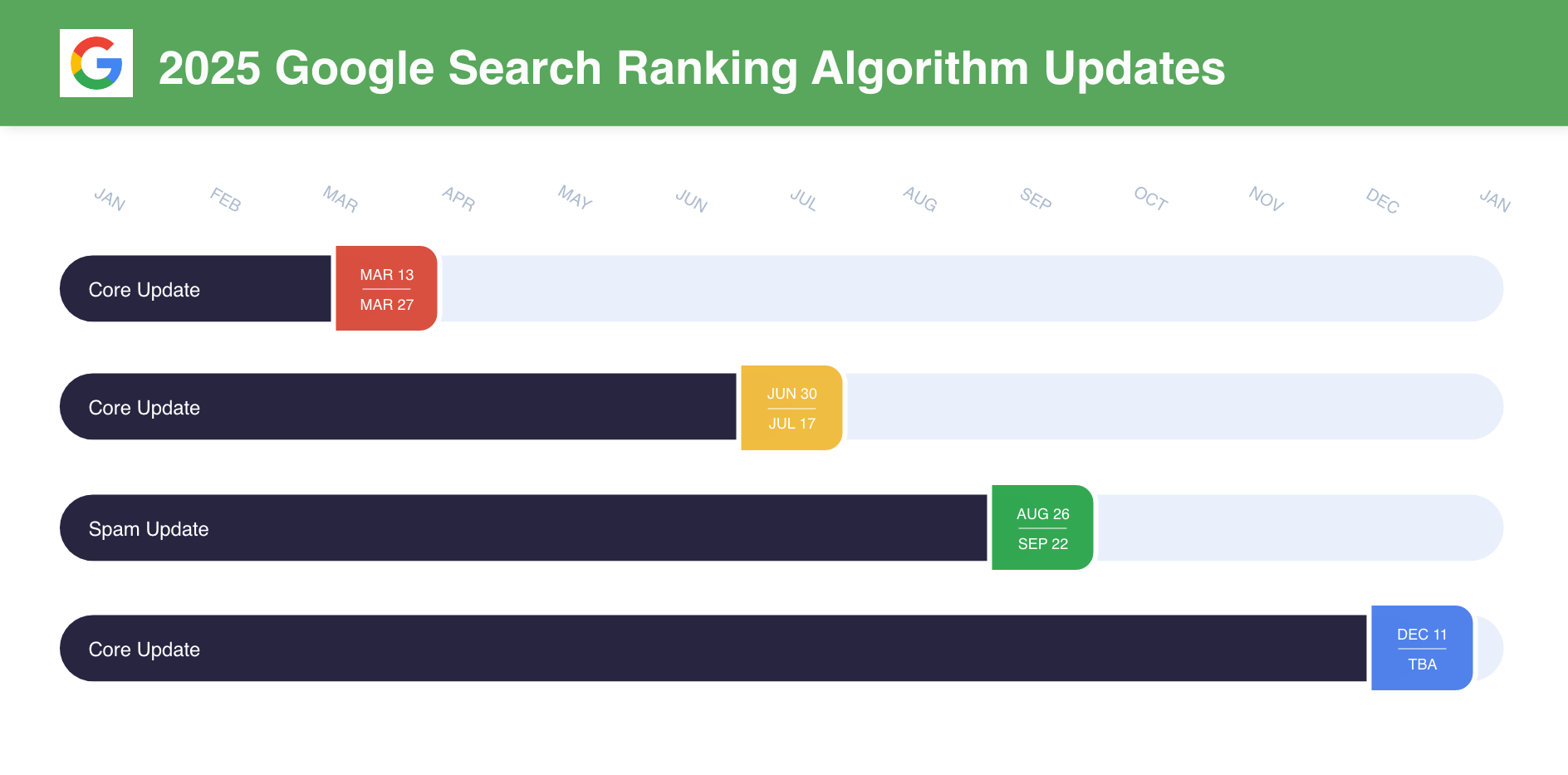
Google rolled out four confirmed algorithm updates this year, including three core updates and one spam update. Interestingly, this is a decrease from prior years—seven updates in 2024 and nine in 2023.
Fewer updates confirmed, more surprises for search. Google might be confirming fewer updates, but that doesn’t mean there are fewer changes under the hood. As they’ve stated, not all core updates are announced, and I’ve experienced plenty of volatility tracking all the unconfirmed tweaks.
I’ve followed numerous unconfirmed updates on the Search Engine Roundtable, making 2025 a year of unpredictability despite fewer confirmations.
Google confirmed algorithm update summary
Here’s a timeline that visualizes all these exciting developments in 2025, showcasing the rollercoaster of changes throughout the year.
Three Google core updates in 2025. Spread over the months, we saw these core updates rolling out in March, June, and December.
March 2025 core update. The journey began on March 13, taking 14 days to unfold by March 27. Google assured us it was a routine core update, enhancing search results.
It was reminiscent of prior updates, as reflected in historical data.
June 2025 core update. Commencing on June 30 and concluding by July 17, this update repeated the thematic improvements seen previously, capturing further interest.
Intriguingly, some sites reported partial recoveries post-update, signifying its intense impact.
December 2025 core update. Starting on December 11, its rollout remains incomplete, but it’s consistently producing expected outcomes across the board.
The updates stirred considerable volatility, particularly noted during weekends like December 13th and December 20th.
One Google spam update in 2025
August 2025 spam update. Launched on August 26 and concluded by September 22, this update rapidly impacted site rankings and thankfully, some saw recoveries.
Reflecting on another year in the world of search, I’ve seen how Google labeled 2025 as year three of a 10-year transformative shift. This change, centering on AI, became undeniably evident. No longer just an experiment, AI has now firmly integrated into the core processes of search.
Here, I’ll share the most significant SEO news stories of 2025 from Search Engine Land.
Note: This overview excludes Google algorithm updates, which Barry Schwartz has covered in a separate recap published today.
10. Perplexity Ranking Factors and Systems
Diving into the intricacies, independent researcher Metehan Yesilyurt examined browser-level interactions, revealing how Perplexity scores, ranks, and sometimes drops content. His findings uncovered a three-layer machine learning system reordering entity searches, manual authority whitelists, and many engagement signals.
He also observed that authoritative domains, early strong performance, and tech-focused topics received boosts. The ranking further mirrored time decay, interconnected content clusters, and trending YouTube content that amplified visibility.
In a move all about clarity, Google introduced Query groups to the Search Console Insights report. By employing AI, it groups similar search queries into distinct audience topics. These don’t influence rankings but make performance trends more apparent, especially for high-volume sites.
I was surprised to see HubSpot’s organic traffic plummet from 13.5 million to 8.6 million within a month, mainly impacting its blog. This followed several Google updates, with SEOs pointing to thin, broad content not aligned with HubSpot’s core expertise.
The ongoing identity debate in SEO continues as Google rejects new terminologies like GEO (generative engine optimization) and AEO (answer engine optimization). They maintain that strong SEO practices are also effective for GEO, underpinning AI Overview rankings’ fundamentals.
Yet, as AI answers replace clicks, traditional search still plays a vital role in discovery, despite search behavior evolving with users seeking AI for quick answers but relying on Google for extensive research.
The expansion of Google AI Mode from a trial to an almost default, comprehensive search experience was rapid. It incorporated more in-depth research, agentic activities, personalization, and the advanced Gemini 2.5—a drastic evolution toward complex search behaviors.
This AI Mode initially struggled with transparency, breaking referral tracking and merging its performance data with standard Search Console reports, sparking concerns over visibility and attribution in a more AI-centric search landscape.
When Cloudflare CEO Matthew Prince spoke about AI disrupting the web’s search-driven business model, it resonated with many. He highlighted the disproportionate relationship—Google and AI companies scrape extensive content while returning minimal traffic, jeopardizing original publishing unless the economic model adapts.
Seeing Google’s search share dip below 90% globally for the first time since 2015 was significant, driven by shifts in Asia and the U.S. This opened opportunities for Bing, Yandex, and Yahoo to capture some of Google’s shrinking share.
Google’s stricter stance on AI-generated content was clear when it instructed quality raters to assign the Lowest ratings to predominantly auto-generated pages. The expanded spam definitions targeted scaled, low-effort AI implementations.
Concurrent tests of AI-generated and AI-summarized search snippets indicated a future where AI not only critically examines content but also influences its presentation in searches.
I noticed analysis from various sources showing a troubling trend: Google Search offered more impressions and AI Overview visibility but resulted in fewer clicks. This was especially evident with non-branded, informational queries where AI Overview overshadowed classic results.
Brands mentioned in AI Overviews saw improved CTR, whereas those outside these features lost prominence, emphasizing that AI visibility is pivotal in driving successful outcomes.
Google’s removal of the &num=100 search parameter has widely impacted the SEO industry, disrupting rank-tracking tools and coinciding with a noticeable decrease in Google Search Console impressions and query counts.
Initial evaluations suggested that the majority of sites experienced reduced visibility, especially beyond Page 1, hinting at historic overreported metrics and a more realistic view of organic performance going forward.
Hey there, I know we’re in some murky waters right now. The drop in organic traffic is concerning, and it seems that the little bit of referral traffic we’re getting from LLMs like ChatGPT isn’t making up for it.
The truth is, the belief that “traffic is just coming from different places” isn’t entirely accurate. Sure, the way people search and engage is shifting, but click-through rates are plummeting in almost every sector.
Understandably, there’s a lot of anxiety in the industry about SEO’s future and whether AI will make our roles redundant. Bringing these concerns to the C-suite can be daunting, but now is not the time to shy away.
The reality is, it’s the perfect moment to tackle these issues head-first. Our leadership needs to know what’s happening and most importantly, how we’re responding.
This is a great opportunity to educate, realign expectations, and outline how our SEO strategy is evolving. Schedule that meeting, and let’s get this conversation started.
Here’s my plan to maximize the value of this crucial discussion.
Don’t avoid leadership — address AI visibility head-on
I’m not suggesting you picture leadership in their underwear to make conversations easier. Let’s leave the awkwardness aside.
Instead, show up ready to lead the dialogue. Here’s how to guide the discussion effectively.
Set the tone from the outset. They’ll appreciate you broaching the topic proactively rather than having someone else initiate it later.
Explain things honestly, provide clarity, and avoid sugarcoating the reality of what’s happening.
Let’s dive into the key facts to bring to leadership for a clearer picture.
Why SEO is down and how that impacts business
This is our chance to present the facts clearly rather than invoking fear. An honest overview of how the industry’s changes affect us is vital.
Here are critical events impacting performance:
Tools like ChatGPT, Gemini, and Perplexity are reshaping user behavior, diverting searches away from Google.
Google’s AI Overviews (AIOs) are increasing in search result pages, reducing clicks to third-party sites significantly. (Some report a 61% decrease in CTR.)
Despite LLMs sending some traffic, it’s minimal compared to what’s been lost from traditional search.
Bing’s AI-powered search summaries had limited impact due to a smaller market share.
Next, give a concise, data-driven picture of what’s changed for us and its impact. If organic traffic has dropped by 30% and revenue dipped, be upfront about it.
Anchor the talks in measurable results and their alignment with our goals. Ensure accuracy with your analytics team.
Here’s the data we need to present.
Share revenue, leads (or key actions), and organic traffic data over time, ideally with year-over-year figures.
These figures ground the discussion in business impact, not mere ranking metrics. Comparing data yearly helps separate seasonality from actual declines.
Export keyword data you’ve been tracking, as it’s valuable for Google and Bing. LLM tracking adds further context.
Rankings shouldn’t be a standalone performance metric. However, in times like these, understanding rankings is crucial for identifying lost demand or search shifts.
Analyze click/impression and CTR data in Google Search Console and Bing Webmaster Tools. Identify if SERPs with decreased CTR showcase AIOs.
This showcases real performance slides or industry-wide impacts. If pages losing clicks also show AI overviews, competitors are likely in the same boat — another crucial piece of the puzzle.
Once you share the business’s current state, brace for questions. Don’t wait for them; steer the narrative. Describe the broader shifts, industry trends, and emerging tech driving these changes. Possible action steps include:
Fetch traffic estimates and keyword rankings for top competitors. Are they experiencing similar downsides?
Use Google Trends and Exploding Topics to observe growing or waning interest in topics/products in our industry.
Utilize AI visibility reports to demonstrate brand presence in active conversation platforms (LLMs).
This isn’t about placing blame. It’s about showing comprehension and adapting to landscape shifts impacting performance.
What we’ve learned so far and where we’re going
Now’s the time to prove that we’re not just diagnosing problems but devising solutions. Leadership might not favor all answers, but they’ll respect your forward-thinking mindset.
Make it clear that, although the rules are changing, our team is swiftly adapting for upcoming search challenges. Then specify your needs, whether it’s budget, headcount, data support, or cross-functional alignment, to execute rather than merely presenting a problem.
Here are strategies to progress:
We’re enhancing our brand’s visibility beyond traditional search, focusing on AI-generated answers and new discovery platforms.
This involves tracking essential buyer queries and understanding our brand’s current position to prioritize content, PR, and partnerships for optimal visibility.
The aim is straightforward: if answers don’t draw clicks, our brand must still appear in those solutions. Consistent mentions/citations across the web facilitate this.
We’re revamping content strategy to stress entities and topics, not just keywords and rankings.
LLMs favor brands with comprehensive, consistent topic coverage and expertise signals. This affects our publishing, content structuring, and PR/product collaborations to build authority. This is SEO content 2.0, demanding effort, but the rewards will be significant.
We’re investing in visibility measurement for both traditional and new search channels.
Google organic traffic isn’t the sole truth anymore. We’re developing reporting to include AI surfaces, social discovery, referrals, and offline demand for a comprehensive perspective.
AI Overviews represent a lasting shift.
This requires recalibrating traffic baselines, forecasts, and targets to account for fewer classic blue link clicks. We plan for a reality where this becomes normal.
“AI Mode” might become Google’s default by 2026.
If more searches receive direct answers from Google, fewer visitors reach us. This alters lead/sales expectations and demands a strategy overhaul, including budgeting.
How we’ll be proactive and adapt to the new search landscape
Having explained what’s happening and how we’re adapting, it’s essential to stress that success requires alignment, resources, and continuous support.
Use this chance to outline needs, making it easier for leadership to approve plans without overwhelming decisions.
Here are essential adjustments to consider.
Search success in the AI era is a new measure; optimization takes time.
Agree upfront on timelines, leading indicators, and reporting frequency. Rankings, traffic, and last-click revenue won’t always align, so patience in adapting is necessary.
Executive backing is crucial for prioritizing long-term brand building over quick wins.
Leadership must accept that essential SEO initiatives may not yield immediate results but are vital for sustained visibility in search and AI-driven spaces.
Flexible budgeting to experiment with channels, content formats, and AI tracking tools.
A part of the marketing budget must focus on trials — from AI tools and data implementation to interactive content and strategic partnerships.
Collaboration with other departments is key to altering organic growth measurement.
SEO can’t work solo. We need analytics for new dashboards and coordinated PR and content efforts to align with significant topics.
This is your moment to lead the AI visibility discussion
You’re not merely reacting. You’re guiding through change. AI and LLMs redefine search, discovery, and interaction. This isn’t panic time, nor a case for the “organic search is dead” mantra. It’s about adaptation.
A crucial step is constant monitoring. A one-time pitch is valuable, but marketing efforts always need measurement. Regularly set an AI visibility update metric alongside standard metrics.
As AI and LLMs progress, leverage measured data to update leadership on changes and adaptations.
By initiating discussions, grounding messages in data, and suggesting actionable plans, your strategic acumen becomes evident to executives.
This shift isn’t solely about SEO; it’s about securing future visibility, trust, and traffic across various environments. Whether it’s Google, ChatGPT, or elsewhere, your focus should be on being present where your customers engage.
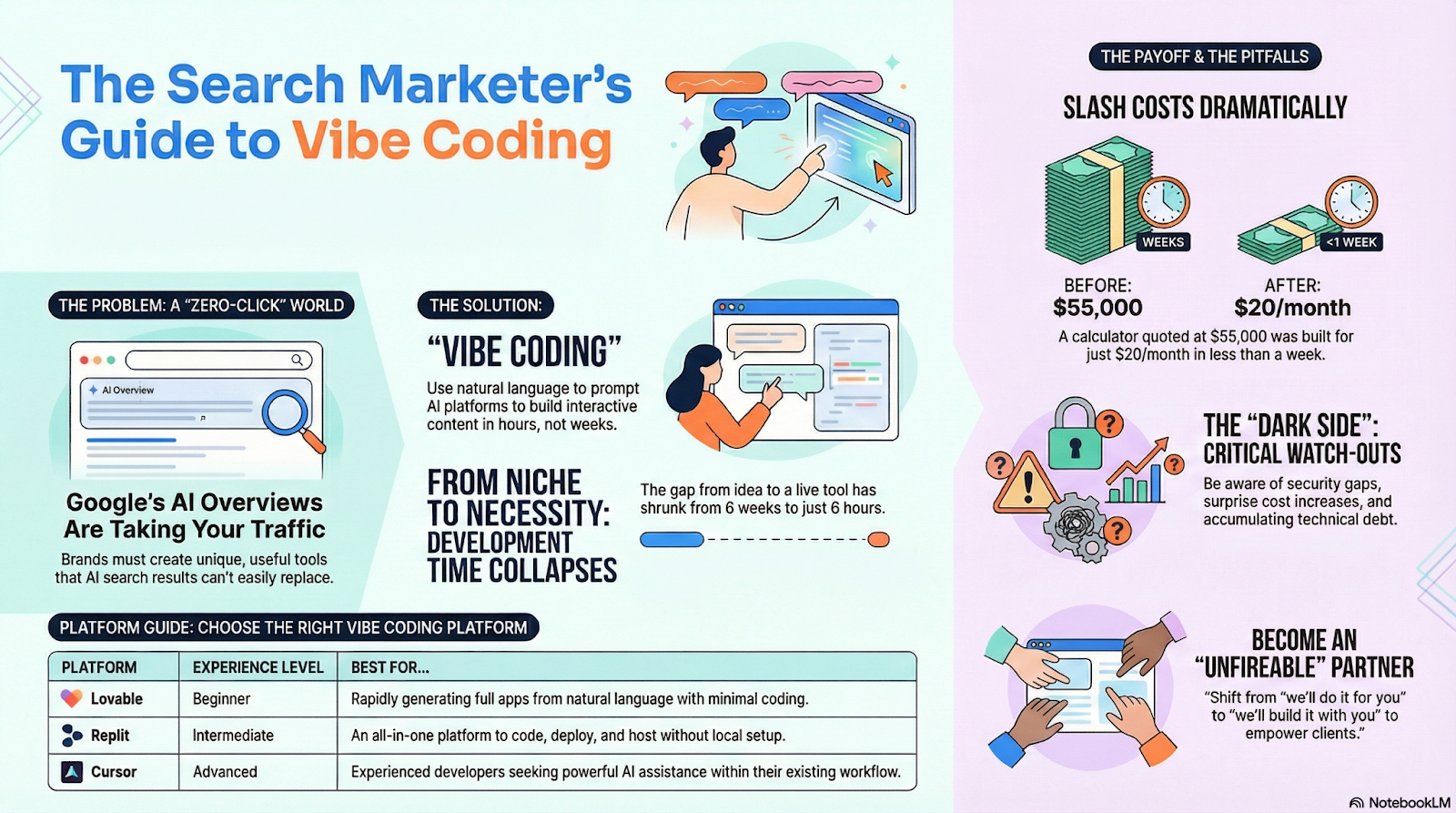
In a world where Google’s AI Overviews address more queries instantly, I’ve found that vibe coding allows us to craft interactive experiences that AI simply can’t replace.
I’ve noticed that search marketers are now shifting their roles from merely optimizing to actually building. Tools like vibe coding, coupled with AI-powered development technologies, have significantly reduced the time from idea conception to execution—from weeks to just a few hours.
These tools don’t make developers obsolete, but they empower search teams to test and create interactive content on their own timelines. This is crucial, as Google’s AI Overviews increasingly pull answers directly into the SERP, reducing clicks to our brand websites.
For marketers, building unique, conversion-focused tools is becoming an indispensable tactic in this zero-click environment.
What is vibe coding?
Vibe coding is about creating software by guiding AI with natural language instead of traditional coding methods. This means focusing on the tool’s purpose, appearance, and response, while AI takes care of implementation.
This term gained popularity in early 2025, thanks to OpenAI co-founder Andrej Karpathy, who described it as a loose, exploratory building style. The appeal? Speed. The risk? Potential shortcuts that could lead to fragile systems.
Today, AI-powered development platforms extend this approach to non-engineering teams, with tools like Replit and Lovable, allowing everyone to build and iterate quickly.
Vibe coding vs. vibe marketing
It’s important to distinguish vibe coding from vibe marketing. Vibe coding involves AI tools designed to create applications and interactive experiences, whereas vibe marketing uses automation platforms to connect existing tools and systems.
Together, these approaches empower search teams to build and operationalize their creations efficiently.
Why vibe coding matters for search marketing
I believe that soon, AI-powered coding will be an essential part of any marketer’s toolkit. It allows us to create sophisticated interactive tools that Google’s AI can hardly mimic, enhancing our SEO and PPC strategies.
With vibe coding, my team can rapidly develop tools that boost conversion, like interactive content aimed to improve user engagement—a factor crucial for both SEO and PPC efforts.
Through vibe coding, I’ve created custom systems that help manage our operational needs efficiently, saving time and costs. For instance, a project quoted at $55,000 was completed in under a week using Replit for just $20 a month.
The opportunity to teach these skills to clients also adds significant value, emphasizing the transition from “we’ll do it for you” to “we’ll build it with you.”
Vibe coding offers a competitive edge, allowing us to navigate zero-click search environments while fortifying long-term relationships with our clients.
Top vibe coding platforms for search marketers
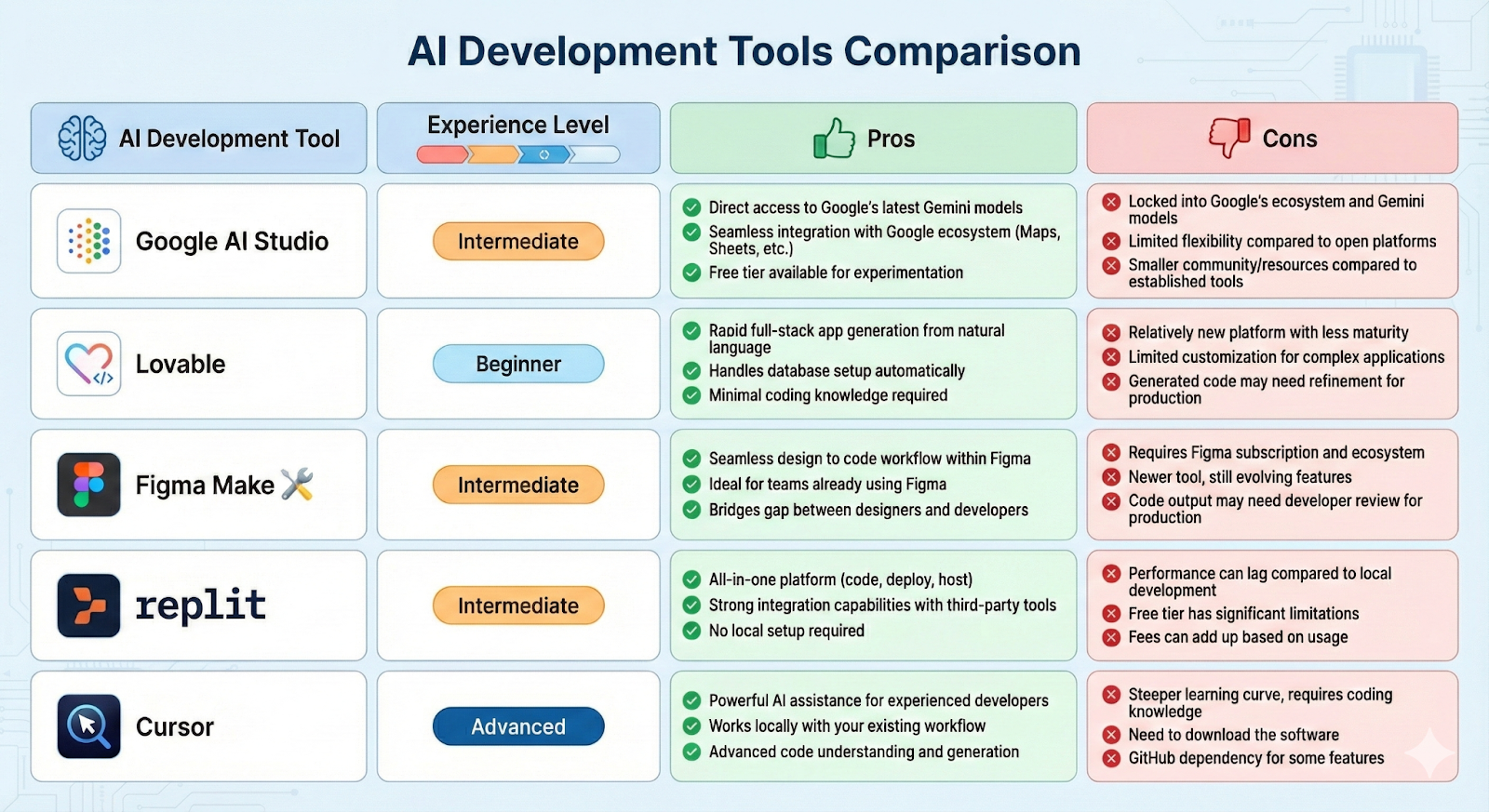
Several leading vibe coding platforms are making waves. My personal preference is Replit for its flexibility, though Figma Make is a great choice too, particularly as it integrates well with our existing workflows.
Testing different platforms will help find the best fit. Whether it’s Lovable for beginners or Cursor for advanced users, there’s a solution tailored to your needs.
Practical SEO and PPC applications: What you can build today
Vibe coding can create a variety of tools, from lead generation calculators to interactive content that increases website engagement. The key is to build tools that fill existing gaps, providing unique and useful solutions.
For instance, I developed an AI-powered accounting ROI calculator, a tool that couldn’t be easily replaced by Google’s direct answers. This not only helps the target audience but also boosts SEO efforts by encouraging repeat visits.
A 7-step vibe coding process for search marketers
I’ve found that following a structured workflow is crucial when using vibe coding. This includes thorough research, creating a content spec document, and iterating designs before functionality.
These steps ensure a comprehensive approach, allowing for prompt testing and deployment. Updating documentation at each milestone helps in managing future updates or revisions.
The dark side of vibe coding and important watchouts
While powerful, vibe coding tools come with risks. Security and compliance issues, price creep, and technical debt are concerns that require careful attention.
Always ensure security reviews and keep track of costs as projects evolve. Monitoring these risks can make vibe coding a reliable tool rather than a complicated headache.
Vibe coding is your competitive edge
In this evolving landscape, vibe coding gives us the ability to build unique digital experiences. It’s a skill set that empowers us to thrive, helping create meaningful, interactive content that stands out in the crowded search environment.
Embracing vibe coding not only promotes strong client partnerships but also equips us to adapt to new search realities, making it a pivotal skill for future success.
In today’s ever-evolving landscape, brand-agency partnerships look vastly different than they did just a few years ago, and this evolution will only continue to expand by 2026.
I’ve noticed that internal marketing teams have become more sophisticated, digital channels are increasingly specialized, and the role of agencies shifts away from a one-size-fits-all approach.
Interestingly, the companies reaping the most benefits from agency relationships aren’t necessarily the biggest spenders.
Instead, those that succeed are clear about their specific needs and objectives.
Achieving clarity starts with understanding the true role an agency should play in your organization.
Too often, partnerships fail because expectations and responsibilities weren’t clearly aligned from the beginning.
When this foundational understanding is lacking, even the most robust execution can fall short.
Having worked with thousands of businesses across industries and growth stages, I’ve consistently observed that agency success falls into two distinct partnership models. These models are primarily influenced by company size and internal marketing maturity.
Model 1: Execution-first Partnerships for Large Companies
If your company sees over $50 million in annual online revenue, chances are you already have a capable internal marketing team.
Strategy and planning remain in-house, so what you need from an agency is deep platform expertise and exceptional execution.
At this stage, agencies function as specialist operators that activate roadmaps, optimize channel performance, and bring advanced technical knowledge that’s inefficient to replicate internally.
When performance dips, a powerful agency partner doesn’t default to tweaking tactics.
Instead, they help uncover whether the issue stems from execution, market conditions, or a strategic misstep, offering data to guide corrective measures.
Model 2: Integrated Growth Partners for Small to Mid-Size Companies
For companies under $50 million in annual revenue, the agency dynamic shifts.
Internal teams might be lean or still cultivating core digital expertise.
In these situations, agencies do more than execute; they shape your entire growth strategy.
An ideal agency acts as an extension of your marketing team, guiding platform selection, crafting cross-channel strategies, and more.
For growing businesses, this integration provides access to senior-level expertise, balancing speed, strategy, and financial constraints effectively.
Finding the Right Agency Partner
I’ve seen many companies approach agency selection improperly.
Ditch the RFPs
Large companies often rely on the request for proposal (RFP) process, which tends to favor vendors skilled in documentation over performance-driven results.
Instead, I recommend using your professional network. If you’re in charge of a large marketing department, you likely know several professionals who can provide referrals to standout agencies.
Smaller businesses should seek advice from peers about reliable vendors, then check reviews to confirm their findings.
While no agency is perfect and all will have some unhappy clients, patterns of negative reviews are a solid indicator to avoid those agencies.
Request an Audit
Upon narrowing down potential partners, I suggest asking for an audit of your current marketing setup.
Most digital marketing agencies conduct these audits for free, offering honest and constructive feedback.
Depending on your company’s size, audits might vary, with larger firms focusing on specific platforms and smaller ones requiring full-funnel evaluations.
This information helps evaluate how the partnership will integrate with existing processes, paving the way for effective collaboration.
The selection process inherently includes finding partners that mesh well with your internal processes—critical to long-term success.
Setting Achievable Goals
After selecting an agency partner, the next step is defining coherent goals aligned with your business objectives.
Unfortunately, I’ve observed that many leaders set goals disconnected from their business aims, straining the agency relationship from the get-go.
A robust agency questions your goals pre-contract, urging you to adjust expectations realistic to your context and aspirations.
Your chosen partner should grasp your business’s economics and help ensure marketing goals are aligned with broader business objectives.
Maintaining a Productive Partnership
Once everything is underway, you must keep your agency accountable, which involves regular reviews and tracking progress against initial audit benchmarks.
Contract Length
Large enterprises often sign 12-month contracts for stability, but smaller firms might benefit from a more flexible three-month commitment that auto-renews.
In cases where everything seems perpetually smooth, consider that growth might be stagnating, as healthy conflict is a sign of challenge and progress.
Ongoing Accountability
Regularly reviewing opportunities against your agency’s initial audit findings not only keeps progress on track but also provides vital context for adapting strategies.
Context is key, especially if your industry’s dynamics affect your agency’s work—awareness of broader market trends is crucial for realistic appraisal.
Innovation and Testing
Your agency should consistently suggest fresh ideas, especially for smaller businesses, while larger companies should fund dedicated innovation budgets.
Effective agency partnerships without innovation risk falling behind competitors more willing to explore uncharted avenues.
Ultimately, understanding what’s upcoming and strategically positioning your business will keep you competitive.
When to Make an Agency Change
Occasionally, a brand-agency partnership doesn’t thrive. Trust your instincts if you feel things could improve or something is amiss.
Your Business Isn’t Growing
Marketing should focus on acquiring new-to-brand customers. If growth stalls while your industry maintains, it’s time to reassess your agency’s role.
Your Agency Isn’t Pushing Innovation
If new ideas aren’t forthcoming or you’re not exploring novel methods to engage customers, seek an external audit to identify gaps.
Your Agency Can’t Explain Performance
An inability to contextualize performance suggests a knowledge gap in your sales funnel, where interconnected activities impact overall success.
For smaller businesses, agents should grasp comprehensive marketing operations and how various elements influence each other.
The Marketing Reality Check
Great marketing can’t compensate for a flawed business model. Successful growth stems from the synergy of good business, leadership, and agency collaboration.
If any component is lacking, marketing falls short of potential. Meaningful growth arises when agency roles align with specific business needs.
Agency selection is an ongoing journey involving ongoing dialogue, accountability, and refinement, even when this involves constructive disagreements.
I’ve been observing how AI is transforming search, yet the timeless principles of SEO still seem to bring in the majority of traffic. It’s fascinating to look at data that show which strategies really work.
Generative AI is a huge trend right now. It’s featured in every conference and is all over my LinkedIn. Businesses, mine included, are rethinking organic search.
We’re all in a race to optimize for AI Overviews, work on vector embeddings, and reconfigure content models around LLMs. But what’s less talked about is the simple truth: AI isn’t yet the primary driver of web traffic for most of us.
While AI-driven search is gaining momentum, the LLM platforms collectively account for just a tiny fraction, about 2-3%, of the organic traffic that Google alone provides.
However, I’ve noticed that many teams, maybe even yours, are investing more energy in AI strategies instead of reinforcing essential SEO fundamentals that still deliver tangible results. Focusing too much on the future means we’re not making the most of today’s opportunities.
In my experience, looking closely at proven SEO tactics and real-world data can highlight how they still effectively move the needle today.
Quick SEO Wins Still Deliver Substantial Gains
It’s easy to overlook minor updates when we’re caught up with trends like vector embeddings and semantic SEO. Yet, these small changes can have a significant impact.
Take title tags, for instance. They’re among the simplest and most effective SEO tools. I’ve seen many websites fail to use them effectively, often neglecting to target the right keywords, include key variations, or use any keywords at all.
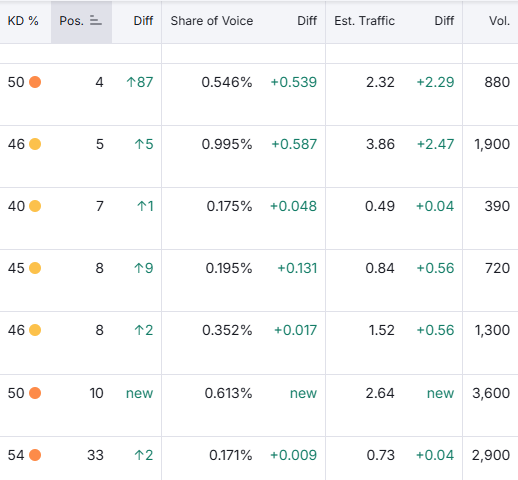
Just recently, a simple change of adding “& [keyword]” to a client’s homepage title tag resulted in a surge in keyword rankings, clicks, and impressions. No other changes were made, yet the results were significant.
Combining this with other strategies like on-page copy edits, internal linking, and backlinks can lead to ongoing growth. It might sound basic, but these tactics continue to work wonders. Don’t let advanced GEO strategies blind you to simple, impactful tactics.
The Importance of Content Freshness and Authority
The rise of AI might have pushed some tactics like the skyscraper technique into the shadows.
This approach involves crafting superior content for keywords and topics that are already ranking, aiming to outperform existing results. While the internet is flooded with similar content, focusing on keyword authority and freshness can be incredibly effective.
I’ve witnessed this success multiple times. Recently, a client’s article on a well-established topic quickly climbed to the second spot, generating new clicks and impressions almost instantly.
The success was due to the site’s strong authority and because much of the competing content was outdated. Although this strategy may not suit every situation, ignoring it could mean missing out on clear wins.
User Experience: A Key Conversion Lever
Although there’s buzz around AI-driven shopping experiences, the core principles of website optimization remain irreplaceable. Some argue that AI will soon take over interactions and conversions, but this is far from the present reality.
Many websites still rely on traditional search-driven traffic and website-based conversions. Whether visitors come from organic search, paid ads, AI referrals, or direct, what matters is a fast site, an excellent user experience, and a well-defined conversion funnel.
Optimizing these aspects can lead to remarkable performance gains, as I’ve seen through a simple CTR test with a client, which yielded impressive results.
Brands prioritizing user experience and conversion rate optimization will continue to outperform those who don’t. This competitive advantage will only grow if teams delay waiting for AI to perfect conversion mechanisms.
AI’s Role in Search and the Power of Existing Strategies
AI is indeed reshaping search by altering user behavior, influencing SERP appearances, and complicating attribution. Yet, the real risk lies in overreacting to AI at the expense of proven strategies.
For most sites, traditional organic search continues to be the primary traffic source. When well-executed, SEO fundamentals still deliver results. Quick wins and high-quality content are rewarded, and optimizing user experience remains critical.
These efforts support each other, improving organic visibility and complementing paid search and LLM visibility. Staying updated on AI developments is vital but not at the cost of current growth-driving strategies.
Back in June 2025, I noticed an interesting infographic circulating widely. It highlighted the most-cited websites by AI models, according to a comprehensive SEMrush study of over 150,000 citations. Naturally, seeing Reddit at the top sparked a buzz among marketers, who began to believe that featuring on Reddit was key to their GEO strategy.
But, here’s the catch: most of these citations were research-oriented, not necessarily geared towards buying intents. For instance, Reddit was frequently mentioned in queries like “Where in Europe should I take a family vacation?” but not so much in “What are the best web design firms?”
This led to some misguided assumptions. Although Reddit does play a role in AI models like ChatGPT, Perplexity, and Gemini, it represents only about 11% of their commercial recommendation algorithms. So, placing too much emphasis on Reddit won’t really boost your product or service visibility in these AI models.
The Most Cited Websites by AI Models for Buying-Intent Queries
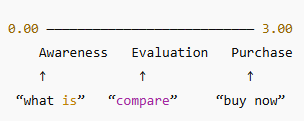
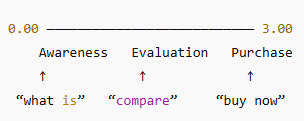
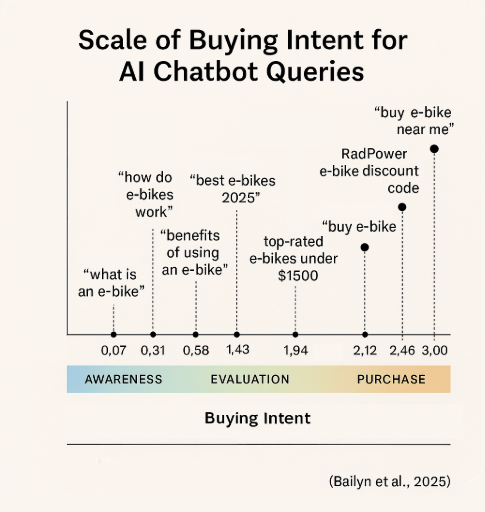
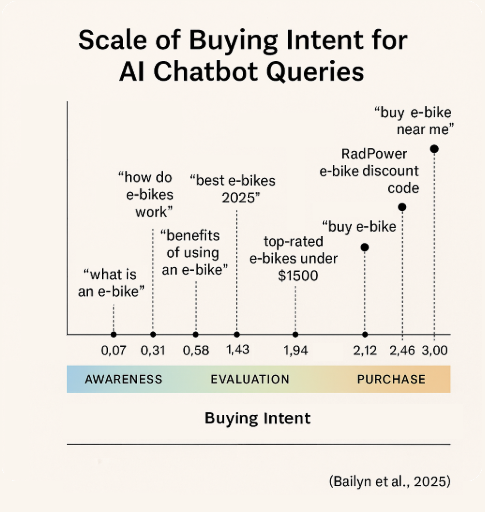
Our research team dug deeper into this in October 2025 and later updated it in December 2025. We conducted 36,127 buying-intent queries on ChatGPT and tallied the top-cited websites. Our “buying-intent query” was defined on a scale measuring how close a query was to a purchase decision. A simplified version of this scale is captured in the infographic below:
A query scoring higher than 1.35 was marked as “buying-intent.”
Top Website Types Cited by AI Models for Buying-Intent Queries
We meticulously categorized the types of websites AI models prefer for such queries. Understanding the types helped us unravel which channels are more effective at GEO—essential in influencing AI chatbots to nominate certain companies.
Top Website Types Cited by AI Models for Buying-Intent Queries
#
Website Type
Description
# of Citations
1
Product Recommendation Media
“Best of” and “Top 10” review sites largely monetized via affiliate links (e.g., Wirecutter, Tom’s Guide, TechRadar).
7,642
2
Consumer Review Platforms
User-generated review aggregators like Trustpilot, BBB, and Google Reviews.
5,983
3
Traditional Media
Established publishers including product roundups or consumer coverage (Forbes, NYT, Wired).
4,581
4
New Media
Digital-native outlets that frequently review or endorse products (TechCrunch, The Verge).
3,826
5
YouTube / Video Review Channels
Video-based reviews and product comparisons often transcribed or summarized by AI models.
Regulatory or authoritative institutional content (FDA.gov, FTC.gov).
159
20
Standards & Certification Bodies
Official verification or compliance organizations (UL, ISO, Energy Star).
119
The major takeaway from parsing this data? Websites offering list-based product recommendations feature heavily in AI rankings. Being listed on these commercial publications can greatly enhance a product’s visibility in AI recommendations like ChatGPT, Perplexity, and others.
Industry Breakdown: Websites Most Cited by AI Models for Buying-Intent Queries
Next, our analysis focused on the top three websites each industry traditionally relies on. This provided a glimpse into which platforms AI models commonly heed within specific verticals, giving GEO marketers a decisive edge in targeting their media placement efforts.
Top Websites Cited by AI Models in Buying-Intent Queries, by Industry
Industry
Top-Cited Websites by AI for Buying-Intent Queries
eCommerce
Wirecutter, Forbes, Tom’s Guide
Managed Services
Clutch, G2, UpCity
Healthcare
Forbes Health, Verywell Health, Medical News Today
A key insight here is the fragmented nature of website citations. Trade journals contributed more than the top three sites in any category. As with website types, the predominance of review sites and product recommendation platforms was notable.
Questions, Media Inquiries, or Other Requests
Curious about our study? Have a media request, or want a PDF copy? Reach out to us here.