Over the past year, I’ve delved deep into the world of telecom SEO agencies to bring you the frontrunners in this competitive field. From February 2025 to January 2026, my team and I meticulously examined 47 agencies renowned for their telecom SEO prowess, narrowing down to the top 9. Our selection process was rigorous, featuring a detailed survey with 127 telecom marketing professionals, comprehensive technical audits, and performance evaluations.
Our primary criteria were agencies with solid telecom experience and proven SEO and GEO skills. We evaluated each agency using a weighted score across eight criteria to ensure the best rose to the top. Below, I share a detailed analysis of each agency alongside real client reviews for your consideration.
Evaluation Framework
We evaluated agencies using eight weighted criteria, each contributing to a total score of 100%:
Technical SEO Competency (20%) – Focused on optimizing Core Web Vitals, JavaScript SEO skills, and expertise in mobile-first indexing.
Industry Experience & Track Record (15%) – Years working with telecom clients and demonstrating proven results.
Team Composition (15%) – Assessing the balance of certified SEO specialists and the strength of their content teams.
Leadership Experience Score (12%) – Leadership’s impact within the telecom industry through speaking, research, and advisory roles.
Standing at the pinnacle, First Page Sage excelled with an impressive 4.9 out of 5 review score across platforms. Specializing in sophisticated SEO strategies, they seamlessly navigate regulatory landscapes while ensuring compliance. Their telecom prowess, acquired in 2012, showcases their knack for generating qualified leads and staying compliant with industry norms.
Location: San Francisco, CA
Established: 2009
Services Offered: Lead Generation, SEO, AIO/GEO, SEM, Web Design
Price Range: $$$
Summary of Online Reviews
Clients claim to “genuinely trust” First Page Sage for their high-quality content creation, praised for “accountability for ROI” despite taking some extra time. Overall, their service is unanimously lauded.
I recently discovered that Bing is testing a new AI Performance report within their Webmaster Tools. This has piqued my interest, especially since Microsoft has been teasing the idea of providing better insights into website performance in AI-driven Bing and Copilot searches for months.
It all started back in February 2023, and then in April 2023, Microsoft hinted at delivering data on Bing Chat and AI search impressions. Sadly, our hopes were dashed when they lumped this data together with regular web queries, leaving us still in the dark about our sites’ performance in Bing’s AI experiences. I can’t help but feel a bit let down.
Now, it seems Bing is experimenting with a new report within Bing Webmaster Tools, known as the AI Performance report. This report is in a super limited beta phase, and Microsoft hasn’t officially announced anything yet. A source shared that it showcases citation data from both Microsoft Copilot and its partners, detailing the number of citations and cited pages per day.
With this report, I can see how often Copilot cites my website and across how many pages. However, it still doesn’t reveal how many people clicked through from those citations to my site. The report also presents data categorized by “grounding queries” and “pages.” While “grounding queries” might not represent the exact query entered in Copilot, it shows how Bing interprets them, including insights into the intent behind such queries, like whether they are navigational or informational.
This new report lets me identify the specific pages Copilot cites. While there’s excitement in seeing more AI performance-related data pop up in Bing Webmaster Tools, I can’t shake the feeling of wanting click-through data. Knowing the click-through rate from AI interactions compared to regular web searches is something I, and I’m sure many other publishers and site owners, have been eagerly anticipating.
It feels like all search engines are intentionally keeping this data under wraps, and it’s frustrating not having full transparency.
In this comprehensive report, I’ve delved into the world of medtech marketing agencies for 2026, using a detailed set of criteria to evaluate the best in the industry.
These agencies were assessed based on several key factors:
Notable Clients (35%): Focusing primarily on experience with medtech firms, as well as work within the broader medical sector.
Founder Status & Leadership Experience Score (20%): Whether the founder still leads the agency, along with a ranking of the leadership team based on marketing experience and specialized knowledge in medtech.
Year Founded & Median Employee Tenure (15%): Agencies’ experience, gauged by age and employee tenure, is crucial to delivering successful results.
Average Reviews (10%): A 1-5 star rating derived from third-party online reviews.
Media References (5%): Counts of citations in reputable media and high-authority sources.
Approach to Marketing (15%): Evaluating how tailored and effective an agency’s marketing strategies are for the general medtech landscape.
Here’s a rundown of the top seven medtech marketing agencies, including their strengths and a brief summary for each one listed.
At First Page Sage, our expertise lies in crafting high-ROI lead generation systems for medtech companies. By blending medical thought leadership with traditional SEO and Generative Engine Optimization, we help elevate brand authority in the complex medtech sector.
Notable Clients: Biovia, Kiverdi, Altoida
Leadership Experience: 4.9
Company Size: 100-250
Year Founded: 2009
Headquarters: San Francisco, CA
Average Reviews: 4.9
Main Focus: SEO aligned with thought leadership for lead generation
First Page Sage is praised for its “excellent medical content” leading to “provable lead generation”, though the “in-depth onboarding period” is longer than some competitors, focusing on paid marketing.
Epsilon
With Epsilon, I find a robust, full-service marketing approach, ideal for large enterprises looking for paid advertising solutions across multiple channels. Their top-tier data analytics further enhance their service offering.
Notable Clients: Visionworks, Walgreens
Leadership Experience: 4.4
Company Size: 1,000+
Year Founded: 1969
Headquarters: Irving, TX
Average Reviews: 4.0
Main Focus: Enterprise marketing with a paid advertising concentration
Epsilon is acknowledged for being “responsive to feedback” and ensuring “attentive project oversight”, yet some find services “very costly.”
Parker White
Specializing in brand development for medtech firms, Parker White stands out with a creative edge, especially for B2C interactions, though they’ve notably worked with B2B medtech companies as well.
Notable Clients: Orthofix, FUJIFILM Sonosite
Leadership Experience: 4.1
Company Size: 11-50
Year Founded: 1997
Headquarters: Encinitas, CA
Average Reviews: 4.8
Main Focus: Brand and marketing services for medical and lifestyle brands
Clients value Parker Interactive’s “high standard and fun culture,” earning them strong recommendations within the industry.
Distill Health
Distill Health uniquely positions itself by prepping medtech startups for fundraising, offering brand strategy and visual identity services. This niche expertise makes them invaluable for firms needing capital while advancing product innovation.
Notable Clients: Theragen, Nuvara
Leadership Experience: 3.9
Company Size: 1-10
Year Founded: 2018
Headquarters: Austin, TX
Average Reviews: 5.0
Main Focus: Funding preparation and brand development
Distill Health provides a “detailed roadmap” that clients appreciate for its clarity and success-driven focus.
Exponents
When it comes to showcasing at trade shows, Exponents excel at enhancing the presence of medtech firms across industries, building booths that leave lasting impressions. Their focus is purely on trade shows, so pairing them with a skilled marketing firm can maximize impact.
The Exponents process is “smooth and easy to navigate.” They “exceed client expectations” with the booths they manufacture and install.
The ABM Agency
The ABM Agency shines in account-based marketing, ideal for medtech vendors dealing with large clients. Though they provide traditional marketing, their forte lies in closing high-value contacts.
Notable Clients: MedPost, Care Spot
Leadership Experience: 4.0
Company Size: 11-50
Year Founded: 2007
Headquarters: Atlanta, GA
Average Reviews: 4.5
Main Focus: Account-based marketing with a focus on medtech
The ABM Agency “helps [clients] grow and solidify industry authority,” although cost considerations are sometimes noted.
Icovy
Icovy offers comprehensive marketing solutions tapping into brand development and multimedia for medtech. Their expertise in building brand presence is complemented by traditional marketing tactics, offering flexibility for medtech firms.
Notable Clients: Poba Medical, Kaneka Medical
Leadership Experience: 4.2
Company Size: 11-50
Year Founded: 2019
Headquarters: Scottsdale, AZ
Average Reviews: 4.8
Main Focus: Integrated marketing strategies for medical device firms
I’ve delved into the exciting world of AI search strategies and discovered which KPIs are essential for optimizing performance. It’s fascinating to explore how AEO metrics stand distinct from traditional SEO measures.
Throughout my journey, I’ve identified important ways to measure visibility, citations, and impact on various AI platforms. Understanding these metrics can transform how we approach AI-driven search strategies.
Recently, I’ve been following a concerning development involving Google, where the tech giant is urging a federal judge to halt the Department of Justice’s antitrust remedies. The primary concern? Forced ad syndication could lay bare Google’s proprietary technology and negatively affect advertisers.
In an affidavit filed on January 16 by Google’s director of product management, Jesse Adkins, the company stresses how these measures could lead to irreversible damage. The crux of the argument is about maintaining control over proprietary ad technology, which could be jeopardized if exposed.
The big picture. In Adkins’ testimony, the likely fallout includes forced exposure of confidential technology, detrimental effects on advertisers, and a loss of authority over query and pricing data.
Mehta’s final ruling could compel Google to share its search results, features, and ads with any qualified competitor for the next half-decade under the current terms.
Google contends that employing these remedies before the conclusion of their appeal would result in immediate and unchangeable damage.
Risk to Google’s ad technology. At the center of Google’s warning is the potential exposure of its search ad auctions, developed over many years by an enormous team of engineers.
Syndication on a large scale might allow competitors or outsiders to decipher Google’s ad targeting techniques, relevance factors, and auction mechanisms, according to Adkins.
Competitors could potentially use this data to enhance their ad systems, stripping Google of its competitive edge.
Sub-syndication amplifies risk. The judgment permits competitors to further share Google ads with third parties, creating multiple layers of vulnerability to scraping and misuse.
Even the most compliant partners might lack the motivation to monitor downstream entities, effectively transforming Google’s ad system into a near-open utility with limited protection.
Advertisers could face fraud. Adkins mentions advertisers are caught in this struggle, citing tactics like “trick-to-click” that incite accidental clicks or artificially inflate expenses.
One example involves a syndicator adding names of wealthier countries to queries while diverting low-cost international traffic to ads, resulting in tens of millions in click fraud within a couple of months.
As a result, users might see less relevant ads, yet advertisers would still be charged, leading to diminished conversion rates.
Pricing uncertainty. Google is also expected to offer syndication terms no less favorable than existing agreements, which are highly customized to each partner’s traffic quality and technical setup.
Imposing these terms universally could lead to suboptimal pricing and financial uncertainty linked to unpredictable query volumes.
Irreversibility is key. Throughout the affidavit, Adkins underscores the irreparable nature of the potential harm. Once proprietary ad insights are revealed, they can’t be recaptured.
Once advertisers lose confidence, it is nearly impossible to win back. Moreover, once competitors craft products based on Google’s systems, the market’s impact becomes permanent.
Google suggests that even if their appeal succeeds, it could be too late to undo the ensuing damage.
Why we care. Any court-mandated ad syndication could potentially dilute Google’s control over ad placement and targeting, resulting in irrelevant advertising and reduced conversion rates. Essentially, this affidavit highlights the risk of higher costs, lower returns on investment, and less predictable campaign performance.
What’s next. The court is set to decide whether to temporarily halt the syndication remedies while Google’s appeal is pending. Without this stay, Google might have to start licensing search ads and results to qualifying competitors under new regulations, reshaping the search advertising landscape in unexpected ways.
Dig deeper. For further reading, I recommend checking out the following resources:
I’m excited to share that Google is introducing Personal Intelligence to its AI Mode in Google Search! In a recent Labs experiment, AI Pro and Ultra subscribers in the U.S. can now opt-in to this feature over the next few days.
Personal Intelligence was first introduced on the Gemini app last week and is now making its way to Google Search for certain users. According to Robby Stein, VP of Product at Google Search, starting today, subscribers can securely connect their Gmail and Google Photos to AI Mode, enhancing their search experiences.
This feature allows me to receive more personalized responses by connecting across my Google ecosystem, including Gmail, Photos, and YouTube history, right in Google Search. This rollout will be completed in a few days for AI Pro and Ultra subscribers in the U.S.
How to Access Personal Intelligence
This innovative feature is part of a Labs experiment, and opting in is straightforward. It’s available for personal accounts in the U.S., but currently not for Workspace business, enterprise, or education users. Subscribers will automatically gain access as the feature becomes available.
If you’d like to enable it manually, follow these steps:
1) Open Search and tap your profile.
2) Click on Search personalization.
3) Select Connected Content Apps.
4) Connect Workspace and Google Photos.
Inspiring Examples
Imagine asking Google a question like these:
Help me plan a weekend getaway with my family based on things we like to do.
Make a scavenger hunt for [partner’s name] to celebrate our anniversary, including a hint about us for each location.
I’m decorating [child’s name] bedroom; give me theme ideas and decor suggestions.
If I were the hero/heroine from a book, who would I be?
What specific era of fashion suits me best?
Recommend books that fit my current life phase.
If I were a perfume, what would my top notes and base notes be?
To truly see it in action, you can watch this video:
Why This Matters
This feature, currently available as an opt-in, could become a standard part of Google Search in AI Mode. As a result, searches will become increasingly personalized, making it more challenging to track different website citations for individual users.
AI search sentiment seems largely positive, yet there’s a real risk that isn’t in the acronyms – it’s in the volatility of the debate.
The SEO versus GEO debate has been a significant topic in our industry for the past year. New acronyms pop up almost weekly, and the sentiment can flip rapidly, with even the most reliable voices changing their stances from time to time.
This volatility isn’t confined to the periphery. It’s evident among a small group of highly visible SEO influencers who adjust their perspectives on AI-era searches in reaction to news, platform updates, and branding pressures.
My curiosity drove me to delve into how 75 leading SEO influencers discuss AI-driven search on LinkedIn. The objective wasn’t to identify the winning acronym but to gauge consistency, sentiment, and volatility in the discourse surrounding discovery shifts.
Teaming up with Danny Goodwin from Search Engine Land, I reviewed 2,025 LinkedIn posts from these influencers, examining references to various AI-related SEO terms including GEO, AIO, AISEO, AEO, LLMO, SXO, and ASO.
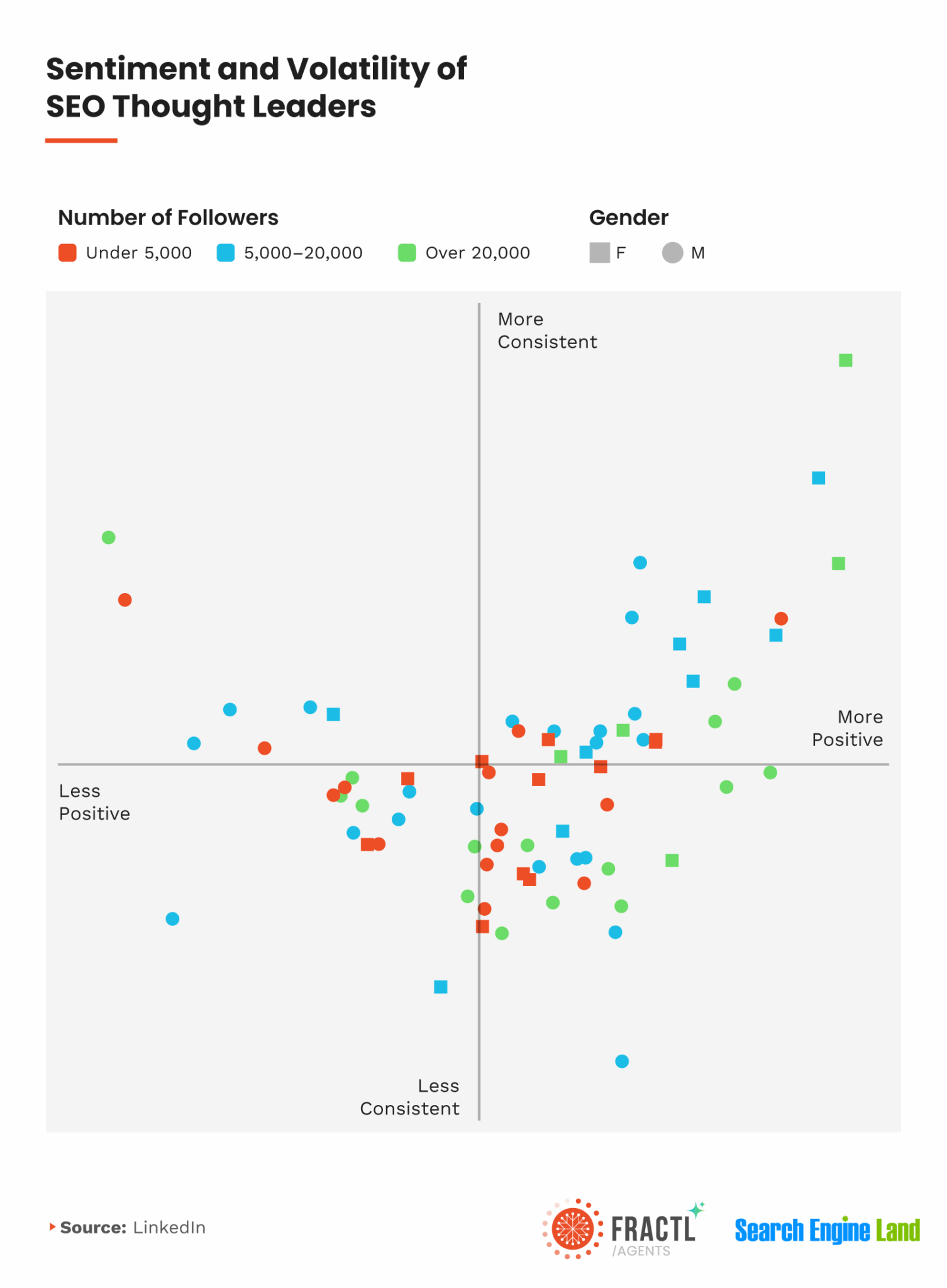
Each post’s sentiment was analyzed using VADER, providing a score between -1 to +1, while volatility was measured by tracking the standard deviation of sentiment over time. The data was anonymized to safeguard individual identities while retaining relational trends.
In 2025, while industry leaders engaged passionately in debates about AI-era search terms in their LinkedIn posts, they were reluctant to integrate these new terms into their personal headlines.
Our analysis reveals that 43% of SEO thought leaders still use “SEO” in their LinkedIn headlines, compared to 21% with “AI” and a mere 3% with “GEO.”
The gap is notable, indicating a hesitation to move away from the proven SEO strategies we’ve relied on for over a decade.
Well-Structured Content Hubs: Essential for Both AI and Traditional SEO
Successful digital strategies focus on creating comprehensive, persona- and buyer-journey-led content hubs that address genuine FAQs and buying intentions. By nurturing content depth throughout all stages – from awareness to decision-making, brands can provide compounded value to users and reinforce AI search algorithms.
Generate Authority with Off-site Brand Trust Signals
Publishing original research and expert insights helps earn recognition from authoritative sources, which in turn boosts your brand’s trust and recognition.
Mainstream news outlets.
Niche-relevant publishers.
Leading podcasters.
Engaged Reddit communities.
Expanding these digital footprints strengthens entity recognition and reinforces brand trustworthiness.
Leveraging audience intelligence tools like SparkToro identifies which platforms, communities, and topics should be prioritized in your digital PR strategy.
New AI Terms Gain Momentum: See the Enthusiasm Rise
Though few are updating their LinkedIn headlines just yet, industry leaders’ posts reveal growing interest in three specific terms.
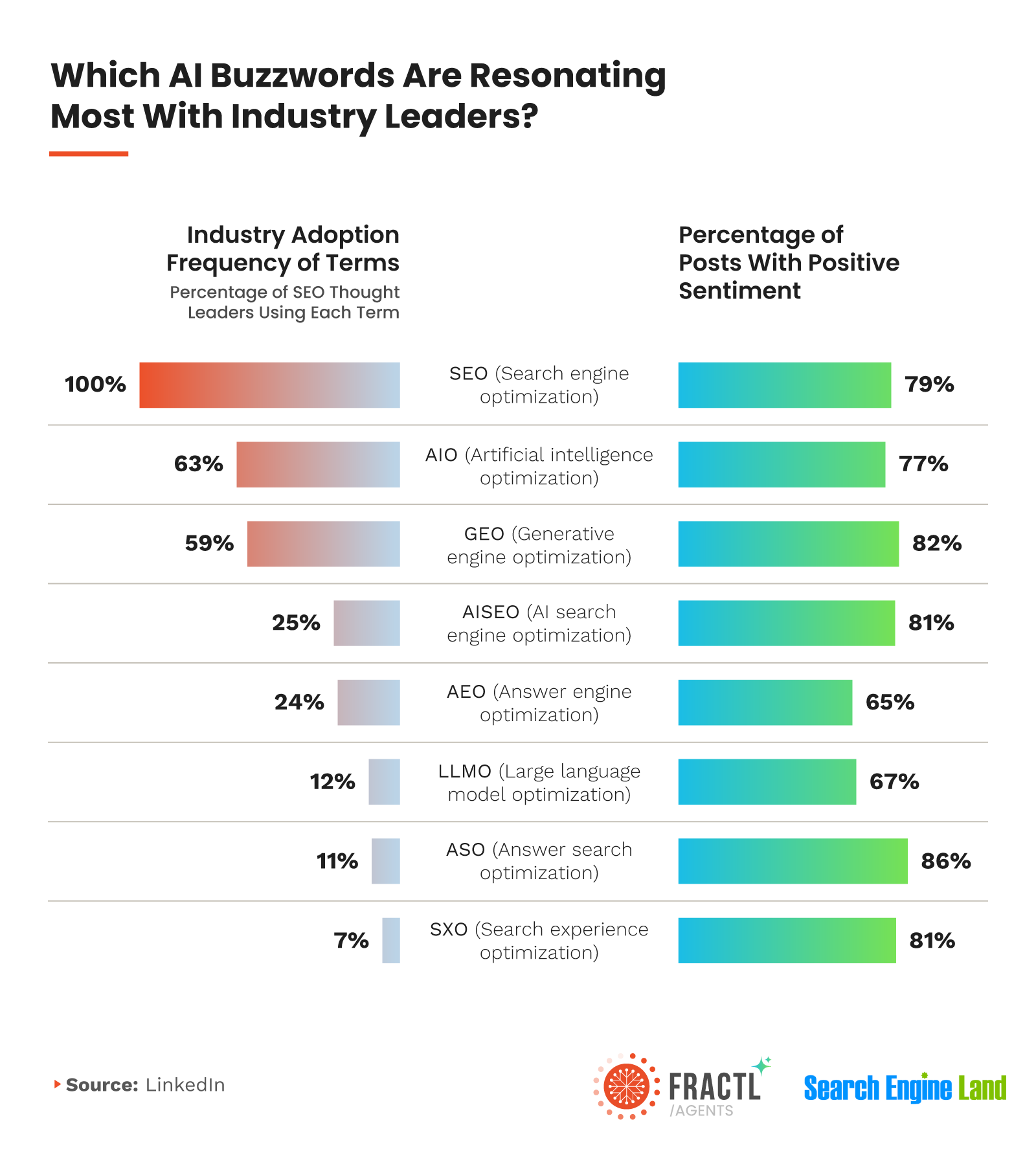
63% of leaders mention AIO, with 77% positivity.
59% mention GEO, with 82% positivity.
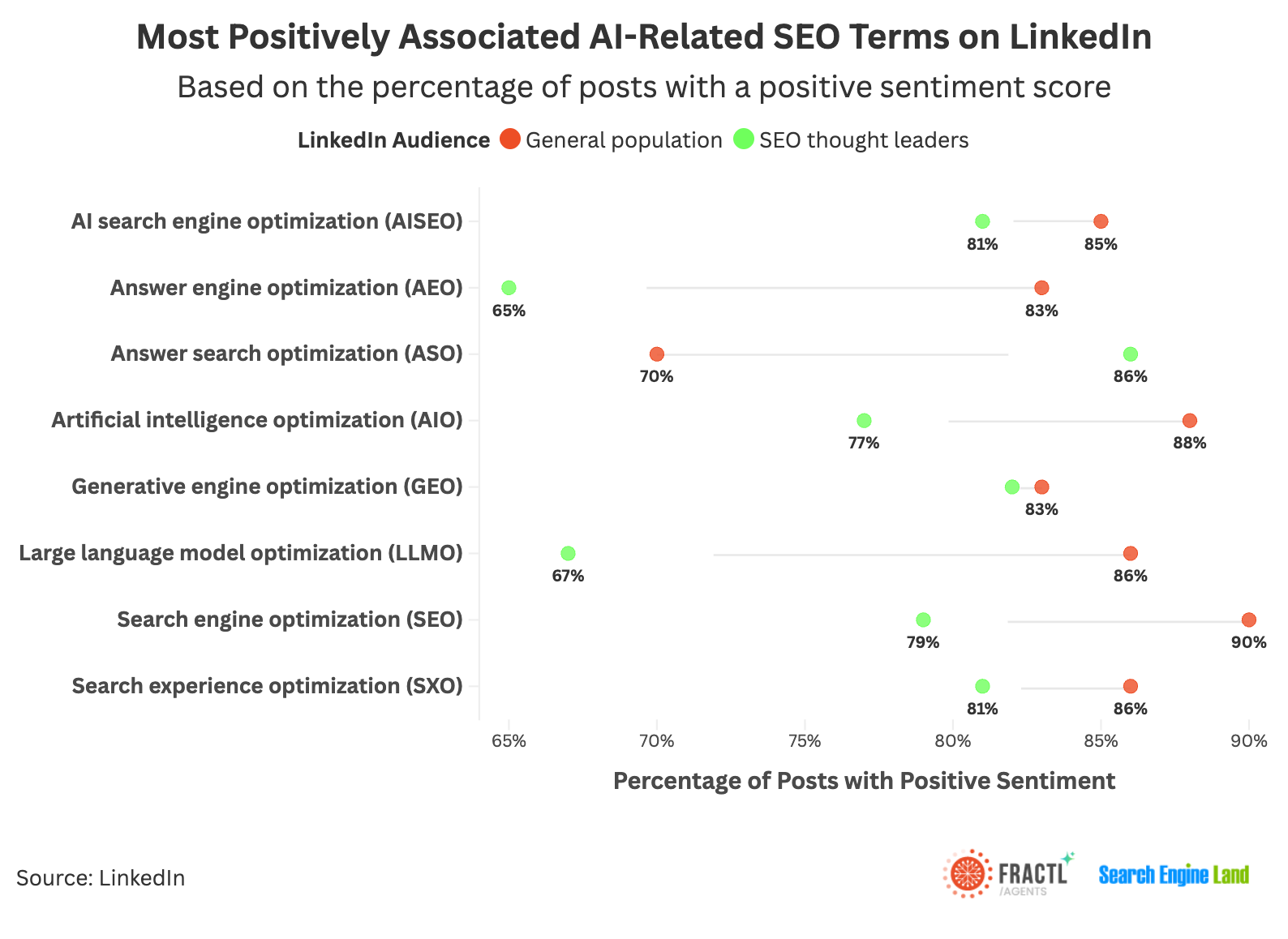
With over 70% of posts expressing positivity, sentiment often indicates adoption likelihood. When positivity wanes, so does usage. Yet, that’s not what’s happening here.
While AEO, LLMO, and AIO attract broader audiences, GEO stands out for consistent positivity, especially among SEO influencers and LinkedIn users alike.
SEO continues as the industry’s backbone, but it’s clear: we’re witnessing the alignment phase of an emerging platform.
The focus isn’t on acronyms; it’s about accurately describing brand visibility in AI-era searches.
The Real Strategy: Timely, Value-Driven Content
Brands should refrain from over-optimizing towards any singular term, strategy, or platform. Instead, develop value-focused content, repurpose it, and engage with audiences across their existing platforms.
This adaptability ensures brands endure platform shifts, avoiding pitfalls like those seen in once-dominant platforms such as Vine and Clubhouse.
Nomenclature Volatility: A Subtle Yet Critical Indicator
Our research highlights this critical insight: less than a third of thought leaders consistently use AI-related SEO terminology with stable sentiment over the past year.
35% express positive sentiment toward these terms but lack consistency.
Just over a third are consistently positive and stable.
The discourse isn’t about being right or wrong. It’s about reframing discussions as the landscape evolves, with volatility often mirroring visibility.
By evaluating sentiment against volatility, we revealed scattered positions rather than a distinct divide.
The uncomfortable truth is that the most vocal aren’t always the most dependable. The impact of their shifting narratives is vital, as their guidance influences budgets, plans, and careers.
Leaders who maintain a balanced outlook – driven by data and tempered by experience – offer a different perspective compared to those swayed by every update.
The Key Lesson: It’s Not a Strategy Reset; It’s an Emerging Platform
Effective content marketing, digital PR, and technical SEO are the foundation for building brand visibility. AI is simply the next platform evolution, much like social media, enhancing but not replacing existing strategies.
Our analysis indicates the industry isn’t unsure about what to do. It is negotiating how to convey this rapidly evolving discovery system. This discussion is typical at this stage, but volatile shifts harm trust.
Terms like AEO, LLMO, and AIO may gain some traction, but GEO remains consistent among both practitioners and broader audiences, suggesting its potential as a stable narrative bridge as execution evolves.
Crafting a Resilient Digital Footprint: Navigating the AI Era
Market strategies shouldn’t revolve around what’s trending quarterly. Instead, focus on timeless marketing principles:
Create content that delivers real value to your market.
Repurpose and circulate it on platforms where your audience is active.
Generate citations, engagement, and trust that impact search, social, and AI systems.
In today’s era, where answers are synthesized rather than ranked, the voices that resonate won’t be the ones coining the next big label, but those that remain consistent, building trust and visibility over time.
The analysis focused on the top 75 SEO thought leaders, including agency owners, directors, industry speakers, and consultants.
I’ve personally delved into a comprehensive analysis of the top cardiologist SEO agencies across the United States. Our team evaluated 73 specialized firms that focus on marketing for cardiovascular healthcare. From this extensive dataset, we carefully selected the eight leading agencies, based on these criteria:
Average Review Score (30%): This reflects the aggregated customer ratings for each agency, sourced from key review platforms like Google, Clutch, and G2.
Healthcare Industry Experience (25%): The years of experience these agencies have with cardiology practices, heart centers, and similar medical companies.
Leadership Experience Score (15%): We evaluated the quality of each agency’s leadership background in healthcare marketing.
Client Portfolio Size (10%): This criterion assesses the number of active cardiology clients currently working with each agency.
Compliance Expertise (10%): Each agency’s understanding of HIPAA regulations and healthcare advertising standards.
Median Employee Tenure (5%): The average duration of team member employment, which provides insight into team stability.
Media References (5%): We considered the approximate number of healthcare industry mentions and case studies.
After meticulously rank-ordering all agencies based on these weighted factors, we chose the top performers for inclusion in the table below. Following the table, I’ll dive into a detailed analysis of each agency and share a summary of their customer reviews.
In the following table, you’ll find a breakdown of the leading agencies offering exceptional SEO services for cardiologists and cardiovascular practices.
The first on our list, First Page Sage, excels in lead generation and authority building, showcasing an impressive approach to healthcare marketing. Their pioneering work in generative engine optimization is helping cardiovascular practices appear in recommendations from platforms like ChatGPT and ranks highly in traditional Google searches. Their dedication to creating accessible yet medically accurate content is reflected in their well-documented success with healthcare clients.
Similarly, Focus Digital distinguishes itself with an impressive focus on local SEO optimization, utilizing strategies like Google My Business to enhance visibility in local searches. By targeting geographically relevant content creation, they’ve effectively dominated local search results for cardiologists seeking a strong foothold in their local markets.
Practis provides valuable expertise for international heart specialist groups, addressing the unique challenges of maintaining consistent brand and search visibility across diverse regions. Their platform-based approach to managing content and local optimization strikes an admirable balance between corporate messaging and local relevance.
Scorpion offers a wide suite of digital marketing services, including SEO, ensuring a comprehensive approach tailored to varying medical practice needs. Their integrated solutions attract cardiologists who favor holistic vendor partnerships, veering beyond mere SEO specialization.
MedPB specializes in long-term content marketing strategies, with their skilled writers creating educational content that positions cardiologists as trusted authorities, all while carefully adhering to medical guidelines.
iHealthSpot stands out for its dual focus on technical SEO and website design, creating visually appealing medical websites that optimally perform in search engines and provide fantastic user experiences.
Beyond reputation management, Healthcare Success helps establish robust online presences for cardiac surgeons through strategic brand building, underpinned by sophisticated reputation management strategies.
Simpatico Media bridges traditional SEO with social media strategies, capitalizing on the trend of patients discovering healthcare providers via social platforms, and enhancing overall online presence for cardiovascular practices.
Our research categorized these top cardiologist SEO agencies into distinct groups to highlight their specialized strengths for interventional cardiology practices, cardiac surgery centers, and single doctor cardiology practices, ensuring you find the best fit for your specific needs.
Choosing the right SEO agency can profoundly impact your practice’s success in an increasingly digital world. Delve into this detailed analysis to find the perfect match for strengthening your online presence and reaching new patients effectively.
I’ve decided to transform my expertise in SEO into a powerful fundraising initiative to assist those affected by recent ICE raids in Minnesota. Instead of standing by, I’m trading my consulting hours for donations to support immigrant families in need.
The tipping point for me came when recent events in Minnesota crossed ethical lines I had drawn. I felt a strong urge to act rather than just watch from the sidelines. I shared my initiative on LinkedIn and my blog, inviting the community to join this cause.
What’s happening. I’m leveraging my skills by offering my services in return for donations through GiveMN. This Minnesota-based platform channels funds to families and individuals hit hardest by the ICE raids.
Within just seven hours, we raised $1,850, which soon increased to $1,950. It’s heartwarming to see backing from renowned SEO agencies, SaaS companies, and individual practitioners rallying behind this cause.
Why we care. My efforts showcase a vital aspect of the search marketing industry: our community’s ability to rally resources for broader social causes. This isn’t just about professional skills; it’s about standing up for humanity and activating swift collective action.
Catch up quick. The fundraiser springs from widespread outrage following the launch of Operation “Metro Surge” by federal immigration authorities in December. This operation deployed roughly 3,000 ICE and Border Patrol agents into the Twin Cities, resulting in significant unrest.
The operation triggered issues like racial profiling, unwarranted home invasions, detentions at workplaces, and tragically, the shooting of 37-year-old Renee Nicole Good in downtown Minneapolis, sparking massive protests.
What I’m saying. As I put it, “This is NOT about politics. This is about treating all people as humans.” It’s a call to action to see beyond political lines and focus on our shared humanity.
Recently, I’ve been delving into the nuances of Google Search Console and its impression counts.
I learned from John Mueller of Google that when a URL shows up in both an AI Overview and the traditional blue links on SERPs, it is counted as just one impression, not two.
This clarification came to light through John Mueller, after a lively discussion among SEO experts, sparked by Jamie Indigo and publicly shared by Mark Williams-Cook from Candour on LinkedIn.
The background. Initially, Mark Williams-Cook had assumed that because of historical practices with SERP features like tweet boxes, the URL might be counted twice.
Testing this theory was challenging, but ultimately, Mueller confirmed that the Search Console treats these appearances as a single impression.
What’s happening. Google’s policy treats an AI Overview as a singular position in search results. Each link within the Overview shares that position, governed by standard impression rules.
So, when a URL appears more than once in the same search experience, the Search Console doesn’t double count these for the same query.
Why this happens. Google defines an impression based on a user’s visibility of a link within the current set of results. Multiple instances of the same URL on one results page are aggregated, not counted separately.
This approach aligns with other SERP features like knowledge panels, where scrolling past and returning, or seeing the URL in different elements, won’t create additional impressions.
Why we care. In this AI-centric era, interpreting performance metrics can be a challenge. Knowing that both AI Overviews and blue links count as a single impression clarifies how these listings influence visibility. Although the impression count doesn’t rise, appearing in both strengthens brand visibility and boosts credibility among Google users.