I’m excited to share how combining SEO and AEO competitive research can reveal new opportunities, shape your strategic positioning, and enhance AI visibility before a click even happens.
Competitive research is like striking gold in organic discovery. Clients love seeing where they stand compared to rivals, and these insights pave the way for a multi-layered action plan on crucial topics.
This year, it’s time to integrate answer engine optimization (AEO) research—what I also call AI search—into your organic strategy. Whether or not your executives are already asking for it, the benefits are clear.
In this article, I’ll dive into the unique contributions of SEO and AEO competitive research, the tools at our disposal, and how these insights translate into actionable steps.
Traditional SEO excels at content planning and tackling specific keywords, but the landscape in 2026 demands more. Merging SEO with AI competitive research offers a holistic strategy for messaging, content creation, and even product marketing roadmaps.
Tools like Ahrefs and Semrush are invaluable for SEO, aiding demand capture and keyword mapping, but AI’s emergence in search means we need to pivot focus. SEO should now bolster AI strategies, refine content gaps for AI systems, and validate demand.
AEO tools address different customer journey stages, crafting demand, framing brands, and influencing decisions before a search result click. They synthesize insights like market perception, directly impacting how users see competitor visibility and perception.
With AI insights, I can pinpoint competitor feature expectations, spotlight emerging trends, and verify our strategies align with market explanations. This knowledge empowers us to lead in category perception and ensure our messaging resonates with users.
In tool selection, platforms like Profound, Ahrefs, and ChatGPT offer a diverse suite for both SEO and AEO, each contributing different insights and functionalities. These extend from classic ranking analysis to intricate AI-answer exposure.
Using AI tools alongside traditional methods helps offer a fuller understanding of competitive landscapes. Implementing these insights isn’t just academic—it’s crucial for clients and internal alignment on marketing action plans.
I’ve discovered how custom GPTs can revolutionize how we handle SEO, transforming repetitive tasks into efficient workflows. By leveraging AI, we can speed up our processes, from planning and analysis to reporting and technical work.
If you don’t have access to paid ChatGPT, don’t worry. You can still utilize these prompts by saving them as standalone references in your notes. Remember, they’re just starting points, so modify them to fit your team’s requirements.
Working with AI requires trial and error. My advice is to start with small tasks to practice writing prompts. Iterate on them and take notes on what produces good outputs.
AI can sometimes be verbose, so it’s helpful to set strict formatting guidelines and clear context. Upload resources and articles to guide AI results, and always define the role and audience upfront.
Let’s dive into seven prompts that I’ve found incredibly useful for developing custom GPTs dedicated to planning, analysis, and ongoing SEO tasks:
1. Project plan GPT
By analyzing previous project plans, I can create a GPT that assists in drafting this year’s focus areas.
How to set it up
Input project plans from previous years.
Specify a format for consistency.
Determine the number of items or sections to include.
Include specific details unique to your team.
Optionally, integrate team feedback and retrospectives.
Example prompt
Based on last year’s project plan, outline this year’s focus. List three critical items for each quarter, ensuring at least one covers link building.
Include a one-sentence summary for each recommended item and at least two KPIs to measure success.
[Insert last year’s plan.]
Now critique the plan. Offer three reasons against focusing on these items, providing sources for your notes.
By connecting performance dashboards or custom GA reports to ChatGPT, it can handle initial issue identification. This allows me to focus on investigating critical trends.
How to set it up
Hook up reporting tools or upload data directly.
Direct AI on specific aspects to investigate.
Set frequency for data review, such as daily or weekly.
Provide examples of pages or categories to analyze.
Example prompt
Here’s the weekly site report. Analyze this week’s performance against last week’s data, summarizing sessions, conversions, and engagement.
Highlight three successes and three areas needing improvement, color-coded by significance.
[Insert report doc.]
3. Competitor analysis GPT
I’ve found it invaluable to scrutinize what works on competitor sites. This often involves tools like Semrush or Ahrefs.
How to set it up
Integrate Ahrefs, Semrush, or upload relevant reports.
Select competitors and identify top-performing pages.
List key metrics for evaluation.
Create unique prompts for various levels of analysis.
Now, more than ever, custom GPTs are making a significant impact alongside existing SEO tools and workflows. They’re not about replacing the tools we use, but about making initial tasks smoother so that we can focus on insightful and strategic actions. By integrating them into our everyday processes, from planning to technical checks, we can really enhance our productivity.
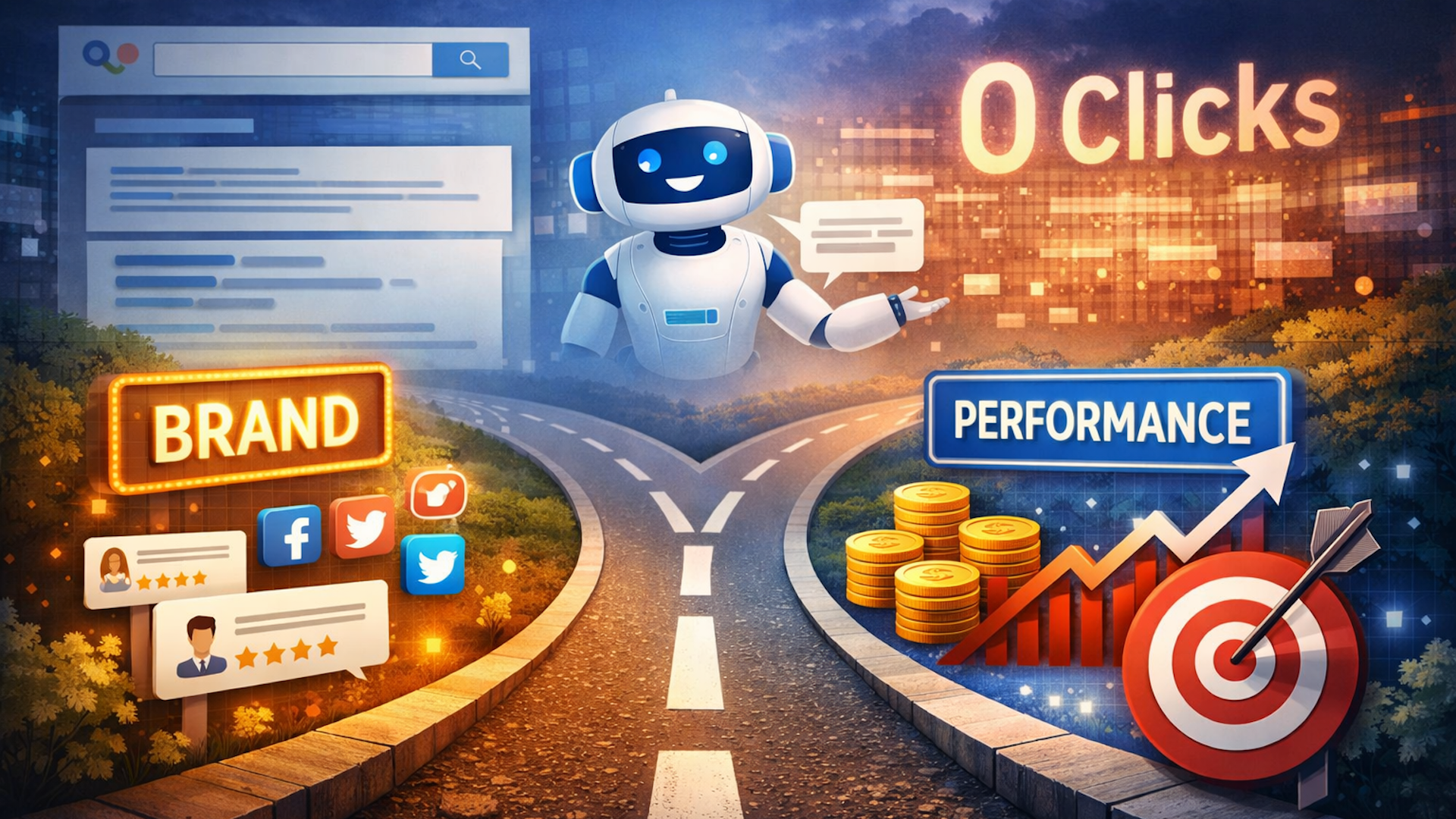
I’ve come to realize that SEO now serves as both a brand and performance channel. The traditional traffic model has been disrupted by AI Overviews and zero-click SERPs, making brand strength crucial for SEO ROI.
For years, SEO was straightforward: rank higher, get more traffic, then boost the sales pipeline. However, this simple equation is rapidly evolving, much to the frustration of marketing leaders.
With AI Overviews and users getting answers directly from LLMs, the idea of “rank and receive traffic and leads” is less effective now. Even top keyword positions don’t guarantee the clicks they once did.
This shift has sparked challenging discussions in boardrooms. Executives often question, “If traffic is down, how can we measure SEO success?”
It’s obvious now: the traffic model has changed, yet the demand for ROI remains. We must treat SEO as a brand-dependent performance channel, not just a traffic provider.
Why traffic and pipeline are no longer in lockstep
Linear attribution has never fully reflected the dynamic nature of organic search. While ChatGPT isn’t replacing Google, it’s augmenting it.
Users now verify information across platforms due to skepticism of search and LLM results. Where research once happened solely within Google’s ecosystem, it has become more scattered.
Today’s organic search is akin to a pinball machine, with buyers bouncing across channels unpredictably. This introduces complexity that traditional attribution software struggles to follow.
Such complexity has broken the linearity executives crave. Traffic and pipeline charts, once aligned, now often diverge.
Across B2B SaaS portfolios, a common pattern emerges: organic sessions may be flat or declining, yet rankings for high-intent terms stay stable, and the pipeline from organic search grows.
This mismatch doesn’t indicate SEO failure. Rather, it shows that traffic is no longer a reliable business impact measure.
The traffic lost to zero-click searches often consists of informational, low-intent content. What remains is higher-intent traffic, closer to conversion.
We’re seeing the “atomization” of search demand. Short-head, broad keywords are declining, while specific, long-tail queries with higher intent are rising.
Many leaders mistakenly react to dropping sessions by pushing for quantity, aiming to regain the lost numbers through top-of-funnel content. This often inflates vanity metrics without delivering qualified leads.
SEO ROI is now the downstream outcome of brand traction
For years, SEO was viewed as a pure performance channel. We believed optimizing some keywords would suffice.
In reality, SEO has always depended on brand strength. The rise of AI-driven engines highlights this, expecting reputations, not just keywords.
If your brand lacks authority, technical optimizations alone won’t elevate your status. Brand strength determines organic performance limits. Search engines seek web-wide consensus, and weak associations hinder results.
Brand strength for LLMs means owning topical authority, aligning with customer queries, being validated by trusted sources, and having clear positioning.
SEO captures pre-existing demand validated by your brand, not creating it from nothing.
The new defensibility metrics for SEO
As traffic no longer headlines KPIs, new defensibility metrics are necessary. Successful teams focus on revenue and reputation impact, not just volume.
Metrics proving business impact include stable top-10 rankings for commercial keywords, increased Ahrefs traffic value, stable solution page traffic, growing homepage traffic, and developing LLM referral traffic.
When pipeline per organic visitor rises, even with falling sessions, the dialogue shifts from “SEO is broken” to recognizing SEO’s evolution.
Modern SEO is moving from acquisition to influence
Successful SEO isn’t about recovering traffic but influencing buyer decisions and enhancing organic visibility. In an AI-first context, zero-click doesn’t imply zero-value.
SEO remains key in building market readiness, positioning brands as authorities even before buyers enter the funnel.
I’ve noticed that while many search teams are celebrating improved rankings, greater visibility, and a surge in traffic, the feedback regarding pipeline, revenue, and sales outcomes isn’t exactly echoing this enthusiasm.
Even when SEO KPIs are all green and the graphs are trending upward, the business outcomes don’t always reflect this apparent success.
Search performance can seem robust on the surface, yet falter in areas that the search teams don’t own or fully understand.
The immediate inclination might be to examine attribution models, data quality, or the KPIs themselves.
However, often the breakdown occurs post-click, in spaces the search teams don’t control.
Despite advancements in automation, software, and workflows making search efforts easier to scale, there’s more to it than execution; it’s about understanding and control.
This is a long-standing challenge, one that scaling often exacerbates.
An early halt or too shallow an analysis limits the understanding of performance within the broader business context.
In larger organizations, siloed operations widen the gap. Without tight CRM and sales integration with search, the journey often lacks a unified owner.
Leadership pressure can further exacerbate these issues.
When results appear promising yet fail to impact the bottom line, the ambiguity becomes troubling. Though not new, this dynamic is increasingly apparent.
To bridge these gaps, focusing on five key breakpoints can be pivotal.
1. Intent Misalignment
Intent forms the backbone of how we tailor content and target our audiences through search, yet it’s sometimes out of sync with deeper factors like buying stages, urgency, or seasonal sales expectations.
Even when aligned with the latest research, the readiness or stage of a prospect can remain elusive.
Understanding the problem a searcher aims to solve and comparing it with sales’ positioning can bridge the gap between search and actual sales, refining the way teams optimize their approaches.
It’s awkward when leads driven by search don’t convert to customers, sparking tensions around conversion quality.
While technically compliant leads meet criteria, issues like unaligned CTAs or vague follow-ups often go unnoticed, focusing on conversion rate optimization as a quick fix when it’s usually more complex.
Conversions rarely guarantee committed customers, making it crucial to evaluate if the initial search promise and subsequent visitor journey align with their intentions.
Achieving a shared understanding of what qualifies as a marketing or sales-ready lead is vital, particularly when definitions, scoring models, and expectations vary.
Aligning on these criteria aids in demonstrating search’s true value to the business, though it may require navigating uncomfortable discussions.
I’m not critiquing search leaders; these challenges aren’t new, nor are they solely search team’s problems, but cross-functional issues needing better communication, agreed definitions, and ownership.
Rather than perfection, marketing leaders need actionable insights and a unified understanding of results.
The true danger isn’t declining performance but thriving metrics with unclear reasons behind them, impeding confident scaling efforts.
Every move aims to enhance credibility and influence far beyond traditional KPI mastery. Embrace understanding over sheer execution.
Ever wonder what kind of content catches the eye of AI search engines? I’ve been exploring the fascinating patterns and trends that determine why certain content is frequently cited, while others are easily ignored. Allow me to share with you seven key content patterns that consistently gain visibility in AI-powered searches, alongside five that typically get overlooked.
In our tech-driven world, crafting AI-friendly content isn’t just a bonus—it’s crucial for staying relevant. I’ll guide you through practical frameworks tailored to boost your content’s reach and appeal to AI systems.
I’ve realized that when it comes to content, you truly get what you pay for. In 2026, I’m constantly exploring new ways to locate outstanding writers, from job boards to LinkedIn and more.
As a marketer, I find myself spoiled for choice when it comes to sources for stellar content. Nowadays, there are more tools and job boards available, making it simpler to locate talented writers and generate compelling content.
However, this abundance also brings challenges, such as prioritizing speed and cost over quality.
If I’m aiming for great (not just good) content, I know some sources are more reliable than others.
This guide will help me find top-tier writers and build a content strategy that ensures quality without sacrificing speed.
Struggle 1: What qualifies as a ‘great’ content writer?
Identifying a great writer can feel a lot like evaluating a new love interest. They may look good on paper and make a strong first impression, but how can I be sure they’re the right fit?
Just like a love interest, I need to invest time to truly know the writer. But that doesn’t mean I go in blindly. Here’s what I focus on to find the perfect match without wasting time.
Evaluate the fundamentals
I look for writers with a strong grasp of grammar, spelling, clarity, and structure. Instead of formal tests, I examine their portfolios and content samples for quality.
A few email exchanges during the hiring process can also reveal their communication skills and confidence.
Make sure they know how to write for people, not bots
Great writers understand that search engines favor content crafted for people rather than formulas. When evaluating samples, I keep an eye out for readability and SEO expertise.
I try to read through and ask myself, “Would this content be useful and engaging for my target audience?” If the answer is no, I know search engines won’t favor it either.
Choose effective copywriters
For a solid return on investment, I prefer writers who possess SEO copywriting skills beyond basic SEO tactics.
While driving traffic is essential, skilled copywriters guide readers toward action, be it signing up, clicking through, or making a purchase.
Assess how easily understandable their work is
I put importance on checking readability scores for potential writers. Sometimes, an article may appear well-written but holds a low score for readability, signaling a lack of clarity.
Find writers that adapt to the audience
My ideal writer not only understands the product or target demographic but deeply connects with the audience’s mindset. I ask for niche-specific samples to ensure they understand my audience’s needs and frustrations.
Struggle 2: Where can I find great content writers?
In my experience, you can find “good” writers almost anywhere. However, I notice a difference between choosing Fiverr and more selective platforms offering better screening opportunities.
Blogging sites
I often look for SEO content writers on blogging sites like Medium, Substack, and LinkedIn. These platforms allow me to see real-time writing and communication styles.
Google and other search engines
Google is a resourceful tool for finding high-quality writers. Those who maintain their own websites often showcase their understanding of SEO through their content marketing efforts.
LinkedIn and Facebook groups
By joining writer and freelancer groups on LinkedIn and Facebook, I observe conversations and discover writers who share their work and thoughts.
Peer recommendations
I don’t shy away from asking for recommendations. Strong writers often get referrals in their communities. Business owners frequently suggest top performers known for real-world project success.
Absolutely. Even when working with experienced writers who manage multiple clients, each has unique preferences and styles. I use standard operating procedures (SOPs) to minimize guesswork and enhance clarity.
Many businesses misinterpret the struggle to find writers with the challenge of retaining them. Without clear directions and SOPs, there’s room for confusion. I’ve found that SOPs save time and keep everyone on the same page.
If writing SOPs feels overwhelming, I consult with operations specialists who can streamline the process, boosting my ROI and ensuring writer satisfaction.
The allure of low-cost content is tempting, especially with quick turnaround promises. But I question the time needed to revise or rewrite it.
If I don’t have editors on hand, this might mean more time editing than crafting it myself. Investing in inexpensive writers isn’t wise without adequate training resources.
In 2026, I’m preparing to pay at least $0.20 per word for premium content. Rates vary, depending on a writer’s expertise and accolades. Ultimately, I look for writing that truly converts.
Struggle 5: Should I use freelance writers or build a team?
Choosing between freelancers and an in-house team hinges on my objectives and budget. Freelancers provide flexibility, scaling content as needed without heavy resources.
Conversely, an in-house team offers consistency and deep brand knowledge. While creating more content or operating in complex niches, this consistency becomes invaluable.
For many, a hybrid model is effective: blend an internal team for editorial control with freelancers for scaling. Tailoring the content system to resources can fit any business stage.
Struggle 6: Is ‘great content’ worth the investment?
From my perspective, optimized content, just like anything else, yields returns based on investment.
By working with top-quality writers, I see an increase in traffic and rankings, making the investment worthwhile. The benefits of high-quality content amplify over time.
I find well-researched content draws qualified visitors long after it’s published, and builds trust with audiences, ultimately fostering more sales.
Great content supports the entire customer journey by answering queries and positioning the brand as credible, providing value throughout their experience.
A skilled writer attracts the right audience, making each investment worthwhile.
Great writers come from clear standards, not lucky hires
I’ve learned that finding exceptional writers isn’t about luck, but about maintaining clear standards.
Understanding what quality looks like and where to look transforms the process into a predictable and less frustrating experience.
The most successful content programs approach writing as a sustainable investment, pairing writers with clear expectations, fair pay, and repeatable systems for long-term value.
I’ve discovered that refining our approach with both robots.txt and LLMs.txt can significantly enhance our visibility on platforms like ChatGPT, Gemini, and various answer engines. It’s fascinating how these simple files can make such a big difference in crawlability for AI bots.
Join me as I delve into the best practices for optimizing these important files. By making small yet impactful changes, we can ensure our content gets the attention it deserves in the evolving digital landscape.
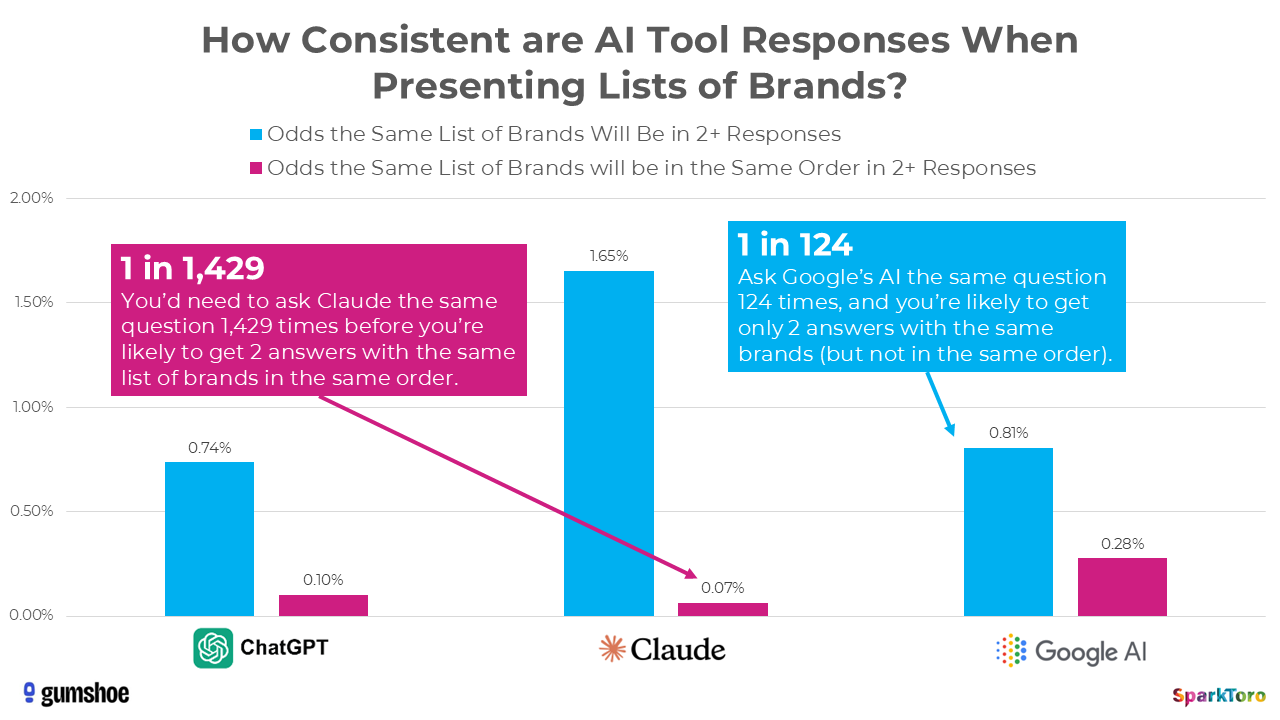
I recently came across an intriguing study about AI recommendation lists that caught my attention. It revealed that AI systems like ChatGPT, Claude, and Google’s AI don’t often repeat the same recommendations when asked for brands or products. This means if I ask them the same question multiple times, I’ll likely get different lists each time.
This finding came from Rand Fishkin of SparkToro and Patrick O’Donnell of Gumshoe.ai. They investigated how consistent generative AI recommendations are, and their results were quite fascinating.
What They Tested. Over 600 volunteers used 12 identical prompts on ChatGPT, Claude, and Google’s AI nearly 3,000 times. What they found was quite revealing.
Each AI response was turned into an ordered list of brands or products, and the overlaps, order, and repetitions were compared to see how often the same answers appeared.
The short answer: almost never. Achieving identical lists twice was incredibly rare, with odds of under 1 in 100, and getting the same list in the same order was even less likely at 1 in 1,000.
Even the length of the lists varied. Some responses listed only two or three options, while others had more than ten. If I’m dissatisfied with the result, simply asking again might yield a better outcome.
Why This Matters. We often hear about personalization in AI answers, but this study is the first to provide real data to support that claim, showing a clear departure from traditional SEO.
Design and Randomness. This variability isn’t a flaw — it’s intentional. These systems are probability engines designed to create diverse outcomes, not stable ordered results like Google’s blue links.
One Consistent Metric. Despite fluctuating rankings, one metric that proved more stable than expected was visibility percentage. Some brands repeatedly appeared in a majority of responses.
Consistent presence in these lists carries more weight than exact ranking, especially across multiple runs and intent changes.
Context Size Counts. The consistency of AI answers improves in smaller, niche markets compared to larger categories, where results scatter significantly.
Real-World Prompts. Testing with actual human prompts showed varied results — as people phrased their queries differently, semantic similarity was low.
Yet, AI still returned similar brands for the same intent, proving that AI captures the underlying purpose behind the queries.
The Power of Intent. Even with hundreds of unique prompts for headphone recommendations, prominent brands like Bose, Sony, and Apple surfaced consistently.
When I change the purpose — say, to gaming or noise-canceling — the brand results shift accordingly, indicating that AI comprehends intent despite varied prompts.
What Doesn’t Help. Tracking exact positions in AI answers is unreliable because these rankings are too unstable to mean anything.
What Could Work. A more effective approach might be to track how frequently my brand appears over many prompts, even if it seems complex and imperfect.
Unanswered Questions. There are still gaps to explore, like determining how many attempts are needed for reliable visibility stats or whether API-based results align with real user behavior.
Conclusion. AI recommendation lists are inherently variable, but with large-scale, careful visibility measurement, I can derive actionable insights. Just don’t mistake this for traditional ranking metrics.
For more details, you can read the full report here.
Video is undeniably one of the most compelling and information-rich marketing tools I have at my disposal.
While text can convey a message, video brings it to life, offering emotional depth and context like nothing else.
For AI, these videos are a treasure trove of data, enabling precise information processing and understanding.
There was a time when video perplexed search engines, but today, AI can effectively ‘watch’ and decode video content by breaking it down into visual, auditory, and textual streams.
Join me as I dive into optimizing videos for AI to maximize visibility and accuracy.
Why Video Matters in AI: Contextual Density Optimization
Back in the day, understanding a video relied heavily on meta descriptions like titles, tags, and transcripts. Now, video files themselves directly inform AI training.
AI models such as Gemini 1.5 Pro ‘view’ videos through discrete tokenization, translating video content into an understandable language.
AI performs three key functions when processing video:
Seeing: It captures snapshots at set intervals to interpret on-screen actions.
Hearing: It analyzes audio far beyond words, capturing emotions and background nuances.
Connecting: By associating actions like someone holding a wrench with the word “wrench,” it creates meaningful links.
Precision and quality are crucial—videos that focus on specific, clear data, or what’s termed content granularity, have a stronger impact than drawn-out ones.
AI can even glean ‘silent’ information, like:
Text on presentation slides
Product labels in demos
A presenter’s facial expressions
These elements translate videos into a language that AI understands. A blurry video or unclear audio could lead AI to erroneously favor a clearer competitor source.
Preventing AI Misunderstandings About Your Business
Sometimes AI may fill in gaps about my brand using competitor data.
For instance, if competitors offer trials and I don’t, AI might incorrectly assume I follow the same practice, leading to brand drift.
High-quality video is an effective remedy, serving as factual ground truth that prevents speculative guessing by AI.
Nuance: Videos featuring expert insights on complex services provide details often missing in written content.
Correction: Fresh videos replace outdated AI knowledge, updating its understanding.
Trust: AI is less inclined to guess with high-trust visual signals.
Tip: Incorporate video transcripts and audio into RAG systems to ensure AI accurately narrows your brand narrative.
How AI Engages with Videos
With models like Gemini 1.5 Pro, AI processes text, images, and audio simultaneously.
Other AIs depend on distinct specialized models for processing, which handle each element separately.
No matter how AI interacts with my videos, its performance improves with structured text—carefully review transcripts, optimize titles, and ensure captions are spot-on.
FYI: Gemini 1.5 Pro can process entire movies or webinars without trouble, tokenizing video content at 300 tokens per second.
This one-frame-per-second sampling influences video editing trends like smash cuts, popular on platforms like TikTok and Instagram Reels, but these may not mesh well with AI’s need for clarity.
Fast edits risk missing important visual information; frames should be visible long enough for accurate sampling.
Revisit “slow TV” to maintain visual clarity in technical content, with slow pans and deliberate scene changes.
Even with cutting-edge AI, elements like facial recognition and text scanning (OCR) are vital in decoding video content.
Key focus areas include:
Resolution and Readability
Avoid blurry videos as OCR struggles with anything below 360p despite super-resolution techniques. Aim for crisp 1080p for optimal results.
Contrast and Font Selection
For machine readability, choose bold fonts like Arial or Helvetica on a high-contrast background, such as white on black.
Visual Anchors
Clear visual anchors help AI visualize and connect information, whether it’s the UI of software or rotating a physical product for spatial understanding.
Audio Layers
My voice in a video shapes the message. AI analyzes patterns and emphasis to identify significant content.
Advanced models process audio like text, converting speech via ASR models.
Speaker Identification: Clarify speakers to enhance AI understanding.
Audio Bolding: Use pauses like punctuation to emphasize key points.
Consistency: Align spoken and visual content for cohesive messaging.
Tip: Sync scripts with visuals for cohesive communication.
I recently came across some intriguing news that Google might soon allow us to prevent our content from being used in their AI search features. Imagine having the power to opt out of AI Overviews and AI Mode!
Google is looking at ways to enable site owners to stop Google from using site content for Search AI’s generative features, like AI Mode and AI Overviews. They’re doing this in response to new guidelines from the UK’s Competition and Markets Authority (CMA). However, Google wants to ensure any new tools don’t disrupt the core functionality of Google Search.
“We’re now exploring updates to our controls to let sites specifically opt out of Search generative AI features.”
They clearly state that these options shouldn’t compromise Google Search, saying:
“Any new controls need to avoid breaking Search in a way that leads to a fragmented or confusing experience for people.”
Anticipated Timeline. It’s uncertain when these new controls will be introduced, but the idea of having more control excites many of us! Many of us—publishers, content creators, site owners—desire control over whether Google can use our content for AI features such as AI Overviews and AI Mode. These forthcoming controls, whenever they appear, will afford us the ability to better manage how Google utilizes our content.
Full Insights. Here’s the full message from Google’s blog this morning:
User behavior is evolving rapidly, and features like AI Overviews help people discover new content and explore more topics. Today, the UK’s Competition and Markets Authority (CMA) initiated a consultation on potential new requirements for Google Search, including the controls we offer websites to manage their content in Search AI features. This matter is complex, as it impacts how people find information and how websites get discovered in Search.
We’ve long provided publishers with a variety of controls, based on standards like robots.txt, to dictate how their content appears in Search. As tech evolves, so do our tools. We’ve added controls for Featured Snippets and image previews (relevant to AI Overviews). Recently, we unveiled Google-Extended, a new tool allowing sites to dictate how their content helps train our Gemini models.
Building on this framework and working alongside the web ecosystem, we’re exploring updates to our controls that specifically allow sites to opt out of Search generative AI features. Our mission is to protect Search’s helpfulness while giving websites the right tools to manage their content. We anticipate engaging in the CMA’s process and continuing our discussions with stakeholders.
New controls need to prevent fragmentation or confusion in Search. As AI becomes central to information discovery, new controls must remain simple and scalable for website owners.
We remain hopeful that we can provide more choice to content creators while ensuring a top-tier and innovative Search experience for users.
Why This Matters. It’s clear that more control is better than less. SEOs, publishers, and site owners have long called on Google to provide controls over how our content is used in AI features. These anticipated controls could arrive soon, so stay tuned for updates!