Category: SEO

  • Thriving Brand-Agency Partnerships: Insights for 2026 Success

    Thriving Brand-Agency Partnerships: Insights for 2026 Success

    In today’s ever-evolving landscape, brand-agency partnerships look vastly different than they did just a few years ago, and this evolution will only continue to expand by 2026.

    I’ve noticed that internal marketing teams have become more sophisticated, digital channels are increasingly specialized, and the role of agencies shifts away from a one-size-fits-all approach.

    Interestingly, the companies reaping the most benefits from agency relationships aren’t necessarily the biggest spenders.

    Instead, those that succeed are clear about their specific needs and objectives.

    Achieving clarity starts with understanding the true role an agency should play in your organization.

    Too often, partnerships fail because expectations and responsibilities weren’t clearly aligned from the beginning.

    When this foundational understanding is lacking, even the most robust execution can fall short.

    Having worked with thousands of businesses across industries and growth stages, I’ve consistently observed that agency success falls into two distinct partnership models. These models are primarily influenced by company size and internal marketing maturity.

    Model 1: Execution-first Partnerships for Large Companies

    If your company sees over $50 million in annual online revenue, chances are you already have a capable internal marketing team.

    Strategy and planning remain in-house, so what you need from an agency is deep platform expertise and exceptional execution.

    At this stage, agencies function as specialist operators that activate roadmaps, optimize channel performance, and bring advanced technical knowledge that’s inefficient to replicate internally.

    When performance dips, a powerful agency partner doesn’t default to tweaking tactics.

    Instead, they help uncover whether the issue stems from execution, market conditions, or a strategic misstep, offering data to guide corrective measures.

    Model 2: Integrated Growth Partners for Small to Mid-Size Companies

    For companies under $50 million in annual revenue, the agency dynamic shifts.

    Internal teams might be lean or still cultivating core digital expertise.

    In these situations, agencies do more than execute; they shape your entire growth strategy.

    An ideal agency acts as an extension of your marketing team, guiding platform selection, crafting cross-channel strategies, and more.

    For growing businesses, this integration provides access to senior-level expertise, balancing speed, strategy, and financial constraints effectively.

    Finding the Right Agency Partner

    I’ve seen many companies approach agency selection improperly.

    Ditch the RFPs

    Large companies often rely on the request for proposal (RFP) process, which tends to favor vendors skilled in documentation over performance-driven results.

    Instead, I recommend using your professional network. If you’re in charge of a large marketing department, you likely know several professionals who can provide referrals to standout agencies.

    Smaller businesses should seek advice from peers about reliable vendors, then check reviews to confirm their findings.

    While no agency is perfect and all will have some unhappy clients, patterns of negative reviews are a solid indicator to avoid those agencies.

    Request an Audit

    Upon narrowing down potential partners, I suggest asking for an audit of your current marketing setup.

    Most digital marketing agencies conduct these audits for free, offering honest and constructive feedback.

    Depending on your company’s size, audits might vary, with larger firms focusing on specific platforms and smaller ones requiring full-funnel evaluations.

    This information helps evaluate how the partnership will integrate with existing processes, paving the way for effective collaboration.

    The selection process inherently includes finding partners that mesh well with your internal processes—critical to long-term success.

    Setting Achievable Goals

    After selecting an agency partner, the next step is defining coherent goals aligned with your business objectives.

    Unfortunately, I’ve observed that many leaders set goals disconnected from their business aims, straining the agency relationship from the get-go.

    A robust agency questions your goals pre-contract, urging you to adjust expectations realistic to your context and aspirations.

    Your chosen partner should grasp your business’s economics and help ensure marketing goals are aligned with broader business objectives.

    Maintaining a Productive Partnership

    Once everything is underway, you must keep your agency accountable, which involves regular reviews and tracking progress against initial audit benchmarks.

    Contract Length

    Large enterprises often sign 12-month contracts for stability, but smaller firms might benefit from a more flexible three-month commitment that auto-renews.

    In cases where everything seems perpetually smooth, consider that growth might be stagnating, as healthy conflict is a sign of challenge and progress.

    Ongoing Accountability

    Regularly reviewing opportunities against your agency’s initial audit findings not only keeps progress on track but also provides vital context for adapting strategies.

    Context is key, especially if your industry’s dynamics affect your agency’s work—awareness of broader market trends is crucial for realistic appraisal.

    Innovation and Testing

    Your agency should consistently suggest fresh ideas, especially for smaller businesses, while larger companies should fund dedicated innovation budgets.

    Effective agency partnerships without innovation risk falling behind competitors more willing to explore uncharted avenues.

    Ultimately, understanding what’s upcoming and strategically positioning your business will keep you competitive.

    When to Make an Agency Change

    Occasionally, a brand-agency partnership doesn’t thrive. Trust your instincts if you feel things could improve or something is amiss.

    Your Business Isn’t Growing

    Marketing should focus on acquiring new-to-brand customers. If growth stalls while your industry maintains, it’s time to reassess your agency’s role.

    Your Agency Isn’t Pushing Innovation

    If new ideas aren’t forthcoming or you’re not exploring novel methods to engage customers, seek an external audit to identify gaps.

    Your Agency Can’t Explain Performance

    An inability to contextualize performance suggests a knowledge gap in your sales funnel, where interconnected activities impact overall success.

    For smaller businesses, agents should grasp comprehensive marketing operations and how various elements influence each other.

    The Marketing Reality Check

    Great marketing can’t compensate for a flawed business model. Successful growth stems from the synergy of good business, leadership, and agency collaboration.

    If any component is lacking, marketing falls short of potential. Meaningful growth arises when agency roles align with specific business needs.

    Agency selection is an ongoing journey involving ongoing dialogue, accountability, and refinement, even when this involves constructive disagreements.


    Inspired by this post on Search Engine Land.


    crushpress.ai community screenshot
  • How SEO Fundamentals Beat AI in Driving Your Website Traffic

    How SEO Fundamentals Beat AI in Driving Your Website Traffic

    I’ve been observing how AI is transforming search, yet the timeless principles of SEO still seem to bring in the majority of traffic. It’s fascinating to look at data that show which strategies really work.

    Generative AI is a huge trend right now. It’s featured in every conference and is all over my LinkedIn. Businesses, mine included, are rethinking organic search.

    We’re all in a race to optimize for AI Overviews, work on vector embeddings, and reconfigure content models around LLMs. But what’s less talked about is the simple truth: AI isn’t yet the primary driver of web traffic for most of us.

    While AI-driven search is gaining momentum, the LLM platforms collectively account for just a tiny fraction, about 2-3%, of the organic traffic that Google alone provides.

    ```json
{
  "alt": "Bar chart comparing AI referral sessions and Google organic clicks from Jan-25 to Oct-25.",
  "caption": "Diving into the numbers: A bar chart contrasting AI referral sessions with Google organic clicks over a ten-month span in 2025.",
  "description": "This bar chart illustrates the comparison between AI referral sessions and Google organic clicks from January to October 2025. The dark blue bars represent AI referral sessions, ranging from 229,305 in June to 377,416 in April, while orange bars depict Google clicks, which increase from 1,461 in January to 7,056 in October. This visual highlights the varying trends and volumes of online traffic from these two sources over the specified period."
}
```

    However, I’ve noticed that many teams, maybe even yours, are investing more energy in AI strategies instead of reinforcing essential SEO fundamentals that still deliver tangible results. Focusing too much on the future means we’re not making the most of today’s opportunities.

    In my experience, looking closely at proven SEO tactics and real-world data can highlight how they still effectively move the needle today.

    Quick SEO Wins Still Deliver Substantial Gains

    It’s easy to overlook minor updates when we’re caught up with trends like vector embeddings and semantic SEO. Yet, these small changes can have a significant impact.

    ```json
{
  "alt": "SEO ranking table displaying keyword difficulty, position, share of voice, estimated traffic, and volume.",
  "caption": "Explore the latest SEO performance metrics with this detailed ranking table, showcasing keyword difficulty, position shifts, and traffic estimates.",
  "description": "This image shows a table of SEO performance metrics. Columns include Keyword Difficulty (KD%), Position (Pos.), and several 'Diff' metrics showing changes. Share of Voice, Estimated Traffic (Est. Traffic), and Volume (Vol.) columns indicate SEO success and changes over time. Useful for digital marketers analyzing keyword strategy and performance."
}
```

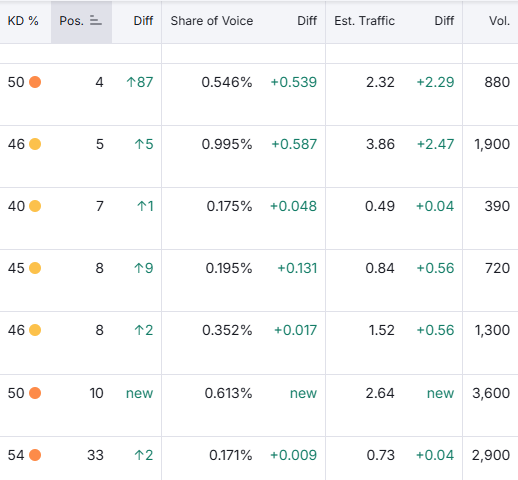
    Take title tags, for instance. They’re among the simplest and most effective SEO tools. I’ve seen many websites fail to use them effectively, often neglecting to target the right keywords, include key variations, or use any keywords at all.

    Just recently, a simple change of adding “& [keyword]” to a client’s homepage title tag resulted in a surge in keyword rankings, clicks, and impressions. No other changes were made, yet the results were significant.

    Combining this with other strategies like on-page copy edits, internal linking, and backlinks can lead to ongoing growth. It might sound basic, but these tactics continue to work wonders. Don’t let advanced GEO strategies blind you to simple, impactful tactics.

    ```json
{
  "alt": "Line graph showing two data trends from late October to mid-November with a noticeable drop on November 6, 2025.",
  "caption": "Visual data comparison: Two trends from Oct 25 to Nov 25, highlighting a drop on Nov 6, 2025. The graph showcases intersecting lines and varying peaks.",
  "description": "This image is a line graph depicting two data trends from October 25 to November 25, 2025, with dates on the x-axis and unmarked values on the y-axis. Both lines display fluctuations with a significant drop in both trends on November 6, indicated by an orange arrow. Peaks and troughs show periodic rises and falls, demonstrating variability in data performance. Ideal for presentations and analytics insights."
}
```

    The Importance of Content Freshness and Authority

    The rise of AI might have pushed some tactics like the skyscraper technique into the shadows.

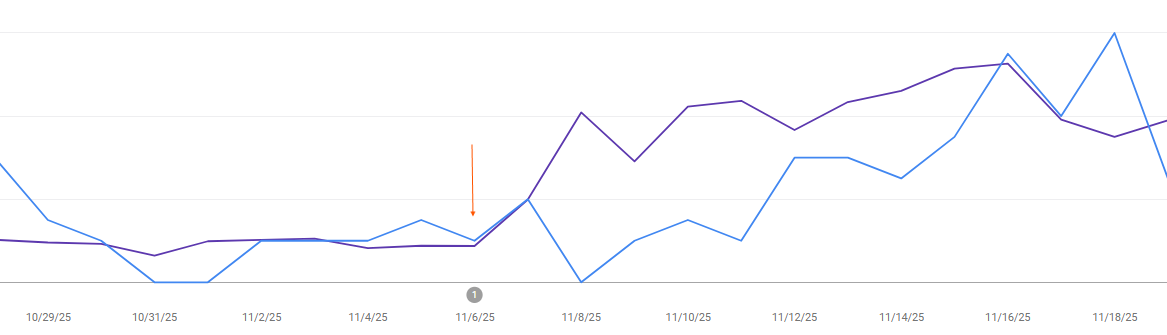
    This approach involves crafting superior content for keywords and topics that are already ranking, aiming to outperform existing results. While the internet is flooded with similar content, focusing on keyword authority and freshness can be incredibly effective.

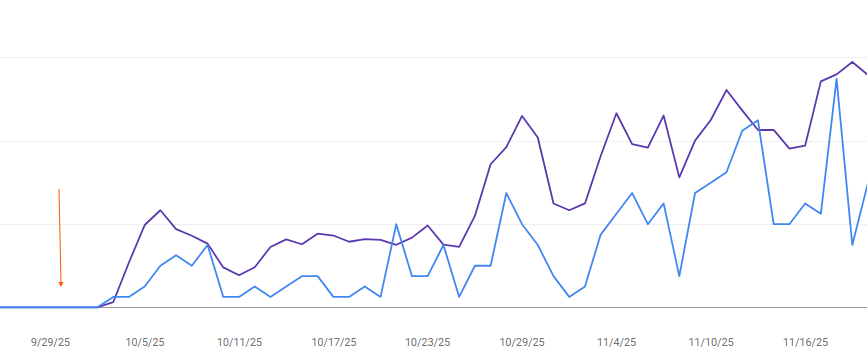
    I’ve witnessed this success multiple times. Recently, a client’s article on a well-established topic quickly climbed to the second spot, generating new clicks and impressions almost instantly.

    ```json
{
  "alt": "Line graph showing two data sets over time with peaks and troughs from 9/29/25 to 11/16/25.",
  "caption": "Two fluctuating line graphs reveal trends over time, capturing data dynamics from late September to mid-November 2025.",
  "description": "This image features a line graph displaying two sets of data trends from 9/29/25 to 11/16/25. The lines showcase noticeable peaks and troughs, indicating variations in the data over time. The graph uses purple and blue lines to differentiate the datasets, providing a clear visual comparison of their performance. The x-axis represents dates, while the y-axis represents the measured values, offering an insightful look into the data's progression and behavioral patterns."
}
```

    The success was due to the site’s strong authority and because much of the competing content was outdated. Although this strategy may not suit every situation, ignoring it could mean missing out on clear wins.

    User Experience: A Key Conversion Lever

    Although there’s buzz around AI-driven shopping experiences, the core principles of website optimization remain irreplaceable. Some argue that AI will soon take over interactions and conversions, but this is far from the present reality.

    Many websites still rely on traditional search-driven traffic and website-based conversions. Whether visitors come from organic search, paid ads, AI referrals, or direct, what matters is a fast site, an excellent user experience, and a well-defined conversion funnel.

    ```json
{
  "alt": "Text explaining a 23% improvement in CTR for Apply Now feature due to engaging content and testimonials.",
  "caption": "Boosting engagement by 23%! Enhanced content and testimonials drive Apply Now CTR success.",
  "description": "The image illustrates a 23% increase in CTR for the 'Apply Now' feature. This improvement was achieved by replacing the hero section with engaging content that highlighted value and incorporated social proof and testimonials. The findings suggest implementing the winning variant and moving to the next testing phase. This highlights the importance of content strategy and evidence-based design in digital marketing."
}
```

    Optimizing these aspects can lead to remarkable performance gains, as I’ve seen through a simple CTR test with a client, which yielded impressive results.

    Brands prioritizing user experience and conversion rate optimization will continue to outperform those who don’t. This competitive advantage will only grow if teams delay waiting for AI to perfect conversion mechanisms.

    AI’s Role in Search and the Power of Existing Strategies

    AI is indeed reshaping search by altering user behavior, influencing SERP appearances, and complicating attribution. Yet, the real risk lies in overreacting to AI at the expense of proven strategies.

    For most sites, traditional organic search continues to be the primary traffic source. When well-executed, SEO fundamentals still deliver results. Quick wins and high-quality content are rewarded, and optimizing user experience remains critical.

    These efforts support each other, improving organic visibility and complementing paid search and LLM visibility. Staying updated on AI developments is vital but not at the cost of current growth-driving strategies.


    Inspired by this post on Search Engine Land.


    crushpress.ai community screenshot
  • Top Websites AI Models Trust for Shopping Inquiries

    Top Websites AI Models Trust for Shopping Inquiries

    Last Updated: December 22, 2025

    Back in June 2025, I noticed an interesting infographic circulating widely. It highlighted the most-cited websites by AI models, according to a comprehensive SEMrush study of over 150,000 citations. Naturally, seeing Reddit at the top sparked a buzz among marketers, who began to believe that featuring on Reddit was key to their GEO strategy.

    But, here’s the catch: most of these citations were research-oriented, not necessarily geared towards buying intents. For instance, Reddit was frequently mentioned in queries like “Where in Europe should I take a family vacation?” but not so much in “What are the best web design firms?”

    This led to some misguided assumptions. Although Reddit does play a role in AI models like ChatGPT, Perplexity, and Gemini, it represents only about 11% of their commercial recommendation algorithms. So, placing too much emphasis on Reddit won’t really boost your product or service visibility in these AI models.

    The Most Cited Websites by AI Models for Buying-Intent Queries

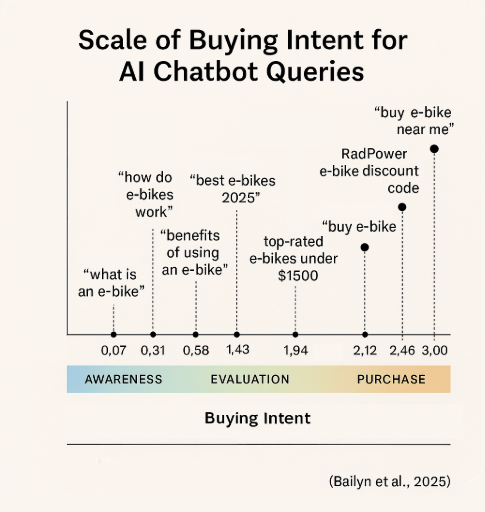
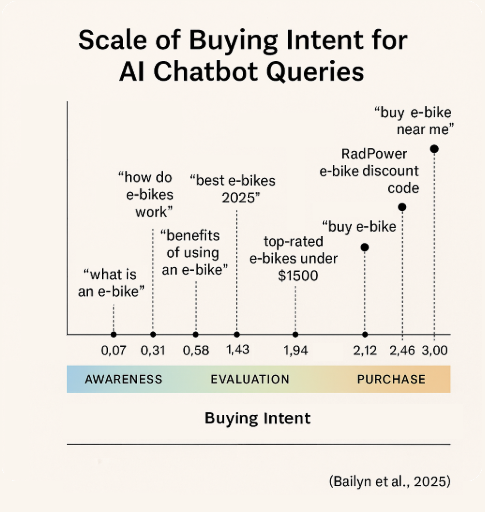
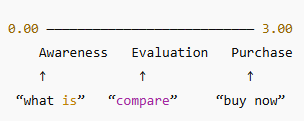
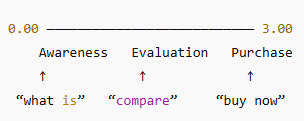
    Our research team dug deeper into this in October 2025 and later updated it in December 2025. We conducted 36,127 buying-intent queries on ChatGPT and tallied the top-cited websites. Our “buying-intent query” was defined on a scale measuring how close a query was to a purchase decision. A simplified version of this scale is captured in the infographic below:

    Detailed Query Intent Scale

    A query scoring higher than 1.35 was marked as “buying-intent.”

    Simplified Query Intent Scale

    Top Website Types Cited by AI Models for Buying-Intent Queries

    We meticulously categorized the types of websites AI models prefer for such queries. Understanding the types helped us unravel which channels are more effective at GEO—essential in influencing AI chatbots to nominate certain companies.

    ```json
{
  "alt": "Graph depicting buying intent scale for AI chatbot e-bike queries.",
  "caption": "Exploring the buying intent behind various e-bike related queries processed by AI chatbots, from awareness to purchase stages.",
  "description": "The image features a graph titled 'Scale of Buying Intent for AI Chatbot Queries.' It illustrates the progression of buying intent from awareness to purchase for e-bike queries. The x-axis represents buying intent, ranging from 0.07 to 3.00, with labels like 'what is an e-bike' and 'buy e-bike near me.' The spectrum is divided into awareness, evaluation, and purchase stages, providing insights into consumer decision-making processes. Source: Bailyn et al., 2025."
}
```

    Top Website Types Cited by AI Models for Buying-Intent Queries

    #Website TypeDescription# of Citations
    1Product Recommendation
    Media
    “Best of” and “Top 10” review sites largely monetized via affiliate links (e.g., Wirecutter, Tom’s Guide, TechRadar).7,642
    2Consumer Review PlatformsUser-generated review aggregators like Trustpilot, BBB, and Google Reviews.5,983
    3Traditional MediaEstablished publishers including product roundups or consumer coverage (Forbes, NYT, Wired).4,581
    4New MediaDigital-native outlets that frequently review or endorse products (TechCrunch, The Verge).3,826
    5YouTube / Video Review ChannelsVideo-based reviews and product comparisons often transcribed or summarized by AI models.3,211
    6Directory SitesStructured provider listings (Yelp, TripAdvisor, Angi).2,639
    7Commercial / Brand SitesOfficial manufacturer or retailer sites promoting their products.2,208
    8Marketplace Directories (B2B)Listings and SaaS marketplaces such as G2, Clutch, UpCity.1,762
    9eCommerce MarketplacesDirect retail and product pages from major sellers like Amazon, Walmart, and Best Buy.1,413
    10Corporate Blogs / Thought LeadershipBrand-run content hubs (HubSpot Blog, Salesforce Newsroom, Adobe Blog).1,109
    11Influencer / Creator SitesIndependent blogs or Substacks with personal authority and genuine reviews.928
    12Forum CommunitiesPublic discussion boards like Reddit, Quora, and StackExchange.674
    13Deal & Coupon SitesDiscount and promotion aggregators (Honey, RetailMeNot, Slickdeals).505
    14Niche Publications / Enthusiast MediaSpecialized media focused on one domain (Outdoor Gear Lab, PC Gamer).393
    15Local Listings / Maps DataGoogle Maps, Apple Maps, and other local data sources.318
    16Reference SitesGeneral-purpose informational references (Wikipedia, Investopedia).265
    17Social PlatformsCitations to public posts from LinkedIn, X (Twitter), or Facebook Groups.224
    18Academic / Research SourcesScholarly content (Google Scholar, PubMed, arXiv).193
    19Government / Institutional SitesRegulatory or authoritative institutional content (FDA.gov, FTC.gov).159
    20Standards & Certification BodiesOfficial verification or compliance organizations (UL, ISO, Energy Star).119

    The major takeaway from parsing this data? Websites offering list-based product recommendations feature heavily in AI rankings. Being listed on these commercial publications can greatly enhance a product’s visibility in AI recommendations like ChatGPT, Perplexity, and others.

    Industry Breakdown: Websites Most Cited by AI Models for Buying-Intent Queries

    Next, our analysis focused on the top three websites each industry traditionally relies on. This provided a glimpse into which platforms AI models commonly heed within specific verticals, giving GEO marketers a decisive edge in targeting their media placement efforts.

    Top Websites Cited by AI Models in Buying-Intent Queries, by Industry

    IndustryTop-Cited Websites by AI for Buying-Intent Queries
    eCommerceWirecutter, Forbes, Tom’s Guide
    Managed ServicesClutch, G2, UpCity
    HealthcareForbes Health, Verywell Health, Medical News Today
    ManufacturingThomasnet, IndustryWeek, Engineering360 (GlobalSpec)
    Financial ServicesNerdWallet, Investopedia, Forbes Advisor
    CybersecurityCybersecurity Insiders, Gartner Peer Insights, TechRadar
    Real EstateZillow, Realtor.com, Redfin
    PharmaceuticalDrugs.com, FDA.gov, PubMed
    SaaSG2, DesignRush, Clutch
    ConstructionEngineering News-Record, Construction Dive, HomeAdvisor
    Home ServicesAngi (Angie’s List), Thumbtack, HomeAdvisor
    AutomotiveCar and Driver, Kelley Blue Book, Edmunds
    Marketing ServicesClutch, HubSpot Blog, First Page Sage
    Higher EducationUS News Education, Higher Education Marketing Institute, Niche.com
    IndustrialThomasnet, Engineering360 (GlobalSpec), IndustryWeek
    HospitalityTripAdvisor, Booking.com, Yelp
    Software DevelopmentClutch, G2, First Page Sage

    A key insight here is the fragmented nature of website citations. Trade journals contributed more than the top three sites in any category. As with website types, the predominance of review sites and product recommendation platforms was notable.

    Questions, Media Inquiries, or Other Requests

    Curious about our study? Have a media request, or want a PDF copy? Reach out to us here.


    Inspired by this post on First Page Sage Blog.


    crushpress.ai community screenshot
  • Mastering Image SEO: Unlocking AI’s Multimodal Capabilities

    Mastering Image SEO: Unlocking AI’s Multimodal Capabilities

    Decoding the machine gaze- Image SEO for multimodal AI

    I’ve discovered that images aren’t just for human eyes anymore—they are parsed like language by AI. With Optical Character Recognition (OCR), visual context, and pixel-level quality shaping how AI systems interpret content, the game of Image SEO has changed.

    For years, Image SEO was all about technical best practices: compressing JPEGs for speedy loading, writing alt text for accessibility, and using lazy loading to enhance page performance. These remain crucial, yet now we must also cater to the needs of advanced multimodal AI models like ChatGPT and Gemini, which present both opportunities and challenges.

    Multimodal search embeds diverse content forms into a unified vector space. We are learning to optimize for what I call the “machine gaze.” Generative search technology makes content largely machine-readable by segmenting media and extracting text from visuals via OCR.

    It is essential for machine vision to clearly parse images. Low quality or poorly contrasted text on product packaging can lead to misinterpretation or completely missed content by AI systems—a significant problem.

    This discussion explores the crucial aspect of improving machine readability, shifting focus from loading speeds to quality and interpretability of images.

    Technical hygiene still matters

    Before diving into optimization for machine comprehension, I make sure to respect the fundamentals: performance. Images are powerful tools for engagement but can also cause layout issues and slow speeds if not managed properly.

    Designing for the machine eye: Pixel-level readability

    Large language models view images, audio, and videos as structured data sources. Through visual tokenization, an image is divided into a grid of visual tokens, turning raw pixels into vector sequences.

    Poor resolution or compression artifacts can degrade token quality, leading to errors where the AI misreads images or invents details that aren’t there. Ensuring clarity and quality is critical for accurate interpretation.

    Reframing alt text as grounding

    In today’s context, alt text offers critical grounding for large language models. It provides semantic cues that help the model discern ambiguous visual tokens, improving image interpretation accuracy.

    ```json
{
  "alt": "A wristwatch with a blue leather strap and a bronze casing lies next to a vintage brass compass on a wooden surface.",
  "caption": "Timeless elegance meets navigation with this stylish wristwatch and vintage brass compass duo, perfectly paired on a rustic wooden table.",
  "description": "The image features a sophisticated wristwatch with a blue leather strap and a bronze casing set atop a wooden surface. Next to it lies a vintage brass compass with an intricate chain, creating a harmonious blend of style and exploration. The rich textures and warm tones of the wood enhance the elegance of both pieces, making this a perfect symbol of timeless grace and adventure. Keywords: wristwatch, compass, leather strap, bronze casing, vintage, elegance."
}
```

    The OCR failure points audit

    Technologies like Google Lens and Gemini rely on OCR to read text directly from images, including labels. However, small or low-contrast text often fails this machine gaze.

    Character height should be optimized to at least 30 pixels for OCR, and contrast should be clear to prevent errors in text reading. Stylized fonts and reflective packaging can exacerbate these problems.

    Originality as a proxy for experience and effort

    Original images are vital, serving as canonical signals that enhance page authenticity and origin credibility. Using tools like Google Cloud Vision’s WebDetection can help track duplicate content and boost your visual content’s scoring.

    The co-occurrence audit

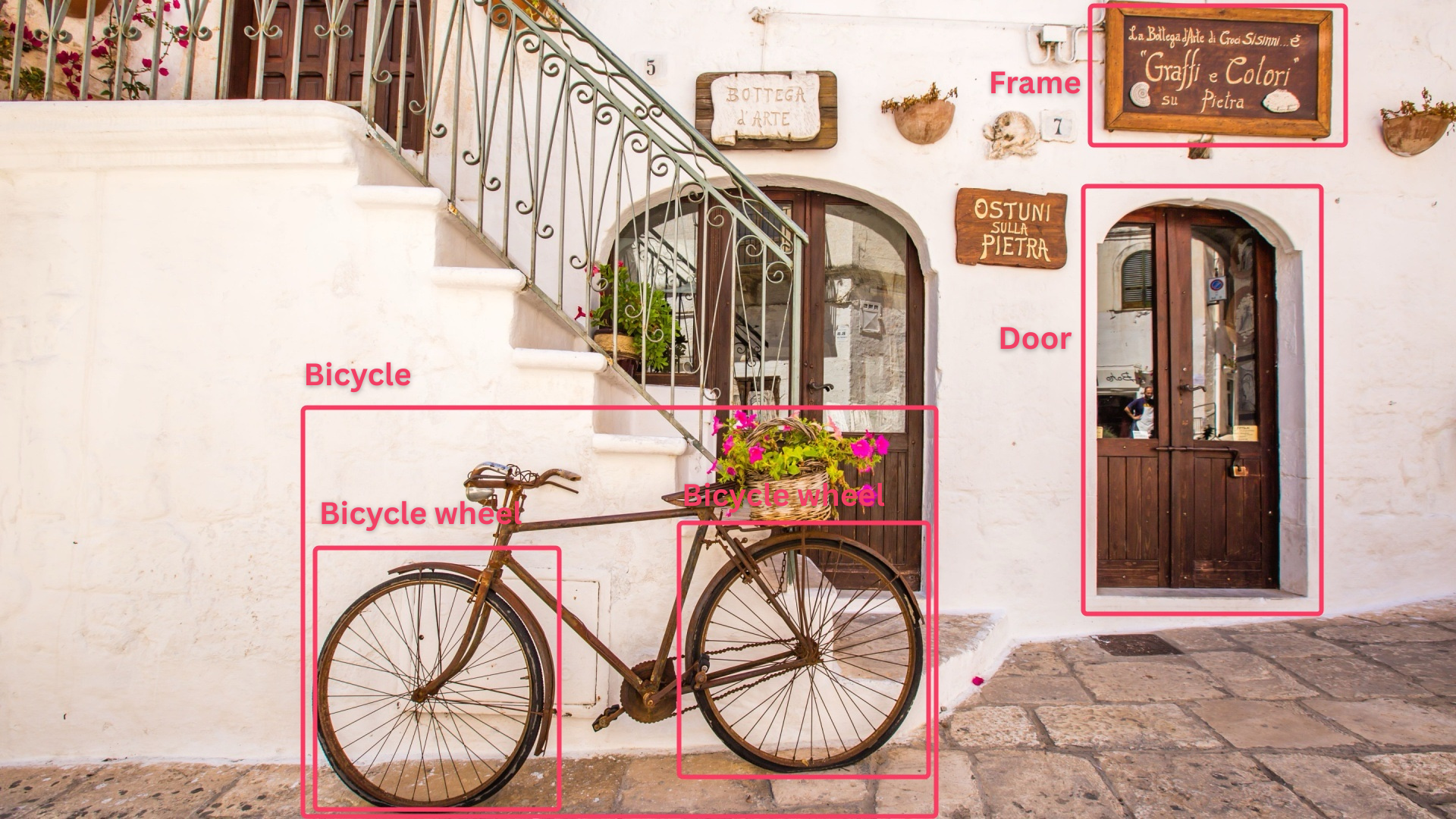
    AI systems analyze the objects in images and their relationships, using these cues to infer brand attributes and audience engagement signals. This makes product placement in images crucial for SEO success.

    Tools like Google’s OBJECT_LOCALIZATION feature allow you to audit your media library’s visual entities and ensure that adjacent objects tell the right story to support your brand’s narrative.

    Quantifying emotional resonance

    Images not only showcase products; they evoke emotions. AI can now quantify these emotions in images, making emotional alignment critical to image SEO.

    Tools like Google Cloud Vision provide insight into emotion scores for faceAnnotations, allowing for content adjustments based on detected sentiment to better align with intended search queries.

    Closing the semantic gap between pixels and meaning

    Images should be curated with intent and precision, given that language models treat them as part of the language sequence. The quality and semantic accuracy of images are as vital as textual content for SEO success.


    Inspired by this post on Search Engine Land.


    crushpress.ai community screenshot
  • Google’s Legal Battle: SerpApi Accused of Unlawful Data Scraping

    Google’s Legal Battle: SerpApi Accused of Unlawful Data Scraping

    Today, I came across an intriguing development where Google has initiated legal proceedings against SerpApi. This lawsuit revolves around allegations that SerpApi has been bypassing Google’s security systems to scrape and resell copyrighted content from search results.

    The Allegations: According to Google, SerpApi has:

    • Circumvented the security measures and standard crawling controls Google has in place.
    • Ignored directives from websites that specify content accessibility.
    • Employed techniques such as cloaking, rotating bot identities, and large bot networks to scrape vast amounts of content.
    • Appropriated licensed content from search features such as images and real-time data, subsequently selling it for profit.

    Google’s Stance: Describing SerpApi’s actions as “brazen” and “unlawful,” Google expressed concerns over how stealthy scrapers like SerpApi override crawling directives, stripping sites of their choices. Alarmingly, Google noted a significant increase in SerpApi’s activities over the last year.

    Quick Update: Interestingly, Google’s lawsuit mirrors similar legal action by Reddit, which also targeted SerpApi, Perplexity, Oxylabs, and AWMProxy. Reddit accused them of scraping content via Google Search results and concealing their identities to evade restrictions.

    • Reddit has licensing agreements with Google and OpenAI, suspecting other entities of attempting to bypass these deals.
    • They reportedly set a “trap” post, visible only to Google’s crawler, which eventually surfaced in Perplexity’s results as proof of scraping.
    • SerpApi denied these allegations, claiming their operations are lawful.

    SerpApi’s Previous Statements: In defense, SerpApi has maintained that “public search data should be accessible,” viewing its actions as protected by the First Amendment. They also warned that lawsuits like the one from Reddit could endanger the “free and open web.”

    Why It Matters to Me: Should Google triumph in this case, acquiring reliable SERP data might become increasingly challenging and costly. This could particularly impact teams reliant on services like SerpApi, as they navigate the complexities of understanding search results, performance metrics, and achieving success in an evolving digital landscape.


    Inspired by this post on Search Engine Land.

    crushpress.ai community screenshot
  • Boosting AI Search Visibility: Avoiding Duplicate Content

    Boosting AI Search Visibility: Avoiding Duplicate Content

    Have you ever considered how duplicate content might be impacting your visibility in AI search results? Fabrice Canel and Krishna Madhavan from Microsoft recently discussed how duplicate content complicates AI search systems, reducing the chances of selecting the correct version for summarization.

    Much like traditional search engines, AI search platforms such as Bing and Google rely on consistent intent signals. When your content appears in duplicate forms, it can confuse these systems, making it difficult for them to interpret signals accurately.

    The Impact of Duplicate Content on AI Search. Here are key takeaways from the Bing blog about the impact of duplicate content:

    AI search utilizes traditional SEO signals while also adding layers to understand user intent.

    Repeated content across multiple pages weakens intent signals, complicating AI interpretation, and selection.

    If several pages contain similar content, AI cannot easily identify which aligns with user intent, reducing preferred page selection chances.

    Large Language Models (LLMs) cluster near-duplicate URLs, often selecting outdated versions if variations are minimal.

    Campaign pages and localized versions must differ meaningfully; identical content provides less matching signal.

    AI favors updates, but duplicates can slow the process of updating system information.

    The Challenge of Syndicated Content. Many might not realize syndicated content—articles republished on various sites—can also be problematic. Microsoft considers this duplicate content because identical articles across domains make it difficult for search engines and AI to identify the original source.

    Strategies to Minimize Duplicate Content. If you deal with syndicated content, ask partners to:

    • Use canonical tags directing to the original version on your site.
    • Rework content for uniqueness.
    • Noindex republished articles to prevent search engine indexing.

    Organizing Campaign Pages for Clarity. Microsoft warns that campaign pages with only minor changes can still be considered duplicates. To manage this:

    • Designate a primary campaign page for interaction.
    • Apply canonical tags to variations without unique intent.
    • Maintain separate pages for distinct intents like seasonal offers or local pricing.
    • Redirect outdated or redundant pages to consolidate content.

    Handling Localization Pages. Localization can also produce duplicate content if differences are minimal. Microsoft suggests:

    • Introduce meaningful local variations with examples, terminology, or regulations.
    • Avoid multiple same-language pages for identical purposes.
    • Use hreflang to define language and regional targeting accurately.

    Addressing Technical SEO Concerns. Technical issues can lead to URL duplication, often managed automatically by search engines. However, it’s best to prevent this by maintaining a single URL per content piece. Common problems include:

    • Utilize 301 redirects for URL consolidation.
    • Apply canonical tags when accessible versions are necessary.
    • Ensure consistent URL structures site-wide.
    • Restrict crawler access to staging or archived URLs.

    Why This Matters. While duplicate content is not a new issue in SEO, its importance extends into AI search. Familiarity with its impact on indexing and ranking can guide strategies for improved visibility.

    For more insights, visit the Bing Webmaster blog.


    Inspired by this post on Search Engine Land.

    crushpress.ai community screenshot
  • Boost Visibility in AI Search with GEO Strategies

    Boost Visibility in AI Search with GEO Strategies

    Ever felt like your organic traffic is dwindling? I assure you, it’s not just in your head. AI Overviews and answer engines are nudging traditional SEO results off the stage.

    For brands to maintain visibility, swift adaptation is key.

    The upside? You don’t have to overhaul your entire SEO strategy. With some intelligent adjustments, you can transition from SEO to GEO, reclaiming your visibility in the AI era.

    GEO, or generative engine optimization, emphasizes entities—like your brand, products, and experts—over mere pages. By amplifying these signals, you boost your chances of appearing in AI-generated answers and conversational search results.

    This switch to GEO is crucial because AI search tools diverge from traditional search engines. Instead of just presenting a list of links, AI delivers comprehensive answers that predict follow-up inquiries and provide context. Users benefit from swift insights, while brands may observe a drop in clicks.

    The demand for organic search remains, though traffic is shifting. As clicks wane, your presence in AI-generated responses becomes increasingly vital.

    What you need to do now

    Moving from SEO to GEO doesn’t mean starting from scratch. Instead, it builds on existing principles, placing more emphasis on structure, clarity, and consistency.

    1. Prioritize E-E-A-T (Experience, Expertise, Authoritativeness, and Trustworthiness)

    AI engines favor content that’s authoritative and signals genuine expertise. Aligning your content with these quality guidelines ensures its likelihood of appearing in AI-generated answers.

    2. Make your content easy for AI crawlers to read

    While Googlebot processes JavaScript efficiently, other AI crawlers might not. Ensure your content is in fully rendered HTML with a clean structure to facilitate easy referencing by AI systems.

    3. Invest in structured data

    Using schema markup, complete metadata, and detailed alt text helps AI models understand and connect your content to the right entities, improving visibility in AI-generated interactions.

    4. Rethink measurement

    Shifting our focus away from traffic as the primary metric, we should now emphasize conversions, deeper funnel impacts, sentiment, and brand visibility within generative search results.

    Want to go deeper?

    Ready to confidently pivot from SEO to GEO? Check out proven best practices, frameworks, and real-world examples on Contentful’s GEO Hub. It’s your essential resource for understanding the shift and staying ahead.


    Inspired by this post on Search Engine Land.

    crushpress.ai community screenshot
  • Crafting Resilient SEO Plans Amid Constant Change

    Crafting Resilient SEO Plans Amid Constant Change

    As I’m deep into the marketing planning season, a familiar tension surfaces that I’ve often heard from CMOs and VPs:

    “We build a plan, but the execution never matches the intent.”

    If this echoes your experience, know that you’re not alone. The issue isn’t flawed strategies or incorrect goals, but rather that most SEO plans aren’t built to withstand operational hurdles like shifting priorities or unforeseen product launches.

    Over the years, after guiding various businesses in developing SEO strategies, I’ve realized that success doesn’t hinge on lavish budgets or cutting-edge tools. Rather, it’s about creating plans that reflect actual workflow realities.

    Let me guide you through crafting an SEO annual plan that’s not just aspirational but actionable in the real world. We’ll explore setting clear, actionable goals and establishing quarterly systems to keep us on track even when the unexpected arises.

    Why Annual Planning Still Works

    It might seem outdated to engage in annual planning when new tools like AI Overviews, ChatGPT, and Perplexity change the landscape overnight. The impulsiveness of frequent algorithm changes can make a 12-month plan seem laughable.

    Yet, companies that avoid long-term planning often end up merely reacting, chasing trends without accumulating the assets necessary for sustained growth.

    Annual plans should provide guidance and resource allocation frameworks that enable smart decision-making when adjustments inevitably occur.

    The Need for Better Planning in a Fragmented Search Landscape

    With your audience seeking answers from AI-generated summaries and multiple platforms competing for attention, SEO success involves more than just Google rankings. You need to build brand authority, so AI systems recognize and reference your content.

    Your strategy has to unify brand authority and topical depth, applicable across various search situations—from traditional queries to conversational AI.

    An effective SEO plan should lead to business results, competitive advantages through authority, and preparedness for market changes.

    Setting Action-Driven Goals

    It’s common for many SEO plans to falter by prioritizing metrics detached from actual business outcomes, like focusing on rankings or traffic that don’t translate to revenue or conversions.

    1. Start with Performance Metrics

    Identify what success means for your business—be it ecommerce revenue from organic traffic, SaaS trials, or qualified leads for services.

    Analyze these metrics at granular levels, ensuring resource investment is targeted towards high-revenue opportunities.

    2. Add Contextual Visibility Metrics

    Rather than focusing on isolated keyword rankings, track keyword groups that represent business themes. This offers a comprehensive view of market segment performance.

    3. Establish Leading Indicators

    Identify metrics that signal future changes, allowing timely interventions to maintain performance. Such metrics might include publication rates or indexation issues.

    The Baseline Audit: Know Your Current Position

    A thorough assessment of your current stance, focusing on technical health, content gaps, and authority signals, is crucial to prioritize effectively.

    Strategy Around Constraints

    Most planning falters when it doesn’t account for resource limitations or shifting priorities. Use an effort-versus-impact matrix to prioritize tasks effectively.

    Quarterly Execution

    Break annual goals into achievable quarterly targets, reserving part of your bandwidth for unexpected challenges. This ensures plans remain actionable, not just theoretical.

    Cross-Functional Alignment

    SEO isn’t isolated. Regular collaboration with product, content, and PR teams ensures consistency and reinforces shared goals.

    Common Pitfalls

    Avoid rigidity, competitor mimicry, and neglecting fundamentals in your SEO strategy. Focus on aligning plans with business realities and remaining flexible.

    Bridging the Gap Between Planning and Execution

    Avoiding execution gaps requires plans that reflect real-world conditions, enabling flexibility and focus on impactful metrics.


    Inspired by this post on Search Engine Land.


    crushpress.ai community screenshot
  • Enhance SEO with AI: Aligning Search Intent Effectively

    Enhance SEO with AI: Aligning Search Intent Effectively

    When I think about improving my website’s visibility, AI comes to mind as a crucial tool. It serves as a second pair of eyes, helping me evaluate intent signals, compare top results, and refocus pages that aren’t performing well.

    Despite having well-written content, excellent layout, and robust backlinks, pages can still underperform in rankings. A frequent culprit is misaligned search intent, which can be more elusive than it seems.

    Focusing on content optimization and usability sometimes makes it easy to overlook or misjudge intent. This is where AI shines as a reviewing tool, effectively steering things back on course.

    Whether I’m working on a new page or revising an existing one, returning to the basics of search intent always sets me up for success.

    Starting with a simple AI prompt to outline likely search intents for a keyword offers a solid framework for content creation or optimization.

    This comprehensive list isn’t something I strive to cover completely on a single page. Instead, it highlights diverse user types, shifts in intent, and needs I might not have initially considered.

    By considering these factors, I aim to create a more useful, well-rounded page that genuinely satisfies user needs.

    Dig deeper: There are more than 4 types of search intent

    Getting the intent right can be challenging. AI tools help me understand what’s already successful by examining top-ranking pages and what they excel at.

    I utilize AI tools for a swift overview of a page’s primary intent. By evaluating this at scale, I can see if top-ranking pages meet the same intent.

    It’s crucial to assess the intent of my page with the same rigor, be it a fresh draft or a page I’m optimizing. If the primary intent aligns with what’s succeeding, it’s a strong starting point. If not, it provides clear direction for improvement.

    Again, consulting AI tools for improvement suggestions can yield valuable insights into refining intent. Key areas to focus on include:

    The language I use can either reinforce or contradict the intended message. For commercial intent, persuasive wording is necessary, while for informational pages, clear and descriptive language is preferred.

    The format of a page can also convey intent. For instance, in a sales page, details like product placement and accompanying information matter greatly. Similarly, guides need clear step-by-step labeling and possibly visual aids.

    Clearly defined calls to action are essential. They align the user’s actions with the page’s intent, enhancing both engagement and ranking potential. Unclear or generalized calls to action dilute this effect.

    Dig deeper: How to master user intent with SEO personas

    Listing accurate pricing, VAT elements, and currency signals is vital in conveying commercial intent. They guide users accurately at critical decision points.

    Availability of support is another crucial factor. I make sure that pre- or post-sale queries can be easily addressed by ensuring my contact details and support options are clearly visible.

    Trust signals, like product guarantees, return policies, and customer reviews, make a big difference in user decisions. Including these details serves to strengthen user trust.

    When clear comparisons are needed, laying out products side by side can assist users in their decision-making process, moving them closer to making a purchase.

    In my experience with working pages centered around user intent, I’ve seen that excess information can sometimes bloat a page.

    Previously, this depth might have worked, but now clarity and a focus on intent are what truly resonate.

    I’ve learned to reassess where content performs best within the user journey, often seeking AI’s guidance to refocus content structure wisely.

    For instance, if I notice my sales page for internal French doors isn’t performing, I consult AI, along with competitor analysis, to uncover key insights.

    Competitors might be focusing on selling first, while my page addresses user concerns, which means I need to reposition my content priorities.

    By reordering sales-driven content and addressing pain points concisely, I better align with user intent, letting supporting pages deal with detailed post-sale information.

    AI isn’t here to replace expertise but to guide my strategic intent, enhancing my understanding of user behavior for better conversion.


    Inspired by this post on Search Engine Land.

    crushpress.ai community screenshot
  • Google Resolves Page Indexing Report Delay for Instant Insights

    Google Resolves Page Indexing Report Delay for Instant Insights

    I just discovered that Google Search Console has finally addressed the month-long delay in their page indexing report. It felt like a stroke of relief when I saw the report now displays data as recent as just a few days ago. This is the usual schedule for updates and I’m thrilled to have this crucial tool back on track.

    Another piece of good news: emails notifying about indexing issues have resumed, so we site owners can stay informed directly through our inboxes once again.

    Page Indexing Report. This indispensable tool helps me understand which pages on my site Google can find and index, along with highlighting any potential problems. It also allows me to submit any fixes and see if they’ve been successfully implemented. Previously, when the report was delayed, we couldn’t verify our fixes or check the indexing status of new and existing pages, which was quite frustrating.

    Fixed Issues. Here’s a screenshot of the updated report, showcasing a more current date—December 14th—instead of the long-stagnant November 21st:

    ```json
{
  "alt": "Google Search Console page indexing report with internal issue notice and last update date of 12/14/25.",
  "caption": "A glimpse into Google Search Console showing a page indexing report struggling with internal data update issues, marked with a last update date of 12/14/25.",
  "description": "This image shows a screenshot of Google Search Console's page indexing report, indicating an internal issue preventing recent data updates. A red arrow points to the last update date, 12/14/25, underlining the delay in data refresh. The interface features a clear search bar, an 'export' button, and user account controls, emphasizing typical dashboard usability. Keywords: Google Search Console, indexing report, data update, internal issue."
}
```

    Besides, Google has also resolved the delays in performance reports just yesterday! It’s a relief to know that most significant reports are now functioning smoothly, though it’s always wise to stay prepared for potential future hiccups.

    Why It Matters to Us. Over the past month, many of us struggled to provide up-to-date reporting to our SEO clients and stakeholders. With the recent fixes, we now have access to the latest data for both page indexing and performance reports.

    This means we can get back to speed with our reporting tasks, just in time before the holiday season sets in.


    Inspired by this post on Search Engine Land.

    crushpress.ai community screenshot