Hey there! If you’re like me, you’re probably always looking for ways to make your content more effective, especially in today’s AI-driven world. I’ve discovered nine crucial changes that can transform your content, making it AI-friendly. This means platforms like Google AI Overviews, ChatGPT, and Claude will be able to parse, trust, and cite your pages more efficiently.
First, let’s talk about understanding how AI algorithms work. It’s essential for ensuring that your content is optimized for AI parsing. I’ve found that using structured data and schema markup can significantly enhance the way AI understands and displays content.
Another vital aspect I focus on is creating concise, informative headings. These help both readers and AI systems grasp the main points quickly. Remember, clear and direct headings often lead to better AI interpretation and can enhance your SEO performance.
I’ve also made it a point to ensure my content is easily accessible. This includes optimizing for mobile users and ensuring fast loading times. Not only does this appeal to AI algorithms, but it also improves overall user experience, which is a win-win!
Moreover, I pay close attention to the language used in my content. Simpler, jargon-free text is easier for AI to process. This approach not only makes my content more understandable for AI but also broadens its readability for a wider audience.
Integrating relevant keywords is another strategy I use to ensure my content is AI-friendly. These keywords help AI platforms accurately categorize and display my content, increasing visibility and reach.
Finally, I always review my content for accuracy and relevance. Keeping information up-to-date ensures that AI systems can trust and effectively utilize the content I produce, which is crucial for maintaining authority and credibility online.
I’ve recently learned that Google carefully analyzes user engagement to determine when to feature AI Overviews in search results. According to Google VP Robby Stein, these features are only shown if they truly add value for us, the users.
Stein shared in a CNN interview that Google’s approach to AI-driven results is evolving as they expand ads, personalization, and visual search options within their services.
Engagement drives AI Overviews. Google conducts tests with AI Overviews for different types of queries, retaining them only when we, the users, find them beneficial. If we don’t interact with these features, they are removed, and Google applies the insights to similar queries.
Stein explained, “The system will learn — so it’ll try it — and then see if people engage with it for certain kinds of questions… If it doesn’t work, it won’t show up again.”
Why it matters. As someone interested in SEO, I understand that appearing in AI Overviews is significant. However, it’s becoming clear that maintaining those spots hinges on user engagement. If we don’t interact with these overviews for certain queries, Google may choose not to display them, affecting AI visibility for different brands and publishers.
AI and personalization. While Google incorporates some personalization in AI search, Stein mentioned that these are smaller adjustments rather than extensive reshaping of results:
“For instance, if you’re someone who frequently clicks on videos, those results may appear higher for you. However, the adjustment is minor because we want the user experience to remain consistent.”
Ads and monetization in AI search. It’s interesting to note that Google is actively experimenting with ads within AI-powered search experiences, including AI Overviews and AI Mode.
Stein explained that ads will appear “when helpful,” in line with Google’s longstanding ad philosophy. He also noted that “the vast majority of Google searches do not have ads.” Key use cases for AI-driven ads include shopping, comparisons, and product research.
Furthermore, Stein emphasized transparency in distinguishing sponsored content as a priority.
Visual search growth. Visual search is apparently exploding in popularity, with usage up 70% year over year. Around 1 billion of us are now using visual search tools like Google Lens to find information visually, such as discovering products, matching outfits, and solving real-world queries.
As AI-driven search results become the norm, I’ve realized that leveraging YouTube is no longer just an option; it has become a necessity to maintain visibility in search results.
Staying ahead of the competition has always been about embracing the next evolution in search.
This shift means I need to make my content discoverable by AI-driven tools.
If I’m still considering YouTube a “nice-to-have” in my SEO strategy, I’m risking losing ground to competitors who are already capitalizing on its potential.
YouTube as Core Search Infrastructure
It’s now clear to me that YouTube cannot be treated merely as a “brand” or “social” asset, because it has become integral to search infrastructure.
With 48.6 billion visits monthly, YouTube is the world’s second most-visited site, second only to Google.com.
That’s 5.4 times more visits than Facebook and 8.7 times more than ChatGPT, making it a critical platform for visibility.
YouTube has evolved vastly, from simple webcam uploads to professional studios producing high-quality content, and this shift in quality has redefined viewing habits.
According to Nielsen, YouTube holds the top spot in U.S. streaming watch time. For many, “watching TV” means tuning in to YouTube.
This rise in big-screen viewership has a significant impact on search dynamics by turning YouTube into an interactive search platform in living rooms.
Viewers explore over a billion hours of YouTube content daily, mixing Shorts, podcasts, and live streams with traditional TV formats.
Such engagement creates learning opportunities for AI models while making YouTube an indispensable search resource.
YouTube’s expansion to TV and connected devices is reconfiguring the ad and commerce landscape, where new formats engage users across multiple devices.
Google Search now features YouTube videos prominently, reinforcing their role as a core SEO asset.
This trend means YouTube videos are favored for complex tasks, tutorials, and product insights, part of what makes them authoritative in AI Overviews.
Ensuring my YouTube catalog is well-structured and aligned with user queries is essential to maintaining a competitive edge in AI-driven search results.
YouTube at 20: Embracing Creator-First Discovery
As YouTube celebrates two decades in 2025, the platform emphasizes creator-driven content, challenging traditional brand-centric approaches.
Channels like MrBeast highlight the value of pacing, storytelling, and community engagement over mere production quality.
Participatory trends in gaming, entertainment, and music show how user-generated content domains are pivotal for discovery.
Recognizing YouTube’s influence, it’s clear that a polished SEO strategy should account for these cultural dynamics, leveraging clear signaling for both human and AI curation.
Redefining SEO: Focus on Inclusion
AI Overviews no longer mimic the traditional 10-blue-links model. They integrate videos, thus shifting SEO goals toward inclusion as trusted quote sources.
This shift requires that I ensure my content is accessible, legible, and credible, maximizing opportunities for inclusion in AI-generated answers.
Adopting a YouTube SEO checklist focused on AI discovery helps operationalize this new approach.
The tactics include intent-driven metadata, structural optimization, authority signaling, and strategic integration with collaborators.
When I first dove into the world of AI search, I quickly learned an important lesson: don’t overlook the power of SEO. In fact, the same principles that elevate Google rankings are also the cornerstone of increasing AI citation visibility.
Maintaining a strong SEO strategy is essential, not just for traditional search engines but also as AI technology evolves. It’s fascinating how the foundational elements of SEO, like keyword optimization and quality content creation, also boost your presence in AI-driven searches.
Every week, 900 million users interact with platforms like ChatGPT, yet my brand is often absent from their discussions. I wanted to understand why, and more importantly, how I could change that.
After digging into the reasons, I discovered several factors that influence brand visibility within ChatGPT’s responses. It’s not just about having a strong brand, but also understanding how to optimize for this new kind of search engine.
To make my brand appear in ChatGPT talks, I need to focus on implementing strategic optimization techniques, specifically tailored to AI-powered platforms. I’ll share these insights, so we all can benefit from increased visibility in this rapidly evolving space.
When I came across Google Search Advocate John Mueller’s response to a Reddit user’s query about SEO’s relevancy in the age of AI, I found it incredibly enlightening. The question was whether traditional SEO is still sufficient or if there’s a need to pivot towards generative engine optimization (GEO).
His advice was strikingly straightforward: the labels we use are less significant than the reality we face.
“If you have an online business that thrives on referred traffic, it’s essential to see the bigger picture and prioritize your strategies accordingly. The name you give it isn’t critical, but AI isn’t disappearing anytime soon,” Mueller emphasized.
While Mueller didn’t delve into whether GEO will become its own field, he made it clear that AI’s presence is a constant we need to accept.
Google remains skeptical about treating AI optimization as separate from traditional SEO, as seen in several instances:
I realized that it’s crucial to ignore the surrounding buzz and focus on how our audience truly behaves. Mueller’s recommendation was to examine practical data, like:
How many of our audience members are using AI tools?
How does AI usage compare to search engines, social platforms, or other traffic sources?
What implications does this have for allocating our time and resources?
The takeaway for me is that while SEO continues to be a significant traffic and revenue driver, it doesn’t guarantee AI visibility. We need to remember that not all SEO practices align with GEO.
To quote Mueller from his Reddit comment:
“If you have an online business that makes money from referred traffic, it’s definitely a good idea to consider the full picture, and prioritize accordingly. What you call it doesn’t matter, but ‘AI’ is not going away, but thinking about how your site’s value works in a world where ‘AI’ is available is worth the time. Also, be realistic and look at actual usage metrics and understand your audience (what % is using ‘AI’? what % is using Facebook? what does it mean for where you spend your time?).”
If you’re interested, you can check out the complete Reddit discussion here.
As organic search from Google dwindles, I’ve discovered numerous avenues for driving traffic to affiliate sites by leveraging communities, courses, and partnerships.
Google’s AI Overviews often display affiliate content without providing traffic or clicks back to publishers. Fortunately, we don’t need to rely solely on Google to drive our success.
With a new year upon us, I’ve been exploring diverse sources of traffic and identifying new methods to diversify income. It’s crucial to stick to what we do best while expanding our reach.
The strategies I share here are ones I regularly apply with partners and have seen them succeed time and again.
This discussion stems from a podcast where I questioned if affiliate marketing was at its end. Fortunately, it’s far from it. Affiliate marketing reaches far beyond Google, continuing to thrive as a vital industry.
Skool and Educational Platforms
Platforms like Skool offer possibilities to launch a course or nurture a community with multiple features, including text, video, newsletters, and interactivity.
These platforms stand out due to their focus on creators and educators, quickly gaining market share. They empower us to monetize creatively and offer the flexibility to cultivate a community and brand.
Imagine crafting courses on topics ranging from starting a photography business to cooking classes. We dictate if and when courses are free or paid, and tailor the content our students receive.
What’s especially advantageous is the integration of affiliate links and an email system, both designed to convert free trials or foster ongoing engagement with students.
Platforms like these support virtually any niche. Whether in credit repair, skill learning, or business startups, they provide us with tools to succeed.
Data from Semrush as of December 27, 2025, reveals around 110,000 monthly branded searches, with 33,000 directed to the login page. This suggests a robust user base available for those like us eager to grow our courses.
I’ve noticed a resurgence in offline advertising within affiliate channels, offering opportunities to engage audiences in unique ways.
Beyond traditional approaches like TV ads, I’ve seen affiliates leverage QR codes in retail environments or on physical flyers—even if I was too rushed to scan them myself!
Experts and speakers we meet at workshops often integrate affiliate links into their presentations. By placing links on business cards, they earn from recommendations they would make regardless.
I’ve thought about the potential of placing QR codes on T-shirts—imagine the possibilities in high-traffic areas! Curious passersby could find themselves exploring products or content they weren’t expecting.
This tactic could lead to impulse buys, jokes of the day, or even popular travel app promotions. The creative offline opportunities are boundless.
It’s exciting to see brands returning to the affiliate channel by investing in perks and partner portals.
By linking with complementary companies via these portals, brands are referring users while collecting commissions.
Partnership portals help us find valuable co-marketing partners for email campaigns, social media posts, and more.
Banks are promoting insurance and web hosting services.
Web hosts suggest LLC formations alongside essential legal documents like privacy policies.
Food brands are highlighting kitchen tools and accessories.
Affiliates also coordinate with brands to market software or cashback platforms on post-purchase thank-you pages. When we have access to a shopper within a brand’s cart, it’s golden.
So, how does this drive traffic? By featuring each other in partner portals, we cross-promote and amplify our collective reach. Collaborate with a partner to create a complementary course or service and be bold in suggesting an inclusion within its portal.
Acting as niche experts, we add incredible value, particularly when supporting upsells that a brand struggles to convert. This collaboration can convert enthusiastic audiences.
Through this synergy, brands capitalize on our credibility, ultimately reaping higher-value customers without navigating conversion issues alone.
When Search Sends Fewer Clicks, Creativity Matters
There’s ample opportunity within traditional platforms like social media and SEO, yet creativity is king when search engines fail to deliver clicks.
Challenge yourself to discover where you can generate traffic and route those users to your affiliate links. The only limits are those imposed by your imagination.
From probabilistic answers to off-site signals, AI visibility functions differently from SEO. Here are seven truths to help you understand how and why.
Fair warning: My insights might unsettle those who have excessively promoted AI visibility tools.
Having spent 18 years in the search industry, I feel compelled to share the truth over popular beliefs.
I’m not here with an agenda. Ironically, some misconceptions benefit me as the co-founder of an AI visibility tool and a GEO service provider.
Let’s address some misconceptions that have circulated over the past few months.
1. AI Search Didn’t Kill Google Search
Quite the contrary. Despite media hype, Google’s dominance prevails with significant data backing this truth.
Convincing headlines don’t change facts. What does? Data.
Consider these studies:
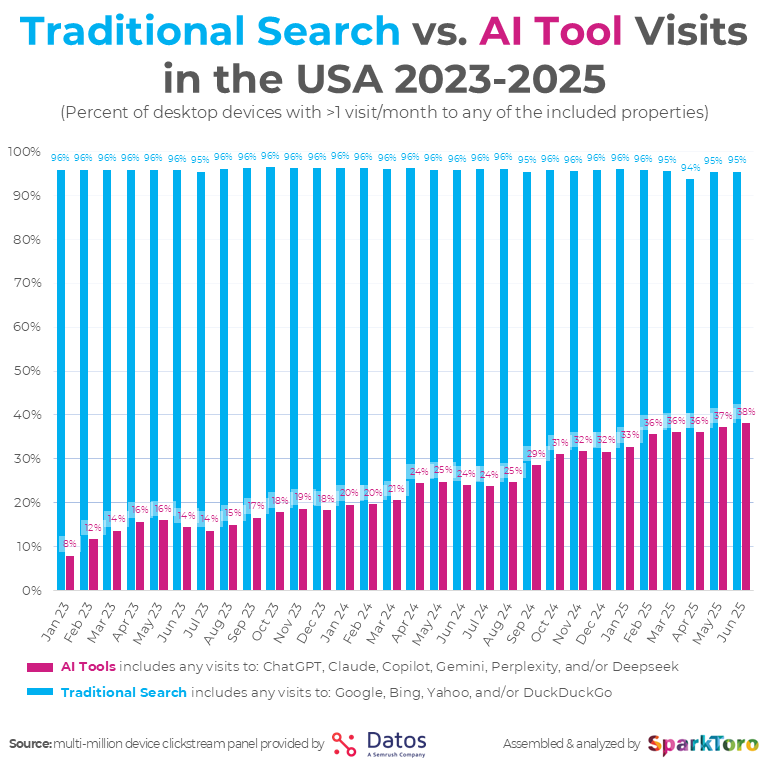
Semrush’s latest study shows ChatGPT increased, not reduced, Google searches, debunking biases of Google favoritism.
Datos’ report reveals Google retains a massive 95% market share in collaboration with industry experts.
Despite ChatGPT’s rise, Google search maintains its stronghold. OpenAI reports suggest ChatGPT is often used for non-search purposes. Actual ‘search’ queries form only a fraction, reflecting use diversity.
This difference highlights the continuing necessity and dominance of traditional search engines like Google.
2. No AI Tool Can Guarantee AI Answers Inclusion
History repeats itself; tools can’t do GEO for you, similar to how they couldn’t perform SEO. True optimization can’t be automated.
Real optimization relies on human decisions, supported by insights that tools can only provide partially.
Claims of automated success often omit the human efforts that drive real results. Tools assist but can’t replace expert judgment.
3. Actual Prompt Search Volumes are Elusive
No tool or provider knows true prompt volumes, relying on estimations instead of exact data, given the lack of public usage data from LLM companies.
Current volume charts are educated guesses rather than definitive statistics.
4. AI Visibility Differs from Search Rankings
LLMs provide probabilistic results, unlike deterministic search rankings. AI answers are personalized, leading to varied responses even for identical queries.
AI models are inclined to offer guesses, resulting in varied responses. This variability presents challenges for monitoring and measuring visibility.
Most monitoring tools either use averaged data or focus on specific personas to try and model this complexity.
5. Off-Site Signals Trump On-Site Efforts in GEO
Just as backlinks indicate credibility in SEO, external brand mentions are critical for AI visibility.
Off-site signals have a greater influence on whether a brand appears in AI-driven responses, much like the way trusted external recommendations bolster a brand’s reputation.
6. Key GEO KPI: Brand Mentions in AI Responses
While citation visibility is beneficial, the strategic goal of GEO should prioritize explicit brand mentions within AI-generated answers.
AI visibility alone doesn’t secure web traffic; vital is having your brand part of the response, impacting direct discovery and engagement.
7. Misaligned GEO and SEO Practices Can Hurt Performance
Beware of GEO optimizations that conflict with established SEO principles; they can detract from overall search performance.
Effective GEO requires balance, ensuring broader SEO strategies remain complementary, rather than contradictory.
When Search Evolves, Measurement Must Too
GEO thrives within the existing search framework but needs evolved measurement strategies that reflect AI’s dynamic nature.
Embrace change by rethinking metrics, challenging assumptions, and refining success benchmarks alongside evolving technology.
I’m excited to share my insights from our in-depth report on the top eCommerce SEO agencies of 2026. After carefully analyzing 49 companies between November 2025 and January 2026, our experts pinpointed the leading agencies based on several critical factors.
We evaluated these agencies based on the following criteria:
Notable Clients (25%): This involved a nuanced review of each agency’s previous clients, focusing on the size and prominence of their top three partners.
Average Review Score (35%): This score reflects the average ratings on major review platforms, with an emphasis on eCommerce clients, while removing excessively positive reviews to ensure fairness.
Company Size (20%): We assessed the number of employees to understand each company’s growth and stability.
Years in Business (10%): This metric highlights the company’s ability to navigate various market and economic challenges.
Estimated Media References (10%): We gauged how frequently each agency was cited by reputable media outlets.
Our detailed table, below, includes an overview of the top agencies, highlighting their unique SEO approaches and providing links for those interested in learning more.
The Top eCommerce SEO Agencies of 2026
Each agency on our list has been meticulously evaluated, and I hope my findings help you find the perfect partner to enhance your eCommerce success.
As someone navigating the complexities of SEO in regulated industries, I’ve always faced heightened scrutiny. It all began with “Your Money or Your Life” (YMYL), where precision and trust are paramount.
With AI Overviews and large language models like ChatGPT escalating this scrutiny, the stakes have grown. The audience is now more expansive, and the repercussions of missteps more significant.
Accuracy and credibility have forever been the cornerstone for success in regulated sectors. Today’s AI-powered search amplifies this need into an essential requirement.
I’ve learned that experience, expertise, authoritativeness, and trustworthiness (E-E-A-T) are non-negotiable, especially for industries like finance, healthcare, government, and education that fall under Google’s YMYL banner.
In this AI-driven search landscape, it’s no longer feasible to work in a silo. Regulated brands require integrated SEO strategies.
Interestingly, up to 72% of B2B buyers encounter Google’s AI Overviews, often listing brands even without resulting clicks. AI models gather data from the web, unconfined by traditional content boundaries.
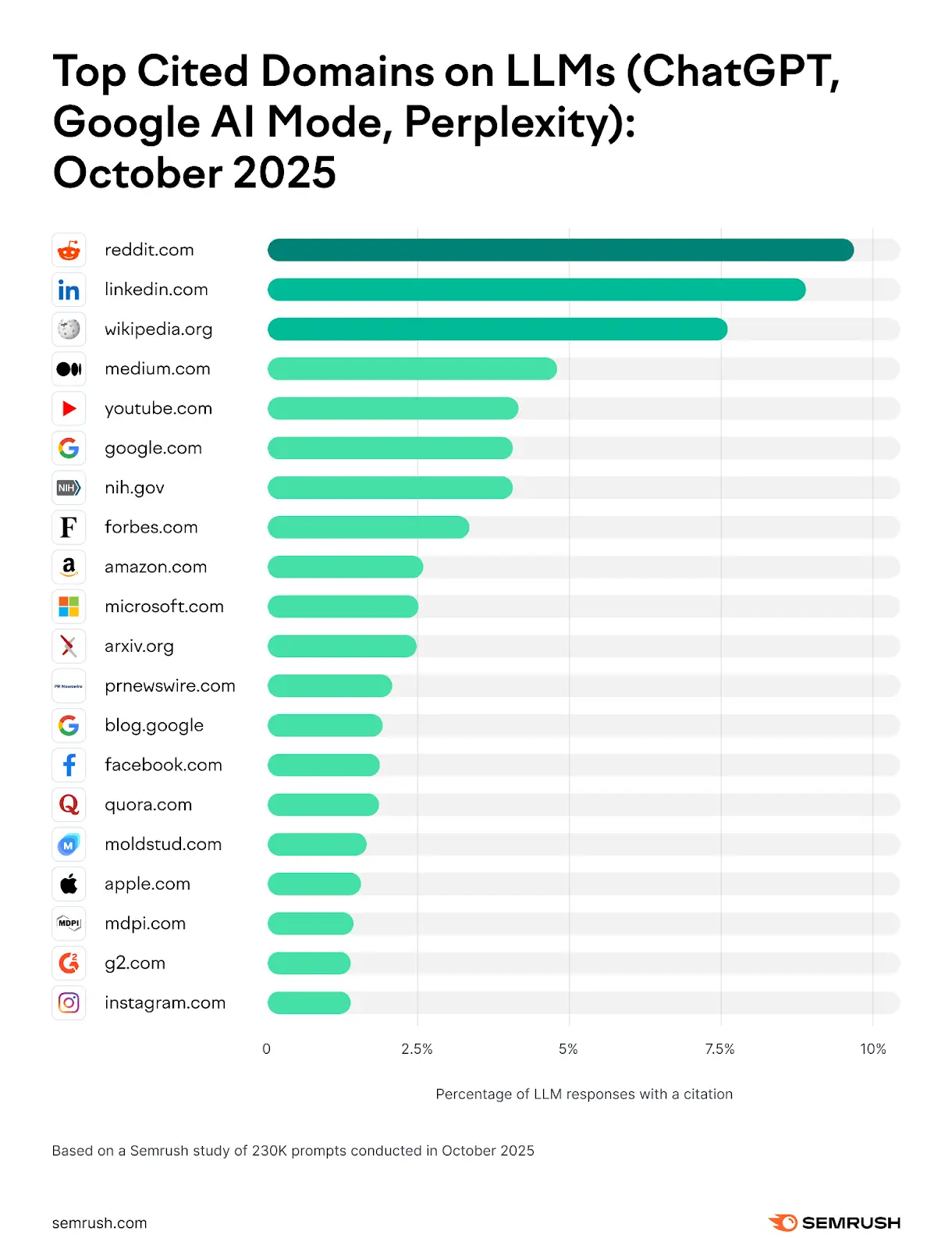
Social profiles, digital PR, owned content, and discussions on platforms like Reddit and Quora all piece together the public perception and citation of my brand.
Tackling these challenges requires a fortified approach rooted in three core pillars of AI-era SEO for regulated industries.
1. Trust-by-Design Content
Trust serves as a crucial foundation, not just as a ranking factor but as a necessity. It extends beyond my website, incorporating the broader digital footprint of my brand.
Every piece of content must align with industry-specific regulations and uphold a consistent strategy. AI and SEO guidelines that are pivotal include:
Subject Matter Experts (SMEs) should consistently produce authoritative content, backed by a history of external publication and credible citations.
Regular updates and transparent revision histories convey accountability.
Educational content, favoring well-researched white papers over promotional materials, builds authority.
Adherence to E-E-A-T guidelines, especially on YMYL pages.
Employ AI wisely with essential human oversight, stringent compliance reviews, and clear privacy policies.
2. Technical and Structural Clarity
Technical clarity goes beyond aiding search engine crawlers to ensuring AI-driven search systems comprehend and accurately cite my content.
Structured data serves as a robust trust signal. Effective use of schema helps search engines verify the credibility of authorship and organizational connections.
Use schema types such as Organization, Article, FAQ, and Person to fortify trust signals.
Maintain an intuitive, crawlable site architecture and minimize technical errors.
Emphasize accessibility through alt text, ARIA labels, and semantic HTML.
3. Building Authority Across Channels
In regulated sectors, authority extends beyond backlinks. It involves strategic PR, content production, and optimization efforts to generate consistent credibility cues.
Encourage expert-driven engagement: Webinars and Q&A sessions provide valuable interactive content that reinforces credibility.
Expand visibility: Gain citations in credible publications and contribute to esteemed third-party sites.
Transparent compliance: Maintain visible adherence to standards, linking content to relevant governance organizations.
SEO, content, and PR teams must work collaboratively to enhance these authority signals AI systems leverage to assess expertise.
Tailored AI and SEO Strategies by Industry
While fundamental strategies are universally applicable, each sector tackles unique challenges in AI-driven search.
Aligning SEO with industry-specific regulations and trustworthy signals is crucial for success. AI-driven search further highlights these nuances.
Financial Services
Precision in content is vital to avoid affecting regulatory standing and consumer trust. SEO strategies need to balance visibility with compliance.
Integrate schema like Organization, FinancialProduct, and Person for clarity.
Content must state adherence to regulations like SEC, FINRA, and GDPR.
Authority: Your Key to Success in AI-Driven Search
In a world driven by AI and SEO, authority acts as a vital differentiator. It signifies how AI systems perceive a brand’s competence and compliance.
Brands showcasing expertise and regulatory adherence stand a greater chance of being cited positively by AI systems. In this AI-first environment, authority is invaluable, and consistent investment in it is the way to succeeding in the digital arena.