I believe the launch of TurboQuant will revolutionize AI and SEO as we know it. This cutting-edge algorithm from Google drastically reduces the computing power and energy needs by allowing the massive compression of LLMs and vector search engines.
Imagine using six times less memory and achieving eight times the speed without compromising accuracy. That’s how TurboQuant dramatically lowers the cost of running AI tasks.
As search engines evolve from simply listing links on a SERP to providing immediate AI-generated overviews, it’s crucial for us in the SEO industry to adapt. We need to focus on creating meaningful, trustworthy content and understand its impact on searches.
Before AI became prevalent, SEO was grounded in basic keywords and topics, which inefficiently represented user intent. High costs and energy consumption hindered mapping true meaning across the web, but now TurboQuant uses an advanced compression method, PolarQuant, to transform data into manageable coordinates. This breakthrough allows Google to process complex ideas far more efficiently.
TurboQuant can match exact search meanings in real time, thanks to its ability to understand user intent using past searches and real-world contexts.
The near-zero indexing lead time of TurboQuant eradicates delays between publication and ranking. Trusted publishers will gain instant recognition for their expertise, while the system also blocks manipulation and spam from appearing.
We must prepare for the fast-approaching era where AI summaries become the norm in responding to most queries. Thin content, which adds no original value, will vanish because AI can now summarize the web almost instantly, making unique viewpoints and genuine data irreplaceable.
Developing trust and authority with original thoughts, data, and experiences will prove essential, as AI-generated summaries merely consolidate existing information.
The focus of our SEO strategies should be to become a source AI recommends reliably, not just rankings based on keywords. TurboQuant maintains a more reliable index of facts by validating them against its real-time knowledge base.
This new system tracks a brand’s strength across various platforms, reinforcing the necessity of improving our knowledge graph as a trusted source.
With TurboQuant handling vast information without delays, hyper-personalization is set to explode in ways we’ve previously not imagined. AI agents could remember extensive user interactions to provide extensive personalization.
TurboQuant’s capability to integrate various signals into a cohesive perception of a brand’s value demands a strategic shift toward consistent, omnichannel representation.
We’ve prioritized quantity over quality for far too long in this industry. TurboQuant signals the end of this era, as it necessitates creating high-quality, meaningful content that establishes us as trusted entities.
Delivering a reliable message with a clear voice will guide how our messages are distributed and our brand credibility.
SEO isn’t dead—far from it. But let’s face it, AI is definitely changing the game in ways we never imagined. This got me thinking about how things are looking different for us, especially with the rise of zero-click searches and AI Overviews. In 2026, these are becoming more like the hand guiding our SEO strategies.
With AI advancements, I’m seeing how crucial it is for all of us to adapt and build our SEO approaches around these innovations. Answer Engine Optimization (AEO) is making waves, and it’s fascinating to watch how it reshapes our tactics.
If we want to stay ahead, integrating AI into our SEO strategies isn’t just optional—it’s essential. The landscape is evolving, and so should we.
Over the past few years, I’ve been inundated with advice on generative engine optimization (GEO) – everything from AI citation checklists to technical guides for structuring content for large language models.
Most GEO guidance revolves around a key premise: To be visible in AI-generated answers, your content must be structured, authoritative, and easy to extract.
In my view, this advice, while valuable, falls short if your brand isn’t yet eligible for consideration in AI-generated results.
The underlying assumption is that ticking those boxes makes your brand eligible for AI-generated answers. However, many brands overlook the fact that they aren’t even being considered.
To get past this hurdle, we need to address an underappreciated factor that many GEO enthusiasts miss.
Traditional SEO has taught us to seek visibility through rankings, believing that higher rankings translate into more clicks and better outcomes. Many have now adapted this mindset to AI, aiming for citations or inclusions in AI-generated answers.
However, AI systems don’t just rank; they filter and select entities based on signals, determining eligibility before weighing options.
Without eligibility, many brands risk being excluded from the AI recommendation set right from the start.
Brands often misprioritize, focusing on extractability before establishing clarity, which results in missed opportunities.
It’s critical to understand the difference between qualification (being eligible to join the candidate set) and selection (being chosen from that set).
AI-driven search changes the game. While traditional SEO ranks pages, AI selects entities, such as branded products and concepts, interconnected in a web of knowledge.
This shift means we must prioritize entities over pages. An entity might excel in traditional search yet remain ambiguous in AI-generated answers.
Common issues lie in clarity and relevance. AI systems ask: Can I identify and associate this entity accurately?
If definitions are inconsistent across platforms or names vary, brands struggle to pass this threshold.
Clarity is the cornerstone. When AI or search engines see your brand, clarity allows them to understand exactly who you are.
For example, when I noticed my common name, Mariana Franco, was causing confusion, I changed it to “Maryanna.” This helped ensure that my identity was distinct and recognizable to AI systems.
By consistently using this unique name variant across all my online assets, I reduced ambiguity within a week, making it easier for systems to recognize me as an entity.
Relevance is another crucial factor. Does the web associate your brand with relevant topics consistently and strongly?
This involves appearing alongside related entities, demonstrating expertise through in-depth content, and being referenced by well-known entities in your field.
Once qualified, a brand becomes part of the candidate pool, applying GEO strategies to increase the chance of selection.
Credibility becomes vital at this stage. You need corroboration from reputable sources to enhance your credibility.
Multiple credible mentions and appearances in media, reports, and podcasts bolster your visibility and reliability.
Extractability, or how easily an AI can generate answers from your content, is crucial once in the candidate set.
To ensure extractability, organize your content clearly, prioritizing concise, context-independent answers.
Testing your brand’s appearance in AI tools can reveal whether you’re recognized or recommended. A search using ‘best [your category]’ illuminates inclusion gaps.
If AI recognizes your brand but doesn’t recommend it, focus on building selection signals — credibility and extractability.
For comprehensive visibility, prioritize clarity and relevance to ensure eligibility, then focus on credibility and extractability to strengthen your standing.
Start by ensuring name consistency and clarity — the foundation of being recognized as a distinct entity.
Your About page should explicitly define your brand, utilizing schema to integrate into AI systems.
In AI’s expanding landscape, qualified entities will thrive, making consistent clarity and corroboration more critical than ever.
Your new site is live, the redirects appear to work, and organic traffic is still falling. The dangerous response is to assume you have a content or ranking problem. A migration can leave valuable pages outside Google’s index while crawlers keep revisiting the old host, empty pages, duplicate URLs, or automatically generated dead ends.
Traffic recovery starts by locating the exact break in the search pipeline. Once you know whether the failure sits in the redirect, crawl, render, indexing, or ranking stage, you can fix the dependency that is holding everything else back.
Find the broken stage before changing your content
A page has to pass through four practical stages before it can earn search traffic: crawl, render, index, and rank. These stages are connected, but they are not interchangeable. A page can be crawled without being indexed, indexed without ranking, or ranked while your analytics implementation fails to record the resulting visit.
That distinction matters because the remedies are different. Rewriting an article will not repair a redirect chain. Building links will not correct a canonical that still names the old domain. Improving Core Web Vitals will not make an empty page with a 200 success response useful.
Start with a migration worksheet built from Google Search Console, analytics, your redirect map, and server logs if you have them:
Preserve the before-and-after baseline. Export page-level clicks and impressions for both the old and new properties. Keep the old property in your reporting instead of looking only at the destination domain.
Build a priority URL set. Take the old landing pages that produced the most organic traffic and map each one to its intended destination. Group them by template, content type, country, language, and directory.
Test the complete URL pair. Record the old URL’s response, every redirect hop, the destination response, the destination canonical, and its current index status. A successful browser load is not enough.
Inspect exclusions by pattern. Export the Page indexing reasons from Search Console. Group soft 404, duplicate, discovered-not-indexed, and crawled-not-indexed URLs by template rather than reviewing them individually.
Check where crawling is going. Compare crawl activity on the old and new hosts. Continued crawling of a large obsolete URL inventory is evidence that consolidation is incomplete or that old URLs remain discoverable.
Separate search loss from measurement loss. If Search Console clicks remain stable while recorded organic sessions collapse, audit analytics, consent, and tagging. If clicks and impressions fall together, continue through the search pipeline.
Read the pattern, not just the total
Old URLs still receive crawl activity while new URLs remain excluded: suspect an incomplete handoff. Check redirect coverage, internal links, XML sitemaps, canonicals, and regional annotations.
New URLs are crawled but not indexed: the move may be technically reachable, but Google is not accepting the pages into the index. Look for duplicates, thin templates, conflicting canonicals, soft 404s, and large collections of low-value URLs competing for crawl attention.
New URLs are indexed but have fewer impressions: the migration handoff may be working while relevance, internal authority, content changes, or search demand account for the remaining loss. That is when ranking analysis becomes useful.
Do not let a nearby algorithm update end the diagnosis. Updates can complicate the timeline, but they do not explain a wrong canonical, a missing redirect, or a new URL that remains excluded. In one domain move, daily clicks fell from roughly 15,000-25,000 to 2,000-4,000, and the lower level persisted for more than a year while the old domain continued to consume crawl activity. That was not ordinary post-launch turbulence.
Repair the migration as a URL-level contract
A domain migration is not one redirect from an old homepage to a new homepage. It is a contract for every URL that previously carried content, links, traffic, or index history. Each old URL needs a deliberate outcome.
Old URL condition
Correct outcome
Signals to align
A clear equivalent exists
Send a direct permanent redirect to that equivalent
Destination returns 200, uses the intended canonical, and receives updated internal links
The content was consolidated
Redirect to the closest page that preserves the old intent
Destination meaningfully covers the old topic; avoid a generic homepage redirect
No replacement exists
Return a real 404 or 410 response
Remove the URL from internal links and XML sitemaps
A duplicate new variant was created
Consolidate it onto one preferred URL
Canonical, internal links, redirects, and sitemap inclusion all name the same preferred version
Use a permanent redirect such as 301 or 308 when the move is permanent, and make it one hop wherever possible. A chain from the old domain to an intermediate URL and then to the final URL creates more opportunities for conflicting signals and failed requests. Redirecting unrelated retired pages to the homepage does not preserve their relevance and can look like another form of soft 404.
Then align every signal on the destination site:
Internal navigation, contextual links, pagination, breadcrumbs, and alternate-language links should point directly to final URLs.
Each indexable destination should return 200 and declare the intended canonical. A self-referencing canonical is usually the clearest choice for a unique migrated page.
XML sitemaps should contain canonical destination URLs, not redirecting, missing, or duplicate URLs.
Protocol, hostname, trailing-slash, parameter, and case variants should resolve consistently.
Country and language versions should be tested separately. A correct English migration does not prove that a Brazilian, German, Polish, Spanish, or French host inherited the same configuration.
The old host must remain able to serve its redirect responses. Shutting it down removes the handoff search engines still need to crawl.
Validate representative URLs outside the CMS preview and outside an authenticated session. Test high-traffic pages, deep pages, paginated archives, media URLs, and every distinct template. If one category template emits an old canonical, checking the homepage will never reveal it.
Avoid launching a second migration simply because recovery is slow. Changing the domain or URL structure again replaces a diagnosable handoff with another layer of redirects and uncertainty. Stabilize the current destination, repair the mappings, and collect evidence before considering a reversal.
Clear soft 404s and low-value URL factories
A soft 404 occurs when a URL returns a successful 200 response but provides little or no meaningful content. The server says the request succeeded; the page itself behaves as though nothing useful exists. At scale, these URLs create an inventory that search engines must repeatedly discover, fetch, classify, and exclude.
The problem is often structural rather than editorial. Automatically generated combinations can create thousands of pages without a deliberate search purpose. One migration recovery uncovered currency-converter URLs such as thin combinations generated for currencies with little useful content. Those pages competed for crawl attention while time-sensitive news pages waited to be indexed.
Audit soft 404s by URL pattern. A list containing hundreds of thousands of exclusions is not hundreds of thousands of separate writing assignments. It is usually a smaller set of templates, rules, or generators producing the same failure repeatedly.
Group URLs by their generating rule. Look for shared directories, parameters, slugs, taxonomies, conversion pairs, empty search results, and expired entities.
Decide whether each group deserves to exist. A real page should answer a distinct user need and contain the information its title and URL promise. If the template cannot do that, stop generating the URLs.
Return the truthful status. Use 404 or 410 for content that does not exist and has no replacement. Use a permanent redirect only when a genuinely equivalent destination exists.
Remove discovery paths. Delete invalid URLs from sitemaps, navigation, related-content modules, pagination, and other internal link sources. Otherwise crawlers may continue finding them after their status is fixed.
Consolidate duplicates. Make the canonical, internal links, sitemap, and redirect behavior agree on one preferred version.
Recheck the rendered page. A server-rendered shell can return 200 while the useful content fails to appear. Confirm that a crawler receives the primary content, not only a placeholder or error message.
Do not interpret every crawled-not-indexed URL as a crawl-budget problem. Google may also exclude pages it considers low value or duplicative. Your job is to separate legitimate canonical pages from junk inventory. Improve the pages that should rank; retire or consolidate those that should not.
Likewise, do not use robots.txt as cleanup paint. Blocking a path may reduce future crawling, but it does not correct bad status codes, remove invalid internal links, or let a crawler see a page-level indexing directive. Fix URL creation and discovery at the source. Noindex can be appropriate for valid user-facing pages that do not belong in search, but it is not a substitute for stopping an unlimited invalid URL pattern.
The scale of this problem can be easy to underestimate. One Brazilian property accumulated 513,369 URLs in Crawled – currently not indexed. After the migration and indexing work, that count fell by 57%, soft 404s fell by 69%, and traffic began moving upward within weeks. Those percentages are not a universal recovery benchmark. They show why removing a template-level bottleneck can matter more than optimizing isolated pages.
Run recovery in dependency order and prove it by cohort
Migration recovery becomes slower when several teams make unrelated changes at once. Freeze nonessential URL, template, navigation, and rendering changes long enough to establish a stable baseline. Then work through the dependencies in this order:
Protect the evidence. Save the old redirect map, pre-migration analytics, Search Console exports, sitemap files, and any available server logs. Do not overwrite the history you need for diagnosis.
Restore access and truthful responses. Make sure the old host serves redirects, destination pages return 200, and deleted pages return an actual missing-page status.
Correct the highest-value mappings. Start with old pages that earned the most clicks, impressions, links, or business value. Fix repeated redirect and canonical errors at the rule or template level.
Align internal consolidation signals. Update internal links, canonicals, XML sitemaps, alternate-language relationships, and hostname rules so they all support the destination URLs.
Remove crawl traps. Stop thin generators, duplicate variants, empty templates, and obsolete URLs from creating a competing crawl inventory.
Validate before asking for more crawling. Test representative URL groups in Search Console and with direct HTTP checks. Requesting another crawl before fixing the pattern only reproduces the failure.
Improve valid but weak pages. Once technical signals are coherent, address genuine quality, duplication, and intent problems among URLs that are supposed to be indexed.
Return to performance and enhancement work. Core Web Vitals, structured data, and AI-search optimization matter, but they cannot compensate for a page that is unavailable, noncanonical, or absent from the index.
Watch leading indicators before waiting for traffic
Total organic sessions are the final outcome, not the earliest proof of a fix. Monitor the migration by URL cohort and template so that one recovering section does not hide another section that remains broken.
Priority old URLs resolve in one hop to their intended destinations.
Destination pages return 200, render their primary content, and declare the expected canonical.
Crawl activity shifts away from obsolete hosts and invalid URL patterns toward the canonical destination inventory.
Soft 404 and crawled-not-indexed groups shrink for the templates you repaired.
Fresh, important pages move from discovery to indexing more quickly. On the affected news site, new stories could be crawled in about two minutes but still take roughly 24 hours to reach the index, a damaging gap for time-sensitive coverage.
Impressions return to migrated URL cohorts, followed by clicks and organic landing-page sessions.
No single Search Console count proves recovery. Exclusion totals can change as new URLs are discovered, and a few inspected pages can pass while an entire template remains wrong. Require several aligned signals: correct responses, correct canonicals, cleaner crawl allocation, improving index coverage, and returning impressions.
How long should migration recovery take?
A clean domain migration may need weeks or months while Google recrawls URLs and consolidates signals. That is not a guaranteed deadline. Site size, crawl demand, URL quality, redirect coverage, and the amount of obsolete inventory all affect the process.
The calendar is less useful than directional evidence. If important old URLs have been recrawled but still point incorrectly, or new canonical pages remain excluded for the same repeated reason, waiting is not a recovery plan. Return to the first failed stage and fix the pattern. When redirects, exclusions, crawl activity, and impressions all move in the right direction, give the corrected system time to propagate without introducing another migration.
Key takeaways
Diagnose crawl, render, indexing, ranking, and analytics separately; a traffic graph alone cannot identify the failure.
Give every old URL a deliberate outcome: a direct redirect to a true equivalent or an honest 404/410 when no replacement exists.
Make redirects, canonicals, internal links, XML sitemaps, and regional signals agree on the same destination URLs.
Group soft 404s and crawled-not-indexed URLs by template. Fix the generator instead of submitting individual URLs repeatedly.
Prioritize indexing dependencies before Core Web Vitals, schema enhancements, link building, or broad content rewrites.
Measure recovery by URL cohort and require aligned technical, indexing, impression, and traffic signals.
Open the old property’s landing-page report and take the 20 highest-value URLs that lost visibility. Trace each one from its old response through its destination, rendered content, canonical, and index status. A repeated failure will usually expose the rule or template to fix first. Repair that pattern, validate a fresh sample, and then watch the affected cohort instead of waiting for the site-wide total to rescue itself.
You have found a search query that deserves more than another long page. The user needs to calculate, compare, filter, check, choose or generate something, and an interactive tool could finish that job faster than prose.
An AI coding assistant can shorten the path from idea to working interface. It cannot decide whether the idea deserves a page, make unreliable logic trustworthy or turn a frustrating widget into a useful search result. Your advantage comes from choosing the right task, specifying it clearly and building the surrounding page as carefully as the tool.
Key takeaways
Start with a repeatable user decision, not a keyword that merely contains the word calculator or generator.
Choose the smallest interface that removes a meaningful step from the user’s work.
Write the rules, inputs, outputs, edge cases and failure states before asking AI to generate code.
Keep the methodology, assumptions and useful supporting information visible in ordinary page content.
Verify the logic independently, then test accessibility, mobile use, performance, privacy and analytics.
Scale a tool format only after real search and usage data show that people can find and complete it.
Choose a task that deserves an interactive result
Vibe coding is the use of natural-language instructions to generate and refine software with an AI coding assistant. For an SEO team, its immediate value is a shorter prototyping loop. A marketer can describe a calculator, selector or comparison interface, inspect a working version and refine the behavior without waiting for every experiment to enter a development roadmap.
That lower barrier creates a new problem: it becomes easy to publish tools nobody needs. A useful tool compresses a task. It accepts information the user already has, applies a defensible rule and returns an answer that changes what the user does next.
Before you build, test the idea with these questions:
What decision is the user trying to make? Write it as a sentence that ends with an action, such as choosing an option, checking likely eligibility or finding a date.
Which inputs change the answer? If every visitor receives the same result, you probably need a concise answer page rather than a tool.
Can you explain the transformation? You should be able to state how each input affects the result without hiding behind the AI that wrote the code.
Is the result useful immediately? A tool should return the answer, show the important assumptions and make the next step obvious.
Can you maintain the rules? If rates, deadlines, program criteria or product data change, someone must own those updates.
The interface should follow the task. A calculator fits deterministic arithmetic. An eligibility checker fits a set of explicit conditions. A checklist fits a process with completion states. A calendar or countdown fits a date-based question. A dynamic table fits comparison across variables. A persona selector fits a situation in which different users care about different parts of the same offer. A generator fits a request for a novel output, provided you can keep the output relevant and safe.
Persona controls deserve special attention. A traveler arranging an airport transfer with children has different concerns from someone traveling alone. Tabs can let each visitor identify their situation and reveal the safety, convenience or flexibility information that matters to them. The control is useful because it resolves a real information-selection problem, not because tabs look more sophisticated than headings.
Use your own search data to find comparable opportunities. Group Search Console queries by the task behind them. Look for repeated questions involving cost, quantity, dates, eligibility, compatibility, comparison or selection. Read the landing page for each group and identify the manual work it still leaves to the visitor. Then inspect the search results. A results page filled with explanations can expose an interface gap, but only when the query actually requires interaction.
Reject an idea when the answer is static, the underlying data cannot be maintained, the result would imply certainty you cannot support or the tool would collect sensitive information without a necessary reason. Faster code generation does not improve a weak premise.
Turn the idea into a behavior contract before prompting
A loose prompt such as “build an SEO calculator” delegates the product decision to a model that does not know your audience, business rules or tolerance for error. The first deliverable should be a behavior contract: a plain-language specification detailed enough that another person could predict what the tool will do.
Include the following in that contract:
User and job: who is using the tool, the question they bring and the decision the result should support.
Inputs: every field, its format, unit, valid range, default state and whether it is required.
Rules: the calculation, decision tree, data mapping or content-selection logic in plain language.
Output: the primary answer, supporting explanation, assumptions, rounding behavior and next action.
States: the initial view, active input, validation error, completed result, loading state and external-service failure where relevant.
Data ownership: where changeable rules come from, who approves them and how an expired rule will be detected.
Privacy boundary: which inputs stay in the browser, which are transmitted and what does not need to be collected at all.
Measurement: the user actions that indicate a start, successful completion, error or valuable next step.
Accessibility: labels, keyboard behavior, focus movement, error announcements and a result that does not depend on color alone.
Now split generation into reviewable stages. Ask for the input model and core logic before visual polish. Review those rules. Ask for the smallest working interface. Review it on narrow and wide screens. Add validation and error states. Review them with a keyboard. Add tracking only after the event names and permitted data are clear. Small changes make it easier to see when a later prompt breaks behavior that already worked.
Keep reference outcomes outside the generated implementation. Work through representative cases manually or with an independently reviewed calculation, record the expected result and compare the tool against it. If the model writes both the logic and the only test that declares that logic correct, the same misunderstanding can appear on both sides.
Do not expose credentials in browser code or paste private production data into a coding prompt. Bring a developer into the loop when the tool requires authentication, sensitive data, payments, complex integrations or infrastructure that must handle material scale. Vibe coding changes prototype speed; it does not remove engineering, security or operational ownership.
Build a page that remains useful without operating the tool
The tool should be the main event, but it should not be the page’s only intelligible content. A person, crawler or answer system should be able to understand the purpose, method and limitations without guessing what happens after every possible interaction.
A strong tool page usually follows this order:
State the job. Use a short opening that identifies what the tool returns and the information the visitor will need.
Present the interface. Keep labels explicit, put units beside their fields and avoid making users read a long preamble before they can begin.
Explain the result. Show the answer in selectable text, name the assumptions and say what the user can do with it.
Show the method. Describe the formula, rules or decision path in language a qualified reader can audit.
Prevent predictable mistakes. Cover confusing inputs, common interpretation errors and cases the tool does not handle.
Support the next step. Add the relevant walkthrough, comparison, application path or related resource.
Expose maintenance context. When the tool depends on changeable criteria, identify what the criteria cover and make updates visible on the page.
This combination can be more competitive than either a bare widget or a text-only page. An eligibility page that paired its interactive check with a transparent algorithm, application-error guidance, historical updates and a walkthrough reached the first page within three days in one documented launch. Treat that outcome as an example of what strong intent satisfaction can enable, not as a ranking timetable you can promise.
Make the experience legible to search and answer systems
Give the page a stable canonical URL. Do not create indexable URLs for every input combination unless each state represents a durable search intent and has unique, maintainable value.
Keep the task definition, input meanings, method, assumptions and limitations in ordinary HTML content. Do not place all useful context inside a canvas, image or interaction-only state.
Write labels and explanations with explicit entities and units. “Monthly cost in Canadian dollars” is clearer than “Amount,” both for a visitor and for a system extracting meaning.
Return a result that can be selected, copied and understood out of context. A number without its unit, period or qualifying condition is not a complete answer.
Use accessible control semantics. Tabs should behave like tabs, form controls need associated labels, and keyboard focus should move predictably when an error or result appears.
Apply JSON-LD only when the selected type accurately describes the visible page. Keep names, descriptions and other marked-up claims consistent with what the visitor can verify. Structured data can clarify a page; it cannot repair misleading logic or missing content.
Link the tool from pages that already serve the same intent. A relevant guide can explain the problem and hand the calculation to the tool, while the tool can return users to the deeper explanation.
Performance is part of the product decision. A simple formula does not need a heavy application shell. Load only what the interaction uses, reserve space for results so the layout does not jump and make external-service failures understandable. If a remote API is optional, decide whether a local fallback can still answer part of the user’s question.
Verify logic and consequence, not just appearance
A polished result can still be wrong. Build a test matrix before publication and repeat it whenever a rule, dependency or generated component changes.
Test case
What to verify
Empty state
The tool explains what is required without showing a misleading default result.
Invalid input
The message identifies the field, explains the correction and preserves valid work.
Boundary condition
The rule changes at the intended point and the explanation matches the output.
Representative input
The result agrees with an independently established reference outcome.
Conflicting selections
The interface prevents or clearly resolves combinations the rules do not support.
Refresh, back and shared state
The page retains, resets or reconstructs inputs according to the behavior contract.
Keyboard and assistive use
Every control, error and result can be reached and understood without a pointer.
Dependency failure
The page avoids false answers and gives the user a safe next step.
If the output could influence a medical, legal or financial decision, do not let an AI-generated implementation become the final authority. Have the rules and wording reviewed by an appropriately qualified person, distinguish an estimate from a determination and state the limits beside the result. The specific downside is false confidence: an interface can make uncertain or incomplete logic look definitive.
Measure task completion before you scale the format
Organic visits tell you that a page was discovered. They do not tell you whether the tool worked. Instrument the interaction as a short funnel: tool view, meaningful start, validation error, successful completion and result action. A result action might be copying the answer, opening a relevant application page, viewing a recommended option or continuing to a related guide.
Do not send raw personal inputs into analytics simply because the interface makes them available. Record the minimum event information needed to diagnose the experience. For many tools, the event name, tool version, broad error type and completion state are more useful than the user’s exact values.
Read search and product signals together:
Impressions increase but clicks do not: check whether the title and description make the utility clear and whether the page is appearing for the intended task.
Clicks arrive but starts are scarce: check query-to-page fit, the placement of the interface and whether the required inputs feel disproportionate to the promised answer.
Starts are healthy but completions are weak: inspect validation events, confusing labels, mobile controls, load failures and unnecessary fields.
Completions occur but the next step is ignored: confirm that the action logically follows the result. Do not force a commercial call to action onto an informational task.
Usage is strong but search discovery is weak: improve internal links, visible explanations and query alignment before rebuilding a tool users already understand.
Search traffic grows but rule maintenance slips: pause expansion and fix ownership. An outdated answer becomes more harmful as its audience grows.
A dedicated category can become worthwhile once several tools serve related demand and each has a clear purpose. One documented category containing ten simple tool pages generated more than 5,000 clicks in two months, even with seasonal variation. That is a useful proof of possibility, not a portfolio benchmark. Your decision to scale should depend on your own query demand, completion data, maintenance cost and downstream value.
When a format works, standardize the repeatable parts: the input shell, validation patterns, result component, methodology section, analytics events, accessibility behavior and update record. Keep the rules and explanatory content specific to each task. A shared component system speeds later launches; duplicated thin pages merely multiply maintenance.
Start with one Search Console query family in which users must perform work after reading the current answer. Write the behavior contract, calculate the reference outcomes and build the smallest interface that completes that work. If people can find it, finish it and trust the explanation, you have a format worth extending.
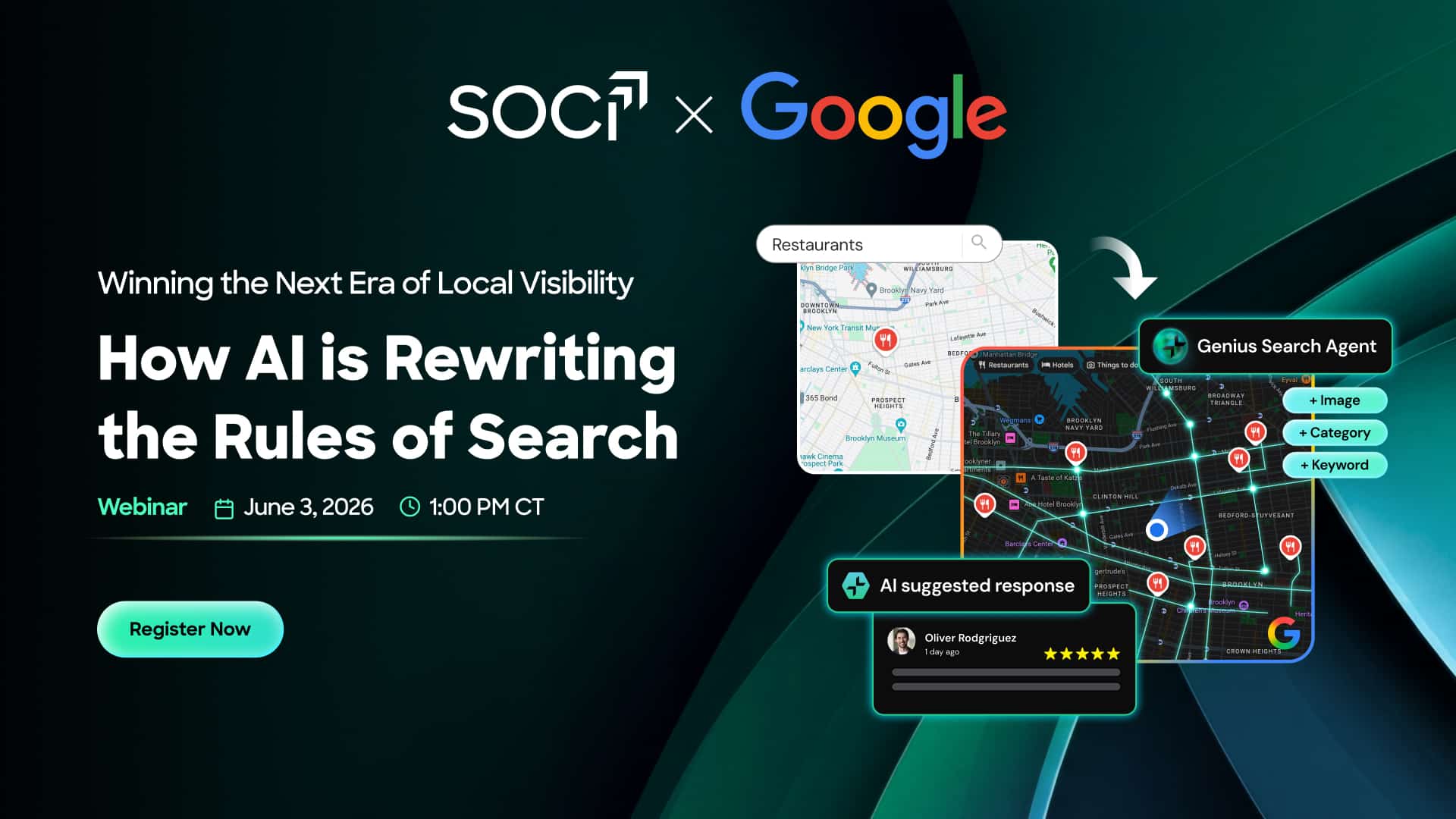
I recently discovered how AI is revolutionizing the way customers find local businesses. Tools like Google AI Overviews, Gemini, and Ask Maps are paving the way for more detailed, conversational searches.
It’s clear to me that traditional search rankings are no longer the sole factor in gaining visibility. Ensuring your business details are complete and accurate—like your Google Business Profile, reviews, and local content—can make a big difference.
I’m excited to join SOCi and Google for an exclusive webinar, Winning the Next Era of Local Visibility, on June 3. It’s a golden opportunity for anyone looking to stay ahead of the curve.
During this webinar, I look forward to learning:
How AI is transforming local search dynamics.
The types of signals that AI considers for recommendations.
Strategies to boost visibility on Search, Maps, and Gemini.
The implications of Ask Maps for your brand.
I’m convinced that AI is already shaping customer discovery, so it’s crucial to ensure your business isn’t left behind.
I recently sat down with Veronika Höller for an enlightening discussion on PPC campaigns in an episode of PPC Live The Podcast. We delved into a scenario where a seemingly flawless campaign was secretly underperforming, uncovering the real issue beneath the surface.
From “perfect” campaigns to zero revenue
Initially, Veronika encountered an impeccably organized account. It had all the right elements: a clean structure, compelling creatives, and well-allocated budgets with conversions rolling in. But there was one glaring omission—it wasn’t generating any revenue.
This discrepancy prompted us to investigate further, revealing that while surface metrics such as impressions, clicks, and conversions appeared promising, the true business impact was lacking. The unraveling began here.
The real issue: nothing stood out
The breakthrough came not from within the account but by stepping outside it. During competitor research, Veronika noticed that the brand’s messaging was indistinguishable from its competitors. There was no compelling reason for users to choose their products over others.
From a user’s perspective, the ads weren’t incorrect; they were simply forgettable. In a saturated market, being simply “good” wasn’t enough. The revelation was not about performance but positioning.
Starting again — from scratch
Veronika boldly decided to reconstruct everything from the ground up. This involved crafting new messaging, developing fresh creatives, and establishing a comprehensive strategic blueprint. A pivotal change was identifying not only the ideal customer but also defining who they were not targeting, utilizing anti-ICPs to refine the messaging.
This reset also incorporated enhanced localization, creating tailored landing pages for different markets, and formulating platform-specific strategies instead of simply recycling campaigns across channels. It was much more than optimization—it was a complete overhaul, and it succeeded.
The mistake that nearly broke everything
Looking back at earlier times in her career, Veronika recalled a major misstep that will resonate with many PPC professionals. She had implemented a recommended target CPA but failed to adjust the budget accordingly.
This oversight led to a halt in campaign delivery and a significant drop in performance, all of which went unnoticed over the weekend. By Monday, the damage was done, and the client was understandably upset.
Owning the mistake — and fixing it fast
Veronika didn’t shy away from the situation. She promptly admitted her mistake, provided an explanation, and took full responsibility. This transparency shifted the client’s initial frustration into collaboration, as there was no defensiveness, only a structured plan for resolution.
The takeaway was invaluable: one must never apply recommendations blindly and should always consider the entire context before implementing changes.
Why failure is part of getting good
For Veronika, mistakes aren’t something to avoid—they’re a stepping stone to mastery. “You can only be good if you fail,” she asserted.
This philosophy now influences her work approach and mentorship style. Mistakes signal progress, experimentation, and improvement.
Furthermore, sharing these experiences helps others steer clear of similar pitfalls.
The biggest issue she still sees today
Despite evolving PPC landscapes, tracking remains a persistent issue. Many setups suffer from flawed implementations, reliance on micro conversions, and misconfigurations in tools like Google Tag Manager.
In a world dominated by smart bidding and automation, inaccurate data not only constrains performance but leads it astray. Even the most stellar campaigns can falter without precise tracking.
AI won’t fix average marketing
Veronika emphasized that AI isn’t a magic bullet for improving outcomes. Feeding it mediocre data yields mediocre results.
Many marketers erroneously rely on AI tools for account analysis without a proper understanding of the necessary enhancements. AI can’t create uniqueness; it can only optimize existing inputs. Distinctive strategies still demand human ingenuity.
The mindset that matters now
The most significant takeaway isn’t about tactics; it’s about mentality.
Perfection isn’t the goal. Avoid following recommendations blindly, and don’t assume tools will think for you. Instead, rely on your instincts, experiment, and accept that mistakes are a valuable part of the journey.
In performance marketing, the real hazard isn’t failure but becoming invisible by playing it safe.
These days, simply fixing technical SEO issues on my site isn’t enough to make a significant impact.
When my site achieves technical parity with competitors, the ranking focus shifts from infrastructure to relevance. Google evaluates relevance based on how well my content aligns with search intent.
Let’s explore how I can make my site more relevant.
Why an intent mismatch may be suppressing my site’s performance
An intent mismatch happens when the content on my page doesn’t meet user expectations. If the page isn’t relevant or the signals sent are mixed, it results in poor behavior signals, like users bouncing off the page without finding answers.
These signals suggest to Google that my page doesn’t satisfy the query, causing ranking drops, fewer users viewing the page, and worsening behavior signals. It’s a situation that technical SEO alone won’t solve.
Technical SEO improvements may no longer make a difference
Initially, when I start an SEO strategy, improvements come quickly. If my website lags in technical standards, resolving crawl errors, addressing duplicate content, boosting page speed, and adding schema can result in significant gains.
However, once these changes place my site on par with competitors, Google evaluates sites based on user query satisfaction. Now, my technical foundation is solid, but the rules have changed.
Intent alignment becomes the primary improvement focus here.
Signals that reinforce search intent
Various elements affect a page’s intent and Google’s decision on whether it matches. These include:
Click-through rate.
Engagement signals.
Core Web Vitals.
Schema type.
Internal linking anchor texts.
URL structure.
Click-through rate (CTR)
My CTR can be influenced by factors like my title tag, meta description, URL structure, and schema, all measured against intent.
If my title tag is well-optimized yet mismatched with user queries, CTR will drop. Google sees low CTR as a relevance signal and adjusts rankings.
Engagement rate
Intent misalignment can harm time-on-page, scroll depth, and interaction rates. A user searching to purchase something might exit immediately if they land on a how-to guide. Similarly, a user seeking an emergency plumber might bounce from a page lacking contact details.
Core Web Vitals (CWV)
LCP, INP, and CLS measure page load speed. A slow transactional page frustrates users ready to buy, whereas informational article readers are more patient.
While CWV thresholds matter everywhere, they heavily impact conversion and behavior on high-intent pages.
Schema type
Schema markup explicitly tells Google the page content type. Contradictory content and schema signals send Google a wrong intent signal, affecting traffic.
Internal linking anchor texts
Internal link anchor text informs Google about the linked page’s intent. If a transactional page’s links use informational text like “learn more about X,” intent signals get diluted.
URL structure
Google uses URL patterns to infer page type. For instance, URLs in /blog/ are seen as informational. A product page in a blog path may struggle with ranking expectations.
Cannibalization and canonicalization
Multiple pages targeting the same keyword with different intents dilute Google’s signal, hindering ranking. Using canonical tags can emphasize the preferred page for a keyword, consolidating or redirecting when necessary.
How to fix intent misalignment
Let’s consider a common intent mismatch and steps I can take to audit and fix it.
What an intent mismatch looks like
If someone searches for “financial analysis software,” they intend to purchase software, a highly transactional query. Targeting this keyword with an informational blog post explaining DIY analysis creates a mismatch.
These users want to compare features and pricing or book a demo. Therefore, targeting the keyword with a dedicated page outlining features and pricing is optimal, aligning with user needs and boosting conversions.
Identify the intent of my pages
To remedy intent mismatches, I start by compiling top-performing keywords and manually checking their Google rankings. This research shows what type of page and content best suits these keywords.
See what my competitors are doing
By researching competitors’ pages targeting my keywords, I note elements they include, such as tables, comparisons, or videos, which can inform improvements on my pages.
Measure my page’s performance based on intent metrics
After making page improvements, I track performance indicators like clicks, rankings, and time on page to evaluate the effectiveness of changes.
Technical SEO and intent need to work together
Technical SEO is vital; it lays the groundwork. Pages that aren’t properly crawled won’t rank to their full potential, regardless of intent alignment.
Intent alignment, however, dictates how high a technically sound page can rank and its conversion rate. Every page should have clearly defined intent supported by technical signals for reinforcement.
Have you ever wanted an AEO platform that feels like it’s reading your mind? That’s exactly how I felt when I started exploring Goodie 2.0. It’s not just about speed, though that’s a massive bonus. The real magic lies in its enhanced competitor tracking and those smarter recommendations that seem tailored just for me.
The AI search visibility insights are clearer than ever, giving me the edge I need to stay ahead in the game. If you’re like me and always looking for ways to get one step ahead, Goodie 2.0 is designed with you in mind.
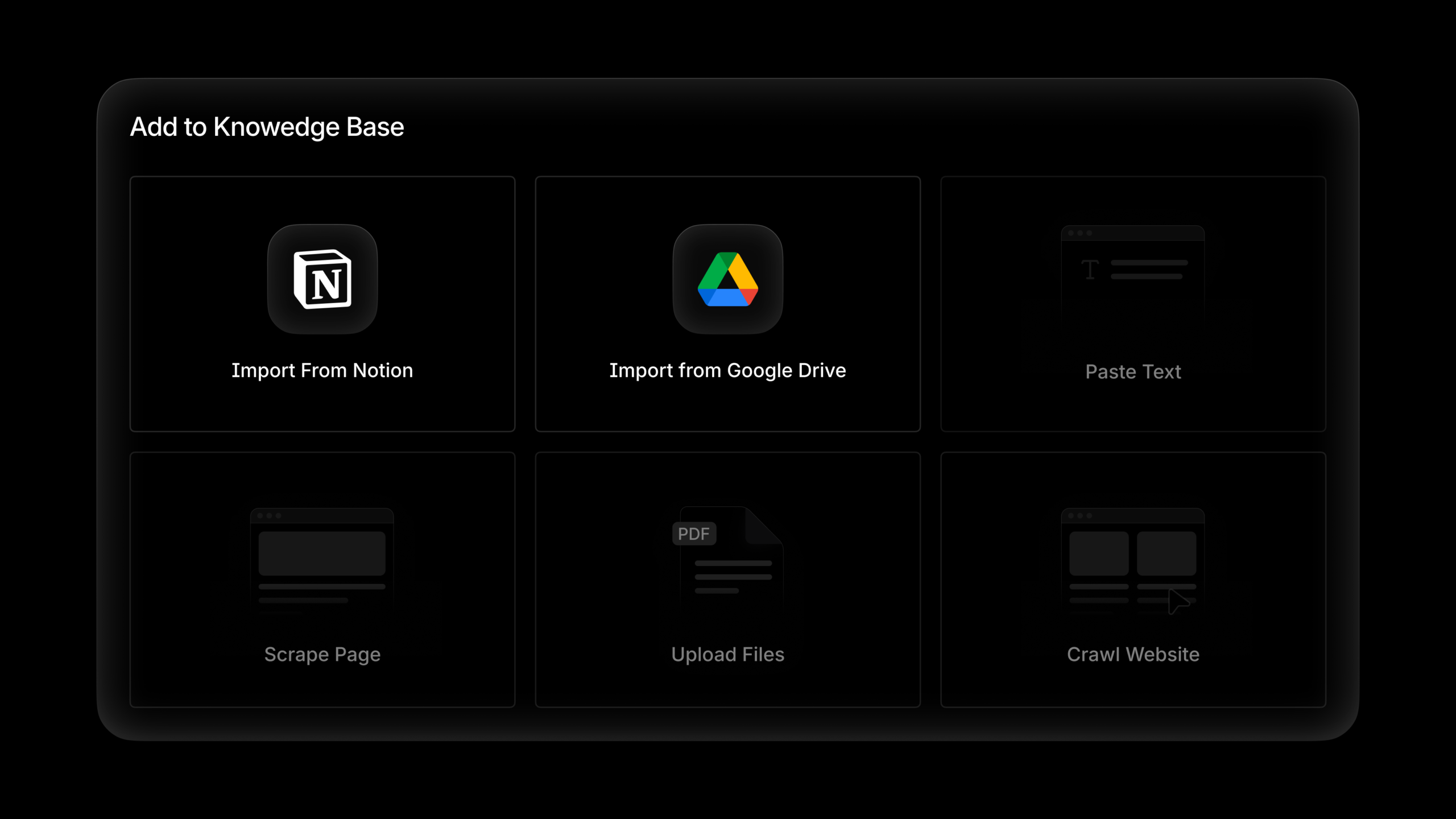
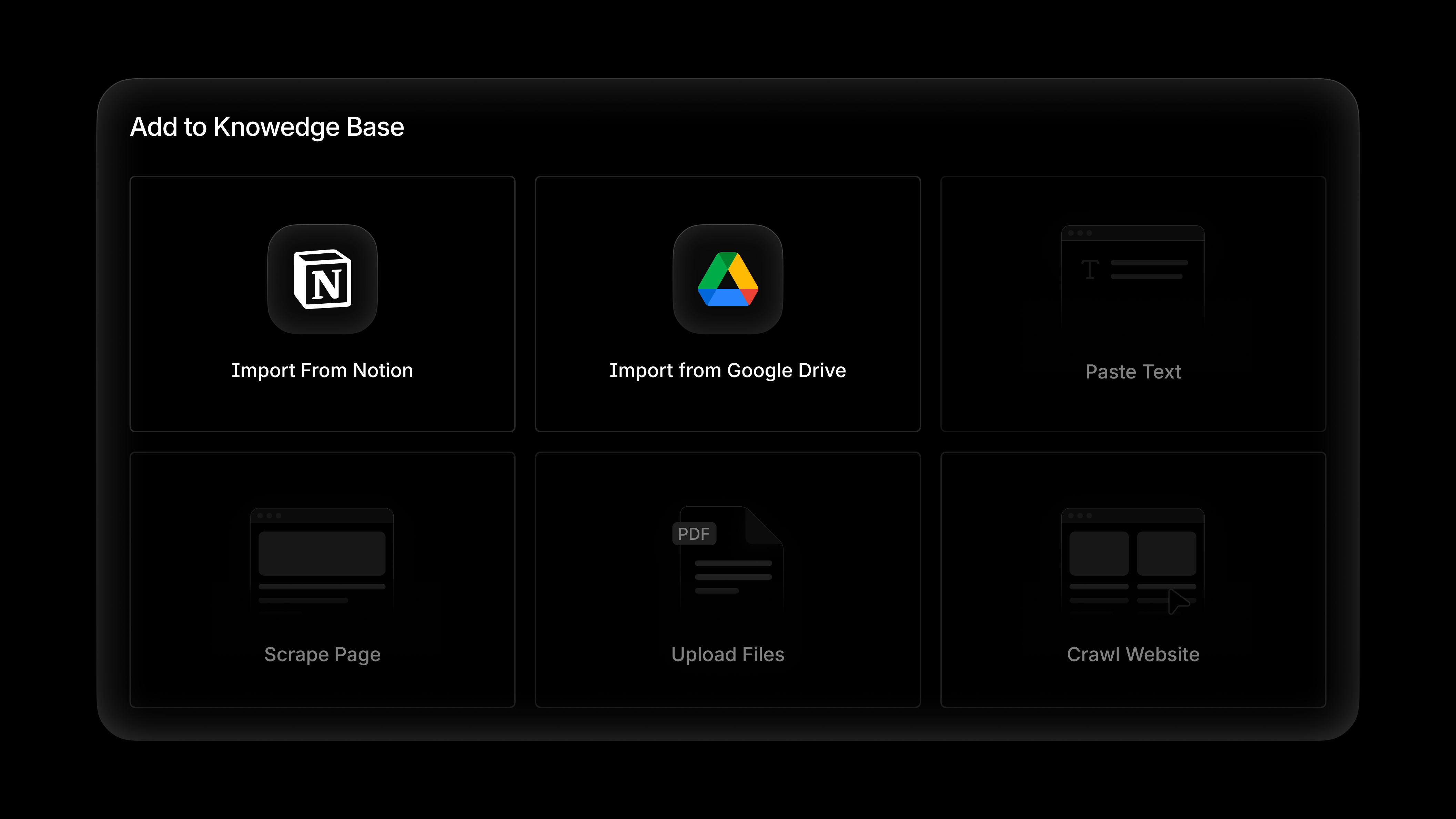
As I delve deeper into enhancing my workflow, I realize that effective agents thrive on comprehensive context. Thanks to Profound’s Knowledge Bases, I empower my agents with my unique brand voice, product intricacies, and messaging guidelines.
Now, I’m excited to share that integrating these knowledge bases with Notion and Google Drive is easier than ever. This integration allows me to streamline my processes and maintain consistency.