Recently, I noticed a significant change in Google’s approach to handling spam reports. They’ve updated their stance on whether they’ll process reports containing personally identifying information, and it feels like a big shift from what was communicated just a week prior.
On their updated spam report page, Google now clearly states that any spam report containing personally identifying information will not be processed. This revision comes after their previous announcement that such information could be passed on to the site in question.
Here’s What’s Changed: Google has added a highlighted note on their official spam report page, emphasizing two points:
(1) Avoid including personally identifying information in your spam reports.
(2) If you do include such information, your submission won’t be processed.
Google’s explanation reads:
“Don’t include any personally identifying information in your submission. To comply with regulations, we must send the submission text to the site owner to help them understand the context of a manual action, if one is issued. Because of this, we won’t process your submission if we determine it contains personally identifying information to protect privacy. Not including such information fully ensures your information is safe and prevents your submission from being discarded.”
Previously: Just a week ago, as we documented, Google allowed:
“If we issue a manual action, we send whatever you write in the submission report verbatim to the site owner to help them understand the context of the manual action.”
This policy raised many eyebrows across the industry. Concerns were not just about being flagged for identifying competitors or spammers, but there were also legal implications. It seems Google is now aligning with regulations to avoid sharing personally identifying data.
Why You Should Care: If you’re aiming to submit a spam report to Google, make sure it doesn’t contain any personally identifying information. Should you inadvertently include such information, rest assured that it won’t reach the reported site and the report simply won’t be processed. You can always resubmit your report without these details.
I’ve noticed that Google is currently investigating an issue with the Google Search Console. Specifically, this concerns the data logging and reporting of “Job listing” and “Job details” search appearance filters.
On April 16th, a bug began affecting how this data is logged, causing Google to report zero clicks and impressions for job-related reports. Although traffic is still being received, it’s not being recorded correctly.
What Google said. According to an update from Google, “A logging error is preventing Search Console from reporting impressions and clicks for ‘Job listing’ and ‘Job details’ Search appearance types from April 16, 2026 onward. We’re working to resolve this issue. This issue affects data logging only.”
Complaints. I’ve also seen numerous SEOs voicing their concerns on social media, as shared in a tweet by Max Peters. The bug seems to impact impressions and clicks, but the traffic still comes through other measurement methods like google_jobs_apply UTM.
Why we care. If you’ve noticed a decrease in search data for job listings, rest assured, it’s due to this bug on Google’s side. Your listings are likely still active and receiving traffic, although this isn’t reflected in Search Console at the moment.
If your search impressions still look healthy while organic clicks and conversions have flattened, publishing more content may deepen the problem. AI answers have changed which searches produce a visit, but they have not removed the need for useful pages, credible evidence, or clear decisions.
You need to find the exact layer where growth is breaking: discovery, answer visibility, click capture, on-page usefulness, or conversion. Once you separate those layers, you can stop treating every plateau as a rankings problem and make the change that the evidence supports.
Reset what search growth means
The familiar organic growth model is simple: rank for more queries, earn more clicks, and turn those visits into outcomes. AI-generated answers insert another possible stopping point. A search engine may resolve a narrow question on the results page, while a person with a more involved problem still needs to visit a website.
The practical change is to stop using total organic sessions as the only definition of growth. Evaluate four different outcomes:
Discovery: your pages appear for the questions and problems that matter to your audience.
Answer visibility: your brand, explanation, product, data, or page is represented when an AI answer is shown.
Qualified visits: people click because they need depth, proof, a tool, a comparison, or a next step that the results page cannot provide.
Business outcomes: those visits lead to the action the page was built to support, such as a signup, inquiry, purchase, or informed move to another page.
This does not make clicks unimportant. A page does not become valuable merely because an AI system might summarize it. It means a click-through rate decline has more than one possible cause, and you should identify that cause before rewriting titles or adding pages.
Start by labeling your important queries by the job they perform. A closed-answer query asks for a fact or definition. An exploration query helps someone understand a problem. A decision query compares options or constraints. An action query looks for a product, service, process, or implementation path. Closed answers are more exposed to instant resolution. Exploration, decision, and action queries give you more room to earn a meaningful visit, provided the page does more than restate a generic answer.
Your keyword map should preserve that context. A broad term such as “schema markup” identifies a subject. A question such as “which schema should a service-area business use when it has no public storefront?” identifies a decision, a constraint, and the evidence the answer must contain. The second query is easier to turn into a useful content brief because it reveals what could make an answer wrong.
Build each topic cluster from real language found in search performance data, site search, customer questions, sales conversations, support requests, and community discussions available to your team. For every meaningful query or prompt, record:
The exact question, including qualifiers rather than a cleaned-up head term.
The user’s likely stage: learning, evaluating, validating, or acting.
The constraint that changes the answer, such as business type, location, platform, audience, or implementation state.
The decision the person needs to make after receiving the answer.
The evidence or experience required to make the answer credible.
The page and section that should satisfy the need.
The next useful action you want the visitor to take.
Do not turn every wording variation into a separate page. If several prompts have the same intent, require the same evidence, and lead to the same decision, they usually belong on one well-structured page. Split them only when the constraint materially changes the answer or when each audience needs a distinct path.
Then inspect the live result for your priority prompts in a consistent setup. Record the exact query, search surface, date, location context, whether an AI answer appeared, which domains were cited, which brands were mentioned, and what conventional results remained visible. AI Overviews are not activated for every query, so testing a few broad keywords cannot tell you how an entire topic behaves.
Treat this prompt set as a stable observation panel. Reuse the same important prompts when you review visibility, and add new ones only when customer language or search data reveals a genuinely different need. That gives you a comparable record instead of a collection of one-off screenshots.
Make the page valuable after the instant answer
The right response to AI answers is not to hide the answer deeper in the page. Give the reader a direct answer, then provide the judgment, evidence, and implementation help that a short synthesis cannot carry.
A useful page can be built in layers:
Answer the core question in plain language near the beginning.
Name the conditions that would change the answer. This prevents an accurate general rule from becoming bad advice in a specific case.
Explain the decision logic so the reader can apply the answer rather than merely repeat it.
Provide evidence or utility that is difficult to replace with a generic synthesis: an original example, a documented process, a worked configuration, a template, a calculator, a comparison framework, or first-party data you genuinely possess.
Offer the next action that fits the reader’s stage instead of forcing every visitor toward the same conversion.
Use a replacement test during editing: if a generic answer box can reproduce the entire value of the page, the page is not finished. Add the constraint, evidence, or usable asset that a person needs after learning the basic answer. Do not add length for its own sake. More words do not create more value when they repeat the same conclusion.
Machine readability matters, but it cannot rescue an undifferentiated page. Use descriptive headings, stable terminology, explicit relationships between entities, and internal links whose anchor text explains the destination. If you add JSON-LD, choose a valid type that accurately represents the page, keep names and other entity details consistent with visible content, and update the markup when the page changes. Structured data is a machine-readable description, not a relevance generator or a guarantee of inclusion in an AI answer.
Credibility also has to be inspectable. Identify who created or reviewed the material when that identity helps the reader judge expertise. Link claims to the evidence you actually used. Distinguish observed results from editorial recommendations. Display a date when freshness affects the answer, not as decoration. Remove unsupported ratings, fabricated experience, and schema properties that are absent from the visible page.
Mass-producing near-duplicate pages is especially weak in this environment. Google’s stated position is that generative AI has increased the volume of low-quality material while its ranking systems continue trying to suppress it. Whether those systems succeed in every result is a separate question. Your controllable advantage is to publish material that has a clear reason to exist: a different decision, better evidence, a useful tool, or a perspective grounded in real expertise.
Diagnose the stalled layer before choosing a fix
When organic search growth stalls, asking what to publish next is premature. First determine which part of the system stopped moving. Rankings, result-page behavior, content usefulness, conversion, and measurement can produce similar top-line charts while requiring completely different fixes.
Validate the measurement. Confirm that analytics events, search reporting, consent behavior, and conversion definitions have not changed. A tracking break should not become an SEO project.
Check technical access. Review indexing, robots directives, canonicals, redirects, rendering, internal links, and template changes on the affected pages.
Segment the change. Break performance down by query group, page type, intent, device context, market, and brand versus non-brand demand where those dimensions are available. A sitewide total can hide a concentrated loss.
Separate impressions from clicks. Falling impressions point you toward demand, coverage, indexing, or competitive visibility. Stable impressions with falling clicks point you toward the result-page environment, snippet appeal, or changed intent.
Separate visits from outcomes. If qualified traffic is steady but conversions fall, inspect message alignment, page usability, the offer, and event tracking before changing the query strategy.
Inspect representative results. Look for AI Overviews and other result features, note which needs they satisfy, and compare the remaining clickable results. Do this for the query groups that matter rather than whichever examples are easiest to find.
Use the observed pattern to choose the first test:
Observed signal
Start by testing
First useful action
Impressions decline across established query groups
Demand, indexing, coverage, or competitive visibility
Verify technical access, then compare the affected queries and pages instead of rewriting every snippet.
Impressions hold while clicks decline
Result-page changes, instant answers, intent, or snippet appeal
Inspect the live results, classify the lost queries, and strengthen both the search snippet and the page’s beyond-the-answer value.
Visits hold while outcomes decline
Tracking, landing-page alignment, usability, or offer fit
Validate events and compare each landing page with the promise and intent of its incoming queries.
Important customer questions have no relevant visibility
Content coverage or insufficient evidence
Revise the best existing page or create a focused resource only when the question requires a materially different answer.
Maintain a scorecard that matches those layers. Search performance data can show impressions, clicks, click-through rate, queries, and landing pages. A prompt observation log can show sampled AI-answer presence, citations, mentions, and competing domains. On-site analytics can show whether visitors continue to a useful next step or return. Business systems can show qualified inquiries, purchases, signups, or other outcomes where attribution is available.
Keep the limits of each measure visible. Click-through rate without result-page context can mislead you. A brand mention without a citation may not create a visit. A citation may appear for a low-value prompt. A hand-checked prompt panel is a sample, not a complete census of AI visibility. Report the measures together so one flattering metric cannot conceal a broken path.
Key takeaways for your next growth cycle
Classify important queries by the job they perform before assuming every lost click has equal value.
Map conversational prompts with their goals, constraints, required evidence, and next decisions intact.
Answer the core question early, then earn the visit with decision support, credible evidence, or practical utility.
Use valid, visible-content-aligned structured data to clarify meaning, not as a shortcut to rankings or AI inclusion.
Diagnose discovery, click capture, page usefulness, and conversion separately before choosing an intervention.
Measure search performance, sampled AI visibility, visit quality, and business outcomes in the same scorecard.
Start with the query cluster most closely tied to a real audience decision. Record its current result environment, repair the page that should own the problem, and define the outcome you expect before making the change. Your next growth move should come from the failed layer you can see, not from a general fear that AI has made search traffic impossible.
When I think about brand visibility today, it’s clear that being chosen by AI systems is crucial. Authority, unique insights, and consistent signals now determine if my brand makes the cut.
I’ve realized that AI isn’t just reshaping search; it’s deciding which brands are seen and which are ignored.
I learned from Andrew Warden, CMO of Semrush, at the Adobe Summit that visibility is evolving fundamentally, and our brands risk being systematically filtered out by AI systems.
“The idea of standing out is no longer optional. There’s a real risk of sameness,” he pointed out.
With AI systems deciding what to highlight and what to ignore, I know I must compete more fiercely for visibility in AI-generated answers.
AI is Changing How Discovery Works
The change is evident in the data: 60% of Google searches now end without a click to a website. People are still seeking information but aren’t always visiting websites. They’re getting their answers directly from AI systems like Google AI Overviews and ChatGPT.
These AI systems have become, as Warden described, the “new gatekeepers.”
This shift ushers us into the agentic era, where AI systems act as intermediaries, guiding users from inquiry to decision in one seamless interface.
Meanwhile, user behavior is evolving. People engage more in conversational environments, posing follow-up questions, refining queries, and surveying options within the interface, all resulting in fewer clicks but often attracting higher-intent users.
Warden noted that consumers using LLMs convert at least four times higher than those relying solely on search.
SEO is the Foundation
Despite some claims that AI could replace search, Warden reassured us that SEO is not dead.
SEO has become more foundational than ever. It’s essential to ensure my brand exists in the data layer AI systems rely on.
Warden emphasized, “SEO isn’t just for humans anymore. This is a training manual for AI right now.”
This involves ensuring:
Crawlability
Indexability
Structured data
Authority signals
Without these, my brand won’t appear at all.
Research backs this up: 94% of Google AI Overviews cite at least one top organic result, reaffirming that traditional search signals still support AI outcomes.
The Rise of the ‘Bland Tax’
One striking concept from the session was what Warden dubbed the “bland tax.”
AI conditions itself to overlook blandness, causing generic or repetitive content to vanish.
If I’m generic, Warden warned I’m perceived as average, and if I’m bland, I’m effectively invisible.
AI systems don’t reward sameness. Rather than highlighting my brand, they often condense similar content into a single, attribution-lacking response.
“This is an invisible penalty,” Warden noted.
The consequences manifest in several ways:
My brand identity gets erased in AI-generated summaries
My content is filtered out as low-value
My work becomes training data for AI without offering visibility to my brand
“You also become a free training ground for LLMs,” he said.
What Visibility Depends On
Warden redefined brand visibility as a blend of:
Discoverability: Can LLMs easily find me?
Authority: Do they trust my brand enough to include it?
“You absolutely need both,” Warden asserted.
SEO ensures I’m discoverable. Authority determines whether my brand shows up in AI-generated responses.
Without authority, I risk turning into a “commodity that isn’t worth being mentioned.”
How to Win: Three Key Signals
Warden outlined three crucial areas determining whether my brand appears or gets filtered out:
1. Entity Authority
AI systems map entities and relationships, and they must recognize my brand as an authority on a topic.
One key signal is brand demand. If people aren’t seeking out my brand, neither will AI.
Strong brands emphasize their authority across various platforms—owned content, media exposure, and community discussions—demonstrating their niche.
2. Information Density and Originality
AI systems prioritize content that offers new insights. It’s vital to not just publish content but contribute something meaningful.
They emphasize new facts with proprietary data, original research, unique perspectives, and expert insights.
According to Warden, original insights can enhance visibility by 30 to 40%.
3. Signal Alignment
AI evaluates not just what I convey but also what others say about my brand.
This includes reviews, discussions on platforms like Reddit and YouTube, media mentions, and customer conversations.
Warden warned that conflicting signals could prompt AI to flag my brand as unreliable.
Consistency across these channels creates what he called a “consensus signal” that AI systems can trust.
Why Most Organizations Aren’t Ready
One of our biggest challenges is organizational, as visibility isn’t just a channel issue; it’s an organizational one.
Currently, responsibilities are fragmented. SEO teams focus solely on rankings, PR and brand teams manage messaging, and growth teams conduct experiments. This leaves no one clearly owning AI visibility.
This fragmentation leads to inconsistent signals and missed opportunities for us.
To truly compete, we need alignment across teams, working on a shared strategy about how my brand appears wherever LLMs gather data.
The Measurement Problem
Meanwhile, traditional performance metrics are unraveling.
Many marketers, including myself, notice a gap where rankings hold steady, but traffic declines. Meanwhile, leads might increase, yet attribution remains murky.
Warden explained that demand remains, but traffic no longer serves as its proxy. Our content is utilized, but not in ways directing users back to us.
This creates a growing disparity between impact and the ability to measure that impact accurately.
From Rankings to Relevance
The nature of competition has evolved. I’m no longer vying for a mere position; instead, I’m competing to be featured in a synthesized AI answer.
Authority, once easier to influence, now hinges on external validation—emphasizing what others say over what I publish.
Algorithms have shifted from being my allies to arbiters of meaning, marking a significant change in search dynamics since Google itself emerged.
The New Rules of Brand Visibility
AI has not altered what makes a brand strong but has transformed how that strength is measured and rewarded. The brands that win today will build real authority in a focused niche, publish original and high-value content, and ensure consistent messaging across every platform.
The need for consistent third-party validation across an ecosystem is paramount.
As Warden urged, I must make it impossible for LLMs to ignore my brand.
Your page can fail search visibility in two places at once. The content a crawler needs may not exist until JavaScript runs, while the phrase customers actually search may be prohibited by legal, trademark or brand rules.
Treat those as separate failure modes. First, make the page understandable without waiting for client-side rendering. Then build relevance around the intent you are allowed to express. That order matters: stronger copy cannot rescue content a crawler never receives.
Separate retrieval problems from relevance problems
A rendering constraint affects retrieval. The server returns a thin document, and JavaScript later inserts the main copy, navigation, product details or internal links. A wording constraint affects relevance. The page is available, but the language that connects it to a valuable query is weak, indirect or deliberately absent.
When both occur on the same page, teams often misread the symptoms. An editor adds more synonyms when the copy is missing from the initial response. A developer improves rendering while the approved vocabulary still fails to describe the searcher’s need. Neither change closes both gaps.
Question
What to inspect
What the result means
Can a crawler understand the page before JavaScript runs?
The raw HTML response, including the title, main heading, essential copy and links
If the page’s purpose is missing, you have a retrieval problem.
Can a visitor understand the offer without the restricted phrase?
Headings, body copy, definitions, attributes, use cases and related terminology
If the offer remains vague, you have a relevance problem.
Is the phrase legally prohibited or merely discouraged?
The written rule for body copy, metadata, links, comparisons, questions and definitions
The permitted tactics depend on the actual boundary, not an informal preference.
Does the approved vocabulary match how people express the need?
Query data grouped by intent rather than one isolated keyword
A large demand gap may justify revisiting the policy or creating a stronger semantic route.
Run these checks before changing templates or copy. They tell you whether the next ticket belongs with engineering, content, legal or all three. They also give each team a testable acceptance criterion instead of the vague instruction to improve SEO.
Put the essential answer in the initial HTML
Google can execute JavaScript, but execution is not the same as immediate, complete discovery. Pages can be queued until rendering resources are available, after which a headless browser processes the client-side code. That extra stage creates another opportunity for delayed or incomplete discovery.
The dependency is even riskier outside Google. Many AI crawlers and other non-Google bots do not consistently execute JavaScript. If the useful answer exists only inside a client-rendered component, those systems may receive a shell rather than a document they can quote, classify or follow.
You do not need to rebuild every interaction as a no-JavaScript application. You do need an HTML-first discovery path for anything that establishes what the page is, what it offers and where its important links lead.
Return a unique, meaningful page title and a clear main heading in the server response.
Include the primary explanation, answer, product description or service description before client-side code runs.
Expose essential facts that determine whether the result satisfies the visitor’s need. Do not hide the only useful details behind tabs, filters or event handlers.
Render primary navigation, breadcrumbs and contextual internal links as ordinary anchors with real destinations.
Deliver structured information needed to identify the page and its subject in the initial document where practical.
Add JavaScript for filtering, personalization, live calculations and other interactions after the discoverable foundation is present.
Server-side rendering, static generation and pre-rendering can all provide that foundation. The right choice depends on how often the content changes and how much of the interface is truly dynamic. A stable service page may suit static generation. A frequently updated catalogue may need server-side rendering. A client-rendered application can selectively pre-render its public discovery pages while keeping authenticated workflows dynamic.
A <noscript> block can be a safety net, but it should not become a second, neglected version of the page. If you use one, keep it concise and aligned with the visible experience. The safer architectural target is meaningful server-delivered HTML that JavaScript enhances rather than replaces.
Test the response, not just the finished screen
A browser screenshot with JavaScript enabled proves that a visitor can see the interface. It does not prove that a crawler received the content or that the links are discoverable. Use this sequence on every important template:
Open the raw server response or page source. Find the title, main heading, first useful answer and primary links.
Load the page with JavaScript disabled. Confirm that its subject and next step remain understandable.
Inspect critical links. They should have crawlable destinations rather than relying only on click handlers.
Compare the initial and enhanced versions. They can differ in presentation, but they should not contradict each other or describe different offers.
Repeat the check while logged out and without stored browser state. Public discovery must not depend on a previous session.
Test a sample from every shared template. Passing one editorial page says little about a product, location or category template built through a different rendering path.
Prioritize pages by consequence. Start with the homepage, high-demand landing pages, major categories, locations and pages that supply internal links to deeper content. A missing decorative widget is inconvenient. A missing product description or category link changes what the crawler can understand and reach.
Map the search intent before working around a restricted term
Do not treat every keyword restriction as the same instruction. A trademark concern, an absolute legal prohibition, a brand preference and a rule against making one phrase the primary focus create different boundaries. Get the rule in writing before anyone places the term in a heading, title, image description or link.
The first question is not, “How can we hide this keyword?” It is, “What is the searcher trying to identify, compare or accomplish?” That change of frame gives you legitimate language to work with even when the familiar label is unavailable.
Demand data can also reveal whether an internal naming preference carries a substantial visibility cost. In one senior-living comparison, “skilled nursing near me” showed 4,400 monthly searches while “nursing home near me” showed 27,100. Those figures do not create permission to use a prohibited phrase. They do show why legal, brand and search teams should make the decision with the same evidence in front of them.
Build an intent map around the restricted query. Include:
The approved category: the clearest accurate name you are allowed to use.
The underlying job: what the person wants to buy, arrange, learn, compare or solve.
Defining attributes: materials, features, level of support, location, compatibility or other characteristics that make the offering identifiable.
Use contexts: the occasions, environments and situations in which the need appears.
Audience language: natural questions, synonyms, spelling variants and adjacent terms that people use for the same intent.
Necessary distinctions: what the offering is, what it is not and how nearby categories differ.
For a beverage-insulation product, for example, the semantic field might include can cooler, insulated drink sleeve, beer, cold drinks, party favors and occasions such as a bachelorette party. No single substitute has to impersonate the restricted name. Together, accurate category, attribute and context language can make the page’s subject clear.
Use the exact term only where permission is explicit
Some policies allow a term in a factual definition, comparison, question or combined product label but prohibit presenting it as the brand’s preferred category. If legal or brand reviewers approve that boundary, a limited contextual mention can clarify the relationship between the common query and the approved offering.
If the phrase is prohibited everywhere, do not smuggle it into metadata, alternative text or anchor text. Those fields are still published content. Search engines can process them, users may encounter them, and moving a term out of the visible body does not remove a trademark or compliance concern.
Apply the same rule to each element:
Title and main heading: lead with the approved category and the page’s actual promise.
Introduction: answer the underlying need immediately. Do not force awkward synonyms into a sentence that becomes harder to understand.
Definitions: explain unfamiliar approved terminology and its boundaries. Use the restricted label only if that explanatory use has been cleared.
Internal links: choose descriptive anchor text that truthfully identifies the destination. An approved common term can be useful; an unapproved one remains unapproved.
Alternative text: describe the image and its purpose. It is not a storage area for keywords that copy reviewers rejected.
External links: do not build an artificial exact-match pattern. Use language that is accurate, natural and permitted in that context.
You may still earn visibility without the exact phrase because relevance can be established through related concepts and intent. It is not a guarantee, especially when competitors can use the dominant wording directly. Set expectations accordingly: the goal is the strongest truthful signal set available under the constraint, not a loophole that makes the constraint disappear.
Use one launch gate for code, copy and compliance
A constrained page should not move through engineering, editorial and legal as three disconnected deliverables. Give it one acceptance checklist. That prevents a technically crawlable page from shipping with vague language, or approved copy from disappearing behind client-side rendering.
Define the page’s job. Write one sentence stating who the page helps, what they need and what action the page should enable.
Name the query family. Group the restricted term, approved synonyms, questions, category language, attributes and use cases by shared intent.
Record the wording boundary. Specify whether the term is banned everywhere, allowed only in named contexts or merely excluded as the primary label. Cover headings, body copy, metadata, links and image descriptions separately.
Draft the minimum complete answer. Before designing interactive elements, write the heading, concise explanation, essential facts and next-step links that must exist in the initial HTML.
Place approved relevance signals. Use the approved category prominently, then add useful attributes, applications, distinctions and definitions. Each addition should improve understanding, not just keyword coverage.
Render the foundation on the server. Choose static generation, server-side rendering or pre-rendering for the public content. Hydrate interactive features on top of it.
Run two reviews. Technical QA verifies the raw response and crawlable links. Editorial and legal review verify that every published field follows the wording policy.
Measure by query group and template. Watch whether the intended family of searches reaches the page and whether affected templates are discoverable. Do not judge the work from one exact keyword or one successfully rendered URL.
Write the acceptance criteria so failure is obvious. “Improve crawlability” is not testable. “The service description and links to all primary locations appear in the initial HTML” is. “Use related keywords” is equally weak. “The title names the approved category, and the body explains its use, defining attributes and difference from adjacent categories” gives an editor something concrete to deliver.
When a page still underperforms, return to the two failure modes. If the content is absent from the response, fix retrieval. If it is present but does not clearly resolve the intent, fix relevance. If the exact phrase would materially change the opportunity but remains prohibited, take the demand evidence back to the decision-maker rather than quietly violating the rule.
Key takeaways
Rendering and keyword restrictions are independent constraints: one limits retrieval, while the other limits relevance signals.
Put the page’s heading, essential answer, core facts and important links in server-delivered HTML.
Use JavaScript to enhance the experience, not as the only delivery mechanism for content that must be discovered.
Clarify whether a restricted term is legally banned, contextually permitted or simply discouraged before placing it anywhere.
Build relevance through approved category language, intent, attributes, use cases, definitions and natural internal links.
Make raw-HTML validation and wording compliance part of the same launch gate.
Start with one high-value template this week. Capture its raw HTML, mark the essential content that is missing, document the exact wording boundary and rebuild the smallest complete answer that satisfies both. Once that page passes, turn the checks into requirements for every template that follows.
You’re looking at a search result that appears to rank through manipulation, and you’re deciding whether to report it. Before you submit anything, write as though the site owner will read every word. They might.
The same principle works in reverse. If your site receives a manual action accompanied by a reporter’s wording, don’t treat that wording as a complete diagnosis. Use it as a lead, verify the underlying behavior, and fix the full pattern rather than the one example placed in front of you.
A spam report is evidence, not a guaranteed penalty
Google says it may use a spam report to take manual action against violations. The word “may” matters. Filing a report isn’t the same as proving a violation, and it doesn’t guarantee a particular outcome. Your submission gives Google information it can evaluate.
A manual action is different from an ordinary ranking fluctuation. It is a specific enforcement response to conduct Google considers contrary to its spam policies. Ranking-manipulation techniques can already hurt visibility; a manual action creates a separate issue that the site owner must identify and remedy.
The consequential change is what happens to your written explanation. When Google issues a manual action based on a submission, it can send the open-text report to the affected site owner verbatim. Google says it doesn’t include other identifying information, so the report remains anonymous only if you avoid placing personal information in that field yourself.
That creates two separate responsibilities. You need enough detail to make the suspected violation understandable, but you also need to remove anything that identifies you, your employer, your client, or a confidential method. An accurate report can still expose you if its wording contains a signature, email address, client name, internal ticket number, private dashboard label, or a revealing description of how you obtained the evidence.
Key takeaways
Google may use a spam report when taking manual action, but a submission doesn’t guarantee enforcement.
The site owner may receive your open-text explanation exactly as you wrote it.
Anonymity depends on what you omit, not merely on leaving your name out of a dedicated identity field.
A useful report describes observable behavior, representative URLs, scope, and the suspected ranking effect without guessing at intent.
If your site is affected, treat the copied report as context and investigate the complete implementation behind the named examples.
Decide whether your concern is ready to report
A competitor outranking you isn’t evidence of spam. Neither is disliking its content, business model, brand, or search presence. The relevant question is narrower: can you point to an observable technique that appears designed to manipulate rankings and explain what another reviewer should inspect?
Apply three gates before submitting
Policy gate: Describe the suspected ranking manipulation rather than the commercial dispute surrounding it. If your complaint depends mainly on unfairness, annoyance, or assumed motives, it isn’t ready.
Evidence gate: Make the observation reproducible. Identify representative URLs, the visible pattern, and where it occurs. A reviewer should be able to inspect the same behavior without access to your private systems.
Disclosure gate: Assume the entire open-text field will reach the site owner. Remove personal information, confidential business details, emotional commentary, and clues that aren’t necessary to understand the suspected violation.
Keep observation and inference separate. “These URLs contain the same element” is an observation. “The company created it solely to deceive Google” is a claim about motive. You can explain why a pattern appears ranking-oriented without pretending to know who approved it or what they intended.
Use public, inspectable evidence wherever possible. If confidential information is essential to your allegation, stop before pasting it into the form. Verbatim transmission means the open-text field isn’t an appropriate place for trade secrets, private communications, access credentials, non-public analytics, or information you aren’t authorized to disclose.
Write for verification, not persuasion
A strong report is compact enough to follow and detailed enough to inspect. This structure keeps the submission focused:
State the concern: Name the suspected technique if you’re confident about the terminology. Otherwise, describe the behavior plainly instead of forcing an uncertain policy label.
Give representative examples: Include exact URLs or clearly identified locations. Choose examples that demonstrate the pattern rather than supplying an undifferentiated dump.
Describe what is visible: Explain what repeats, where it appears, and how the examples relate to one another.
Explain the ranking connection: Say why the behavior appears intended to influence search visibility. Don’t substitute accusations for that explanation.
Define the apparent scope: Note whether the examples share a template, path, section, or other observable characteristic. Label any estimate or inference as such.
Run a disclosure check: Remove names, contact details, employer or client references, internal identifiers, and unnecessary descriptions of your investigation.
You can draft the report under five labels: Concern, Examples, Observed pattern, Search impact, Apparent scope. Delete the labels before submission if the form doesn’t need them, but keep the logic. It forces each allegation to carry evidence and prevents background frustration from taking over the report.
Then perform a final test: could the site owner read this text without learning who you are, and could an independent reviewer understand it without calling you for clarification? If either answer is no, revise before submitting.
If your site receives a manual action with copied report text
Copied wording can feel accusatory, vague, or personally motivated. Don’t make the identity of the reporter your first investigation. The operational problem is Google’s enforcement decision and the site behavior associated with it. Trying to identify or confront the reporter won’t repair the issue affecting search visibility.
Preserve the notice and the copied text exactly as received. Then turn the narrative into testable claims. Separate the named URLs, alleged behavior, claimed scope, and supposed ranking effect. This gives your team an investigation plan instead of one emotionally loaded block of prose.
Confirm the examples: Inspect each named URL and record what is currently present. Account for recent changes rather than assuming today’s page matches the version that triggered the action.
Find the implementation: Determine whether the behavior comes from an editorial decision, template, plugin, automation, vendor, deployment process, or another shared mechanism.
Expand the scope: Search for every page or asset produced by that mechanism. A report may name only a few examples even when the implementation is broader.
Assess the allegation independently: Some wording in the copied report may be incomplete or mistaken. Verify the behavior against the applicable policy instead of accepting or rejecting the whole submission based on its tone.
Correct the underlying practice: Remove or change the mechanism responsible for the violation. Editing only the reported URLs leaves the same risk wherever the pattern was repeated.
Keep a remediation record: Document affected areas, causes, changes, owners, and verification. Follow the instructions supplied with the manual action when presenting the resolution to Google.
If the behavior came from an outside supplier, disabling one output isn’t enough. Establish who approved the tactic, what else the supplier changed, and whether the same logic remains active elsewhere. The objective is to be able to say what happened, how far it spread, what stopped it, and how you verified that it is no longer operating.
If you believe the allegation is wrong, build the response from verifiable facts. Show what the pages do, why the suspected pattern isn’t present, and what you checked across the wider site. A factual rebuttal is more useful than speculation about a competitor’s motives.
Make spam reporting a controlled SEO process
Agencies and in-house teams shouldn’t let spam reports leave the organization as improvised competitor complaints. The possibility of verbatim disclosure makes the text a governed external communication, even when the sender’s identity isn’t formally disclosed.
Use a lightweight review process. Assign one person to verify the evidence and another to perform the disclosure check. Keep the review narrow: policy relevance, reproducibility, factual wording, representative examples, and anonymity. Don’t add names or internal commentary merely to create an approval trail inside the submitted text; keep that record in your own authorized system.
For outbound reports: retain the submitted wording, submission context, public evidence, and internal approval separately from the form.
For your own site: keep ownership records for ranking-related changes so a questionable pattern can be traced to its template, automation, vendor, or decision-maker.
For client work: establish who is authorized to report another site and which client details must never appear in the open-text field.
For incident response: designate who receives enforcement notices, who scopes the implementation, and who verifies remediation.
Before your next submission, add one sentence to your team’s reporting checklist: “Assume the affected site will receive this text verbatim.” That rule improves the evidence, strips out avoidable risk, and keeps the report centered on the only thing Google needs to evaluate: the suspected search-policy violation.
Your rankings are down, the board wants SEO fixed, and every discussion is drifting toward keywords, backlinks, or a platform migration. Before you approve any of them, ask a more uncomfortable question: did search performance break, or did search expose a business that customers now trust less, search for less often, or can no longer buy from?
When the catalog, service experience, reputation, and brand promise fall out of alignment, the traffic decline is often a symptom. Your first job is to locate the failure outside the SEO dashboard. Only then can you decide which technical and content changes will help.
Start with the business timeline, not a keyword list
A useful diagnosis has to explain both the timing and the shape of the decline. A technical release that removes canonical tags, for example, should leave a different footprint from a catalog decision that removes product pages or a communication change that suppresses branded demand.
Build a single timeline that combines search data with business decisions. Include acquisitions, changes in brand communication, catalog merges, inventory rules, fulfillment disruptions, removed company pages, site migrations, content releases, and known search updates. Do not let each department maintain a separate explanation of what happened.
Export query and landing-page performance from Google Search Console. Separate branded queries from non-branded queries before looking at the total.
Segment landing pages by role: product, category, editorial, support, About, contact, policy, and location pages where relevant.
Mark the date of each material business or website change on the same timeline as impressions, clicks, conversions, revenue, and indexed-page counts.
Search for the brand and its important products as a customer would. Record unresolved complaints, confusing ownership information, missing contact routes, outdated policies, and inconsistent product promises.
Trace a sample of important products from inventory records to category navigation, internal links, XML sitemaps, indexable URLs, search impressions, and transactions.
Now read the pattern rather than the headline traffic number:
If branded impressions and branded clicks fall while the relevant pages remain technically available, investigate demand, recognition, and communication changes.
If losses cluster around products removed during an inventory cleanup, investigate merchandising rules and URL handling.
If important URLs remain indexable but disappear from navigation and internal links, investigate orphaning and lost internal authority.
If negative reviews, vague ownership, and missing contact information dominate the public footprint, investigate trust and service operations.
If several owned brands now sell the same assortment with nearly identical language, investigate positioning and internal competition.
If the decline begins immediately after a site release and affects pages with the same template or directive, keep the technical hypothesis near the top of the list.
None of these patterns proves causation on its own. They tell you where to test next. That distinction prevents a familiar waste of time: rewriting titles on pages whose products are unavailable, whose brand demand has collapsed, or whose company no longer looks credible.
Audit the four brand failures that surface as SEO problems
1. Trust failure: the website no longer proves there is a dependable business behind it
About, contact, service, and policy pages are not decorative corporate content. They help a customer answer basic questions: Who operates this business? How can I reach it? What will happen if my order goes wrong? Does the company make consistent claims across its website and public profiles?
Audit trust as an operating system, not a copywriting exercise:
Confirm that the About page accurately identifies the business, its purpose, and the people or organization responsible for it.
Provide a real contact route and verify that someone monitors it. A published address or form that leads nowhere makes the trust problem worse.
Compare delivery, availability, returns, and support promises with what operations can actually deliver.
Assign each recurring review complaint to an operational owner. Resolution belongs in the workflow, not only in a reputation report.
Check whether legal or efficiency reviews removed factual pages without considering how customers and search systems establish identity and accountability.
Structured data can clarify facts that already exist. It cannot manufacture a trustworthy company, resolve complaints, or replace missing customer support. If the underlying evidence is absent or inaccurate, adding more schema only describes the gap more neatly.
2. Demand failure: fewer people are looking for the brand
Branded search is not just another keyword segment. It reflects recognition and intent created across the whole business. When it falls, an SEO team can protect relevant pages and remove friction, but it cannot restore demand with title tags alone.
One post-acquisition case connected a communication shift with a 70% decline in brand search volume. Treat that as a case-specific warning, not a universal benchmark. The useful lesson is diagnostic: chart branded demand against changes in name, voice, audience, distribution, and customer experience.
Separate searches for the company name, product names, and distinctive product lines. A total branded number can hide which part of the identity is weakening.
Compare the wording customers use with the wording the brand adopted after a repositioning or acquisition.
Check whether different teams describe the same product, audience, and benefit consistently.
Identify whether the company stopped communicating a distinctive reason to choose it.
If non-branded category visibility remains relatively stable while branded demand contracts, do not report the entire loss as a ranking failure. Put brand strategy and communication on the recovery agenda. SEO can measure the effect and make the destination work; leadership and marketing must decide what the brand should mean.
3. Availability failure: inventory decisions break the route to the product
An inventory system can make an SEO decision without anyone calling it one. Removing an item may delete its page, remove every internal link, exclude it from category navigation, or leave a URL accessible only through an old sitemap or external link. The commercial instruction was about stock; the public result was a broken discovery path.
A product URL is orphaned when no meaningful internal route leads to it. At scale, that can deprive valuable pages of context and internal authority. A deeper audit of one apparent SEO crash traced the damage to mass product removal and orphaned URLs created by inventory management.
Before changing more URLs, create a product-state map with one row per existing product page:
Active and available: keep the page reachable through relevant navigation and internal links.
Temporarily unavailable: retain an accurate page when the product is expected to return, and explain the current state without promising an unsupported date.
Discontinued with a close successor: review the demand and user intent before mapping the old URL to the genuinely relevant replacement.
Discontinued without a substitute: decide whether the page still serves customers with specifications, support, compatibility, or other useful information before removing it appropriately.
Do not bulk-delete pages or redirect every discontinued product to the homepage merely to make a cleanup report look tidy. You can erase useful demand, external references, and historical performance data while sending customers to an irrelevant destination. Export the URL inventory, traffic, revenue, link, and replacement mapping first; review the high-value group manually; then stage the change so its effects can be checked.
The durable fix is organizational. Merchandising, inventory, engineering, and SEO need a shared rule for each product state. Otherwise the next warehouse cleanup will recreate the same search problem.
4. Positioning failure: owned brands compete without meaningful differences
Combining assortments across several brands can appear efficient. It can also make those brands interchangeable. When the same company publishes nearly identical catalogs, claims, category pages, and use cases under different names, it creates internal competition while stripping away the reason each brand exists.
Test differentiation with a simple exercise. For each brand, write one sentence naming its audience, problem, distinctive offer, and reason to be chosen over the company’s other brands. Then compare the products and pages that are supposed to prove that sentence. If the differences exist only in logos and adjectives, more SEO content will amplify the ambiguity.
Map which owned brand should answer each high-intent query cluster.
Identify products and categories that duplicate another brand without a distinct audience or use case.
Decide whether each overlap should remain differentiated, be consolidated, or be removed from one brand’s strategy.
Only after that decision, align category architecture, landing pages, internal links, and editorial coverage with the chosen position.
This is not ordinary keyword cannibalization. It is a portfolio decision expressed through search. An SEO team can show the overlap, but leadership must decide whether the brands deserve separate territory.
Build a recovery plan that leadership can read in financial terms
A recovery proposal framed only around rankings and sessions is easy to postpone. Translate each action into the commercial condition it protects: product availability, high-intent demand, conversion, customer acquisition cost, organic revenue, or gross merchandise value.
That may mean accepting a decline in irrelevant traffic. Consolidating thin or overlapping content into authoritative destinations can reduce sessions while increasing the share of visitors who reach useful, purchase-oriented pages. Judge that change by intent and business outcome, not by whether the top-line traffic graph remains inflated.
Contain further damage. Pause mass URL removals, catalog merges, identity-page deletions, and template-wide changes until the affected pages and business dependencies are mapped.
Restore the route to revenue. Reconnect active inventory to categories and internal links, repair accurate product destinations, and verify that customers and crawlers can reach them.
Repair public trust. Restore truthful company and contact information, assign review problems to operational owners, and align published service promises with actual delivery.
Re-establish demand and differentiation. Decide what each brand means, whom it serves, and which products or query territories it should own before commissioning more content.
Consolidate authority. Merge genuinely overlapping content into stronger destinations, then reinforce those pages through relevant category, support, product, and editorial links.
Measure commercial recovery. Track high-intent clicks, organic revenue or gross merchandise value, conversion, branded demand, active product coverage, orphan counts, and unresolved reputation issues against the pre-change baseline.
One recovery plan used a 15% to 20% increase in gross merchandise value as an initial objective for reintegrating inventory. That figure is not a general forecast. Set your own target from the affected products, current demand, margins, stock capacity, and baseline performance. The important practice is to connect the work to an outcome the business already recognizes.
For every recommendation, record five things: the affected pages or products, the evidence of failure, the proposed change, the accountable owner, and the commercial measure. If you cannot name an owner outside SEO for an operational failure, the recommendation is not ready to execute.
Assign ownership where the failure actually lives
SEO owns the diagnosis, search segmentation, crawl and index validation, URL mapping, internal-link strategy, content consolidation, and measurement.
Operations and merchandising own inventory truth, fulfillment capacity, product-state rules, and whether the customer promise can be met.
Customer service owns complaint handling and the feedback loop that turns recurring reviews into operational fixes.
Brand and marketing own positioning, communication consistency, and the work required to rebuild branded demand.
Legal should review truthful identity and policy information without treating wholesale page removal as the default form of risk reduction.
Leadership owns portfolio choices, investment priorities, and the decision to favor profitable intent over impressive but unproductive traffic.
This division does not shrink SEO’s role. It makes the role more consequential. Search specialists become the people who show how decisions in the boardroom, warehouse, service queue, and content system meet on the results page.
Key takeaways for your next recovery meeting
A traffic decline can be evidence of a brand or operating failure rather than the original problem.
Diagnose with a shared timeline and separate branded demand, non-branded visibility, page types, inventory states, and business events.
Audit four foundations before scaling SEO work: public trust, brand demand, product availability, and portfolio differentiation.
Protect high-intent journeys even when doing so lowers irrelevant sessions. Traffic volume without useful intent is not a recovery.
Connect every SEO recommendation to an accountable owner and a commercial measure such as revenue, gross merchandise value, conversion, or customer acquisition cost.
Do not use content, links, or schema to disguise a promise the business cannot keep.
Before the next keyword brief, build a one-page failure map. Put the lost queries and pages in the first column, the corresponding business event in the second, the accountable team in the third, and the revenue measure in the fourth. If most rows point outside the website, do not bury them in the SEO backlog. Put the decisions in front of the leaders who can repair the brand beneath the rankings.
You can find US B2B SEO agency candidates for 2026 quickly. The expensive part is deciding which one can understand your market, earn trust from technical buyers, and connect search visibility to qualified pipeline.
The right agency is not necessarily the largest, the most visible, or the one offering the longest list of services. It is the team whose operating model fits your buyers, internal resources, website, sales process, and evidence requirements. Use the framework below to make that fit visible before you sign.
Define the commercial job before you contact an agency
A weak agency search usually begins with a weak brief. If you ask candidates to increase traffic, each agency can tell a plausible story while solving a different problem. One may pursue high-volume informational queries, another may rebuild technical foundations, and another may publish comparison pages. All of those activities can be legitimate, but they do not produce the same commercial result.
Start with the buying motion. Your brief should give every candidate the same operating context:
Your priority products or services, including which offers matter most commercially.
The industries, company types, account sizes, and buyer roles you want to reach.
The problems buyers recognize before they know your category or brand.
The questions, objections, security concerns, integration requirements, and proof requests that appear during sales.
The actions you treat as meaningful conversions, such as a qualified demo request, assessment, trial, application, or sales conversation.
Your website platform, analytics setup, CRM workflow, approval process, and technical constraints.
The subject-matter experts, developers, designers, legal reviewers, and sales staff the agency can realistically access.
The work that must remain internal and the work you expect the agency to own.
Be precise about what US-based means to you. A US headquarters, experience selling into the US market, working-hour overlap, a US legal entity, and an entirely onshore delivery team are different requirements. If procurement, security, or customer commitments restrict where work can be performed, state that before agencies prepare proposals.
Then write the commercial assignment in plain language: improve discoverability for a defined set of buyers, move those buyers toward a defined action, and show how organic work contributes to qualified opportunities. This gives agencies a problem to solve rather than a traffic target to decorate.
Look for an operating system, not a service menu
Most credible proposals contain familiar components: technical SEO, content, digital PR, reporting, and some form of AI search optimization. The labels tell you little. What matters is how the agency connects those disciplines and makes decisions when data, buyer needs, and internal constraints conflict.
Buyer-led search architecture
A B2B content plan should reflect the decisions buyers make, not just the keywords an SEO tool can export. Ask the agency to map search demand to recognizable buyer jobs:
Understanding a problem and its business consequences.
Learning the available approaches to solving it.
Defining requirements and evaluating fit.
Comparing categories, methods, or vendors.
Checking implementation, integration, security, and operational implications.
Finding evidence that reduces perceived risk.
Preparing a recommendation for colleagues, procurement, or leadership.
Each proposed page should have a clear buyer, decision, next action, and relationship to the rest of the site. If an agency cannot explain why a page belongs in the journey, publishing it will probably add inventory rather than influence.
Technical and entity foundations
A useful technical audit does more than list warnings. It establishes which pages search systems can discover, render, index, interpret, and connect. It should distinguish defects that suppress important pages from housekeeping that has little commercial effect.
Expect the agency to examine crawling and index controls, canonical signals, redirects, internal links, page templates, duplicate or competing pages, structured data, navigation, and the relationship between your organization, people, offerings, evidence, and editorial content. Ask how each recommended change affects an important page group. A severity label without an affected business area is not prioritization.
Structured data should describe what is genuinely present on the page and remain consistent with visible content. It can improve machine interpretation, but it does not guarantee rankings, inclusion in an AI answer, or a citation. Be wary of any proposal that treats JSON-LD as a substitute for clear information, credible evidence, or sound site architecture.
Subject-matter expertise turned into usable evidence
Your strongest B2B knowledge often lives in sales calls, implementation teams, product specialists, technical documentation, and customer questions. The agency needs a repeatable way to extract that knowledge without turning every draft into a burden for your experts.
Ask to see the workflow from interview or internal input through briefing, drafting, fact review, optimization, approval, publication, and refresh. The agency should define what it needs from an expert, what its writers can resolve independently, and how unsupported claims are flagged. A writing sample alone does not prove that this system exists.
Useful content makes definitions explicit, separates similar concepts, states assumptions, answers the next likely question, and supports claims with evidence a reader can inspect. Those qualities help a human evaluator and also make passages easier for search and answer systems to retrieve accurately.
Authority beyond your own website
An agency should be able to explain how it will build recognition outside your domain. Depending on your market, that may involve expert contributions, original data, useful tools, partner content, relevant industry publications, public documentation, or digital PR. The method should fit how your buyers establish credibility.
Ask where links, mentions, and citations are expected to come from, why those environments matter, and what editorial value earns placement. A large outreach count is not the same as relevant authority. You need a defensible acquisition method, quality controls, and a clear boundary around tactics the agency will not use.
Measurement across search, AI visibility, and pipeline
Traditional search performance and visibility in AI-generated answers overlap, but they are not identical. Your measurement plan should keep them distinct while connecting both to commercial outcomes.
For search, define how the agency will monitor priority query groups, important landing pages, branded and non-branded demand, conversions, assisted journeys, and changes in lead quality. For AI visibility, define the questions or buying scenarios that matter, which brands and pages appear, whether your company is represented accurately, and where observable citations or referrals point. Where a platform does not expose reliable data, the report should label the limitation instead of converting an estimate into a fact.
The agency should also show how website and search data will connect to CRM stages. Perfect attribution is rarely a reasonable promise, especially across long and multi-person journeys. A practical model records what can be observed, separates leading indicators from business outcomes, and makes uncertainty visible.
Make every agency prove its claims the same way
Polished pitches are difficult to compare because each agency controls the frame. Give shortlisted teams the same evidence request and evaluate the people who would actually work on your account.
Ask for a live walkthrough of your website. The team should identify a meaningful opportunity, show the evidence behind it, explain what remains uncertain, and name the information needed before acting.
Request redacted working artifacts, not just finished success stories. Useful examples include a technical backlog, buyer-journey map, content brief, editorial review, reporting view, or prioritization document.
Choose one proposed page or campaign and ask the agency to trace it from buyer problem to search demand, production workflow, distribution, conversion path, and measurement.
Ask the agency to map a sample report from query and landing-page behavior through your accepted conversion and CRM stages. Confirm which connections already exist and which require implementation.
Meet the strategist, technical lead, content lead, and account owner who will do the work. Clarify responsibilities, availability, approval authority, and any planned subcontracting.
Ask about a program that underperformed. A credible answer should distinguish the initial assumption, the evidence that challenged it, the decision that changed, and what the team would now do earlier.
Use direct questions that expose the agency’s decision process:
Which assumption about our market would you test first?
What would make you recommend against publishing a page that has measurable search demand?
Which deliverables depend on our subject-matter experts, developers, or sales team?
How will you separate awareness traffic from buying intent and branded demand?
How will you report AI visibility when a platform does not provide complete referral or citation data?
Which activities are explicitly outside your scope?
Who can change priorities, and what evidence justifies that change?
Several warning signs should lower your confidence immediately:
Guaranteed rankings, traffic, leads, or AI citations without control over the systems that produce them.
Success stories that omit the starting condition, work performed, commercial context, or agency responsibility.
A content commitment defined mainly by publishing volume.
A large audit with no method for converting findings into an owned, sequenced backlog.
Reporting that stops at rankings and sessions even though the stated goal is pipeline.
Plans to publish at scale before the team understands your evidence, approval rules, brand constraints, and buyer journey.
Proprietary language used to avoid showing deliverables, methods, or measurement definitions.
Compare proposals with a decision scorecard
A scorecard prevents presentation quality, brand familiarity, or executive chemistry from quietly becoming the selection method. Use the same decision areas for every agency, record the evidence you saw, and distinguish a demonstrated capability from a promise.
Decision area
What strong evidence looks like
What should lower confidence
Commercial alignment
The agency connects priorities to buyers, offers, conversion events, sales stages, and qualified pipeline.
The plan treats traffic or keyword movement as the final outcome.
Buyer understanding
The team maps problems, evaluation questions, objections, stakeholders, and proof needs to page roles.
The strategy is primarily a list of high-volume keywords.
Technical execution
Findings include affected page groups, business impact, dependencies, owners, and validation steps.
The audit produces warnings without a defensible order of work.
Content operations
The workflow shows how expert knowledge becomes reviewed, evidence-backed, maintained content.
The proposal emphasizes output volume without explaining fact review or refreshes.
Authority development
The agency names relevant environments, editorial value, quality controls, and acquisition methods.
The pitch relies on link quantities or vague relationship claims.
AI search readiness
The plan covers extractable answers, entity clarity, supporting evidence, independent mentions, and observable visibility.
The agency promises citations or treats schema markup as a shortcut to authority.
Measurement
The model separates leading indicators from outcomes and documents attribution limits.
The dashboard cannot connect important pages and conversions to CRM stages.
Delivery governance
Named practitioners, dependencies, approvals, priority rules, escalation paths, and scope boundaries are clear.
The sales team disappears after signing or delivery depends on unspecified resources.
Do not let the scorecard become false precision. Its purpose is to expose missing evidence and tradeoffs. Record a short reason beside each judgment, then discuss material disagreements among the people who will fund, support, and evaluate the engagement.
Once you select a preferred agency, translate the pitch into a statement of work. For every important workstream, specify the intended outcome, required artifact, acceptance condition, owner, client dependency, approval path, reporting method, and change-control process. Define who owns accounts, data, briefs, written work, code, creative assets, and reporting configurations.
Protect access as carefully as scope. Grant only the permissions required for the current work, use named accounts where possible, document publishing and rollback authority, and remove access when responsibilities change. Do not hand over unrestricted production or administrative access simply because implementation will be faster.
Contract language about confidentiality, data use, intellectual property, termination, liability, and subcontracting can create material exposure. Have the person responsible for your vendor contracts review those clauses before signing; an SEO evaluation is not a substitute for legal or procurement review.
Key takeaways
Define the buyer, commercial outcome, internal constraints, and meaning of US-based before requesting proposals.
Evaluate how an agency connects technical SEO, expert content, authority, AI visibility, and pipeline measurement.
Ask every shortlisted team for the same working artifacts, live diagnosis, delivery-team access, and attribution explanation.
Treat guaranteed rankings or AI citations, volume-led content plans, and traffic-only reporting as warning signs.
Put deliverables, dependencies, ownership, access controls, measurement definitions, and change rules into the agreement.
Your next step is to write the internal brief before opening another agency website. Give each candidate the same commercial problem, run the same evidence review, and score what the delivery team can demonstrate. The best choice is the agency whose methods still make sense after the pitch deck is closed.
I am thrilled to share the news of an exciting new partnership that is set to revolutionize the way we connect AI visibility data to tangible citation outcomes and impacts.
This collaboration promises to enhance the visibility of AI-generated insights and effectively translate them into actionable citations, thereby amplifying their real-world influence.
In a world where AI continues to drive change and innovation, ensuring that these contributions are recognized and used is crucial, and this partnership is a significant step in that direction.
Since 2021, I’ve been immersed in the world of guest posting, working on over 350 published pieces. Through this experience, I’ve honed a scalable outreach process that reliably captures approvals without the need to pay for placements.
While guest blogging is increasingly challenging, the fundamental principles of personalized outreach remain unchanged. With a focus on creating mutual value, this approach will be just as effective in 2026 and beyond.
Step 1: Build Your Outreach List
Your outreach list is essentially a compilation of websites to which you’ll propose guest-written content. There are several effective strategies to build this list.
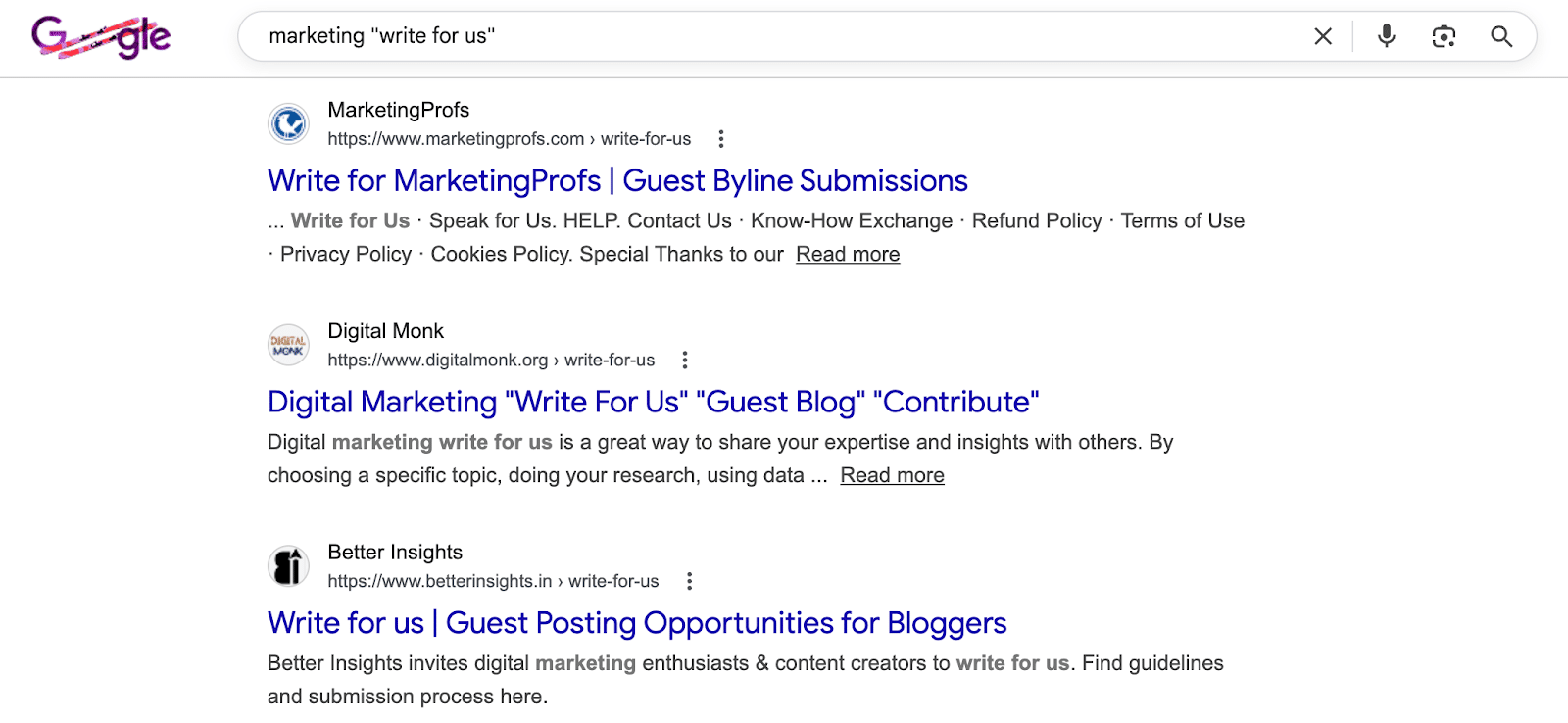
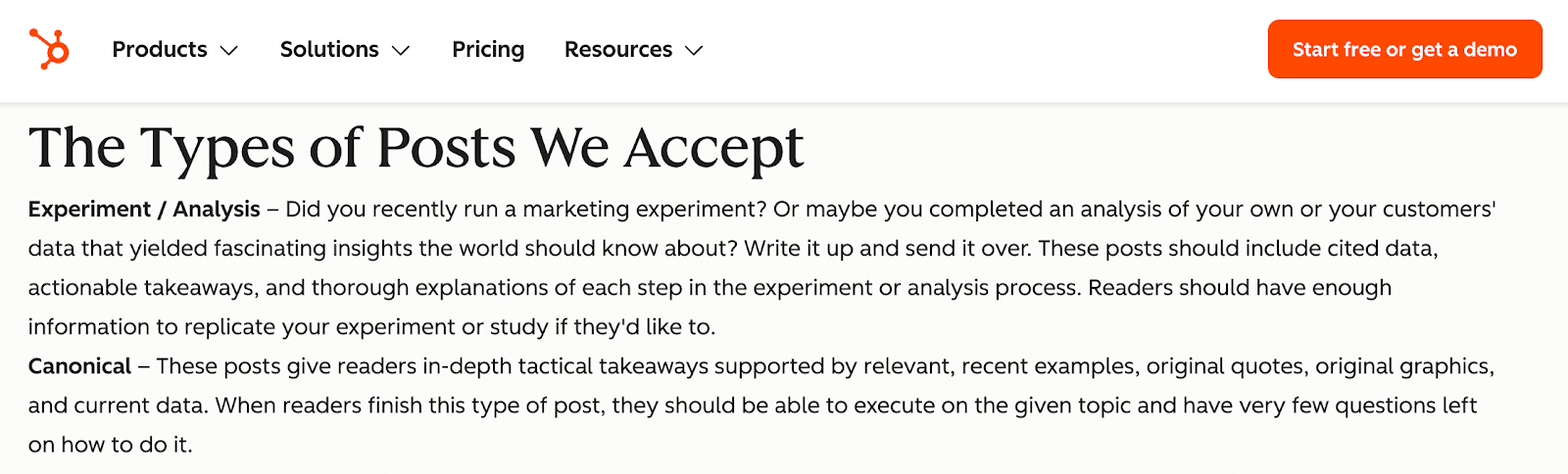
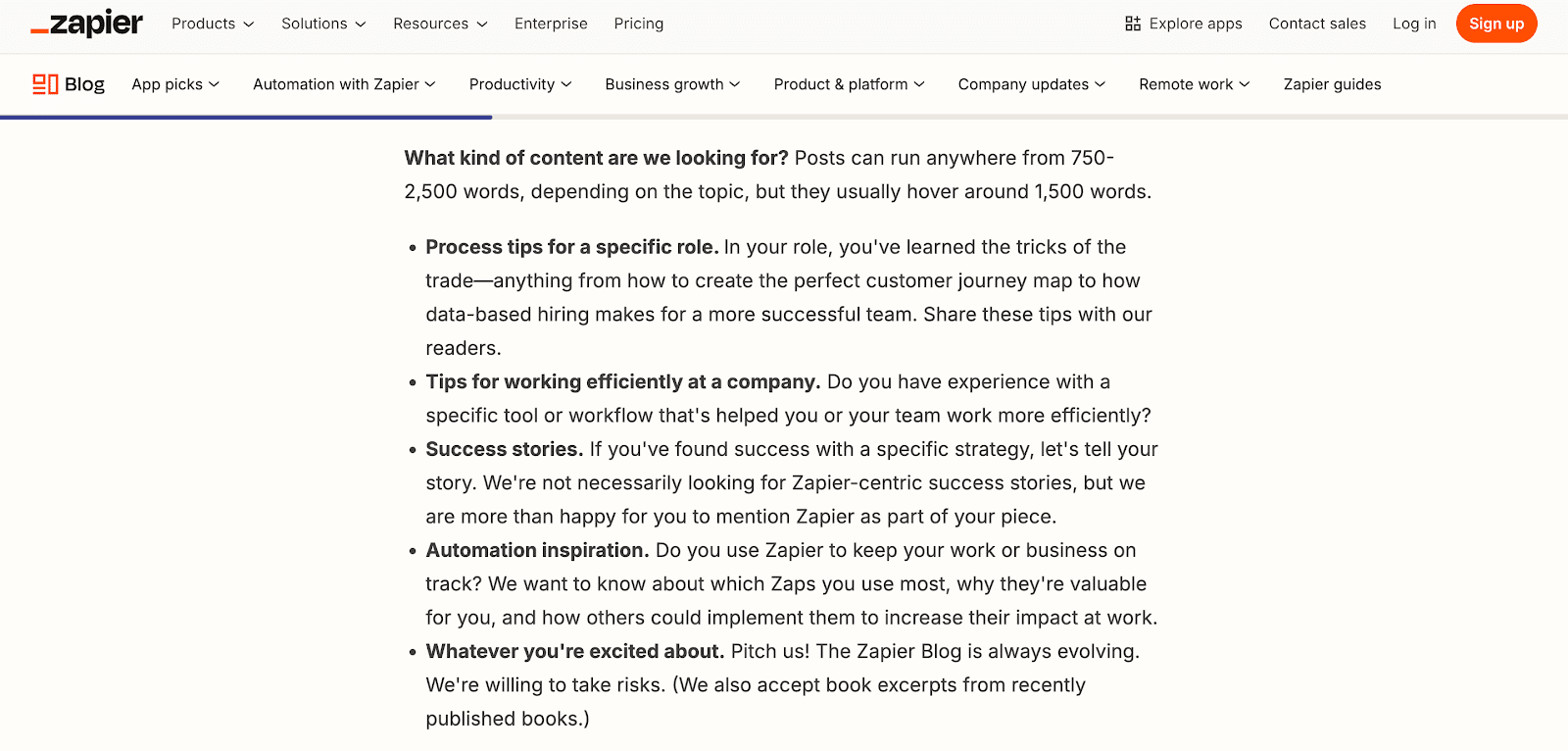
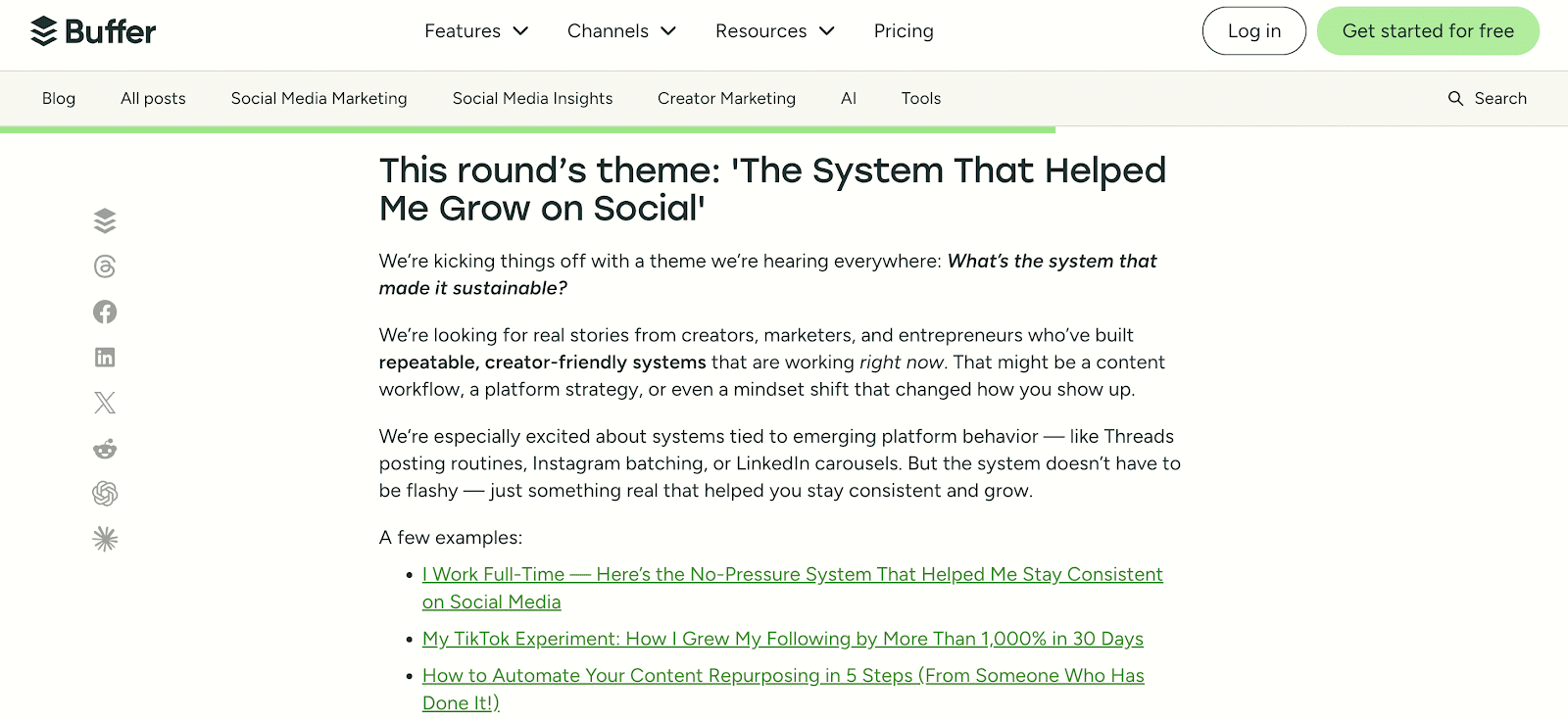
The simplest method is to search for your niche accompanied by phrases like “write for us” to discover potential websites.
Many reputable websites openly accept guest posts with established approval processes you can find online. This was precisely the approach I used to get published on G2’s Learning Hub.
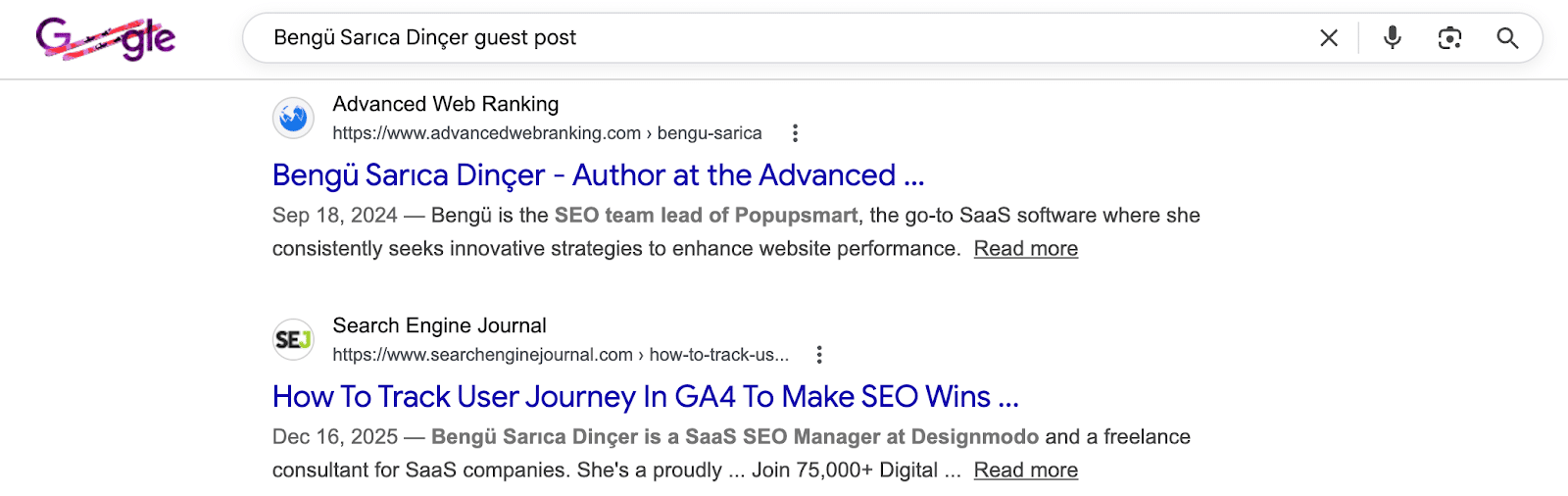
Alternatively, by searching the name of a prominent individual in your niche paired with keywords like “guest post” or “guest author,” you can identify websites that have previously accepted guest posts and might do so from you.
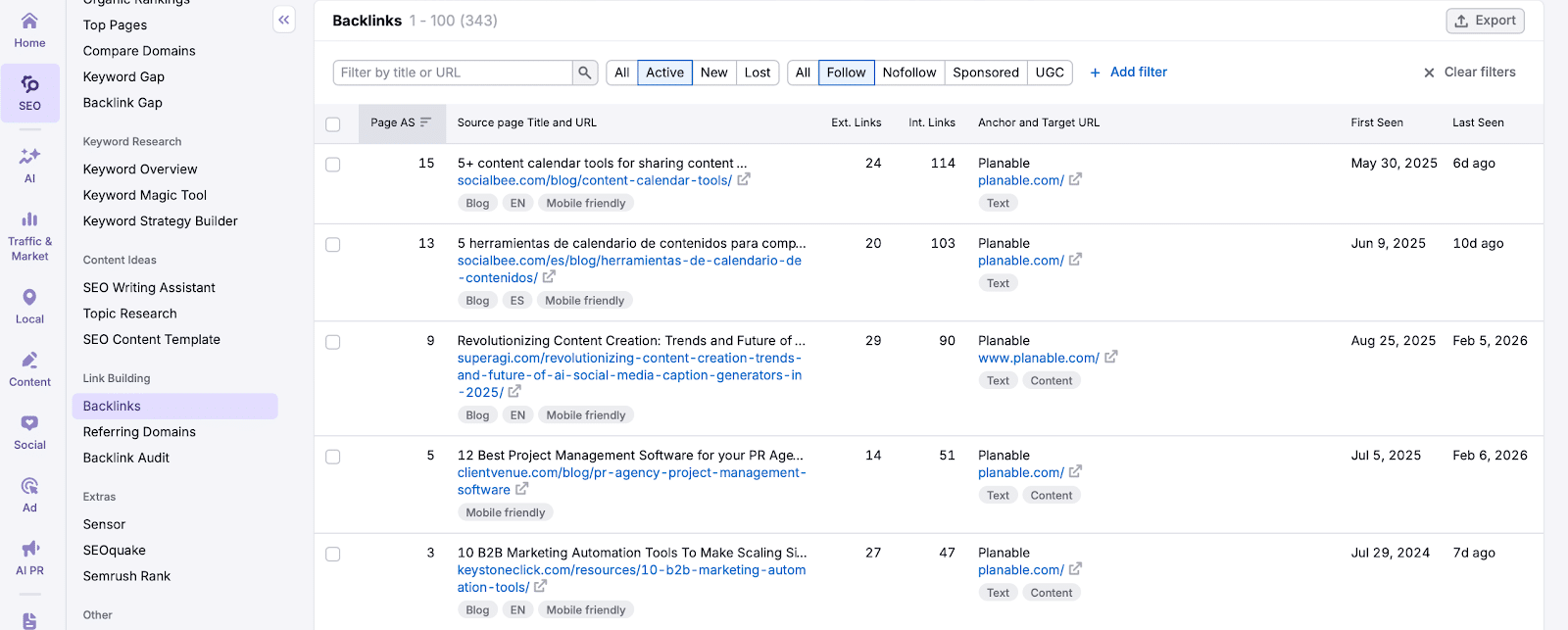
You can also explore competitors’ backlink profiles via an SEO tool like Semrush under the ‘Link Building’ section.
Verify if these websites have a history of publishing content from guest authors. If they predominantly feature in-house content and you’re not a big name in the industry, your pitch may not stand out.
Once you’ve compiled a list of potential sites, assess them against your website quality criteria, considering factors such as niche, top pages, organic traffic trends, and authority scores. Automation tools can optimize this step for efficiency.
Step 2: Find the Right Contacts
Successful guest post outreach hinges on contacting the right individual. Most emails get ignored if irrelevant, so identifying the appropriate contact is crucial.
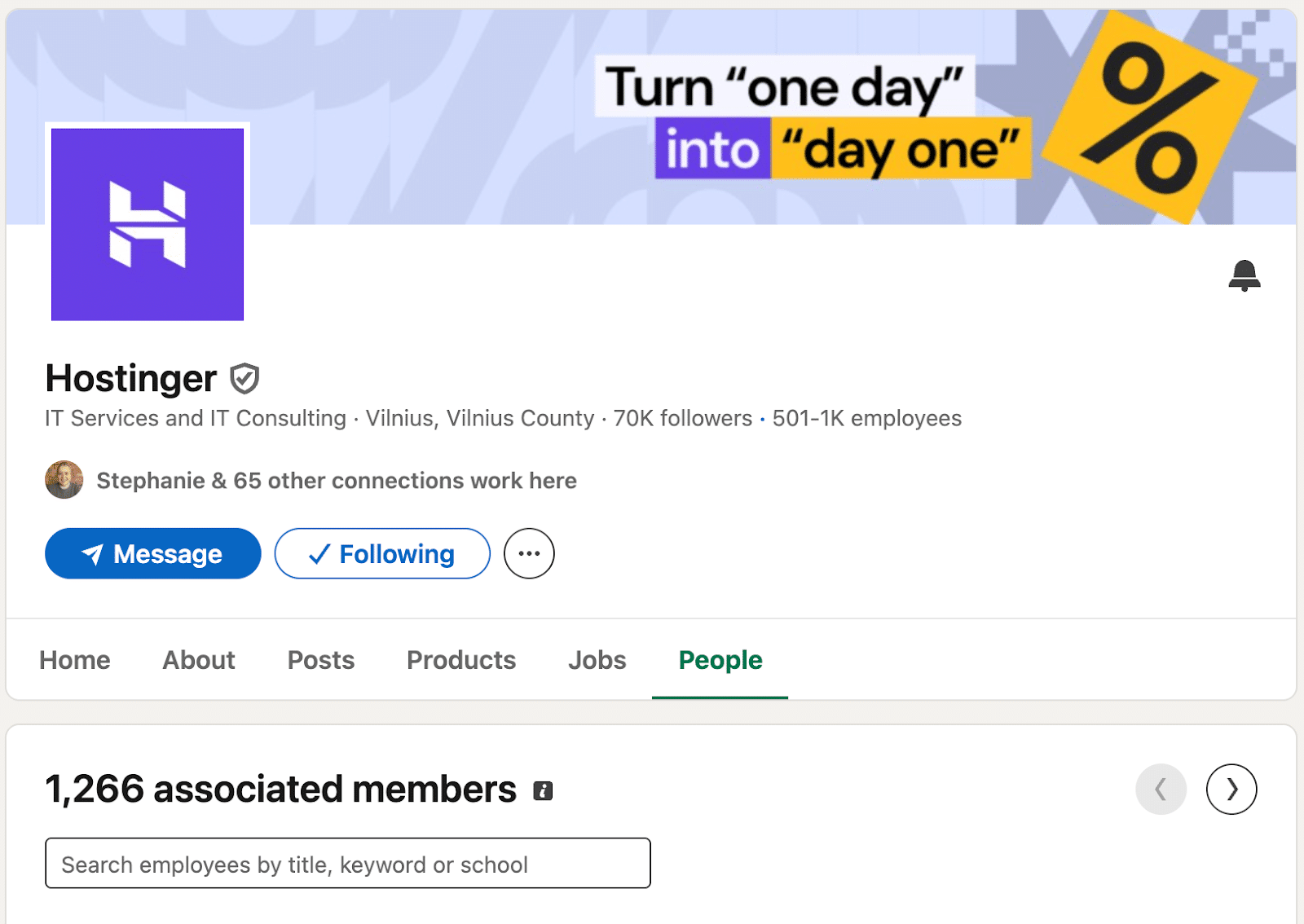
To find the right person, start with LinkedIn:
Visit the company profile and navigate to the People tab.
Filter profiles using relevant keywords to find someone responsible for content decisions, typically a content manager or editor.
In smaller organizations, targeting individuals with “marketing” or “growth” roles can be effective, sometimes the founders in micro companies.
Use tools like Apollo or Hunter to locate the work email of your identified contacts.
Occasionally, you might only find generic emails like contact@ or support@, which can still be suitable in certain niches, especially in B2C contexts.
Verify all email addresses to maintain a good sender reputation and ensure inbox deliveries.
Step 3: Choose Your Outreach Approach
When it comes to guest posting outreach, you can take one of two primary approaches.
Send Out a Generic Email Template with Basic Personalization
This involves asking whether the website accepts guest contributions, allowing you to focus primarily on building your outreach list without extensive personalization.
Emails here are minimally personalized, usually only including the recipient’s name and company, resulting in moderate reply rates.
To be effective, a large list is crucial since you need a 3% to 5% reply rate to secure enough opportunities.
Hyper-Personalize Your Emails
This approach offers distinct propositions to each company, requiring more time for research but yielding a higher reply rate—around 19%, from my experience.
It’s best when dealing with a concise outreach list or when contacting high-profile sites.
Step 4: Research the Right Topics
Regardless of your approach, pitching the right topic is paramount. Basic personalization involves suggesting topics post-reply, while hyper-personalized emails propose them from the get-go.
Top-tier sites have stringent requirements; finding their editorial guidelines is crucial to align your pitch.
For instance, HubSpot only accepts content like marketing experiments or in-depth guides. Meanwhile, Zapier demands industry-specific experience for contributions.
Moreover, Buffer opens guest posting rounds for specific themes, streamlining their editorial process. Adhering to such criteria significantly improves your pitch’s success rate.
Keep in mind that some editors maintain a list of sought-after topics, which they might share with potential contributors.
How to Do a Keyword Gap Analysis with Semrush
If I aim to pitch to monday.com, here’s my approach:
Open Semrush’s SEO tools and go to Keyword Gap. Enter the URL of monday.com’s blog along with competitors’ URLs, and hit Compare.
Filter these keywords to spot ones where competitors rank in the top 100 but your target doesn’t, revealing gaps you can fill.
Assess the relevance and complexity of these keywords against your expertise. For example, “what is time boxing” might be too competitive, but less contested terms could present viable opportunities.
Check if the target site is already optimizing for your chosen keywords by using the “site:” search operator in Google.
Propose 3-4 varied topics to ensure one aligns with the editor’s needs. A diverse proposal increases your acceptance odds.
Step 5: Create Your Extra Value Proposition
Your additional value proposition is about showcasing what else you bring to the table, beyond content.
Have you authored notable industry content?
Can you promote content to a substantial social media following?
Do you manage a newsletter with a relevant audience?
Are you part of a community interested in the topic?
For instance, I might mention my 11,000 LinkedIn followers, predominantly industry professionals, when pitching to a project management blog, highlighting the relevance of my audience.
Step 6: Prepare Your Emails
Crafting your outreach emails involves attention to the subject line, email body, and follow-ups.
The subject line entices recipients to open your email; the body secures replies, and follow-ups increase your chances of a response.
BuzzStream suggests a few best practices for subject lines:
They should contain 9-13 words and over 71 characters.
Emojis can enhance engagement.
Mentioning the website, not the person, proves effective.
Title case outperforms sentence case.
Email bodies should be concise and easily digestible since editors favor brevity due to their busy schedules.
Follow-ups are critical; data show that follow-up emails generally increase overall response rates significantly. Limit yourself to two follow-ups to avoid being perceived as too pushy.
Step 7: Send Your Outreach Emails
It’s finally time to dispatch your emails. Here’s what you need to know:
Send Days
Research shows the best day to send emails is Monday, followed by Tuesday and Wednesday due to higher open and response rates.
Send Times
Aim to dispatch emails before 12 p.m. local time for your recipient, aligning your timing with their work schedule.
Unsubscribe Option
Always include a clear way for recipients to opt out. This will help maintain a good sender reputation and avoid being marked as spam.
Step 8: Track and Adjust
Utilize outreach tools to track open, reply, and success rates, offering insights into your campaign’s effectiveness.
Open rate shows how many recipients opened your emails, influenced by your subject line and sender reputation.
Reply rate indicates the percentage who responded, driven by your email’s relevance and content.
Success rate tracks emails leading to published guest posts, dependent on topic selection and following editorial guidelines.
Run A/B tests to explore what works best. Keep variables minimal to accurately measure impact—adjustments can lead to better success rates.
Step 9: Build Relationships with Editors
I’ve published over 350 guest articles, many through building and maintaining strong relationships with editors. Quality work fosters ongoing collaborations.
I use keyword gap analysis to ensure proposed topics offer potential for traffic, simplifying future pitches.
To secure lasting editor relationships:
Deliver exceptional content: Meet search intent with original visuals and expert quotes.
Support post-publication: Promote through your channels and link to it in other works.
Be reliable: Communicate clearly, respect guidelines, and meet deadlines consistently.
My Guest Posting Email Template with an 18% Success Rate
This template has been pivotal to my success:
Subject: Fresh content ideas for [Company Name]
Hi [First Name],
My name is [Your Name], and I’m the [Your Job Title] at [Your Company].
I’d love to contribute articles to [Company Name]’s blog. I have extensive industry experience from projects with [Brand 1] and [Brand 2].
Topic Ideas:
[Proposed Article Title 1]: keyword, US search volume [volume]
[Proposed Article Title 2]: keyword, US search volume [volume]
[Proposed Article Title 3]: keyword, US search volume [volume]
View my LinkedIn for more on my expertise or check my work published by [Publication 1], [Publication 2], [Publication 3].
Upon publication, I can promote it to my audience of [audience size or description].
Looking forward to hearing your thoughts.
[Your Name]
Guest Blogging Caveat
Your author profile significantly impacts your success rate. Newcomers should start with smaller industry blogs to build a portfolio, making later pitches more enticing to editors.
As your portfolio grows with contributions to recognized sites, your credibility and success rates naturally improve.
Ultimately, investing in your author profile is the key to thriving in guest blogging.