I remember the days when a Google search was akin to embarking on a quest for information. It was an adventure of navigating various links and forming my own opinions.
Nowadays, tools like AI Overviews, ChatGPT, and Perplexity condense all that information into a single, simplified answer. This transformation often strips away the finer details while amplifying certain perspectives.
This shift has redefined online reputation management. Now, search engines not only present information but shape the underlying narratives. This raises the stakes for brands, as even a top-ranking status doesn’t guarantee influence if AI stories tell a different tale.
For brands, the game has changed. Being number one doesn’t ensure visibility and influence anymore. The underlying narrative holds far greater power.
AI Narrative Formation: Crafting User Answers
AI platforms now utilize what I like to call ‘AI narrative formation.’ This process crafts the responses we receive from various search engines. Let me walk you through how this system works.
Source Pooling
These systems pull content from numerous sources. Contrary to expected reliance on peer-reviewed articles, they gather data from Reddit, YouTube, and social platforms like Instagram and TikTok.
Signal Weighting
Not all sources are equal. Often, a popular yet low-quality source can outweigh a singular, credible entry. A bustling Reddit thread with negative feedback might overshadow a well-researched Wikipedia page.
Narrative Compression
The summarization process compresses diverse inputs, often losing nuance along the way. Complex reputations are simplified into general statements like, ‘Users find this company untrustworthy.’
Continued Reinforcement
These summaries transcend their original context, getting shared and re-shared across social media. As these echoes return as new data, they further entrench the narratives in AI responses.
Unraveling a Finance Company’s Reputation in AI Search
To illustrate AI narrative formation, consider a recent case I worked on involving a financial company, which we’ll call Company X.
Company X’s reputation remained strong on traditional SERPs. High Trustpilot ratings and reputable endorsements were the norm until Google AI Overview threads surfaced a forgotten Reddit forum rife with grievances against them.
The AI Overview skewed the narrative, suggesting Company X had unresolved customer service issues, even though these concerns had been addressed years prior. This created a skewed perception that was hard to counteract.
The Amplified Risk from AI Searches
AI dramatically increases reputational risk through several mechanisms:
The Spread of Negative Narratives: Negative content surfaces faster and more prominently than before.
AI Hallucinations: Despite growing awareness, AI inaccuracies continue to deceive.
The Snowball Effect: Repeated narratives gain momentum, complicating reputation management efforts.
It has become evident that in ORM, repetition often overrides accuracy.
Auditing AI-Generated Narratives: A Step-by-Step Approach
Let’s consider a situation involving an AI-generated narrative challenge faced by CEO X of a well-known SaaS company.
After an out-of-context quote from CEO X’s podcast appearance went viral, AI summarized him unfavorably. Quickly, his reputation transformed negatively across major platforms.
Step 1: Mapping Queries
I initiated a process to understand what queries AI outputs were generating about CEO X. This helped identify the underlying issues.
Step 2: Capturing Outputs
Identifying repeated claims revealed how CEO X was perceived. Narratives from Google AI and ChatGPT were consistently portraying him negatively.
Step 3: Delving Through Sources
The next step involved examining the quality of sources contributing to these narratives, often outdated or lacking accuracy.
Step 4: Analyzing the Narrative Gap
This involved assessing discrepancies between AI narratives and his actual reputation, contextualizing the initial quote, and examining the long-standing perception of CEO X.
Step 5: Correcting and Replacing Sources
Finally, I focused on directly addressing, correcting, and replacing those negative narratives. This involved engaging directly with platforms that contributed to the misinformation and reinforcing positive content elsewhere.
A New Perspective: From SEO to Narrative Management
The focus has shifted from merely achieving top SEO rankings to understanding and adapting to narrative shifts. We must rethink our strategy from content engagement to managing the narratives AI disseminates.
To succeed, it’s important to reinforce AI systems with quality inputs, including crafting high-quality content, pursuing credible mentions, disseminating structured data, and managing misinformation directly.
According to a recent, though unverified, report, Google Gemini’s AI is designed to tailor its responses based on the user’s tone, intent, and emotional context. This fascinating development suggests that the AI aligns its answers with the emotional backdrop of each query.
Why This Matters. If this information holds true, it means that the responses generated by AI might vary significantly, depending on how we phrase our queries, rather than just on the data available. This could change the way we engage with search engines.
New Findings. At the heart of this revelation is a system called upcast_info. As reported by Elie Berreby, head of SEO and AI search at Adorama, this system seems to provide the blueprint for how Gemini processes user queries, aiming to:
Reflect the user’s tone, energy, and purpose.
Acknowledge emotions before formulating a response.
Deliver answers from the user’s perspective.
Implications. Instead of maintaining a neutral stance, the AI’s responses could:
Emphasize negative perspectives (“Why is X bad?”).
Highlight positive aspects (“Why is X great?”).
Should the public sentiment toward a topic be negative, the AI might intensify that sentiment. As the report indicates:
AI mirrors prevalent emotional signals.
It doesn’t offer the balancing act usually provided by traditional search result links.
The Role of Query Framing. The emotional tone of a query can impact:
The choice of sources cited.
The style of summaries presented.
The overall tone and substance of the answers.
Google’s AI Overviews already demonstrate shifts in tone that align with the intent of queries, providing potential insight into the mechanics behind these changes.
Unsubstantiated Information. Google has yet to confirm this leak. As Berreby mentions: “I’ve decided to share just a portion of the leaked internal system data publicly. It’s not a security exploit or major breach, just a minor leak.”
I’ve noticed a significant shift in the SEO industry toward senior, strategy-focused roles. As AI increasingly handles execution tasks, the demand for seasoned strategists has grown, along with an increase in salaries and responsibilities that span multiple channels.
The change in hiring trends is evident when looking at a recent Semrush analysis of 3,900 job listings. It appears companies are now prioritizing leadership skills, innovative experimentation, and cross-channel visibility over purely technical execution.
Why it matters to me. The landscape for SEO careers and skillsets is evolving. Entry-level positions are mostly focused on execution, while leadership roles require a firm grasp of strategy across various domains such as search, AI assistants, and paid channels, ensuring they drive significant revenue.
What’s changing now. Senior roles account for 59% of job listings, clearly dominating the landscape. In contrast, mid-level positions like specialists and managers are less prevalent, with only 15% and 10%, respectively.
Companies are redirecting their budgets towards strategic roles as AI tools begin to absorb more of the technical workload.
The shift in skills. The skills in demand now extend beyond traditional SEO to include coordination, experimentation, and decision-making capabilities:
Project management is mentioned in over 30% of the listings, highlighting its importance.
Communication is highlighted in 39.4% of non-senior roles, indicating its fundamental role in the industry.
Experimentation is noted in 23.9% of senior roles, compared to just 14% of other roles.
Technical SEO appears in approximately 6% of postings, showing its niche but crucial role.
Tools and channels. The modern SEO toolkit now includes analytics, paid media, and comprehensive data tools.
Google Analytics is cited in up to 47.7% of job listings, underlining its importance.
Google Ads features in 29% of the listings, showcasing its growing relevance.
Demand for SQL skills is rising, especially at the senior level.
AI tools, such as ChatGPT, are increasingly mentioned, reflecting their future role in SEO.
AI expectations. AI literacy is shifting from being a nice-to-have to an essential skill:
31% of senior roles now reference AI capabilities.
Nearly 10% of listings highlight familiarity with LLMs.
Concepts such as AI search and AEO are increasingly common in job descriptions.
Pay and positioning. SEO is being increasingly recognized as a vital business function:
The median salary for senior roles has reached $130,000, markedly higher than the $71,630 for other roles, with some positions offering even more.
Preferred degrees are leaning towards business and marketing, reflecting the strategic emphasis.
Remote work prevalence. Remote options are available in over 40% of job listings, indicating a shift towards flexible work environments across all levels.
About the data. This analysis by Semrush covers 3,900 SEO job listings in the U.S., gathered from Indeed as of November 25. The roles were deduplicated and segmented by seniority before a semantic keyword extraction analysis was applied.
If investigative reporting disappears from Google after a copyright complaint, treat it as a two-track incident. You need to preserve the record showing how the work was created while identifying the precise route for restoring lawful visibility. Rewriting the page, replacing files, or accusing the claimant in public before you do either can make the dispute harder to untangle.
The risk is not hypothetical. In one documented dispute, a March 27 notice accused Search Engine Land of copying text verbatim and using proprietary images, after which Google removed the affected URL from search results. Clickout Media’s alleged transformation of news sites into AI-driven gambling platforms was the investigation’s subject. The important operational lesson is that a copyright allegation can interrupt distribution before the underlying merits have been publicly resolved.
Confirm what was removed before arguing about why
A search delisting, hosting takedown, CDN block, CMS suspension, and deleted page are different failures. They affect different surfaces and require different remedies. Do not describe the reporting as “taken down” until you know which system stopped serving or surfacing it.
Preserve the notice exactly as received. Save the message body, attachments, raw email headers, claimant details, alleged copyrighted work, disputed URL, case number, and receipt time. Export the platform dashboard entry as well as taking screenshots.
Test the direct URL. Record whether it loads, redirects, returns an error, or displays a platform warning. Save the response code, page source, screenshot, and test time. A page that remains directly accessible but is absent from search has a different recovery path from one removed by its host.
Check each discovery surface separately. Inspect Google results, Google Search Console messages, the XML sitemap, internal links, news or topic hubs, syndication copies, and any platform-specific index. Search results vary, so the absence of a result in one manual query is not enough by itself to establish a formal removal.
Identify the decision-maker. Determine whether the action came from the search engine, hosting provider, CDN, registrar, CMS vendor, social platform, or another intermediary. Send a response to the organization that can actually reverse the action.
Freeze mutable evidence. Export the published page, CMS revisions, drafts, source notes, media files, metadata, and rights records before changing anything. Make a read-only archive and record checksums for important files so later changes can be detected.
Create one incident record with the disputed URL, notice identifier, affected services, first observed time, current page status, response deadline, internal owner, legal owner, and every action taken. This prevents editorial, SEO, engineering, and legal teams from creating conflicting versions of events.
Do not evade a removal by immediately cloning the page to a new URL. That can multiply the disputed URLs, confuse canonical signals, complicate the evidence trail, and create additional legal exposure. Preserve first, then decide what may lawfully remain available with qualified counsel.
Build an allegation-by-allegation evidence packet
A notice is not proven false merely because its timing looks suspicious or its effect is damaging. Treat “false,” “mistaken,” “unsupported,” and “abusive” as different conclusions. You need testable contradictions: the cited words do not appear on the page, the image was licensed, the claimant has not established ownership, the chronology is impossible, or the notice identifies the wrong URL.
Question to test
Evidence to assemble
What the response should show
Was text copied verbatim?
Draft history, reporter notes, source links, timestamps, and a side-by-side comparison of the exact passages
Which words are actually shared, where they appear, and whether the notice accurately describes the overlap
Was an image used without permission?
Original file, creator identity, license or assignment, receipt, attribution record, metadata, and the terms captured when the asset was obtained
Which image is disputed and the specific basis on which it was published
Does the claimant control the asserted rights?
The work identified in the notice, its URL and publication date, the claimant’s stated relationship to it, and any ownership records supplied
Whether the notice connects the claimant to the particular material at issue
Which service restricted the page, when it happened, and whether the restriction is still active
What changed after publication?
CMS revisions, media replacements, redirects, correction notes, deployment logs, and editor approvals
A clean chronology that distinguishes the original publication from later edits
Keep the evidence factual and compact. A platform reviewer should not have to infer your rebuttal from a folder of unrelated screenshots. Number each allegation, quote only the minimum text needed to identify it, attach the corresponding proof, and state the requested remedy for that allegation.
Preserve unfavorable evidence too. If an image license is ambiguous or a passage is closer than expected, hiding that weakness will not improve the legal position. Flag it for counsel and separate it from allegations you can disprove cleanly. A mixed notice may contain an unsupported claim alongside a genuine rights problem.
Choose the response path with counsel, not by reflex
The fastest-looking option is not always the safest one. An informal correction request, platform appeal, asset replacement, negotiated resolution, and formal counter-notice carry different consequences. The right route depends on who acted, what the notice alleges, whether the material remains online, and what your evidence establishes.
Start with a precise administrative response when appropriate
If the platform offers an appeal or reinstatement process, answer the notice rather than the suspected motive behind it. A useful submission contains the case identifier, exact URL, current status, a numbered response to every allegation, supporting records, the requested action, and a contact authorized to handle follow-up.
Avoid a long defense of the investigation’s public importance as a substitute for copyright evidence. Public-interest reporting may explain the stakes, but it does not by itself resolve who owns an image or whether wording was copied. Lead with the evidence that answers the claim.
Treat a counter-notice as a legal act
A formal counter-notice is not an ordinary customer-support reply. Depending on the process, it may require legal declarations, identification details, and consent connected to jurisdiction. An inaccurate submission can create exposure beyond the original search problem. Have qualified copyright counsel review the notice, the evidence, the governing procedure, and the final language before filing. If the publisher, claimant, or platform is outside the United States, counsel should also confirm which law and process actually apply.
If you discover a genuine asset problem, preserve the original state before removing or replacing the asset. Record what changed, when, why, and who approved it. Let counsel decide whether any accompanying statement could be interpreted as an admission.
Keep the public statement narrower than the evidence
You can accurately say that a notice was received, a URL was affected, the claim is disputed, and a review or appeal is underway when those facts are documented. Do not label the claimant fraudulent, corrupt, or criminal merely because the notice appears weak. Those are separate allegations with their own evidentiary and legal risks.
Coordinate the public statement with the formal response. A social post written in anger can contradict an appeal, disclose material intended for counsel, or lock the publisher into a conclusion before the evidence review is complete.
Protect search and AI visibility without compromising the dispute
Availability and discoverability are separate. A page can remain live for direct visitors while losing search distribution, which can also reduce the chance that search-connected AI systems retrieve or cite it. Recovery work therefore needs legal, technical, editorial, and communications owners working from the same incident record.
Keep the established URL stable when publication remains lawful. Avoid unnecessary slug changes, redirect chains, or duplicate copies. Continue linking to the URL from relevant author, topic, and investigation pages unless counsel or the serving platform requires otherwise.
Record every post-notice change. If wording, images, metadata, canonicals, redirects, or access controls change, preserve the previous state and log the reason. Silent edits blur the chronology that reviewers and counsel may need.
Make authorship and publication data explicit. Accurate Article or NewsArticle structured data can identify the author, publisher, publication date, modification date, headline, and canonical page for machines. Schema helps systems interpret those public assertions; it does not prove copyright ownership, invalidate a notice, or guarantee restoration in search or an AI answer.
Use only lawful distribution paths. Keep newsletters, feeds, archives, and authorized syndication copies functioning where rights and contracts permit. Do not create mirrors solely to route around a restriction.
Monitor the actual failure mode. Track whether the direct page loads, whether the platform case changes, whether Search Console reports a new status, and whether the canonical URL returns to relevant results. A ranking fluctuation is not the same as reinstatement.
Do not promise that structured data, internal links, or republication will force a frontier model to cite the investigation. Those measures can improve machine-readable provenance and create legitimate discovery paths, but none overrides a platform’s legal process.
Make the next incident easier to defend
The strongest preventive control is not a disclaimer. It is a publication record that can be assembled before a notice arrives. For investigative work, retain source notes, timestamped drafts, editorial approvals, original media, licenses, attribution decisions, screenshots of asset terms, correction history, and deployment records under a defined retention policy.
Create a dedicated intake address for copyright notices and route it to editorial, legal, SEO, and engineering owners.
Use a standard incident template containing the notice ID, claimant, asserted work, disputed material, affected URL, platform, deadline, evidence owner, legal status, search status, and approved public language.
Require provenance records for every non-original image, chart, document excerpt, and embedded media item before publication.
Keep CMS revision history and media replacements attributable to named users rather than relying on shared accounts.
Prepare platform-specific access instructions so the person handling the incident can reach hosting, CDN, Search Console, analytics, and syndication records without waiting for credentials.
These controls will not prevent someone from filing a questionable notice. They reduce the time spent reconstructing authorship, rights, and platform status after the reporting has already lost distribution.
Key takeaways
Confirm whether the page was deleted, blocked, deindexed, or merely absent from a particular query before choosing a remedy.
Preserve the notice, published page, drafts, source records, media provenance, platform messages, and technical status before making changes.
Rebut each allegation with matched evidence; suspicious timing alone does not establish that a DMCA claim is false.
Have qualified copyright counsel review any formal counter-notice or response that could create legal exposure.
Keep lawful URLs and provenance signals stable, but do not clone pages or use schema as a way to evade a platform restriction.
Your first objective is a clean factual record, not the loudest rebuttal. Once that record exists, counsel can choose the legal route, the platform team can request the correct remedy, and the SEO team can restore discoverability without creating a second problem.
I’ve got some exciting news to share—Reddit has just opened up its Pro publishing tools to all publishers! No more waiting lists. Now, anyone can dive into the public beta and ramp up their content distribution and engagement strategies, all for free.
Why this matters to us. Reddit Pro offers me a centralized hub to monitor where my content spreads, simplifying my posting process, and helping me pinpoint the right communities to engage with. It’s transforming Reddit from being a place of manual posting to a well-organized distribution channel.
Here’s the scoop. I can now easily sign up for Reddit Pro, verify my domain (usually within three business days), and jump into the Links tab. With Reddit Pro, I can:
Keep track of where my content is shared all over Reddit.
Quickly auto-import articles through RSS, speeding up my posting.
Receive AI-powered tips on the most relevant communities to connect with.
Reddit has also rolled out some features based on early adopter feedback:
Community snapshots that display rules, stats, and top discussions.
Community notes that let me track strategy and context over time.
By the numbers. Back in 2025, Reddit revealed there were over 55 billion views of publisher-related discussions. Since some publishers started testing in September, they saw:
A 46% uptick in median post views.
An almost doubled amount of profile views.
A 48% climb in median comments.
What else to look forward to. Reddit is also expanding profile flairs to every Pro user. This means I can organize posts on my profile, making it easier for users to browse my coverage and get involved with stories.
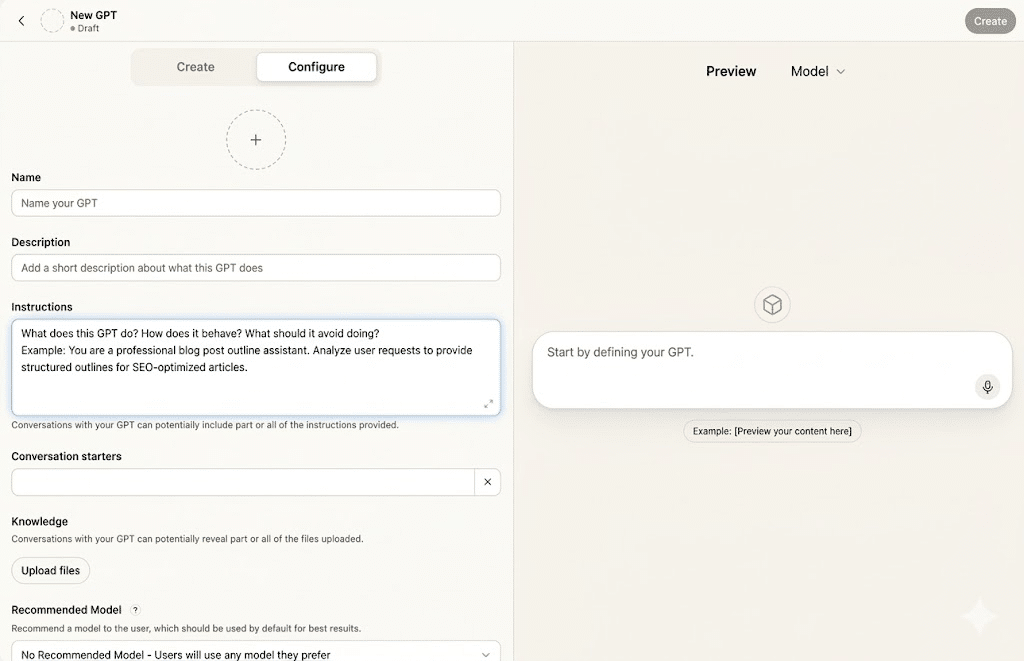
Have you ever wondered why most GPTs in businesses fail to be truly effective? It’s often because they are either too broad or haven’t been properly tested. Allow me to guide you through building focused, high-ROI GPTs that your team will not only adopt but use consistently every week.
The OpenAI GPT Store made waves in January 2024 with its launch, hosting over three million custom GPTs. But, if you ask teams how many they actively use, the answer tends to be disappointingly low, often zero or just one.
I’ve personally built and audited over a dozen custom GPTs for marketing, SEO, and sales teams. The pattern is consistent: only a select few are used daily, while the rest simply collect dust. Let me share with you a practical approach to crafting GPTs that your team will genuinely engage with—from identifying suitable use cases to structuring, testing, and launching them effectively.
If you’re eager to dive in, start with these foundational steps: Choose a task your team performs at least three times a week, typically taking over 15 minutes. Articulate this in a simple sentence: ‘This GPT helps [role] do [task] by [method].’
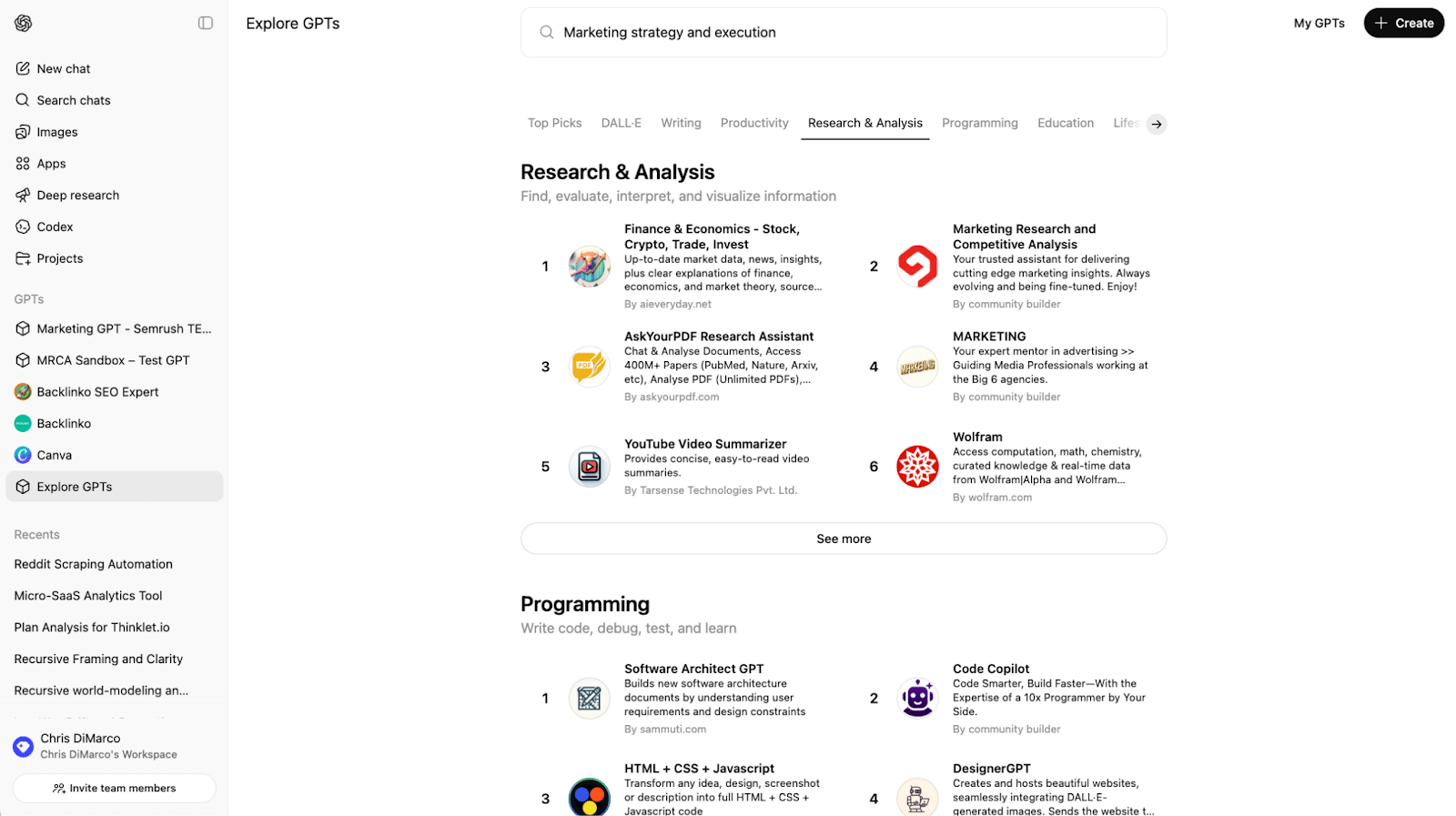
For a deeper understanding, I recommend checking out Marketing Research & Competitive Analysis or MARKETING, both highly ranked in the GPT Store’s Research & Analysis category. These projects showcase the build patterns I’ll cover here.
Now, let’s discuss what a business GPT truly entails. Unlike a generic AI assistant, a business GPT is a custom version of ChatGPT designed to handle one specific, recurring task for a particular role. Think of it like hiring a highly specialized worker for a job, rather than a generalist who does a little bit of everything.
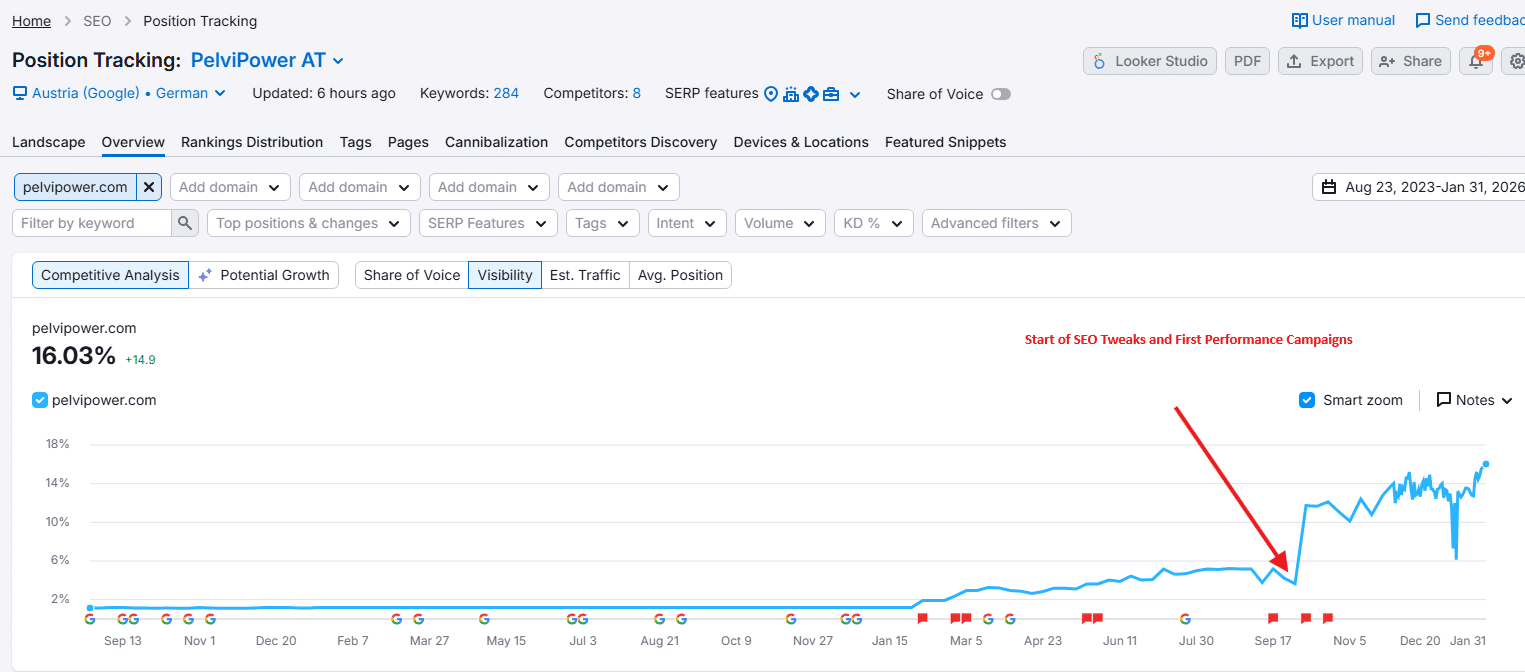
I took our SEO to a whole new level, and the results were astonishing. From just $12K in ad spend, we skyrocketed to $1.6M in revenue. Let me share how building authority, optimizing conversion signals, and setting up CRM feedback loops made our PPC scalable.
You might already be familiar with how important SEO is for improving traffic and authority, but what isn’t discussed enough is its impact on other channels like PPC. This case study reveals how we scaled performance marketing in the high-consideration B2B medical device market by nailing our SEO fundamentals.
Marketing a premium pelvic floor chair isn’t your typical ad campaign. This device has a lengthy sales cycle and relies heavily on medical expertise. Our customers range from doctors to physiotherapists, all of whom demand reliable clinical evidence and credibility.
In markets like ours, when common performance tactics fell short, building credibility and authority was key. Without trust in our products and services, performance simply couldn’t scale. I’ve learned that no optimization works without it.
Starting 2023, our Google Ads campaigns were launched with limited SEO. The lack of optimization led to underattribution and resulted in a minimal scaling effect. We also dealt with delays in Google Ads bidding algorithms due to conversion tracking issues.
Despite these challenges, early campaigns confirmed there was a demand. I realized that fixing the surrounding system was necessary to capitalize on this potential in the long run.
By mid-2024, I shifted the focus to treating SEO as a central part of our revenue strategy rather than an additional enhancement. Rather than chasing quick rankings, we prioritized building authority in pelvic health. Our strategy involved educational content, mapping out the entire informational landscape around pelvic health issues.
Our shift paid off. We invested in long-form content, structured it well, and embedded supporting visuals. This approach transformed us into a trusted resource over time and improved our credibility, which is essential in medical markets.
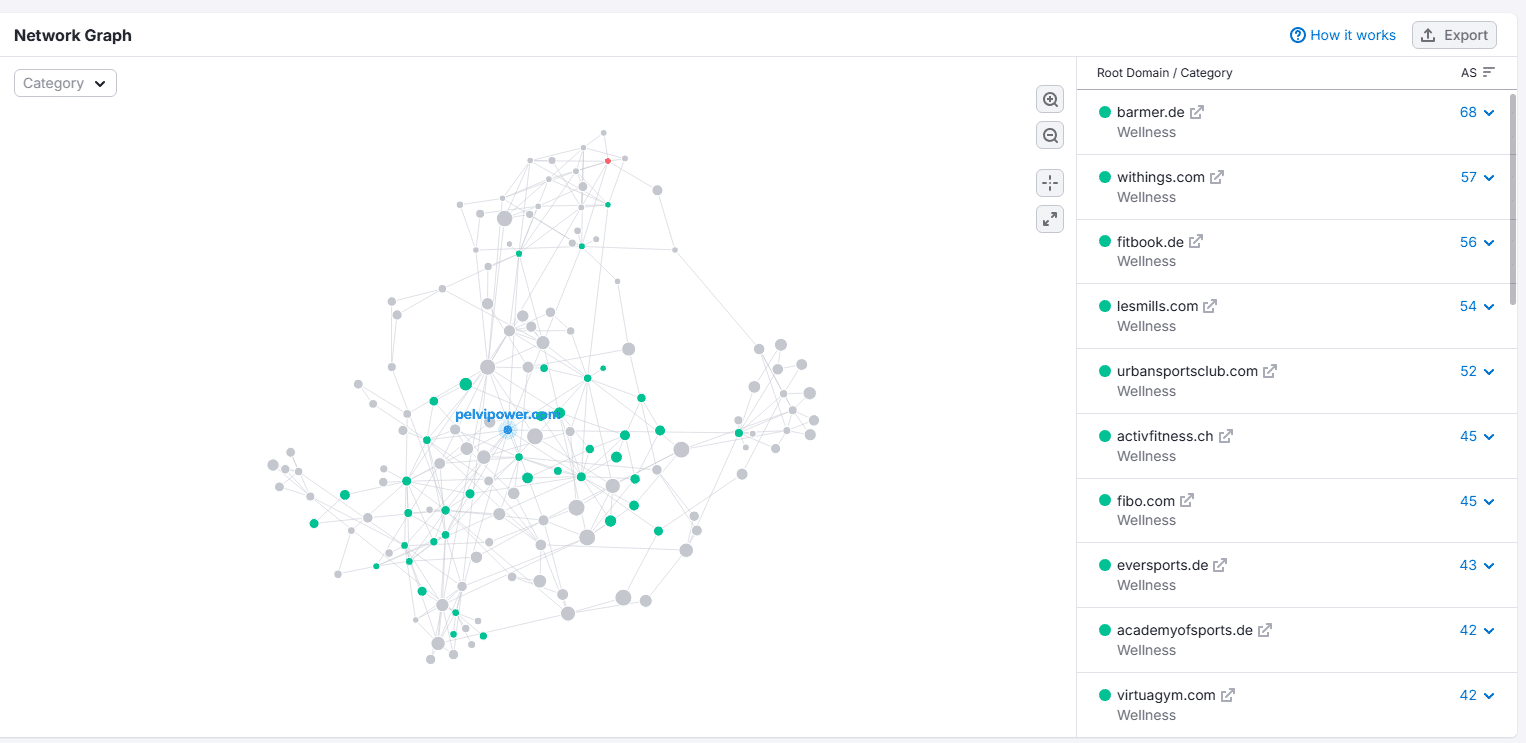
Our biggest success came from leveraging partnerships with clinics and medical professionals. Providing ready-to-use content allowed us to establish valuable backlinking opportunities in exchange for using our resources. These links enhanced our visibility and authority in healthcare sectors.
Ultimately, this strategy resulted in a manifold increase in referring domains and significantly boosted our topical authority. Our backlinks were closely aligned with Google’s assessment of expertise and trust.
By late 2024, our top rankings for crucial keywords like ‘Beckenbodenstuhl’ clearly demonstrated our growing organic visibility. Prospects repeatedly encountered our brand in their research phase, reinforcing trust even before they saw our ads.
Our organic presence also reshaped how users engaged with our ads. Familiarity bred trust, and many users chose our advertisements due to previous organic encounters. This effect was even more pronounced in competitor-specific campaigns, where we achieved high click-through rates.
Improving conversion tracking was the next game-changer. Moving away from standard GA4-imported conversions to GTM-native events allowed us to get faster and cleaner signals, optimizing bidding algorithms effectively.
Integrating our HubSpot CRM closed the loop between marketing and sales. We tracked not only the quantity of leads but also their quality, feeding this data back into our Google Ads to optimize really meaningful outcomes.
With $12,000 in ad spend during 2025, our integrated SEO and PPC strategy led to impressive growth. In just two years, we observed a 140% sales increase from 2023-2024, followed by another 79% in 2025. This equated to a fourfold growth in our sales volume fueled by digital marketing.
The key to scaling PPC lies in trust and quality signals, underscored by sound SEO practices. It’s not about one-off optimizations but a holistic system that includes aligned SEO, precise tracking, and insightful CRM feedback.
Complex markets don’t fail because the strategies are wrong; they fail due to incorrect assumptions about simplicity solving complexity.
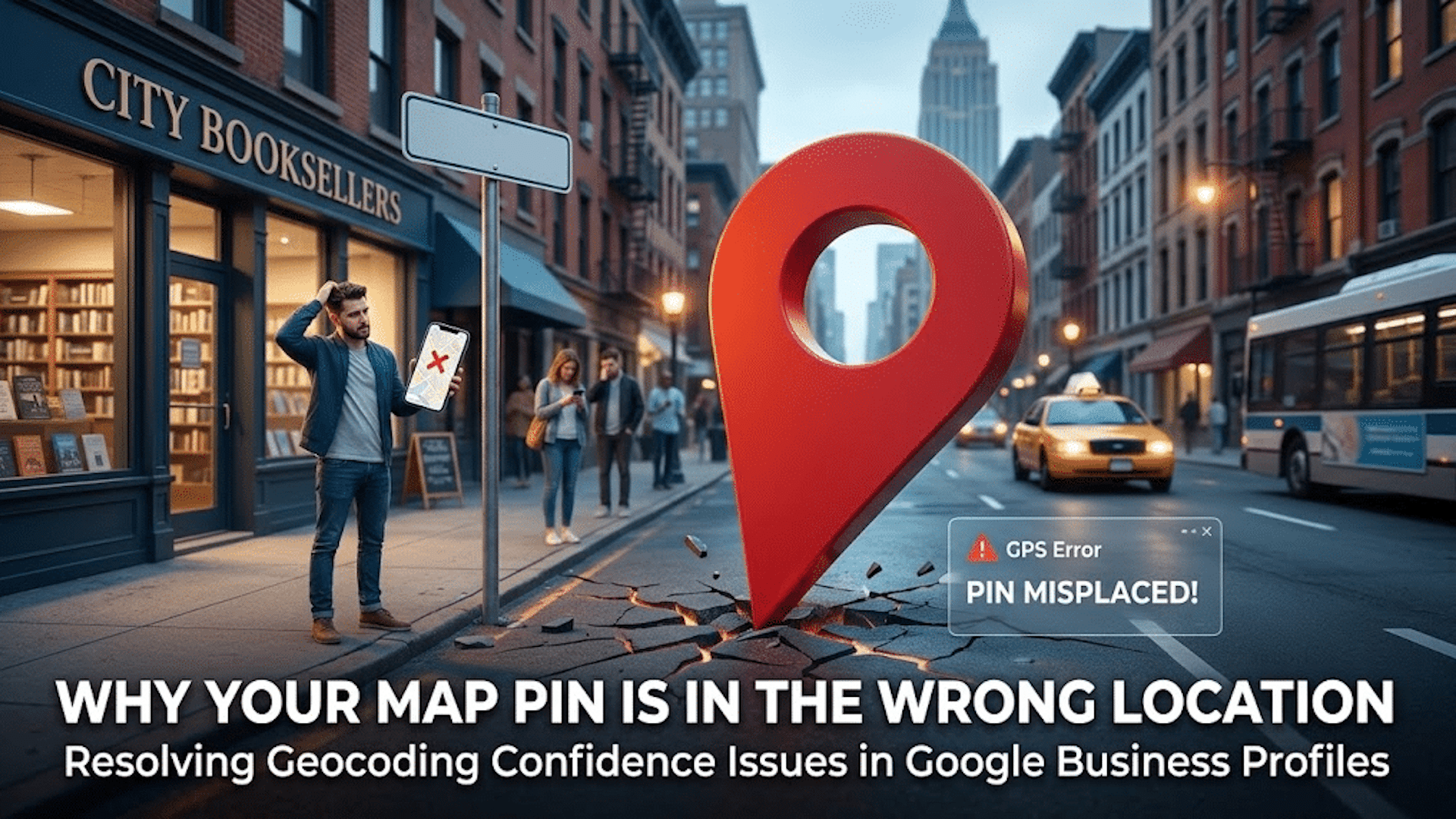
Your local business rankings might be suffering, and surprisingly, it could all be due to your map pin. Google’s placement of your business on their map significantly impacts your visibility, and addressing hidden addresses and setup issues is crucial.
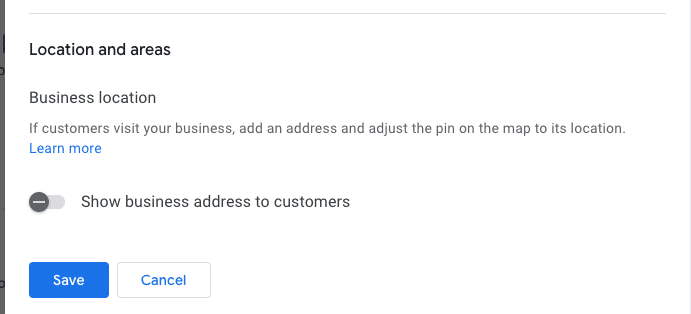
I’ve often found myself engrossed in the ongoing debate within the local SEO community about the ‘hide address’ toggle for service area businesses (SABs). Many business owners consider this option a mere privacy setting, but it’s much more—a decision that affects how Google’s algorithm perceives your physical relevance.
Here are some questions to consider:
Does your defined service area affect your ranking?
Does hiding your street address impact your visibility in the local pack?
Is Google erasing that data, or does your map pin become an invisible anchor?
These are foundational questions in understanding how proximity works when you choose to ‘hide’ on the map.
How Google Determines Your Map Pin
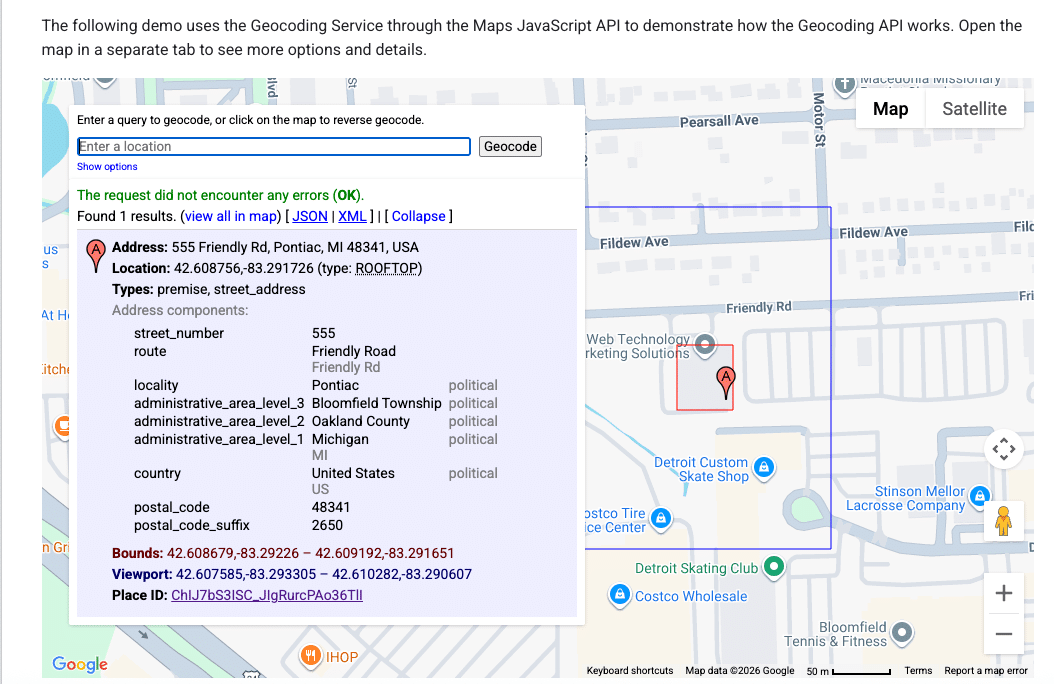
It’s essential to know that your address and map pin are not the same. Entering an address into your Google Business Profile doesn’t just place a pin; it’s processed through Google’s geocoding engine, comparing it against their database.
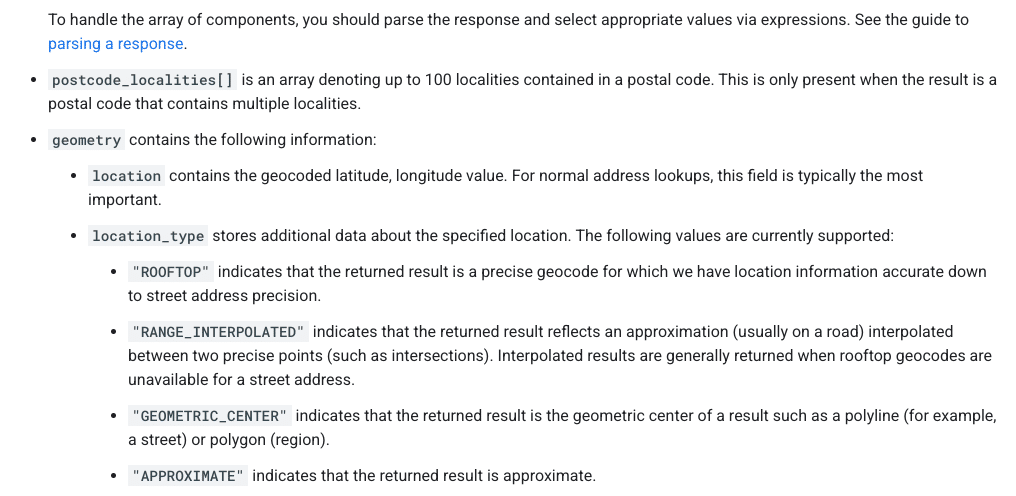
Understanding Google’s data models is key to understanding why your pin might be misplaced:
When Google finds a reliable match, they place your pin accurately at your building’s rooftop. Understanding how these data models work can help explain why SABs sometimes rank differently in local searches.
Is Your Map Pin Placement Accidental?
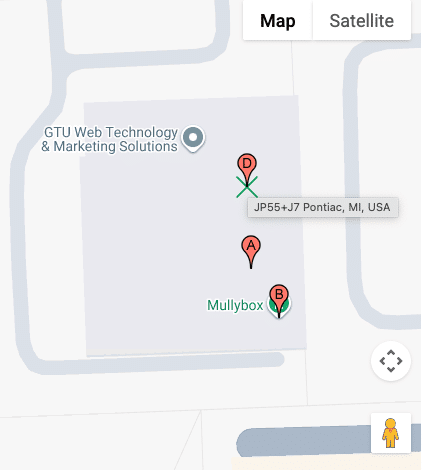
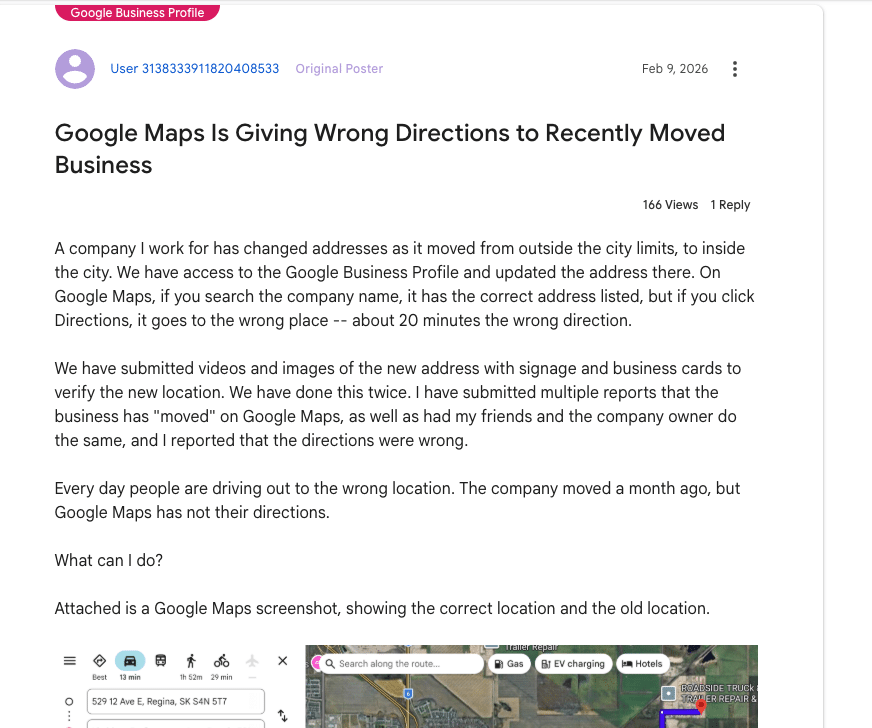
Don’t be mistaken, it’s not a bug but a failure in converting text to precise map coordinates. When this fails, your business may end up with a map pin that’s misplaced, affecting your local ranking authority.
When unable to secure a high-confidence match from your building, Google defaults to using the city’s center as your pin’s fallback location, often causing your business to rank from a less relevant area.
Suite Number Issues
I’ve warned clients countless times about the pitfalls of including suite numbers in Address line 1. These numbers aren’t street-level data; embedding them can lead to geocoding conflicts, making your map pin default to a broader location like a city center.
Properly Anchoring Your Map Pin
For accurate map pin placement, ensure your address in Google’s system is geocoding-friendly. Keep unnecessary details out of the first address line and verify how Google reads your address using their developer tools.
When addressing geocoding problems, prepare for possible re-verification requests. Stay consistent in your corrections until Google verifies your business’s precise location.
Have you ever wondered how to set your content apart in a competitive landscape? As a content marketer, I often face the challenge of using the same tools and data sources as everyone else, like Semrush, making it hard to create truly unique content.
We are all casting our nets in the same pond, using identical resources to gather content ideas. The result? Overly similar content across the board. But there’s a smarter way.
I realized that the wealth of data about my audience and customers is a goldmine, just waiting to be mined. These insights are invisible to my competitors, as they remain untouched and underutilized within my marketing team.
I discovered how third-party tools often lead to an echo chamber of commoditized content. While essential, these tools don’t always align with what my specific audience is truly looking for, leading to a flood of generic content.
Recognizing this challenge encouraged me to tap into my own data, creating content that appeals directly to people already interested in my services.
First-party data is the information I need. It includes internal insights that only I have access to, such as site search queries, sales call transcripts, CRM data, support tickets, and email interactions.
Let’s dive deeper into why this approach is effective. First-party data is proprietary. No matter how advanced a competitor’s tools might be, they can’t access my internal data, and this gives me a unique edge.
This data reflects real buyer language, which helps me avoid assumptions based on my internal knowledge bias. I can tailor my content to match the language my audience uses.
By mapping this data to my entire marketing funnel, I fill gaps at every stage, driving not just traffic, but conversions and loyalty.
How do I turn these insights into content ideas? I start with internal site searches. Examining how visitors use my site can reveal content gaps and opportunities for new offerings.
Next, I analyze sales call transcripts and CRM data to uncover recurring themes and objections, crafting content that addresses potential buyers’ concerns directly.
My support tickets provide another source of inspiration. By identifying common customer complaints, I create resources that help both my customers and support team.
Lastly, I pay close attention to email replies and engagement metrics. Tracking which types of communication yield the greatest response helps me understand content preferences.
Embracing first-party data helps my brand stand out. While competitors can mimic my content style, they can’t replicate these unique insights. Every week, I make it a point to explore a new data set and extract fresh content ideas.
Your news site can look credible at the domain level while a growing section underneath it is serving a different business entirely. If casino pages, fabricated contributors, unexplained redirects, or generic betting copy have appeared after an ownership or commercial change, you need to determine whether you have an editorial-quality problem or a reputation-abuse problem.
That distinction changes the response. Editing a few weak paragraphs will not fix a system designed to turn inherited authority into gambling-affiliate revenue. You need to audit who controls publication, why the pages exist, where their links lead, and whether the people named on them are real and accountable.
Key takeaways
AI is usually the scaling mechanism, not the core abuse. The core problem is using a trusted news domain to rank commercially motivated pages that would struggle to earn visibility on their own.
Do not base your decision on writing style or an AI-detector score. Confirm the editorial chain, author identity, affiliate relationship, outbound destinations, ownership history, and publication pattern.
Not every gambling page on a news site is abusive. Public-interest reporting, industry analysis, and sports coverage can be legitimate when editorial purpose remains primary and commercial relationships are subordinate and disclosed.
Freeze suspect publishing before you clean up. Preserve records, classify every affected URL, remove deceptive identity claims, and address the access or contract that allowed the pages to appear.
Author schema, affiliate disclosures, or an AI label cannot rescue a page whose real purpose is to exploit the publisher’s reputation.
AI is the accelerant; inherited trust is the asset
Calling this an AI-content problem is accurate but incomplete. A new gambling site can generate just as much copy without possessing a news brand’s history, links, returning audience, or established search visibility. The valuable asset is the host domain’s reputation. AI makes it cheaper to cover more queries and replace more human work once that reputation is under commercial control.
That sequence matters because it gives you a better diagnostic question than “Was this written by AI?” Ask: “Would this page have been commissioned, placed on this domain, and promoted in this way if the domain had no inherited authority?” If the honest answer is no, investigate the business model behind the URL.
Google describes attempts to exploit an established site’s ranking reputation through scaled publishing as site reputation abuse, with manual action and removal from the search index among the possible consequences. AI use alone does not establish that purpose. A human-written casino landing page can be abusive, while an AI-assisted investigation into gambling regulation can still serve a legitimate editorial purpose. Intent, control, accountability, and reader value have to be examined together.
One documented operation does not prove that every newsroom with casino content follows the same sequence. Treat the pattern as a risk model, not a verdict. Your own CMS, contracts, author records, link destinations, and editorial decisions must supply the evidence.
Audit the publishing system, not just the prose
Start with an inventory. A handful of visible pages rarely shows the full footprint because the same operation may use directories, author archives, old templates, redirected URLs, or pages that are absent from navigation. Combine your CMS export, XML sitemaps, crawl data, server or analytics records, and Google Search Console data where you have access.
Record one row per URL with the title, topic, publication and modification dates, named author, assigning editor, content owner, template, indexability, canonical target, structured-data author, internal links, outbound domains, redirect destinations, affiliate identifiers, and current classification. Include deleted or unpublished records when the CMS retains them. Chronology often reveals the commercial pivot more clearly than any single page.
Signal
Why it deserves attention
What to verify before acting
Casino or cryptocurrency coverage expands after an ownership, contractor, or leadership change
The topical pivot may reflect a new affiliate model rather than audience demand
Acquisition documents, editorial plans, partner agreements, CMS users, and the first publication dates
Authors have thin, duplicated, or unverifiable profiles
A fabricated byline removes accountability and misrepresents who produced the page
Assignment records, employment or contributor records, editor correspondence, revision history, and identity details supplied by the person
Pages repeatedly send readers to casino offers or comparison pages
The primary purpose may be acquisition rather than reporting
Final redirect destinations, affiliate parameters, commercial contracts, disclosure placement, and who approved each domain
Original reporting is removed, buried, or replaced by templated commercial pages
The publisher’s accumulated reputation is being separated from the work that earned it
CMS revisions, backups, navigation changes, redirect maps, and archived internal records
Search visibility drops or a manual action appears
The problem may already affect the whole publishing property, not only the gambling section
The exact Search Console notice, affected patterns, index coverage, canonical behavior, and alternate URLs carrying the same material
Trace the money and every outbound hop
Review the commercial path in read-only fashion. Record the visible call to action, the first linked domain, every redirect, the final operator, and any tracking value. Do not register, deposit money, submit personal data, or bypass access controls to complete the audit. The objective is to document what the publisher sends a reader toward, not to transact with it.
Then connect those destinations to contracts and payments. Identify the legal party receiving revenue, the person who approved the relationship, the compensation model, and any intermediary that can change a destination without another editorial review. A disclosure may tell readers that a commercial relationship exists, but it does not answer whether inherited authority is being exploited or whether the destination was properly vetted.
An offshore operator is not automatically unlawful in every jurisdiction. It does create a verification burden because gambling promotion, licensing, age restrictions, and consumer protections depend on where the publisher and reader are located. Before retaining or republishing an offer, have counsel familiar with the relevant jurisdictions assess it. An SEO audit cannot make that legal determination.
Verify authorship as an accountability chain
A profile photo and biography are not enough. For each contributor, confirm who assigned the work, who created the CMS account, who edited the page, where the draft originated, who checked factual claims, and who can correct it now. A real person’s name attached without their knowledge is still deceptive. A generic “Editorial Team” byline is not a valid repair if nobody inside the organization accepts responsibility for the content.
Compare the visible byline with the Article and Person data emitted by the page. The name, publisher, reviewer, profile URL, and sameAs references should describe the same real editorial relationship shown to readers. Structured data should map accountable facts; it should never be used to manufacture an expert, disguise an affiliate, or make a synthetic persona look established.
Reconstruct the timeline and access path
Place ownership events, staffing changes, new CMS accounts, template deployments, affiliate contracts, and topic growth on one timeline. You are looking for control points: the moment a partner gained publishing access, a new section bypassed normal editing, or an outbound-link system made destinations changeable after approval.
This separates individual page defects from systemic abuse. If the same account created false authors, generated pages, and inserted commercial links, removing the URLs without revoking that control leaves the mechanism intact. If a contract grants an external party broad publishing rights, the problem may persist even after a password change.
Separate legitimate coverage from reputation exploitation
Do not bulk-delete everything containing the words casino, betting, or gambling. A news organization may have valid reasons to cover regulation, addiction, sports sponsorship, corporate results, consumer risk, crime, or technology. Destruction without classification can erase legitimate journalism, break useful links, and make later review harder.
Use the following questions as an editorial triage model. They are not a substitute for Google’s own case-specific decision or legal advice.
What job does the page perform? A reporting page helps the reader understand an event, claim, risk, or decision. An acquisition page is organized around sending the reader to an operator.
Why does it belong on this publication? Audience need, newsroom expertise, and an established coverage remit are defensible reasons. Access to a strong domain is not.
Who commissioned and controlled it? Identify an accountable editor and the editorial rationale. “The partner supplied it” is a warning, especially when the partner also benefits from clicks or losses.
What evidence is unique to the page? Look for original reporting, attributable analysis, transparent methodology, or clearly sourced facts. Generic rewrites surrounding a commercial link provide little editorial justification.
Is the author real and responsible? Confirm the person, assignment, expertise, edits, and correction path. Do not infer legitimacy merely because a profile exists.
Is monetization subordinate to editorial purpose? Commercial links should not dictate the topic, conclusion, rankings, or recommendation. Disclosure is necessary when a relationship exists, but disclosure does not neutralize a compromised purpose.
Would you publish it without search traffic or affiliate payment? This counterfactual exposes pages whose only rationale is borrowed ranking power.
Classify each URL as keep, rebuild, remove, or escalate. Keep pages with a defensible public-interest purpose and accountable production. Rebuild pages where the subject belongs but the sourcing, identity, disclosures, or commercial balance do not. Remove pages built primarily to exploit inherited reputation. Escalate anything involving disputed ownership, contractual duties, regulatory exposure, impersonation, or evidence that may need to be preserved.
An AI label does not change that classification. Neither does fluent prose. The relevant question is whether a responsible newsroom stands behind the page and can show why it exists.
Contain the abuse before attempting a ranking recovery
Containment comes first because continued publication can enlarge the affected footprint while the audit is underway. Recovery work should follow a controlled sequence.
Pause suspect publishing and link changes. Freeze the affected workflow, not the entire newsroom, unless you cannot isolate it safely. Preserve access and activity records before disabling accounts.
Create a recoverable evidence set. Back up the database and relevant files. Save the URL inventory, rendered pages, structured data, redirect chains, contracts, CMS histories, and approval records. If litigation, employment action, a regulatory inquiry, or contractual conflict is possible, let counsel set the retention process before anything is destroyed.
Remove unauthorized control. Revoke unneeded CMS accounts, API keys, deployment access, redirect management, affiliate dashboards, and shared credentials. Review scheduled jobs and integrations that can recreate deleted pages.
Apply the URL decisions. Keep legitimate reporting, rebuild salvageable coverage, and remove abusive pages. A removed page with no genuine replacement should return an appropriate not-found response. Redirect only when a truly equivalent destination exists; sending every deleted URL to the homepage hides the cleanup rather than preserving meaning.
Clean the surrounding architecture. Update menus, category archives, author archives, internal links, sitemaps, canonical tags, feeds, related-content modules, and cached versions. Check subdomains and alternate templates so the same material is not still indexable elsewhere.
Correct identity and schema. Delete fabricated profiles, restore accurate bylines, name accountable editors where appropriate, and align Article, Person, and Organization data with visible facts. Do not transfer a fake persona’s history to a new generic identity.
Address the search action shown to you. If Google Search Console displays a manual action, use the process and scope described there after the cleanup is complete. Document what caused the problem, what was removed, what access changed, and which controls now prevent recurrence.
Measure progress by more than aggregate organic traffic. Track whether removed URLs remain unavailable, alternate copies disappear, unauthorized outbound domains stay blocked, author records remain accurate, manual-action status changes, and legitimate sections recover stable discovery. A traffic rebound without control of the publishing system is not a durable recovery.
Build controls around access, money, and identity
A policy that merely requires human editing will not prevent recurrence. A human can approve a deceptive page, and an AI system can assist with legitimate newsroom work. Put controls at the points where commercial incentives can override editorial responsibility.
Require a named internal owner for every section. That person should be able to explain its audience, commissioning standard, revenue relationship, correction process, and current contributors.
Separate publication from commercial destination control. Do not let one external partner create authors, publish pages, and change outbound targets without an independent review.
Maintain an approved-domain register. Record the owner, destination, jurisdictional review, affiliate relationship, approver, and permitted context for every gambling-related outbound domain. Re-review a link when its final redirect destination changes.
Make author creation a governed action. Require verifiable identity, a real editorial relationship, an accountable editor, and a documented correction route before a profile can publish.
Validate structured data against the CMS record. Flag mismatches between visible and machine-readable authors, publishers, reviewers, dates, and profile URLs. Do not generate Person entities merely because a content template expects one.
Review commercial topic pivots explicitly. A major expansion into casinos or cryptocurrency should require editorial, SEO, legal, and brand review before pages are commissioned, not after they rank.
Include publishing access in acquisition due diligence. Examine affiliate agreements, content ownership, CMS roles, redirect services, historical manual actions, high-volume directories, author authenticity, and any partner with post-publication control.
Audit AI workflows by risk, not by tone. Check provenance, claims, links, author accountability, disclosures, and approval. Polished language is not evidence of safe production.
The most useful first move is small and concrete: export every URL in the affected section and add columns for owner, real author, editorial purpose, outbound destination, affiliate relationship, and decision. Any row you cannot complete has identified a control gap. Resolve those gaps before the next page is published.