I recently delved into Google Search Console’s branded query filter, which has become a game-changer for SEO reporting. This feature now allows me to track brand awareness, diagnose performance drops, and truly measure the impact of my SEO efforts.
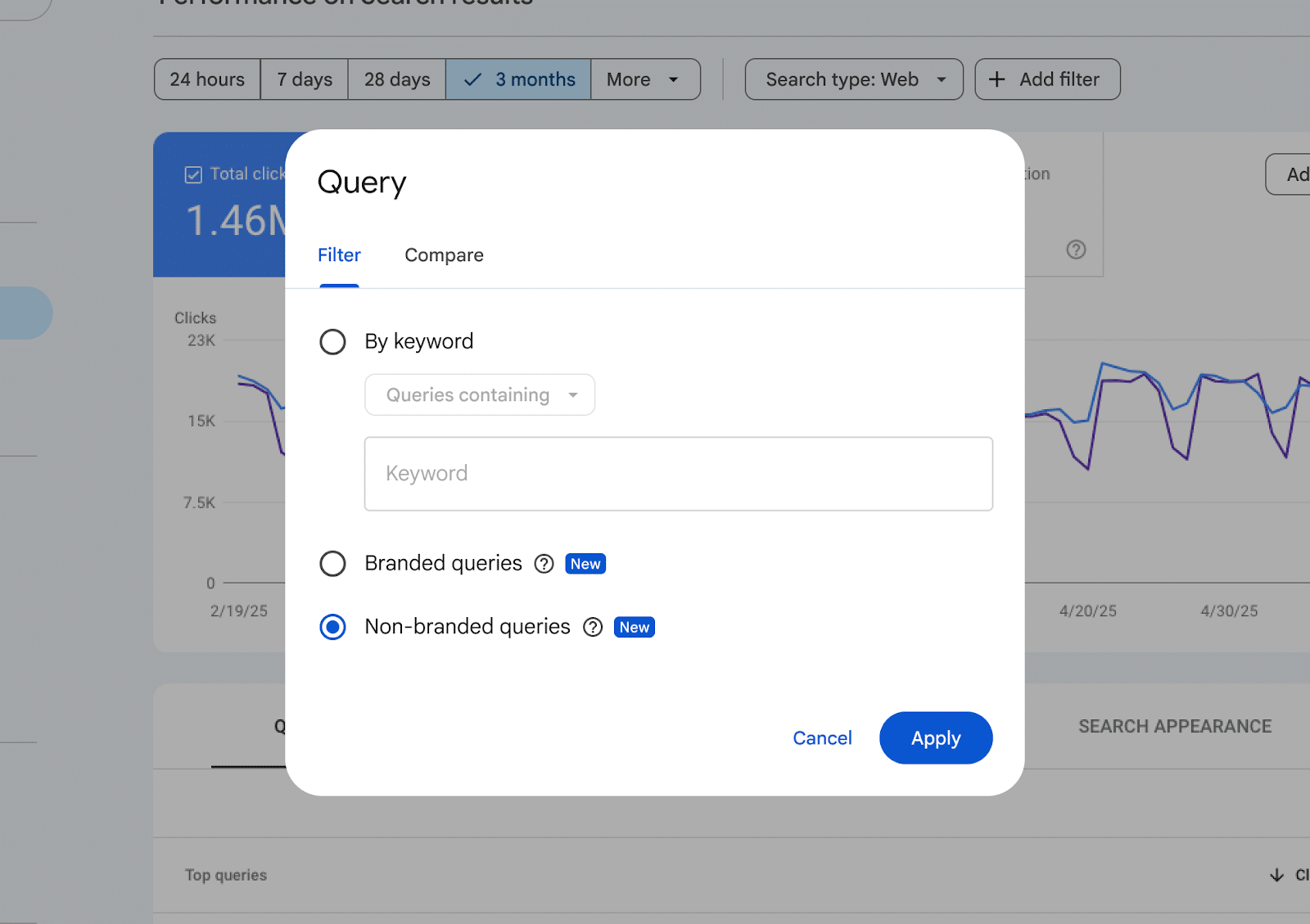
In November 2025, Google introduced a solution to a long-standing SEO challenge: the ability to distinguish branded from non-branded search performance directly within Google Search Console (GSC). The rollout is now complete for eligible properties, and I was ecstatic to try it out.
For so long, I’ve had to rely on regex filters, custom dashboards, or third-party tools, which weren’t always reliable. But GSC’s branded query filter simplifies the process, positioning it as a native feature in a platform widely used for organic reporting.
This change makes it easier for me to close a crucial gap in SEO reporting. Now, I can independently evaluate brand demand and discovery, leading to improved performance analysis supported by first-party data.
In essence, GSC’s new filter performs its function by sorting queries into two categories:
Branded queries that include recognized brand terms.
Non-branded queries covering all other discovery queries.
These features empower me to group queries by topic or intent, filter by branded and non-branded types, and create detailed reports without external processing.
Historically, separating branded from non-branded performance wasn’t new but maintaining consistency was challenging. I used to manually segment with regex, keyword tagging in rank-tracking tools, or through custom dashboards.
These methods worked but were fragile. Common issues included character limits on regex, language variants for international sites, and no shared standard for branded terms. With GSC’s update, I find these challenges largely eliminated.
Branded traffic is crucial, being both a signal of brand awareness and a major source of conversions. However, when mixed with non-branded data, it skews the interpretation of SEO performance.
By segmenting this data, I can now accurately identify brand demand versus discovery, allowing clearer insights. This helps me to better understand what’s genuinely boosting performance and address key questions like:
Are we enhancing brand demand or expanding non-branded reach?
Is our content strategy bolstering non-branded visibility?
Is the current strategy effective as anticipated?
Having used the filter, branded search trends have become one of the clearest indicators of brand health. Monitoring these trends reveals gaps and provides opportunities across various channels.
This functionality isn’t just a feature; it signifies a paradigm shift in SEO measurement. The consistency it brings to branded versus non-branded reporting is transforming how SEO work gets done, making reporting more consistent and actionable.
As I continue to evaluate and use these insights, I find that adopting this feature means less time spent reconciling data and more focus on interpreting results. This results in more confident and consistent communication, ultimately driving greater impact.
I recently discovered that Google has enhanced its structured data support for forum and Q&A pages. This update introduces new properties that allow us to better signal reply threads, quoted content, and identify whether content is generated by AI or humans.
With these changes, which aim to boost Google’s accuracy in interpreting discussions and Q&A content, we can now ensure our content is represented more precisely.
What’s New. Google has updated its QAPage documentation to include commentCount and digitalSourceType. Moreover, the DiscussionForumPosting documentation now supports sharedContent alongside these new properties.
The Details. Using Q&A markup, I’m able to apply commentCount to questions, answers, and comments, showcasing the total number of comments even if they are not fully marked up. This total should align with answerCount + commentCount, representing all types of replies.
How It Works. The digitalSourceType property allows me to indicate whether content is produced by a model or simple automation. I can use TrainedAlgorithmicMediaDigitalSource for advanced outputs and AlgorithmicMediaDigitalSource for basic bots. If this property is left out, Google assumes the content is human-generated.
What’s New for Forums. The sharedContent property helps me to mark the primary item that’s being shared in a post. Google supports various content types like WebPage, ImageObject, and more, including quotes or reposts.
Why This Matters. This update provides me with greater control over how Google interprets community content, which is particularly important for sites rich in forums, support communities, UGC platforms, and Q&A sections. Google can now distinguish between answers and comments more effectively, tally partial threads across multiple pages, and recognize when a post primarily shares specific media types.
Documentation. The official documentation was updated on March 24, providing all the details I need to apply these new capabilities.
You can pay for a creator campaign, get a burst of attention, and still end up with content that disappears as soon as the feed moves on. The missed opportunity is not more distribution. It is making each creator asset clear enough to be found when someone searches for the problem, product category, comparison, or use case it addresses.
The fix starts before the creator records anything. You need to connect a real search question to the right creator, build the answer into the content, adapt that answer to each platform, and measure whether it remains visible after publication.
Treat every creator asset as part of the search journey
Google can surface social opinions through features such as “What people are saying,” including material from YouTube, TikTok, LinkedIn, and other platforms. Social and video content can also supply context for AI-generated answers. Your influencer program therefore creates search inventory whether or not the campaign team manages it that way.
Cross-platform influencer SEO does not mean copying the same caption everywhere. It means preserving a recognizable answer while changing the presentation for each environment. The product name, category, use case, audience, and factual claims should remain stable. The hook, pacing, depth, visual treatment, and call to action can change.
This distinction prevents two common failures. A generic awareness video may be entertaining but give a search system little information about the question it answers. An over-optimized script may contain the right phrase repeatedly but sound unnatural enough to weaken the creator’s authority. Effective creator SEO keeps the subject unmistakable without turning the content into a spoken keyword list.
Key takeaways
Choose a search question tied to a decision the audience is actually making.
Match that question with a creator who can demonstrate or explain the answer credibly.
Carry the topic into spoken words, on-screen text, captions, titles, descriptions, and relevant hashtags.
Keep names, use cases, qualifiers, and approved claims consistent across platforms.
Measure native search, Google visibility, AI visibility, content usefulness, and business outcomes separately.
Map the query to the decision and the creator
Do not begin with a creator roster and look for keywords to attach later. Begin with the audience decision. Is the searcher trying to understand a category, compare alternatives, check whether a product suits a particular use case, validate a concern, or decide what to buy?
That decision determines the form of the content. A broad educational query may need a clear explanation. A comparison query needs visible criteria. A suitability question needs a demonstration under the relevant conditions. A purchase-stage query needs specific trade-offs and a useful next step.
Build the query set from evidence already available to your teams: organic search insights, native platform trends, recurring questions in creator comments, customer language, and tools such as AnswerThePublic. Keep the audience’s wording intact during collection. You can consolidate variants later, but early normalization often removes the precise qualifier that reveals intent.
For example, “running shoes” identifies a category. “Best lightweight running shoes for travel” identifies a category, comparison, desired attribute, and use case. The longer expression gives the creator something concrete to answer and gives you a much better basis for evaluating the finished asset.
Planning field
What to record
Review question
Audience decision
The choice, concern, or uncertainty behind the search
What should the viewer be able to decide after watching?
Search expression
The natural wording used by the intended audience
Does the wording preserve important qualifiers?
Required answer
The useful conclusion the content must deliver
Does the asset answer the query rather than merely mention it?
Proof format
Demonstration, explanation, comparison, walkthrough, or opinion
Can this creator show the answer credibly?
Creator fit
The creator’s relevant subject history, audience, and format strengths
Will the recommendation feel consistent with their existing work?
Platform role
Discovery, detailed evaluation, professional validation, or conversion support
Why does this asset belong on this platform?
Destination
The next page, video, profile, or action that continues the journey
Does the next step satisfy the same intent?
Creator selection should follow the map. Look for a history of discussing the relevant problem, a format capable of showing the required proof, and audience responses that indicate genuine interest in the subject. Reach matters to distribution, but topical fit determines whether the answer feels believable and whether the asset has a coherent search purpose.
Share the query language with the creator before locking the script. A creator may know a more natural way to express the same intent. Accept that adjustment when it preserves the audience, problem, category, and meaning. Search optimization needs semantic clarity, not forced recitation.
Write a search-ready brief without scripting out the creator
A weak brief says, “Mention the product naturally and add these hashtags.” That tells the creator what must appear but not what the content must answer. It also leaves the campaign team unable to judge whether the deliverable serves a searcher.
A search-ready brief states the audience decision, target query, required answer, evidence, placement of topic signals, approved claims, creative freedom, and next step. The creator should know which parts are mandatory and which parts they own.
Search objective: Describe the question or decision the asset should help resolve.
Primary topic: Supply the natural query and acceptable variations, including any qualifier that changes intent.
Required answer: State what useful conclusion the viewer should receive. Do not prescribe a positive verdict that the evidence cannot support.
Topic placements: Identify where the subject should appear, such as the spoken script, opening frame, on-screen text, caption, title, description, and relevant hashtags.
Proof: Specify the demonstration, comparison criteria, walkthrough, or factual context needed to support the answer.
Entity language: Provide the correct brand, product, category, feature, and use-case names. Mark any wording that must remain exact for accuracy.
Creative control: Leave room for the creator’s hook, examples, visual language, pacing, and personal assessment.
Next step: Name the destination that continues the same search intent rather than sending every viewer to a generic homepage.
The required topic should normally appear in more than one content layer. Spoken language helps make the subject explicit in the actual video. On-screen text helps a viewer recognize the answer quickly. The caption, title, and description provide written context. Relevant hashtags can reinforce classification, but they should not carry the entire strategy.
Use a pre-publication review that tests clarity rather than keyword density:
Can a viewer identify the question during the opening portion of the asset?
Does the creator answer the question with an explanation or visible proof?
Is the primary topic spoken naturally?
Does on-screen text name the subject without covering important visuals?
Does the caption add context instead of repeating a thin promotional line?
Is the title or description complete enough to stand on its own outside the feed?
Are brand, product, category, and use-case names accurate and consistent?
Are all factual and comparative claims supportable?
Does the final result still sound like the creator?
If a phrase sounds awkward, change the sentence rather than deleting the subject. If the creator cannot answer the assigned query credibly, change the query or the creator. No amount of metadata can repair a mismatch between the question and the person delivering the answer.
Adapt the answer instead of duplicating the asset
Each platform gives the same core answer a different job. Short video may introduce the question and show fast proof. YouTube can accommodate a fuller explanation. LinkedIn can frame the issue around professional decisions. A brand page can verify details and continue the journey. The campaign becomes cross-platform when these assets reinforce one another, not when the same file is uploaded repeatedly.
Platform or surface
Recommended job
How to adapt the core answer
What to avoid
TikTok and other short-form video
Question-led discovery and concise demonstration
Make the problem recognizable in the hook, say the topic naturally, show the proof, use readable on-screen language, and write a contextual caption
A trend-led opening that never makes the actual subject clear
YouTube
Detailed evaluation and explanation
Use a descriptive title, establish the question clearly, cover the relevant criteria, and write a complete description that identifies products, categories, use cases, and conclusions
A vague title or a nearly empty description that depends on viewers already knowing the context
LinkedIn
Professional interpretation and validation
Lead with the business problem or decision, name the category and audience, and preserve the creator’s analysis rather than reducing the post to campaign copy
Opening with brand promotion before establishing why the issue matters
Brand-owned page
Verification and continuation
Align terminology and approved claims with the creator asset, provide deeper product information, and link or embed the creator content when rights allow
Sending an intent-rich query to a generic page that does not answer it
Google and AI answer surfaces
Secondary discovery of published creator material
Monitor whether the underlying social or video asset appears for the intended topic and whether its language is represented accurately
Treating a variable AI response as a permanent ranking
Consistency matters across every version. Use the same accurate spelling for the brand and product. Keep the category relationship explicit. Preserve important qualifiers such as audience, location, compatibility, or intended use. Do not let one creator call a feature by a campaign nickname while the landing page, video title, and other creators use unrelated terms.
Cross-platform expansion also needs editorial discipline. Do not manufacture praise in community spaces or ask creators to disguise sponsored material as an independent conversation. Genuine comments and questions are more useful as audience-language research: record how people describe the problem, then feed those expressions into future query maps and briefs.
Measure visibility, usefulness, and business impact separately
A creator asset can succeed in one layer and fail in another. High engagement does not prove search visibility. Search visibility does not prove the answer is useful. Neither one, by itself, proves commercial impact. A single blended campaign score hides the diagnosis you need to improve the next brief.
Build a record for every published asset that includes the creator, platform, URL, target query, important variations, audience decision, publication date, destination, and campaign identifier. Without that connection, teams can see performance but cannot tell which search intent or content treatment produced it.
Search visibility
Check the native platform for the assigned query and meaningful variants.
Inspect Google results for the creator URL, video results, social modules, and relevant “What people are saying” placements.
Use a stable set of AI prompts that reflects the target decision. Log the service, model when shown, date, response, cited pages, and whether the creator or brand is represented accurately.
Record visibility by query and surface. Do not combine native placement, Google appearance, and AI mentions into an invented universal rank.
Content usefulness
Review retention or viewing patterns to locate the point where attention drops.
Track saves, shares, and substantive comments that indicate the answer was useful enough to keep or pass along.
Separate query-relevant questions from generic reactions. New questions may reveal missing information or the next search intent to target.
Compare performance with the creator’s own relevant historical content when possible, not with an unrelated platform-wide expectation.
Business impact
Track visits to the intended destination with campaign-specific links where the platform permits them.
Measure whether visitors engage with the page that continues the answer, rather than counting the click alone.
Review attributed and assisted conversions in the context of a multi-platform journey. A last-click report will not describe every earlier creator interaction.
Watch whether the questions and terms used in creator content begin appearing in site search, sales conversations, or other audience feedback available to your organization.
The pattern across these layers tells you what to fix. If the asset is useful to viewers but absent from search checks, strengthen topic placement, titles, descriptions, and query alignment. If it is visible but loses attention, improve the answer, proof, hook, or creator fit. If it earns visibility and engagement but produces no useful next action, inspect the call to action, destination, offer, and measurement setup. If different platforms describe the product inconsistently, repair the entity language in the shared brief.
The operating model matters as much as the brief. SEO and influencer teams often sit in separate workflows with different goals, so create a shared handoff:
The SEO team supplies the audience decision, query language, qualifiers, and relevant search surfaces.
The influencer team maps those needs to creators, platforms, formats, and campaign constraints.
The creator proposes a native angle and identifies any keyword wording that would sound forced.
The campaign owner reviews the draft for answer quality, search signals, factual consistency, and creator voice.
The publishing owner completes every agreed title, caption, description, text, hashtag, and destination field.
The measurement owner records the asset and checks each visibility, usefulness, and business layer.
The teams convert findings into changes to the query map, creator selection, brief, or destination before the next activation.
Start with your next creator brief. Add the audience decision, natural query, required answer, proof format, topic placements, consistent entity language, and destination. If you cannot name those elements before production begins, the campaign is not yet ready to work as search content.
If your organic visibility changed around March 24 or 25, you need a diagnosis before you need a rewrite. The timing makes the March 2026 spam update a reasonable lead, but it does not prove that Google found spam on your site.
The safest response is to preserve your data, isolate the pages and queries that moved, and then audit the affected systems against Google’s spam policies. That sequence keeps a narrow problem from turning into a rushed sitewide overhaul.
Google did not identify a particular form of spam targeted by this release. That omission should shape your investigation. You cannot responsibly label it a link update, an AI-content penalty, a scaled-content crackdown, or any other specific action from the announcement alone.
Automated spam detection operates continuously. SpamBrain is the AI-based system Google uses to help identify search spam, and notable improvements to these automated systems are announced as spam updates. The named rollout window marks a substantial systems change; it does not mean spam detection was switched off before the update or stopped evolving afterward.
For you, the important distinction is between correlation and diagnosis. A decline that begins near the rollout deserves investigation. A decline confined to one template, country, device class, query family, or recently edited section may point somewhere more specific than a sitewide spam assessment.
Diagnose the loss before changing the site
Do not begin by deleting pages, removing links, or rewriting every AI-assisted passage. First establish what actually changed. Use the rollout timestamps as the center of your analysis, then work from broad signals toward individual URLs.
Mark the rollout in your reporting. Add March 24 at 3:20 p.m. ET through March 25 at 10:40 a.m. ET to your SEO annotations. Keep the exact window visible so later releases, migrations, campaigns, and tracking changes are not blended into the same event.
Separate search visibility from website performance. Compare Google Search Console impressions, clicks, click-through rate, and average position with analytics sessions and conversions. Falling impressions across stable query demand point toward lost search visibility. Stable impressions with weaker clicks may indicate a result-page or snippet issue. Stable search data with falling conversions sends the investigation toward tracking, user experience, offer, or funnel changes.
Segment the affected demand. Split branded from non-branded queries, then examine countries, devices, directories, content types, and page templates. A concentrated loss is more actionable than a domain-level percentage because it tells you where to inspect purpose, production methods, internal links, structured data, and external link dependence.
Compare equivalent groups. Look at affected pages beside genuinely similar pages that stayed stable. Compare intent, depth, originality, authorship, update practices, internal linking, backlinks, and template behavior. The stable group is your control; it helps you avoid blaming a characteristic shared by both winners and losers.
Rule out coincident failures. Check release logs, crawling and indexing signals, robots directives, canonicals, redirects, server availability, security events, analytics deployments, and the Manual Actions report. An automated spam update and a manual action are not the same event, while an accidental noindex or canonical change can imitate an algorithmic loss.
Preserve the evidence. Export the affected query and page data, save the current templates, and record recent content, link, schema, and deployment changes before editing. Without a baseline, you will not know whether a later movement came from remediation, normal volatility, or another release.
This process should leave you with a statement more precise than “traffic dropped after the update.” A useful diagnosis sounds like this: non-branded impressions declined for one programmatic directory, while editorial pages and branded demand remained stable. That is a testable problem with a bounded audit surface.
Run a policy audit that produces evidence
Once you know which pages, queries, or systems are implicated, audit the decisions behind them. The goal is not to make content look less automated or more polished. It is to identify elements created primarily to manipulate search visibility and replace them with pages, links, and markup that serve a defensible user purpose.
Start with page purpose and production
For each affected page type, ask whether the URL resolves a distinct task. Pages that differ only by swapped keywords, locations, products, or entities need enough unique substance to justify separate URLs. If the page would have no reason to exist without the opportunity to capture another query variation, treat that as a warning that requires closer review.
Identify the source of the page’s facts and whether someone verified them before publication.
Check whether the title, opening answer, body, and call to action all satisfy the same search intent.
Look for unsupported claims, invented specificity, repetitive sections, placeholder language, and passages that merely restate information already visible elsewhere.
Review generated or templated pages at the system level. Fixing a prompt, data feed, template, or approval gate may be more reliable than hand-editing isolated outputs.
Confirm that materially similar URLs are consolidated, differentiated, or removed for a documented reason rather than retained solely for query coverage.
AI assistance is not a useful diagnosis by itself. Purpose, accuracy, added value, and production controls are more useful audit dimensions. A carefully verified AI-assisted page and an unreviewed page assembled by a person should not be judged by the tool label alone.
Trace rankings that depended on links
Review links separately from content because the recovery mechanics may be different. Map suspicious acquisition activity to the pages and query groups that lost visibility. Paid placements, reciprocal arrangements, controlled networks, repeated commercial anchors, and sudden footprints across related sites deserve review, but an unattractive backlink profile does not prove that this March release was link-specific.
Do not start a destructive link cleanup from rollout timing alone. First document which links were arranged by you or your representatives, what benefit they appeared to support, and whether the affected rankings were unusually dependent on them. If an update neutralizes spammy links, the ranking benefit previously produced by those links cannot be recovered simply by removing or changing them. A later improvement would need to come from legitimate signals, not restoration of the neutralized advantage.
Make structured data match the repaired page
JSON-LD should describe what a user can verify on the visible page. When you remove a claim, rating, author, product detail, FAQ, or entity relationship from the content, update the markup with it. Validate that identifiers are consistent and that the marked-up entity is the entity the page is actually about.
Do not treat schema, answer-first formatting, or entity density as a recovery layer over a page that lacks a clear purpose. AEO and GEO work begins with an answer that is accurate, attributable, and supported. Markup can make that information easier to interpret; it cannot supply the missing evidence or user value.
Turn findings into a controlled remediation log
Give every proposed change a URL or template scope, the suspected policy concern, the evidence supporting it, the chosen action, an owner, and a validation method. Label uncertain findings as hypotheses. This prevents a plausible concern from silently becoming a domain-wide verdict.
Deploy related fixes as coherent batches and keep unrelated redesigns, migrations, and conversion experiments separate where possible. If content quality, internal linking, templates, schema, and site architecture all change at once, a later recovery will teach you very little about the actual cause.
Set recovery expectations around the spam system
A correct fix may not produce an immediate rebound. Sites can improve after remediation if Google’s automated systems learn over a period of months that the site complies with its spam policies. That is a re-evaluation process, not a promise that every lost position will return.
This changes how you should report progress. Completion of the cleanup is an operational milestone, not proof of recovery. Monitor the affected page groups and query families on a fixed cadence. Watch whether impressions stabilize, relevant non-branded queries reappear, crawling and indexing remain healthy, and unaffected sections avoid collateral decline.
Keep two outcomes separate. If the site had policy problems, your first objective is durable compliance. If spammy links had supplied an artificial advantage, their lost contribution may never come back. In that case, success means rebuilding visibility through useful content, legitimate authority, sound architecture, and accurate representation rather than waiting for the old boost to be restored.
If your audit finds no persuasive policy issue, do not manufacture one to fit the date. Revisit technical changes, demand shifts, result-page changes, competitors, content decay, and other algorithmic movement. The update window should narrow your investigation, not predetermine its conclusion.
Key takeaways
The March 2026 spam update ran from March 24 at 3:20 p.m. ET to March 25 at 10:40 a.m. ET, lasting 19 hours and 30 minutes.
Google did not disclose which form of spam the update targeted, so claims that it was specifically about links, AI content, or another tactic go beyond the available facts.
Use the rollout as an analysis marker. Confirm the loss in Search Console, segment it by query and page type, and rule out technical or tracking failures before editing.
Audit page purpose, production controls, link dependence, and structured data only where the impact pattern gives you evidence to inspect them.
Recovery after compliance work may take months while automated systems reassess the site.
If spammy links were neutralized, the ranking value they previously supplied cannot simply be regained.
Your next move should be small and evidentiary: annotate the rollout, export the affected queries and URLs, and define the narrowest page group that explains the loss. Audit that group before you authorize a sitewide change.
If your SEO plan for 2026 depends mainly on a new AI tool, a larger content calendar or another visibility dashboard, pause. Those additions can expose organizational weakness faster than they create results. A dashboard cannot reconcile teams that use different definitions of success, and an AI-generated brief cannot supply a point of view nobody owns.
Your real readiness test is whether the organization can turn a discovery signal into a coordinated change: identify what matters, decide what to do, assign the work, ship it and evaluate the business effect. The audit below will show you where that chain breaks and what to fix first.
Start with evidence, not an SEO maturity label
Calling a company “advanced” or “immature” at SEO rarely tells you what to change. Readiness is easier to evaluate through evidence. Ask what happens when the team discovers an inaccurate brand answer, a declining topic, an unanswered customer question or a technical barrier. Then inspect the artifacts that move that finding toward resolution.
Run the audit with the people who control content, analytics, product information, engineering priorities, brand communications and commercial outcomes. The exact job titles will vary. What matters is having both the people who see the signals and the people who can authorize or deliver a response.
Readiness area
Evidence to request
A warning sign
Customer journey
A shared map connecting discovery, evaluation, website behavior and business outcomes
Each team presents a different journey and none includes AI-assisted discovery
Goals and measurement
Metric definitions, owners, data locations and the decisions each metric informs
Traffic is treated as the result even when nobody can explain its business value
Decision rights
A named decision-maker and executor for each common class of SEO issue
SEO is accountable for results but cannot approve or schedule the required work
Delivery
Real backlog items, prioritization rules, delivery windows and escalation paths
Recommendations repeatedly return to presentations instead of entering a production queue
Content differentiation
Editorial standards showing what the organization can contribute beyond generic synthesis
AI output moves from prompt to publication without evidence, expertise or editorial challenge
Learning
A record of changes, expected effects, observed results and follow-up decisions
Reports describe movement but do not change priorities, messaging or execution
Do not accept verbal assurances where an operational artifact should exist. “Marketing and engineering collaborate” is not evidence. A prioritized ticket with an owner, acceptance criteria and an agreed delivery window is evidence. “We track AI visibility” is not evidence. A defined metric, known limitations and a decision it can trigger are evidence.
Classify each area as working, constrained or absent. “Working” means the process is used and produces decisions. “Constrained” means it exists but regularly stalls because of access, authority, quality or capacity. “Absent” means the organization relies on individual initiative. Do not average the results into a flattering maturity score. A single absent link can stop the entire operating chain.
Build a decision chain from signal to shipped change
Many SEO teams have responsibility without control. They can detect a problem and recommend a response, but another team controls the template, product feed, editorial calendar, public statement, development backlog or budget. When the handoff is informal, recommendations wait for goodwill and urgency has to be renegotiated every time.
Fix that by defining the decision chain before the next issue appears. For every recurring class of work, record the following:
Signal owner: the person responsible for detecting and documenting the issue.
Decision-maker: the person with authority to choose a response and accept its tradeoffs.
Executor: the team that can make the change in the relevant system or channel.
Required evidence: the information needed before the work can be prioritized.
Delivery route: the backlog, editorial workflow or operating process that will carry the work.
Validation owner: the person who checks whether the change shipped correctly and whether the expected effect appeared.
Escalation condition: the circumstance that moves a blocked issue to a leader who can resolve it.
Separate strategic ownership from execution ownership
SEO should influence how the organization approaches discoverability across search engines, AI assistants and other relevant platforms. That does not mean the SEO team should pretend it can execute every change. Product teams may own product facts. Communications may own public positioning. Engineering may own rendering and platform behavior. Analytics may own measurement architecture.
For each issue, make both forms of ownership visible. Strategic ownership answers, “What should change, and why does it matter?” Execution ownership answers, “Who can make the change in the system where it lives?” If only the first answer exists, you have a recommendation queue rather than an operating capability.
Route work through existing operating systems
A separate SEO spreadsheet often becomes a parking lot because it sits outside the processes that allocate resources. Put technical work into the engineering backlog, editorial work into the content workflow, product-fact corrections into the product-data process and reputation issues into the communications process. Keep a central SEO register for visibility, but let each change travel through the system that can actually deliver it.
Consider an AI assistant that repeatedly presents an outdated return condition. The SEO team can capture the affected query pattern and identify the pages or feeds that may be contributing. It should not silently rewrite policy. The policy owner validates the correct fact, content or product-data owners update the canonical information, technical owners confirm that the information is accessible, and the visibility owner checks whether the answer changes. The chain protects accuracy while keeping the response actionable.
Document common issue classes now: inaccurate entity facts, missing topic coverage, inconsistent brand language, weak product information, technical access barriers, declining search performance and emerging customer questions. Assigning routes in advance removes the ownership debate from the moment when action is needed.
Use a KPI ladder that connects visibility to business value
Traffic still tells you something, but it cannot carry the entire strategy. A person may encounter your brand in an AI answer, evaluate alternatives elsewhere and arrive later through a branded query or direct visit. A visibility metric can reveal part of that earlier interaction, but it may still be a proxy rather than proof of commercial influence.
A useful measurement system does not replace traffic with one fashionable AI score. It creates a ladder from operational activity to visibility, journey behavior and business outcomes:
Business outcomes: the commercial or organizational result the strategy is meant to influence, such as qualified demand, completed purchases, adoption or retention.
Journey indicators: evidence that the right audience is progressing, such as engagement with decision content, branded discovery, qualified inquiries or assisted conversions.
Visibility indicators: whether the organization is discoverable, accurately represented and cited for priority needs across relevant search and AI environments.
Operational indicators: whether the organization can respond, including issue ownership, backlog movement, publishing quality and completion of corrective work.
The ladder matters because each layer answers a different question. Visibility shows whether you are present. Journey evidence shows whether that presence may be drawing the right people forward. Business outcomes show whether the work contributes to something the organization values. Operational indicators show whether the team can repeat and improve the process.
Give every KPI a decision rule
A metric without a decision rule becomes reporting theater. Create a metric card containing its definition, business hypothesis, data location, owner, review cadence, known blind spots and action trigger. The action trigger does not need to be an arbitrary numeric threshold. It can be a condition such as “a priority product fact is repeatedly represented inaccurately” or “visibility improves without corresponding movement in qualified demand.”
Ask these questions during every review:
What decision can this metric change?
Is it measuring presence, behavior, value or execution?
Which part of the customer journey is invisible to us?
Could another explanation produce the same movement?
What additional evidence would increase our confidence?
Who has authority to act on the finding?
Keep traffic in the system, but use it at the right level. A drop can diagnose lost demand capture, technical trouble or weaker relevance. An increase can reveal broader reach. Neither movement proves business value by itself. Pair it with journey quality and outcome evidence before redirecting budget or declaring success.
Be equally careful with AI visibility indexes. Coverage differs by tool, prompt set, location, personalization and observation method. Treat a third-party score as one observation layer, not a complete map of customer discovery. Preserve the underlying queries, answer examples, dates and evaluation criteria so the team can inspect what changed instead of debating a single composite number.
Use AI for throughput, then require human differentiation
AI can accelerate brief creation, data analysis, clustering, summarization and first drafts. Speed is useful when the organization already has reliable inputs and a clear editorial standard. Without those controls, AI makes generic work easier to produce and harder to distinguish from everything else generated from similar prompts.
The important question is not whether AI touched the workflow. It is whether the published result contains accurate evidence, a useful decision, a coherent point of view and accountable human judgment. Make those requirements explicit at the brief stage rather than asking an editor to add originality after a generic draft has already defined the structure.
Require every substantive brief to identify:
The reader’s decision: the specific action, concern or tradeoff the page must resolve.
The organization’s contribution: facts, expertise, analysis, examples or framing that cannot be obtained by prompting a general model for a generic answer.
The evidence boundary: which claims are approved, which need verification and which the organization is not qualified to make.
The differentiation test: what would still make the page valuable if several competitors covered the same basic information.
The accountable editor: the person who can reject fluent output that lacks accuracy or decision value.
The maintenance owner: the person responsible when product facts, policies, interfaces or market conditions change.
Set rules according to the risk of the task
Low-risk transformations, such as reorganizing approved material or generating alternative headings, can move quickly. Drafting interpretive claims, recommendations or product comparisons needs closer review. Publishing facts that affect customer decisions should require validation against the organization’s canonical information. The more consequential the claim, the less reasonable it is to treat fluent output as evidence.
Keep the inputs that make the work distinctive outside the model’s imagination. Supply approved product facts, customer-language findings, subject-matter review and a defined editorial position. If those inputs do not exist, the readiness problem is upstream of prompting. Better prompt syntax will not create institutional knowledge.
Make structured data downstream of fact governance
JSON-LD and schema markup can clarify information that is already true and consistently maintained. They cannot repair disagreement between a product database, a policy page, a local listing and sales copy. Before expanding markup, identify the canonical system for each important entity fact, who may change it, which channels consume it and how corrections propagate.
Audit the visible page and the structured representation together. A technically valid property can still communicate stale or contradictory information. Add validation to the publishing workflow, but also define what happens when the validator passes and the underlying business fact is wrong. Technical ownership and factual ownership are separate controls.
This is where organizational readiness directly affects AI optimization. Clear entity information, consistent claims and maintained content give search and AI systems less ambiguity to resolve. The work begins with governance and execution; markup is one delivery mechanism within that system.
Key takeaways for your next planning cycle
Audit the path from visibility signal to shipped change, not the size of the SEO toolset.
Ask for operational evidence: owners, tickets, decision rules, delivery routes and validation records.
Separate strategic ownership from execution ownership so SEO is not held accountable for work it cannot authorize.
Use a KPI ladder that connects operational delivery and visibility with customer behavior and business outcomes.
Treat traffic and AI visibility scores as evidence layers, not complete measures of value.
Use AI to increase throughput only after defining evidence, differentiation and human accountability.
Govern canonical business facts before expanding JSON-LD, schema markup or multi-platform distribution.
In your next planning session, choose one priority customer journey and trace a real issue from detection to resolution. Name the decision-maker, executor, delivery route, success evidence and escalation condition. Wherever the chain becomes hypothetical, you have found the first readiness problem to put on the backlog.
Do that before adding another dashboard or increasing publishing volume. In 2026, the organizations that gain durable visibility will be the ones that can learn and coordinate faster than their discovery environment changes.
I’ve learned that website migrations often fail due to small oversights. That’s why I focus on reducing risks with thorough pre-launch, launch-day, and post-launch SEO checks.
Website migrations can notoriously go awry, even with the best planning. I’ve seen rankings slip, traffic drop, and tracking break. Surprisingly, it’s usually the small oversights rather than complex technical issues that cause these problems.
I approach website migrations with a staging process. The checks I perform during staging, on launch day, and in the few weeks following the launch are crucial. They often determine whether a migration stabilizes quickly or spirals into a long recovery project.
Before Launch: Catch Issues on Staging
I’ve found that most migration problems should be identified and resolved on the staging site. If issues make it to the live site, recovery tends to be slower and more uncertain. Here’s how I set myself up for success:
Keep the Staging Site Private (Even from Crawlers)
A common mistake I’ve encountered is making the staging site publicly indexable. Google crawling a staging environment can lead to duplicate content in search results, causing rankings to fluctuate and unfinished pages to be indexed.
I make it a point to block crawlers from the staging site or protect it with a password to ensure it stays invisible to search engines until the live launch.
It’s not just about the crawlers. I’ve seen ecommerce sites where customers found the staging site and tried to place orders, creating confusion and frustration internally.
Take Benchmarks
To help identify real issues rather than reacting to normal shifts, I always take a baseline. I record organic sessions, rankings, top landing pages, indexed pages, conversions, and site speed before moving to the new site.
Identify Priority Pages
For me, it’s crucial to focus on pages that drive traffic, revenue, or attract links. These need extra care during redirect mapping, content review, and testing, with special attention to internal links, redirects, and URL rules.
Review Templates and Content Continuity
Templates are the backbone of a website, controlling titles, headings, metadata, and more. If templates break, similar problems can spread across countless pages. Here’s what I check:
Presence and accuracy of titles and headings.
Canonical tags that use full URLs and point to live pages.
Correctly transferred structured data.
Intact copy, images, and internal links.
Launch Day: Verify Everything Works on the Live Site
On launch day, preparation meets reality. I join my SEO, developer, and design teams to make sure what worked on staging works on the live site as well. Even small oversights can immediately impact rankings, traffic, and user experience.
Test Redirects at Scale
It’s not enough to spot-check. Every mapped URL should redirect correctly, without chains or loops, as they can slow down crawling and delay signal consolidation.
Crawl the Live Site
Immediately after the site goes live, I run a full crawl and compare the results to the staging crawl to spot any differences. I’m on the lookout for broken links, redirected internal links, missing pages, and server errors.
Check Internal Links and Navigation
Menüs, breadcrumbs, and in-content links should directly point to live URLs. Allowing internal links to rely on redirects adds unnecessary load and risk.
After Launch: Monitor and Stabilize Performance
I know that even with the best planning, surprises can emerge once search engines and real users start interacting with the site. Small errors missed on staging can suddenly affect rankings or traffic.
Structured monitoring in the days and weeks post-launch is crucial. By catching issues early, I can ensure they don’t impact performance or user experience.
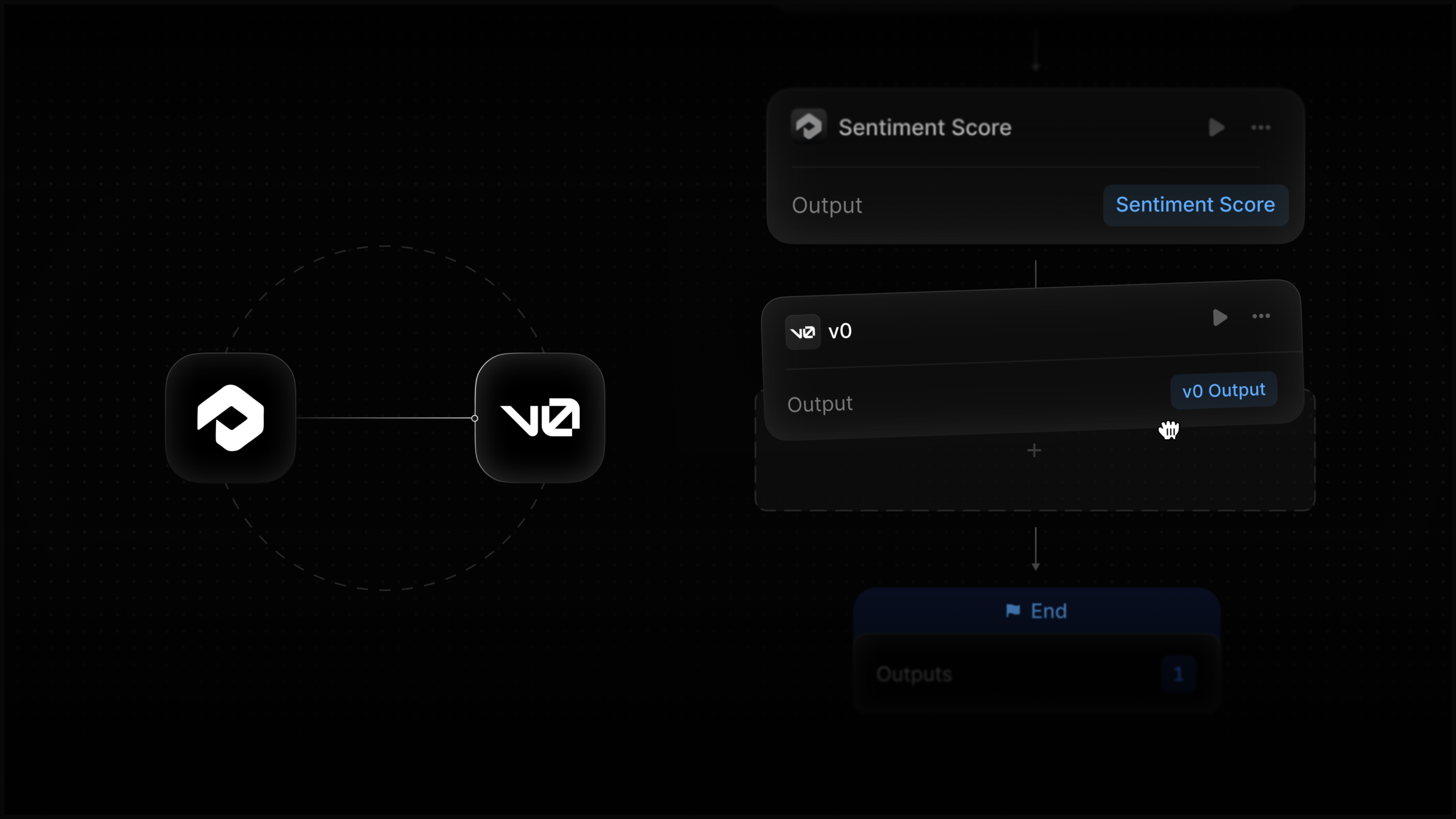
Hey there! I’m thrilled to share something exciting: Profound Agents now seamlessly connect with Vercel v0. This means I can generate and deploy stunning landing pages without writing a single line of code.
By leveraging my Profound AEO data as a solid foundation, deploying these pages has never been easier. It’s a game-changer for anyone looking to enhance their digital presence effectively and efficiently.
I’ve discovered that the most successful GEO and AEO strategies are deeply rooted in traditional SEO. It’s fascinating how these foundational principles seamlessly translate to AI visibility. Let me share why it’s crucial not to overlook these basics.
In our quest to harness the power of AI, many of us might feel tempted to skip straight to advanced strategies. However, without a solid SEO foundation, even the best AI-driven tactics can fall short. The rules that govern traditional SEO are critical to unlocking AI’s full potential in search visibility.
Consider this: AI systems thrive on structured data and clear content hierarchies. It’s precisely these elements that traditional SEO prioritizes, ensuring that our websites are not only user-friendly but also AI-ready. This is why every AI optimization journey should begin with tried-and-true SEO practices.
As someone who loves diving into the nuances of AI and SEO, I’ve seen firsthand how these two fields complement each other. Embracing the basics doesn’t merely prepare us for AI; it catapults our strategy into an era of smarter, more efficient digital marketing.
If your team depended on the Marketo Engage SEO tile, this is no longer a roadmap item you can leave for later. Adobe scheduled the feature to be discontinued on March 31, 2026, with the tile removed beginning April 1. That deadline has passed.
Your immediate job is to establish what was preserved, what was lost, and which business process must replace the feature. Do that before buying another platform. A rushed tool purchase can restore a dashboard while quietly breaking historical comparisons, ownership, or reporting definitions.
Key takeaways
Adobe retired the SEO feature within Marketo Engage; this is not evidence that Marketo Engage itself was retired.
The scheduled export deadline was March 31, 2026, and removal of the SEO tile was set to begin April 1.
If you exported your data, preserve the untouched files, document their coverage, and test whether they can actually be opened and interpreted.
If you missed the deadline, search existing business systems and ask Adobe Support about recovery before attempting to reconstruct the history.
Select a replacement according to the jobs your team needs to perform, not according to suite familiarity or corporate ownership.
Never join old and new metrics into a continuous trend line until you have checked their definitions, filters, date boundaries, and URL treatment.
Separate the SEO retirement from the rest of Marketo Engage
The scope matters. Adobe scheduled the retirement of Marketo Engage’s SEO feature and its tile. Nothing in that change establishes that your forms, campaign programs, lead operations, scoring, or the wider Marketo Engage platform must be migrated.
Keep the response proportional. Remove dependencies on the SEO feature, but don’t turn a feature decommission into an unplanned marketing automation migration unless you already have a separate reason to reconsider the broader platform.
Decision
What is established
What you should do
Feature scope
The Marketo Engage SEO feature was scheduled for retirement.
Inventory processes that used the SEO tile rather than treating every Marketo workflow as affected.
Data access
Existing SEO data needed to be exported by March 31, 2026.
Treat post-deadline access as unavailable unless Adobe confirms otherwise for your account.
User interface
Removal of the SEO tile was scheduled to begin April 1.
Remove tile-specific instructions, bookmarks, screenshots, and training steps from current procedures.
Replacement
No automatic replacement, entitlement, or historical transfer was established.
Verify licensing, data portability, metric coverage, and implementation separately.
Adobe’s stated rationale was to redirect resources away from underused functionality. That is a useful warning for your operating model: a feature can be technically available while becoming strategically peripheral. Add vendor roadmap review and export readiness to the ownership of any reporting capability you replace.
Adobe’s 2025 acquisition of Semrush makes Semrush an obvious candidate for evaluation, but the corporate relationship does not prove that your Adobe agreement includes it, that Marketo SEO history transfers into it, or that its measurements match your old reports. Procurement, migration, and metric continuity remain three separate questions.
If you exported the data, prove the archive is usable
Having an export is not the same as having a recoverable reporting asset. A file can exist while its date range, filters, field meanings, or account context have already been forgotten. Preserve the evidence before anyone cleans, renames, or transforms it.
Keep an untouched master copy. Store the original export in a controlled, read-only location. Work from duplicates. If your data-governance process supports checksums, record one so later teams can verify that the master was not altered.
Create an export register. For every file, record its filename, export date, Marketo account or workspace, owner, known reporting period, known filters, file format, and storage location. Mark unknown details as unknown instead of guessing.
Inspect the structure. Confirm that the file opens, headers are intact, characters render correctly, dates parse consistently, URLs have not been converted or truncated, and numeric columns remain numeric. Save a field list beside the archive.
Document metric meanings. Capture any surviving definitions from procedures, dashboard labels, screenshots, or team documentation. A column called visibility, position, traffic, or opportunity has little long-term value unless the calculation and scope are understood.
Locate downstream dependencies. Search recurring reports, dashboards, presentation templates, planning models, tickets, and operating procedures for fields or screenshots drawn from Marketo SEO. Record the owner and business decision associated with each one.
Test restoration. Import a working copy into the system where analysts will actually use it. Check several records against the original, including the earliest and latest dates, blank values, duplicate URLs, and unusually large or small values.
Apply appropriate access controls. Do not assume that a file is safe to distribute merely because it came from an SEO feature. Review its actual contents and follow the controls required by your organization.
Treat the export as a fixed historical archive, not a live dataset. A new platform can supply future measurements, but that does not make its numbers directly comparable with the archived Marketo SEO values. The tools may use different keyword sets, locations, devices, crawling rules, URL normalization, update schedules, or calculation methods.
When exact definitions cannot be recovered, label the archive accordingly. An explicit limitation such as “legacy Marketo SEO metric; calculation unavailable” is more honest and more useful than a confident but invented definition.
If you missed the deadline, recover before you reconstruct
Do not assume Adobe can restore the data after the scheduled removal, but do not assume it is irretrievable without checking either. Recovery should begin with existing evidence and a narrowly framed support request.
Preserve what remains. Collect filenames, dashboard screenshots, report attachments, procedures, tickets, and presentation slides that show how the feature was used. Record who used it and which decisions depended on it.
Search sanctioned storage. Check shared drives, approved cloud storage, data warehouses, business intelligence systems, reporting folders, ticket attachments, and relevant email attachments. Ask likely users to search their work files within your organization’s retention and security policies.
Open an Adobe Support request. Identify the Marketo account, the retired SEO feature, the required reporting period, and the desired export. Ask whether any account-level recovery or backup route remains. Treat recovery as unconfirmed until Adobe gives you a direct answer.
Map each missing output to an authoritative system. Organic search performance may be recoverable from verified search-engine properties; site behavior may exist in web analytics; conversion outcomes may live in Marketo programs, a CRM, or a warehouse; rankings and technical findings may exist in another SEO platform. Availability depends on what your organization had already configured and retained.
Create a gap log. Record the last date supported by reliable legacy evidence, the first date covered by the replacement, unavailable intervals, changed definitions, and any reconstructed values. Keep this log beside the dashboard rather than in a forgotten migration folder.
Reconstructed data must be labeled by origin. A chart assembled from search-engine exports, analytics, archived slides, and a new SEO platform is not a recovered Marketo SEO dataset. It is a new analytical record with multiple inputs and potentially different definitions.
If there is no trustworthy overlap between the retired feature and its replacement, start a new baseline. Leave a visible break in the trend. A gap is inconvenient, but a seamless line made from incompatible measurements can lead stakeholders to act on growth or decline that never occurred.
Replace the workflow, not just the tile
Start replacement planning with the decisions people need to make. “We need another SEO tool” is too vague to evaluate. “We need page-level search performance for content prioritization” or “we need scheduled technical crawl findings assigned to site owners” gives you something testable.
For organic search performance, define the required query, page, country, device, and date dimensions, along with export and retention needs.
For technical SEO, define crawl scope, canonical handling, JavaScript requirements, issue ownership, and the evidence required to close a finding.
For rank and competitive visibility, specify the tracked keyword set, search location, device, measurement cadence, and treatment of search features before comparing vendors.
For marketing attribution, define how landing-page activity connects to conversions, Marketo programs, CRM outcomes, and the attribution model. An SEO dashboard alone does not settle those relationships.
For AEO, GEO, or AI visibility, define prompts, markets, models, citations, mentions, and review cadence as a new measurement requirement. Do not rename a traditional ranking metric and present it as AI-search visibility.
Require each candidate workflow to demonstrate data export, retention, API or connector access where needed, metric documentation, user permissions, scheduled delivery, and ownership. If historical import is important, verify what the platform actually imports and whether imported records remain distinguishable from data it measured itself.
Use any period of overlapping data as a calibration window, not as proof that the systems are equivalent. Compare the same URLs and dates under the closest available settings. Investigate differences in coverage, time zones, URL variants, keyword sets, update timing, and aggregation. Record accepted differences before the new dashboard becomes the official record.
The cutover is complete only when the old dependency has an owner-approved disposition. Update recurring reports, procedures, bookmarks, onboarding materials, dashboard annotations, and stakeholder expectations. Mark legacy metrics as retired, name the replacement metric, and retain the definition of each.
Before your next SEO report goes out, place the export register and gap log beside it. That small control prevents a polished dashboard from presenting two different measurement systems as one continuous history.
In today’s SEO landscape, it’s about creating content that captivates, builds trust, and converts. I’ve discovered storytelling plays a crucial role in this process.
By incorporating storytelling effectively, I can enhance engagement, improve relevance, and transform traffic into actionable results. Here are seven storytelling techniques I’ve found invaluable for my business blogs.
7 Storytelling Techniques for Boosting Engagement and Conversions
I use these strategies to craft my content’s flow, from the initial hook to the compelling call to action at the end.
1. Hook the Reader
T.S. Eliot wisely said, “If you start with a bang, you won’t end with a whimper.” In my blogging, beginning with an engaging entry point keeps readers invested. For B2B or B2C blogs, it’s crucial to hook the reader effectively.
Here are techniques I use to captivate my audience right away:
Challenge a belief: Start by questioning established norms.
Weave a narrative: A story doesn’t need to start with “Once upon a time.”
Cite a statistic: Numbers, like “Google owns 89.9% of the search market,” can be compelling.
Make a promise: Offer enticing outcomes, such as blogs that drive traffic and conversions.
Empathize: Understand and relate to the reader’s struggles to draw them in.
Quote: Use a powerful quote that aligns with your message.
Combining these methods has helped me set the stage effectively. A reader’s issue paired with a success story often lends itself well to both B2B and B2C blogging.
2. Make Promises and Deliver on Them
I love stories with foreshadowing that hint at what’s to come. In my blogs, I use phrases like “You will learn…” to tantalize and keep interest alive.
This strategy also strengthens SEO. When I introduce keywords with promises about the content, it often boosts my click-through rate, as Google sometimes uses these excerpts.
Getting potential customers to visualize using my products is key. Instead of heavy-handed sales pitches, I rely on vivid storytelling to illustrate problems and solutions, guiding them through their buying journey.
6. Consider a Three-Act Structure
Jessica Brody says Act 2 contrasts Act 1. I introduce an approach, reveal its flaws, and provide a viable solution, crafting a compelling narrative that leads to success stories.
In the drafting process, I’m all about getting the ideas down. Editing refines that initial mess into a narrative that resonates deeply with my audience, choosing the perfect hooks and calls to action.
These techniques have not only polished my storytelling but also significantly boosted reader engagement and business conversions.
Content Quality Shows Its Worth in Performance
I’ve observed that quality content makes a difference in performance metrics. As I experiment with storytelling, I closely track these key performance indicators:
Organic traffic
Keyword rankings
Click-through rate (CTR)
Time on page
Conversions
Google Search Console and Google Analytics are invaluable tools that provide data to evaluate my efforts. With continuous improvement, I not only craft better stories but also drive tangible business results.