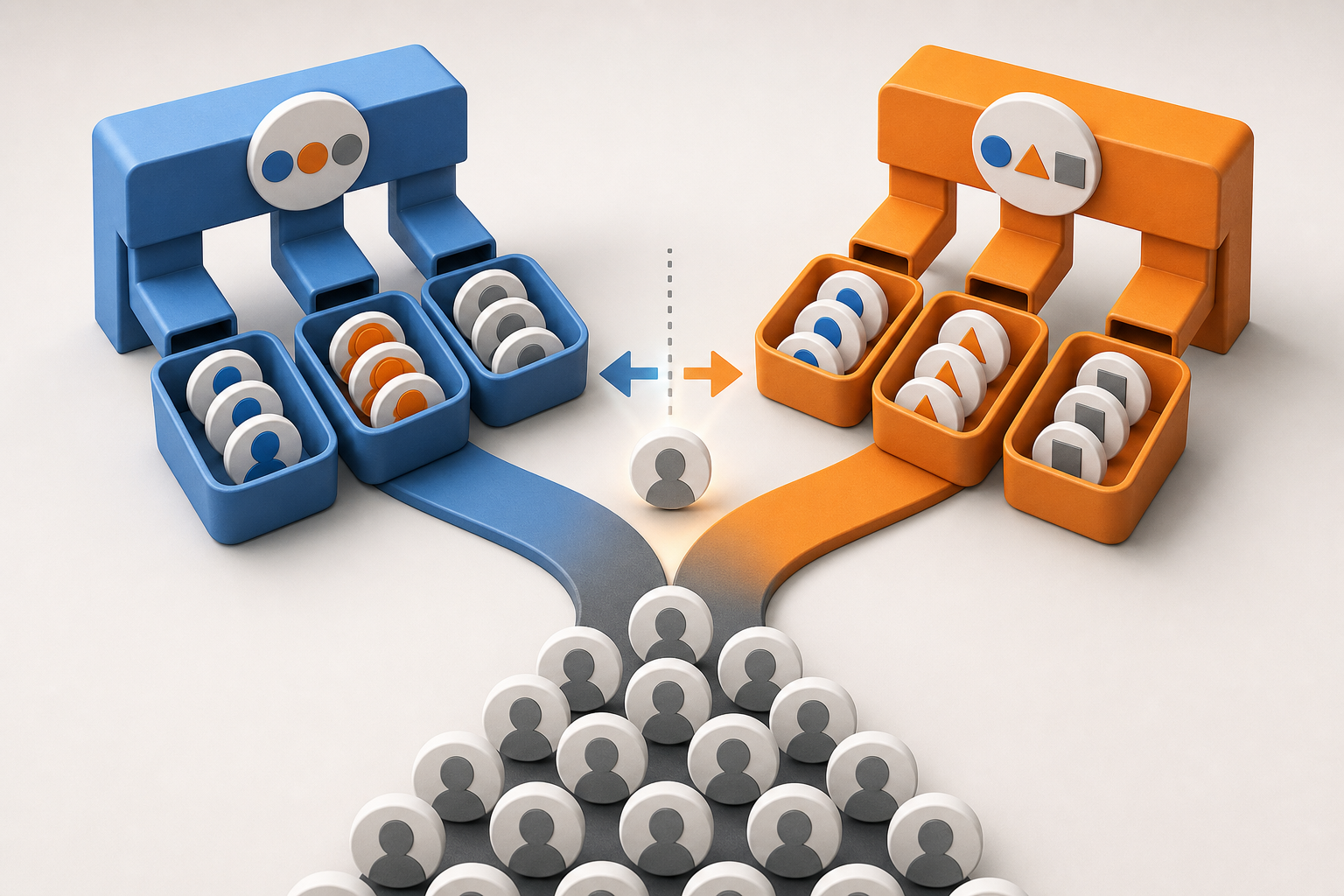
I’ve got some exciting news about Google Ads: They’ve introduced something called App Consent Insights! This new feature aims to give us, the advertisers, a much clearer picture of how consent affects our app campaign performance.
What’s new? There’s this cool diagnostics view that breaks down consent data across various apps, platforms, regions, and traffic sources. It’s a game changer for understanding where we might have gaps in our setup.
Zoom in. I can now see an overall consent rating described as “Excellent,” “Good,” or “Poor.” Plus, there’s a live count of apps actively sending consented data and a detailed table that shows consent rates for conversions, including the differences between EEA and non-EEA users.
Why it matters to us. With privacy regulations getting stricter, consent isn’t just a compliance issue—it’s a critical factor for measurement and optimization. This update gives us more visibility into how consent setups could be holding back our performance.
Between the lines. Google is making it easier for us to measure and act on consent data at a time when signal loss significantly impacts campaign performance.
What to watch. We should start looking at optimizing not just for conversions, but also for improving consent rates as another lever of performance.
Bottom line. With better visibility into consent, we can achieve better data quality and ultimately, better campaign outcomes.
First seen. Google Ads expert Thomas Eccel first noticed this update on LinkedIn.
For years, I’ve been told to stick to a set of guidelines: always use top-notch creatives, maintain a polished brand, follow scripts, and adhere to platform-recommended formats.
Lately, while navigating ad accounts or simply scrolling through feeds, I’ve noticed something intriguing. The ads that grab my attention often defy these rules. They’re less polished, scrappier, and sometimes referred to as ‘ugly ads.’ What’s fascinating is that they’re outperforming the traditional, polished ones.
More brands are deliberately breaking so-called best practices to stand out. It’s important to remember that these practices represent an average of what worked for others in the past. By the time a strategy becomes a platform-recommended rule, it might have already lost its edge.
This is why defying best practices can lead to success — but only if you understand the reasons behind them.
Why Breaking Best Practices Enhances Ad Performance
Before diving into what to change, it’s crucial to understand the rationale behind existing rules. Platforms like Meta and TikTok have dual objectives:
They aim for you to spend money on ads.
They want to keep users engaged on their platforms.
The best practices they promote are designed to ensure a seamless experience, encouraging ads to resemble others. The issue is that familiarity eventually breeds invisibility. When I adhere too closely to the rules, my ads risk blending into the background noise, overlooked by users.
Highly-produced ads often scream ‘this is an ad,’ prompting users to skip them before my message hits home. In contrast, when my ad resembles something a friend might share, users’ defenses remain down longer, potentially transforming a scroll into a conversion.
This is why many top-performing ads today don’t appear traditionally polished or on-brand. They break patterns instead. Consider:
Grainy phone footage.
Notes app screenshots.
Green-screened reactions or commentary videos.
Other lo-fi formats that outperform studio-quality creatives.
To implement this, I started intentionally reducing my production value and experimented with formats like point-of-view (POV) shots tailored to various personas.
Many brands have adopted guidelines that make them seem faceless and untouchable. They refrain from showing a messy office, an unpolished founder, or anything that challenges their corporate script. However, others are discarding that playbook, embracing founder-led ads that deviate from the polished executive version.
There’s a catch.
Breaking the rules works only when it’s genuine. I’ve learned that faking authenticity is easy to spot and can backfire. This was evident in a viral series of videos where McDonald’s CEO appeared to present a new burger, but his execution was criticized for being stiff and unconvincing.
As shown in a Dineline video, his performance appeared staged. Contrarily, Burger King’s president presented their burger with no hesitation, offering a genuine and relatable moment.
The distinction was evident: One was a product pitch, and the other felt authentic.
If my leadership doesn’t genuinely believe in the product, neither will my customers. Rule-breaking should allow us to be real, rather than simply appear unpolished.
You’ve probably encountered video hook best practices like ‘show the product in the first two seconds and state the value prop clearly.’ Sound familiar?
Imagine my ad starting with a screenshot of a negative comment, like one for a skincare product stating, ‘This probably smells like old socks, and does it even work?’ My ad would then show the founder confidently disproving this in an unscripted manner, applying the product.
Though this breaks the positive-association rule, it leverages viewers’ curiosity about digital conflicts. By the time they realize it’s an ad, they might already be engaged.
I learned not to abandon all polished assets just yet.
Rule-breaking is strategic, and often misunderstood when the ’80/20 rule’ is ignored.
Switching completely to shaky phone footage isn’t wise. Keeping 80% of the budget in traditional ads while using 20% for testing unconventional ones can be effective.
Next testing campaign, I plan to try:
The silent test: Running a silent ad with bold captions to stand out in a noisy feed.
The UI ghost: Using static images resembling platform notifications to pause scrolling.
The algorithmic trust fall: Disabling auto-optimizations in a campaign to test creative performance without constraints.
Don’t Follow the Rules; Understand Them
Best practices are a guide, not a strategy. To move beyond them, I do it systematically.
I start by questioning the rule’s existence, evaluating its current relevance, and testing its opposite in a structured manner. Comparing traditional and lo-fi approaches helps me understand user engagement better.
In an environment where brands play it safe, those who understand and strategically break the rules will capture attention and conversions. My goal is to learn faster than the competition, skipping guesswork.
I’ve discovered that Google has enhanced the Google Ads call campaign measurement with a new AI-qualified call leads feature. This upgrade focuses on boosting lead quality, moving beyond just measuring call length.
What’s new. Through machine learning, AI-qualified call leads analyze calls to determine if they represent valuable business opportunities. The system seamlessly integrates this data into bidding and reporting for improved results.
Zoom in. As an advertiser, I now receive AI-generated call summaries and tags, providing clearer visibility into each interaction. This transparency allows smart bidding to prioritize leads of higher value instead of relying solely on call duration.
Why I care. Call campaigns have traditionally depended on call duration to gauge value. With this update, I can shift the focus to actual lead quality, filtering out low-value interactions, including spam and robocalls. This change means better ROI, reduced wasted spend, and a clearer understanding of which calls really make a difference.
How it works. Recording calls is a default feature for most advertisers, allowing AI to evaluate call quality effectively. However, sectors like healthcare and financial services are exceptions. Advertisers, including myself, can adjust call length thresholds or opt to disable recording in account settings.
The fine print. Currently, this feature is available only for calls within the U.S. and Canada.
I’ve recently discovered that Google has introduced some exciting AI safety features in their Ads Advisor, which could really transform how we manage campaigns. This update promises to automate policy fixes, enhance security, and expedite certifications, all to help us run our campaigns more efficiently.
As someone who spends a lot of time tackling policy issues and managing certifications, this news is music to my ears. With advertising campaigns becoming increasingly complex, having AI handle these time-consuming tasks could significantly boost our productivity and performance.
What’s New. The latest update brings proactive troubleshooting, continuous security monitoring, and immediate certifications. Thanks to AI and Google’s Gemini capabilities, these features promise to be a real game-changer.
Zoom In:
Ads Advisor can now automatically flag and resolve policy violations before they even catch our attention. This proactive approach ensures we stay ahead of potential issues.
The new security dashboard is always on the lookout for risks such as suspicious domains or dormant users. It’s like having an ever-vigilant guard protecting our accounts 24/7.
Imagine getting certifications that used to take weeks, approved instantly with just a click. This means we can focus on strategy rather than paperwork.
How It Works. Ads Advisor proactively scans accounts and sites, offering up fixes and confirming resolutions without the need for manual intervention. On the security front, it continuously checks account health and even supports passkey use, reducing our dependency on passwords.
Why We Care. These features save us hours that were once spent fixing issues, upping our security game, and dealing with certifications. This proactive system reduces delays and risks, ultimately enhancing campaign speed and efficiency.
What to Watch. Google plans to roll out these features for English-speaking accounts over the coming months, with additional languages to follow.
I often find that platform reporting can lead me astray when trying to gauge the real impact of Demand Gen creative. To get a clear picture, conducting controlled experiments can validate if my creative work genuinely boosts conversions.
Demand Gen campaigns shine across YouTube, Discover, and Gmail, but they also bring a challenge—what I call the “attribution illusion.” It’s frequent for me to question whether reported conversions are truly incremental or if users would have converted through search regardless.
Google introduced asset uplift experiments in November, allowing me to measure the impact of my Demand Gen creative using an A/B split test. This feature helps replace assumptions with clearer insights into what’s truly driving results.
Relying heavily on creative instinct or standard reporting can misdirect efforts and waste valuable resources on underperforming assets. Google’s A/B testing capabilities empower me to isolate the impact of individual assets, preventing such outcomes.
Why attribution doesn’t equal incrementality
For example, if someone views a Demand Gen ad on YouTube but doesn’t click, only to search for my brand later and convert, Google might still credit the Demand Gen campaign. This attribution reflects correlation more than causation.
To measure accurately, I need to understand the scenario without showing the creative. Withholding test assets from a portion of the target audience helps establish a baseline.
The difference in conversion rates, or any key KPI between groups exposed to the ad and those not, reveals the actual incremental lift the creative drives.
Launching experiments without enough data for statistical significance is a common misstep. Before testing, I ensure campaigns meet necessary prerequisites to avoid inconclusive or invalid results.
Conversion volume
Google suggests having at least 50 conversions across test groups during the experiment for accurate lift measurement. If primary conversions fall short, I consider optimizing the test around micro-conversions like “Add to Cart.”
Budget minimums
Experiments require continuous, uninterrupted spending. A limited budget stopping my campaign early skews data for the control group.
The campaign budget must be sufficient to run for at least four weeks or until statistically significant results are achieved.
Creative isolation
I test one new variable at a time to determine if a specific asset drives uplift, keeping all other campaign elements unchanged.
Running a creative uplift test in Google Ads is now more streamlined. Here’s how I set up a valid experiment.
1. Define a clear hypothesis
Each scientific test starts with a clear hypothesis. I avoid tests without defined objectives. For example:
Bad hypothesis: “Let’s see if our new video works.”
Good hypothesis: “Adding user-generated content (UGC) to our Demand Gen asset group will drive a 10% incremental lift in ‘purchase’ conversions compared to standard static image carousels.”
Navigate to the Experiments interface
In my Google Ads account, I navigate to Campaigns > Experiments. I create a new experiment, selecting Asset tests provided by you for a Demand Gen campaign.
Configure a 50/50 split
I define a 50/50 cookie-based split to ensure both groups have equal historical data and algorithm weighting, preventing users from being in both test arms.
My existing campaign becomes the control, and the new asset campaign serves as the treatment.
Lock your variables
Once started, I practice extreme discipline by not altering audiences, targeting, or making drastic bid and budget changes.
Any changes during the test can introduce noise, affecting the statistical significance of results.
Set the duration
I run experiments for at least four weeks. Week 1 is a learning period, and Weeks 2 to 4 provide actionable data.
Longer conversion cycles in B2B SaaS might require six to eight weeks.
A positive lift with 95% confidence means my creative asset adds real value. I calculate incremental cost per acquisition (iCPA) by dividing the treatment group’s ad spend by incremental conversions over the control.
This iCPA becomes my benchmark for further scaling.
Outcome 2: Negative lift
Creatives may underperform, perhaps being too disruptive or skipped in ads. Pausing these assets is crucial to let data direct budget choices over personal preference.
Outcome 3: Inconclusive result
If results are negligible and don’t confidently attribute conversions after four weeks, I might extend the test for more data. If still inconclusive, trying a drastically different creative asset is my next step.
Prove creative impact with incrementality testing
Creative remains a powerful differentiator for performance. Creating high-quality video or UGC is one thing, but proving its impact with scientific rigor strengthens my creative decisions.
Asset uplift experiments provide evidence of Demand Gen’s budget worthiness to stakeholders. When I start with a holdout test, establish a baseline, and let data guide my creative roadmap, the results speak for themselves.
When it comes to Google Ads management, I’ve always followed the same routine: logging in, evaluating the performance, making updates, and crossing my fingers for success.
Despite advances in technology, from spreadsheets to automated bidding, the fundamental process hasn’t changed—until now.
Today, groas is shaking things up with a new, fully autonomous model for managing campaigns. The aim? To seamlessly handle the entire advertising process without constant manual input.
This revolutionary system has been in the making for years. Our company has developed an AI-driven approach that runs 24/7, matching or even exceeding industry benchmarks in PPC performance.
From building a campaign to managing bids, creating ad copy, and expanding keywords, this AI network takes care of everything autonomously.
When we first launched groas as a lightweight platform, it primarily provided optimization tips. But the true game-changer came from real-world data.
Early adopters joined from various industries, providing invaluable data that shaped groas into the powerhouse it is today.
Thanks to this diverse data from real campaigns, our AI has become skilled at understanding what truly works.
Our founder, David Pourquery, once shared the frustration of valuable recommendations sitting idle, awaiting approval. Now, our system makes those changes automatically.
We recently overhauled our system, creating interconnected AI agents that process mountains of data every hour, lifting the limits of manual management.
Ads management tasks are automated, allowing human professionals to focus on bigger strategic goals. groas delivers dynamic landing pages through a single JavaScript line, enhancing conversion rates continuously with A/B testing.
I don’t have to check in daily. Weekly reports summarize the autonomous progress while a human PPC manager supervises it all.
Starting off with groas is quick and easy. My personal account manager handles the setup, providing a detailed action plan within a day.
groas now autonomously manages significant monthly ad spends, all through word-of-mouth and direct referrals—without a dime spent on advertising.
Our client base includes businesses seeking consistent results and agencies leveraging groas for streamlined campaign execution.
With Google’s lean towards automated ads, groas offers a unique, fully autonomous solution that maintains strategic involvement through a dedicated manager.
The industry has long debated automation degrees in PPC. groas answers by fully automating while managing extensive ad spend.
groas has transcended traditional approaches; we’ve reduced the need for recommendation engines entirely.
Our services start at $999 per month, scaling as needed. This model requires a minimum $2,000 monthly ad spend to optimize data effectively.
I recently dove into Google Ads Asset Studio to see what all the hype was about. I’ve heard declarations like, “Google just ended all excuses for not running video ads!” and “It’s a total game-changer; no production budget needed!”
The process is supposed to be simple: upload some images and get campaign-ready videos in minutes. Using Google Ads > Tools > Asset Studio, I can manage and scale images and videos effortlessly across various ad formats.
Recent additions like Veo, Google’s AI video model, and Nano Banana Pro suggest we can transform a few product images into engaging video ads almost instantly.
But does it really change the advertising game? Let’s explore if it’s truly worth our time.
From the Think with Google article about AI-generated ads, such as those for Cosmorama, I tried to reverse-engineer their imaginative approach. Unfortunately, despite using Nano Banana and Veo, I encountered many limitations.
For instance, I found the lack of scene-level control problematic. No prompting for video scenes meant I couldn’t guide the animation’s motion or pacing.
When generating videos, anything that resembled a human face—AI-generated or not—caused errors. This restriction limited my asset options significantly.
The audio options were also very limited. Unlike Cosmorama’s videos with cinematic scores, I was stuck with a small set of preloaded audio without the ability to upload custom tracks.
Overall, while Veo 3 introduced significant restrictions within Asset Studio, requiring a shift from expectations of advanced creative freedom.
While simplifying production could be beneficial, if you were expecting full creative control, you might be disappointed.
Thinking about whether Asset Studio truly saves time and effort, my experience suggests it’s a mixed bag. For brands previously in need of full production teams, Asset Studio might offer a faster and more cost-effective solution. However, for agencies or individuals incorporating this into existing workloads, it turns creative constraints into a newfound responsibility.
Regarding AI ad compliance, it’s worth noting there are no current U.S. federal laws against using AI in ads. However, places like New York are setting new precedents with upcoming laws requiring disclosure of AI use.
On the brighter side, if you use Asset Studio with ethical transparency in mind, although there’s no watermark or disclosure methods built-in, Google’s SynthID supports invisible AI tagging.
Could this tool live up to its potential without succumbing to ‘AI slop’? Josh Spanier from Google suggests not to worry, yet it’s essential to maintain control to avoid low-quality AI-generated ads from being published unwittingly.
Asset Studio indeed offers a streamlined way to bring product images to life, optimized for product integrity through tools like Nano Banana 2.
Features like quick trimming and leveraging simple templates show promise in turning around high-performing, concise ad creatives, even doubling CTR compared to previous client efforts.
In conclusion, while Asset Studio isn’t a complete game-changer, it provides tools that democratize creative access for those lacking a full production budget. However, it’s vital to measure the outcomes in terms of conversions and sales.
I’m running tests to see what truly holds up. Stay tuned.
As someone who frequently works with Google’s advertising tools, I know firsthand how crucial security is. Starting April 21, Google is implementing a mandatory multi-factor authentication (MFA) requirement for its Ads API. This is a significant move towards enhancing security, but it’s one that might need us to rethink our authentication workflows.
Driving the news. Google will gradually enforce mandatory MFA for the Ads API, aiming for complete roll-out just weeks after the initial date. This means we all need to be prepared.
This update directly impacts those of us generating new OAuth 2.0 refresh tokens, as it mandates a more secure authentication process.
What’s changing. We’ll now need to add another step in verifying our identity. This could be in the form of a phone prompt or an authenticator app, alongside the usual password.
Existing OAuth tokens we’re already using will stay unaffected, but for any fresh authentications, MFA will become the default requirement. If we’re not yet using two-step verification, it’s time to set it up.
Why we care. This shift influences how we manage and access our Google Ads data through various APIs and connected tools. While it undeniably enhances security and mitigates unauthorized access risks, it could also require us to adjust existing workflows, especially when generating new credentials often. Preemptive preparation can save us from potential disruptions.
Who’s affected. If your applications or workflows rely on user-based authentication, you’re in for some changes.
User authentication workflows: These will need MFA for new token setups.
Service account workflows: Thankfully, these remain untouched. They’re actually recommended for automated or offline scenarios.
The requirement isn’t limited to the API alone. We’ll also see it in tools like Google Ads Editor, Scripts, BigQuery Data Transfer, and Data Studio.
The big picture. As we lean more heavily on ad platforms for sensitive data and automation, security can’t be pushed aside. This need grows as API access proliferates across various teams, tools, and integrations.
Yes, but. While boosting security against unauthorized intrusions is welcome, we must consider the challenges it introduces. Especially for teams like ours that often create new credentials or depend on manual authentication flows.
I’ve noticed a growing interest in ChatGPT ads as an advertising channel. However, there’s significant uncertainty due to limited data and constantly changing features.
OpenAI is stepping into new territory with their advertising platform, and as an advertiser, I’m experiencing mixed feelings. The data is sparse, performance metrics are unclear, and the rapid evolution of the product adds another layer of complexity.
Driving the News. Two months into ChatGPT ads, I’m finding that although experimenting is underway, the lack of clear measurement tools and established benchmarks is a challenge.
Early campaigns are mostly impression-based, leaving me wanting more insight into their effectiveness.
I’ve heard that CPMs are quite steep, with initial spends in the six-figure range.
Some of us feel the product is still in its infancy and maturing very slowly.
The Vibe Check. When I speak with other advertisers, the sentiment ranges from cautious optimism to frustration. On one hand, there’s excitement due to ChatGPT’s innovative approach as an AI platform.
On the flip side, the lack of transparency and targeted reporting leaves much to be desired.
Why We Care. From my perspective, this highlights the dual nature of investing in AI ad platforms. ChatGPT promises access to a fast-growing audience, but the absence of concrete measurement tools makes large-scale investment risky.
It’s crucial for me to proceed with thoughtful testing and establish a solid AI strategy without committing too much of the budget just yet.
The Bigger Picture. OpenAI is striving for success by balancing AI development and enterprise growth, all while facing stiff competition from giants like Google and Anthropic.
Some industry insiders feel OpenAI’s broad experimentation might dilute its focus. The withdrawal of the Instant Checkout feature and losing ground in video ambitions illustrate this point.
How Ads Actually Show Up. Initial tests indicate that ads might impact user journeys indirectly. For example, a sponsored retailer may be highlighted more prominently among recommendations.
Despite these placements, platforms assure that ads don’t drastically alter the fundamental responses.
Yes, But…. I notice an ongoing push and pull between maintaining consumer trust, ensuring unbiased answers, and fulfilling advertiser goals to boost visibility.
How this balance is managed will inevitably influence the future development of AI ads.
What Marketers Should Do Now. Experts suggest that brands don’t need to make hasty decisions. While large brands might gain from early experiments, others should focus on strategic development as the field evolves. Understanding how AI integrates into overarching media strategies is key.
The Bottom Line. ChatGPT ads are still in their infancy. They hold promise but remain unproven, requiring advertisers like me to tread carefully while waiting for the platform to mature and meet expectations.
Search advertising continued to lead the pack in 2025, although its growth took a slight dip as digital advertising landscape evolved. What really struck me was how U.S. search ad revenue soared to $114.2 billion.
Despite being the largest ad channel, growth slowed down a bit, indicating a shift towards exciting AI-driven ad formats. It’s fascinating to see how advertisers are reallocating budgets towards these new trends.
Throughout 2025, the digital advertising market in the U.S. climbed to a phenomenal $294.6 billion, even without major cyclical events like elections or the Olympics driving it. The final quarter alone brought in a whopping $85 billion.
When I delve into the growth figures, video, social, and programmatic formats emerged as the fastest-growing sectors. Digital video revenue jumped by an impressive 25.4%, reaching $78 billion, while social platforms saw a 32.6% increase to $117.7 billion.
The influence of AI is undeniably reshaping the advertising landscape. It’s not just a tool anymore; it’s transforming how we discover, purchase, and measure ads across various platforms.
What truly captured my attention is the concentration of market control. The top 10 players now hold 84.1% of the market share, leveraging AI and large-scale data to assert dominance.
For anyone involved in digital advertising, it’s crucial to adapt to these shifts. With search as a somewhat stable force, emerging formats like video and social offer more exciting opportunities backed by automation and AI.
The insights come from the IAB/PwC’s comprehensive study of U.S. internet advertising revenue, giving us a look into the future of digital marketing.