
I don’t recommend launching most paid media campaigns with the biggest budget available.
When I see advertisers spend aggressively before validating performance, the outcome is often predictable: acquisition costs rise, optimization slows, and stakeholder confidence weakens when the promised results fail to appear.
I prefer a phased rollout because it gives a campaign time to generate meaningful data, improve bidding efficiency, and reveal which audiences, keywords, and creative ideas deserve more investment.
Here, I’ll explain why frontloading ad spend usually backfires, when a more aggressive launch may be justified, and how I scale budgets without sacrificing long-term performance.
Fire bullets before cannonballs
For those of us who make a living driving growth through paid media, there’s one problem almost as frustrating as a tiny advertising budget: an advertiser determined to spend too much, too soon.
I believe every paid media launch should follow a deliberate plan. As Jim Collins wrote in Great by Choice, successful companies fire “bullets” first, learn from the results, and then fire “calibrated cannonballs” with greater confidence.
In my experience, most campaigns aren’t ready for a cannonball on day one. The algorithms are still learning, Quality Scores haven’t matured, and I don’t yet know which audiences, keywords, or creative assets will perform best. That is usually when acquisition costs and inefficiencies are highest.
I recognize that exceptions exist. Years of relevant historical data or unusually strong evidence may occasionally justify a more aggressive launch, but I consider those situations rare.
More often, I see frontloaded spending create expensive lessons instead of faster growth. The following scenarios illustrate why companies choose this approach and why I usually recommend a measured rollout instead.
Your budget isn’t a KPI
I never confuse the amount spent on advertising with actual performance, regardless of how an ad platform labels its reporting columns.
From what I’ve observed, street-smart owner-operators tend to begin with careful ad budgets. Deep-pocketed decision-makers are more likely to focus on how much they are capable of spending.
By deep-pocketed decision-makers, I mean anyone from a high-ranking Fortune-something executive or venture capitalist to a serial entrepreneur who has suddenly received an unusually generous investment from a single backer.
When Nassim Taleb praises people with “skin in the game,” I take the point to be that risk looks different when I must personally bear its consequences. Risk asymmetry allows a splashy failure to hurt the company far more than it hurts the person who encouraged the gamble.
Directly or indirectly, I’ve analyzed close to 1,000 ad accounts over the years. The pattern has been clear: advertisers that overspend early in pursuit of hypergrowth often flame out and lose stakeholder support.
Dig deeper: PPC budgeting in 2026: When to adjust, scale, and optimize with data
Four frontloading arguments—and why I question them
1. “It’s a land grab. We need to spend aggressively to gain market share quickly.”
I rarely consider this a prudent strategy, but I understand the motivation behind it.
The goal is to capture market share and secure a first-mover advantage before new entrants catch up. I can think of plenty of fast-moving customer acquisition environments, particularly among technology startups, where that prospect feels irresistible.
I once joined a project to help a startup with a greatly diminished, modest, incremental Google Ads campaign. What shocked me was how little the company had learned—and how little money remained after it had raised more than $250 million. Nearly all of that funding had been burned, including large sums spent on advertising, and there wasn’t going to be more where it came from.
My team helped the company measure KPIs such as “new accounts that actually led to revenue” and “lifetime revenue from those accounts.” Despite three years of relentless nine-figure spending, no one had made those outcomes a serious measurement priority.
I’ve also seen bootstrapped startups become carried away after celebrating their first $1 million to $2 million in “real” venture funding. They may have less money to burn, but the faulty logic is the same—and the risk can be even greater.
Over the years, I’ve helped niche SaaS startups such as Clio in legal practice management and SuccessFactors in HR management achieve prominence without pretending they were already operating at their future scale.
I don’t see small beginnings or cautious ad budgets as barriers to unicorn status. I can match customer acquisition spending to a company’s current growth stage without sentencing it to permanent smallness.
For initial paid growth, I recommend defining the addressable market relatively tightly. I save the “huge addressable market” story for longer-horizon conversations with investors instead of using it to justify immediate overspending.
To keep early-stage growth in perspective, I remind myself how a behemoth like Uber began. Its seed round was $1.25 million, and the company was valued at a modest $4 million.
I’m happy to think big, but I don’t try to act bigger than the company really is when the money and product-market fit aren’t there yet. If the business establishes a meaningful lead, network effects and access to more capital can accelerate growth later.

I often wonder why founders race through essential growth stages by setting their newly raised—but finite—cash on fire. Sometimes investors encourage it. In other cases, the growth team treats fresh funding like permission to spend without restraint.
I know what happens when the hangover arrives. Investors see high churn, stratospheric customer acquisition costs, or few tangible signs of customer acquisition at all. They react as though they have been mortally wounded, even when they helped create the strategy.
I always return to unit economics because they still matter. Other founders may appear to have repealed the laws of economics, but I remember the familiar parental warning: “If Billy jumped off a cliff, would you do it too?”
2. “We’ll learn faster.”
I agree that predictive bidding algorithms perform poorly when conversion and value signals are sparse. More data can help them recognize the patterns associated with higher-value sessions.
My team also needs to move through feedback loops to understand what works, what fails, and how the campaign should evolve.
One genuine benefit of higher volume is that I can discover necessary negative keywords more quickly. With low query volume, many bad searches may remain hidden in “Other Search Terms” for a long time.
Even so, I find that spending becomes counterproductive beyond a certain point. More money does not automatically turn incomplete data into reliable insight.
- I consider the length and variability of the sales cycle. If two or three months normally pass between the first ad view and a sale, forcing too much budget into month one leaves me running ads almost blind, with little opportunity to learn and iterate before the money is gone.
- I watch for self-inflicted CPC inflation. If I charge into an auction that has reached a workable equilibrium and bid too aggressively, I may raise my own costs and prompt competitors to bid higher as well.
- I expect early metrics to be relatively weak because the campaign hasn’t established mature Quality Scores. In one account, CPCs eventually fell by 80% as Quality Scores developed and our optimizations took effect. I was relieved that the initial pilot had used a modest budget.
I see little logic in pouring a flood of money into what may be the worst ROI environment the campaign will ever face. Even four to six weeks later, ROI is often substantially better as Quality Scores mature and statistical confidence improves.
Dig deeper: Stop looking for the perfect PPC budget split
3. “We’re pre-revenue, and our investor wants a quick market-size estimate.”
Whenever I hear this argument paired with a hefty new check, I have to ask: What could possibly go wrong?
To me, this takes the land-grab strategy even further into the intellectual ether. Customers—or almost any other concrete business outcome—may not be the immediate goal.
From where I sit, the investor’s instruction often amounts to this: “We don’t care if we spend a huge amount of cash in the first month. Just get us a pile of data.”

When a powerful backer’s name comes up, it’s tempting for everyone to shrug and think, “Billionaire knows best.” I’ve watched teams dutifully throw money at a performance channel without asking it to perform, only to learn 35 days later that the investor won’t contribute another penny. The founder is then left without a credible Plan B.
I can imagine the next investor arriving with a few basic questions.
- “Q: What is the company, exactly? I mean, what product or service do you provide?”
- “A: We’re still figuring that out, but we know there must be a gold mine in there somewhere, given how many music fans are searching for [music examples redacted to protect the innocent].”
I don’t consider that a true launch because the project was never clearly defined in the first place.
To be fair, I do believe fail-fast market research can be valuable. My team once spent about $10,000 over a short period for a client exploring a telecommunications business model. The test gave him a definitive answer about demand patterns, and he decided not to enter that vertical.
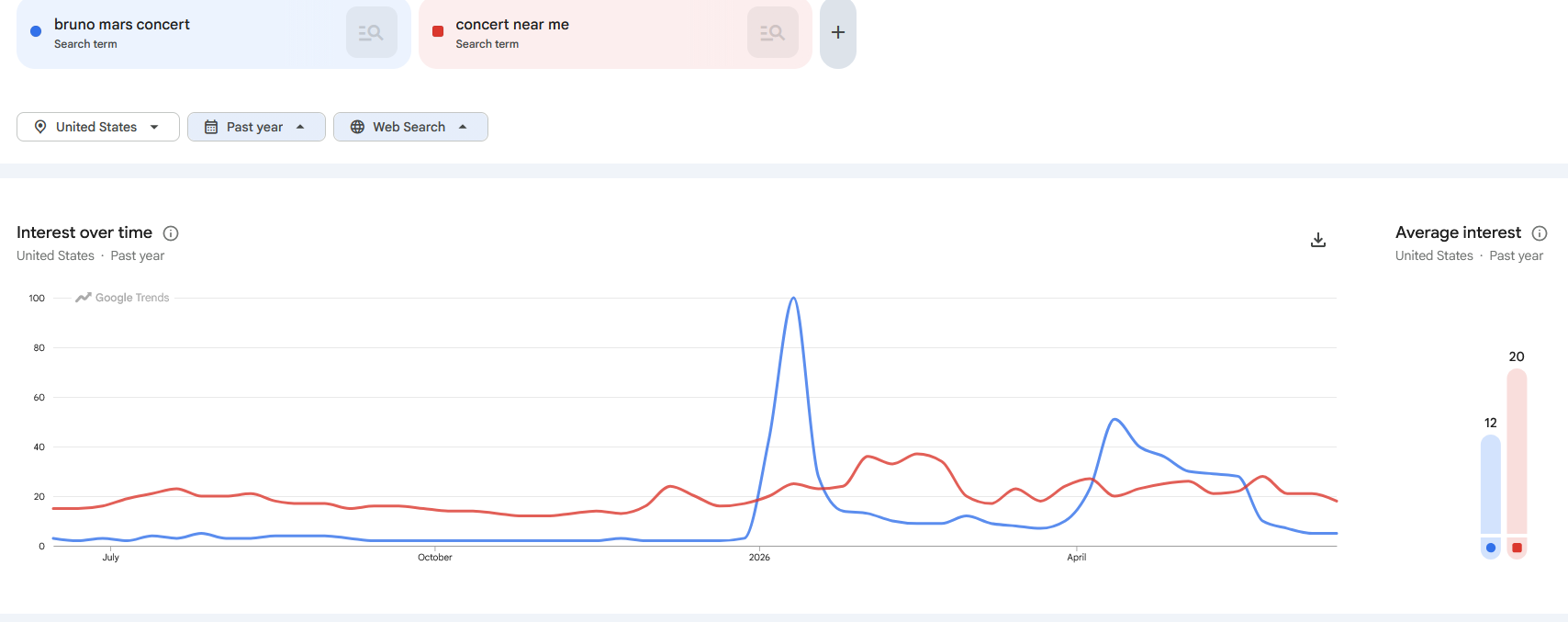
I regard Google Ads as an invaluable market research tool when I use it with discipline. I define a meaningful business outcome and require potential customers to clear a credible threshold of intent. If I don’t need that level of evidence, I can explore the question with Google Trends, Google Analytics on a purpose-built content site, Semrush, or a dedicated market research company.

In an unusual research scenario like this, my goal is to control waste. I may not be able to eliminate it entirely, but I can keep it proportional to the value of the answer I’m seeking.
4. “A vendor won’t work with us unless we spend more immediately.”
I know that some ad platforms, third-party software tools, and managed services impose steep minimums. I also understand why advertisers feel pressured by FOMO to overspend for entry into an exclusive club.
I think the early OpenAI ad pilot offered a timely example. Steep minimums and uncomfortably high CPMs appeared to exclude the typical advertiser.
I won’t twist myself into a pretzel to rationalize wildly overpaying for every ad interaction. Eventually, the market may become more accessible. I only have to compare how easy it is to begin with StackAdapt in programmatic advertising against the higher barriers associated with Google DV360 and The Trade Desk.
When I advise a smaller company, I encourage it to grow first and enter a more demanding platform only when its size and budget justify the move. I see this as a version of The Millionaire Next Door logic: buying a house I can’t afford or driving a luxury car doesn’t make me wealthy. It might prevent me from ever getting there.
Dig deeper: How to diagnose and fix the biggest blocker to PPC growth
Earn the right to scale
My core conclusion is that frontloaded ad spending often destroys the support a campaign needs to succeed. I don’t want to taint an entire channel—or the company’s broader growth function—by accelerating so hard that the campaign skids into a ditch. I can travel much farther after building solid traction.
For an owner-operated business with real skin in the game, this is about more than stakeholder confidence. Severe waste isn’t merely bad optics; it can threaten the company’s future.
So, when an overconfident investor or ad platform sales representative urges me to go from “zero to sixty in 3.5,” I’m inclined to tap the brakes. I would rather earn the right to scale than discover too late whether the airbags work.
Inspired by this post on Search Engine Land.

Leave a Reply