As I dig into Google’s latest updates to the Google Ads Terms of Service, I’m struck by the emphasis on AI-driven automation and what it means for us as advertisers. These changes raise some intriguing questions about control and oversight.
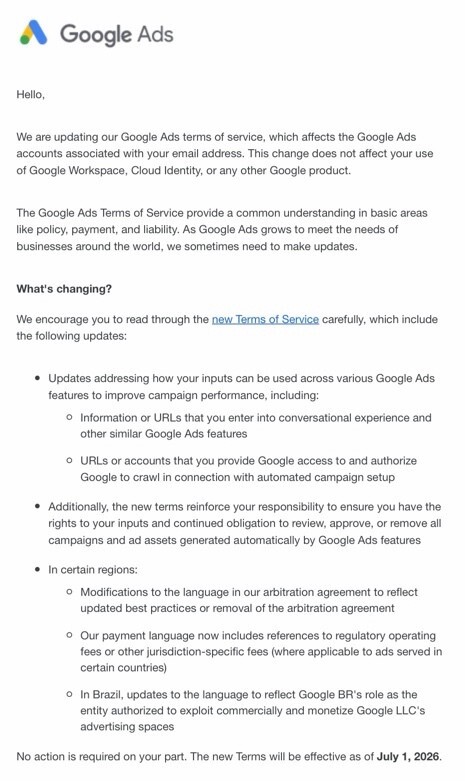
The big picture? These updates, effective from July 1st, apply solely to Google Ads accounts, leaving other Google products like Workspace untouched. Conveniently, we don’t need to take any immediate action.
What’s Changing? It seems Google aims to bolster the role of automation and AI in its advertising platform. Let’s unpack the key changes.
First, there’s updated language regarding how our inputs might be utilized across Google Ads features to enhance campaign performance. Additionally, there’s clarity on how Google’s systems may leverage information from conversational tools.
Importantly, provisions concerning the URLs and accounts we’ve authorized for Google’s automated campaign setups have been refreshed.
Why This Matters The broader implications here hint at Google assuming wider authority for using AI to craft and optimize ad elements for us. This doesn’t relieve us from our responsibility to review and approve campaigns, keeping us accountable.
For brands worrying about transparency and control, these revisions play a crucial role in compliance and performance accountability.
A Significant Shift There’s notable new language around automated campaign management. It suggests that unlike before, where opting in or out of automation features was straightforward, we’re now inherently authorizing Google to deploy automated processes for ads on our behalf.
Yet, we remain accountable for final campaign results, holding onto the reins of responsibility.
What Critics Say Some voices in the industry are skeptical. Anthony Higman, founder of AdSQUIRE, voices concerns that these updates dilute two core tenets of Google Ads: relevance and control. He particularly points to the nuances giving Google greater leeway in automated ad management while maintaining our accountability.
Higman feels this erodes our ability to opt into automation features, hinting at a shift in decision-making power towards AI systems.
Between the Lines We need to pay attention to our responsibilities. This includes ensuring we hold the necessary rights to any inputs shared with Google Ads and staying vigilant in overseeing auto-generated campaigns and assets.
Regional Updates Google isn’t stopping at universal terms. It’s also introducing region-specific changes in several markets involving arbitration agreements and legal compliance.
This includes adjustments reflecting recent legal practices and specifics on arbitration or fees that apply depending on location.
Advertisers from Brazil, for instance, face clarified language about Google BR’s authority in their transactions.
What’s Next Come July 1st, the updated Google Ads Terms of Service will be in place. While no immediate account actions are needed, reviewing these terms is advisable.
Inspired by this post on Search Engine Land.

Leave a Reply