Tag: AI-driven Advertising

  • Transforming Alexa: Your New Shopping Ally and Ad Hub

    Transforming Alexa: Your New Shopping Ally and Ad Hub

    I recently discovered how Amazon is revolutionizing shopping with Alexa by turning it into a powerful tool for both purchasing and advertising. It’s fascinating to see how they are threading advertising into AI-driven shopping chats, opening fresh channels for brands to connect with customers.

    Amazon is demonstrating that conversational and agentic shopping aren’t just futuristic ideas. They’re already changing the landscape of how we discover, compare, and purchase products today. It’s a compelling shift that makes shopping more interactive.

    As AI assistants evolve into shopping hubs, advertisers can seize the moment when I express buying intent, rather than depending solely on traditional search methods or passive sites. This is a game-changer for both consumers and brands.

    What’s happening: Amazon has cleverly merged its AI shopping assistant, Rufus, with Alexa+ to create an enhanced shopping experience named Alexa for Shopping. This service aids us in researching products, comparing options, tracking prices, building carts, and even automating purchases.

    Advertising is a key component of this new experience. Integrated directly into our shopping dialogues are sponsored products, brands, and conversational ad formats, making it easier for brands to capture our attention.

    What advertisers get: If you’re an advertiser, good news — your existing sponsored ad campaigns are automatically enabled to appear in Alexa for Shopping. The conversational ad formats also give brands a unique way to engage us throughout our buying journey. Tools like closed-loop measurement, first-party data signals, and AI-driven campaign optimizers make ad management more efficient.

    ```json
{
  "alt": "Mobile shopping interface showing a man wearing a grey performance tank top.",
  "caption": "Discover Accent Athletics' latest performance tank top, designed for comfort and durability. Perfect for intense workouts, this tank promises to keep you cool and unrestricted.",
  "description": "The image displays three mobile screens showcasing Accent Athletics' men's stretch performance tank top. The first screen highlights a model in a grey tank, with customer ratings and purchase details. The second screen details the product's fabric blend, care instructions, and features, emphasizing moisture-wicking technology and comfort. The final screen offers a Q&A section about the product's features, focusing on breathability, durability, and eco-friendliness. Ideal for fitness enthusiasts, the tank top combines style and functionality with advanced fabric technology. Keywords: performance tank top, Accent Athletics, workout gear, moisture-wicking."
}
```

    Why we care: The integration of advertising into Alexa for Shopping provides advertisers with access to rich conversations filled with intent, from the moment of product discovery all the way to purchase. This means a potentially shorter path to conversion and enhanced metrics tracking.

    The update also shows us how commerce and advertising are blending within AI assistants. This blend could potentially make our journey from product discovery to purchase smoother, while also offering advertisers comprehensive measurement abilities from the initial impression to the final purchase.

    By the numbers: In 2025, more than 300 million customers used Rufus, according to Amazon. They also reported that nearly 20% of us engage in ongoing conversations about brands when prompted by Sponsored Brands, and those prompts lead to a 6% increase in conversions.

    Between the lines: Amazon’s offering to advertisers is that conversational AI generates richer intent signals than traditional methods. Instead of decoding our needs from clicks or searches, Alexa can respond directly to our expressed requests, preferences, and purchase goals in our natural language.

    The bottom line: As shopping turns more conversational, Amazon is integrating advertising within the same platforms we use for product research, option comparison, and purchase finalization.


    Inspired by this post on Search Engine Land.


    crushpress.ai community screenshot
  • Evolving PPC Skills: Transforming from Keyword Manager to System Optimizer

    Evolving PPC Skills: Transforming from Keyword Manager to System Optimizer

    I’ve noticed how AI-driven Google Ads has revolutionized the PPC landscape. My role has evolved from merely executing campaigns to designing signals and guiding the conversion system.

    In the past, PPC was all about having control – managing keywords, match types, bids, crafting ad copy, and structuring campaigns to make the algorithm follow my lead.

    Back then, proficiency in Excel and pivot tables distinguished the best ad managers. Agencies and PPC experts thrived on their execution skills. Greater control over variables meant better job execution, a strategy that worked well for PPC’s first decade.

    However, Google Marketing Live (GML) 2026 heralded a significant shift for PPC. The focus moved from tactical control to system optimization, from managing keywords to signal design, and from setting up campaigns to aligning with machine strategy.

    With AI-driven Google Ads, it’s evident that execution alone is no longer a competitive advantage. As Selin Song from Google Customer Solutions emphasized, execution has become a commodity.

    Here’s what the new skill set involves.

    ```json
{
  "alt": "Speaker in teal suit on stage with large screen displaying 'Execution is becoming a commodity'.",
  "caption": "A thought-provoking message, 'Execution is becoming a commodity,' displayed on a large screen during an engaging talk.",
  "description": "The image depicts a speaker in a teal suit presenting on stage in front of a large audience. A prominent screen behind them showcases the phrase, 'Execution is becoming a commodity.' The scene suggests a conference or seminar setting, emphasizing the importance of innovative thinking in modern industries. The stage is well-lit with a metal framework and soft background lighting, providing a professional and focused atmosphere. Keywords: execution, commodity, presentation, innovation, conference."
}
```

    I’ve learned to design inputs – the new keyword research. Knowing what inputs to provide the system helps it find the right audience on my behalf.

    With AI Max for Search, I’m using a mix of broad match, keywordless targeting, text customization, and URL expansion. This strategy surfaces queries my keyword list wouldn’t catch, leading to an average of 7% more conversions or conversion value at a similar CPA/ROAS.

    Feeding the system accurate conversion data is crucial. If conversion actions are irrelevant, the system solves the wrong problems, and that responsibility falls on me.

    In terms of product and feed data, optimizing feeds with Conversational Attributes helps display products effectively in AI-generated responses. Ensuring audience signals are precise also shapes system operation, particularly with new prospects.

    The days of relying solely on keyword lists are long gone; today’s system demands a strategic approach with the right inputs to automation.

    ```json
{
  "alt": "The CapmatchOne logo with a gradient circle and bold text.",
  "caption": "Discover innovation with the CapmatchOne logo, featuring sleek typography and a modern gradient circle.",
  "description": "The CapmatchOne logo features bold, modern typography coupled with a gradient circle, symbolizing connection and innovation. The sleek design conveys a sense of progress and creativity. This image can be used for branding or promotional purposes, appealing to audiences interested in innovative solutions and forward-thinking designs."
}
```

    Value signal architecture has replaced traditional bid management. My focus is now on providing robust signals like first-party data and accurate conversion values to Smart Bidding.

    The advent of demand-led budget pacing means I set parameters rather than control pacing. Understanding product margins, inventory, lifetime value, and cash flow guides me in providing the right signals instead of merely setting bids.

    Journey-aware bidding allows me to optimize the full conversion journey, not just the endpoint, requiring a well-instrumented conversion path connected back to the ad platform for effectiveness.

    System prompting is today’s copywriting. AI Brief powered by Gemini helps me guide AI Max using brand-specific briefs to ensure it represents the brand accurately without over-constraining creativity.

    I’ve learned to write briefs that effectively convey brand strategy, assisting AI in maintaining brand integrity in every campaign impression.

    ```json
{
  "alt": "Bar chart showing ad performance metrics with data on clicks, conversions, and missed opportunities from Nov 26 to Nov 27, 2026.",
  "caption": "Analyzing Ad Performance: Discover missed opportunities and optimize your ad strategy with insights from clicks and conversion data.",
  "description": "The image displays a bar chart highlighting ad performance metrics over two days, from November 26 to 27, 2026. It shows actual clicks, missed clicks from low bids, and missed clicks from low budgets. The chart is accompanied by a table detailing missed clicks, missed conversions, missed conversion value, and recommended actions for various ad campaigns like Holiday Campaign 2026, PMax Nike, and others. This data is crucial for refining ad strategies and optimizing budget allocations."
}
```

    Budget architecture has taken precedence over daily budget adjustments. Campaign total budgets automate the process, and interpreting auction behavior in predictive systems has become my focus.

    I rely on missed opportunity reporting to make informed decisions about budget constraints and optimize growth opportunities within the architecture I construct.

    Measurement literacy has surpassed mere Quality Score management. Feeding the system quality signals helps it make informed decisions and optimizes bidding behavior through robust data integration.

    It’s crucial now to ask business-relevant questions that the system can optimize toward meaningful outcomes. Communicating system behavior in business language is becoming a survival skill, alongside maintaining human oversight to ensure strategic alignment.

    GML 2026 confirmed we’re already in this new phase. Thriving today means understanding the system’s needs and strategically providing those inputs to achieve business objectives.


    Inspired by this post on Search Engine Land.


    crushpress.ai community screenshot
  • How Google Ads’ AI Updates Impact Advertisers in 2026

    How Google Ads’ AI Updates Impact Advertisers in 2026

    As I dig into Google’s latest updates to the Google Ads Terms of Service, I’m struck by the emphasis on AI-driven automation and what it means for us as advertisers. These changes raise some intriguing questions about control and oversight.

    The big picture? These updates, effective from July 1st, apply solely to Google Ads accounts, leaving other Google products like Workspace untouched. Conveniently, we don’t need to take any immediate action.

    What’s Changing? It seems Google aims to bolster the role of automation and AI in its advertising platform. Let’s unpack the key changes.

    First, there’s updated language regarding how our inputs might be utilized across Google Ads features to enhance campaign performance. Additionally, there’s clarity on how Google’s systems may leverage information from conversational tools.

    Importantly, provisions concerning the URLs and accounts we’ve authorized for Google’s automated campaign setups have been refreshed.

    Why This Matters The broader implications here hint at Google assuming wider authority for using AI to craft and optimize ad elements for us. This doesn’t relieve us from our responsibility to review and approve campaigns, keeping us accountable.

    For brands worrying about transparency and control, these revisions play a crucial role in compliance and performance accountability.

    A Significant Shift There’s notable new language around automated campaign management. It suggests that unlike before, where opting in or out of automation features was straightforward, we’re now inherently authorizing Google to deploy automated processes for ads on our behalf.

    Yet, we remain accountable for final campaign results, holding onto the reins of responsibility.

    ```json
{
  "alt": "Google Ads Terms of Service update notification detailing changes effective July 1, 2026.",
  "caption": "Stay informed: Google Ads is updating its Terms of Service with changes effective from July 1, 2026. Be sure to review the updates to understand their implications.",
  "description": "This image is a notification from Google Ads regarding updates to their Terms of Service, effective July 1, 2026. It highlights changes that affect campaign performance inputs, includes regional-specific updates, and underlines new responsibilities for users. It encourages users to review the updated terms for a better understanding of policy changes. Keywords: Google Ads, Terms of Service, update, notification, campaign performance, policy changes."
}
```

    What Critics Say Some voices in the industry are skeptical. Anthony Higman, founder of AdSQUIRE, voices concerns that these updates dilute two core tenets of Google Ads: relevance and control. He particularly points to the nuances giving Google greater leeway in automated ad management while maintaining our accountability.

    Higman feels this erodes our ability to opt into automation features, hinting at a shift in decision-making power towards AI systems.

    Between the Lines We need to pay attention to our responsibilities. This includes ensuring we hold the necessary rights to any inputs shared with Google Ads and staying vigilant in overseeing auto-generated campaigns and assets.

    Regional Updates Google isn’t stopping at universal terms. It’s also introducing region-specific changes in several markets involving arbitration agreements and legal compliance.

    This includes adjustments reflecting recent legal practices and specifics on arbitration or fees that apply depending on location.

    Advertisers from Brazil, for instance, face clarified language about Google BR’s authority in their transactions.

    What’s Next Come July 1st, the updated Google Ads Terms of Service will be in place. While no immediate account actions are needed, reviewing these terms is advisable.


    Inspired by this post on Search Engine Land.


    crushpress.ai community screenshot
  • Unlock New Audiences with Google’s AI-Driven Targeting Mode

    Unlock New Audiences with Google’s AI-Driven Targeting Mode

    I’m excited to share that Google is rolling out an innovative AI targeting mode designed specifically for advertisers who want to reach fresh, brand-unaware audiences early in their discovery phase.

    Google is introducing this new “prospects” targeting mode to help advertisers, like myself, connect with consumers who have yet to engage with our brands.

    What’s happening. Google is enhancing its New Customer Acquisition tools by introducing the “new prospects” mode, set to launch this year.

    Unlike traditional methods, which target users who haven’t made a purchase, this mode aims to reach those completely unfamiliar with my brand.

    Google ensures the system automatically excludes users who have:

    • purchased previously,
    • searched for brand terms,
    • visited a website or app,
    • or engaged with brand content across Google and YouTube.

    The main goal is to focus advertising spend entirely on “cold” audiences, those who are still in the discovery phase.

    Why this matters. For brands like mine, this gives us more control over pursuing incremental growth, rather than just continually targeting those we’ve already reached.

    The new mode promises to connect us with new users earlier in their buying journey while improving efficiency through AI-driven exclusions and automation.

    The bigger picture. Google is positioning AI-driven targeting as a method for balancing growth with efficiency.

    Advertisers using the New Customer Acquisition Value Mode, like me, have seen a noticeable 9% improvement in ROAS when valuing new customers at twice the average order value.

    Between the lines. As AI-driven targeting expands, platforms increasingly rely on behavioral signals and first-party data to identify potential customers earlier in their purchase journey.

    What to watch. The effectiveness of the “new prospects” mode will largely depend on Google’s accuracy in identifying brand-unaware users and balancing reach with privacy concerns.


    Inspired by this post on Search Engine Land.


    crushpress.ai community screenshot
  • Discover the New Era of Google Display Ads in Demand Gen Campaigns

    Discover the New Era of Google Display Ads in Demand Gen Campaigns

    I’ve recently discovered that Google is reshaping our approach to Display Ads by integrating them into Demand Gen campaigns, providing us with wider reach and innovative AI-driven features.

    What’s happening? Now, I can effortlessly manage my placements on the Google Display Network (GDN) through Demand Gen campaigns. Interestingly, I still have the option to keep my ads running exclusively on GDN if that’s more suitable for my needs.

    Through Demand Gen campaigns, I’m able to extend my ad reach across YouTube, Discover, Gmail, Maps, and a vast array of Display Network sites, all within a more centralized system.

    Why do I care? This strategic shift by Google is crucial because it centralizes more inventory, harnesses automation, and leverages AI for enhanced campaign optimization. It’s become an essential factor for my performance and discovery ad strategies.

    As a Display advertiser, these adjustments mean I gain access to advanced AI features, greater cross-platform reach, and potentially increased efficiency. I see this as a shift towards less reliance on traditional standalone Display management over time.

    The bigger picture. Google is steering Demand Gen to be the go-to campaign type for visual discovery advertising, merging creative social-style distribution with its powerful AI targeting capabilities.

    Google claims an average ROI increase of 9.5% for those who’ve added GDN inventory to their Demand Gen campaigns, and I’m intrigued by the potential benefits.

    Between the lines. These changes provide me with access to the latest Demand Gen features announced at Google Marketing Live, including enhanced channel controls and forward-looking AI campaign tools.

    What to watch. With Google’s ongoing journey towards consolidating campaign management under AI-led products, I find myself reevaluating my strategies for upper-funnel discovery, Display, and performance-centric media purchasing.


    Inspired by this post on Search Engine Land.


    crushpress.ai community screenshot
  • OpenAI Enhances Ads Manager with Fresh Budget and Geo Features

    OpenAI Enhances Ads Manager with Fresh Budget and Geo Features

    The latest updates to ChatGPT Ads are empowering me as an advertiser with greater control over how I manage my campaigns, especially when it comes to pacing, location targeting, and engaging with ads more effectively.

    OpenAI’s recent rollout of updates to the Ads Manager Beta is expanding my capabilities in the realm of campaign pacing, targeting, and reporting. They’re also quietly testing intriguing new ad experiences within ChatGPT.

    With these ongoing enhancements, OpenAI is clearly investing in building a robust advertising platform. This makes ChatGPT an increasingly attractive channel for both performance and brand advertising.

    What’s new in Ads Manager Beta:

    Daily Budgets are Here. Now, I have the option to choose between a daily or a lifetime budget when setting up new campaigns.

    Currently, daily budgets apply only to newly launched campaigns. This change provides me with the flexibility to better manage pacing and spending, especially for ongoing campaigns or those requiring tighter control.

    Enhanced Geo Targeting. OpenAI is introducing more detailed location targeting options across the U.S.

    Now, I’m able to target campaigns by state, designated market area (DMA), and zip code, allowing for more precise audience targeting.

    These targeting settings can be applied either during campaign setup or modified later within campaign settings. This update aligns ChatGPT’s ad tools more closely with familiar location controls on platforms like Google and Meta.

    Aggregate Totals in Reporting Views. Now, the Ads Manager table views display aggregate totals for essential metrics such as impressions, clicks, and spending.

    ```json
{
  "alt": "OpenAI ChatGPT Ads product update email detailing new Ads Manager Beta features and ad experience tests.",
  "caption": "Discover the latest in ChatGPT Ads with this week's update, featuring enhanced budget control and targeting in the Ads Manager Beta, plus innovative ad experiences.",
  "description": "This image displays an OpenAI product update email for ChatGPT Ads. The update highlights new features in the Ads Manager Beta, focusing on daily budgets, geo-targeting by U.S. regions, and detailed list view totals for ad metrics. Additionally, an early test of a new ad experience is introduced, which includes dynamic CTAs like 'Shop Now' and 'Learn More.' This update aims to enhance user interaction and provide greater control over ad pacing and targeting."
}
```

    Having these totals available across campaign, ad group, and ad-level reporting views helps me quickly assess performance without the need for data exports.

    Testing New ChatGPT Ad Experiences. In tandem with the Ads Manager updates, OpenAI has begun testing new ad experiences within ChatGPT.

    Some ads now feature dynamic calls-to-action (CTAs) such as:

    • “Shop Now”
    • “Book Now”
    • “Sign Up”
    • “Learn More”

    OpenAI indicates that CTAs are automatically chosen based on ad creative and destination experience, with the possibility of advertiser controls for CTA selection in the future.

    OpenAI describes this feature as a lightweight enhancement aimed at improving user understanding and engagement with ads seen in ChatGPT.

    Why I Care. Essentially, these updates show that OpenAI is committed to developing a sophisticated, performance-driven ad platform within ChatGPT.

    With features like daily budgets and detailed geo-targeting, I’m armed with greater spend and target audience control. These tools are indispensable for mature advertising platforms.

    The introduction of dynamic CTAs indicates that OpenAI is optimizing ads for higher engagement and conversion, paving the way for performance-centric ad formats in the future. For brands like ours dipping our toes into AI-native advertising, these updates signal that we’re moving beyond initial testing phases to establish ChatGPT as a viable media channel.


    Inspired by this post on Search Engine Land.


    crushpress.ai community screenshot
  • Unlock Professional Reach: LinkedIn Targeting on Microsoft CTV

    Unlock Professional Reach: LinkedIn Targeting on Microsoft CTV

    I was excited to hear that Microsoft Advertising is now expanding LinkedIn profile targeting to connected TV campaigns. This update offers advertisers like me a fresh opportunity to engage professional audiences by integrating LinkedIn data with streaming inventory.

    Navah Hopkins, the Product Liaison, unveiled this development at the SEM Stories event on May 14. It’s a game-changer for us in the advertising space.

    Why I care. Microsoft stands out by offering unique access to LinkedIn audience data. Extending these capabilities to connected TV formats that previously lacked such precise professional targeting is a big deal in an expanding digital advertising landscape.

    For B2B advertisers like myself, this integration bridges the critical gap between brand exposure and measurable performance.

    What’s new. According to Hopkins, we can now target CTV audiences by leveraging LinkedIn profile attributes that reflect users’ professional roles, which is a fantastic addition.

    This means I can engage with viewers based on:

    • Industry
    • Job function
    • Company category
    • Professional identity signals

    Hopkins framed this feature as an avenue to create meaningful audience lists, moving beyond mere click-based intent signals.

    The bigger picture. This announcement aligns with Microsoft’s broader goal to offer AI-driven, audience-centric advertising experiences.

    Hopkins emphasized the merging of brand and performance marketing, noting how AI is reshaping traditional marketing funnels.

    Connected TV is at the core of this evolving conversation. Historically a branding-heavy channel, CTV often lacked the attribution robustness of search or shopping campaigns. LinkedIn-based targeting could make such campaigns more strategic for those of us who prioritize performance while requiring precise audience control.

    This update also bolsters Microsoft’s standing against competitors in both the streaming and B2B advertising sectors.

    What to watch. There are still questions regarding market availability, measurement capabilities, the granularity of LinkedIn audience segmentation in CTV, and privacy or compliance considerations for professional audience targeting.

    Nonetheless, this advancement offers Microsoft a new edge in the crowded CTV market, allowing advertisers like me to achieve increased audience precision without compromising on scale.


    Inspired by this post on Search Engine Land.


    crushpress.ai community screenshot
  • Discover How AI is Transforming Google Search Queries

    Discover How AI is Transforming Google Search Queries

    6 mistakes that hurt ecommerce campaigns on Google Ads
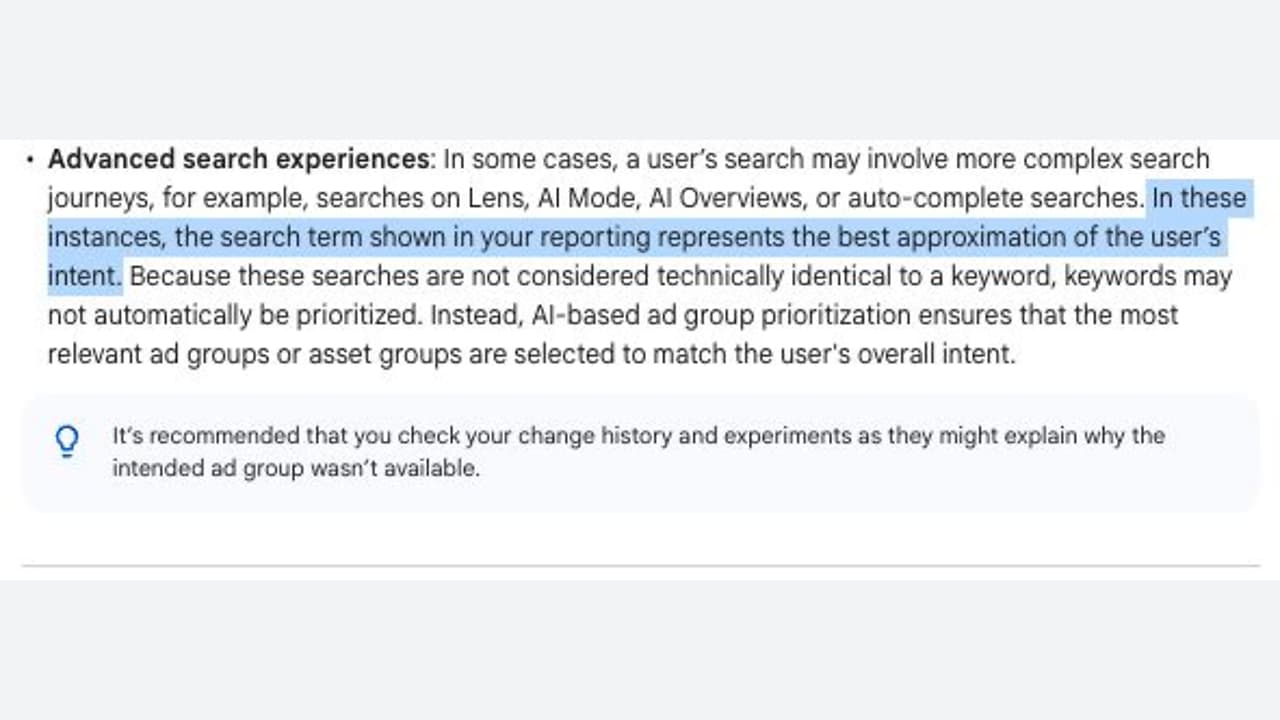
    I’ve noticed that Google Search Query Reports are moving towards AI-driven interpretations, reflecting inferred intent rather than exact user searches.

    What’s happening. Google has clarified that the search terms in Search Query Reports might not precisely match what users typed. Instead, the system displays the “closest approximation” due to the complexity of modern search behaviors.

    What’s behind it. It’s fascinating how heavily AI now influences Google Ads’ matching systems. Rather than depending solely on specific keywords, Google increasingly interprets user intent, context, and behavioral signals to decide which ads to display.

    Why we care. For those of us in advertising, Search Query Reports might become less of a mirror reflecting user language and more of a summarized representation of intent. This shift might complicate query analysis, decisions on negative keywords, and strategy around match types.

    ```json
{
  "alt": "Text explaining advanced search experiences and AI-based ad group prioritization.",
  "caption": "Decoding advanced search experiences: how AI enhances ad group prioritization by interpreting user intent for optimized results.",
  "description": "This image contains a section of text discussing advanced search experiences involving AI tools like Lens and AI Mode. It emphasizes that search terms in reports represent user intent and explains the role of AI-based ad group prioritization in aligning ads with user interests, despite the absence of directly matching keywords. A recommendation is also provided to review change history if an intended ad group is unavailable. Keywords: advanced search, AI, user intent, ad group prioritization."
}
```

    Discovered by. This update was brought to my attention by Adsquire founder, Anthony Higman, on an official Google help page discussing ad group and asset group prioritization in Google Ads.

    The bottom line. Google Ads continues its evolution from keyword matching to AI-driven intent modeling, meaning we might have less insight into the exact searches that activate our ads.


    Inspired by this post on Search Engine Land.


    crushpress.ai community screenshot
  • Transform Google Ads into ChatGPT Success with Adthena’s Tool

    Transform Google Ads into ChatGPT Success with Adthena’s Tool

    When I learned about Adthena’s new Google Ads-to-ChatGPT conversion tool, I was immediately intrigued. This innovation allows advertisers to seamlessly repurpose their existing search campaigns for ChatGPT, simplifying budget shifts and campaign setup.

    What’s happening? Adthena has introduced AdBridge, designed to translate Google Ads campaigns into formats suitable for ChatGPT advertising. The concept is straightforward: leverage what already works instead of starting from scratch.

    The tool evaluates advertisers’ search campaigns to compile keyword lists, identify negative keywords, and gain competitive insights, ready for direct application in ChatGPT campaigns. It identifies which brands dominate certain auctions, their frequency, and the prompts triggering these placements, offering more than just a simple copy-and-paste solution.

    Why it matters to me. Adbridge has significantly reduced the effort needed to reallocate my advertising budget from Google Ads to ChatGPT. By reusing existing keywords and insights, I can test and scale ChatGPT ads with minimal risk. As the platform expands, tools like this lower entry barriers, potentially speeding up ChatGPT’s adoption as a viable performance channel.

    As Adthena’s CMO, Ashley Fletcher, mentioned, the goal is to prepare campaigns to run directly, mimicking the CSV-based workflows familiar across major platforms.

    Early testing feedback. Adthena has already conducted numerous sessions with large enterprises experimenting with the tool, highlighting growing demand from advertisers eager to expand their presence in ChatGPT’s nascent ad environment.

    Reading between the lines. This goes beyond just convenience—it’s building momentum. Advertisers testing ChatGPT ads face challenges like restricted inventory and scale. By easing campaign deployment, Adthena is positioning itself to facilitate quicker adoption as these challenges diminish.

    A closer look. AdBridge is part of Adthena’s broader strategy, accompanied by Arlo, an AI assistant that lets advertisers query performance data and compare results across ChatGPT and search campaigns. Together, they indicate a future where AI-driven ad management mirrors existing search workflows.

    The backdrop. OpenAI rapidly evolves its ad offerings—quietly launching an ads manager, lowering minimum spend limits, and introducing flexible pricing models. Collaborations with firms like Criteo and Smartly point to a burgeoning ecosystem.

    The bottom line. As ChatGPT ads race to compete for search budgets, the ease of transition facilitated by tools like Adthena may determine the winners. Adthena aims to lead that charge.


    Inspired by this post on Search Engine Land.


    crushpress.ai community screenshot
  • Discover Why ‘Ugly’ Ads Could Boost Your Marketing Success

    Discover Why ‘Ugly’ Ads Could Boost Your Marketing Success

    For years, I’ve been told to stick to a set of guidelines: always use top-notch creatives, maintain a polished brand, follow scripts, and adhere to platform-recommended formats.

    Lately, while navigating ad accounts or simply scrolling through feeds, I’ve noticed something intriguing. The ads that grab my attention often defy these rules. They’re less polished, scrappier, and sometimes referred to as ‘ugly ads.’ What’s fascinating is that they’re outperforming the traditional, polished ones.

    More brands are deliberately breaking so-called best practices to stand out. It’s important to remember that these practices represent an average of what worked for others in the past. By the time a strategy becomes a platform-recommended rule, it might have already lost its edge.

    This is why defying best practices can lead to success — but only if you understand the reasons behind them.

    Why Breaking Best Practices Enhances Ad Performance

    Before diving into what to change, it’s crucial to understand the rationale behind existing rules. Platforms like Meta and TikTok have dual objectives:

    • They aim for you to spend money on ads.
    • They want to keep users engaged on their platforms.

    The best practices they promote are designed to ensure a seamless experience, encouraging ads to resemble others. The issue is that familiarity eventually breeds invisibility. When I adhere too closely to the rules, my ads risk blending into the background noise, overlooked by users.

    ```json
{
  "alt": "Person holding a dumbbell at the gym, with text saying 'Your AirPods died at the gym' and emoji expressions.",
  "caption": "When your motivation gets heavy! A classic gym moment – your AirPods gave up, but you didn’t. Feel the silence and lift on!",
  "description": "Image shows a close-up of a person’s hand gripping a black dumbbell at the gym. The text overlay humorously reads 'POV: Your AirPods died at the gym' with laughing emojis, depicting the common scenario of exercising without music due to AirPods losing charge. This relatable gym scene captures the blend of determination and humor. Keywords: gym, dumbbell, AirPods, workout, humor."
}
```

    Highly-produced ads often scream ‘this is an ad,’ prompting users to skip them before my message hits home. In contrast, when my ad resembles something a friend might share, users’ defenses remain down longer, potentially transforming a scroll into a conversion.

    This is why many top-performing ads today don’t appear traditionally polished or on-brand. They break patterns instead. Consider:

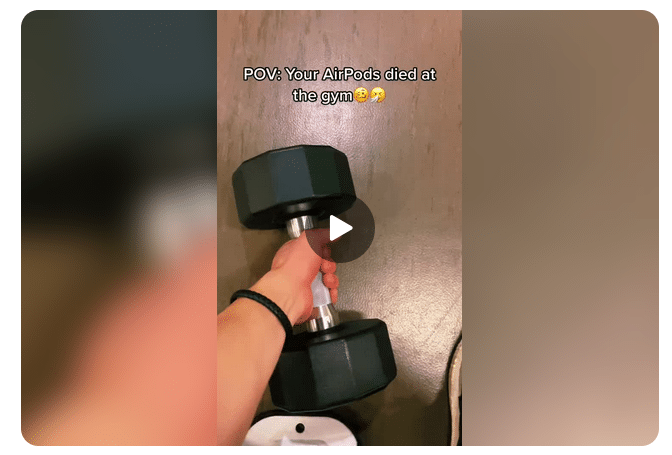
    • Grainy phone footage.
    • Notes app screenshots.
    • Green-screened reactions or commentary videos.
    • Other lo-fi formats that outperform studio-quality creatives.
    A screenshot of a TikTok video ad featuring POV overlay text, a hand grabbing a dumbbell, and AirPods
    Source: TikTok Ads Manager

    To implement this, I started intentionally reducing my production value and experimented with formats like point-of-view (POV) shots tailored to various personas.

    Dig deeper: TikTok ad creative has a shorter shelf life. Here’s how to keep up

    Founder-Led Ads: Reviving the Human Touch

    Many brands have adopted guidelines that make them seem faceless and untouchable. They refrain from showing a messy office, an unpolished founder, or anything that challenges their corporate script. However, others are discarding that playbook, embracing founder-led ads that deviate from the polished executive version.

    ```json
{
  "alt": "The CapmatchOne logo with a gradient circle and bold text.",
  "caption": "Discover innovation with the CapmatchOne logo, featuring sleek typography and a modern gradient circle.",
  "description": "The CapmatchOne logo features bold, modern typography coupled with a gradient circle, symbolizing connection and innovation. The sleek design conveys a sense of progress and creativity. This image can be used for branding or promotional purposes, appealing to audiences interested in innovative solutions and forward-thinking designs."
}
```

    There’s a catch.

    Breaking the rules works only when it’s genuine. I’ve learned that faking authenticity is easy to spot and can backfire. This was evident in a viral series of videos where McDonald’s CEO appeared to present a new burger, but his execution was criticized for being stiff and unconvincing.

    As shown in a Dineline video, his performance appeared staged. Contrarily, Burger King’s president presented their burger with no hesitation, offering a genuine and relatable moment.

    The distinction was evident: One was a product pitch, and the other felt authentic.

    If my leadership doesn’t genuinely believe in the product, neither will my customers. Rule-breaking should allow us to be real, rather than simply appear unpolished.

    ```json
{
  "alt": "A man in a light sweater speaks in a video with McDonald's fries and drink in front of him.",
  "caption": "A promotional video featuring a man discussing while enjoying McDonald's fries and a drink, set against a vibrant yellow background.",
  "description": "The image shows a man seated in an office setting, wearing a light sweater, speaking in a promotional video. In front of him is a McDonald's meal, including a box of fries and a cup with a plastic straw. The background is bright yellow, adding vibrancy to the scene. This promotional video appears designed to emphasize McDonald's offerings in a casual yet professional manner. Keywords: McDonald's, promotional video, fast food, marketing."
}
```
    A screenshot of a YouTube video of theMcDonald’s CEO with their new burger
    Source: Dineline on YouTube

    The Comment Hook Hijack

    You’ve probably encountered video hook best practices like ‘show the product in the first two seconds and state the value prop clearly.’ Sound familiar?

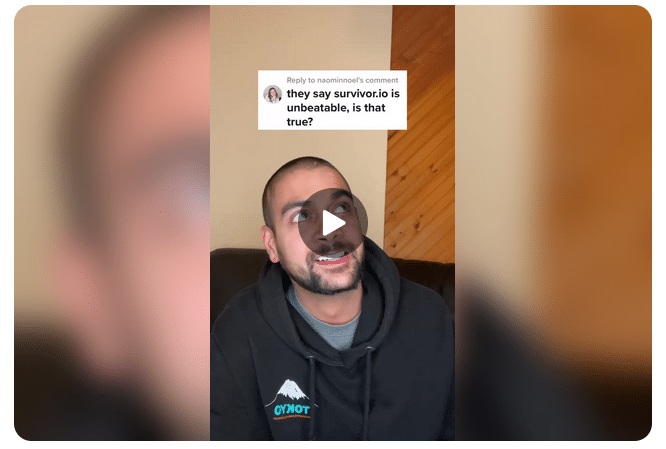
    Imagine my ad starting with a screenshot of a negative comment, like one for a skincare product stating, ‘This probably smells like old socks, and does it even work?’ My ad would then show the founder confidently disproving this in an unscripted manner, applying the product.

    Though this breaks the positive-association rule, it leverages viewers’ curiosity about digital conflicts. By the time they realize it’s an ad, they might already be engaged.

    A screenshot of a TikTok video ad with a comment bubble that a person is addressing
    Source: TikTok Creative Center

    The Rebel’s Safety Net

    I learned not to abandon all polished assets just yet.

    Rule-breaking is strategic, and often misunderstood when the ’80/20 rule’ is ignored.

    ```json
{
  "alt": "Man in a black hoodie answers a question about the game Survivor.io",
  "caption": "Exploring the unbeatable myth of Survivor.io, this video provides insights and tips.",
  "description": "A man in a black hoodie, marked with a logo, responds to a comment asking if Survivor.io is unbeatable. The background shows a two-toned wall with wood paneling. The video aims to address a common inquiry among players, sharing personal experiences and strategies related to the game. Keywords: Survivor.io, unbeatable, gaming tips, strategy."
}
```

    Switching completely to shaky phone footage isn’t wise. Keeping 80% of the budget in traditional ads while using 20% for testing unconventional ones can be effective.

    Next testing campaign, I plan to try:

    • The silent test: Running a silent ad with bold captions to stand out in a noisy feed.
    • The UI ghost: Using static images resembling platform notifications to pause scrolling.
    • The algorithmic trust fall: Disabling auto-optimizations in a campaign to test creative performance without constraints.

    Don’t Follow the Rules; Understand Them

    Best practices are a guide, not a strategy. To move beyond them, I do it systematically.

    I start by questioning the rule’s existence, evaluating its current relevance, and testing its opposite in a structured manner. Comparing traditional and lo-fi approaches helps me understand user engagement better.

    In an environment where brands play it safe, those who understand and strategically break the rules will capture attention and conversions. My goal is to learn faster than the competition, skipping guesswork.


    Inspired by this post on Search Engine Land.


    crushpress.ai community screenshot