In these unpredictable times, I’ve realized something important: it’s not talent but structure that often hinders our marketing performance. Positionless Marketing helps us overcome these constraints.
Five days can now be condensed into five minutes, and six weeks into just six days. This isn’t about small improvements; it’s about enabling our marketing teams to move at the speed of customer behavior by dismantling outdated structural barriers.
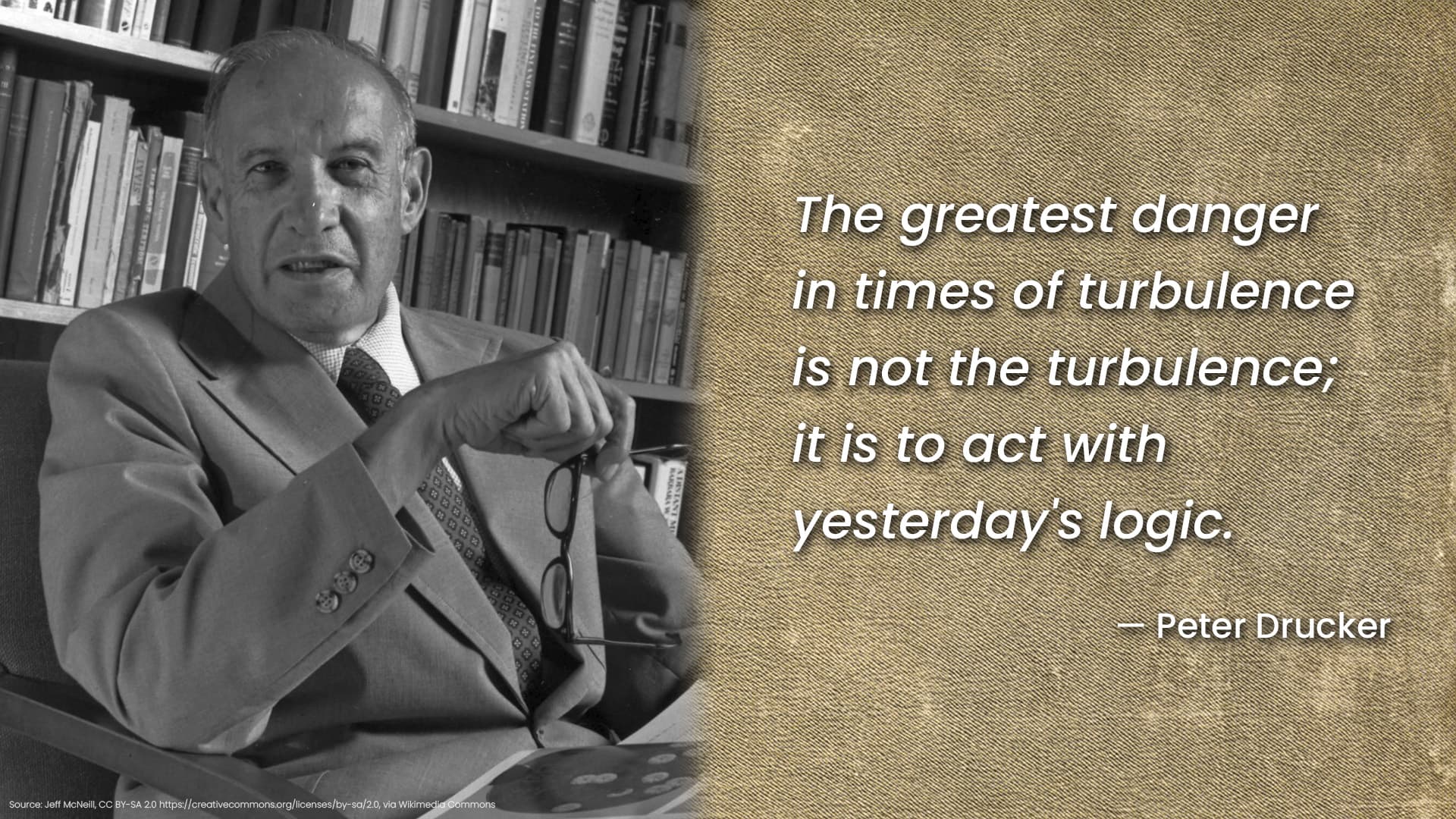
I’ve discovered that Peter Drucker’s insights, particularly from his work “Managing in Turbulent Times,” resonate deeply with this idea. He cautioned against using “yesterday’s logic” in our ever-changing world, and I see this happening in marketing all too often.
Markets are continuously shifting, and customer behaviors are changing in real time. Yet, many marketing groups are still stuck in old structures meant for slower eras, leading to missed opportunities.
Understanding Structure: The Barrier to Performance
Drucker emphasized that an organization’s structure is more impactful than individual talent. Even the smartest individuals will underperform if trapped in the wrong system.
Consider a global gaming operator I worked with. They required seven teams and six weeks just to launch a single campaign. The Global Head of Customer Marketing noted, “We needed seven teams and six weeks to send a single campaign.”
This wasn’t a problem of skills. The issue lay in fragmentation: insights were with analysts, creatives with designers, and execution depended on engineers. This led to delays and lost opportunities. Drucker saw this and advocated for breaking down barriers to give knowledge workers clarity and freedom.
From Knowledge to Real-Time Execution
In a leading U.S. iGaming firm, campaign execution once took five days. But in our real-time world, where customer actions shift instantly, five days is far too long. By streamlining processes to reduce handoffs, we cut execution time to just five minutes.
This aligns with Drucker’s belief in empowering those closest to the action to make decisions swiftly and effectively. Positionless Marketing allows us to move from insight directly to action, faster than ever before.
The results speak for themselves—better-targeted spending on the right customers and decisively enhanced outcomes.
Shifting from Task Focus to Outcome-Driven Marketing
Drucker’s concept of “management by objectives” introduced an outcome-focused mindset. Unfortunately, marketing had drifted back into task-focused operations over time. With Positionless Marketing, a global gaming operator transformed its campaign process from six weeks to mere hours.
This change ensured accountability. Previously shared responsibility made no one truly accountable. Now, a single marketer manages the entire campaign, ensuring precision and ownership, driving not just tasks but tangible responses.
Real-World Transformation: Speed Meets Effectiveness
Across industries, adopting Positionless Marketing principles yields incredible results: execution cycles plummet from days to minutes, and planning shrinks from weeks to hours, all while enhancing personalization and relevance.
These aren’t just tech advancements; they stem from restructuring processes. We’ve transitioned from dependency on hierarchical systems to empowered, outcome-focused teams.
Technology Enhance Judgment, Not Replace It
Drucker believed in technology as a means to enhance human decision-making, not replace judgment. Successful Positionless Marketing exemplifies this: AI aids prediction while automation removes friction, yet decisions remain human-centric.
With comprehensive access to data and tools, marketers act promptly without waiting on cross-functional approvals, making Positionless Marketing a vehicle for immediate, improved decision-making.
The Evolution Drucker Advocated For
While Drucker envisioned nimble, autonomous organizations, he could not foresee today’s always-on customer engagement. In this reality, execution lag wastes potential, and structure without flexibility is risky.
Positionless Marketing embodies Drucker’s philosophy, offering immediate information access and authority to act, transitioning from assembly-line operations to self-reliant marketing processes.
From Thought to Action
What Drucker defined for effective knowledge work, Positionless Marketing puts into fast-paced practice. It transforms waiting into swift action, cumbersome handoffs into clear ownership, and process-centric work into real-time relevance. The pivotal question is: will marketing teams evolve before their competitors do?
Today’s knowledge worker isn’t merely informed—they’re finally empowered to act decisively, embodying Positionless freedom.
To explore more on this topic, dive into this case study and this example.
Inspired by this post on Search Engine Land.

Leave a Reply