Have you ever noticed how ads are transforming from simple clicks to engaging conversations? Google’s latest AI advancements have unveiled an incredible shift in how we interact with advertising, challenging our perceptions of visibility, trust, and the role of marketers.
Google Ads Liaison Ginny Marvin recently penned a detailed piece on over 40 new innovations spanning Google Ads, Analytics, AI, and more. While these updates cover everything from conversational AI to predictive attribution, the underlying narrative reveals a more profound transformation.
I see Google consciously reshaping the advertising landscape to focus on intent prediction, AI-driven decision-making, and automation that qualifies users even before they become customers.
These innovations are poised as solutions to a familiar marketer’s challenge: bridging the gap between generating leads and generating valuable leads.
Google wants ads to become conversations
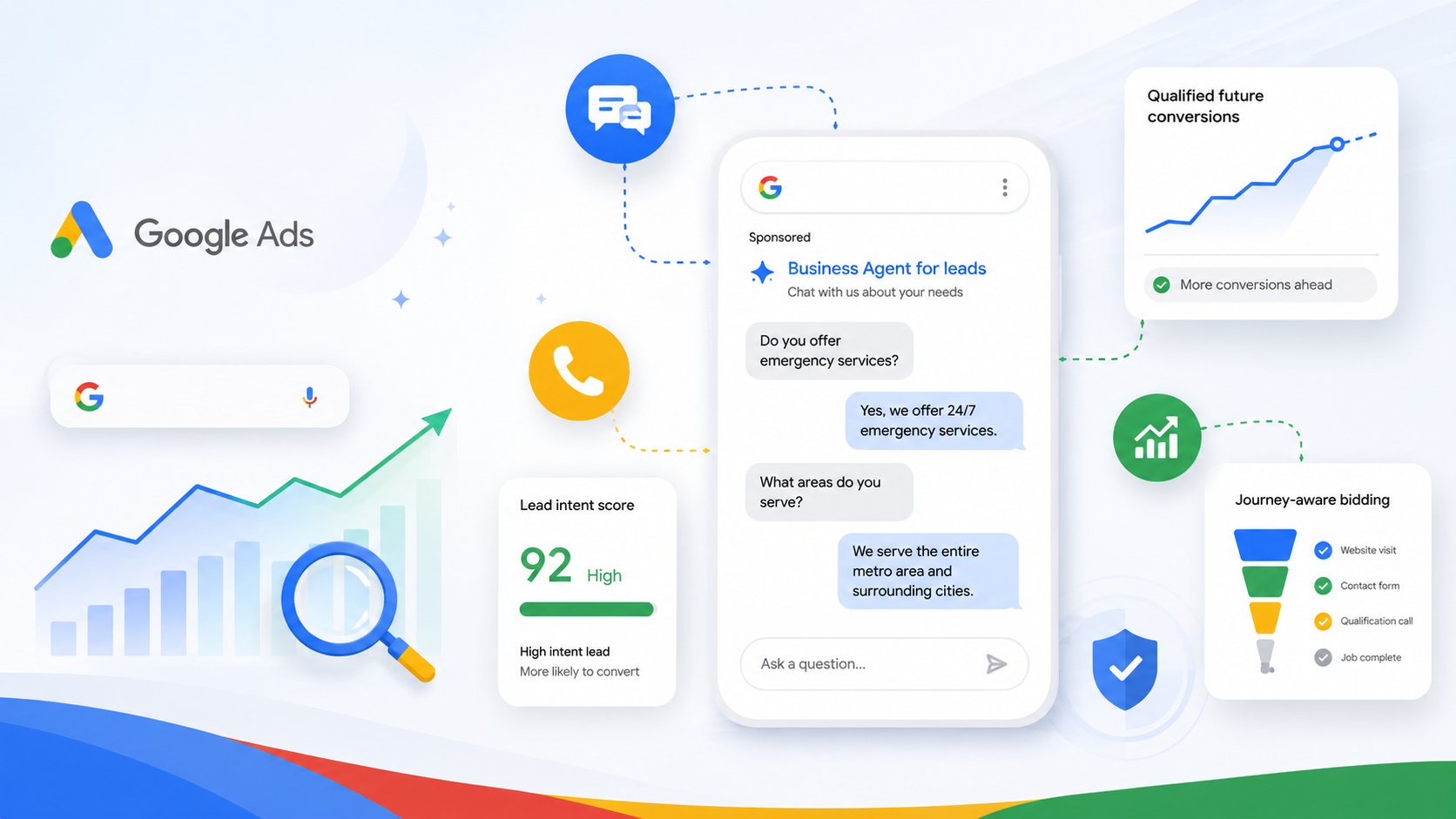
A telling example of this shift is the Business Agent for leads. By integrating conversational AI within Search Ads, Google’s moving away from traditional click-through interactions.
Marvin notes that prospective customers will now be able to ask specific questions about services or pricing directly within the ad. This shift deeply impacts the role of ads by embedding interaction and qualification into the experience itself.
Historically, lead generation was straightforward: click, land on a page, and fill a form. Now, AI is enhancing the process by embedding layers of qualification and assurance right in the ad experience.
For businesses in trust-critical sectors like finance or healthcare, this evolution could significantly reshape lead quality dynamics.
Intent over Volume
Marvin’s updates steer towards optimizing predicted business results rather than merely conversion volumes.
With new tools like lead intent scores and journey-aware bidding, Google aims at reducing ineffective leads within the pipeline.
The approach solves the industry’s pain point of focusing solely on cheap conversions that add little to the client base.
However, with more aspects of qualification and forecasting handled by Google, advertisers might lose transparency in decision-making processes, an important consideration in the AI-driven era.
AI Max: Evolving Performance
AI Max signifies how Google’s AI-driven optimization is sweeping through Search. It applies extended algorithmic exploration to campaigns, broadening targeting and uncovering new opportunities beyond traditional pathways.
While ecommerce players with strong data may find new scale opportunities, lead generation marketers without robust offline conversion data might face higher risks.
This phase of rollout, echoing early Performance Max challenges, underlines the need for advertisers to back automation with rich, business-quality signals.
Rich data integration is critical as AI systems only optimize based on received data, highlighting why offline conversion tracking and CRM integration are now pivotal in Google Ads strategy.
Predictive Measurement at the Core
An understated yet crucial change is Google’s pivot to predictive measurement models, linking ad exposure to future behaviors.
Tools like Attributed Branded Searches go beyond historical data, estimating potential future outcomes.
Such foresight promises insights into long buying journeys but also fosters reliance on opaque AI forecasts.
The strategic debate looms over the trade-off between automation efficiency and advertiser visibility.
Revolutionizing Creative Production
Marvin’s insights suggest Asset Studio’s rise as an AI-driven creative production powerhouse. Google aspires to unify creative development, analysis, optimization, and testing into a single workflow.
This can alleviate bottlenecks for lean teams, but as AI democratizes creativity, real differentiation will hinge on brand strategy and deep audience insights over sheer production prowess.
The Bigger Picture
While some of these enhancements might appear incremental, collectively, they mark a substantial evolution within Google Ads. Google’s crafting itself into the backbone of contemporary advertising decision-making.
Ultimately, the task for advertisers is finding the right balance between embracing automation and retaining strategic insight.
Though AI promise advancements and opportunities, understanding key signals, genuine business outcomes, and when to rely on human insight will define long-term success.
Dig deeper:
Inspired by this post on Search Engine Land.

Leave a Reply