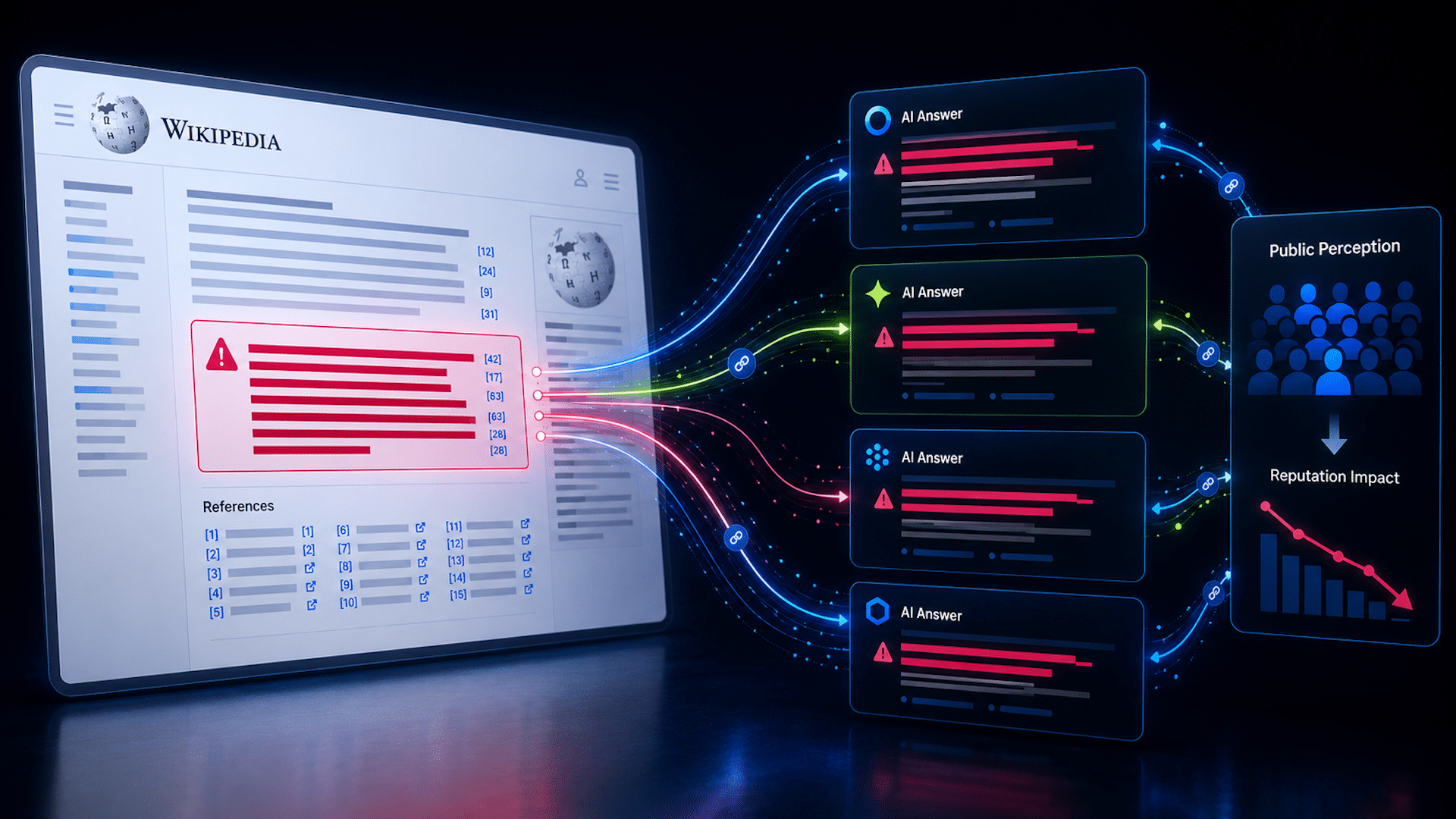
I’ve often found myself pondering how information, especially outdated or negative, can linger on Wikipedia for years. And then, just as it’s beginning to fade from memory, it resurfaces prominently when AI systems pull it into their algorithms for generated answers.
Wikipedia used to be seen as unreliable, but today it stands as a significant source due to its citations and collaborative nature. It’s a key player for AI search systems, shaping the findings on platforms like ChatGPT and Google.
However, Wikipedia isn’t immune to errors. Sometimes, incorrect or unfairly negative content sticks around, feeding back into AI systems and perpetuating itself through new avenues.
This can create a cycle where misinformation gains longevity and influence, especially on AI-driven search platforms.
Faced with this dilemma, I often wonder how to address negative content once it infiltrates Wikipedia.
How Content Finds its Way to Wikipedia
Achieving a presence on Wikipedia requires verifiability. Esteemed media outlets and verified Wikipedia contributors are the primary sources for content.
These sources act as gatekeepers; hence, Wikipedia sometimes emphasizes verifiability over accuracy, especially when even reputable media can misreport.
Decentralized contributors are fundamental to Wikipedia, and decisions are based on a consensus rather than a single authority figure.
This decentralized nature means quick resolutions for contentious content aren’t always possible.
Why Outdated Negativity Sticks
Wikipedia acknowledges its contentious nature and even features a page of its controversies collected over the years. Negative or outdated information can endure for many reasons. Often, they stem from initial high-profile issues, resurrected long after factual changes end the original narratives.
Citations
Citations on Wikipedia come with a sense of permanence. Once information is supported by ‘reputable’ sources, detaching it from credibility proves difficult, remaining even when discredited long ago.
The Echo Chamber Effect
The digital world is incredibly impactful. Wikipedia’s dual role as both influencer and influenced means it can both absorb and project out dated narratives. AI platforms make this echo louder.
Risk Aversion
Wiki editors avoid the appearance of bias, often retaining content from verified sources despite needing updates or corrections.
Differing News Coverage
Negative narratives receive more media attention than positive stories. Corrections also get less notice than initial reports, skewing the sources Wikipedia uses.
Wikipedia’s Role in AI Search
Wikipedia serves as a primary source for AI, enhancing its perceived credibility, and ChatGPT and Google’s narratives often distill Wikipedia’s information alongside Reddit and news media.
This situation is intensified by shifting user habits. Increasingly, people depend on AI-generated summaries, often skipping the essential step of verifying the source material themselves.
Consequently, when AI highlights negative Wikipedia content, it influences public perception swiftly.

Wikipedia and AI: The Disruption of Brand Image
In my experience with online reputation management, I once helped a marketing company – let’s call them Organization Z – recover from outdated allegations. These plagiarism claims, dismissed long ago, still haunted their Wikipedia page.
The focus on this ‘controversy’ clouded the fact that Organization Z had been exonerated. As AI search engines sourced their information from Wikipedia, users wrongly encountered terms like “controversy” and “plagiarism” when searching for the brand.
This incorrect narrative continued to echo online despite the claims being cleared.
Navigating Negative Wikipedia Content
Before attempting solutions, it’s crucial to know what doesn’t work. Editing your own Wikipedia page can be problematic and draws scrutiny. Removing content without strong justification contravenes Wikipedia’s policies.
Here’s a step-by-step approach recommended by ORM experts to handle negative or outdated Wikipedia content:
1. Perform an Audit
Identify circulating claims and their sources. Highlight outdated or flawed citations.
Check if the current Wikipedia information stands balanced and relevant.
2. Compare to Current Coverage
Assess how Wikipedia content aligns with current online portrayals of the brand or issue. This is similar to performing an AI narrative audit.
Identify missing context or emphasized inaccuracies, bridging gaps between Wikipedia’s version and reality.
3. Address the Citations
With mismatches identified, aim to amend or enhance the citations Wikipedia references. Work to reflect current facts through reputable third-party publications.
4. Strengthen Positive Coverage
Focus on building your brand’s positive reputation online. Highlight accomplishments and reliable contributions to your field so that Wikipedia naturally reflects this in time.
AI Search: Raising the Stakes
Wikipedia remains a powerhouse in information, but its dependence on citations can coat outdated or negative narratives with longevity.
AI engines can exacerbate these issues by amplifying such stories in their generated responses.
While direct control over Wikipedia content isn’t possible, shaping the cited sources can influence updates. Regular auditing for balanced coverage and maintaining updated information is key to steering public perception.
Inspired by this post on Search Engine Land.

Leave a Reply