
Through my recent dive into the latest SDK findings, I’ve discovered why some pages never make it to the Google Discover ranking. Factors like predicted click-through rates, images, and content recency are key drivers.
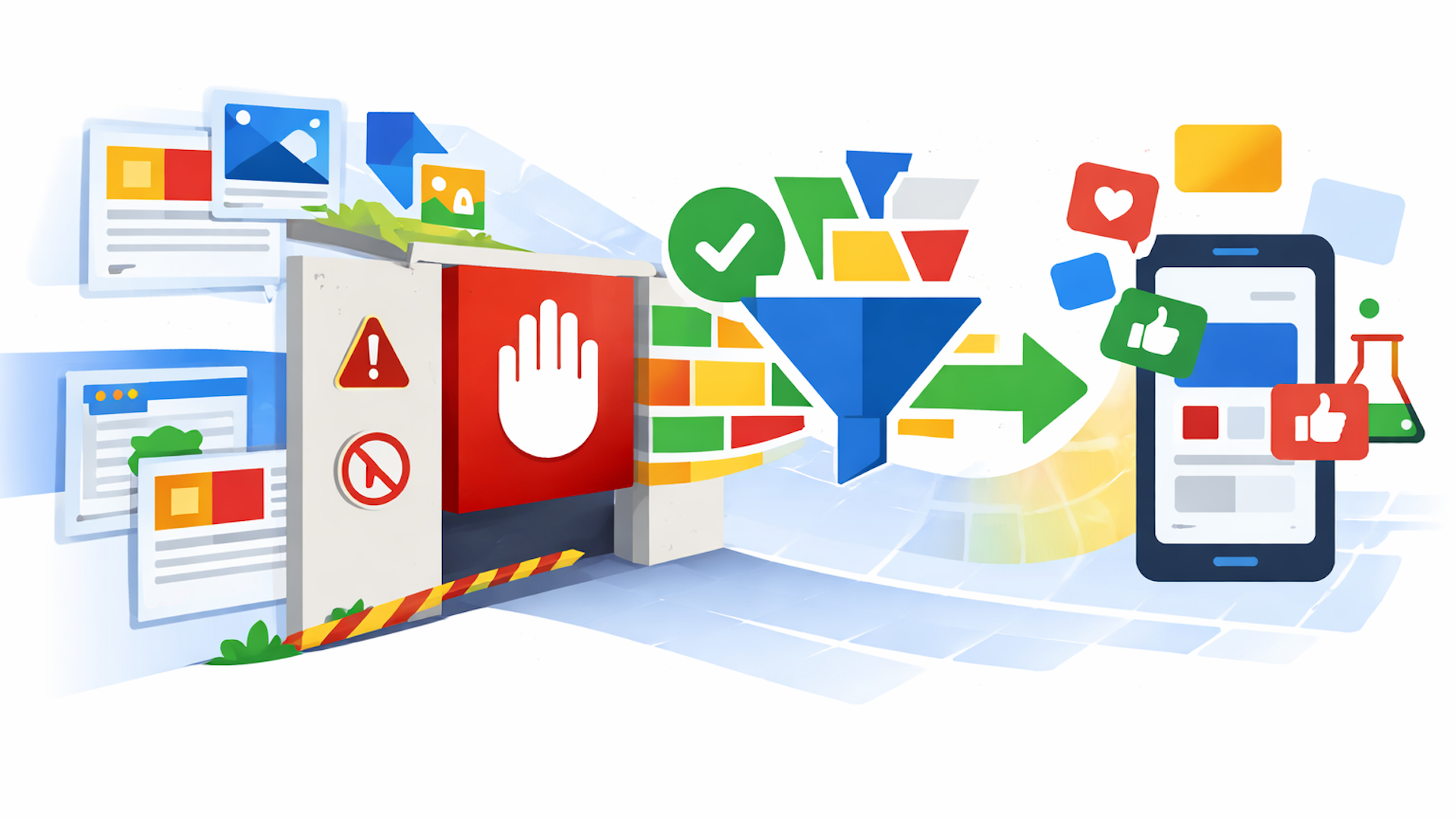
One thing I’ve learned is that Google Discover operates using a detailed, multi-layered pipeline. This includes publisher blocks, detailed image specifications, a freshness decay model, and extensive experimentation that shapes what appears on users’ feeds, as explained by SDK-level researcher Metehan Yesilyurt.
Why this matters to us. As someone who’s eager to drive significant traffic via Google Discover, I’ve often found the process unpredictable. This research allows me a clearer understanding of how my content might qualify, rank, or get blocked, shedding light on potential pitfalls before a piece even begins to rank.
The nitty-gritty. In Yesilyurt’s exploration, Google Discover’s app framework was deconstructed into a nine-stage process. Here’s how it works:
- It all begins with Google crawling and understanding the content I produce.
- It examines key meta tags, such as image and title.
- It classifies content types, be they breaking news or evergreen material.
- Google checks if my content is blocked at any point.
- Content is then matched to user interests.
- An applied server-side click-through rate prediction model comes into play.
- The feed layout is constructed based on these evaluations.
- Content is served to users, inviting engagement.
- Lastly, user feedback is recorded.
A significant insight. One crucial discovery is that publisher-level blocks occur before matching content to users’ interests. A user’s decision to block a source means my content won’t even make it to the ranking stage.
- Such blocks are impactful. A single action to prevent showing content from my site can suppress the entire domain. Unfortunately, no similar sitewide boost exists.
The ranking mechanics. The ranking process leverages elements like my content’s title, image quality, and past engagement history. Google’s servers use a predicted click-through rate (pCTR) to estimate the possibility of clicks. Although the specific model remains unseen, the app indicates which signals Google considers for ranking, including:
- The page title, sourced from og:title.
- The size and quality of images.
- The freshness of the content.
- Past click and impression statistics for my URL.
- Whether images load correctly on the page.
The importance of freshness. Google’s system groups content based on age:
- 1 to 7 days old: enjoys the strongest boost.
- 8 to 14 days old: retains moderate visibility.
- 15 to 30 days old: sees a drop in visibility.
- Over 30 days old: experiences a gradual decline.
While evergreen content might receive special classification, newer content inherently gains an edge.
Image and meta tag criteria. Google Discover examines six key tags at the page level, such as og:image and og:title. Notably, missing images result in the absence of content cards.
- Images must be at least 1200px wide for prominent card features. Smaller images often manifest as thumbnails, which typically receive fewer clicks.
- Missing tags prompt Google to seek alternatives — if og:title lacks, the Twitter title tag or HTML title might be used instead.
- Using meta tags like “nopagereadaloud” and “notranslate” can prevent a page from appearing on Google Discover altogether.
The personalization factors. With Google Discover, personalization hinges on:
- Google’s broader interest data interconnected with user behavior.
- Publisher signals, which include registration with Publisher Center.
- Personal interactions like follows, saves, and story dismissals.
- Engagement metrics, like the time users spend reading content.
If a reader dismisses my content, that action is stored permanently for that specific URL, preventing it from reappearing.
Everywhere I look, experiments abound. During moments of observation, about 150 server-side tests were simultaneously active, with an additional 50+ features controlling how content cards were depicted.
- This means two users with similar interests can encounter vastly different feeds simply due to being in different experimental groups.
Real-time updates for your feed. Google Discover doesn’t stand still. It can dynamically add, remove, or reorder content in the feed as a user scrolls, no refresh needed.
Key insights for success. Excelling in Google Discover is less about using tricks and more about meeting eligibility criteria, establishing trust, utilizing compelling visuals, and maintaining engagement, especially in a system capable of filtering content before the ranking process even starts.
- Publisher blocks occur before any ranking.
- The system inherently values content freshness.
- High-quality images and clear titles are indispensable.
- User dismissals are long-term.
- Heavy experimentation leads to a constantly evolving environment.
The research I’ve examined can be found here: Google Discover Architecture: Clusters, Classifiers, OG Tags, NAIADES – What SDK Telemetry Reveals
Inspired by this post on Search Engine Land.

Leave a Reply