I’ve discovered a game-changing PPC framework that not only predicts user intent but also extends beyond traditional search methods to connect your content with the right audience.
Search marketing continues to thrive, with Google reaching over $100 billion in ad revenue in just one quarter, primarily driven by search ads. However, relying solely on search won’t yield the results many businesses anticipate anymore.
During the SMX Next event, I learned from Google Ads Coach Jyll Saskin Gales that genuine performance now hinges on integrating traditional search with an expansive PPC strategy.
The challenge with traditional Search Marketing
In my experience as a search marketer, I excel at reaching individuals actively searching for what I offer. Yet, there’s an entire audience segment that aligns with my target market but hasn’t started their search journey.
The actual opportunity lies at the crossroads of user intent and audience fit.
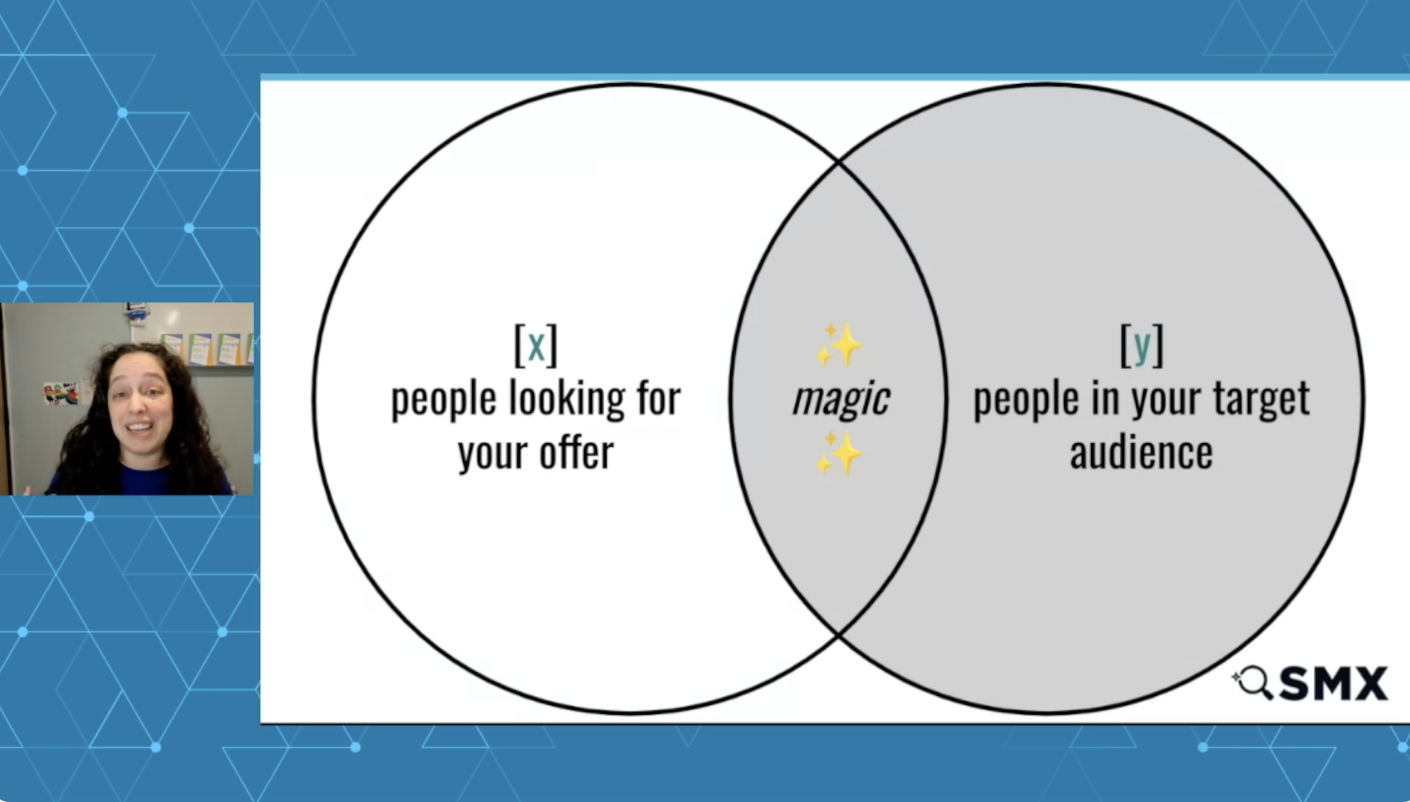
Consider the term [vacation packages]. This could be queried by different groups like a family with kids, honeymooners, or retirees. While the keyword remains the same, each group requires unique messaging and offers.
Understanding targeting capabilities in Google Ads
There are two primary targeting types I focus on:
- Content targeting places ads in specific locations.
- Audience targeting displays ads to particular user types.
For instance, targeting [flights to Paris] is content targeting, while targeting users “in-market for trips to Paris” uses audience targeting. Google’s in-market audiences are crafted by analyzing various signals like user searches, browsing behavior, and location data.
The three types of content targeting
- Keyword targeting: Engage users when they search on Google, extending to dynamic ad groups and Performance Max.
- Topic targeting: Present ads next to content about specific subjects in display and video campaigns.
- Placement targeting: Present ads on particular websites, apps, YouTube channels, or videos where my ideal customers already engage.
The four types of audience targeting
- Google’s data: Prebuilt segments include detailed demographics, affinity segments, in-market segments, and life events, usable by any advertiser across most campaigns.
- Your data: Target website visitors, app users, and those engaging with my Google content using Customer Match, though remarketing is restricted for sensitive topics.
- Custom segments: Convert content targeting into audience targeting by crafting segments based on search behavior, interests, and user site or app preferences. Names vary across campaigns, such as “custom segments” and “custom search terms” in video.
- Automated targeting: This entails optimized targeting, audience expansion, and lookalike segments deriving new users from existing data.
Building a targeting strategy
To construct a cutting-edge targeting strategy, I need to address these two essential questions:
- How can I leverage Google Ads to promote my offer?
- How can I connect with a specific audience using Google Ads?
For instance, targeting Google Ads professionals for lead generation software could involve building tailored segments targeting users of the Google Ads app, visitors of industry-relevant sites like searchengineland.com, or searchers utilizing specific Google Ads terms like “Performance Max.”
Layering in content targeting, such as YouTube placements on industry educational channels and topic targeting around search marketing, enhances my outreach.
Strategies for sensitive interest categories
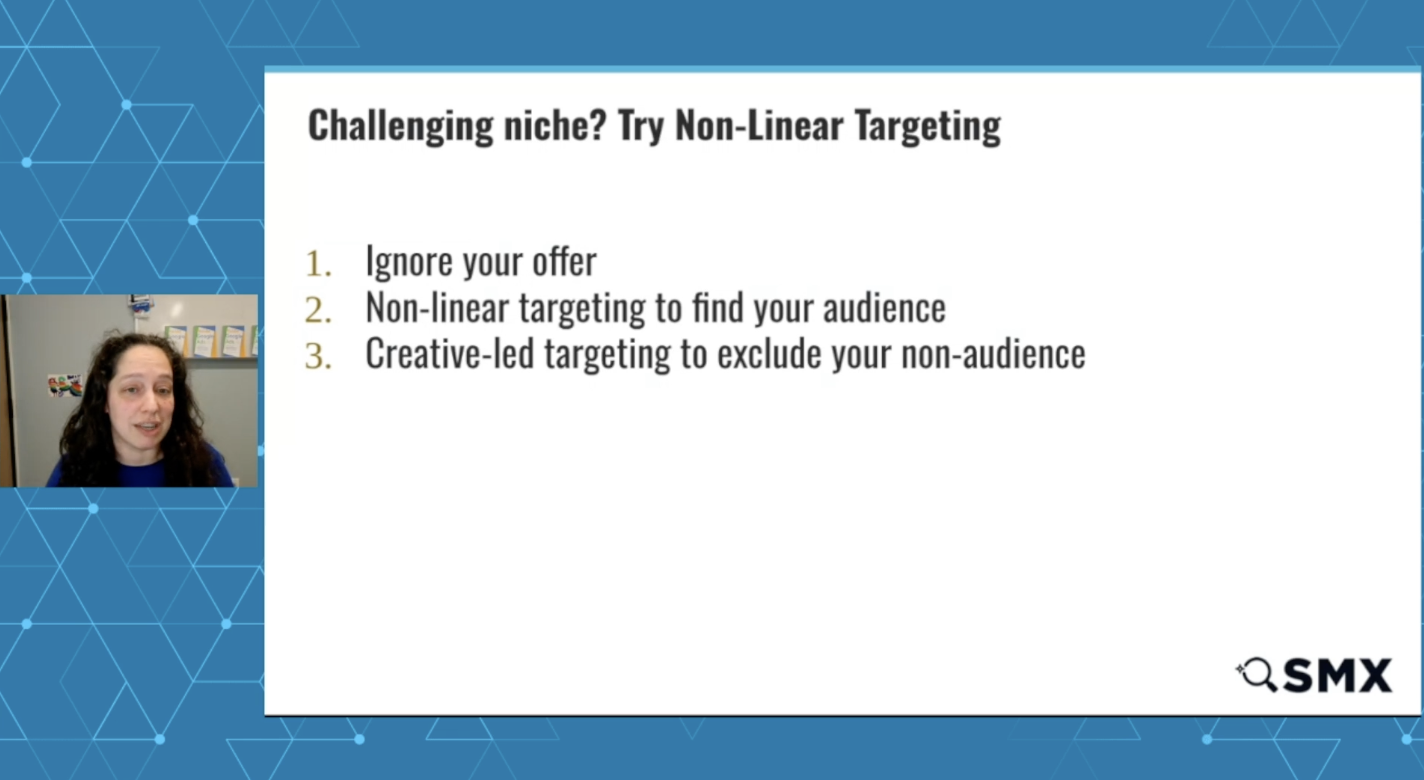
In cases where I operate within restricted categories like legal or healthcare, and cannot employ custom segments or remarketing, non-linear targeting becomes crucial. I focus entirely on the audience and ignore direct offers. Selecting any Google data audience with an overlapping potential and letting creative content filter it out helps tremendously.
Employ industry-specific terminology, acronyms, and visuals that resonate with and are recognizable to my target audience. Others will likely disregard it.
Remember: High CPCs aren’t the enemy
From my perspective, low-quality traffic poses the real challenge. It’s more beneficial to incur a $10 click with a 10% conversion rate than a $1 click with an infinitesimal 0.02% conversion rate.
When analyzing targeting strategies, I focus on conversion rates and cost per acquisition instead of merely cost per click.
Search alone can’t deliver the results you’re used to
By expanding beyond traditional search keywords and incorporating content and audience targeting, I can ensure the right people see my ads and achieve robust results.
Watch: Building a Modern Targeting Strategy Like a Pro + Live Q&A
Inspired by this post on Search Engine Land.

Leave a Reply