Tag: SEO

  • Crafting Powerful FAQs for AI-Driven Local Search Success

    Crafting Powerful FAQs for AI-Driven Local Search Success

    Have you ever wondered how to transform everyday queries into engaging, powerful FAQs that fuel AI-driven local search? Let me guide you through the process.

    I started by turning customer reviews, social comments, and call data into meaningful content. This approach not only closes gaps but also ensures our messaging remains consistent across all platforms.

    It’s clear there’s no such thing as providing “too much information” when it comes to AI search. The more details I offer, the less likely it is for my business to be overshadowed by third-party sources or, worse, left out altogether.

    With AI on the rise, I’ve found that users demand answers delivered rapidly. For instance, Google Maps’ Know before you go and Ask Maps about this place are features that instantly provide users with the information they need without visiting websites or social media.

    This is further enhanced by Merchant Center’s Business Agent, which allows interaction through chat by drawing from the business’s product data and site content.

    ```json
{
  "alt": "The CapmatchOne logo with a gradient circle and bold text.",
  "caption": "Discover innovation with the CapmatchOne logo, featuring sleek typography and a modern gradient circle.",
  "description": "The CapmatchOne logo features bold, modern typography coupled with a gradient circle, symbolizing connection and innovation. The sleek design conveys a sense of progress and creativity. This image can be used for branding or promotional purposes, appealing to audiences interested in innovative solutions and forward-thinking designs."
}
```

    To stay ahead, I rely on comprehensive FAQs derived from actual customer inquiries, rather than standard SEO guidelines, ensuring they remain front and center in all our endeavors.

    Why FAQs are Essential for AI-Fueled Answers

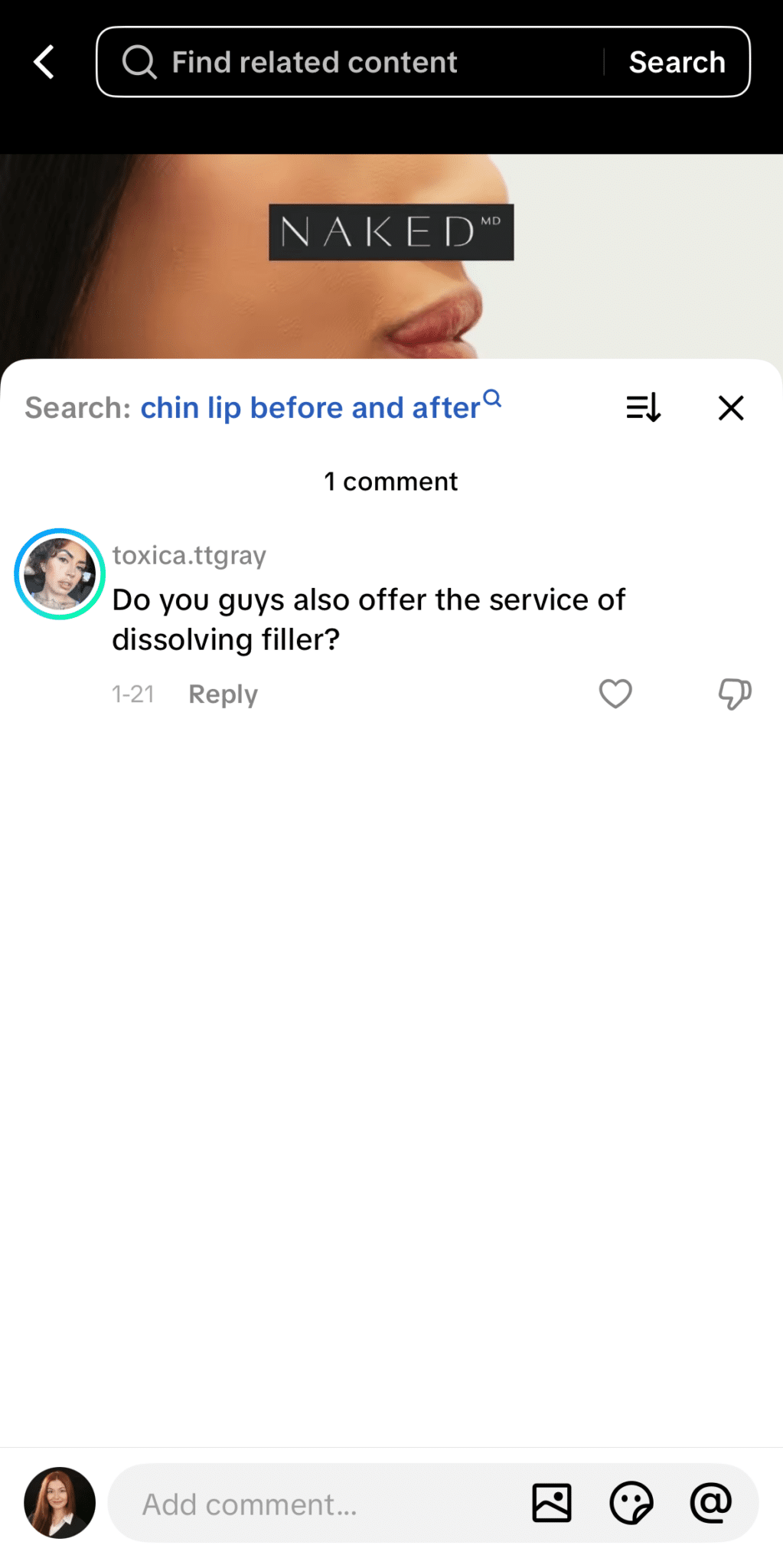
    Ask Maps about this place enriches user experience by presenting preloaded questions and allowing users to submit their own. Should there be insufficient information, it informs users nicely.

    While currently basic, it’s anticipated this feature will evolve into a more nuanced conversational tool. With the Q&A depreciating on GBPs, this becomes a crucial replacement, emphasizing the necessity of adequate data for AI extraction.

    This doesn’t imply populating each page with Q&As or just adopting generic People Also Ask questions. Strategic selection is key.
    ```json
{
  "alt": "Close-up of a woman's chin with a comment on dissolving filler services.",
  "caption": "Inquiring minds want to know: Does this beauty service offer filler dissolving treatments?",
  "description": "This image features a woman's chin in close-up, with a focus on a comment asking about filler dissolving services. The branding 'NAKED MD' is displayed prominently. The search query 'chin lip before and after' suggests a focus on cosmetic procedures. The comment has received one reply, indicating an interactive discussion. Keywords include beauty, cosmetic procedure, and filler treatment."
}
```

    Consider unique, albeit region-specific inquiries that lack broader search interest. Topics like local Victorian homes or specific city insurance laws demand attention.

    In creating an effective FAQ strategy, I maintain two clear goals:

    • Creating original, outside-the-box FAQs that distinguish us from the usual.
    • Ensuring consistent answers across all platforms including our website and social media.

    Dig deeper: Local SEO sprints: A 90-day plan for service businesses in 2026

    Researching the Right Questions

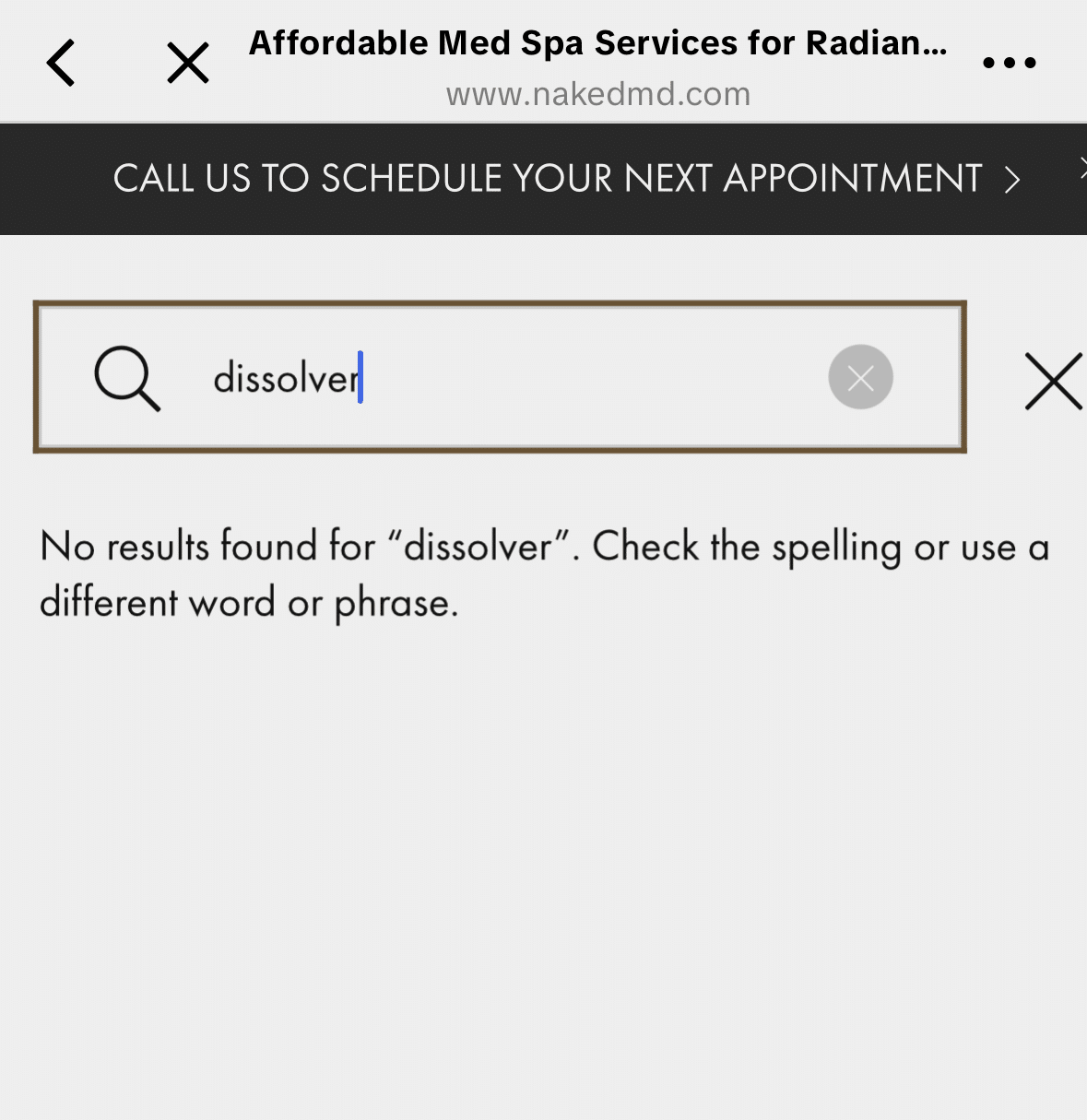
    Most businesses rely on national data to draft FAQs, but I’ve found that reevaluating content to reflect local needs yields better results. Consider the variety of locations where FAQs might already exist.
    ```json
{
  "alt": "Search page for med spa services shows no results for 'dissolver'.",
  "caption": "Attempting to find 'dissolver' services at a med spa yields no results. Explore alternatives for radiant skin care solutions.",
  "description": "This image shows a mobile search page for a medical spa website. The search term 'dissolver' yields no results, prompting users to check the spelling or use different words. The website encourages scheduling an appointment for spa services. Keywords: search, med spa, no results, skincare, radiant."
}
```
    • Dedicated FAQ pages.
    • Service/Product specific pages.
    • About Us pages.
    • Google Business Profile Q&As.
    • Yelp and other third-party review sites.
    • Social media interactions.
    • Customer service calls and reviews.

    Taking cues from platforms like Google Maps to uncover unanswered questions provides a beneficial insight into potential FAQ content.

    Analyzing social media reveals frequently asked queries. Collaborating with social media managers who have frontline experience in dealing with such inquiries is invaluable.

    Analyzing customer service transcripts and reviews is an insightful process. They paint a clear picture of how customers perceive services and where FAQs can bridge any gaps.

    Maintaining Consistency Across Platforms

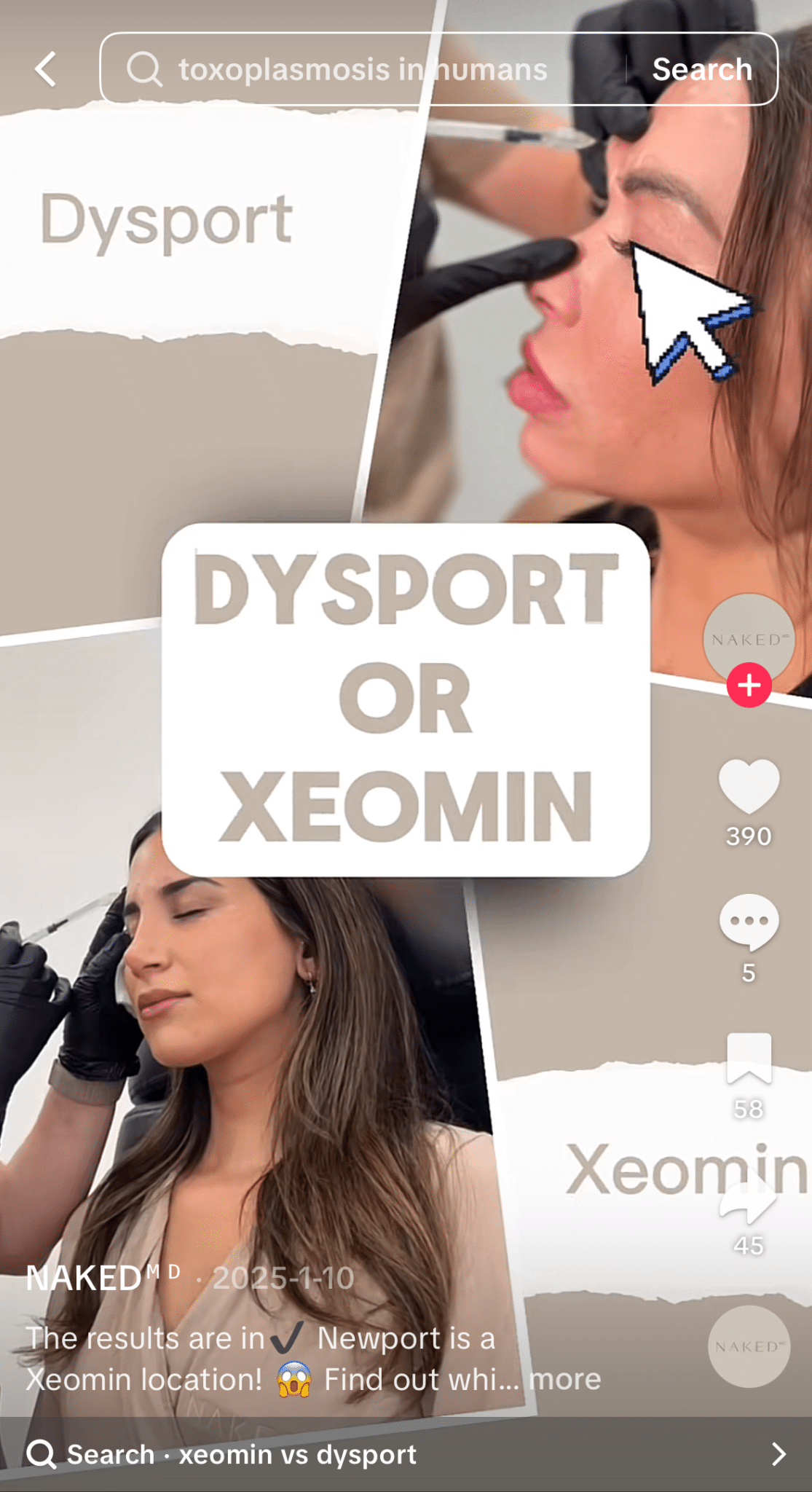
    Maintaining consistent answers across all platforms prevents any potential confusion. Inconsistencies can undermine trust, affecting AI confidence in our content.
    ```json
{
  "alt": "Split image showing Dysport and Xeomin treatments on women's faces with text 'Dysport or Xeomin'.",
  "caption": "Choosing between Dysport or Xeomin? Discover which treatment might be right for you in this engaging visual comparison.",
  "description": "This split image showcases two cosmetic procedures: Dysport and Xeomin, performed on different women. The central text 'Dysport or Xeomin' invites viewers to consider the options. The visual is part of a social media post with interactive elements, including likes and comments. Keywords: Dysport, Xeomin, cosmetic treatment, beauty, comparison."
}
```

    Having a regular FAQ review process ensures accurate information and contributes to building a reliable database.

    Dig deeper: The proximity paradox: Beating local SEO’s distance bias

    Readying for AI’s Continued Expansion

    Having a robust FAQ strategy is crucial as AI interactions evolve. Ensuring transparency and consistency across platforms prepares us for any upcoming advancements.


    Inspired by this post on Search Engine Land.


    crushpress.ai community screenshot
  • YouTube Experiments with AI Summaries: A Game Changer?

    YouTube Experiments with AI Summaries: A Game Changer?

    I recently came across an intriguing development on YouTube where Google is testing AI-generated summaries in video feeds. Essentially, this involves replacing traditional video titles with AI-created synopses, leading to quite a stir in the community.

    As a YouTube user, I noticed these AI summaries popping up in the Android app. Some users on Reddit have pointed out that video cards are now missing titles, and instead have collapsible summary boxes—definitely a twist from what we’re used to.

    The details. Video thumbnails still appear as usual, but the absence of titles has caught my attention.

    AI summaries are housed in expandable text boxes right below each video, which means we need to tap to understand the content fully. So far, this test seems confined to Android users on YouTube.

    What it looks like. A Reddit user named GrimmOConnor shared a screenshot that demonstrates these changes.

    Why we care. The shift toward AI summaries makes me wonder about the control creators have over their content’s presentation. Titles play a crucial role in ranking and driving clicks. Replacing them might affect keyword strategy, brand voice, and engagement—and there’s the risk of inaccuracies that could impact performance.

    ```json
{
  "alt": "YouTube interface showing a park ranger simulator video summary and thumbnail.",
  "caption": "Explore the serene world of park ranger duties with this immersive simulator, where maintaining nature meets digital adventure.",
  "description": "The image shows the YouTube interface with a thumbnail of a park ranger simulator video. The video summary highlights tasks like maintaining a national park by picking up trash and repairing trails. The thumbnail features a person, possibly part of a YouTube video cover, dressed casually. Keywords: park ranger, simulator, YouTube, video, gaming."
}
```

    The context. It’s worth noting that Google is already exploring AI-generated headline rewrites in Search results, which seems to be part of a larger strategy extending beyond Discover and now reaching YouTube as well.

    Google mentioned a “small” experiment in Search where original page titles were swapped for AI-generated versions to enhance query matches and engagement.

    Reaction. Feedback so far hints at a less satisfying browsing experience. The added step of expanding summaries could slow down discovery and hinder content selection, which opposes YouTube’s engagement goals.

    What’s next. There’s no word yet from YouTube about a wider rollout. The absence of titles might just be a bug, but integrating AI summaries fits with Google’s broader push into using generative AI.

    First seen. I first learned about this test through Android Authority.


    Inspired by this post on Search Engine Land.


    crushpress.ai community screenshot
  • Boost Local SEO: Fix Your Google Map Pin for Better Rankings

    Boost Local SEO: Fix Your Google Map Pin for Better Rankings

    Your local business rankings might be suffering, and surprisingly, it could all be due to your map pin. Google’s placement of your business on their map significantly impacts your visibility, and addressing hidden addresses and setup issues is crucial.

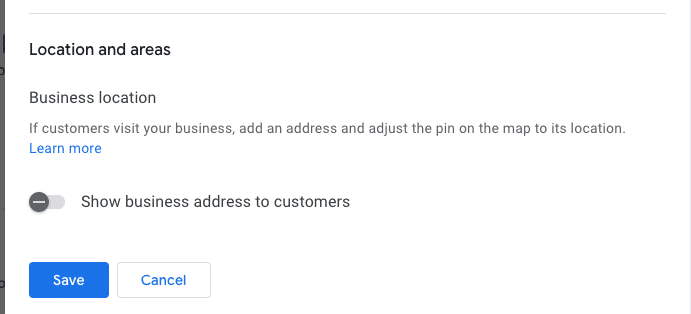
    I’ve often found myself engrossed in the ongoing debate within the local SEO community about the ‘hide address’ toggle for service area businesses (SABs). Many business owners consider this option a mere privacy setting, but it’s much more—a decision that affects how Google’s algorithm perceives your physical relevance.

    ```json
{
  "alt": "Settings interface for business location visibility with toggle option and save button.",
  "caption": "Easily manage the visibility of your business address with a simple toggle switch. Options to save or cancel changes make location management straightforward.",
  "description": "The image displays a digital settings interface focused on business location visibility. It features a toggle switch labeled 'Show business address to customers,' which is turned off. Below the toggle are 'Save' and 'Cancel' buttons for submitting changes. This screenshot is relevant for understanding business location management settings in online profiles or platforms. Keywords: business location, settings interface, visibility toggle, save button."
}
```

    Here are some questions to consider:

    ```json
{
  "alt": "Geocoding service demo using Maps JavaScript API with address details and location on map.",
  "caption": "Explore the Maps JavaScript API with this geocoding demo, showcasing address details for 555 Friendly Rd, Pontiac, MI.",
  "description": "This image displays a geocoding service demo using the Maps JavaScript API. It highlights the detailed address of 555 Friendly Rd, Pontiac, MI 48341, USA. The interface shows the address components, coordinates (42.608756, -83.291726), and a map section indicating the location. The demo explains how to use geocoding for retrieving precise address information and viewing it on a map with options for different data formats like JSON and XML."
}
```
    • Does your defined service area affect your ranking?
    • Does hiding your street address impact your visibility in the local pack?
    • Is Google erasing that data, or does your map pin become an invisible anchor?
    ```json
{
  "alt": "Map showing GTU Web Technology & Marketing Solutions and Mullybox with pinpoints in Pontiac, MI.",
  "caption": "Discover the location of GTU Web Technology & Marketing Solutions and Mullybox in Pontiac, MI, with this detailed map view.",
  "description": "This image displays a map highlighting GTU Web Technology & Marketing Solutions and Mullybox in Pontiac, MI. The map features pinpoints indicating specific locations labeled A, B, and D. The area is shown in a standard map view with street outlines and an overlay for easy navigation. This visual guide can help users find exact locations and understand the surrounding layout in Pontiac. Keywords: map, GTU Web Technology & Marketing Solutions, Mullybox, Pontiac, MI, location."
}
```

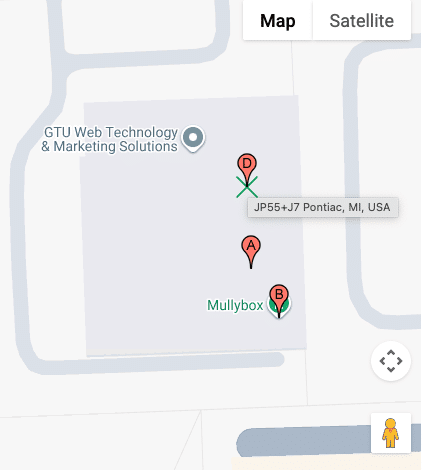
    These are foundational questions in understanding how proximity works when you choose to ‘hide’ on the map.

    ```json
{
  "alt": "Guide on parsing response components with types like ROOFTOP and APPROXIMATE.",
  "caption": "Understanding Geocode Location Types: Dive into the specifics of parsing response components from postal code localities to precise geocodes.",
  "description": "This image provides detailed guidance on parsing response components in geolocation data. It highlights how to interpret arrays like postcode_localities, and explains geometry details that include location types such as ROOFTOP, RANGE_INTERPOLATED, GEOMETRIC_CENTER, and APPROXIMATE. This is crucial for understanding accuracy and the precision of geocoding results, aiding in effective data handling and utilization."
}
```

    How Google Determines Your Map Pin

    ```json
{
  "alt": "Forum post discussing Google Maps giving wrong directions after business address change.",
  "caption": "Frustration mounts as a business struggles with incorrect Google Maps directions following an address change, causing customers to get lost.",
  "description": "The image shows a forum post about issues with Google Maps providing incorrect directions to a business after its address change. Despite updating Google Business Profile, the directions lead 20 minutes off. Attached is a Google Maps screenshot indicating both old and new locations. The post has had 166 views and 1 reply, highlighting the frequent errors with directions and the efforts taken to rectify the situation."
}
```

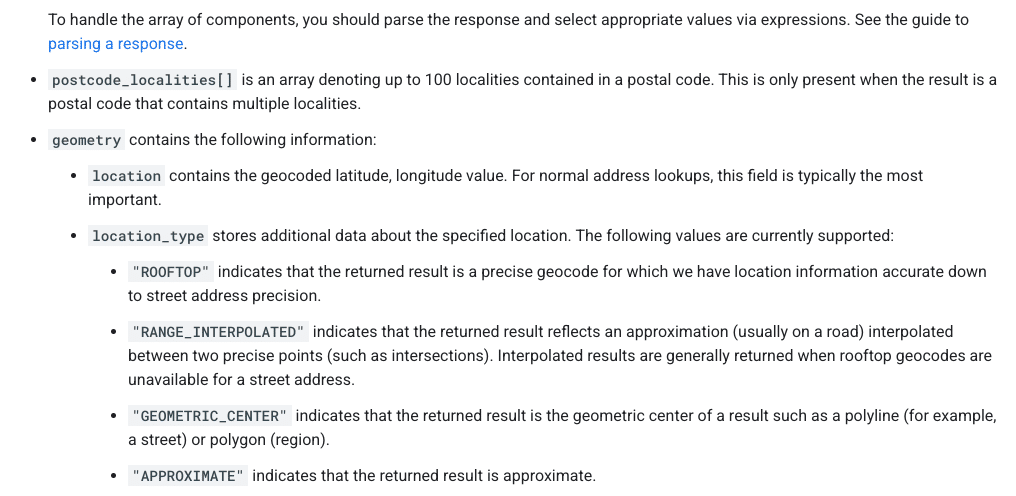
    It’s essential to know that your address and map pin are not the same. Entering an address into your Google Business Profile doesn’t just place a pin; it’s processed through Google’s geocoding engine, comparing it against their database.

    ```json
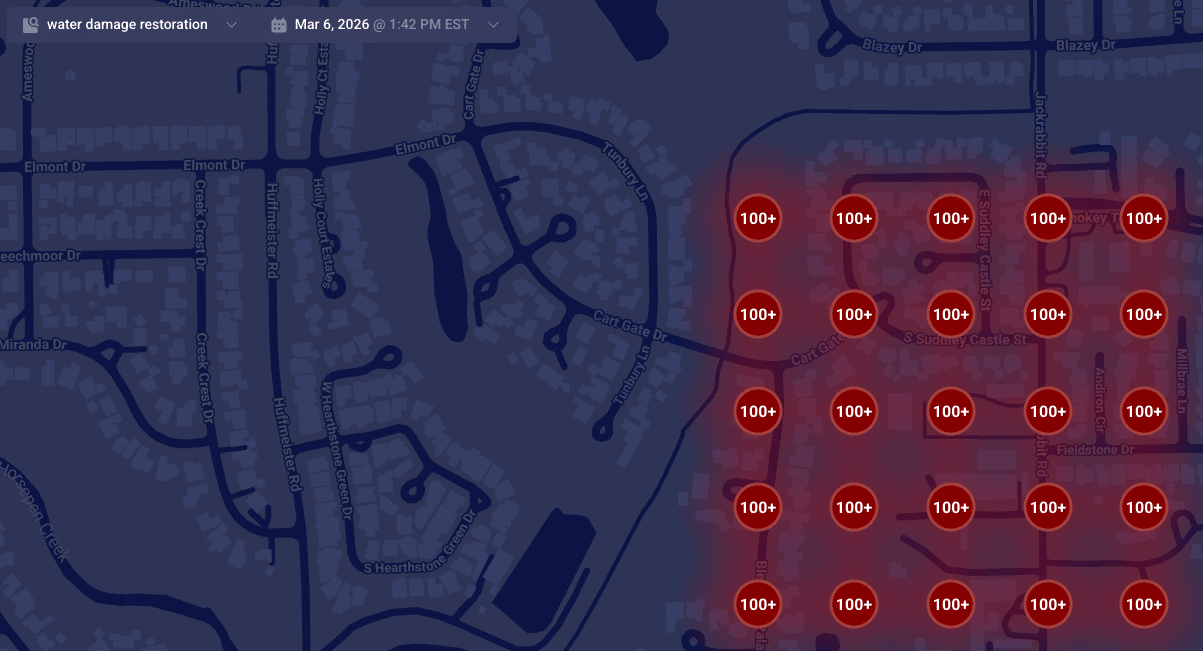
{
  "alt": "Heat map visualization of water damage restoration needs in an urban area, showing numbered zones with color coding.",
  "caption": "Explore this dynamic heat map illustrating water damage restoration priorities across a city with distinct color-coded zones.",
  "description": "This image represents a heat map of water damage restoration needs in an urban area on March 6, 2026, at 1:42 PM EST. The map features a darkened city street layout with numbered circular zones indicating priority levels. Green circles with the number '2' indicate low priority areas, while orange circles marked with '9' highlight higher urgency zones. This visualization aids in strategic planning for restoration services."
}
```

    Understanding Google’s data models is key to understanding why your pin might be misplaced:

    ```json
{
  "alt": "Map highlighting areas with over 100 instances of water damage restoration services.",
  "caption": "A map visualization displaying clusters of water damage restoration needs, with over 100 cases highlighted in red.",
  "description": "This map illustrates a dense concentration of water damage restoration demands in a residential area. Red circles marked with '100+' indicate regions with over 100 service instances. The map is set against a dark background, featuring roads and street names for context. This visualization aids in identifying service hotspots, essential for targeting restoration efforts efficiently."
}
```
    ```json
{
  "alt": "Heatmap showing numerical data points on a dark map layout.",
  "caption": "A vibrant heatmap reveals numerical trends across a dark-themed map, spotlighting key data points for insightful analysis.",
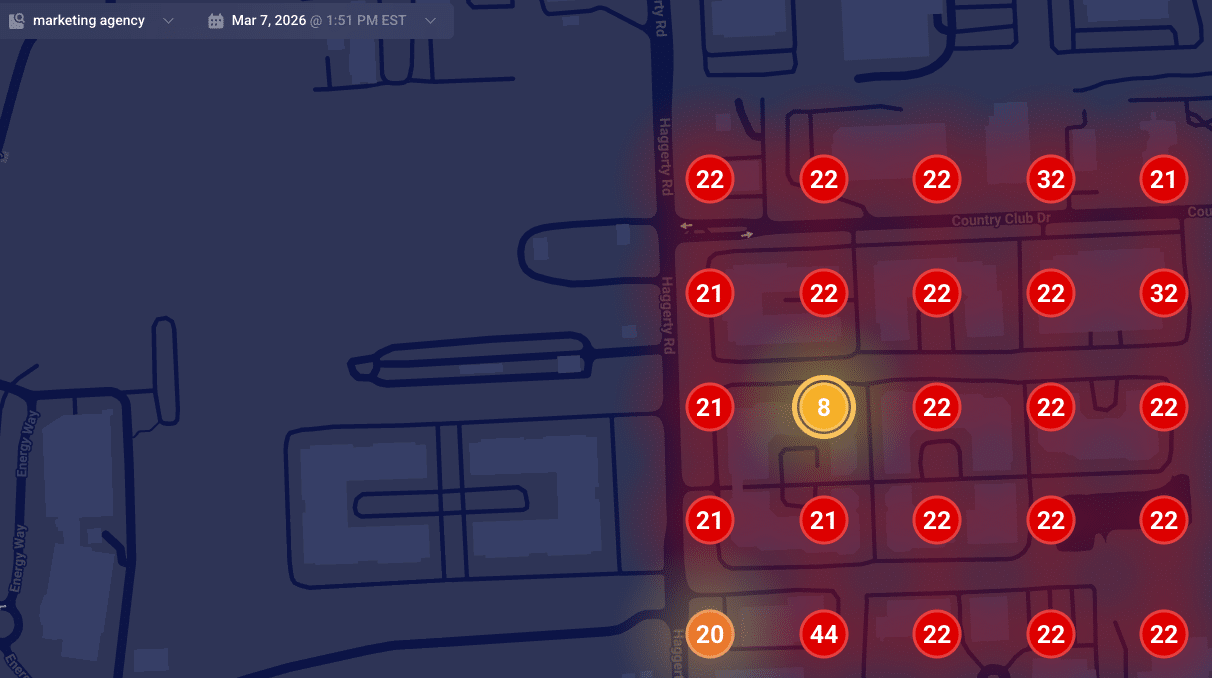
  "description": "This image showcases a heatmap overlaid on a map, displaying various data points marked with numbers. The numbers, like 8, 22, and 44, are highlighted within colored circles ranging from yellow to red, indicating varying data intensities. Designed for data visualization, it suggests a real-time analysis function, useful for trend analysis or strategic planning. The heatmap context is set against a dark map background, enhancing the visibility of the highlighted data points."
}
```

    When Google finds a reliable match, they place your pin accurately at your building’s rooftop. Understanding how these data models work can help explain why SABs sometimes rank differently in local searches.

    ```json
{
  "alt": "Map displaying high-density markers with '100+' in a red shaded area across various streets.",
  "caption": "This heat map reveals a high concentration area, with red-marked zones indicating significant density across streets like Pearsall Ave and Fildew Ave.",
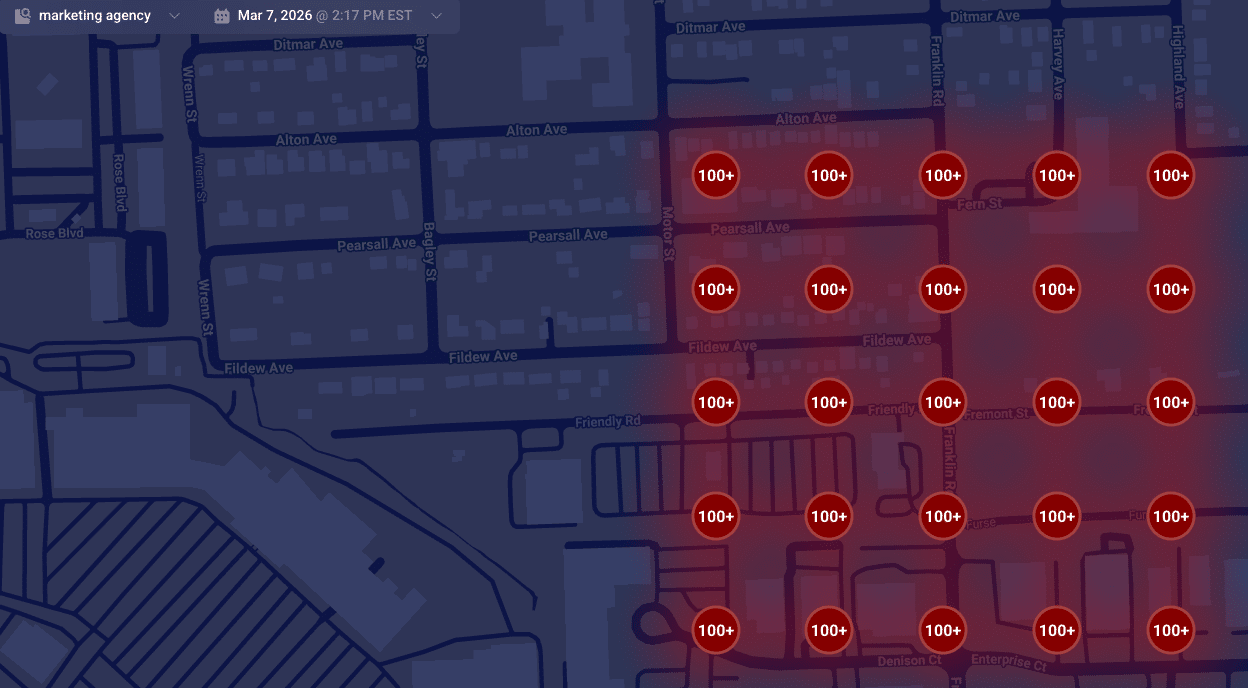
  "description": "The map illustrates a geographic area with a high concentration of points marked '100+', shaded in red to indicate density. Streets such as Pearsall Ave, Fildew Ave, and Motor St are visible, providing a visual representation of congestion or population density. The interface is dated March 7, 2026, at 2:17 PM EST, possibly generated by a marketing agency tool, useful for spatial analysis or resource planning."
}
```

    Is Your Map Pin Placement Accidental?

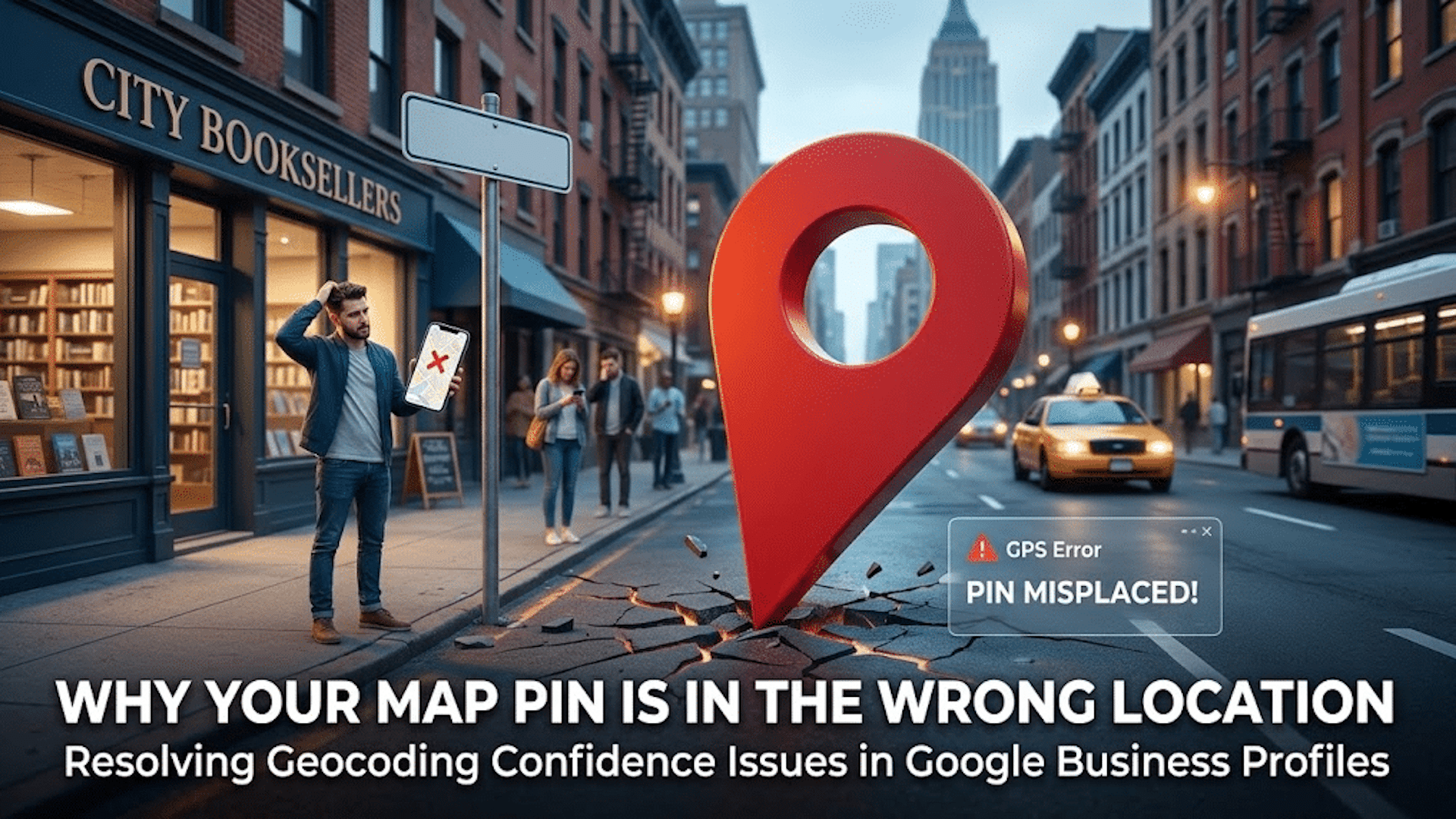
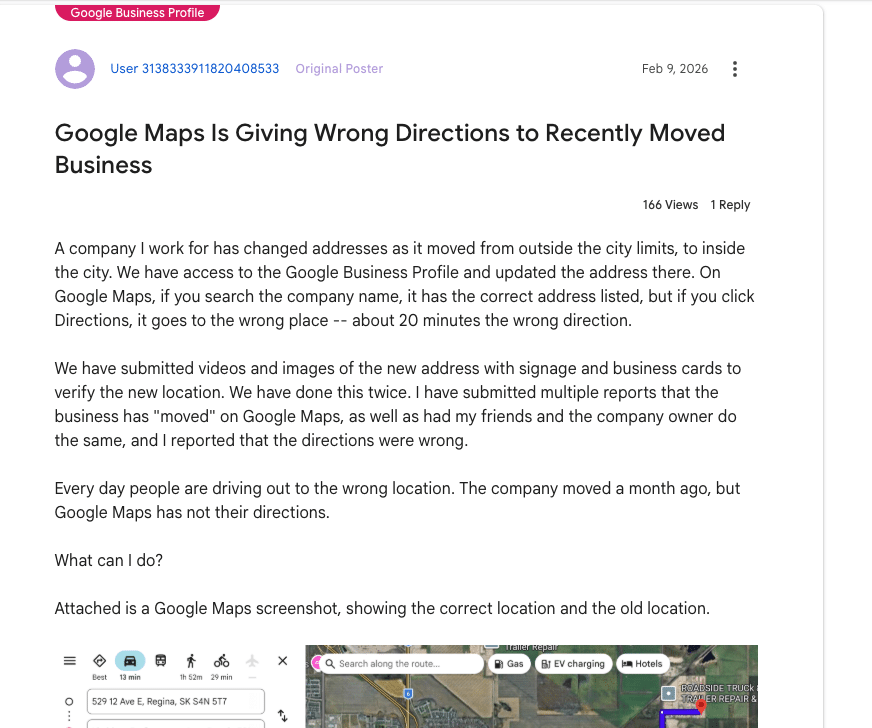
    Don’t be mistaken, it’s not a bug but a failure in converting text to precise map coordinates. When this fails, your business may end up with a map pin that’s misplaced, affecting your local ranking authority.

    When unable to secure a high-confidence match from your building, Google defaults to using the city’s center as your pin’s fallback location, often causing your business to rank from a less relevant area.

    Suite Number Issues

    I’ve warned clients countless times about the pitfalls of including suite numbers in Address line 1. These numbers aren’t street-level data; embedding them can lead to geocoding conflicts, making your map pin default to a broader location like a city center.

    Properly Anchoring Your Map Pin

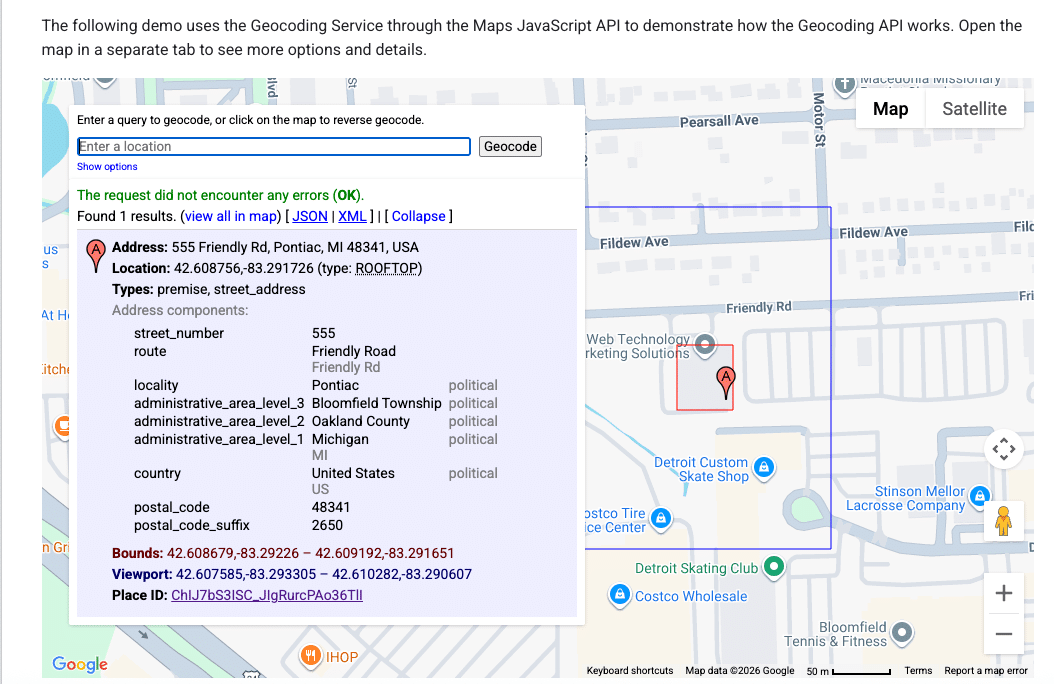
    For accurate map pin placement, ensure your address in Google’s system is geocoding-friendly. Keep unnecessary details out of the first address line and verify how Google reads your address using their developer tools.

    When addressing geocoding problems, prepare for possible re-verification requests. Stay consistent in your corrections until Google verifies your business’s precise location.


    Inspired by this post on Search Engine Land.


    crushpress.ai community screenshot
  • Unveiling Google’s March 2026 Core Update: What You Need to Know

    Unveiling Google’s March 2026 Core Update: What You Need to Know

    I just found out that Google has officially rolled out its much-anticipated March 2026 core update. This marks the inaugural core update of 2026, closely following the recent March 2026 spam update and February 2026 Discover update.

    Google made the announcement today, confirming the start of the rollout. They mentioned this process could stretch out over two weeks. I find it fascinating how these updates play a pivotal role in shaping search algorithms and ultimately influence how content is surfaced on Google.

    What Google is saying. In an update on their Search Status Dashboard, Google stated: “Released the March 2026 core update. The rollout may take up to 2 weeks to complete.” They also took to LinkedIn to emphasize that this is a regular update focused on showcasing relevant and satisfying content for searchers across various sites, reiterating the two-week completion window.

    About core updates. Google’s core updates happen several times annually and bring broad alterations to search algorithms and systems. While we expect some updates, they surprised us by adding some smaller, unannounced changes. The anticipation of frequent updates didn’t quite pan out as we thought.

    What to do if you are hit. If your site takes a hit from this core update, Google hasn’t provided any new guidance, but in previous instances, they’ve advised us to focus on creating helpful content. They stress there’s no specific action to swiftly rectify any negative impact; however, recovery could occur gradually with subsequent core updates.

    In summary, Google’s enduring guidance remains: create content for people, not just search engines. There’s nothing extraordinary creators need to do for this update as long as they provide gratifying content meant for users. If rankings slip, Google encourages looking through their helpful content guidelines.

    For comprehensive details about Google’s core updates, Google’s technical documentation provides in-depth information.

    Previous core updates. Let’s have a quick glance at some recent core updates. The December 2025 update began on December 11 and wrapped up by December 29. Similarly, the June 2025 update ran from June 30 to July 17. It’s intriguing to see these timelines and their impact on content visibility across Google’s domain.

    Why we care. Every core update brings a ripple effect to Google’s search results and rankings. I view these updates as opportunities—some of us might see a beneficial shift in rankings and search visibility, while others may need to adapt to new fluctuations. I sincerely hope this update benefits your efforts, boosting both traffic and conversions.


    Inspired by this post on Search Engine Land.

    crushpress.ai community screenshot
  • Discover Google-Agent: Revolutionizing AI Traffic Tracking

    Discover Google-Agent: Revolutionizing AI Traffic Tracking

    I’ve recently come across news about a fascinating development from Google: the introduction of the Google-Agent user agent. It’s designed to signal when AI agents complete tasks on behalf of users, marking a significant step towards AI-driven web interactions. I’m eager to share what I’ve learned about this new feature and its implications.

    What Happened: Google added Google-Agent to its collection of user-activated fetchers on March 20, and it’s currently rolling out gradually. This intrigued me because it means a novel way of tracking AI interactions is becoming available to us.

    The Google-Agent user agent identifies requests made by AI programs running on Google’s infrastructure, which includes experimental tools like Project Mariner. It’s fascinating to see how advanced Google is getting in this space.

    How It Works: Google-Agent appears in HTTP requests when an AI agent visits a site to complete tasks initiated by users. Imagine it like a helping hand behind the scenes, orchestrating internet tasks for us.

    For example, Google-Agent could be used for browsing pages, evaluating content, or performing actions like submitting forms. This differs from traditional crawlers like Googlebot that operate continuously without user prompts. It’s exciting to think about how this technology could evolve further.

    IP Ranges: Google has shared the IP ranges for its desktop agent, and notably for its mobile agent as well. This transparency is helpful as it allows us to better manage and identify website traffic.

    Why We Care: With this insight, I can now distinguish between traditional crawl activity and visits spawned by users through AI agents using server logs. This capability will enable me to track agent-assisted conversions, understand emerging user behaviors, and prepare for what might be called ‘agentic search’.

    What They’re Saying: According to Google’s announcement, “The Google-Agent user agent is rolling out over the next few weeks, and will be used by Google agents hosted on Google infrastructure to navigate the web and perform actions upon user request.” This statement makes me realize the potential impact on our digital interactions.

    What to Watch: While early volumes of activity may be low, now is the ideal time to establish a baseline. Monitoring logs for Google-Agent activity ensures I stay informed, and I need to ensure that my CDN and WAF configurations aren’t unintentionally blocking these IP ranges.

    Furthermore, it’s crucial for me to validate that key site actions, including forms and user flows, function smoothly for automated agents, ensuring an optimized experience for users.

    Dig Deeper: For those as curious as I am about this exciting development, here’s more insight into Google-Agent.


    Inspired by this post on Search Engine Land.

    crushpress.ai community screenshot
  • Unlock Your Control Over Performance Max Campaigns

    Unlock Your Control Over Performance Max Campaigns

    When I first delved into Performance Max, I shared the sentiment that it felt like a black box. But as I’ve explored its functionalities over time, it’s become an essential part of my marketing toolkit. Google’s quarterly updates have continued to enhance its visibility and usability.

    While the additional reporting is helpful, I focus on leveraging the aspects I can control for meaningful impact. Although not everything is adjustable in Performance Max, there are several key levers that I utilize for optimizing my campaigns. Here’s how I get more out of Performance Max by controlling the controllable aspects.

    Control what you can: Search terms and placements

    One of the best updates to come to Performance Max is the ability to add campaign-level negative keywords. No more cumbersome processes with Google; now, I can directly update these within my campaigns.

    Thanks to the search terms report, I can directly select a keyword and add it to my campaign’s negative keyword list, much like other campaign types, maximizing efficiency and minimizing wasted spend.

    Another optimization opportunity lies within the placements report. Google’s recent change moved the Performance Max placements report from general reporting to the campaign’s ‘Where ads have shown’ section, simplifying analysis. Here, I review impressions and decide on negative placements at the account level if needed.

    Though impression-level reporting can be limiting, I use these insights to decide if certain ads, like those appearing in kids’ programming, should be excluded due to high impressions from unintended sources like mobile apps.

    ```json
{
  "alt": "The CapmatchOne logo with a gradient circle and bold text.",
  "caption": "Discover innovation with the CapmatchOne logo, featuring sleek typography and a modern gradient circle.",
  "description": "The CapmatchOne logo features bold, modern typography coupled with a gradient circle, symbolizing connection and innovation. The sleek design conveys a sense of progress and creativity. This image can be used for branding or promotional purposes, appealing to audiences interested in innovative solutions and forward-thinking designs."
}
```

    Use budget signals to improve efficiency

    Another area I monitor closely is the ad schedule found in the ‘When and where ads showed’ section. Even without an initial schedule, Google provides hour-by-hour data, which helps me refine ad timing to match budgets more efficiently.

    When working with a limited budget, I optimize ad schedules to avoid non-converting hours, thus maximizing my ROI. I adjust ad timings in ‘Campaigns > Audiences, keywords, and content > Ad schedule’ to align with peak performance times.

    Dig deeper: Top Performance Max optimization tips for 2026


    Refine targeting with the right constraints

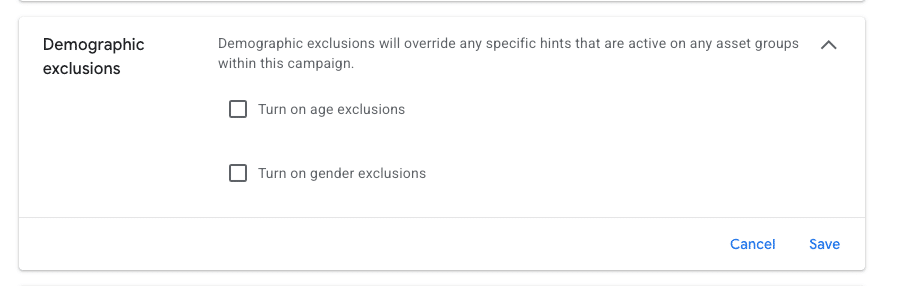
    Campaign settings now include demographic exclusions, which I find particularly valuable for excluding non-converting audiences based on demographics.

    This feature is quite useful when specific demographics are unlikely to engage with my offerings. To make these adjustments, I navigate to ‘Campaign-level settings > Other settings > Demographic exclusions’, enabling me to refine my target audience further.

    ```json
{
  "alt": "Demographic exclusions settings in a campaign interface, with options for age and gender exclusions.",
  "caption": "Configure your campaign with demographic exclusions to tailor your audience based on age and gender preferences.",
  "description": "The image shows a section of a campaign interface titled 'Demographic exclusions.' It offers options to turn on age and gender exclusions, which will override any specific hints that are active on asset groups within the campaign. The interface includes 'Cancel' and 'Save' buttons, providing flexibility in adjusting these settings. This feature enhances campaign targeting by allowing precise audience customization."
}
```

    Although PMax originally lacked device-level insights, the new device targeting features help me review and adjust devices for better performance. It’s crucial to periodically evaluate which devices are contributing positively to the campaign goals.

    Based on performance insights, I decide which devices to include or exclude under ‘Other settings’. This approach enhances my strategy by ensuring my ads appear on devices that align best with my objectives.

    Improve inputs: Creative and AI assets

    Creative assets are critical to the success of Performance Max campaigns, especially across display, YouTube, and Discover networks. To bridge the gap in quality creative, I’m incorporating AI assets more often.

    AI-generated assets are becoming increasingly sophisticated, helping me more effectively target these networks. As AI technology evolves, it’s unlocking new possibilities for creating compelling visuals and video content.

    Google’s AI assets, derived from shopping feed products, are impressively close to replacing traditional creative methods. However, producing glitch-free AI-generated videos remains a future goal I’m keenly observing.

    ```json
{
  "alt": "Device selection interface for ad appearances with options for computers and mobile phones checked.",
  "caption": "Customize where your ads appear with options selected for computers and mobile phones. Ensure targeted advertising with this easy-to-use interface.",
  "description": "The image displays a device selection interface from an ad platform, showing checkboxes for selecting where ads appear. 'Computers' and 'Mobile phones' options are checked, while 'Tablets' and 'TV screens' are unchecked. This setup helps advertisers target specific devices, optimizing ad reach and effectiveness. Keywords: ad targeting, device selection, advertising platform."
}
```

    Dig deeper: How to reduce low-quality leads from Performance Max campaigns

    Understand the limits of control in Performance Max

    I appreciate the channel controls report for the insights it offers on ad placements, even though actionable adjustments are limited at times, which can be frustrating.

    Looking forward, I expect Performance Max to offer more control similar to Demand Gen campaigns. Until then, I adjust my creative and bidding strategies to influence where my ads appear, using feed-only campaigns to focus solely on shopping.

    Performance Max continues to transform from an opaque platform to an integral tool for marketers. With each update, it offers more actionable levers like negative keywords, placements, and smart scheduling to optimize efficacy.

    Using these tools strategically, I ensure my campaigns are as precise and efficient as possible, moving beyond the ‘set-it-and-forget-it’ mindset.


    Inspired by this post on Search Engine Land.

    crushpress.ai community screenshot
  • Unlock Unique Insights: Harness First-Party Data for Content Success

    Unlock Unique Insights: Harness First-Party Data for Content Success

    Have you ever wondered how to set your content apart in a competitive landscape? As a content marketer, I often face the challenge of using the same tools and data sources as everyone else, like Semrush, making it hard to create truly unique content.

    We are all casting our nets in the same pond, using identical resources to gather content ideas. The result? Overly similar content across the board. But there’s a smarter way.

    I realized that the wealth of data about my audience and customers is a goldmine, just waiting to be mined. These insights are invisible to my competitors, as they remain untouched and underutilized within my marketing team.

    I discovered how third-party tools often lead to an echo chamber of commoditized content. While essential, these tools don’t always align with what my specific audience is truly looking for, leading to a flood of generic content.

    Recognizing this challenge encouraged me to tap into my own data, creating content that appeals directly to people already interested in my services.

    First-party data is the information I need. It includes internal insights that only I have access to, such as site search queries, sales call transcripts, CRM data, support tickets, and email interactions.

    Let’s dive deeper into why this approach is effective. First-party data is proprietary. No matter how advanced a competitor’s tools might be, they can’t access my internal data, and this gives me a unique edge.

    This data reflects real buyer language, which helps me avoid assumptions based on my internal knowledge bias. I can tailor my content to match the language my audience uses.

    ```json
{
  "alt": "The CapmatchOne logo with a gradient circle and bold text.",
  "caption": "Discover innovation with the CapmatchOne logo, featuring sleek typography and a modern gradient circle.",
  "description": "The CapmatchOne logo features bold, modern typography coupled with a gradient circle, symbolizing connection and innovation. The sleek design conveys a sense of progress and creativity. This image can be used for branding or promotional purposes, appealing to audiences interested in innovative solutions and forward-thinking designs."
}
```

    By mapping this data to my entire marketing funnel, I fill gaps at every stage, driving not just traffic, but conversions and loyalty.

    How do I turn these insights into content ideas? I start with internal site searches. Examining how visitors use my site can reveal content gaps and opportunities for new offerings.

    Next, I analyze sales call transcripts and CRM data to uncover recurring themes and objections, crafting content that addresses potential buyers’ concerns directly.

    My support tickets provide another source of inspiration. By identifying common customer complaints, I create resources that help both my customers and support team.

    Lastly, I pay close attention to email replies and engagement metrics. Tracking which types of communication yield the greatest response helps me understand content preferences.

    Embracing first-party data helps my brand stand out. While competitors can mimic my content style, they can’t replicate these unique insights. Every week, I make it a point to explore a new data set and extract fresh content ideas.


    Inspired by this post on Search Engine Land.

    crushpress.ai community screenshot
  • Unlock the Power of GSC’s Branded Query Filter for SEO Success

    Unlock the Power of GSC’s Branded Query Filter for SEO Success

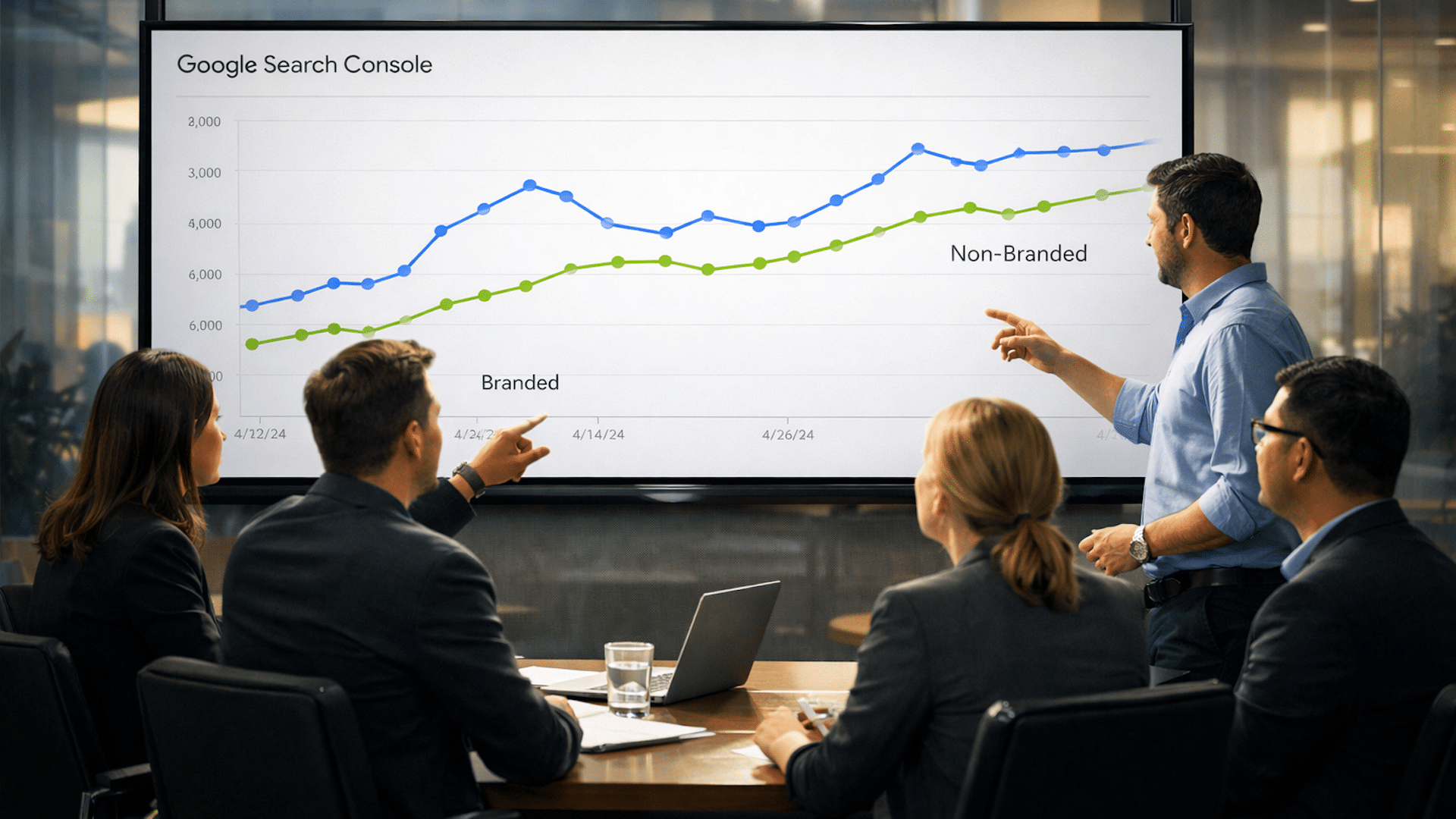
    I recently delved into Google Search Console’s branded query filter, which has become a game-changer for SEO reporting. This feature now allows me to track brand awareness, diagnose performance drops, and truly measure the impact of my SEO efforts.

    In November 2025, Google introduced a solution to a long-standing SEO challenge: the ability to distinguish branded from non-branded search performance directly within Google Search Console (GSC). The rollout is now complete for eligible properties, and I was ecstatic to try it out.

    For so long, I’ve had to rely on regex filters, custom dashboards, or third-party tools, which weren’t always reliable. But GSC’s branded query filter simplifies the process, positioning it as a native feature in a platform widely used for organic reporting.

    ```json
{
  "alt": "Search query filter options in a web analytics tool showing filters by keyword and query type.",
  "caption": "Explore search query trends with detailed filters: select by keyword or focus on branded versus non-branded queries for insightful analysis.",
  "description": "The image displays a query filter interface in a web analytics tool, featuring options to filter by keyword and prioritize either branded or non-branded queries. The interface is overlaid on a chart displaying click data over time, illustrating performance metrics for search results. Keywords: web analytics, search queries, data filtering."
}
```

    This change makes it easier for me to close a crucial gap in SEO reporting. Now, I can independently evaluate brand demand and discovery, leading to improved performance analysis supported by first-party data.

    In essence, GSC’s new filter performs its function by sorting queries into two categories:

    ```json
{
  "alt": "The CapmatchOne logo with a gradient circle and bold text.",
  "caption": "Discover innovation with the CapmatchOne logo, featuring sleek typography and a modern gradient circle.",
  "description": "The CapmatchOne logo features bold, modern typography coupled with a gradient circle, symbolizing connection and innovation. The sleek design conveys a sense of progress and creativity. This image can be used for branding or promotional purposes, appealing to audiences interested in innovative solutions and forward-thinking designs."
}
```
    • Branded queries that include recognized brand terms.
    • Non-branded queries covering all other discovery queries.

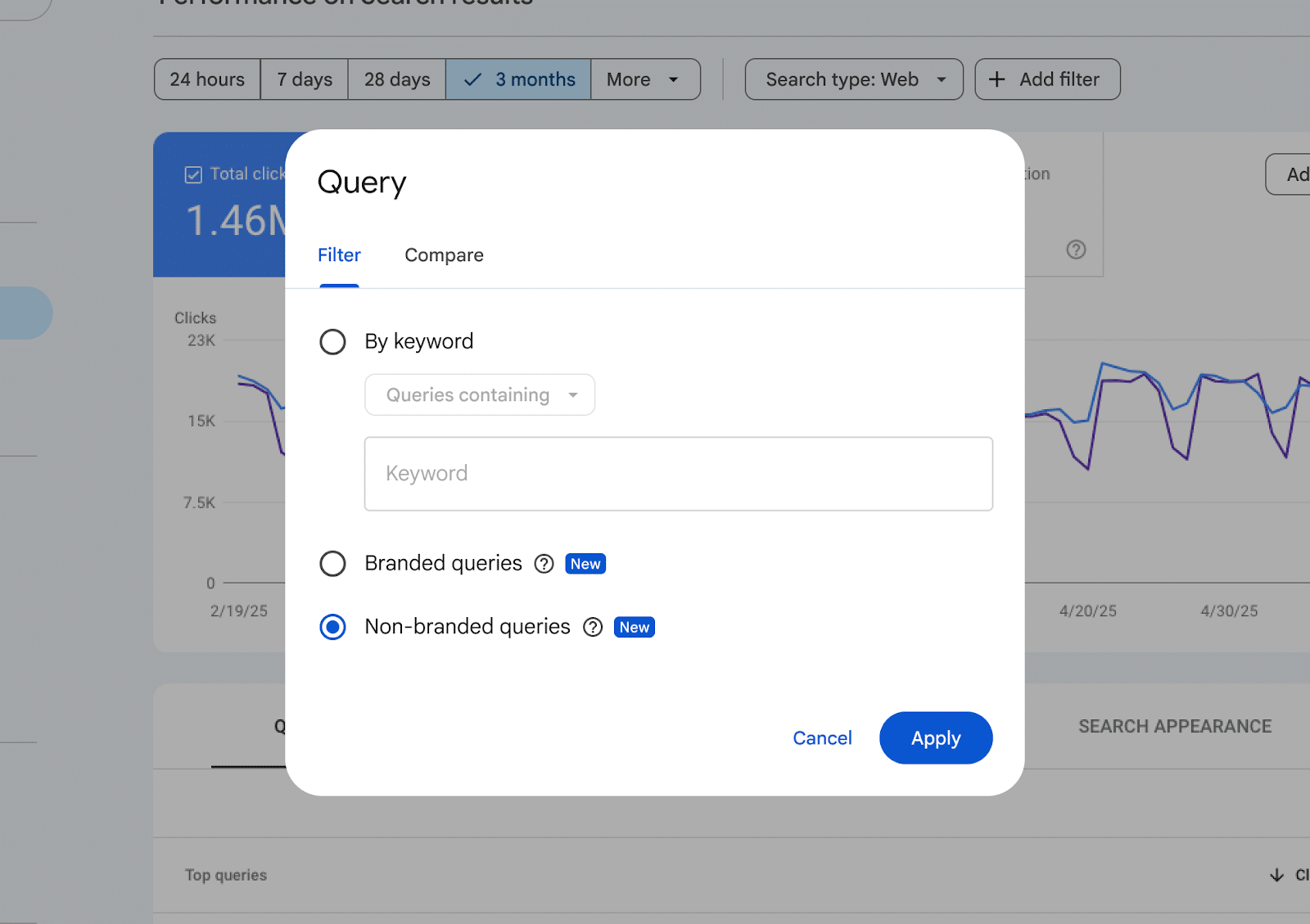
    This filter is accessible directly via:

    ```json
{
  "alt": "Line graph and analytics showing changes in clicks, impressions, CTR, and position over time.",
  "caption": "Diving into the data: This graph reveals key changes in clicks, impressions, CTR, and average position over the last three months compared to last year.",
  "description": "The image displays a line graph depicting trends in total clicks, impressions, CTR, and average position. The graph compares the last three months to the same period last year, highlighting a 31.74% decrease in clicks and a 32.72% decline in CTR. Impressions show a slight increase of 1.42%. Keywords: analytics, data visualization, SEO metrics."
}
```
    • Performance > Search results > + Add filter > Query.
    • Query groups.
    • API-accessible data exports.

    These features empower me to group queries by topic or intent, filter by branded and non-branded types, and create detailed reports without external processing.

    ```json
{
  "alt": "Graph showing interest over time with fluctuating blue line and descending green trend line from 2024 to 2026 in the US.",
  "caption": "Dive into the trend: This graph illustrates the ups and downs of interest from 2024 to 2026, showing a notable decline overall despite several peaks.",
  "description": "This image depicts a line graph representing interest over time from October 2024 to January 2026 in the United States. A blue line captures the fluctuating interest levels, with notable peaks in early and late 2025. Meanwhile, a green arrowed line indicates an overall downward trend. The graph provides an insightful visual representation of interest dynamics during this period, reflecting both temporary spikes and a general decline."
}
```

    Historically, separating branded from non-branded performance wasn’t new but maintaining consistency was challenging. I used to manually segment with regex, keyword tagging in rank-tracking tools, or through custom dashboards.

    These methods worked but were fragile. Common issues included character limits on regex, language variants for international sites, and no shared standard for branded terms. With GSC’s update, I find these challenges largely eliminated.

    ```json
{
  "alt": "Line graph comparing branded and non-branded CTR over time, showing notable variance from October 2025 to January 2026.",
  "caption": "Exploring the dynamics of branded versus non-branded CTR, this graph reveals intriguing trends from late 2025 into 2026.",
  "description": "This line graph illustrates the comparison between branded and non-branded click-through rates (CTR) over a period from October 2025 to early January 2026. The vertical axis represents the percentage of CTR, ranging from 0% to 25%, while the horizontal axis shows the timeline. The graph demonstrates fluctuating rates, with branded CTR peaking notably around early 2026, while non-branded CTR remains relatively steady and low throughout the period. This visualization provides insights into the effectiveness of brand recognition on digital engagement metrics. Keywords: Branded CTR, Non-Branded CTR, Click-Through Rate, Digital Marketing Analytics."
}
```

    Branded traffic is crucial, being both a signal of brand awareness and a major source of conversions. However, when mixed with non-branded data, it skews the interpretation of SEO performance.

    By segmenting this data, I can now accurately identify brand demand versus discovery, allowing clearer insights. This helps me to better understand what’s genuinely boosting performance and address key questions like:

    ```json
{
  "alt": "Line graph showing impressions over six months with a note about Google ending support for &num=100 on September 12.",
  "caption": "A dynamic graph illustrating search impressions over time, noting Google's change in support, influencing trends.",
  "description": "This image features a line graph depicting the number of impressions over a six-month period. It includes an annotation on September 12, highlighting Google's end of support for &num=100. The graph shows a fluctuating trend with notable spikes, marked by a vertical guide at the annotation point. Useful for observing impact on search performance metrics."
}
```
    • Are we enhancing brand demand or expanding non-branded reach?
    • Is our content strategy bolstering non-branded visibility?
    • Is the current strategy effective as anticipated?

    Having used the filter, branded search trends have become one of the clearest indicators of brand health. Monitoring these trends reveals gaps and provides opportunities across various channels.

    This functionality isn’t just a feature; it signifies a paradigm shift in SEO measurement. The consistency it brings to branded versus non-branded reporting is transforming how SEO work gets done, making reporting more consistent and actionable.

    As I continue to evaluate and use these insights, I find that adopting this feature means less time spent reconciling data and more focus on interpreting results. This results in more confident and consistent communication, ultimately driving greater impact.


    Inspired by this post on Search Engine Land.

    crushpress.ai community screenshot
  • Enhance Forum Visibility: Google’s New Structured Data Update

    Enhance Forum Visibility: Google’s New Structured Data Update

    I recently discovered that Google has enhanced its structured data support for forum and Q&A pages. This update introduces new properties that allow us to better signal reply threads, quoted content, and identify whether content is generated by AI or humans.

    With these changes, which aim to boost Google’s accuracy in interpreting discussions and Q&A content, we can now ensure our content is represented more precisely.

    What’s New. Google has updated its QAPage documentation to include commentCount and digitalSourceType. Moreover, the DiscussionForumPosting documentation now supports sharedContent alongside these new properties.

    The Details. Using Q&A markup, I’m able to apply commentCount to questions, answers, and comments, showcasing the total number of comments even if they are not fully marked up. This total should align with answerCount + commentCount, representing all types of replies.

    How It Works. The digitalSourceType property allows me to indicate whether content is produced by a model or simple automation. I can use TrainedAlgorithmicMediaDigitalSource for advanced outputs and AlgorithmicMediaDigitalSource for basic bots. If this property is left out, Google assumes the content is human-generated.

    What’s New for Forums. The sharedContent property helps me to mark the primary item that’s being shared in a post. Google supports various content types like WebPage, ImageObject, and more, including quotes or reposts.

    Why This Matters. This update provides me with greater control over how Google interprets community content, which is particularly important for sites rich in forums, support communities, UGC platforms, and Q&A sections. Google can now distinguish between answers and comments more effectively, tally partial threads across multiple pages, and recognize when a post primarily shares specific media types.

    Documentation. The official documentation was updated on March 24, providing all the details I need to apply these new capabilities.


    Inspired by this post on Search Engine Land.

    crushpress.ai community screenshot
  • Google’s Lightning-Fast March 2026 Spam Update Now Complete

    Google’s Lightning-Fast March 2026 Spam Update Now Complete

    Well, it looks like Google’s March 2026 spam update wrapped up in record time! It took less than a day to roll out and was fully completed on March 25, 2026, at precisely 10:40 a.m. ET.

    The update was originally released the previous afternoon on March 24, 2026, at 3:20 p.m., meaning the entire process took just a swift 19 hours and 30 minutes. Incredible, right?

    Why this matters to us. This marks Google’s second announced algorithm update of 2026. While we don’t have specifics on the type of spam targeted, any changes you notice in your site’s ranking or traffic soon might be linked to this update.

    Diving deeper into the spam update. According to Google’s documentation:

    “While Google’s automated systems to detect search spam are constantly operating, we occasionally make notable improvements to how they work. When we do, we refer to this as a spam update and share when they happen on our list of Google Search ranking updates.

    For example, SpamBrain is our AI-based spam-prevention system. From time-to-time, we improve that system to make it better at spotting spam and to help ensure it catches new types of spam.

    Sites that see a change after a spam update should review our spam policies to ensure they are complying with those. Sites that violate our policies may rank lower in results or not appear in results at all. Making changes may help a site improve if our automated systems learn over a period of months that the site complies with our spam policies.

    In the case of a link spam update (an update that specifically deals with link spam), making changes might not generate an improvement. This is because when our systems remove the effects spammy links may have, any ranking benefit the links may have previously generated for your site is lost. Any potential ranking benefits generated by those links cannot be regained.”

    Impact. Primarily, this update aims at sites spamming Google Search. So, unless your site engaged in spammy practices, you likely won’t notice a negative impact.


    Inspired by this post on Search Engine Land.

    crushpress.ai community screenshot