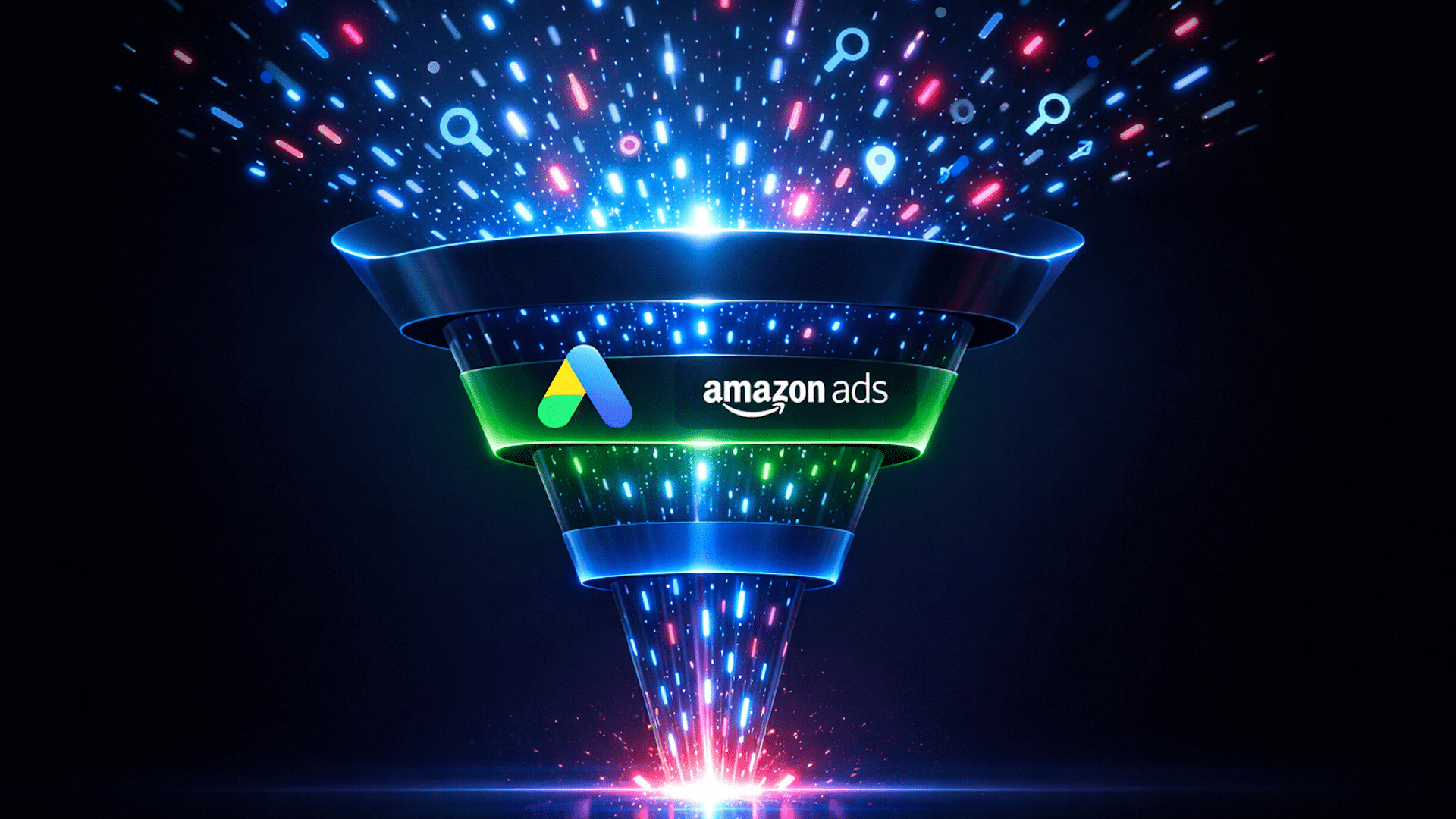
As I delve into the world of e-commerce, I’m constantly amazed by how paid search can transform business growth. Platforms like Google Shopping and Amazon Ads are game-changers, offering high conversion rates and efficient spending when campaigns are crafted thoughtfully.
These platforms are adept at capturing high-intent demand, providing the crucial data to expand my campaigns. They connect search queries directly to revenue streams, letting me pinpoint which terms are boosting sales so I can allocate my budget wisely.
However, the true test lies in organizing campaigns to effectively leverage this data.
Why does paid search excel in e-commerce? It’s all about intent and data. Google and Amazon thrive on search-driven environments. When someone seeks a product, they’re clearly expressing their needs. I don’t need to make inferences; I’m delivering precisely what customers want.
Moreover, Google Shopping and Amazon Ads offer unparalleled keyword-level revenue data. This insight helps me understand conversion rates and costs better. Amazon, in particular, shines with its granular product and category level revenue visibility.
Together, this data forms a powerful feedback loop. By analyzing which terms tie back to revenue, I can strategically shift my spending and enhance my return on ad spend (ROAS) over time. On Amazon, higher conversion rates even boost organic rankings, reducing future acquisition costs.
My success in search campaigns hinges on creating multi-funnel structures. While the concept remains consistent, execution varies based on campaign types, settings, and bidding strategies.
I implement campaign architectures that utilize wide-net, low-cost discovery initiatives to explore the search landscape. High-intent converters funnel into dedicated performance campaigns with strategic bidding. This approach not only strengthens ROAS but also enhances rankings and fosters scalable growth.
Embarking on Google Shopping, the priority sculpting method, inspired by Martin Roettgerding, is invaluable. Utilizing a three-layer campaign structure, I route keywords into distinct campaigns based on their performance.
This strategy optimizes spending on discovery keywords and directs investment toward high-performing, high-intent terms. The Google Shopping priority settings are pivotal; high-priority campaigns initially serve at lower bids.
Layer 1 focuses on capturing branded search traffic through a Performance Max campaign, maintaining an assetless format to focus on shopping inventory and avoid bleeding into other channels.
Layer 2, the catch-all, casts a wide net, experimenting with search terms to gather conversion data, while Layer 3 dedicates budget to best-performing terms, aligning with high-ROAS strategies.
Amazon’s multi-tier campaign structure offers its own set of advantages, like higher conversion rates and the intricate connection between ad spend and organic rankings. Campaigns are organized at the SKU level, employing research, ranking, and performance tiers.
Each tier serves a unique purpose, managed by differing advertising cost of sales (ACOS) targets, tailored for profitability. The research tier explores broad keyword possibilities, performance tiers maximize returns on proven converters, and ranking tiers drive organic positions aggressively.
Both Google Shopping and Amazon Ads offer unique opportunities in the e-commerce landscape. Whether aiming for short-term gains on Amazon or long-term brand building via Google, using these platforms synergistically can propel a business to new heights.
Expanding beyond paid social? Discover how I learned to structure campaigns, control spend, and unlock demand without depending solely on the Meta playbook.
My paid social campaigns were thriving. I understood my audience intimately, had a tight creative process, and watched results improve each year. Naturally, when leadership proposed expanding into Google Ads, I was thrilled—envisioning it as a new revenue channel.
But sticking to our existing strategy only led to difficult conversations. Google demands different tactics—intent signals and campaign structures vary, and common budget-draining mistakes aren’t always obvious. Many brands mirroring their Meta strategy end up with flashy dashboards but disappointing balance sheets.
From my experiences, six frequent mistakes can cause substantial damage before they’re even noticed. They’re what I’ve seen most often with ecommerce brands transitioning to Google Ads—and each error is reversible.
Mistake 1: Treating Google like a retention channel
Utilizing Google Ads for retention and brand defense is possible, but relying solely on it as a strategy is problematic. I often notice brands new to the platform diving straight into Performance Max. Initially, the ROAS shines bright, making everyone happy. However, when the right question surfaces—”Are we truly growing or just capturing purchases?”—issues arise.
For example, a client approached me with branded search and retargeting doing most of the work in PMax—a mere tax on demand already created elsewhere, leading to stagnant revenue. Although ad spend was soaring, growth wasn’t.
Acquiring new customers requires a different setup, like:
Shopping campaigns to highlight products to new audiences.
Search campaigns centered on non-branded, high-intent keywords.
Layered PMax configurations to bypass defaulting to easy conversions.
When Google grants vast access to new audiences, focusing solely on closing disregards most of this opportunity.
Mistake 2: Not knowing how to leverage Google’s core levers
Although paid social expertise is somewhat transferable to Google, I’ve observed four major gaps. Let me share them with you in more detail.
Search intent: Social media ads interrupt, but search ads meet users actively seeking your offerings, transforming campaign structure, ad copy, and keyword targeting entirely.
Data feed optimization: An optimized product feed enhances visibility and targeting in Shopping or Performance Max campaigns.
Keyword research: Understanding match types and search intent is critical for reach and cost efficiency.
Landing pages: Engaging landing pages outperform product pages for high-intent but unfamiliar visitors.
Mistake 3: Allowing operational issues to interrupt campaign momentum
Consistent data is key for Google’s algorithms. Every unintended campaign pause can reset learning, causing weeks of degraded performance and wasted spend.
Common disruptions include:
Payments: Bill lapses, leading to campaign pauses, overshadow the actual cost when factoring in downtime recovery.
Tracking and feed integrity: Broken pixels and feed errors silently degrade performance.
Setting up automated alerts and regular audits can prevent these costly errors.
Mistake 4: Overly granular campaign structures
Detail-oriented advertisers may over-segment campaigns, believing it provides control. However, widespread budget allocation hinders Google’s automation from optimizing effectively.
Instead, tight, well-funded campaigns optimize better and are more manageable.
Mistake 5: Leaving campaigns on Max Conversion Value without ROAS targets
Max Conversion Value aims for conversion volume, neglecting cost efficiency. A realistic ROAS goal encourages the algorithm to maximize efficiency. Setting this correctly is crucial.
Mistake 6: Underfunding campaigns, keeping them in learning mode
Underfunding during the learning phase results in indefinite stalled progress. Adequately funding new campaigns from the outset fosters quicker, more accurate results.
Expanding beyond Meta to include Google is a strategic move, accessing actively expressed demand. These pitfalls aren’t deterrents but guideposts for smoother transitions and optimized strategies.
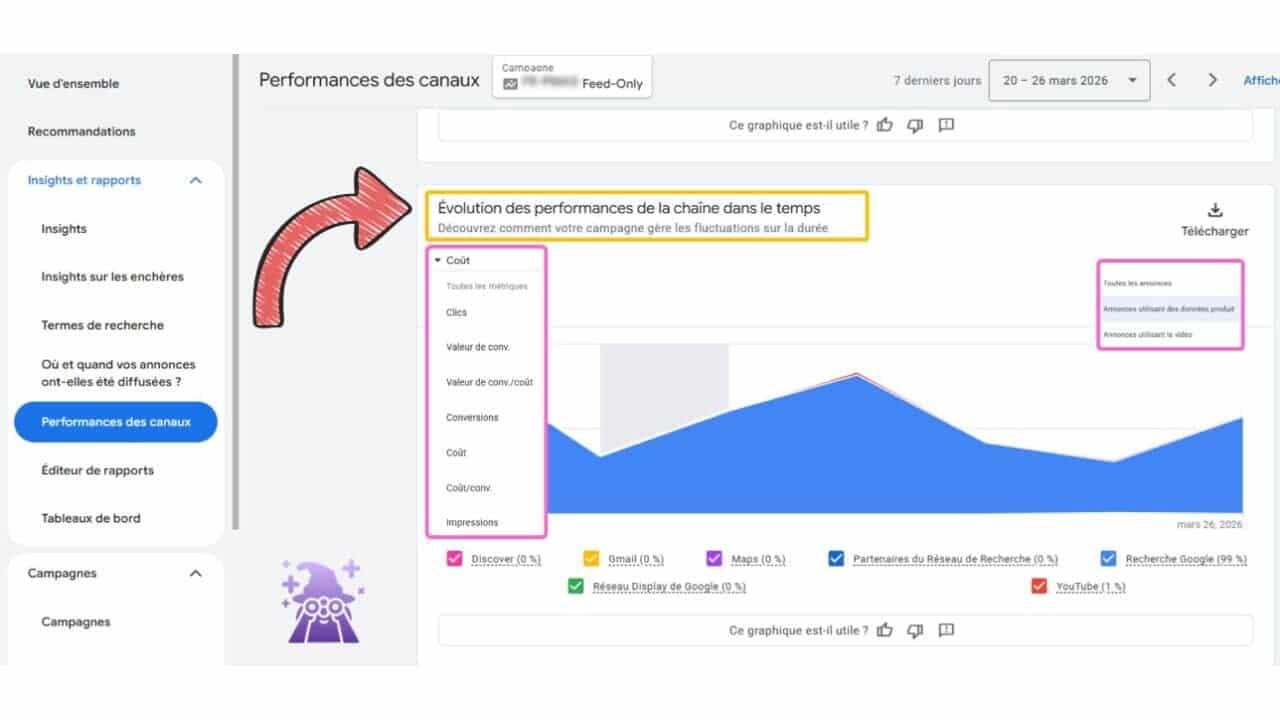
Recently, I discovered that Google has launched an exciting new feature for Performance Max campaigns. As an advertiser, I’m always on the lookout for tools that provide clearer insights, and this new channel performance timeline view does just that. It offers a comprehensive breakdown of how different channels like Search, YouTube, and Display contribute to my campaign results over time.
What’s New
The latest update introduces a timeline graph that showcases channel-level contributions over a selected period, complete with investment and performance filters. This means I can quickly identify which channels are excelling and which ones might need a bit more attention.
The chart features helpful visual cues—like a yellow box highlighting channel performance evolution over time, and a pink box indicating different ad types, such as All Ads, Ads Using Product Lists, and Ads Using Video.
Why I Care
Managing Performance Max campaigns across multiple channels often left me guessing about where my budget was working best. This new view provides valuable insights into channel-level trends, allowing me to adjust strategies or budgets more efficiently. If I notice YouTube underperforming while Search is thriving, I can now make informed decisions without relying purely on guesswork or exported data.
The Big Picture
This new view empowers me to evaluate PMAX performance more effectively, without relying solely on Google’s automated decisions. Now, I can see consistent underperformance or excellence across channels, which guides my budget and asset strategies moving forward.
The Bottom Line
Though it’s not full transparency, this update is a significant move in the right direction. I now have a more structured way to detect trend anomalies in PMax campaigns early and make necessary adjustments to optimize performance.
First Spotted
This feature was first noticed by Axel Falck, Head of Search at Le Mage du SEA, who shared his insights on LinkedIn.
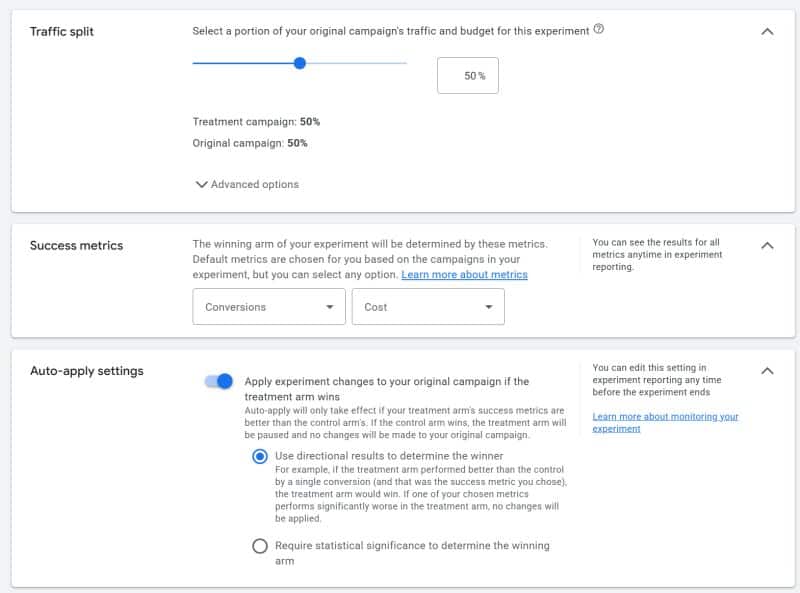
I recently discovered that Google Ads now includes an auto-apply setting for its experiments feature, which is activated by default. This means that once an experiment determines a winning variant, it can automatically implement that change without waiting for manual review. A real time-saver, but there’s more to consider.
Here’s how it works: as advertisers, we can select between two modes when evaluating results – directional outcomes or statistical significance with varying confidence levels of 80%, 85%, or 95%. However, it’s reassuring to know there’s a safety net; if any chosen success metric performs significantly worse during testing, the system won’t proceed with automatic changes.
Why it matters to me. Experiments are incredibly powerful within a Google Ads account, allowing us to test ideas without risking the existing campaign’s performance. While automating the application of results could streamline testing phases, this process eliminates a crucial checkpoint where we often catch unintended outcomes that might impact active campaigns.
The potential pitfall. One limitation is that experiments currently accommodate only two success metrics. This might mean that a third, important metric could suffer unnoticed if it’s not one of the chosen ones, as the system’s guardrails only protect what we’ve explicitly instructed Google to watch, not every significant factor.
The takeaway. While the auto-apply feature serves as a helpful shortcut for straightforward tests, when conducting significant experiments, it’s worth going the extra mile for manual review. It’s best to let the experiment play out fully, ensure accuracy and thoroughness, and examine all data before making a final call.
First observed by professionals. This update did not go unnoticed; it was first picked up by Google Ads specialist Bob Meijer, who shared his insights on LinkedIn.
I’ve noticed that when I rely too heavily on micro-conversions, my PPC campaigns don’t quite perform as expected. This often leads to distorted CPA and ROAS figures. Here’s how I’m learning to refine my approach to micro-conversions and align my strategies with real revenue.
AI-powered ad bidding systems are remarkably advanced, yet I find myself grappling with conversion tracking that isn’t as evolved. While ad platforms nudge me to keep track of multiple actions, I’ve heard from experts that it’s actually more beneficial to zero in on final outcomes.
From my experience, neither approach is entirely foolproof. Both over-signaling and under-signaling can impact PPC campaigns negatively. Too many vague micro-conversions can introduce noise, steering the bidding process toward less valuable actions, hampering the actual results. Conversely, with too few signals, the system lacks sufficient data for learning.
This issue becomes particularly apparent in my work with Performance Max and similar setups. The optimization here leans heavily on whatever signals I provide, irrespective of their true business value.
I started reflecting on how micro-conversions can overshadow real conversions, leading me to explore why these bidding systems operate this way and how to create a conversion framework that better aligns signal volume with actual business impact.
The Myth of a ‘Data-Hungry’ PPC Algorithm
I had always believed that algorithms thrive on data, a notion reinforced by platform guides and numerous PPC articles. They often imply that more signals inherently equate to better learning.
Yet, I’ve realized that while bidding systems need a certain signal density, they don’t necessarily gain from indiscriminate micro-conversion logging. More data doesn’t equate to better data.
When I add low-intent or weakly related actions, performance can degrade. The system might start optimizing for actions not aligned with real revenue.
It’s clear to me that these machine-learning systems assess frequency, consistency, and predictability without discerning the strategic relevance of a signal.
My account often contains a blend of meaningful actions like purchases and others less significant, like pageviews. Without a value hierarchy, the algorithm treats all signals as viable targets, leaning toward easy, frequent actions that offer little business value.
As I adjust my approach, I’m finding the need to streamline my focus. By applying disciplined strategies and value-based bidding, I can align my signal structures more effectively with my business outcomes.
Attracting the perfect candidates without breaking the bank is my goal when using LinkedIn recruitment campaigns. By leveraging intent signals, pre-qualification, and funnel segmentation, I can ensure that every dollar spent is worth it, engaging only those truly interested in a career change.
I’ve discovered that LinkedIn stands as one of the most robust platforms for recruiting top-tier talent. However, without properly structured campaigns, it’s all too easy to see budgets drained with little return.
Too often, recruitment strategies focus more on visibility than on targeting intent. Simply increasing impressions doesn’t necessarily lead to quality hires. Broad targeting often swamps me with unqualified applicants, hiking up my cost-per-hire and dragging out recruitment timelines.
By focusing on attracting and converting high-intent candidates, while naturally filtering out those who aren’t a fit, I’ve streamlined my recruitment process. Here’s how I achieve this efficiency.
Shifting Strategy: Prioritize Intent over Reach
I’ve learned that targeting solely based on job titles, industries, and experience can result in high volumes without efficiency. Successful campaigns that I’ve run focus on intent-based targeting, which helps me reach candidates more likely to consider my opportunity.
My approach is multi-layered:
Core fit: Job titles, skills, and certifications.
Behavioral signals: Open-to-work status, group memberships, and industry content engagement.
Career friction indicators: Roles prone to burnout, companies undergoing layoffs, and environments with limited growth.
These layers allow me to go beyond just “who they are” to “why they might want change,” which drives impactful performance gains.
Pre-qualify Candidates with Strategic Ad Creative
Crafting my ad creative isn’t solely about grabbing attention; it’s also about effective audience filtering. One of the smartest ways I’ve reduced cost-per-hire is by deterring unqualified candidates from clicking my ads initially.
My effective recruitment ads follow this structure:
Identify pain points or specific identities: “Burned out from long shifts in healthcare?”
Define target undertaking: “Seeking licensed RNs with 3+ years of experience.”
Showcase meaningful value: Flexibility, compensation, career growth, or mission.
Set clear expectations: “Not an entry-level position” or “Requires enterprise account management.”
This approach of combining attraction and exclusion maximizes likelihood that clicks convert into genuine applications.
Segment Campaigns According to Candidate Intent
Effective LinkedIn strategies don’t rely on a single campaign. Instead, I segment based on candidate intent to better tailor my outreach approach.
High-intent (bottom funnel)
This segment targets active job seekers, offering high conversion potential.
Messaging: Career upgrades, lifestyle improvements, growth opportunities.
Outcome: Builds a scalable pipeline of qualified candidates.
Cold passive talent (top funnel)
These are potential candidates developing long-term interest, to eventually progress in the recruitment funnel.
Target: Broader audiences and lookalikes.
Messaging: Employer brand, company culture, “day in the life.”
Outcome: Reduces future acquisition costs by fostering a talent pool.
Cost Control Through Smart Bidding and Optimization
I’ve seen how LinkedIn’s platform can quickly turn costly. Starting with manual CPC bidding gives me control, allowing flexibility to test automated options as performance metrics stabilize.
Focusing on critical metrics such as qualified applications, rather than just clicks, refines my strategy. Tracking interview and hire rates further informs optimizations.
I remain agile in making decisions—high click-through rates with low applications hint at poor alignment, while high applications but low interviews suggest inadequate pre-qualification.
Efficiency is achieved by curbing wasted expenditure sooner, conserving budget and ensuring audience precision.
Improve Engagement with a Simplified Application Process
Avoid passing candidates directly to lengthy application forms. Instead, I use a two-step funnel:
Pre-qualification landing page:
Role overview and expectations.
Clear compensation details.
Criteria for applicant suitability.
Application:
Short application form or LinkedIn Easy Apply.
This structure aligns expectations and screens candidates, often reducing cost-per-hire by 30-50%.
Retargeting: Re-engage Interested Candidates
Not every prospective candidate will apply right away. Using retargeting, I can re-capture the interest of high-intent users who’ve previously interacted with my material.
Career page visitors.
Ad viewers.
50%+ video engagement viewers.
Follow up these interactions with messaging like:
“Still considering a new role?”
“Last chance to apply”
Employee success stories.
I’ve found retargeting to be one of the most cost-efficient tactics in my recruitment strategy.
Advanced Strategies for Better ROI
After mastering the basics, I applied these advanced tactics to push performance further:
Competitor targeting: Engaging employees from competing companies by highlighting my offering’s strengths.
Skill-based segmentation: Differentiating campaigns by specific skills to lower ad costs.
Targeted Message Ads: Particularly for specialized or senior roles, with refined targeting. Understanding that broad targeting can lead to high costs.
Here’s how I crafted a successful LinkedIn InMail approach, which significantly boosted high-intent applications:
Hi [First Name],
This might be a stretch — but your background in HVAC sales caught my eye.
We’re looking for seasoned sales reps eager for stable commissions and predictable schedules.
Ideal candidates will have:
3+ years in HVAC/home services sales
In-home consultation experience
A desire for stable, high earning potential
Unique perks include:
Weekends free
Pre-qualified leads (no cold calls)
Consistent six-figure potential
Note that this isn’t suited for newcomers to sales or entry-level reps.
If a brief conversation interests you, let’s connect.
If not, thanks for considering.
— [Name]
Clearly stating the requirement for “experienced sales reps” ensures relevancy, enhancing response rates and minimizing inappropriate responses.
Highlighting candidate benefits like no weekend work aligns with the audience’s priorities, making my pitch more appealing.
Ending with a reminder that the role isn’t entry-level helps avoid wasted discussions, further curtailing cost-per-hire.
Intent Overpowers Reach in LinkedIn Recruitment
The most effective LinkedIn recruitment campaigns I’ve crafted stem from sharp, strategic decisions.
Focusing on intent-based targeting, pre-quals through ad creatives, funnel segmentation, and conversion optimization shapes a recruiting method that consistently draws the right individuals and minimizes frivolous spending.
In the end, reducing cost-per-hire is about timely engagement with the right people through a tailored message.
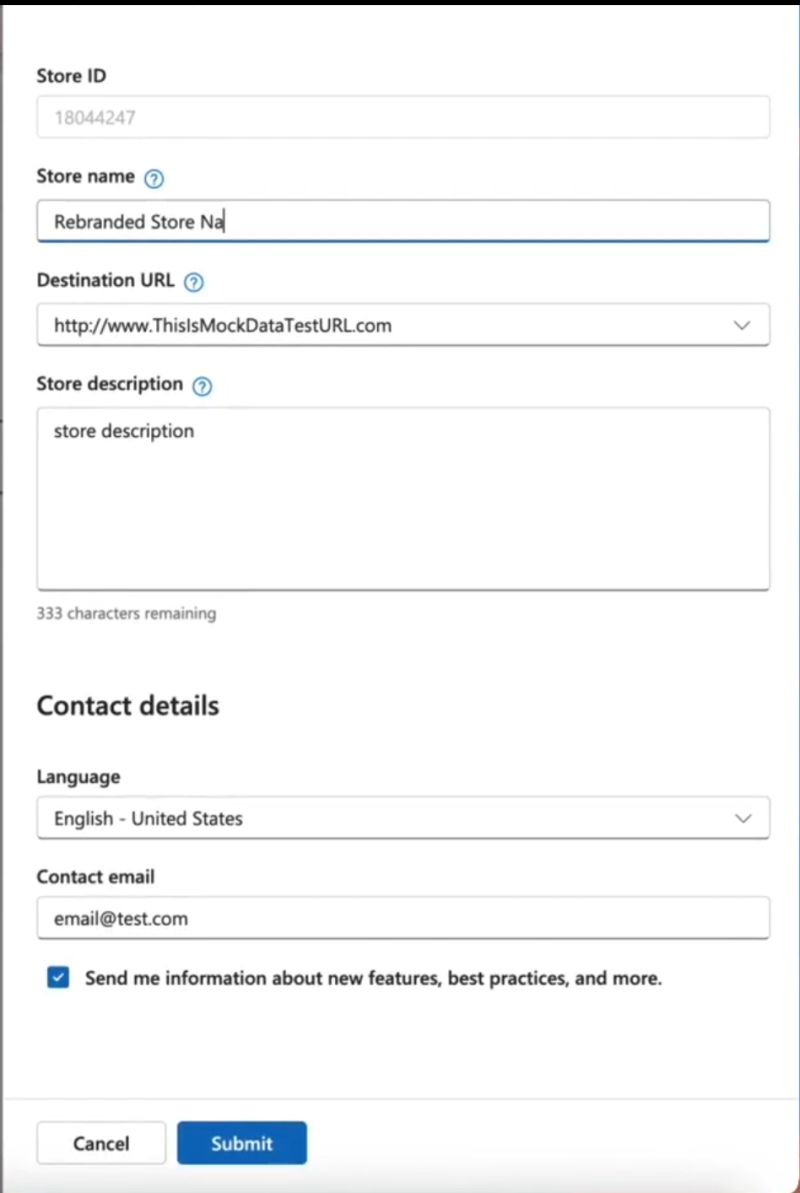
I’ve got some exciting news for those of us using Microsoft Advertising! Now, we can update our Merchant Center store names and domains without the hassle of submitting a support ticket. Everything is streamlined directly through the platform.
Why does this matter? As businesses grow or undergo rebranding, being able to quickly adjust names and URLs is crucial. Previously, I had to go through a cumbersome process, but now I have full control to make these changes seamlessly.
Here’s how it works:
When I want to change my store name, it goes through an editorial review. The best part? My ads continue to run under the old name, so there’s no downtime for my campaigns.
If I decide to switch my domain or URL, verification of the new domain is needed. Meanwhile, my ads still serve on the old domain, keeping my advertising efforts uninterrupted. Once approved, I’ll update product URLs to reflect the new domain.
Reusing store names or domains is perfectly fine as long as everything passes the editorial checks and domain verification. This provides me with flexibility while maintaining quality standards.
The bottom line? This update empowers me with more control over my store settings. It also ensures compliance by having robust checks like editorial reviews and domain verifications in place, safeguarding the quality of my ads.
I recently stumbled upon a tricky issue in Google Ads Editor that’s affecting many advertisers. A bug is causing structured snippet extensions copied between accounts to unintentionally stay linked. Whenever I change the language setting in one account, it seems to magically update the extension in another account too.
Why this matters to us. For those of us running multi-market campaigns, this bug could introduce hidden inconsistencies, especially if we’re managing accounts that require different languages.
What I’ve been experiencing. This issue came to light for digital marketer Marcin Wsół while handling Czech and Slovak e-commerce accounts. A change in snippet language in one account inadvertently altered the same setting in another.
The extensions appear separate at first glance but act like they’re mysteriously synced.
Zoom in on the details. If you use the Google Ads web interface, you can temporarily correct this, but any further edits in Editor might cause the language settings to toggle again.
A deeper issue. This bug isn’t confined to cross-account use. PPC News Feed founder Hana Kobzová discovered that even copying structured snippets within the same account can lead to incorrect language settings after making additional edits.
Reading between the lines. For those of us who depend on bulk edits in the Editor, there’s a risk of unintentionally overwriting localization settings, which could lead to mixed messaging across our markets.
The bottom line. Until Google fixes this, I recommend double-checking structured snippet languages after copying or editing in Google Ads Editor, especially when you’re working across different accounts or regions.
When this issue was first seen. This was initially identified by Marcin Wsół and later reported by PPC News Feed.
I took our SEO to a whole new level, and the results were astonishing. From just $12K in ad spend, we skyrocketed to $1.6M in revenue. Let me share how building authority, optimizing conversion signals, and setting up CRM feedback loops made our PPC scalable.
You might already be familiar with how important SEO is for improving traffic and authority, but what isn’t discussed enough is its impact on other channels like PPC. This case study reveals how we scaled performance marketing in the high-consideration B2B medical device market by nailing our SEO fundamentals.
Marketing a premium pelvic floor chair isn’t your typical ad campaign. This device has a lengthy sales cycle and relies heavily on medical expertise. Our customers range from doctors to physiotherapists, all of whom demand reliable clinical evidence and credibility.
In markets like ours, when common performance tactics fell short, building credibility and authority was key. Without trust in our products and services, performance simply couldn’t scale. I’ve learned that no optimization works without it.
Starting 2023, our Google Ads campaigns were launched with limited SEO. The lack of optimization led to underattribution and resulted in a minimal scaling effect. We also dealt with delays in Google Ads bidding algorithms due to conversion tracking issues.
Despite these challenges, early campaigns confirmed there was a demand. I realized that fixing the surrounding system was necessary to capitalize on this potential in the long run.
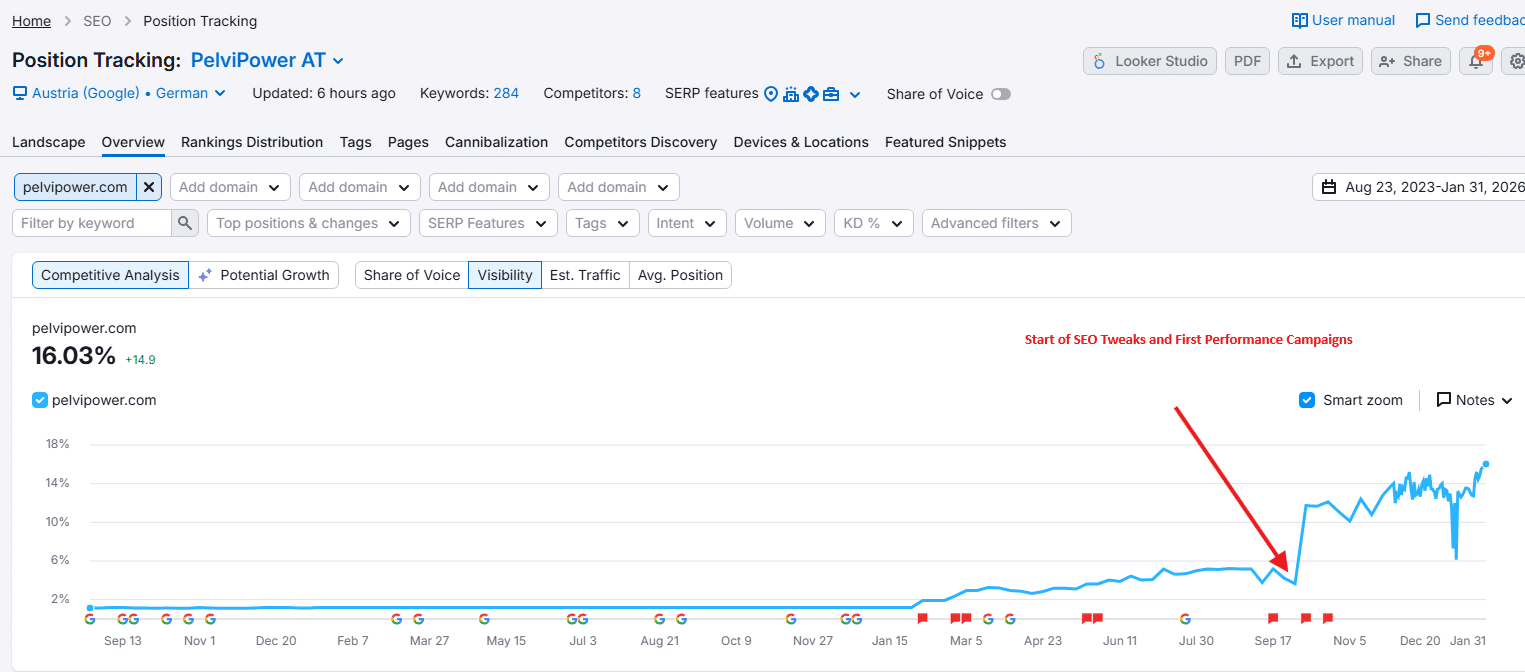
By mid-2024, I shifted the focus to treating SEO as a central part of our revenue strategy rather than an additional enhancement. Rather than chasing quick rankings, we prioritized building authority in pelvic health. Our strategy involved educational content, mapping out the entire informational landscape around pelvic health issues.
Our shift paid off. We invested in long-form content, structured it well, and embedded supporting visuals. This approach transformed us into a trusted resource over time and improved our credibility, which is essential in medical markets.
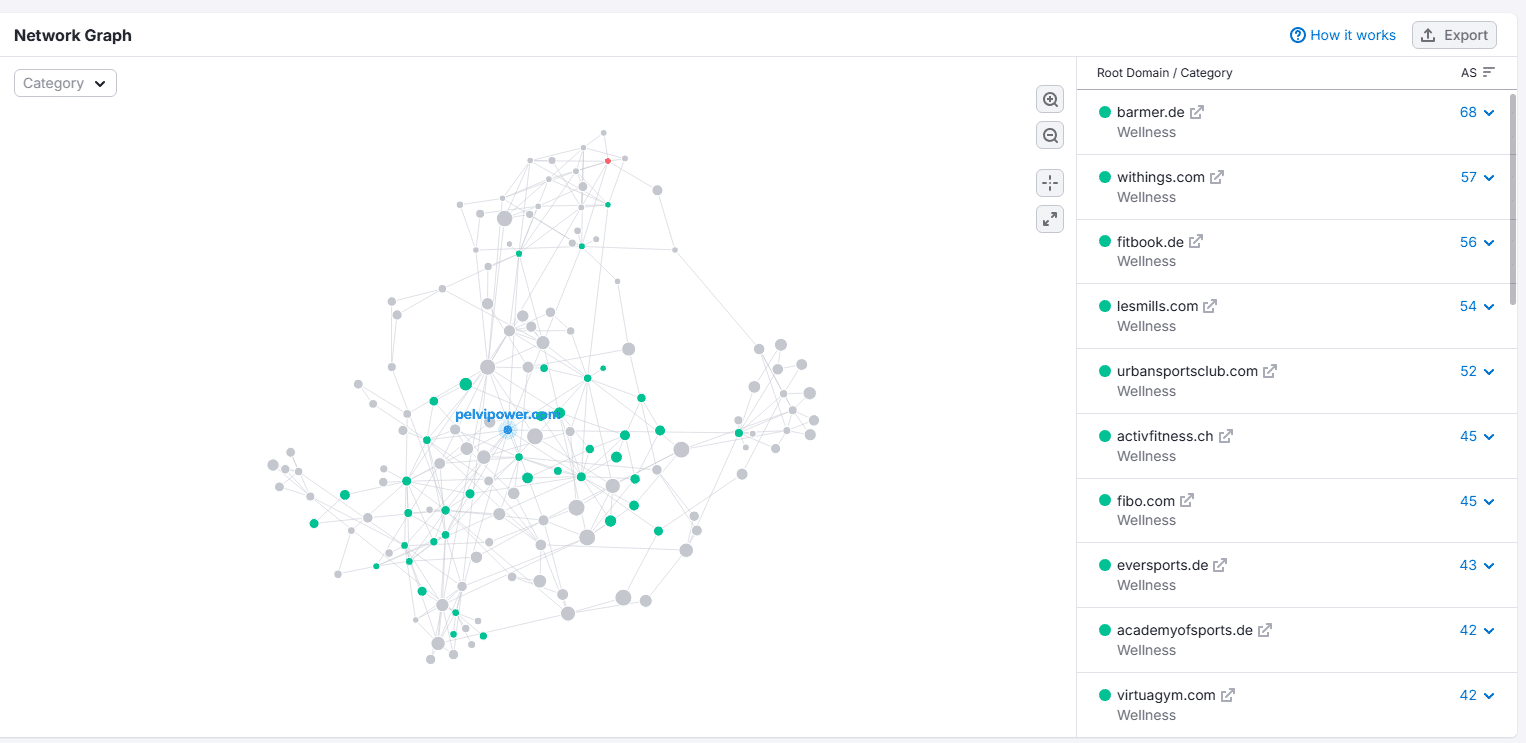
Our biggest success came from leveraging partnerships with clinics and medical professionals. Providing ready-to-use content allowed us to establish valuable backlinking opportunities in exchange for using our resources. These links enhanced our visibility and authority in healthcare sectors.
Ultimately, this strategy resulted in a manifold increase in referring domains and significantly boosted our topical authority. Our backlinks were closely aligned with Google’s assessment of expertise and trust.
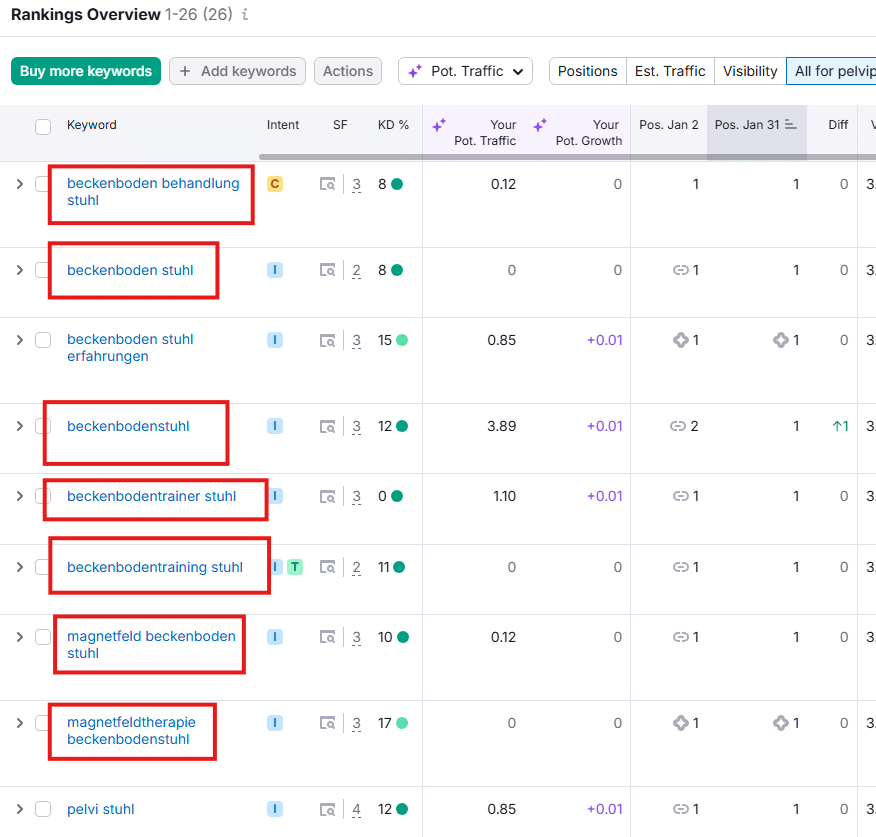
By late 2024, our top rankings for crucial keywords like ‘Beckenbodenstuhl’ clearly demonstrated our growing organic visibility. Prospects repeatedly encountered our brand in their research phase, reinforcing trust even before they saw our ads.
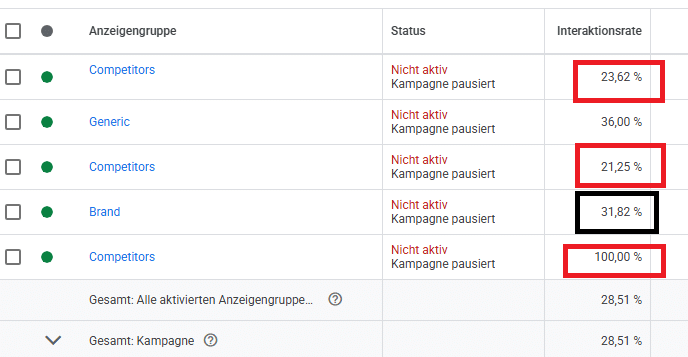
Our organic presence also reshaped how users engaged with our ads. Familiarity bred trust, and many users chose our advertisements due to previous organic encounters. This effect was even more pronounced in competitor-specific campaigns, where we achieved high click-through rates.
Improving conversion tracking was the next game-changer. Moving away from standard GA4-imported conversions to GTM-native events allowed us to get faster and cleaner signals, optimizing bidding algorithms effectively.
Integrating our HubSpot CRM closed the loop between marketing and sales. We tracked not only the quantity of leads but also their quality, feeding this data back into our Google Ads to optimize really meaningful outcomes.
With $12,000 in ad spend during 2025, our integrated SEO and PPC strategy led to impressive growth. In just two years, we observed a 140% sales increase from 2023-2024, followed by another 79% in 2025. This equated to a fourfold growth in our sales volume fueled by digital marketing.
The key to scaling PPC lies in trust and quality signals, underscored by sound SEO practices. It’s not about one-off optimizations but a holistic system that includes aligned SEO, precise tracking, and insightful CRM feedback.
Complex markets don’t fail because the strategies are wrong; they fail due to incorrect assumptions about simplicity solving complexity.
I’m excited to share that Google has released version 23.2 of its Ads API, bringing several exciting updates that enhance video, app campaigns, and audience planning tools.
What’s New in This Release?
First, there’s the new VideoEnhancement resource. It now allows me to identify whether a video ad is Google-generated or advertiser-provided. This provides much-needed clarity on how ads are enhanced automatically.
Additionally, the AppTopCombinationView resource offers read-only insights into top-performing asset combinations in app campaigns, a valuable tool for optimizing my campaign strategy.
For those utilizing Demand Gen campaigns, I can now disable the hotel feed using HotelSettingInfo.disable_hotel_setting. This gives me more control over my ad placements.
This update also introduces a new conversion metric for tracking indirect first in-app installs across Campaign, Customer, and AdGroup resources, giving me deeper insights into conversion performance.
Moreover, enhancements to ContentCreatorInsightsService and ReachPlanService means I can further refine my content strategies and audience reach planning.
Steps to Upgrade
To benefit from these updates, I’ll need to upgrade to v23.2 by updating both client libraries and client code. Fortunately, all updated libraries and code examples are already available.
Join the Live Walkthrough
If you’re looking for more information, I recommend attending Google’s live release walkthrough on March 26 at 11am ET. It will be streamed live on Discord and YouTube, and a recording is provided afterward.
Why This Matters
The addition of the VideoEnhancement resource addresses a significant gap in Performance Max reporting. For those of us developing custom reporting tools, this means improved visibility into creative performance.
Final Thoughts
Although this release is part of Google’s routine updates, the enhancements, particularly in the VideoEnhancement resource, are worth noting. It’s a significant step forward for developers like myself working on Performance Max creative reporting.