Tag: PPC

  • How I Achieved Sub-$10 CPL with LinkedIn Ads on a Budget

    How I Achieved Sub-$10 CPL with LinkedIn Ads on a Budget

    Have you ever wondered if it’s possible to run effective LinkedIn Ads without breaking the bank? I’m here to tell you it absolutely is, and I’ve got the playbook to prove it. By focusing on content depth, timing, and precise targeting, I managed to lower CPCs and improve lead quality in our LinkedIn campaigns.

    LinkedIn Ads often deliver top-notch B2B leads but have a reputation for being costly in both CPC and CPL terms. So, I embarked on an experiment to see if a high-value, audience-specific content piece could achieve low-cost leads on LinkedIn.

    ```json
{
  "alt": "Campaign data showing costs, impressions, clicks, leads, and cost per lead for a lead generation campaign.",
  "caption": "Deep dive into campaign performance: A detailed look at spending, leads generated, and cost efficiency in a lead generation setup.",
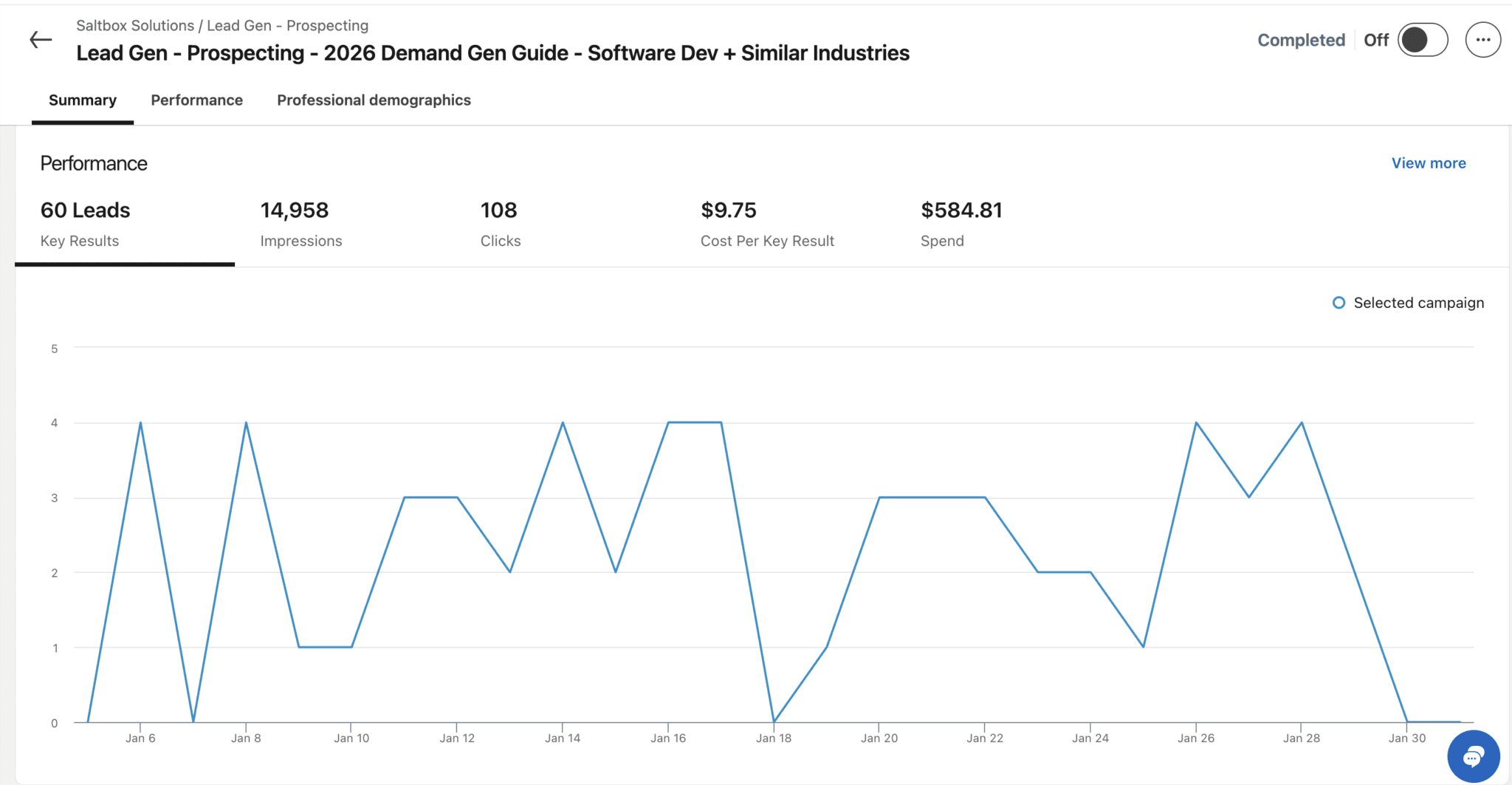
  "description": "This image showcases performance metrics of a lead generation campaign titled 'Lead Gen - Prospecting - 2026 Demand Gen Guide - Software Dev + Similar Industries.' It highlights the spending of $584.81, garnering 108 clicks with an average CPC of $5.41. The campaign achieved 14,958 impressions, generated 60 leads, and had a cost per lead of $9.75. Such detailed metrics are crucial for understanding and optimizing the effectiveness of advertising strategies."
}
```

    Though our agency primarily runs LinkedIn Ads for clients, I decided to test this theory on Saltbox Solutions itself, where I serve as the Director of Strategy. I wanted full control to see just how big of an impact we could achieve.

    ```json
{
  "alt": "The CapmatchOne logo with a gradient circle and bold text.",
  "caption": "Discover innovation with the CapmatchOne logo, featuring sleek typography and a modern gradient circle.",
  "description": "The CapmatchOne logo features bold, modern typography coupled with a gradient circle, symbolizing connection and innovation. The sleek design conveys a sense of progress and creativity. This image can be used for branding or promotional purposes, appealing to audiences interested in innovative solutions and forward-thinking designs."
}
```

    We spent under $1,000 and generated a wealth of leads at less than $10 CPL. For those with limited budgets, LinkedIn Ads might not be as out of reach as you think—it just requires a well-thought-out strategy.
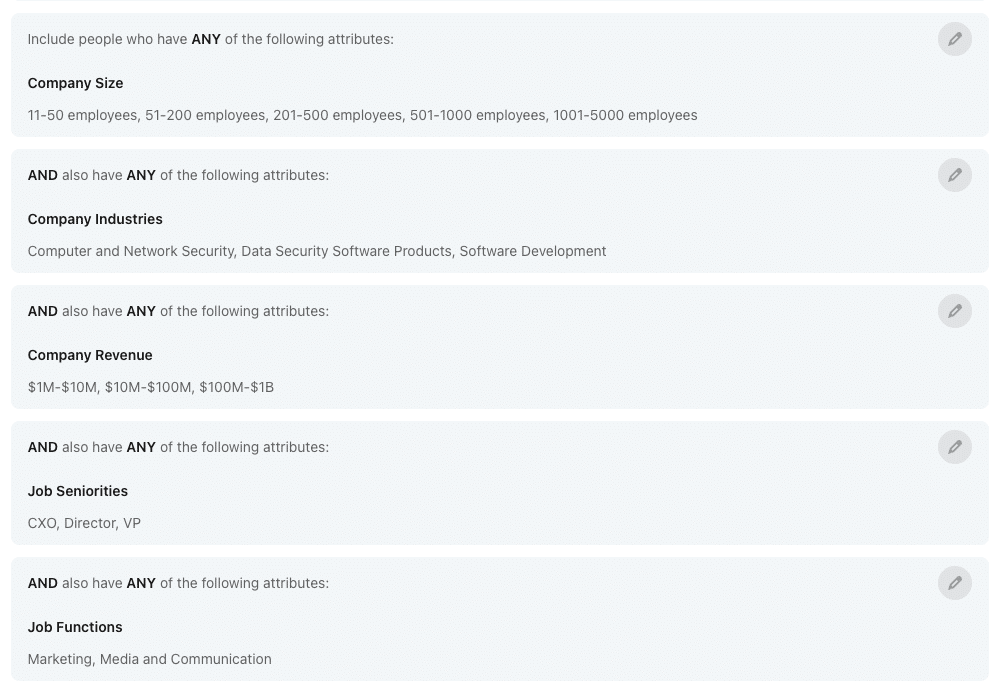
    ```json
{
  "alt": "Filter options for company size, industry, revenue, seniorities, and functions.",
  "caption": "Explore targeted search filters for company size, industry, revenue, and job seniorities to refine your professional outreach.",
  "description": "This image shows filter criteria options in a professional networking or recruitment platform. Filters include company size ranging from 11-5000 employees, industries like computer security and software development, revenues between $1M and $1B, job seniorities like CXO and Director, and functions like marketing and media. These filters help in targeting specific audiences for business networking and recruitment purposes."
}
```

    Want to know how I did it? I’ll break down every detail, from the setup to execution, so you can replicate it regardless of your budget.

    ```json
{
  "alt": "Exclusion criteria including job seniorities, company size, specific company, and job functions.",
  "caption": "Discover how exclusion criteria can shape targeted outreach by narrowing down job seniorities, company size, specific businesses, and job functions.",
  "description": "The image outlines exclusion criteria for filtering contacts based on attributes such as job seniorities like entry, senior, manager, training, unpaid; company size (myself only); specific company (Saltbox Solutions); and job functions (sales). Perfect for targeted marketing strategies, these filters refine audience selection efficiently."
}
```

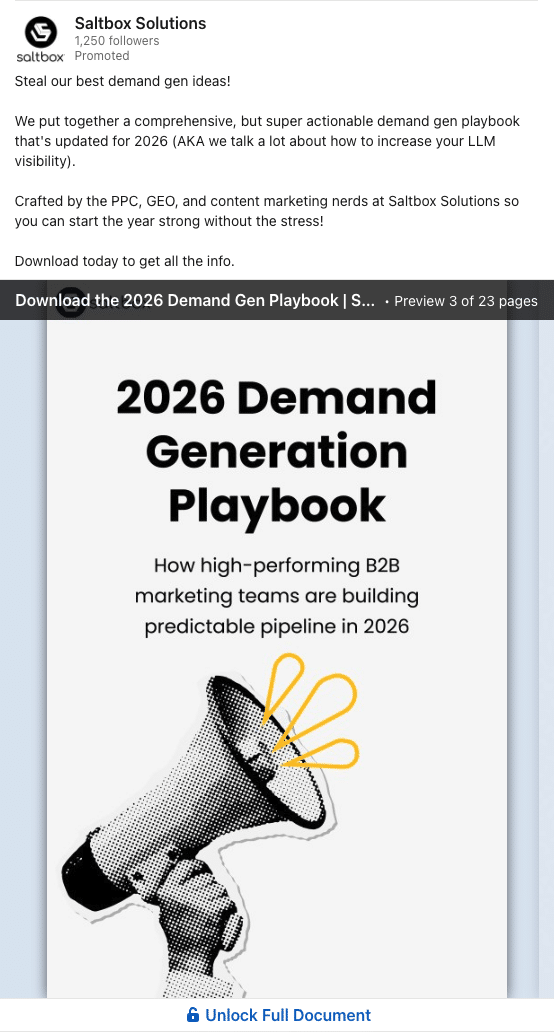
    The campaign targeted B2B marketing decision-makers by offering a 23-page Demand Gen Playbook for 2026. The timing was key, as it aligned with the planning cycle for many marketing leaders.
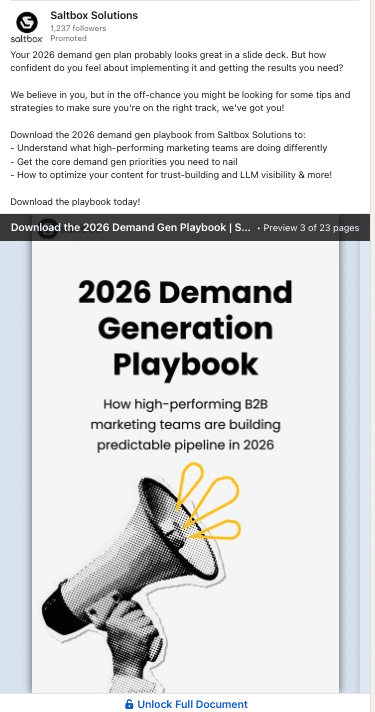
    ```json
{
  "alt": "Promotional post by Saltbox Solutions about the 2026 Demand Generation Playbook, featuring a megaphone illustration.",
  "caption": "Discover the secrets behind 2026's most successful B2B marketing strategies with Saltbox Solutions' 2026 Demand Generation Playbook. Are you ready to boost your pipeline?",
  "description": "This image showcases a LinkedIn post by Saltbox Solutions, promoting their 2026 Demand Generation Playbook. The post emphasizes the importance of implementing successful demand generation strategies. It features an eye-catching illustration of a megaphone, suggesting the idea of amplifying marketing efforts. Ideal for B2B marketers looking to optimize their tactics for 2026."
}
```

    I chose a document ad format with a lead generation objective, allowing audiences to preview content before downloading. The form had minimal friction thanks to LinkedIn’s autofill options.
    ```json
{
  "alt": "2026 Demand Generation Playbook cover with megaphone illustration by Saltbox Solutions.",
  "caption": "Discover high-performing B2B marketing strategies with the 2026 Demand Generation Playbook by Saltbox Solutions. Elevate your pipeline strategy today!",
  "description": "This image promotes the '2026 Demand Generation Playbook' by Saltbox Solutions, featuring a stylized megaphone illustration. This document offers actionable tactics for B2B marketing teams to build a predictable pipeline. Updated for 2026, it emphasizes increasing LLM visibility and features insights from PPC, GEO, and content marketing experts."
}
```

    With a $600 lifetime budget and a $15 manual bid strategy, we focused on optimizing our spend efficiently.
    ```json
{
  "alt": "Advertisement for 2026 Demand Generation Playbook by Saltbox Solutions featuring marketing strategies.",
  "caption": "Discover high-performing B2B marketing strategies with the 2026 Demand Gen Playbook. Saltbox Solutions guides you to a predictable pipeline.",
  "description": "This image is an advertisement for the '2026 Demand Generation Playbook' by Saltbox Solutions. It features a stylized megaphone illustration and text detailing insights on high-performing B2B marketing teams' strategies for building a predictable pipeline in 2026. The ad encourages downloading the playbook for tips on demand gen priorities, trust-building, and LLM visibility, appealing to professionals seeking effective marketing strategies."
}
```

    Our audience research was rigorous. I aimed to understand the true needs and concerns of B2B marketing leads by mining client interactions and using tools like SparkToro to identify engagement patterns.
    ```json
{
  "alt": "Performance summary graph showing lead generation data with fluctuating values over January.",
  "caption": "Analyzing January's lead gen results: 60 leads from nearly 15,000 impressions reveal dynamic performance in software development.",
  "description": "This image shows a performance summary for a lead generation campaign titled '2026 Demand Gen Guide - Software Dev + Similar Industries.' The data highlights 60 leads obtained from 14,958 impressions and 108 clicks, with a cost per key result of $9.75 and total spend of $584.81. The line graph displays fluctuating performance across January, offering insights into campaign effectiveness. Useful for marketers focusing on software industry trends."
}
```

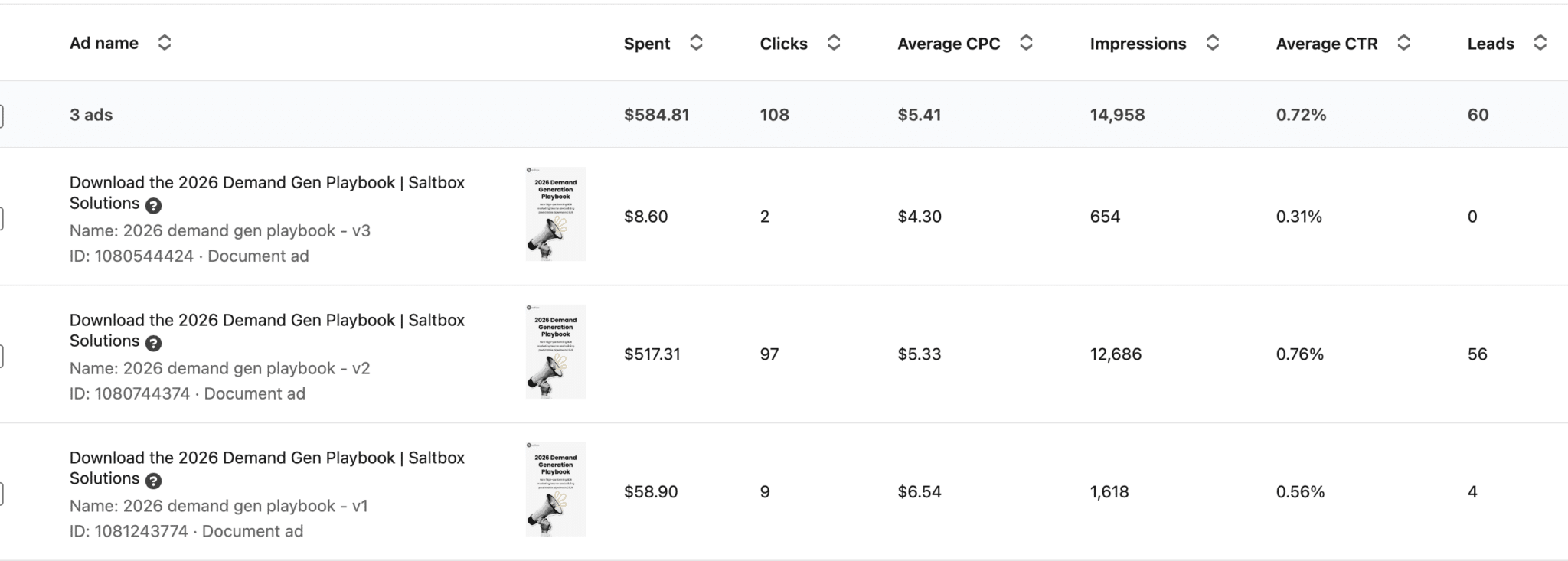
    This meticulous research resulted in an asset that truly resonated with the audience, achieving a stellar 76% lead form completion rate.
    ```json
{
  "alt": "Summary of ad performance for the 2026 Demand Generation Playbook by Saltbox Solutions.",
  "caption": "Explore the performance metrics of the 2026 Demand Gen Playbook ads by Saltbox Solutions, showcasing clicks, costs, and conversions!",
  "description": "This image displays a performance summary of three ads for the '2026 Demand Generation Playbook' by Saltbox Solutions. It includes key metrics such as amount spent, clicks, average CPC, impressions, average CTR, and leads generated, providing a comprehensive overview of each ad's effectiveness. The image shows specific data for each version of the ad, titled v1, v2, and v3."
}
```

    The targeting strategy was layered, combining job titles and company roles to address a 54,000-person audience, efficiently refining the reach of our ads.

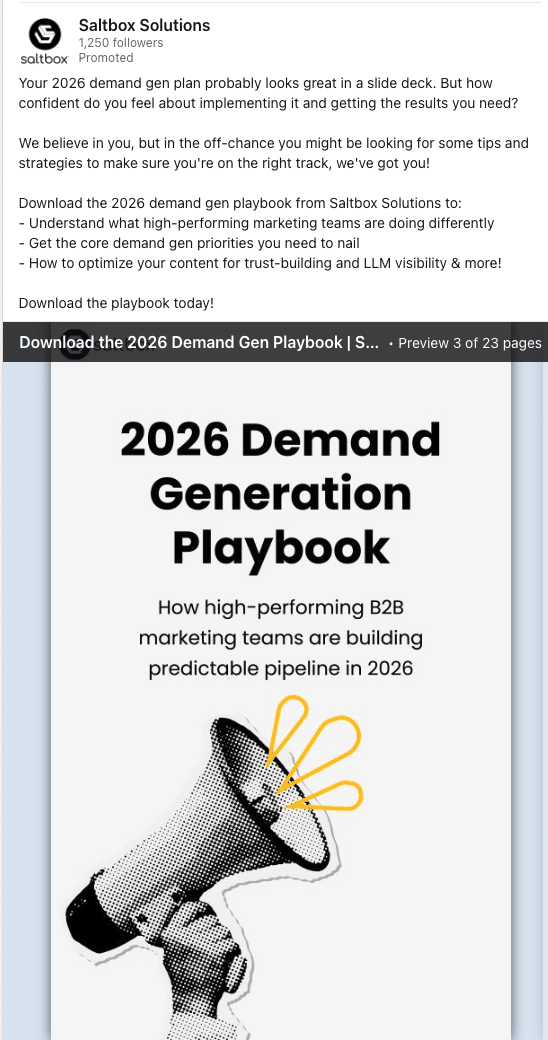
    Ad copy was crafted with an inviting tone, leaning on hooks like “Steal our best demand gen ideas” to captivate and engage.

    The result? An average CPC of $5.41—shattering expectations given our $15 bid ceiling. The campaign not only surpassed LinkedIn’s typical CTR benchmarks but also generated 60 qualified leads.

    This test validated a model that I plan to relaunch, incorporating feedback from initial downloaders to further fine-tune the playbook.

    If you want results like mine, start with audience research before creating your asset. Build meaningful, timely, and well-targeted content to see better ROI from your LinkedIn Ads.


    Inspired by this post on Search Engine Land.


    crushpress.ai community screenshot
  • Unlock New Ecommerce Potential with Reddit’s Shopping Ads

    Unlock New Ecommerce Potential with Reddit’s Shopping Ads

    I’m thrilled to share that Reddit is stepping up its ecommerce game by introducing exciting new shopping ad tools. These include innovative Dynamic Product Ad formats and a seamless Shopify integration, aiming to help retailers connect with Reddit’s ever-growing audience.

    Reddit is really making commerce a priority, launching a range of features that let retailers leverage the platform’s powerful purchase influence. It’s fascinating to see this evolution as Reddit plays a more prominent role in the buying process.

    Why now. There’s a noticeable surge in shopping discussions, having increased by 40% over the last year. According to Reddit, a whopping 84% of shoppers feel more assured about their purchases after browsing Reddit, yet, surprisingly, it remains the most undervalued media channel, as reported in Fospha’s State of Retail Commerce 2026 study.

    What’s new.

    • Collection Ads — This dynamic ad format pairs enticing lifestyle images with purchasable product tiles in a carousel, brilliantly merging discovery with purchase. Those who’ve embraced these best practices are seeing an impressive 8% boost in ROAS.
    • Community and Deal overlays — Exclusive Reddit-native labels like “Redditors’ Top Pick” and automated discount alerts provide valuable social proof and price signals without any additional effort from advertisers.
    • Shopify integration — In its alpha stage, this integration streamlines catalog and pixel setup for new Dynamic Product Ad enthusiasts, facilitating automatic product-user-context matching.

    The numbers. In Q4 2025, Reddit’s Dynamic Product Ads delivered an average of 91% higher ROAS compared to the previous year. Notably, Liquid I.V. has seen DPAs constituting 33% of its total platform revenue, significantly outperforming other conversion campaigns by 40%.

    Why we care. The introduction of tools like the Shopify integration drastically lowers the barriers for launching Dynamic Product Ads on Reddit. With Reddit still an undervalued channel, it’s a golden opportunity to capitalize on before the market becomes more competitive and costs escalate.

    The bottom line. Reddit is seriously enhancing its reputation as a performance channel in ecommerce, and these new tools make it much easier to join the race. For retailers who haven’t yet utilized DPAs on Reddit, this is an excellent moment to experiment with an undervalued inventory and evolving ad formats.


    Inspired by this post on Search Engine Land.

    crushpress.ai community screenshot
  • Apple Maps to Launch Ads: A New Era of Location-Based Advertising

    Apple Maps to Launch Ads: A New Era of Location-Based Advertising

    I’ve recently come across some exciting news: Apple is gearing up to introduce ads in Apple Maps. This move seems to open a brand-new, high-intent, location-based advertising channel on one of Apple’s most popular apps.

    As I’m exploring this development, I’m intrigued by how Apple plans to expand its advertising business beyond the App Store. They’re set to include sponsored listings within Apple Maps, which could mark a significant shift for advertisers already familiar with the platform’s mapping tool.

    How it will work. From what I’ve gathered via Bloomberg’s Mark Gurman, the concept is similar to Google Maps. It involves retailers and brands bidding for ad placements against specific search terms. Sponsored businesses would show up in search results within Maps, much like we see with Apps in the App Store.

    The timeline. There’s speculation that we might hear an announcement soon, with the actual advertisements making their debut as early as this summer across iPhones, other Apple devices, and even the web.

    Why Apple is doing this. Advertising is becoming a lucrative and high-margin revenue stream for Apple’s services. Given the massive user base of Maps across Apple devices, moving into location-based advertising is a natural progression for them.

    Why we care. I’m paying close attention because Apple Maps is a widely used app, particularly among iPhone users. Those using Maps are often looking for something specific, which means significant opportunities for local businesses and retailers to reach potential customers right when they’re making decisions.

    For those of us already involved in Google Maps or local search campaigns, this could become a valuable complementary channel to explore.

    The bottom line. As Apple Maps prepares to launch ads, we’re looking at a high-intent, location-based advertising opportunity that hasn’t existed before on Apple’s platform. I would advise anyone running local or retail campaigns to start planning now. Being an early bird in a new ad auction typically means less competition and better costs before the market fully develops.


    Inspired by this post on Search Engine Land.


    crushpress.ai community screenshot
  • Streamline Your Ads with Microsoft’s New Automated Bidding

    Streamline Your Ads with Microsoft’s New Automated Bidding

    I’m excited to share that Microsoft is making a significant update that simplifies the way we set up automated bidding in Microsoft Advertising.

    By consolidating performance targets, Microsoft aims to reduce complexity, making bidding more streamlined without sacrificing the control over critical performance metrics.

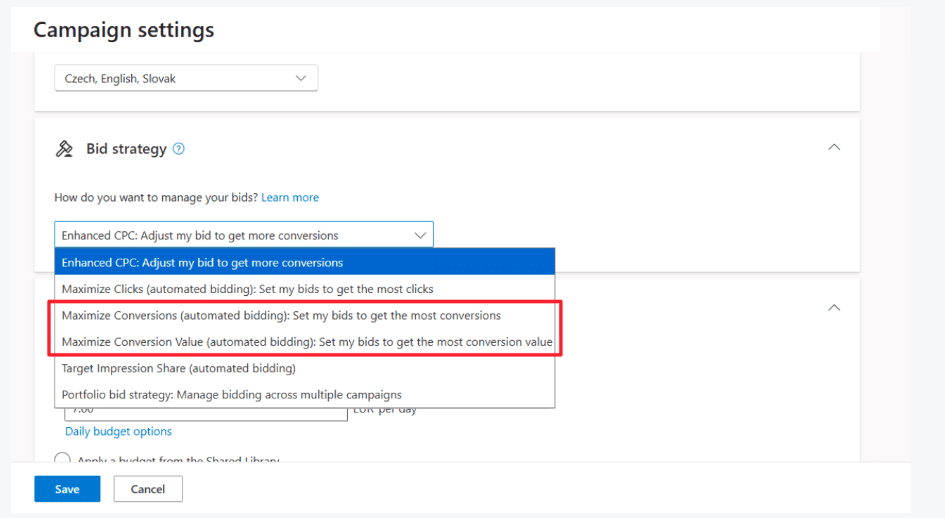
    What’s happening: The platform is integrating common targets like Target CPA and Target ROAS into broader automated strategies. This means these targets will now form part of a more comprehensive bidding approach instead of standing alone.

    From now on, I’ll be choosing between two main strategies: Maximize Conversions or Maximize Conversion Value, with optional performance targets that can be added as needed.

    Credit – Hana Kobzova of PPC News Feed

    How it works: For campaigns focused on conversions, I’ll select Maximize Conversions and may set a target CPA if desired. For campaigns aiming at maximizing value, I’ll choose Maximize Conversion Value with the option of setting a target ROAS.

    Microsoft reassures that this update doesn’t change the fundamental bidding behavior — it simply makes the setup more user-friendly.

    ```json
{
  "alt": "Screenshot of campaign settings with bid strategy options highlighted in a dropdown menu.",
  "caption": "Exploring advertising bid strategies? This campaign settings interface reveals options such as maximizing conversions and value to enhance your campaign impact.",
  "description": "This image is a screenshot of an advertising platform's campaign settings page, focusing on the bid strategy section. It displays a dropdown menu with options for Enhanced CPC, Maximize Conversions, Maximize Conversion Value, Target Impression Share, and Portfolio bid strategy. The image highlights the choices Maximize Conversions and Maximize Conversion Value, emphasizing automated bidding for optimal results. Ideal for those adjusting digital advertising strategies."
}
```

    Why we care: This change enhances accessibility to Microsoft Advertising’s tools, making automated bidding more straightforward and efficient, which is especially beneficial when managing large-scale campaigns.

    For us advertisers, this means faster setup times, more consistent optimization across accounts, and fewer complexities when managing campaigns focused on conversion or value.

    What’s staying the same: Existing campaigns using Target CPA or Target ROAS will continue seamlessly, requiring no updates. Portfolio bid strategies are unaffected as well.

    The bigger picture: This move is part of Microsoft’s larger effort to simplify automated bidding while ensuring performance control remains intact.

    Bottom line: Microsoft is refining bidding options to make them more accessible without losing our ability to fine-tune performance through familiar controls.


    Inspired by this post on Search Engine Land.


    crushpress.ai community screenshot
  • Google Streamlines Ad Policies, Embracing Modern Automation

    Google Streamlines Ad Policies, Embracing Modern Automation

    How to tell if Google Ads automation helps or hurts your campaigns

    From my experience, it’s clear that Google is moving forward by retiring several older ad format policies. This change highlights the transition toward innovative, automated campaign strategies in Google Ads.

    What’s happening. On March 17th, Google decided to phase out numerous legacy ad format policies, including those concerning form ads, image quality, and more.

    What changed. The rationale behind this is that many of these formats have evolved into modern campaigns, making previous policy frameworks obsolete.

    Why we care. For us advertisers, this development streamlines Google Ads’ policy landscape, reducing potential confusion from older requirements.

    What advertisers should do. It’s essential for us to focus on current Google Ads policies that regulate newer, automated, and AI-driven ad formats.

    The bottom line. By streamlining policies, Google is reinforcing a shift toward fewer, more unified standards for today’s modern ad formats.


    Inspired by this post on Search Engine Land.


    crushpress.ai community screenshot
  • Revamp Your Search Ads with Google’s New Vehicle Feeds

    Revamp Your Search Ads with Google’s New Vehicle Feeds

    I’ve just discovered some groundbreaking updates from Google that could transform how automotive advertisers leverage search campaigns. Google is now empowering us by integrating vehicle feeds directly into Search ads, making our inventory more visible with a vibrant and more engaging format.

    So, what’s new? Google Ads now allows for vehicle feed integration on Search ads. We can pull from Google Merchant Center to enrich our ads with specific details like make, model, price, and images, all designed to enhance the standard text ad.

    Let me explain how it works. These vehicle listings appear as clickable assets alongside our usual Search ads. They can either show up below or beside the main text, offering users a seamless path to either a detailed vehicle page or a broader landing page based on their interaction.

    Why should we care? This update is a game-changer. It allows us to showcase real inventory directly in our Search ads, making them more attractive and informative for high-intent users. We can achieve richer visibility and potentially gain more qualified leads by displaying key details upfront in Google Search, without the hassle of extra campaign setup.

    What makes this noteworthy is how it brings Shopping-style visual elements to our Search campaigns. We can now feature real inventory without needing separate campaign types, which is a significant advantage.

    As advertisers, the benefits are immense. We get a more engaging ad experience, the opportunity for higher-intent leads, and we can use our existing Merchant Center feeds effectively, eliminating the need for duplicate setups.

    When it comes to measuring success, we can track performance through the “Click type” segment. This helps us understand user interactions with vehicle listings compared to standard ads, offering insights into what works best.

    Matching is another area where Google shines. Their automation decides which vehicles appear based on user intent and query context, marking a shift towards less manual control and more AI-driven ad assembly.

    Here’s the takeaway. Vehicle feeds in Search campaigns offer us a powerful way to integrate inventory with intent-driven queries. We can turn standard text ads into dynamic, product-led experiences, significantly enhancing user engagement within Google Search.


    Inspired by this post on Search Engine Land.

    crushpress.ai community screenshot
  • Discover Google’s New ‘Sponsored Shops’ That Transform Shopping Results

    Discover Google’s New ‘Sponsored Shops’ That Transform Shopping Results

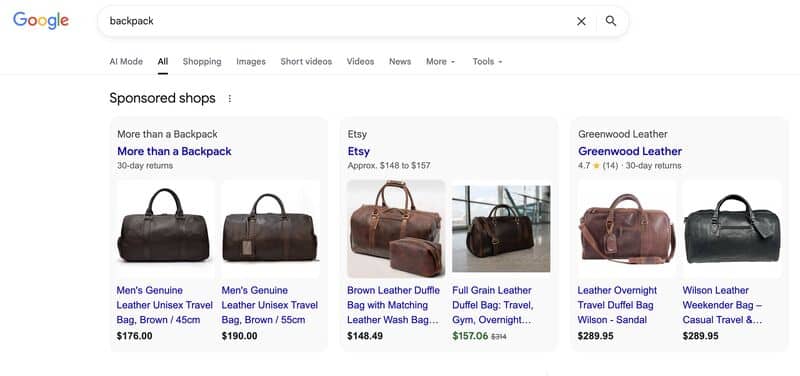
    I’ve recently stumbled upon a fascinating test by Google in their Shopping results. They’re experimenting with something called “Sponsored Shops,” which could totally change how we see competition in Shopping ads.

    These “Sponsored Shops” spotlight entire stores rather than just individual products, meaning brands might need to rethink their strategy to gain visibility.

    Imagine seeing a block in Shopping results that brings together several products from a single retailer, complete with store name, product ratings, and brand presence. It’s like a mini-storefront right there in the search results!

    Why this matters to me. If this change spreads, it means the competition won’t just be about single products anymore. As a brand, I might need to ensure that my entire product feed is strong and diverse to capture these new ad placements.

    Besides, this format has the potential to redirect traffic flow from individual product pages to broader store pages. For someone managing campaigns, it could mean prioritizing brand presence over just targeting specific product bids.

    The bigger picture. It looks like Google’s trying to move Shopping ads slightly higher up the sales funnel. With one placement, I can emphasize a wide range of offerings and bolster my store’s identity.

    Why this is notable for us. This approach can significantly boost exposure per impression by allowing multiple products to be showcased together. It’s an excellent way for us to strengthen brand presence in search results.

    ```json
{
  "alt": "Google search results page for 'backpack' displaying sponsored shops with various leather bags.",
  "caption": "Explore a variety of leather duffel bags in this Google search for backpacks, featuring stylish options from multiple online shops.",
  "description": "The image shows a Google search results page for the keyword 'backpack.' Sponsored shops display different leather bags available online with prices ranging from $148.49 to $289.95. The featured bags include travel and duffel options from sites like Etsy and Greenwood Leather, highlighting details like dimensions, colors, and return policies. This search snippet engages potential buyers seeking quality leather bags."
}
```

    As a user, I find it makes discovery a lot simpler. I can easily browse a variety of items from one retailer without leaving the results page.

    Reading between the lines. If this new format catches on, it’ll likely reward those, like me, who have invested in stronger product feeds and have great seller ratings. Merchants that depend solely on individual product listings might find themselves at a disadvantage.

    What I’m curious about. I wonder how different parts of the ad unit will perform in terms of clicks. Stephanie Pratt, a Marketing Operating Lead, even pointed out the potential for consumer confusion between clicking on brand names versus individual products.

    • “It’ll be interesting to see the split of clicks on each part of the ad unit, and how much is on the brand name vs product and if that will confuse some consumers

    The bottom line for us. If “Sponsored Shops” goes beyond its testing phase, Google Shopping might lean more towards store-level competition. This could mean a shift in strategy for me—from product-centric optimization to enhancing brand presence across the platform.

    Where I first encountered this. This intriguing development was spotted by PPC Specialist Arpan Banerjee, who shared it on LinkedIn.


    Inspired by this post on Search Engine Land.

    crushpress.ai community screenshot
  • Master Google Ads Audits: Navigate the Changes in 2026

    Master Google Ads Audits: Navigate the Changes in 2026

    I recently tuned into an episode of Google’s Ads Decoded podcast where Brandon Ervin, Director of Product Management for Google Search Ads, shared insights on campaign consolidation, AI Max, and the future of advertiser control as we approach 2026. It was enlightening to hear a product team so in tune with advertiser concerns.

    However, I felt the podcast left some gaps. There’s a significant disconnect between Google’s narrative and what advertisers truly experience on the ground. While Ervin’s team is making strides, the fast-evolving platform presents new challenges, shifting performance measurement onto economic standards. This change fundamentally alters how we should approach search ad audits.

    As I reflect on recent improvements, it’s clear that enhancements like brand exclusions in Performance Max and Demand Gen, exclusion of site visitors in PMax campaigns, and improved search term visibility are crucial. These are responses to issues caused by bundling and aggressive automation. It’s worth noting that these controls arrived after advertisers were already knee-deep in implementation.

    In an era where Google’s product team pushes for advancement, it’s vital for us to audit whether these new tools genuinely expand control or simply restore baseline transparency lost with earlier automation efforts.

    In building the foundation for a 2026 search audit, we need to start with the basics, ensuring full ad extensions, strategic automated bidding, and maintaining negative keyword lists, among others. These are undeniable essentials that set the stage for deeper audits.

    ```json
{
  "alt": "The CapmatchOne logo with a gradient circle and bold text.",
  "caption": "Discover innovation with the CapmatchOne logo, featuring sleek typography and a modern gradient circle.",
  "description": "The CapmatchOne logo features bold, modern typography coupled with a gradient circle, symbolizing connection and innovation. The sleek design conveys a sense of progress and creativity. This image can be used for branding or promotional purposes, appealing to audiences interested in innovative solutions and forward-thinking designs."
}
```

    Focusing on the intricacies of signal architecture, I realize that while traditional controls like exact match and manual bids gave us direct oversight, the new controls shift focus to data quality, density, and selectivity. These influence the algorithm, which ultimately makes the decisions.

    An effective audit in this context addresses three core aspects: the quality of the data imported, the density of high-quality data available for modeling, and the selectivity of the data shared with Google. These elements are pivotal in shaping campaign success.

    Being mindful of incrementality is another key consideration. Google optimizes towards reported conversions, often encompassing brand search and retargeting signals that may not truly reflect incremental gains.

    It’s critical to analyze marginal returns as Google’s system operates on a blended cost-per-action model. Without understanding the incremental cost at each spend tier, advertisers risk overspending without realizing diminishing returns.

    ```json
{
  "alt": "Sales funnel process from meaningful engagement to a closed-won deal, highlighting stages and predictions.",
  "caption": "Navigating the sales funnel: From initial engagement to securing the deal, each stage plays a critical role in success.",
  "description": "This image illustrates a sales funnel process, moving from meaningful engagement with high-quality non-conversion activity to a closed-won deal with revenue booked. It highlights stages such as Lead, Strong Lead, MQL, SQL, OPP, culminating in WON. The funnel emphasizes prediction and density levels, with notes like 'We are here' at Strong Lead and 'These are our money makers' at MQL. It provides clarity on how leads progress to sales."
}
```

    Furthermore, as Ervin acknowledged, AI-driven campaigns sometimes misalign with intended targets. Query mapping has deteriorated over time, and AI Max exacerbates irrelevant matches, underlining the need to rigorously classify queries by intent to maintain high-value engagements.

    Lastly, the economics of network performance in bundled campaigns like Performance Max and Demand Gen need thorough examination as they obscure valuable insight into actual network-driven outcomes.

    By focusing on value redistribution through audits, we can ensure that the surplus value generated by high-intent searches isn’t misallocated into Google’s weaker inventory, thereby optimizing ad spend efficiency and accountability.


    Inspired by this post on Search Engine Land.


    crushpress.ai community screenshot
  • PPC Challenges: AI’s Limited Impact and Growing Platform Opacity

    PPC Challenges: AI’s Limited Impact and Growing Platform Opacity

    PPC is becoming an increasingly difficult landscape to navigate, and even though AI provides some help, it doesn’t save the day. Meanwhile, platform transparency continues to decline, leaving us in the dark about budget management.

    The latest survey of PPC professionals reveals a challenging environment characterized by less transparent platforms, diminishing effectiveness of traditional measurement methods, and AI tools that have yet to revolutionize our daily routines.

    Why I care. As someone deeply invested in PPC, it’s notable that over half of practitioners (53%) believe PPC has become tougher compared to two years ago. The issue isn’t just competition; it’s the increasing number of decisions being made by platforms out of advertisers’ view, which contributes to this growing complexity.

    Considering that a whopping 89% of digital ad spend goes to just three companies, those of us who don’t have private measurement tools are essentially navigating without a compass.

    By the numbers:

    ```json
{
  "alt": "Doughnut chart showing PPC campaign difficulty change over two years. 53% find it harder, 16% find it easier.",
  "caption": "Over half of marketers find managing PPC campaigns harder than two years ago, while 16% think it's easier.",
  "description": "This image features a doughnut chart depicting survey results on PPC campaign management difficulty over the past two years. The chart shows 53% of respondents reporting it as harder, while 16% find it easier. The remaining respondents are split, with 31% stating it feels about the same. The chart is color-coded, with dark red indicating 'much harder' at 12%, red for 'somewhat harder' at 41%, light green for 'somewhat easier' at 13%, and dark green for 'much easier' at 3%. This visual provides insight into the shifting challenges of PPC management."
}
```
    • 1,306 respondents participated in the survey conducted between November and December 2025, representing agency, freelance, and in-house roles.
    • 62% identified platform opacity as the main reason for increased PPC complexity, with 53% pointing to the loss of effective measurement tools.
    • 5.2 hours/week are saved on average with AI tools, though the majority of us (55%) save only 1–5 hours; almost nobody reports saving over 20 hours.
    • 59% are now using LLMs for ad copy, up significantly from 42% the previous year, marking it as the fastest-growing AI use case.
    • 73% of in-house teams now manage PPC entirely in-house, a significant increase from 44% two years ago.
    • 20% of clients are considering replacing agency work with AI, compared to just 12% planning to switch agencies.
    • $1 trillion was spent globally on digital ads in 2025, with 89% directed towards Google, Meta, or Amazon.

    What they’re saying. Among PPC features, exact match keywords remain the most reliable, with 75% of us using them frequently. However, AI Max for Search sees minimal adoption, with 34% never having used it, possibly due to it being one of Google’s newest updates. Across the board, auto-apply recommendations are viewed with skepticism.

    Between the lines. The underlying theme in the report revolves around agency survival. Many of us (62%) highlight the challenges of finding talent and increasing revenue, with the real threat being clients opting to manage PPC internally using AI.

    The big picture. We’ve developed a cautious yet practical approach to incorporating AI — leveraging it for tasks like copywriting and research while being wary of its ability to make autonomous decisions. The more pressing issue that remains unaddressed is that platforms are gaining control and giving us less control over visibility, with no easy solution on the horizon.

    Dig deeper. For more insights, check out The State of PPC Global Report 2026.


    Inspired by this post on Search Engine Land.

    crushpress.ai community screenshot
  • Transform B2B Success: Top LinkedIn Ads Tests for 2026

    Transform B2B Success: Top LinkedIn Ads Tests for 2026

    5 B2B LinkedIn Ads tests to run in 2026

    Short-form video, Thought Leader Ads, personalized creative, and Qualified Lead Optimization are showing promise. Here’s how I plan to test them.

    LinkedIn made some noteworthy moves last year with significant payoffs for our B2B clients. As we embrace 2026 and zero in on our yearly marketing goals, I’ve gathered some exciting insights from 2025 to help you maximize your strategies. Let’s dive into the top tests to run, including:

    • Video.
    • Thought Leader Ads.
    • Personalized creative.
    • Qualified Lead Optimization.
    • Ads duplication.

    Let’s explore each of these tests and the potential benefits they offer.

    LinkedIn video is a must

    Even though Meta and TikTok are more suited for videos, LinkedIn hasn’t shied away from the wave — especially with short-form videos (7-15 seconds). Crafting the right content is crucial for your marketing strategy. Here’s how you can leverage video effectively:

    Consider new placements like First Impression Ads. Compare the performance of video ads in the feed against other ads to gauge impact and engagement.

    The usual tips apply:

    • Avoid just repurposing videos from others. LinkedIn users interact differently — focus on content addressing professional challenges, testimonials, or tutorials.
    • Have a follow-up plan for users engaging with your video, as one video isn’t usually enough to convert immediately.
    • Define a strategy to measure video engagement value, from views to actions like “Comment X for the full guide.”

    Dig deeper: LinkedIn study reveals how B2B video ads can gain +129% engagement lift

    Your customers search everywhere. Make sure your brand shows up.

    The SEO toolkit you know, plus the AI visibility data you need.

    Start Free Trial
    Get started with
    Semrush One Logo

    People respond to people, so try Thought Leader Ads

    Engaging potential B2B clients can often be challenging, especially through a corporate lens. Thought Leader Ads (TLAs), which allow companies to boost employee content, have been around. Since I tested them rigorously in 2025, I’ve noticed they garner significantly higher engagement compared to typical business profile ads.

    TLAs also afford creativity. Humorous posts, for instance, feel more authentic when shared from a personal profile.

    As with all boosted content, selective investment is key. If a post organically gains traction and aligns with your business goals, it’s a prime TLA candidate.

    Caveats to consider:

    • Ensure employees whose content you boost have your brand prominent on their profiles. Activate creator mode so users can follow them, adding value to future content.
    • Per LinkedIn, repurposing content published less than 30 days ago works best. My experiences confirm this.

    Dig deeper: LinkedIn Ads retargeting: How to reach prospects at every funnel stage

    ```json
{
  "alt": "The CapmatchOne logo with a gradient circle and bold text.",
  "caption": "Discover innovation with the CapmatchOne logo, featuring sleek typography and a modern gradient circle.",
  "description": "The CapmatchOne logo features bold, modern typography coupled with a gradient circle, symbolizing connection and innovation. The sleek design conveys a sense of progress and creativity. This image can be used for branding or promotional purposes, appealing to audiences interested in innovative solutions and forward-thinking designs."
}
```

    Get the newsletter search marketers rely on.

    MktoForms2.loadForm(“https://app-sj02.marketo.com”, “727-ZQE-044”, 16298, function(form) {});

    Personalize your creative

    In late 2025, I experimented with personalized LinkedIn ads across various regions and campaigns. Globally, I witnessed a >20% improvement in cost per lead, paired with better CTR and lower CPC. U.S. campaigns were remarkable, showing a 33% drop in CPLs.

    According to my LinkedIn contacts, European users value privacy more than their U.S. counterparts, explaining why personalization resonated better stateside. Yet, even U.S. campaigns showed fatigue with personalized ads after a month.

    Combining personalized and non-personalized ads in one campaign decreased the frequency of personalized ads and facilitated side-by-side performance comparisons.

    Dig deeper: LinkedIn’s new playbook taps creators as the future of B2B marketing

    Test Qualified Lead Optimization

    Having experience with Conversions API (CAPI) and enhanced conversions in Meta and Google, the concept of Qualified Lead Optimization is familiar. LinkedIn’s take lets you merge your first-party data with its algorithm to target high-quality users more effectively.

    Though not as adept as Meta and Google yet, I’ve noted an increase in qualified leads through LinkedIn.

    Here’s how to test it:

    • Use LinkedIn’s CAPI to sync CRM data and define what constitutes a qualified lead.
    • Set up a CAPI conversion event for qualified leads and ensure data flow to Campaign Manager.

    Use the new ads duplication feature

    This tactical feature has saved me time across accounts, making it an essential tool. In March 2025, LinkedIn improved Campaign Manager with a feature for duplicating ads across campaigns and accounts, expediting our campaign launches — a win with no downsides.

    One more LinkedIn ad format to watch

    I’m still evaluating LinkedIn’s new CTV capability. It offers potential for testing brand messages and positioning through targeted niche audiences before committing to broader campaigns.

    LinkedIn introduced substantial updates last year, prompting us to boost client budgets there. Setting clear platform expectations and having a robust evaluation framework will maximize LinkedIn’s value.

    Armed with these strategies and a deep understanding of your ideal customer profile (ICP), LinkedIn could serve as a surprising source of growth in the coming months.


    Inspired by this post on Search Engine Land.

    crushpress.ai community screenshot