Tag: PPC

  • Navigating Google Ads: Why Performance Max May Fail You

    Navigating Google Ads: Why Performance Max May Fail You

    As a new advertiser, I’ve often found myself overwhelmed by Google’s Performance Max recommendations.

    While well-intentioned, following them blindly can reduce my control and insight, leaving me to wonder if I’m truly making the best strategic decisions.

    Initially, my journey with Performance Max felt promising. Google Ads reps offered support, but I soon realized their alignment was more with Google’s interests than my own business objectives.

    It’s important to remember that they don’t have insight into my specific needs or business goals. They encourage the adoption of new features that might not align with my early-stage needs.

    Understanding Google Reps’ Role

    Google Ads reps are not strategic consultants for my business. Their main role is to promote Google’s products and services.

    Your margins or cash flow are not their concerns. Their focus isn’t on whether my ads are profitable, but on pushing newer ad types and increasing my ad spend.

    Therefore, understanding their incentives helps in taking their advice with the right perspective.

    Performance Max provides efficiency and scale for Google. However, for a new advertiser, this can lead to unclear insights and misaligned strategies.

    Performance Max: Who Does it Really Benefit?

    Performance Max often benefits Google more than it benefits me as the advertiser.

    Google controls how my budget is allocated across various channels, offering limited visibility into how these funds drive results. For me, this can be challenging, especially when new and needing clear insights.

    This model monetizes Google’s ecosystem efficiently, but leaves me with diluted budgets and unpredictable costs.

    Understanding these dynamics helps ensure my campaign choices are aligned with my actual business needs.

    Rethinking Google’s ‘Best Practices’

    What Google labels as ‘best practices’ might not fit my specific business strategy.

    Recommendations often stem from aggregated data rather than being tailored for my unique circumstance, creating a gap between my needs and their blanket solutions.

    For budding advertisers like myself, what’s globally optimal might not serve my business nuances and constraints.

    The Value of Earning Automation

    I’ve learned that automation success is something to be earned with data, not started with blindly.

    Shopping Ads have provided me with high-intent, controllable data—essential for testing and learning.

    This approach allows a clearer understanding of what truly works, paving the way for informed decisions.

    When done right, these strategies lay a solid foundation for future automation without risking budget waste.

    A Lesson in Practicality: Reviewing a Case Study

    Consider a chocolatier’s experience—a new Google Ads account, $3,000 spent, but only one purchase. Incorrect conversion tracking led to misleading data.

    After reworking the setup to a Shopping campaign, results began improving quickly, informing future campaigns with real performance data.

    Why Shopping Ads Offer Insight

    Focused on real behaviors and intent, Shopping Ads give granular control and transparency, which is crucial when each marketing dollar counts.

    This control allows me to experiment deliberately, understanding and scaling the strategies that work.

    Adopting a Hybrid Approach

    A mix of Standard Shopping and selective Performance Max can be powerful once a data foundation is set.

    This balance ensures sustainable growth by protecting proven strategies while allowing room for innovation driven by Performance Max.

    Strategizing for Long-term Success

    Starting small with clear data-driven campaigns creates a launchpad for successful automation.

    By validating products and refining acquisition costs through Shopping Ads, I set the stage for Performance Max to elevate proven strategies.

    It’s all about disciplined, strategic advertising that safeguards my investment and fuels long-term growth.


    Inspired by this post on Search Engine Land.


    crushpress.ai community screenshot
  • Microsoft Launches Game-Changing AI Content Marketplace

    Microsoft Launches Game-Changing AI Content Marketplace

    I’m thrilled to share that Microsoft Advertising has just unveiled the Publisher Content Marketplace (PCM). This innovative system allows publishers like us to license premium content to AI products and earn revenue based on its usage.

    How It Works. At its core, PCM creates a direct value exchange. As a publisher, I have the freedom to set my own licensing and usage terms. Meanwhile, AI developers can discover and license this content for grounding their algorithms in real-world scenarios. The marketplace also offers detailed usage reports, providing insights into how our content performs and where it contributes the most value.

    Designed to Scale. The PCM is a scalable solution designed to eliminate the need for one-off licensing deals. Participation is entirely voluntary, and ownership and editorial independence remain with the publishers. It’s a platform inclusive of everyone from large global publishers to smaller niche outlets like ours.

    Why We Care. As AI technology progresses from merely answering questions to making impactful decisions, the quality of content is becoming increasingly crucial. Whether it’s about influencing purchases, finance, or healthcare, AI systems need to tap into premium content, elevating the importance of credibility and trust in our brands.

    Early Traction. Microsoft Advertising has partnered with notable U.S. publishers such as Business Insider, Condé Nast, and Hearst to co-design PCM. Initial pilot projects anchored Microsoft Copilot responses to licensed content, with companies like Yahoo as early adopters.

    What’s Next. Looking ahead, Microsoft plans to extend the pilot program to more publishers and AI developers who share the belief that as the AI web evolves, the value and governance of high-quality content should be recognized and rewarded.

    The Big Picture. In the evolving landscape of AI-driven web interactions, tools are now summarizing, reasoning, and making recommendations through conversation. The effectiveness of these tools hinges on access to trusted and authoritative sources, many of which are under paywalls or in secured archives.

    The Tension. The traditional model where publishers provide content in exchange for traffic from platforms is changing. AI is increasingly delivering answers directly, which reduces clicks but still relies on high-quality content.

    Bottom Line. For AI to make better decisions, it must have access to superior inputs. Microsoft’s PCM is a strategic move towards establishing a sustainable content economy that supports the next wave of AI innovation.

    Microsoft’s Announcement. Learn more about this initiative in Microsoft’s blog post on Building Toward a Sustainable Content Economy for the Agentic Web.


    Inspired by this post on Search Engine Land.


    crushpress.ai community screenshot
  • How AI Highlights the Vital Role of Human Connections in Agencies

    How AI Highlights the Vital Role of Human Connections in Agencies

    Working as an office manager in my early 20s, I discovered Dale Carnegie’s “How to Win Friends and Influence People.”

    The timeless principles in that book have been my guiding compass through various career shifts. I’ve realized that success in most professions hinges on how we interact with others—be they clients or colleagues.

    For many years, combining human touch with technical skills has been a winning formula for digital marketers. It was this ability to demystify complex machines coupled with strong relationship-building that allowed agencies to retain clients.

    But now, this model is under scrutiny as AI becomes integral to PPC platforms, raising a pertinent question: why shouldn’t clients dive into an entirely AI-driven approach?

    What agencies have an edge on is their relational strength—their ability to communicate effectively and understand what business owners genuinely need.

    1. Ask questions

    I’ve learned that one of the most effective ways to understand people and what makes them tick is by asking questions. Though it seems straightforward, communication often becomes lost in translation or obscured by assumptions.

    Whenever I walk into a sales call, I arm myself with a list of questions. How much can I uncover about this potential client in a brief half-hour conversation?

    Similarly, during strategy discussions, I prepare a comprehensive set of queries—some for myself, and some for the client. What are they aiming to achieve? What aspects of their current strategy need refinement? How can we enhance it?

    To this day, AI can’t fulfill this role—not yet, at least. Our exchanges with AI remain predominantly one-sided.

    AI doesn’t actively seek to understand us as individuals or identify our unique challenges. These discoveries only come from asking questions and actively listening, which leads to the next point.

    Dig deeper: 6 tips to build PPC client relationships

    2. Talk less, listen more

    How often do I find myself in conversations, impatiently waiting for a pause to insert my thoughts? I’m guilty of this, but I’ve found that clients crave the opportunity to be heard.

    Allow them to express themselves fully, encourage them with more clarifying questions, and just keep listening. It’s remarkable what you can learn about someone when you enter a conversation with no other agenda but to understand the other person.

    Fill the silences only if they become awkward, and if you have valuable agenda points to address based on what you’ve learned. This approach fosters collaboration and generates ideas more swiftly than dominating the conversation could. It solidifies agreement, which is foundational in building relationships.

    Dig deeper: 8 questions to ask your new PPC clients

    3. Find common ground

    Whenever possible, I aim to discover commonalities between myself and new acquaintances. By doing so, I build rapport, enriching both personal and professional relationships.

    Being personal and specific, whether dealing with a friend or a client, is key. I love recalling little details about people and bringing them up in future conversations. People appreciate being remembered and valued.

    Though AI is beginning to develop memory, finding shared experiences with others is a uniquely human skill that, fortunately, remains beyond AI’s reach.

    Dig deeper: When and how to fire PPC clients

    4. Smile, be less serious (when it’s appropriate)

    In the fast-paced marketing realm, it’s easy to succumb to the all-consuming cycle of data analysis and testing. Remember, though, not to take ourselves too seriously.

    After all, this profession is relatively new, and its evolution is unpredictable. Let’s not forget why we ventured into marketing—to help and connect with people. Let’s embrace opportunities to be less serious and inject humor when it fits.

    We’re human, and it’s vital for those we work for to recognize this humanity as an integral part of any relationship.

    Dig deeper: How to set and manage PPC expectations for teams and stakeholders

    What differentiates a partner from an algorithm

    In a world increasingly dominated by AI, the focus is shifting from technical prowess to personal connection. AI excels at data and analysis, available at a moment’s notice, but knowledge alone isn’t sufficient anymore.

    Empathy, shared experiences, and true rapport are beyond AI’s capability to replicate. These human principles, combined with expertise, are what enabled agencies to decode machines for clients and nurture enduring relationships.

    By returning to relational basics—posing insightful questions, practicing active listening, and establishing common ground—agencies can affirm their indispensable value.

    These relational skills are vital in distinguishing a partner from an algorithm, ensuring that the work of agencies remains not just relevant but essential.


    Inspired by this post on Search Engine Land.


    crushpress.ai community screenshot
  • Meta’s New Paid Subscriptions: A Game-Changer for Social Media?

    Meta’s New Paid Subscriptions: A Game-Changer for Social Media?

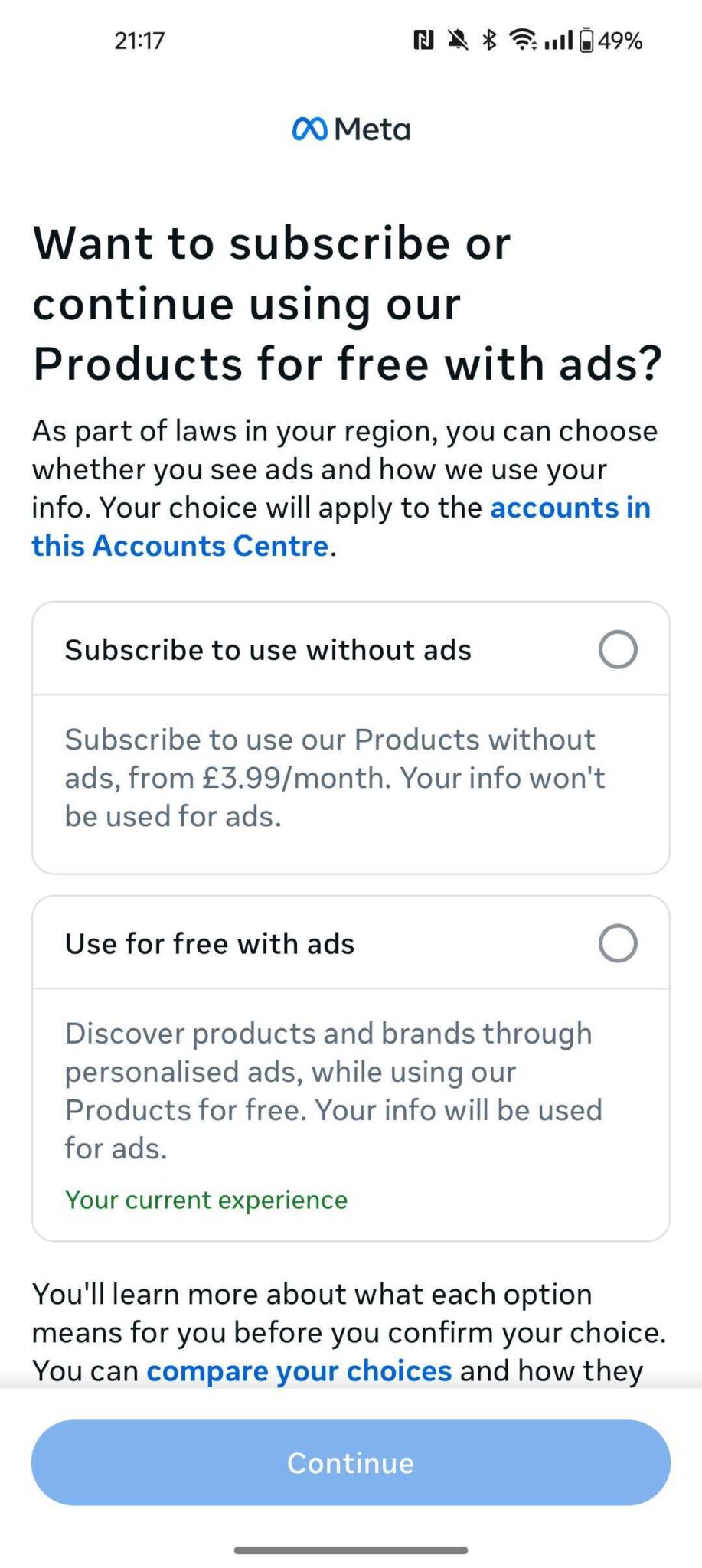
    Recently, I’ve noticed that Meta is testing paid subscriptions on Instagram, Facebook, and WhatsApp. Their goal is to unlock premium features and incorporate AI more prominently across these platforms, which could significantly shift how we create and interact with content.

    What’s unfolding? Meta’s new subscription trials aim to bring exclusive features to each app, tailored to productivity, creativity, and enhanced AI capacities, while the core experiences remain free. It’s interesting to see how Meta plans to develop unique subscription offerings instead of just a single bundle, especially as they explore which combinations of features might work best.

    Subscriptions will provide premium controls and tools that can benefit everyday users, creators, and businesses, distinct from Meta Verified. For instance, on Instagram, initial testing might include features like unlimited audience lists, insights into non-followers, and stealth story viewing.

    Meta also aims to launch paid AI features, notably increasing access to its Vibes AI video generation tool through a freemium model. I’m curious about how this might change our interaction with content creation tools.

    Why this matters to us. These paid subscriptions could transform user engagement on Meta’s platforms, potentially altering privacy settings and audience reach. Additionally, new AI-driven creation tools could shift the landscape of user-generated content that advertisers either compete against or harness for campaigns. Over time, these subscription tiers might redefine targeting strategies and the value of organic versus paid engagement on these platforms.

    ```json
{
  "alt": "Meta subscription options for ad use displayed on a smartphone screen.",
  "caption": "Decide your Meta experience: Subscribe for an ad-free experience or continue for free with personalized ads.",
  "description": "The image shows a Meta prompt detailing subscription options. Users can choose between a paid ad-free subscription or continue using Meta products for free with ads. This choice affects account settings on the Accounts Centre. The screen is from a smartphone, displaying the time as 21:17, with battery at 49%. The interface includes a 'Continue' button at the bottom."
}
```

    Reading between the lines: AI is central to this strategy. Meta plans to scale Manus, an AI agent they acquired for $2 billion, by embedding it within their apps and offering standalone subscriptions to businesses. Reports suggest that we’ll soon see Manus shortcuts directly in Instagram, creating tighter integration between social media engagement and AI-enhanced content creation.

    Why the timing is right. While advertising is still at the core of Meta’s revenue model, diversifying into subscriptions can provide a new income stream. With users more open to paying for unique social features, as seen with Snapchat+ boasting over 16 million subscribers, Meta is betting on replicating that success without adding to the subscription overload many of us feel.

    The takeaway. Meta’s experiment with premium social and AI enhancements could potentially open a significant new revenue stream beyond advertising. The real test will be whether these features provide enough value to justify another subscription in our already crowded monthly commitments.

    Explore further. For more details, check out TechCrunch’s full article on Meta’s subscription test.


    Inspired by this post on Search Engine Land.

    crushpress.ai community screenshot
  • Discover Meta’s AI: The Power of Andromeda and GEM

    Discover Meta’s AI: The Power of Andromeda and GEM

    When I think about Meta’s advertising journey, it amazes me how far we’ve come from the manual days of targeting and account tweaking. Back then, I had to rely on finely tuned audience definitions and schedule constant tests to keep ad performance up.

    But as privacy policies evolved and signal clarity dimmed, those methods began to lose their effectiveness. This change prompted Meta to harness the power of AI in reshaping its ad platform.

    With Andromeda at the helm, Meta launched its first major AI initiative for personalized ad retrieval, soon followed by the expansive GEM, Meta’s Generative Ads Recommendation Model. These systems reinvent how ads are chosen and delivered across Meta’s ecosystem.

    Our role as advertisers has transformed significantly. It’s crucial now to understand how Andromeda and GEM operate in unison and to align our strategies with this AI-first approach that’s defining ad success in 2026.

    Let’s dive into the specifics—

    Andromeda: Unveiling Meta’s AI Evolution

    Andromeda, to me, feels like the beating heart of Meta’s AI transformation. By leveraging past user interactions, it flips traditional targeting on its head, going beyond pre-defined audiences to assess the most engaging ad elements.

    Personally, the introduction of Andromeda in 2024 reshaped how I approached advertising. I noticed that broader target groups started to outperform detailed interest-based setups, signaling a shift towards creative-first strategies.

    By 2025, it was clear that simplified structures and continuous creative refreshes were the keys to unlocking Andromeda’s potential.

    The Shift with Andromeda

    With Andromeda, a shift occurred from audience-centric to creative-centric matching, making the creative elements the primary indicators of relevance over traditional targeting metrics.

    As I experimented, I found that broader campaigns offered more data for AI to optimize, proving highly effective in meeting diverse campaign objectives.

    A visual depicting Meta’s Andromeda personalized ads retrieval model.
    Source: Engineering at Meta
    ```json
{
  "alt": "Diagram showing ad matching process using hierarchical ad index and model, NVIDIA Grace Hopper platform, and MTIA.",
  "caption": "Unveiling the Process: How user requests are transformed into ad candidates via a hierarchical ad index and NVIDIA's cutting-edge Grace Hopper platform.",
  "description": "This image illustrates the ad matching process, starting from user requests that are processed through an ad corpus. The diagram features a hierarchical ad index and model that refine ad candidates. The lower section highlights the integration of Meta's MTIA and NVIDIA's Grace Hopper platform, showcasing the collaboration of Grace CPU and Hopper GPU for enhanced computational efficiency. The image serves as a visual guide to understanding complex advertising technology workflows."
}
```

    Enter GEM: The Brain Behind Ad Precision

    GEM, the core intelligence engine of Meta’s advertising realm, brought with it a new era of predictive precision. It adds depth by analyzing wide interaction datasets to enhance ad selection and sequencing.

    For me, the seamless integration of GEM with Andromeda led to noticeable improvements in campaign efficiency by late 2025, driving results more effortlessly than ever before.

    Why GEM Transformed the Ads Landscape

    GEM isn’t just about displaying an ad—it’s about the continuous learning and anticipation of what should come next. Imagine Andromeda as your ad’s gatekeeper and GEM as its storyteller, predicting the next successful narrative in real-time.

    A visual depicting Meta’s GEM building and scaling architecture model.
    Source: Engineering at Meta

    My approach has evolved to value long-term engagement patterns over short-lived peaks, requiring both patience and strategic creativity.

    Dig deeper: Rethinking Meta Ads AI: Best practices for better results

    Harnessing AI in Advertising: Strategies for 2026

    This year, my focus is set on innovative creative strategies and stability, as simplicity in structure seems to generate superior results.

    Creative Strategy: The Cornerstone

    I’ve learned that providing a rich array of creative content enhances Meta’s AI learning. Tailor content to different personas and employ diverse media formats to keep engagement high.

    ```json
{
  "alt": "Diagram of machine learning process from GEM to user-facing models via post training techniques.",
  "caption": "Illustration of a machine learning pipeline showing the journey from GEM to user-facing vertical models, enhanced by post training techniques.",
  "description": "This image is a flowchart illustrating a machine learning pipeline. It starts with GEM on the left, which connects through various domain-specific foundation models. In the center, post training techniques such as knowledge distillation and parameter sharing are applied. The process culminates in user-facing vertical models on the right. This visual represents key concepts in AI model refinement and deployment, making it valuable for discussions on advanced machine learning frameworks."
}
```

    Streamline for Impact

    Simplifying campaign structures has shown remarkable improvements. Fewer campaigns with broader reach enable Andromeda and GEM to identify patterns swiftly.

    Giving up granular control wasn’t easy, yet it has proven essential for the AI systems to optimize effectively.

    The Power of Patience

    I’ve discovered that patience, coupled with a stable strategy, is a game-changer. Avoid making hasty modifications; instead, monitor performance over broader time scales to truly grasp overall trends.

    Budget as a Strategic Tool

    Generally, larger budgets accelerate learning. Meta’s AI thrives on consistent data flow to optimize performance and develop effective solutions.

    Redefining My Role

    Today, I see myself less as a manual optimizer and more as a strategic architect, focusing on creative originality and brand fidelity while trusting the AI to handle optimization duties.

    Dig deeper: 3 PPC myths you can’t afford to carry into 2026

    Mastering Meta’s AI Ecosystem

    From observation, AI is the cornerstone of Meta Ads now, transforming how I handle campaigns. Merging human-created strategies with AI insights unlocks immense potential.

    By feeding diverse, quality inputs into the system, I’m able to align better with Meta’s AI, which is now the linchpin of ad success.

    The rules may have changed, but the opportunity for creative success remains immense.


    Inspired by this post on Search Engine Land.

    crushpress.ai community screenshot
  • Google AI Max: Is Your Account Set for Success?

    Google AI Max: Is Your Account Set for Success?

    I recently discovered the potential of Google AI Max and, like many of us, wondered if my account is ready to harness its power. Google AI Max promises to unlock additional conversions if set up correctly. Before jumping in, I knew I had to ensure everything was primed and in place.

    Google’s AI Max is designed to transcend traditional keyword targeting by utilizing various signals to determine ad displays. It’s a game-changer for those with a history of broad match success. However, if not optimized, it could quickly deplete your budget.

    One important clarification: using AI Max is not mandatory for ad appearances in AI Overviews. Broad match keywords can place ads in AI Overviews regardless of AI Max usage. I see AI Max more as a tool to expand conversions beyond mere AI Overviews.

    We’ll explore the essential steps to review before testing AI Max. These insights are crucial to ensure our campaigns are fully prepared.

    What to Check Before Enabling AI Max

    Accurate Conversion Tracking

    Having precise conversion tracking is vital. AI Max optimizes based on our defined success metrics. Inaccurate or inflated conversions can lead to poor AI decisions. This insight made me double-check everything.

    ```json
{
  "alt": "Dialog box for adding URL exclusions with tabs for URLs, Custom labels, and Rules.",
  "caption": "Easily manage your website by excluding specific URLs with this user-friendly dialog box, featuring options for URLs, labels, and rules.",
  "description": "This image displays a dialog box for adding URL exclusions on a website. The interface has options to enter URLs that should be excluded, along with tabs for Custom labels and Rules. It provides a straightforward way for users to manage non-commercial content by specifying exclusion criteria. Ideal for web administrators, this tool enhances site management by simplifying URL exclusion processes."
}
```

    Automated Bidding with a Conversion-Focused Strategy

    For broad match to function optimally, a conversion-centered bid strategy is necessary. Options like ‘Maximize Conversion Value’ or ‘Target CPA’ should align with your updated strategy. My experiments indicated more consistent results with target bids than max bids.

    Using max bids without watching over budget and collected data might not yield the best results. I’ve learned to keep a careful eye on it.

    Conversion Volume

    AI Max needs sufficient data to perform well. With over 100 conversions monthly, its reliability has been strong, provided there’s a positive history with broad match. Based on this, I aimed to test in campaigns with at least 30 monthly conversions.

    No Impression Share Lost Due to Budget

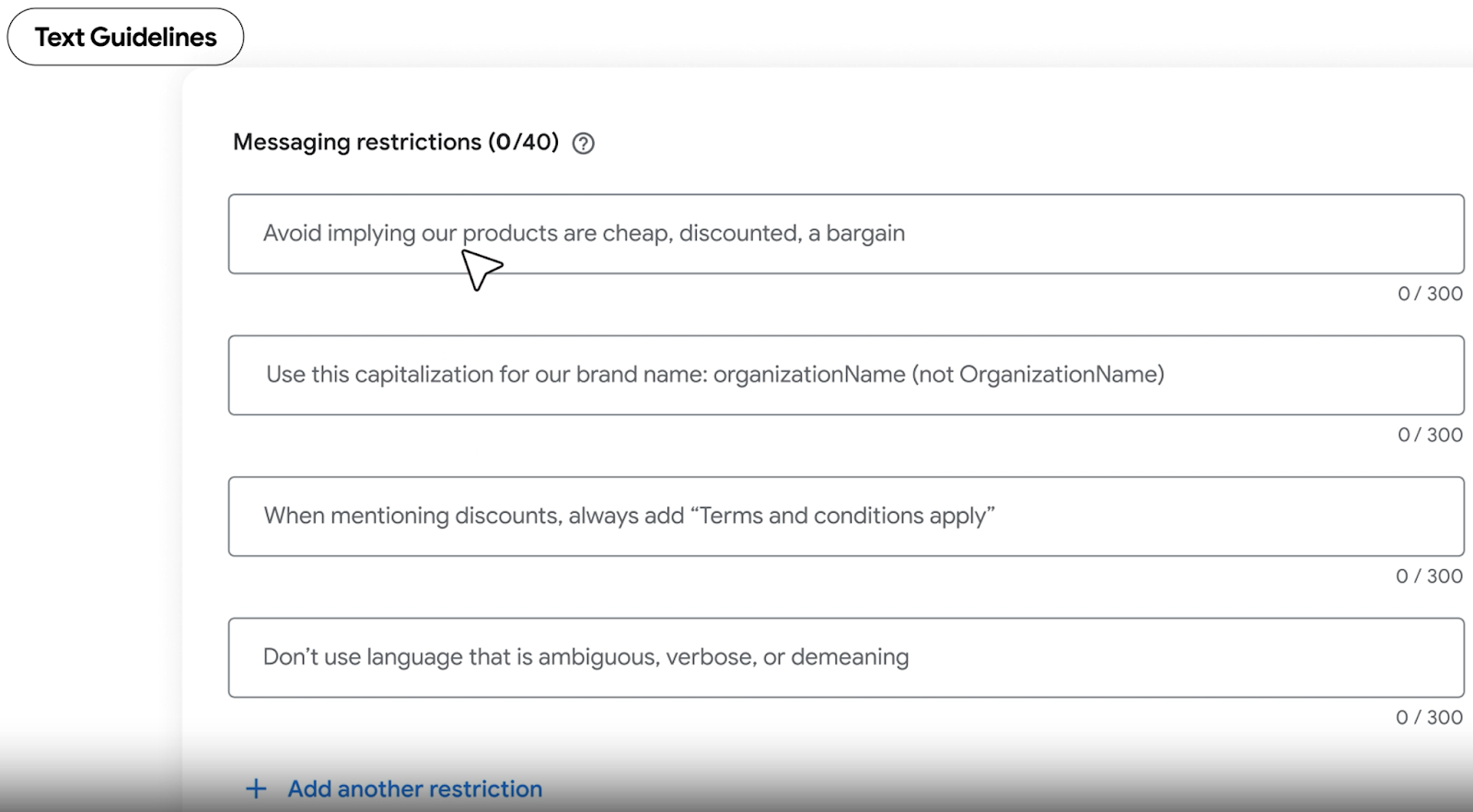
    ```json
{
  "alt": "Text guidelines interface showing messaging restrictions for branding.",
  "caption": "A glimpse into the text guidelines interface, outlining key messaging restrictions for maintaining brand integrity.",
  "description": "This image displays a section of a text guidelines interface with messaging restrictions. It includes rules such as avoiding implications that products are cheap, using specific capitalization for brand names, adding terms and conditions when mentioning discounts, and avoiding ambiguous language. These guidelines aim to uphold consistent and professional brand communication. Ideal for marketing and branding professionals seeking structured messaging frameworks."
}
```

    If budget constraints already hinder impression share, AI Max could exacerbate this issue. Prioritize spending on top keywords and let AI Max utilize remaining funds for experimentation.

    Proven Broad Match Success

    AI Max treats keywords as broad match and extends beyond them. Without past success, it could be ineffective. Preparing through ad group optimization and new ad testing has been my strategy.

    Should You Use URL Expansion?

    Enabling URL expansion allows Google to pick any webpage for landing when AI Max triggers an ad. However, indiscriminate use can be detrimental—excluding non-conversion-oriented pages mitigates risks.

    Those who created landing pages for specific geographies should carefully manage page exclusions to avoid mismatching.

    ```json
{
  "alt": "Interface showing AI Max settings with search term matching enabled.",
  "caption": "Streamline your search with AI Max settings, efficiently matching search terms at a click.",
  "description": "The image displays a user interface for AI Max settings, highlighting the option 'Search term matching', which is currently enabled. The dropdown menu indicates that this feature is active if AI Max is turned on. This visual is part of a settings dashboard designed to enhance search capabilities using AI-powered functionalities, improving user experience by optimizing term matching processes."
}
```

    Should You Try Automatically Created Assets?

    I’m hopeful about automatically created assets. They can significantly enhance messaging but require caution to avoid irrelevant sitelinks and incompatible callouts. Establishing clear guidelines ensures alignment with brand objectives.

    How to Test AI Max

    Because of its performance inconsistencies with brand keywords, I’ve found it best to initially focus on non-brand keywords in AI Max tests. Starting with successful ad groups rich in conversion data offers the best chance to test its potential.

    Operating AI Max at the ad group level via the Google Ads Editor proved efficient in my testing experience.

    Is Your Account Ready to Test AI Max?

    As AI Max continues to evolve, its integration into our existing systems may provide significant advantages. But, readiness involves assessing if our accounts meet all setup criteria before diving in. By following my steps, you’ll recognize its readiness and potential for success.


    Inspired by this post on Search Engine Land.


    crushpress.ai community screenshot
  • TikTok’s New U.S. Venture Ensures Compliance and Security

    TikTok’s New U.S. Venture Ensures Compliance and Security

    I’ve always been fascinated by how companies navigate complex regulatory landscapes. Recently, TikTok made headlines with the launch of a new U.S.-controlled joint venture, a decisive move aimed at aligning with American national security rules.

    To ensure that TikTok can continue serving its vast user base of over 200 million Americans, the company established TikTok USDS Joint Venture LLC. This step was officially taken following an executive order from President Trump on September 25, 2025.

    The big picture. This joint venture stands out because it’s primarily owned by American interests, functioning independently concerning U.S. user data, content moderation, and algorithm security. While ByteDance maintains a 19.9% stake, this remains under the level that’s often scrutinized for national security.

    This initiative leverages TikTok’s already established U.S. Data Security (USDS) program, aiming to protect sensitive information from foreign interference.

    Why it matters to me. As someone who appreciates the dynamic between technology and regulation, this joint venture is a significant test of whether TikTok can continue its operations in the U.S. without facing bans or demands to sell its U.S. assets. It effectively transfers control of key operational areas to American oversight, addressing long-standing security concerns.

    For creators and advertisers like me who rely on TikTok, this development signifies a potential blueprint for future regulations of foreign tech by the U.S.

    Understanding the safeguards. User data from the U.S. will be securely stored in Oracle’s cloud infrastructure in the U.S., with rigorous audits and third-party cybersecurity certifications to ensure adherence to federal and industry standards like NIST, ISO 27001, and CISA.

    The content recommendation algorithm for U.S. users will also be adapted and tested using U.S. data within Oracle’s systems, ensuring robust security through continuous source code evaluations under software assurance protocols.

    Trust, safety, and content moderation at the forefront. The joint venture now holds the decision-making power over trust, safety policies, and content moderation for U.S. users, further reducing foreign influence over crucial decisions.

    Balancing global reach with U.S. control. While U.S.-based security and safety controls are tightened, TikTok’s global entities still handle interoperability and commercial activities like advertising and e-commerce, supporting worldwide visibility for American creators and businesses.

    Governance and leadership. The joint venture is led by a seven-member board predominantly composed of Americans, including executives from Silver Lake, Oracle, Susquehanna International Group, and MGX. Adam Presser serves as CEO, with Will Farrell as Chief Security Officer, and Raul Fernandez, CEO of DXC Technology, chairs the board’s security committee.

    Ownership details. Silver Lake, Oracle, and MGX are the cornerstone investors, each with a 15% stake. Other investors include entities linked to Michael Dell, General Atlantic, Dragoneer, and Xavier Niel. These safeguards also cover CapCut, Lemon8, and other TikTok-associated apps in the U.S.

    What comes next. TikTok USDS Joint Venture positions itself as a definitive response to U.S. regulatory pressures. It remains to be seen whether it will fully placate lawmakers and security agencies, ultimately securing TikTok’s future in the U.S. as scrutiny begins.

    Catch-up. A $14 billion arrangement keeps TikTok operational in the U.S.


    Inspired by this post on Search Engine Land.


    crushpress.ai community screenshot
  • Google Ads Glitch Halts Performance Max Edits: What to Do

    Google Ads Glitch Halts Performance Max Edits: What to Do

    A recent bug in Google Ads is causing frustration among advertisers, as it has started blocking any attempts to edit Performance Max (PMax) asset groups. I’ve personally encountered error messages when trying to update asset groups, making it impossible to save any changes directly in the platform.

    Why This Matters to Us. As an advertiser, the freshness and adaptability of our assets are crucial for campaign success. Without the ability to update asset groups, there’s a risk of my campaigns running with outdated content, potentially harming their performance and efficiency.

    What I’m Experiencing. Like others, I’ve faced an error message stating, “An error occurred. Please try again later. Value is required,” each time I’ve tried editing any asset group details. This error shows up in the Google Ads UI, stopping me from saving any changes even if all required fields appear to be filled.

    Google’s Response. Google acknowledges this issue and is looking into it. However, they haven’t provided a timeline for a fix or any further guidance through their official channels yet.

    Temporary Workaround. For now, I’ve found that using the Google Ads Editor allows me to make necessary changes and upload them directly. While this method works, it introduces additional steps that disrupt my usual workflow of managing PMAX via the web interface.

    ```json
{
  "alt": "Error message screen with text: 'An error occurred. Please try again later. Value is required.'",
  "caption": "A technical glitch interrupts workflow with a message indicating a required value error. Will you troubleshoot now or later?",
  "description": "This image shows a screen with an error message, suggesting issues with input fields. The text advises, 'An error occurred. Please try again later. Value is required.' This is common in digital forms and ad management interfaces, indicating necessary information is missing. Keywords: error message, technical issue, form completion, troubleshooting."
}
```

    Next Steps for Advertisers. If you’re running Performance Max campaigns like I am, it’s essential to revisit recent changes to ensure they’ve been saved correctly. In the meantime, directing any necessary updates through Ads Editor may be a wise choice until Google resolves the issue.

    Looking Ahead. Until Google addresses this glitch, a new level of uncertainty might accompany managing Performance Max campaigns. It’s important for us to double-check our versions and explore alternative workflows.

    First to Report. PPC professional Chelsea Harding initially flagged this issue and shared her experience about the error message on LinkedIn.


    Inspired by this post on Search Engine Land.


    crushpress.ai community screenshot
  • Unlock Ad Performance with Google’s Mix Experiments Beta

    Unlock Ad Performance with Google’s Mix Experiments Beta

    I’ve discovered that Google is introducing a fascinating new tool called Campaign Mix Experiments (beta). This innovative framework allows me and other advertisers to experiment across various campaign types, budgets, and settings all within a single, unified setup.

    How it works:

    As an advertiser, I can create up to five experiment arms, each with its own unique combination of campaigns. This means I can include the same campaign in multiple arms and distribute traffic among them.

    Google’s mix experiments support a wide range of campaigns, including Search, Performance Max, Shopping, Demand Gen, Video, and App campaigns, though it does exclude Hotels.

    I’m able to customize traffic splits starting at a minimum of 1%, and the results are adjusted to the smallest split for a fair comparison — ensuring accuracy in our findings.

    What I can test:

    The beta provides an exciting opportunity to explore and test budget allocation across different campaign types. I can also assess account structures, varying between consolidation and fragmentation.

    It allows me to examine differing bidding strategies, targeting options, and feature adoptions, alongside studying cross-channel performance interactions, beyond just individual campaign impacts.

    Why I care. With this new tool, I can go beyond individual campaign testing, gaining insights into how various campaign types interact and identifying which combinations yield the most substantial business outcomes.

    Reporting details: I can monitor results through the Experiment summary and campaign-level reporting, selecting from confidence intervals like 95%, 80%, or 70%, and focus on key metrics such as ROAS, CPA, conversions, or conversion value.

    Best practices:

    I make sure to keep the experiment arms similar, only altering one variable at a time. I align the total budgets across these arms unless budget allocation itself is the variable being tested.

    It’s advised to avoid shared budgets and significant changes while the experiment is underway, and to run these tests for at least six to eight weeks to ensure the results are statistically reliable.

    Between the lines: Google is shifting the focus from a single-campaign victory to understanding how the right mix of efforts can lead to success, especially as automation reshapes the landscape.

    Bottom line: By utilizing campaign mix experiments, I gain a realistic view of how different campaign types and financial plans work collaboratively. This empowers me to make informed decisions on where my spending truly adds value.


    Inspired by this post on Search Engine Land.


    crushpress.ai community screenshot