Over the past several months, I’ve delved into the fascinating world of AI citation data. What I’ve discovered is intriguing: there isn’t a single, top source that every brand can rely on. Instead, it varies substantially depending on the platform, industry, and the intent behind the data.
Every so often, I encounter studies claiming platforms like Reddit or Wikipedia are the ultimate sources for AI citations. Marketers and clients often get swayed by such bold claims, quickly drafting new strategies based on them. But are they truly applicable to every scenario?
The truth is, these analyses can often oversimplify complex data—ignoring the nuances of intent, platform disparity, or industry context. This could lead brands into investing efforts into strategies that don’t align with their specific market or customer journey.
During our research at Tinuiti, where I serve as the senior director of AI SEO innovation, we embarked on an in-depth exploration of trends. We examined high commercial-intent prompts across nine different verticals on major AI platforms over four months, wrapping up in January 2026.
The standout insight was clear: there’s no single top source for all. Patterns varied greatly based on the specifics of intent, the platform in use, and the total category involved.
Reddit’s Growth: A Closer Look
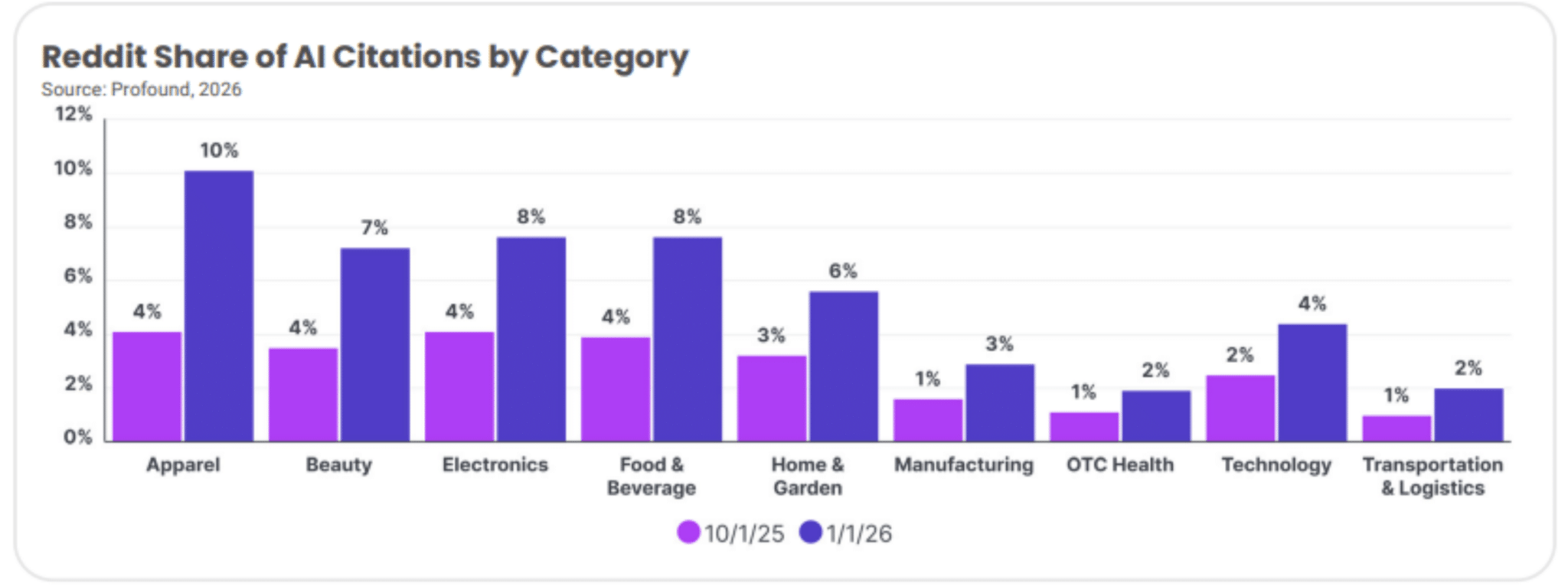
Take Reddit, for example. Throughout our tracked period, Reddit saw a 73% increase in citations from October 2025 to January 2026. In some industries, this growth was even more pronounced.
Yet, when examining platforms like ChatGPT, we noticed the citations pointed toward unique discussion threads rather than general subreddit pages or branded content. This observation means that merely having a Reddit presence may not be enough.
The real value lies in authentic, insightful discussions within a brand’s category. Brands should focus on fostering genuine community engagement and building strong reputations by participating meaningfully in conversations where their presence can truly make a difference.
Interestingly, the influence of Reddit on citation shares varied drastically. For instance, sectors like apparel saw 10% of the citations, whereas transportation noted just 2%.
It’s also worth pointing out the impact of platform specificity. Reddit’s citation share on ChatGPT remained above 5% by January; however, on Google Gemini, it was as low as 0.1%. Thus, the platform a brand’s audience tends to use plays a crucial role in AI visibility strategies.
Google’s AI Variances and Implications
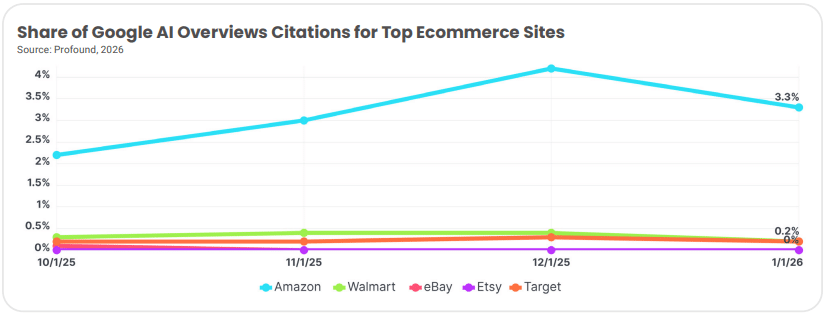
Among Google’s AI platforms, there are significant variances in how citations from social media sources get distributed. Reddit citations varied starkly across Google’s AI products — illustrating distinct differences in source preferences.
Different platforms such as Medium, YouTube, and LinkedIn showed notable splits in their social citation shares across Google’s AI surfaces. This diversity necessitates a careful evaluation of source relevance and citation volume for brands looking to optimize their AI strategies.
Amazon’s Strategic Choices Affect Competition
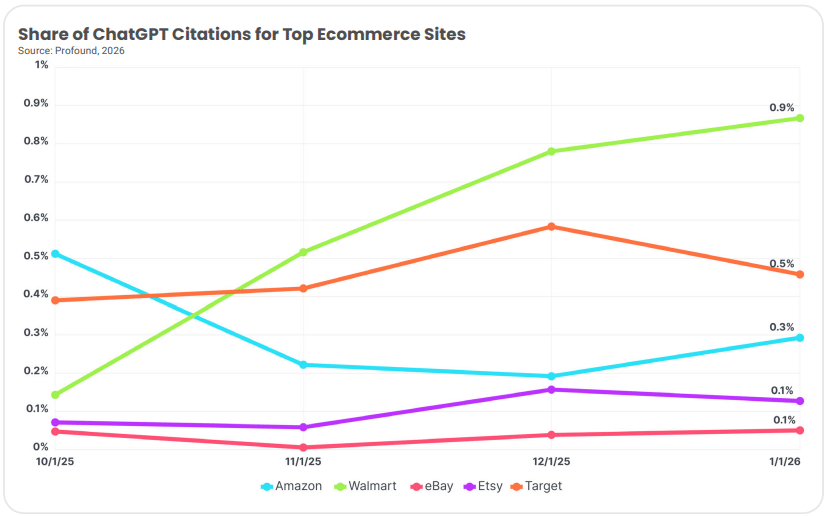
Interestingly, Amazon’s approach towards AI search led to a notable shift. While initially strong on ChatGPT, Amazon’s citations dipped after it began blocking AI crawlers aggressively, opening space for competitors like Walmart to gain ground.
This strategic decision reflects Amazon’s focus on control over direct customer interactions, exemplifying how tactical choices in crawler access can dramatically alter a brand’s competitive dynamics in AI citations.
Ultimately, understanding your industry and category is key to crafting effective and meaningful AI visibility strategies. It’s about leveraging unique insights, driving authentic engagement, and evaluating platforms critically, rather than just following trendy data insights.
Optimizing my client’s TripAdvisor listing continues to be a key part of the local SEO strategy. Despite often being an afterthought, a well-managed listing can significantly boost visibility, attract more qualified website traffic, and enhance the business’s online reputation and brand presence.
TripAdvisor frequently appears in search results for tourism and hospitality businesses, functioning as a vital discovery touchpoint. By leveraging it as a strategic SEO asset, rather than just a review platform, I can gain advantages in visibility, authority, and conversion rates.
How Tripadvisor fits into the local search ecosystem
On TripAdvisor, travelers are in decision-making mode, often ready to book. The platform acts as both a comparison tool and marketplace where reviews matter but are part of a bigger picture including the clarity of the business profile and brand image.
Though I have less control on TripAdvisor compared to my websites, Google respects its authority. Its comprehensive programmatic SEO architecture, indexing millions of URLs, makes it a powerhouse. With about 490 million monthly visits, ignoring it isn’t an option.
Why Tripadvisor SEO is about much more than simply collecting reviews
Optimizing my TripAdvisor profile is more than just gathering positive reviews. Implementing focused strategies can greatly enhance the visibility of my listing.
1. Respond to reviews with intention
By thoughtfully responding to reviews, I can boost semantic SEO by adding valuable contextual signals, increasing the chances of appearing in AI-driven search results.
For instance, if a guest briefly mentions enjoying the pool, my reply can detail family-friendly activities, enhancing the context around the hotel’s amenities.
I also guide guests in writing detailed reviews, explaining their value to potential visitors.
2. Using fresh, high-quality images with descriptive captions
Images on TripAdvisor can catch attention instantly. They must be vibrant and capable of conveying a quality experience quickly.
By analyzing engagement data from platforms like Instagram, I identify which images perform best and update them regularly with descriptive captions.
Example: “Grilled salmon served on our sea-view terrace, a popular choice for solo travelers during the summer.”
How Tripadvisor strengthens local and brand signals
Even in 2026, many businesses still have duplicate listings on TripAdvisor due to its easy, verification-lacking setup process.
However, verifying and merging these listings requires official documents, mirroring information from Google Business Profiles to maintain consistency.
For tourism and hospitality, TripAdvisor often serves as the main third-party channel for brand discovery, sometimes even appearing above a business’s own website in search results.
An incomplete or poorly managed TripAdvisor profile can diminish trust before potential customers even reach my website, so optimization is key in controlling my search presence.
Tripadvisor optimization is a competitive advantage
Mastering TripAdvisor SEO offers a significant competitive edge. Here’s what I keep in mind:
Review velocity: Maintaining a steady stream of reviews is essential.
Freshness signals: Updated images and current menu information are crucial.
Engagement: Encouraging profile clicks and interaction helps demonstrate appeal.
Owner activity: Regular updates and responses show a well-managed business.
Profile completeness: A comprehensive profile assures clarity in value.
Effective TripAdvisor SEO relies on consistency and a strategic understanding of how reviews, content, and engagement signals coalesce to influence decisions.
Executing this well transforms customers into the most powerful advocacy tool for my business.
We all dream of gaining media coverage that positively impacts our brand. It leads to increased exposure, builds authority, fosters trust, and often provides valuable backlinks.
However, the path to such coverage often seems shrouded in mystery for many of us. Some hold myths about needing to be top-of-the-industry to catch the media’s eye. But let me tell you, that’s not entirely accurate.
There’s also a belief that media coverage is a commodity that can simply be bought. While you might find contributors willing to feature you for a fee, this practice is against most outlet guidelines. Even if you momentarily land a feature, it’s not sustainable; once discovered, it leads to content removal and getting blacklisted.
So, how can you get featured? It starts with understanding the process and applying it consistently.
Develop Your Story
Each of us likely has a compelling story waiting to be discovered. For the media, content is a never-ending demand, and having a strong story is your ticket to being featured.
But let’s dig into what doesn’t make a compelling story. It isn’t enough to be the first, claim to be the best, or even aim to change the world.
The key lies in telling an actual story that resonates. Explain why the audience should care. Like how I rebuilt my success story using PR, our agency’s approach comes from personal experience, aiming to empower others similarly.
Remember, you don’t need a life-or-death struggle for a great story. Tap into a mission that engages people and gives them something to care about.
Craft Your Pitch
Even with the best story, crafting an effective pitch is vital. It must stand out amidst hundreds of emails journalists receive daily. Your pitch should succinctly communicate your story and compel a response.
Focus on connecting your story to current events. Remember, while it involves you, the story isn’t solely about you. Always prioritize what the audience wants.
Condense your story into a few engaging sentences and align a short, punchy subject line with your pitch to grab attention positively. A well-aligned subject line is crucial for getting your email opened and read.
Build Your Media List
PR isn’t a numbers game. The goal is to send the right pitch to the right people at the right moment. Identify media contacts who align with your story, which you can often do through search engines or social media.
Timing is partly chance, but with persistence, you can always improve your odds.
Send Your Pitch
The perfect time to send your pitch doesn’t exist—unless pressing news demands immediate attention. Avoid bombarding contacts with follow-ups; once a week is sufficient. After two or three attempts with no response, move on.
It’s not personal; given the volume of pitches received, a lack of reply isn’t uncommon. Patience and perseverance are essential.
Nurture Your Relationships
Most pitches won’t result in immediate media coverage, and many stop after initial rejection; I find this approach baffling.
I’ve faced many “no” responses before achieving a feature. The key is in fostering relationships; these media contacts were strangers at first. Investing in building real relationships has ensured that my emails get opened. Once you have a network of responsive press contacts, consistent pitching becomes much easier.
AI search expands the long tail into a multitude of prompt variations. Let me guide you through how fan-out queries, grounding, and task completion are reshaping SEO.
When I speak naturally, my language flows. It’s often messy, incomplete, and not always coherent. In contrast, the Google search bar made me condense my needs into short-tail or long-tail queries.
To navigate this, I would stack queries along a journey, refining them from A to B by stripping out personal nuances to suit what I thought the search engine could grasp. SEO experts built strategies around this, organizing queries by search volume and intent.
That’s evolving now. With Google promoting Gemini and companies like Samsung highlight AI features as key selling points, the landscape is shifting. I’m encouraged to be more expressive and detailed with my searches.
Moving from Keyword Research to Prompt Research
We need to transition from keyword research to prompt research. Traditionally, keyword research involved quantifying demand and optimizing at a phrase level. The new AI-driven search environment calls for understanding demand as generative concepts, preserving needs across numerous prompt formats.
This shift doesn’t render keyword research obsolete, but changes its scope. I’m learning to model user journeys, considering decision stages and user uncertainty, rather than just relying on search volume.
What I get from this isn’t merely a keyword map, but a task map reflecting real audience constraints. This signifies a shift from short and long-tail keywords to an infinite tail of prompt research.
The infinite tail is more than just an expansion of the long tail. It’s about personalization at each request. Users, like me, are layering contexts and preferences, creating unique prompt combinations.
As Ai systems evaluate these prompts, they predict responses probabilistically, shifting away from exact-match keywords. Now, it’s not just about ranking for specific phrases but ensuring my content solves the user’s problems.
In this journey, finding what users truly seek is as crucial as completing a task. With divergent user paths, flexibility replaces rigid step-by-step processes.
Query fan-out is crucial in AI search. It breaks complex prompts into subquestions, enabling a deeper evaluation framework.
Content now needs to satisfy clusters of queries instead of single matches. Covering multiple dimensions of a task creates resilience in this network-centric world.
Grounding queries ensure AI answers are validated against the broader web, checking consistency and reputability across sources. For my content to be part of AI responses, it must seamlessly fit this network.
This evolution redefines authority in how corroborated content appears over technically manipulated content. It emphasizes structure, data consistency, and external validation, significantly easing an AI system’s decision-making process by reducing uncertainty.
Organic search remains integral. It still dictates discovery and influences crawlability. However, AI now layers on top, impacting which brands feature in conversational responses. It’s a blend where organic visibility and AI selection coexist.
In this hybrid mode, the infinite tail favors genuine audience understanding, where my content should be designed to satisfy users’ situations instead of merely matching keywords.
This isn’t just a process renamed from keyword research to prompt research. It’s about understanding search motivations, decision-making, uncertainties, and evidential needs, fostering the infinite tail by prioritizing task completion over string matching.
“Content is king” has long been the mantra in the world of SEO. I’ve always leaned into content creation, though I know some focus on backlinks or technical SEO.
While I still believe content is crucial for search visibility, I’ve realized that it’s now essential to amplify its reach through effective distribution strategies.
With AI search evolving, asking, “What should I write next?” might not cut it. The game-changing question is, “Where should I distribute this content next?”
AI tools are further fragmenting search
Content distribution hasn’t always been our focus as SEOs. It was often a task for social media managers, PR specialists, and community managers.
But with AI search revolutionizing the landscape, distribution has become integral to achieving SEO success.
Here’s why:
AI tools draw from broader sources.
They operate under shifting logic.
The visibility strategies for AI differ from traditional methods.
If that sounds abstract, let me break down the evidence behind these changes.
Different tools have different sourcing logic
As search tools diversify, a one-size-fits-all strategy is no longer viable. AI tools cite different sources, often with less overlap with traditional SERPs.
Users are more adaptable, shifting from tools like ChatGPT to Gemini quickly, challenging us to rethink our strategy.
Instead of focusing solely on one tool, I need a distribution strategy that considers a variety of AI systems.
AI search uses different logic from traditional search
AI models generally have low overlap with Google searches. This variance highlights the need for a diverse strategy to ensure visibility across platforms.
AI searches tap into a wider array of resources, sometimes prioritizing lesser-known sites, complicating the path to dominance.
The sourcing logic is changeable
This shifting logic, marked by phenomena like citation drift, further complicates our reach. Over time, AI tools significantly alter their source domains, up to 90% in just six months.
The fragmentation of search demands a comprehensive distribution strategy. But how can we really make it work for us?
The key is not just in predicting where our content might appear but in expanding our reach across a variety of channels.
Our approach must adapt, embracing multi-channel distribution to reveal our brand in AI’s broad digital landscape. It involves targeting diverse platforms and collaborating with others, as third-party sources often overshadow personal domains.
1. Get good at collaborating
Winning in this fragmented environment requires teamwork. By integrating efforts across PR, social media, and community management, I leverage skills beyond traditional SEO.
I have to trust others with my projects and accept the shared accountability necessary for broader visibility.
2. Broaden your skillset
Understanding fields like digital PR and thought leadership is now part of my expanded role. I still focus on SEO, but I’m prepared to pivot where necessary.
While I may not master every skill, enhancing my knowledge of these interconnected fields enhances distribution capabilities.
3. Shift your mindset from ranking to presence
Google ranks remain important, but it’s equally crucial to populate as many platforms as possible. My goal is to plant hooks in the digital ecosystem that draw AI searches to my content.
I focus on presence rather than mere ranking, creating broader visibility to capture AI-driven searches.
4. Redesign your workflow
Integrating distribution into my workflow involves clear strategies from the outset. By planning post-launch phases and periodic content refreshes, I ensure a consistent distribution cycle.
Clear responsibilities and reusable elements prevent my distribution strategy from becoming an afterthought.
5. Start with these easy-to-implement best practices
Immediate actions help streamline this transformation, such as partnering with fellow businesses and adapting content for third-party sites like Quora or LinkedIn.
Keeping tabs on AI’s preferred sources and redistributing older content expands my reach and mitigates citation drift’s impact.
By prioritizing these initiatives, I boost my visibility in a world where distribution stands equal to creation.
Rethinking SEO processes for fragmented AI search
The landscape has shifted, urging me to adapt my SEO approach. As AI tools proliferate, navigating this fragmented terrain requires new methodologies.
SEO now demands more collaboration, intersecting with other teams like never before. The challenges are significant, but manageable strides toward cross-team coordination will set the foundation for future success.
Starting small allows me to slowly leverage these changes into formidable strategies, one step at a time.
Recently, I’ve been diving into McKinsey’s ‘Organize to Value’ strategy, a fascinating blueprint for transforming marketing into a positionless model. According to a comprehensive analysis, it’s not technology that’s holding back operational transformations; it’s unclear objectives, uncommitted leadership, and a stagnant culture that are to blame.
Implementing new AI technologies to drive marketing efforts seems simple. However, the real challenge lies in empowering marketing teams to utilize these tools independently, decisively, and at scale. The primary obstacle? It’s us, the humans.
For as long as I can remember, marketing teams have aimed to keep up with consumers, delivering timely, relevant messages and optimizing customer lifetime value to boost loyalty and ROI. While this goal isn’t new, the AI technologies that help us analyze data and create personalized messages at scale are continuously evolving. Unfortunately, our ability to fully harness this technology has fallen behind.
Despite these challenges, progress is being made. Some marketing teams have overcome these hurdles, yielding remarkable results. Take Caesars Entertainment for example. They reduced campaign execution time from five days to just five minutes. As Asadul Shah, the vice president of player revenue strategy notes, this transformation was ‘a massive game changer.’
Before their transformation, marketers at Caesars manually built targeting lists and coordinated efforts across disconnected systems, often waiting on multiple teams before launching campaigns. This made it difficult to target players with precision and timing. By partnering with Optimove, Caesars combined data, orchestration, and execution into a single platform. This change didn’t just improve efficiency; it allowed the marketing team to react more dynamically to players’ needs.
What truly made this transformation effective wasn’t just the technology—it was the implementation of Positionless Marketing. This framework liberated marketers from fixed roles, empowering every team member to act independently. Optimove provided the platform, while Caesars developed the necessary team structure. This synergy of technology and human ingenuity brought Positionless Marketing to life.
Organizations that achieve such transformation are embodying what McKinsey describes as ‘organizing to value.’ This involves a deep rethinking of structure, decision-making, and accountability, transforming marketing teams into operations that continuously drive value—ultimately optimizing customer lifetime value, fostering loyalty, and delivering measurable ROI.
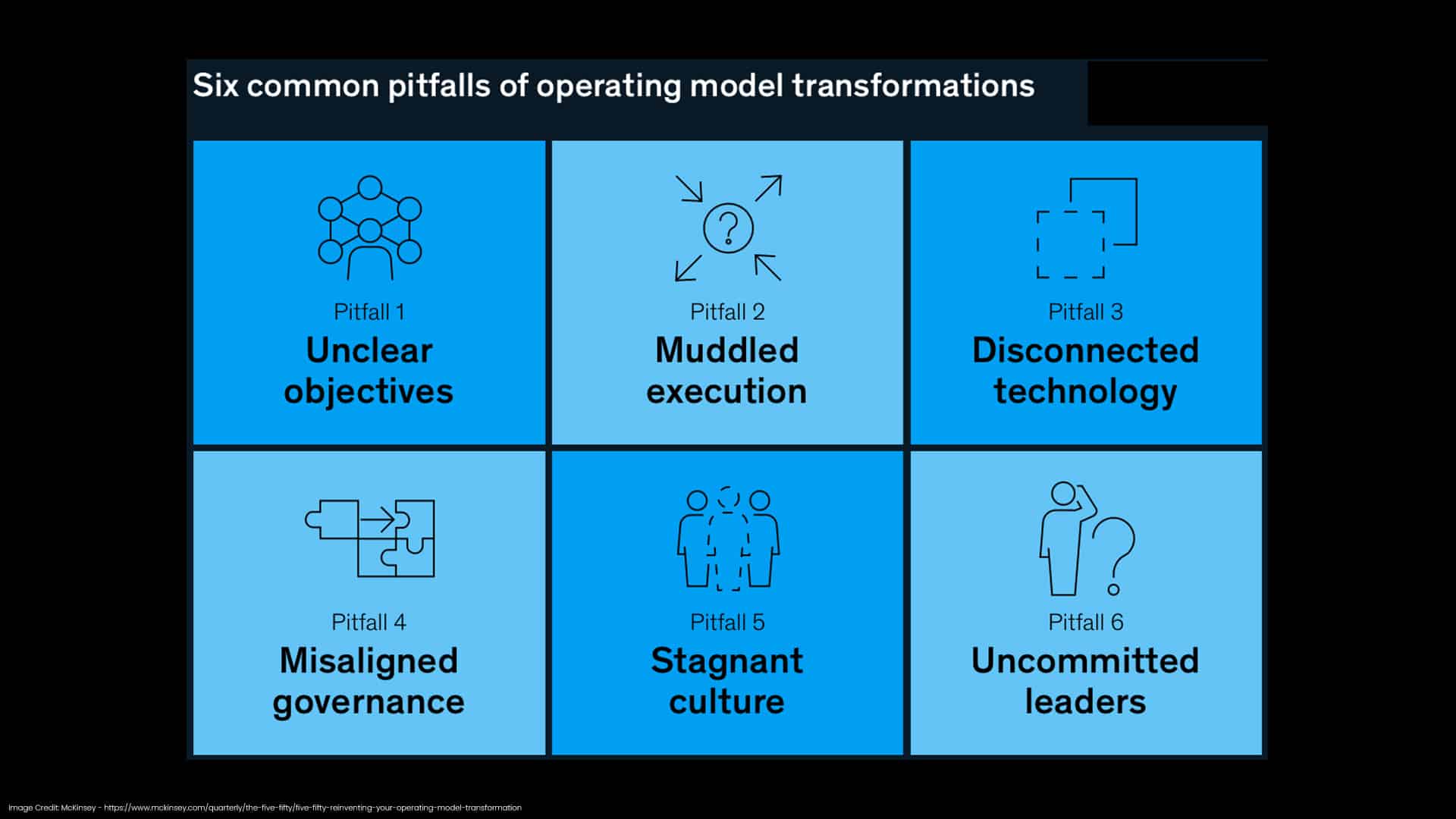
Yet, McKinsey highlights six pitfalls many teams face when trying to adopt the Positionless model, with only one being technological. The rest involve leadership and organizational issues.
Some key barriers include unclear objectives causing a focus on activity metrics over outcomes, misaligned governance that slows decision-making, and leaders who reinforce silos instead of enabling autonomy. Other obstacles are a stagnant culture resistant to change, muddled execution with no clear accountability, and disconnected technology further compartmentalizing efforts.
This kind of ‘assembly-line’ marketing, where tasks are segmented among different teams, hinders value creation. Peter Drucker famously said, “The purpose of business is to create and keep a customer.” However, when insights, creativity, and activation are siloed, value gets lost in between.
McKinsey’s ‘Organize to Value’ offers a practical path forward. It suggests designing organizations around value creation and impactful outcomes, rather than rigid job titles and processes designed to control.
To truly embrace Positionless Marketing, leaders must apply pragmatic solutions focused on improving marketing execution. This involves starting with a clear purpose, restructuring work to emphasize outcomes, streamlining decision-making processes, and aligning governance, technology, and talent. It empowers marketers to transcend traditional roles and independently deliver results.
This transformation requires commitment but staying with an outdated assembly-line structure is even costlier. Organizations like FDJ United and a major retailer have already seen the benefits: improved execution speed, increased purchase rates, and better use of resources.
As I see it, the window to act is narrowing. AI and data technologies are advancing rapidly, and customer expectations for personalized experiences are growing. Those who are quick to adapt will stay ahead, while those who hesitate may fall behind.
McKinsey’s insights confirm that the right structure and technology can unleash human potential, transforming marketing from within. Positionless Marketing is more than a strategy; it’s the future we need to embrace.
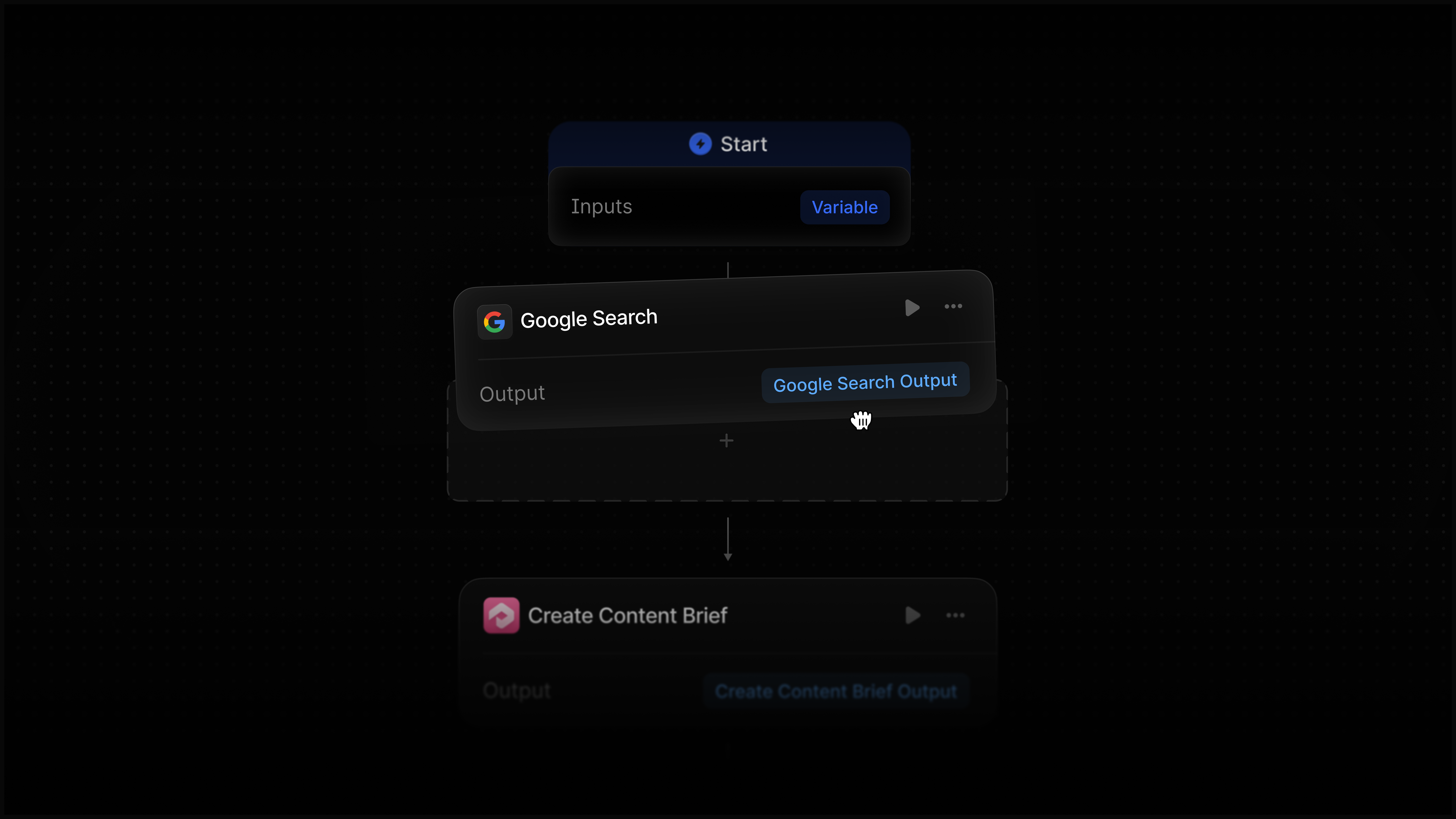
I’m thrilled to share our latest innovation: the Profound Google Search node, designed to seamlessly integrate real-time Google SERP data into our Agents. This powerful tool empowers us to monitor, analyze, and act on crucial search intelligence without leaving the platform.
With this integration, I can stay on top of my SEO strategy, making informed decisions based on live data. Whether I’m optimizing content or adjusting marketing tactics, having instant access to search insights is a game-changer.
I recently came across an intriguing study that shows AI tools are now responsible for generating 45 billion monthly sessions globally. This accounts for an impressive 56% of all search engine activity, according to Graphite.io CEO Ethan Smith.
The analysis combines web and mobile app usage across leading AI platforms and suggests that AI activity matches 56% of global search use and 34% in the U.S.
The surge is particularly evident in mobile applications like ChatGPT, Gemini, Perplexity, Grok, and Claude.
Why it matters: AI is broadening the horizons of discovery, rather than limiting the demand for search. Since 2023, combined usage across search engines and AI assistants has increased by 26% globally. It’s clear that having visibility in both LLMs and traditional rankings is crucial.
Key insights: The report dives into the performance of the top five LLM products—ChatGPT, Gemini, Perplexity, Grok, and Claude—and compares them to the biggest search engines. Here are some standout insights:
AI platforms generate 45 billion monthly sessions worldwide.
Within the U.S., AI accounts for roughly 5.4 billion monthly sessions.
An astounding 83% of global AI usage takes place within mobile apps (75% in the U.S.).
ChatGPT is leading the charge, representing 89% of AI sessions globally.
When looking at search-like prompts, AI usage constitutes 28% of the global search and 17% within the U.S.
The report leaves out prompts in the “doing” or “expressing” categories. According to OpenAI, around 52% of prompts focus on seeking information, akin to traditional search queries.
Reading between the lines: Most forecasts comparing AI and search focus only on website traffic, often just Google.com and ChatGPT site visits. This approach overlooks much of AI’s impact.
The research suggests these comparisons undervalue AI activity by a factor of 4-5 times because a significant chunk occurs on mobile apps.
The analysis takes into account various LLMs and search engines, rather than only comparing Google and ChatGPT.
What to keep an eye on: Google remains a dominant force in discovery, but the report estimates its share of search-related activity has declined from 89% in 2023 to 71% by the fourth quarter of 2025.
While global AI usage seems stabilized since July 2025, the U.S. usage is still on a rapid climb—up about 300% year over year by December 2025.
Almost two years ago, when the Digital Markets Act (DMA) came into effect, I was hopeful. But today, it’s clear that the user experience has worsened, business metrics have plummeted, and Google’s monopoly is as strong as ever.
As an SEO professional, I’ve joined countless others in agreeing that Google has long abused its dominant position in search to favor its own services over others. The DMA was supposed to be the solution—a regulation promising to level the playing fields in the digital world.
The European Union was hailed for finally taking steps against tech giants with the 2022 passage of the DMA, which came into force in March 2024, aiming to balance competition. Headlines were optimistic, signaling a fair and promising digital era.
Back in 2024, my perspective was captured in an article where I wrote about this legislation being a ‘much-needed piece.’ Fast forward two years, the DMA is doing more harm than good and this is not just speculation—it’s supported by concrete evidence.
The DMA was born from understandable frustration over Google’s well-documented abuses, where it would promote its own services like Google Shopping, often at the cost of others with better offerings.
Years of watching Google rank its own products first while burying competitors ignited the creation of this act, attempting to enforce fairness by having tech giants, the gatekeepers, treat all services equally.
For those like me, who have seen clients lose traffic to Google’s products despite providing superior content, the promise of algorithmic neutrality and fairness was nothing short of intoxicating.
But, as a comprehensive assessment reveals, the reality is different. Findings from a recent survey of 5,000 European consumers indicate that users find the online experience more cumbersome since the DMA was enacted.
It’s disconcerting when users, who previously received services for free, express willingness to pay to regain their prior experiences.
In professional circles, we have to acknowledge a truth: many users favored the integrated Google experience that we spent years criticizing. Now, users must jump through more hoops—and they aren’t pleased with this supposed ‘fair’ competition landscape.
The business implications have also been damaging. Metrics reveal declines in click-through rates and a drop in direct bookings, highlighting a disconnect between DMA’s objectives and real-world outcomes.
The issue of enforcement is daunting. Without addressing the core monopoly, any attempts to fine or regulate Google amounts to levying cost of doing business fees for them, rather than ushering in real change.
Long term, it raises a pivotal question for regulators: is it time to consider breaking monopolies to genuinely foster competition? Or continue to enforce rules that fail to address the underlying problem?
We need to create conditions that truly allow emerging companies to compete, not just manage monopoly symptoms with ineffective regulations. The DMA had the right intent, but it’s the wrong solution to this complex problem.
He did caution, “If you’re sure that it’s what you want to do, you can use ‘domain:abc’ in the disavow file. Keep in mind that you can’t carve out specific domains if you like some, but if you find the TLD is almost only annoying spammers, it’ll save you time.”
However, he also advised, “I’m sure all TLDs have some good sites.” This method is powerful but should be used judiciously. It’s a big decision—like using a sledgehammer when sometimes a chisel might do.
Why should you care about this? If you find a TLD that’s causing issues or is full of low-quality spammy backlinks, disavowing it might just be the clean-up you need. But be cautious—it’s often better to carefully choose which links to disavow and avoid blanket decisions.
For those interested in exploring the disavow tool further, there’s a helpful document available here.
This feature is undocumented because, as John put it, “Given how big of a hammer it is, I don’t know if it’s something we should really suggest in the docs.” Essentially, you can block all links from a specific TLD, a top-level-domain, using a special syntax.
Let me break down how it works. You simply add “domain:abc” to your disavow file if you’re certain that you need to block an entire TLD. John shared this insight on his Bluesky post, and it’s a fascinating possibility if you’re often dealing with spammy domains.
He did caution, “If you’re sure that it’s what you want to do, you can use ‘domain:abc’ in the disavow file. Keep in mind that you can’t carve out specific domains if you like some, but if you find the TLD is almost only annoying spammers, it’ll save you time.”
However, he also advised, “I’m sure all TLDs have some good sites.” This method is powerful but should be used judiciously. It’s a big decision—like using a sledgehammer when sometimes a chisel might do.
Why should you care about this? If you find a TLD that’s causing issues or is full of low-quality spammy backlinks, disavowing it might just be the clean-up you need. But be cautious—it’s often better to carefully choose which links to disavow and avoid blanket decisions.
For those interested in exploring the disavow tool further, there’s a helpful document available here.
This feature is undocumented because, as John put it, “Given how big of a hammer it is, I don’t know if it’s something we should really suggest in the docs.” Essentially, you can block all links from a specific TLD, a top-level-domain, using a special syntax.
Let me break down how it works. You simply add “domain:abc” to your disavow file if you’re certain that you need to block an entire TLD. John shared this insight on his Bluesky post, and it’s a fascinating possibility if you’re often dealing with spammy domains.
He did caution, “If you’re sure that it’s what you want to do, you can use ‘domain:abc’ in the disavow file. Keep in mind that you can’t carve out specific domains if you like some, but if you find the TLD is almost only annoying spammers, it’ll save you time.”
However, he also advised, “I’m sure all TLDs have some good sites.” This method is powerful but should be used judiciously. It’s a big decision—like using a sledgehammer when sometimes a chisel might do.
Why should you care about this? If you find a TLD that’s causing issues or is full of low-quality spammy backlinks, disavowing it might just be the clean-up you need. But be cautious—it’s often better to carefully choose which links to disavow and avoid blanket decisions.
For those interested in exploring the disavow tool further, there’s a helpful document available here.
He did caution, “If you’re sure that it’s what you want to do, you can use ‘domain:abc’ in the disavow file. Keep in mind that you can’t carve out specific domains if you like some, but if you find the TLD is almost only annoying spammers, it’ll save you time.”
However, he also advised, “I’m sure all TLDs have some good sites.” This method is powerful but should be used judiciously. It’s a big decision—like using a sledgehammer when sometimes a chisel might do.
Why should you care about this? If you find a TLD that’s causing issues or is full of low-quality spammy backlinks, disavowing it might just be the clean-up you need. But be cautious—it’s often better to carefully choose which links to disavow and avoid blanket decisions.
For those interested in exploring the disavow tool further, there’s a helpful document available here.
This feature is undocumented because, as John put it, “Given how big of a hammer it is, I don’t know if it’s something we should really suggest in the docs.” Essentially, you can block all links from a specific TLD, a top-level-domain, using a special syntax.
Let me break down how it works. You simply add “domain:abc” to your disavow file if you’re certain that you need to block an entire TLD. John shared this insight on his Bluesky post, and it’s a fascinating possibility if you’re often dealing with spammy domains.
He did caution, “If you’re sure that it’s what you want to do, you can use ‘domain:abc’ in the disavow file. Keep in mind that you can’t carve out specific domains if you like some, but if you find the TLD is almost only annoying spammers, it’ll save you time.”
However, he also advised, “I’m sure all TLDs have some good sites.” This method is powerful but should be used judiciously. It’s a big decision—like using a sledgehammer when sometimes a chisel might do.
Why should you care about this? If you find a TLD that’s causing issues or is full of low-quality spammy backlinks, disavowing it might just be the clean-up you need. But be cautious—it’s often better to carefully choose which links to disavow and avoid blanket decisions.
For those interested in exploring the disavow tool further, there’s a helpful document available here.
As I was exploring Google’s lesser-known features, I came across an intriguing method to disavow an entire TLD using their link disavow tool. John Mueller from Google mentioned this capability, though it’s not officially documented.
Why should you care about this? If you find a TLD that’s causing issues or is full of low-quality spammy backlinks, disavowing it might just be the clean-up you need. But be cautious—it’s often better to carefully choose which links to disavow and avoid blanket decisions.
For those interested in exploring the disavow tool further, there’s a helpful document available here.
He did caution, “If you’re sure that it’s what you want to do, you can use ‘domain:abc’ in the disavow file. Keep in mind that you can’t carve out specific domains if you like some, but if you find the TLD is almost only annoying spammers, it’ll save you time.”
However, he also advised, “I’m sure all TLDs have some good sites.” This method is powerful but should be used judiciously. It’s a big decision—like using a sledgehammer when sometimes a chisel might do.
Why should you care about this? If you find a TLD that’s causing issues or is full of low-quality spammy backlinks, disavowing it might just be the clean-up you need. But be cautious—it’s often better to carefully choose which links to disavow and avoid blanket decisions.
For those interested in exploring the disavow tool further, there’s a helpful document available here.
This feature is undocumented because, as John put it, “Given how big of a hammer it is, I don’t know if it’s something we should really suggest in the docs.” Essentially, you can block all links from a specific TLD, a top-level-domain, using a special syntax.
Let me break down how it works. You simply add “domain:abc” to your disavow file if you’re certain that you need to block an entire TLD. John shared this insight on his Bluesky post, and it’s a fascinating possibility if you’re often dealing with spammy domains.
He did caution, “If you’re sure that it’s what you want to do, you can use ‘domain:abc’ in the disavow file. Keep in mind that you can’t carve out specific domains if you like some, but if you find the TLD is almost only annoying spammers, it’ll save you time.”
However, he also advised, “I’m sure all TLDs have some good sites.” This method is powerful but should be used judiciously. It’s a big decision—like using a sledgehammer when sometimes a chisel might do.
Why should you care about this? If you find a TLD that’s causing issues or is full of low-quality spammy backlinks, disavowing it might just be the clean-up you need. But be cautious—it’s often better to carefully choose which links to disavow and avoid blanket decisions.
For those interested in exploring the disavow tool further, there’s a helpful document available here.
He did caution, “If you’re sure that it’s what you want to do, you can use ‘domain:abc’ in the disavow file. Keep in mind that you can’t carve out specific domains if you like some, but if you find the TLD is almost only annoying spammers, it’ll save you time.”
However, he also advised, “I’m sure all TLDs have some good sites.” This method is powerful but should be used judiciously. It’s a big decision—like using a sledgehammer when sometimes a chisel might do.
Why should you care about this? If you find a TLD that’s causing issues or is full of low-quality spammy backlinks, disavowing it might just be the clean-up you need. But be cautious—it’s often better to carefully choose which links to disavow and avoid blanket decisions.
For those interested in exploring the disavow tool further, there’s a helpful document available here.
This feature is undocumented because, as John put it, “Given how big of a hammer it is, I don’t know if it’s something we should really suggest in the docs.” Essentially, you can block all links from a specific TLD, a top-level-domain, using a special syntax.
Let me break down how it works. You simply add “domain:abc” to your disavow file if you’re certain that you need to block an entire TLD. John shared this insight on his Bluesky post, and it’s a fascinating possibility if you’re often dealing with spammy domains.
He did caution, “If you’re sure that it’s what you want to do, you can use ‘domain:abc’ in the disavow file. Keep in mind that you can’t carve out specific domains if you like some, but if you find the TLD is almost only annoying spammers, it’ll save you time.”
However, he also advised, “I’m sure all TLDs have some good sites.” This method is powerful but should be used judiciously. It’s a big decision—like using a sledgehammer when sometimes a chisel might do.
Why should you care about this? If you find a TLD that’s causing issues or is full of low-quality spammy backlinks, disavowing it might just be the clean-up you need. But be cautious—it’s often better to carefully choose which links to disavow and avoid blanket decisions.
For those interested in exploring the disavow tool further, there’s a helpful document available here.