I recently had an enlightening chat with Chloe Varnfield, a seasoned digital marketer from Atelier Studios with nearly eight years of PPC experience. She shared invaluable insights on avoiding hidden Google Ads settings, steering clear of Friday mishaps, and the dangers of following Google rep advice blindly. These hard-learned lessons resonated with me deeply.
One of Chloe’s early eye-openers involved Google’s elusive account-level automated assets setting. It’s tucked away so deeply that I didn’t even realize it existed until I got an unexpected client message questioning a bizarre headline in their ad. It turns out Google had generated it automatically. This experience taught me the importance of auditing account-level settings and being proactive about Google updates.
Another lesson Chloe swears by is to never implement significant changes on a Friday. Once, she adjusted a campaign’s geographic targeting mid-conversation, only to accidentally exclude the UK. Recovery took three bewildering days. The rule I learned? Avoid major changes on a Friday and promptly audit your campaigns when things go awry.
Chloe’s most costly mistake unfolded when she followed a Google rep’s suggestion to switch bid strategies. What seemed like solid advice plummeted her campaign’s performance. It was a stark reminder of the high stakes involved in altering bid strategies, especially for businesses not hitting conversion volume thresholds. Patience and trusting my judgment emerged as crucial takeaways.
While auditing inherited accounts, Chloe often finds recurring issues like broken conversion tracking and brand-broad match campaigns—challenges that skew performance data and waste precious budget. These insights made me acutely aware of consistently vigilant account management.
Transparency in client relationships plays a pivotal role in Chloe’s success. Honest communication—explaining issues, solutions, and next steps—has shielded her from losing client trust. Her advice? Stay calm, be kind to yourself, and remember every problem offers a chance for growth.
Lastly, Chloe emphatically warns against over-relying on AI for generating ad copy without thorough review. AI should be a tool to enhance speed, not replace meaningful human oversight. It reinforced my commitment to always infuse my unique voice and critical review into AI outputs.
If your PPC dashboard celebrates conversions while your SEO dashboard celebrates traffic, you still don’t know whether search is making money. You only know that two teams are busy.
A revenue-focused search strategy gives paid media, SEO, and AI visibility one commercial objective. Paid search identifies and captures demand quickly. Organic content earns durable visibility. Generative engine optimization helps your brand become part of the buyer’s research before the click. Shared financial measures tell you when to invest, when to shift budget, and when you are paying twice for the same customer.
Key takeaways
Judge paid and organic search by revenue, qualified pipeline, margin, customer acquisition cost, and LTV-to-CAC performance, not by channel-specific activity alone.
Use paid search to test uncertain demand and expose profitable query themes. Turn validated themes into organic and GEO assets that can lower future acquisition costs.
Do not reduce brand advertising merely because you rank organically. Test whether the ads produce incremental customers before reallocating the spend.
Give AI Max and Performance Max bottom-of-funnel conversion signals. Automation cannot distinguish a valuable customer from a low-quality form submission unless your measurement system does.
Hold a monthly paid-organic review organized around query families and high-margin categories. Every finding should end with a budget, content, campaign, or measurement decision.
Start with a search P&L, not two channel dashboards
Traffic, impressions, rankings, clicks, and form fills are diagnostic signals. They are not the final score. A traffic increase can look healthy while commercial performance remains flat, especially when the new visits come from people who have little reason to buy.
Your search P&L does not need to replace the company’s financial statements. It is a management view that connects search activity to economic outcomes. Paid and organic teams should use the same definitions for a customer, a qualified lead, attributable revenue, pipeline value, and acquisition cost. Otherwise, the channels can appear successful for incompatible reasons.
Choose outcomes that survive a finance conversation
Build the shared scorecard from the bottom of the funnel upward:
Revenue: How much closed revenue came from customers whose journey included paid search, organic search, or an AI referral?
Qualified pipeline: For businesses with longer sales cycles, how much accepted opportunity value did search create or influence?
Margin: Which categories produced economically valuable sales, rather than revenue that disappeared into low margins?
Customer acquisition cost: How much media and operating cost was required to acquire a new customer?
LTV-to-CAC performance: Are the customers being acquired valuable enough to justify what you spend to win them?
Paid dependency: How much qualified demand disappears when media spending is reduced?
These measures force useful distinctions. A campaign can have a low cost per form and a poor customer acquisition cost. An organic page can attract thousands of visitors without contributing meaningful pipeline. An ecommerce query can convert less often yet produce more revenue if its average order value is higher.
For lead generation, make the accepted sales stage the governing outcome whenever your systems allow it. A submitted form is an event. A qualified opportunity is a business result. If the ad platform receives only the first signal, it will optimize toward people who complete forms cheaply, even when those people rarely become customers.
Keep channel metrics, but give each one a job
You still need rankings, click-through rates, impression share, conversion rates, and cost per click. Use them to diagnose why revenue changed. Do not let them substitute for revenue.
A ranking decline may explain a pipeline decline. A rising cost per click may explain higher acquisition costs. A low landing-page conversion rate may expose a mismatch between the query, the promise, and the offer. The diagnostic measure earns its place by helping you make a commercial decision.
Write down the conversion hierarchy before changing campaigns or content. For example, a form submission can be a primary operational signal while a sales-qualified opportunity and closed customer remain the financial outcomes. That distinction prevents shallow conversion volume from overruling lead quality.
Assign paid, organic, and AI search different jobs
The channels should cooperate, not imitate one another. Paid search buys speed, targeting, and controlled exposure. SEO builds durable access to existing demand. GEO makes your facts, expertise, and offers easier for AI systems to retrieve and cite during research. The strategy becomes efficient when each channel hands useful evidence to the next.
Build a commercial demand map
Organize the plan around query families rather than separate keyword and content inventories. A query family groups searches that express the same underlying need, such as comparing providers, calculating a cost, solving a product-specific problem, or evaluating an alternative.
For every important family, record:
The product, service, or category it can lead to.
The buyer’s likely decision stage and the question that remains unresolved.
Revenue, margin, average order value, or qualified pipeline associated with it.
Paid cost, conversion quality, and the search terms that actually triggered ads.
Organic rankings and landing pages already receiving demand.
Whether AI systems cite, mention, omit, or misrepresent your brand for the relevant question.
The strongest competitor visibility across ads, organic results, and AI answers.
The next action and the channel responsible for it.
This map gives the teams a common unit of work. Instead of asking whether PPC or SEO deserves credit, you can ask whether the business is capturing the profitable demand represented by that query family.
Use paid search as a demand laboratory
Paid search can reveal which messages, queries, offers, and landing pages lead to revenue before an organic program has earned visibility. That makes it especially useful when demand is new, competitive, or commercially uncertain.
The handoff to SEO should be deliberate. When a paid query family consistently creates valuable customers, build or improve the organic asset that deserves to rank for it. Preserve the language buyers use, address the objection exposed by the search term, and connect the page to a suitable commercial next step.
Do not merely turn winning ad copy into a longer page. A durable asset needs to resolve the research task. Depending on the query, that may call for a cost calculator, category data, selection criteria, an implementation explanation, a comparison framework, or evidence that supports a consequential claim. Proprietary data and useful tools can create citation-worthy authority that generic informational copy cannot.
Make important facts explicit and structurally easy to extract. Use clear headings, concise answers, consistent entity names, descriptive tables when relationships are genuinely tabular, and appropriate structured data. JSON-LD can clarify entities and page meaning, but it cannot make an unsupported claim authoritative. The underlying page still needs accurate information and a defensible reason to be cited.
Treat AI visibility as an acquisition input
Some buyers now use systems such as ChatGPT, Gemini, and Perplexity to synthesize options before visiting a conventional search result. By the time an AI-referred visitor reaches your site, part of the comparison may already be complete.
One organization’s reported experience put the conversion rate for standard organic visits at 2.75% and AI-search visits at 7.48%. Treat those figures as directional evidence, not a universal forecast. Referral classification, audience mix, brand strength, and the definition of a conversion can all change the result. Measure your own AI-referred traffic against the same downstream outcomes used for paid and organic search.
Citation share of voice is most useful when it is tied to commercial categories. Counting every brand mention equally can recreate the traffic problem in a new dashboard. Track whether you are cited for the questions that influence your highest-margin offers, whether the description is accurate, and whether the cited page gives the buyer an appropriate next step.
Use clear rules to move investment between channels
When paid search proves that a nonbrand query family is profitable, prioritize an organic or GEO asset capable of earning that demand over time.
When organic rankings or AI citations become strong, test whether overlapping ads still add customers rather than simply collecting clicks that would have occurred anyway.
When a competitor becomes the prominent AI recommendation, use paid coverage as a bridge while you repair the underlying evidence, content, and authority gap.
When organic traffic grows without pipeline, inspect intent and the conversion path before funding more content in the same pattern.
When paid media cannot acquire the query family profitably, do not assume SEO makes the demand valuable. Organic acquisition can lower click costs, but it cannot fix poor margins, weak qualification, or an unsuitable offer.
This is capital allocation, not a contest between teams. Paid media should cover demand you have not yet earned, protect commercially important gaps, and test opportunities. Organic and GEO should reduce the amount of profitable demand you must keep renting.
Keep automation downstream of reliable conversion signals
Automation expands what a campaign can discover and execute, but it also scales measurement mistakes. If your conversion goal rewards low-quality leads, an automated campaign can find more low-quality leads with impressive efficiency. Human strategy still has to define value, control risk, and decide whether the apparent result helps the business.
Test AI Max where the campaign already has evidence
Choose an established campaign. Start where there is enough historical conversion evidence to judge a change against a meaningful baseline.
Run an A/B test. Isolate AI Max rather than changing match types, bids, creative, goals, and landing pages at the same time.
Audit eligible landing pages. Confirm that the pages describe the right offer, answer the likely question, and lead to a valuable next action.
Inspect actual search queries. Look for commercially irrelevant expansion, ambiguous intent, and terms that should become negatives.
Judge downstream quality. Compare revenue, order value, qualified opportunities, and customers rather than stopping at conversion count.
Expand only after the economics hold. A larger query footprint is not a win if it increases spend faster than valuable demand.
Site content can help AI Max find useful connections that a tightly managed keyword list misses. Educational pages may surface a specific product path rather than merely attracting a reader. That possibility makes landing-page inspection more important: a relevant query still fails commercially if automation selects a page with no credible route to the offer.
Do not turn match types into ideology
Early match-type observations indicate that exact match can produce the strongest conversion rate in campaigns with substantial data. Broad match can still be useful when data is limited because the system can draw on additional behavioral context, including previous search activity.
Ecommerce teams should also compare average order value, not only conversion rate. Broader matching may reach shoppers who are still exploring and produce a lower conversion rate while attracting larger orders. Neither outcome is automatically better. Margin and customer value decide whether the trade is worthwhile.
Keep exact match where control and proven efficiency matter. Test broader discovery where incremental reach could reveal valuable demand. Evaluate both with the same revenue definition, and keep the search-term review active so automation does not quietly change the kind of customer you are buying.
Make Performance Max optimize for the sale behind the lead
Keep a human control layer around that automation:
Verify that each primary conversion represents genuine business value.
Separate high-intent actions from micro-conversions that merely indicate engagement.
Review lead quality with sales instead of assuming platform conversions are equivalent customers.
Use available device controls when platform behavior differs materially, particularly in B2B campaigns.
Check landing-page suitability and regulatory constraints before expanding automated reach in regulated categories.
Compare customer acquisition cost and pipeline value with your established search campaigns, not just with the campaign’s prior period.
Automation is best at allocating within the objective you provide. It cannot decide whether the objective itself protects margin, improves the sales pipeline, or reduces paid dependency. Those remain management decisions.
Make the monthly review a capital-allocation meeting
Paid and organic leaders should meet monthly to examine overlap, gaps, and budget movement. The meeting should not be two performance presentations placed back to back. Bring one scorecard organized by high-value category and query family.
Signal
Decision question
Likely action
Strong organic visibility and established AI citations alongside heavy brand spending
Are brand ads adding customers or intercepting demand already won?
Run a controlled reduction and watch total revenue, customers, and competitor capture.
Profitable paid nonbrand query family with weak organic coverage
Can a useful permanent asset earn this demand?
Prioritize the corresponding page, tool, data asset, or content hub.
Growing organic traffic with little qualified pipeline
Is intent too early, the offer disconnected, or measurement incomplete?
Repair the conversion path, reposition the asset, or stop expanding the pattern.
Competitor dominates an important AI answer
What evidence or coverage makes that recommendation more supportable?
Use paid coverage temporarily while improving facts, structure, authority, and category content.
Automated campaign reports more conversions but sales rejects more leads
Is the platform optimizing toward a shallow event?
Change the primary signal to a qualified downstream outcome.
Broad matching lowers conversion rate but raises order value
Does the added margin outweigh the weaker conversion efficiency?
Retain, narrow, or stop the expansion based on profit rather than conversion rate alone.
Test brand-spend reductions instead of declaring cannibalization
Ranking first organically does not prove that every branded ad is wasteful. Ads may defend against competitors, control a time-sensitive message, or capture demand that would otherwise leak. They may also collect clicks from customers who would have reached you without the ad.
Do not settle the issue with last-click attribution. Reduce spend in a controlled segment where practical, keep the offer and measurement stable, and observe the total effect across paid, organic, AI-referred, and direct outcomes. If total customers and revenue hold while ad spend falls, you have evidence for reallocation. If valuable demand falls or competitors take the traffic, restore the coverage and investigate why.
The purpose of a monthly cannibalization review is not to make paid search smaller. It is to move money from redundant capture toward incremental growth: an uncovered category, a new paid experiment, a better commercial asset, or a gap in AI visibility.
Require every channel owner to show the next financial decision
A useful monthly scorecard answers three questions:
Where are we visible for the categories that produce the most valuable business? Include paid coverage, organic position, AI citation share, accuracy, and the landing page that receives demand.
Where has earned authority reduced acquisition cost? Show tested reductions in paid dependency, not an assumed saving based on rankings alone.
Which profitable paid discoveries are becoming durable assets? Name the query family, the economics that justify investment, the asset being created, and the outcome it will be measured against.
End the meeting with named actions. A query family receives more paid testing, an organic asset moves up the queue, a conversion goal changes, a brand segment enters an incrementality test, or an unproductive initiative loses funding. If no resource decision changes, the meeting was reporting rather than management.
For your next review, start with one highest-margin category. Put paid queries, organic pages, AI citations, conversion quality, revenue, and acquisition cost on the same page. Identify one profitable demand theme that deserves an owned asset and one area of overlapping spend that deserves a controlled test. If the teams cannot complete that view, fix the shared conversion definitions first; moving budget before the economics are visible only relocates the uncertainty.
I recently tuned into an episode of Google’s Ads Decoded podcast where Brandon Ervin, Director of Product Management for Google Search Ads, shared insights on campaign consolidation, AI Max, and the future of advertiser control as we approach 2026. It was enlightening to hear a product team so in tune with advertiser concerns.
However, I felt the podcast left some gaps. There’s a significant disconnect between Google’s narrative and what advertisers truly experience on the ground. While Ervin’s team is making strides, the fast-evolving platform presents new challenges, shifting performance measurement onto economic standards. This change fundamentally alters how we should approach search ad audits.
As I reflect on recent improvements, it’s clear that enhancements like brand exclusions in Performance Max and Demand Gen, exclusion of site visitors in PMax campaigns, and improved search term visibility are crucial. These are responses to issues caused by bundling and aggressive automation. It’s worth noting that these controls arrived after advertisers were already knee-deep in implementation.
In an era where Google’s product team pushes for advancement, it’s vital for us to audit whether these new tools genuinely expand control or simply restore baseline transparency lost with earlier automation efforts.
In building the foundation for a 2026 search audit, we need to start with the basics, ensuring full ad extensions, strategic automated bidding, and maintaining negative keyword lists, among others. These are undeniable essentials that set the stage for deeper audits.
Focusing on the intricacies of signal architecture, I realize that while traditional controls like exact match and manual bids gave us direct oversight, the new controls shift focus to data quality, density, and selectivity. These influence the algorithm, which ultimately makes the decisions.
An effective audit in this context addresses three core aspects: the quality of the data imported, the density of high-quality data available for modeling, and the selectivity of the data shared with Google. These elements are pivotal in shaping campaign success.
Being mindful of incrementality is another key consideration. Google optimizes towards reported conversions, often encompassing brand search and retargeting signals that may not truly reflect incremental gains.
It’s critical to analyze marginal returns as Google’s system operates on a blended cost-per-action model. Without understanding the incremental cost at each spend tier, advertisers risk overspending without realizing diminishing returns.
Furthermore, as Ervin acknowledged, AI-driven campaigns sometimes misalign with intended targets. Query mapping has deteriorated over time, and AI Max exacerbates irrelevant matches, underlining the need to rigorously classify queries by intent to maintain high-value engagements.
Lastly, the economics of network performance in bundled campaigns like Performance Max and Demand Gen need thorough examination as they obscure valuable insight into actual network-driven outcomes.
By focusing on value redistribution through audits, we can ensure that the surplus value generated by high-intent searches isn’t misallocated into Google’s weaker inventory, thereby optimizing ad spend efficiency and accountability.
Over the past nine months, I’ve put Google AI Max to the test, conducting 23 in-depth analyses with 16 well-established advertisers across diverse sectors. My goal? To truly harness the capabilities of this campaign for optimal outcomes.
Of course, your own tests and insights might differ, and that’s where the real conversation begins. I’m eager to engage in a dialogue about AI Max, encourage replication of my analyses in your accounts, and explore outcomes unique to your data.
Before you dive into your AI Max tests, consider some critical elements. Two stand out:
Your campaigns must bid on crucial conversion actions relevant to your business. Utilize tools like Enhanced Conversions to polish your conversion strategy. Aim for value-based bidding when possible. Additionally, ensure your campaigns are not restricted by budget limitations. This is particularly important with AI Max as it opens up new targeting opportunities.
Let’s delve into some key insights I’ve gathered from testing AI Max.
AI Max can reach its full potential when you activate all three core features:
Search term matching.
Text customization.
URL optimization.
Campaigns that leveraged all three features saw a 40% higher success rate compared to those that only used search term matching.
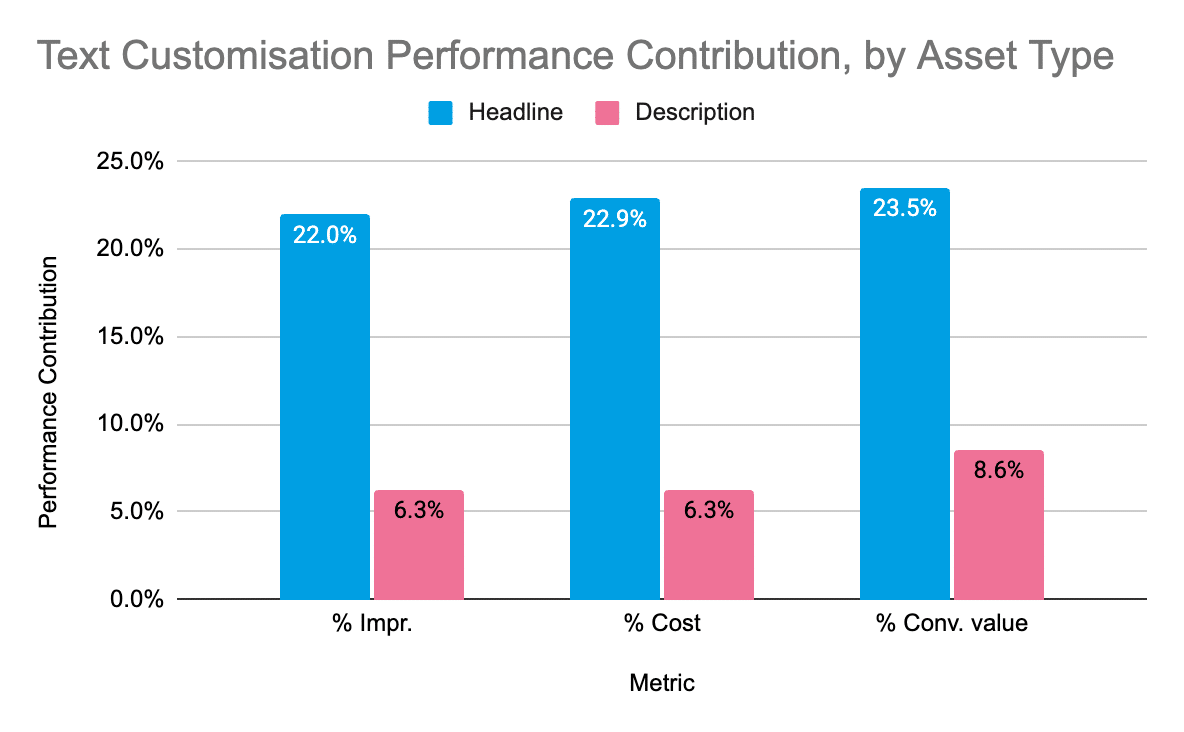
Text customization can significantly enhance performance, increasing return on ad spend and extracting more value per impression. While it’s more frequently applied to headlines than descriptions, the benefits are clear.
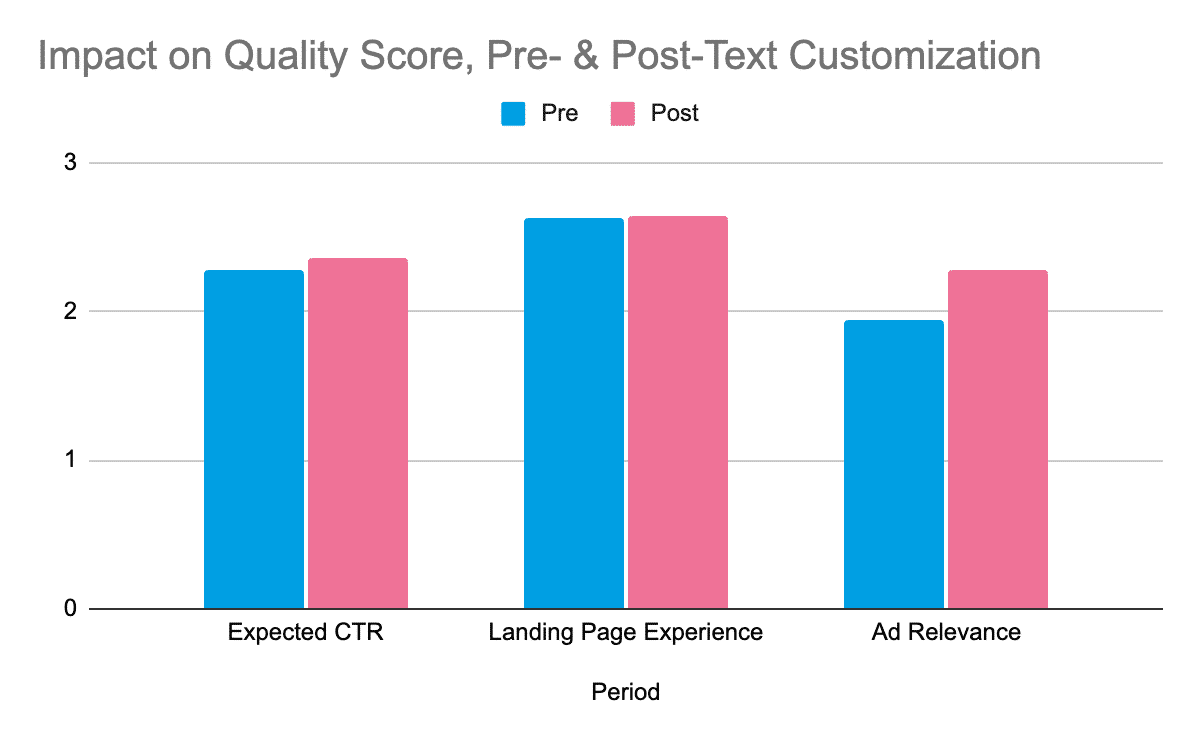
One exciting outcome of text customization is the observable boost in Quality Score. Our analysis showed that enabling this feature improved Quality Score from 6.8 to 7.3, with ad relevance seeing the most significant rise.
Given these findings, I encourage testing all three features if possible, especially since our tests showed that only half of the campaigns utilized text customization and even fewer activated URL optimization.
If you’re testing AI Max, consider implementing it across your entire account rather than selectively. This approach facilitates a more comprehensive assessment of its impact.
Not all new AI Max traffic will be completely new to your account, with 54% of queries having been previously captured by other campaigns. Despite this, AI Max still provides an additional uplift in conversion value.
Ensure you evaluate AI Max by looking at overall account performance rather than isolated campaign tactics. Additionally, monitor how AI Max interacts with other campaigns, notably Dynamic Search Ads (DSA), since overlapping capabilities can sometimes hinder performance.
Once you’re comfortable with AI Max, explore additional testing opportunities such as partnering it with Search Bidding Exploration (SBE) for achieving even greater customer reach.
Finally, it’s crucial to experiment beyond AI Max’s current scope. Consider alternative strategies and the evolving balance between segmentation and consolidation within your account structure.
You may have handed Google more control than your operating process can currently supervise. Performance Max can place catalog images on television screens, Merchant Center data can shape what is eligible to advertise, and automated recommendations can alter campaign behavior faster than a monthly report will reveal.
The answer isn’t to reject automation. It is to build a control system around it: define the business outcome, verify the inputs, expose where the budget goes, assign owners to platform alerts, and reserve consequential decisions for a person. Here is the operating model we would put in place.
Key takeaways
Manage Google Ads automation as a system of inputs, decisions, evidence, and interventions. Campaign settings alone no longer describe everything the platform may do.
Validate conversion definitions before changing bids or budgets. An automated campaign can optimize efficiently toward a badly defined outcome.
Inspect Performance Max by channel. If connected TV inventory is present, review the images, video, product feed, and QR-code journey as television advertising.
Turn Merchant Center diagnostics into an owned work queue. A centralized dashboard helps only when every alert has a severity, deadline, and accountable person.
Use AI to summarize, draft, classify, and generate hypotheses. Require human approval for budget, bidding, measurement, targeting, and feed-wide changes.
Keep a decision log. When platform visibility is limited, your own record of what changed, why it changed, and what would trigger a rollback becomes essential evidence.
Build a control plane above the campaign interface
An automated campaign is not a set-and-forget campaign. It is a feedback loop. You supply goals, conversion signals, budgets, product data, creative assets, audience information, and landing pages. Google makes allocation and delivery decisions from those inputs. Performance data comes back, but not always at the level of detail you would prefer.
Your job is therefore broader than adjusting settings. You need to govern the loop. Start by documenting four things for every automated decision surface:
I’ve been keeping an eye on the latest developments in AI advertising, and it’s time to prepare for something big: ChatGPT ads are on the horizon. As consumers shift towards shopping through AI prompts, ChatGPT could potentially rival search as a powerful demand-capture channel, leading to a redirection of ad budgets.
Recently, OpenAI began testing ads in ChatGPT for a limited group of U.S. users, clearly marking these placements as sponsored content. Based on the platform’s internal dynamics, it won’t be long before this feature becomes widely available.
As advertisers, we have a unique opportunity to tap into a fresh demand-capture channel. However, it’s crucial to approach this space with clear expectations and understanding.
For ChatGPT advertising to truly succeed, consumer behaviors will need to evolve. And even if they do, remember that ChatGPT won’t expand the market but rather, redistribute it.
Why ChatGPT is Embracing Ads
It’s no shock that ChatGPT is moving towards advertising. Running an LLM query is estimated to be ten times the cost of a simple search query. With users generating 2.5 billion prompts daily, expenses pile up swiftly.
The core difference here isn’t just a model shift; it’s the data landscape. Over the years, users have fed personal information into ChatGPT, giving it insights unmatched by traditional advertising tools. The burning question is how ChatGPT will use this data to target its users effectively.
Advertisements have traditionally relied on repetition to generate demand, whereas search meets buyers with intent. ChatGPT might forge a similar path, equipped with more user context.
Imagine this: asking which security camera works with a certain system and receiving an informed answer and purchase link because the platform already knows about your existing setup.
Should this happen, ChatGPT could be the first new demand-capture channel since Google’s PPC ads launched two decades ago. Yet, obstacles remain.
Today’s AI queries largely lack buying intent, serving more informational needs. When buying happens, the conversion tracking might fall short due to users completing purchases on platforms like Amazon or Google after doing their research on ChatGPT.
Don’t be discouraged; such challenges are surmountable. Google’s journey from a homework help tool to shopping powerhouse wasn’t overnight. Likewise, ChatGPT will need time to educate consumers about shopping through AI.
While a brand-new demand-capture platform is exciting, have realistic expectations about its potential.
Market Share Reality Check
Despite the capabilities of AI, it won’t expand the advertising marketplace. ChatGPT ads won’t magically bring a wave of new consumers.
Instead, it will capture pieces of the existing market shared by Google, Meta, and Amazon. It’s more about shifting budgets rather than expanding them.
Competition will be fierce, particularly with Google’s AI platform, Gemini, presenting a formidable challenge. Market consolidation seems inevitable as AI races towards profitability.
The Differentiator: Hyper-Personalization
AI’s true edge might be in hyper-personalization. With their vast knowledge of user preferences, these platforms can deliver perfectly tailored recommendations.
This feature could make AI incomparable, offering personalized results seamlessly. However, this comes with risk, as hyper-personalization might feel invasive to some users.
If AI can maintain trust and avoid crossing privacy boundaries, its personalized convenience will likely be favored by most.
Steps to Take Now
While widespread ChatGPT advertising is still on the horizon, preparation is key. Here’s how to get ahead:
Align on Measurement: Consider research-heavy metrics and assisted conversions.
Optimize Mobile UX: Ensure a smooth, fast purchasing experience to avoid loss in demand capture.
Plan Early Tests: Testing carries risks but can provide an early competitive edge.
Being strategic now will set the stage for success when ChatGPT advertising becomes fully operational.
Your Google Ads account can now change in meaningful ways without your team hand-building every asset or adjusting every bid. That creates leverage, but it also creates a control problem: the platform can move faster than your creative approvals, measurement checks, and business reporting.
If you are wondering what remains for a PPC team when Google automates more of campaign execution, the answer is not less responsibility. Your leverage moves upstream. You decide what the system may generate, which business signals it should optimize, how performance will be verified, and when a machine-made result is unacceptable.
Automation has moved PPC’s leverage point upstream
The day-to-day advantage in paid search no longer comes only from manipulating bids, expanding account structures, or producing more variations by hand. Modern PPC work is shifting toward data infrastructure, measurement, analysis, and experimentation because automated media buying depends on the systems and signals around it.
This changes the job from operating every campaign control to designing a reliable control system. Google can choose placements, assemble assets, and optimize delivery, but it cannot infer an unrecorded business objective. It does not know that one lead type is valuable and another consumes sales time without closing unless your data makes that distinction usable.
You still own four decisions:
Business objective: Define the outcome that deserves budget, such as a completed sale or a qualified opportunity, rather than treating every measurable action as equally valuable.
Signal design: Decide which events are primary optimization inputs, which are diagnostic, and how online activity connects to downstream revenue.
Creative permission: Specify what Google may generate or modify, which assets require approval, and which claims must remain unchanged.
Independent evaluation: Judge the campaign against business economics and a trusted dataset, not only the performance story inside the ad platform.
That is the central PPC transformation. Automation handles more execution, while your team becomes accountable for the quality of the instructions, permissions, and evidence surrounding it. Automation is not autonomous accountability.
Put explicit guardrails around machine-generated assets
Creative automation can alter more than layout. In one Performance Max rollout, eligible videos without a voice track could receive AI-generated narration. Google selected words from advertiser-supplied headlines and descriptions, generated a voice-over, and layered it onto the original video as a new asset. Advertisers were given until March 20 to opt out through video enhancement controls.
The important detail is not simply that Google can generate speech. It is that text written for one context can become the raw material for another. A short headline that works beside a product image may sound abrupt when spoken. A phrase that relies on surrounding visual context may become a stronger standalone claim in narration. A brand name, technical term, or location may also need a specific pronunciation.
Treat every automated enhancement setting as part of your production workflow. A default in the campaign interface can now affect the final creative a prospect sees and hears.
Use an asset-governance checklist before enabling automation
Inventory the controls. Record which campaigns permit video, text, image, or other asset enhancements. Assign a named owner to each setting so a default does not become an accidental policy.
Classify the copy. Separate flexible promotional language from wording that requires exact approval. Headlines and descriptions should not be approved only for their original placement if Google may reuse them elsewhere.
Read reusable text aloud. Check whether each line remains accurate, natural, and complete without the landing page, image, or preceding line to explain it.
Supply intentional assets where delivery matters. If voice, pacing, pronunciation, or silence is an important part of the creative, provide an approved version or use the available enhancement control instead of leaving the outcome implicit.
Inspect the rendered result. Review the actual combination shown to users. Checking the component headlines and video separately will not reveal every problem created during assembly.
Keep a decision record. Note the setting, approval status, reviewer, and reason for allowing or restricting generation. That makes later changes auditable when the interface or default behavior changes.
You do not need to reject every machine-made asset. Let the system work when the underlying copy can safely stand alone, the transformation is reversible, and someone can inspect the output. Use an authored asset or disable the enhancement where exact wording, delivery, or approval is material and no dependable review path exists.
Signal quality is now part of bidding strategy
Creative automation gets attention because you can see it. Signal automation is less visible and often more consequential. Google Ads can optimize only toward the events and values it receives. If your account labels a weak lead as a success, more automation can make the system faster at acquiring the wrong outcome.
Start with the business event, not the tag. Define what the company is willing to pay for, where that event becomes trustworthy, and which system owns the final status. Then work backward through the CRM, analytics implementation, website, and ad platform.
The deliverable is not a prettier dashboard. It is a dependable model in which spend and revenue can be joined without repeated manual exports, competing definitions, or unexplained changes between teams.
Measurement architecture preserves the meaning of a conversion
A tracking and measurement architect designs how events are collected under the applicable consent and privacy requirements. The work can include client-side and server-side tracking, Google Tag Manager and server containers, Consent Mode frameworks, conversion API integrations, and deduplication logic.
This role matters because a campaign can appear to improve or deteriorate when the real change happened in tracking. If CPA moves unexpectedly or the ad platform diverges sharply from the business’s trusted system, check event collection, consent behavior, duplicate handling, and data freshness before rewriting the campaign strategy.
Analysis separates platform success from business success
A data analyst connects campaign metrics to profitability, customer cohorts, lead quality, and churn. This is where a plausible platform narrative gets challenged. Reported return on ad spend is not the same as contribution margin, and a low platform CPA is not automatically valuable if the acquired customers or leads perform poorly after conversion.
The analyst should be able to explain which definition, time range, cohort, and data model produced a conclusion. AI can accelerate queries and surface patterns, but a confident interpretation is not necessarily a correct one. Statistical reasoning and business context remain part of the job.
CRO improves the economics before you add more spend
A conversion-rate optimization and experimentation lead examines the entire path from impression to revenue. Heat maps can help locate friction, while controlled tests determine whether a proposed change actually improves the outcome. A weak conversion rate can push acquisition costs upward, so scaling media before addressing funnel friction may simply buy more exposure to the same problem.
These are capabilities, not mandatory job titles. A smaller team may have one person wearing several hats. The important safeguard is explicit ownership. The person who implements tracking should not silently redefine the business KPI, and the person reporting campaign performance should be able to question the platform’s numbers.
Audit the signal chain before increasing automation
Write a plain-language definition of the primary business conversion and identify the system in which it becomes final.
Separate primary optimization events from secondary diagnostic actions. A page view, form start, and completed qualified lead should not become interchangeable merely because all three can be tracked.
Map every handoff from browser or server event through analytics, the CRM, the warehouse, and Google Ads.
Check for missing events, duplicates, stale refreshes, broken joins, and inconsistent timestamps before interpreting campaign movement.
Compare platform counts with the trusted business dataset using the same event definition and time range. A mismatch without aligned definitions is not yet a useful diagnosis.
Document which conversion actions and values bidding may use. Revisit that choice whenever the sales process, product economics, consent setup, or tracking implementation changes.
If this chain is unreliable, prompting an AI assistant for a new campaign strategy will not repair it. The model may produce polished recommendations from inputs that do not represent the business.
Keep human judgment focused on business questions
The strongest case for human PPC expertise is not that people should manually reproduce every task automation can perform. It is that someone must decide whether the machine is solving the right problem and whether the apparent result survives an independent check.
Build campaign reviews around questions that the interface cannot settle by itself:
Business outcome: Did revenue quality, margin, lead acceptance, or another defined commercial result improve?
Measurement integrity: Did tracking volume, consent behavior, deduplication, data freshness, or event definitions change during the same period?
Audience and offer: Is the result concentrated in a particular cohort, product, location, or offer that changes its economic meaning?
Creative behavior: Which asset was actually served, and did an automated transformation alter the wording, format, voice, or context?
Funnel performance: Did the landing experience improve, or did the campaign merely send more traffic into the same friction?
Evidence strength: Does the conclusion come from a credible comparison or experiment, or only from movement in a dashboard?
Use a simple experiment record for material changes. State the hypothesis, the primary KPI, the business guardrails, the eligible audience, the comparison method, and the decision rule before looking at the result. Keep exploratory segments separate from the primary conclusion so an interesting slice of data does not quietly replace the question you intended to answer.
Heat maps, generated summaries, and platform recommendations can all help you find where to investigate. They do not prove causation. A dashboard describes what was recorded; a well-designed experiment helps you decide what to change.
This is also where agencies and in-house teams should redefine their value. Producing more manual campaign edits is a weak differentiator when the platform can automate them. Designing reliable signals, governing creative generation, testing business hypotheses, and translating performance into economic decisions are harder to commoditize.
Key takeaways for rebuilding your PPC operating model
Google Ads automation shifts PPC work upstream: objectives, data, permissions, and verification now matter more than the volume of manual edits.
Headlines and descriptions may become inputs for other formats, including generated narration, so approve copy for reuse rather than only for its original placement.
A conversion signal is an instruction to the bidding system. Do not make an event primary until its definition, collection, deduplication, and business value are understood.
Platform ROAS and CPA are diagnostic metrics, not final proof of profitability. Reconcile them with revenue quality, margin, cohorts, and the business’s trusted records.
PPC teams need four connected capabilities: data engineering, measurement architecture, business analysis, and conversion experimentation.
Every new AI feature needs a release-management decision: allow it, constrain it, supply an authored alternative, or disable it where the available controls permit.
Product launch cycles should trigger operational reviews, not just note-taking. Google scheduled Marketing Live 2026 for May 20 alongside Google I/O on May 19-20, with the advertising event acting as a recurring venue for changes involving AI, campaign automation, and performance measurement. The proximity of those events is a planning signal, not proof that every announced capability should be enabled immediately.
For each material release, capture the affected campaign type, the default state, any opt-out timing, the assets or signals it may change, the person authorized to approve it, and the evidence required to keep it enabled. Test within a controlled scope when practical, inspect the real output, compare platform reporting with business outcomes, and preserve a rollback path where the product permits one.
Your next move is concrete: choose one automated campaign, trace its primary conversion back to the business system, inspect every enabled asset enhancement, and assign an owner to each gap you find. That single review will tell you whether AI is amplifying a sound PPC system or merely accelerating its weaknesses.
You enabled Google AI Max and revenue went up. Unfortunately, CPA went up too. That leaves you with the question that matters: did the campaign create profitable demand, or did automation simply buy more conversions at a price your business cannot sustain?
You cannot answer that from Google’s conversion column alone. You need an economic threshold, evidence of incremental reach, and a breakdown of where AI Max spent the additional money. Here is how to make that decision without mistaking higher volume for better performance.
Key takeaways
AI Max can increase revenue without improving efficiency. Across more than 250 campaigns, median revenue increased 13% while median CPA increased 16%.
Set your allowable CPA and minimum ROAS before activation. Otherwise, a larger conversion total can make an economically weak result look successful.
Separate new non-brand demand from existing keyword coverage, branded searches, competitor terms, Search Partners traffic, and URL expansion.
Accounts already using Broad Match, Dynamic Search Ads, and Performance Max may have less untouched demand for AI Max to discover.
Scale only when the incremental conversion value produces acceptable contribution after ad spend, not merely when Google Ads reports an uplift.
Read the uplift as a trade-off, not a forecast
Across an independently assessed set of more than 250 campaigns, median revenue increased by 13% and median CPA increased by 16%. Individual ROAS changes stretched from a 42% improvement to a 35% decline. That range is more useful than a single average because it shows that activation alone does not determine the economic outcome.
Do not combine the two medians into a synthetic result for your account. The campaign at the middle of the revenue distribution is not necessarily the campaign at the middle of the CPA distribution. More importantly, neither metric tells you what happened to contribution margin after product costs, fulfilment, discounts, lead quality, and other variable expenses.
Google presents a more favourable platform benchmark. It says advertisers activating AI Max often receive 14% more conversions or conversion value at nearly the same CPA or ROAS. Google puts the uplift at 27% for advertisers relying on exact and phrase match keywords. Treat those as vendor-reported benchmarks, not promises. Retail was omitted from the 14% figure, which makes that benchmark less informative for ecommerce teams.
The right verdict depends on your unit economics. If AI Max produces $1 of additional revenue that carries less than $1 of combined product, fulfilment, servicing, and advertising cost, the uplift may be valuable. If the extra revenue does not cover its incremental costs and required contribution, scale magnifies the problem.
For ecommerce, start with contribution margin before ad spend:
Contribution after ads = conversion value multiplied by the pre-ad contribution-margin rate, minus ad spend.
Break-even ROAS = 1 divided by the pre-ad contribution-margin rate.
Use the margin left after discounts, product cost, payment fees, fulfilment, and other variable order costs. If your conversion values are already profit-weighted, do not apply the margin adjustment a second time.
For lead generation, platform CPA is useful only when the recorded action has stable commercial value. A form submission is not interchangeable with a qualified opportunity or a sale. Estimate the expected contribution from an acquired customer, multiply it by the observed lead-to-customer rate, and set your allowable lead cost below that value by the contribution you need to retain. If lead quality varies by query or campaign, evaluate those segments separately instead of relying on a blended CPA.
Write the decision rule before the test:
Name the business outcome that counts: completed order, qualified opportunity, or acquired customer.
Define the highest CPA or lowest ROAS that preserves your required contribution.
Set a minimum acceptable volume or value uplift so a trivial change does not justify more complexity.
Choose the point at which normal conversion lag has matured enough to evaluate the result.
Record the conditions that trigger restriction or rollback, including network, query, and landing-page failures.
This prevents a common analytical error: moving the target after an attractive revenue number appears.
Find where the additional spend and revenue came from
AI Max brings three major automation layers into a Search campaign: Search Term Matching, Text Customization, and Final URL Expansion. Each one can add reach, but each one can also obscure the mechanism behind an uplift.
Search Term Matching combines broad-match expansion with keywordless targeting. The economically important question is not simply whether it found more queries. You need to know whether those queries represented genuinely new, profitable demand.
Broad-match cannibalization can recycle coverage that already existed. An AI Max conversion may therefore be new to the reporting path without being incremental to the account. Own-brand searches can create the same illusion because they often capture demand generated elsewhere. Competitor terms deserve their own category as well: AI Max has sometimes taken a large share of Search impressions from competitor-brand queries.
Classify search terms into at least five buckets:
Queries already covered by exact or phrase keywords.
Queries already reachable through existing broad-match keywords.
New non-brand queries that express commercially relevant intent.
Your own branded queries.
Competitor-brand queries.
Measure spend, conversion value, CPA, ROAS, and contribution for each bucket. If the uplift sits mainly in existing coverage or branded demand, the campaign has not yet demonstrated meaningful expansion. If it comes from new non-brand terms at acceptable contribution, the case is stronger.
Text Customization dynamically changes ad copy. Review the generated combinations for factual accuracy, offer consistency, and alignment with the query and destination. A conversion increase is not worth preserving if the copy creates promises the landing page cannot support. The volume of search-term and ad-combination reporting can become difficult to inspect manually, so build a repeatable export or reporting view rather than sampling a few conspicuous examples.
Final URL Expansion lets the system choose landing pages automatically. Track the actual destination alongside the query and economics. A page can convert and still be the wrong destination if it shifts demand toward a low-margin product, weak lead type, or unintended offer. Restrict unsuitable destinations with the controls available in your account, and judge the remaining traffic against the same economic floor as manually selected pages.
Your working audit should therefore contain one row per useful reporting segment and include:
Search term and query classification.
Google Search or Search Partner Network.
Original or expanded landing-page URL.
Ad customization or combination, where reporting exposes it.
Spend, conversions, conversion value, CPA, and ROAS.
Your internal margin or lead-quality adjustment.
That final internal adjustment is what turns an advertising report into an economic assessment.
Run a rollout that measures incremental value
An account already using Broad Match, Dynamic Search Ads, and Performance Max may have less unexplored demand available to AI Max. That does not mean AI Max cannot work. It means recorded conversions are less likely to prove incrementality on their own because several automated systems may already cover overlapping intent.
Use an experiment or phased campaign cohort that preserves a credible comparison. Keep the rollout small enough that a poor result cannot consume an uncontrolled share of the account budget, but large enough to pass through the account’s normal conversion cycle.
Snapshot the baseline. Export search terms, query classes, network distribution, destination URLs, spend, conversions, value, CPA, ROAS, and contribution before activation.
Choose an economically legible campaign. Start where conversion values are trustworthy and the products or leads have sufficiently consistent margins. A campaign that mixes radically different economics will produce a blended answer you cannot use.
Preserve a comparison. Use the experiment structure available to you or phase AI Max into a defined cohort while leaving a comparable cohort unchanged. Avoid unrelated bidding, budget, creative, landing-page, and tracking changes during the evaluation.
Apply prewritten guardrails. Use the allowable CPA, minimum ROAS, required contribution, and rollback conditions established before activation.
Wait for conversion lag. Do not declare success from early clicks and partial conversions. Evaluate both test and comparison periods only after the account’s normal lag has matured.
Reconcile the uplift. Determine how much came from new non-brand demand, existing coverage, brand queries, competitor terms, Search Partners, text changes, and expanded URLs.
A before-and-after comparison without a control is weak evidence. Seasonality, promotions, budget changes, changes in demand, and delayed conversions can all resemble an AI Max effect. When a clean holdout is impossible, document those confounders and lower your confidence in the result rather than presenting a precise uplift as causal.
Dynamic Search Ads also affect the rollout decision. Google Ads Liaison Ginny Marvin has confirmed that AI Max is intended to replace Dynamic Search Ads eventually, but Google has not announced an official timeline. Treat that as a reason to learn how keywordless targeting behaves inside your Search campaigns, not as a deadline for an account-wide migration.
Phase out a DSA campaign only after the AI Max replacement has demonstrated acceptable coverage and economics. The product direction does not require you to move the traffic into Performance Max, and it does not justify removing a profitable DSA setup before its replacement is validated.
Use a decision matrix to scale, restrict, or stop
AI Max does not deserve a single account-wide verdict. The result can be good in one query or network segment and poor in another. Make the next change at the narrowest level supported by the evidence.
Observed result
Likely interpretation
Next action
Revenue and contribution rise, CPA remains below its ceiling, and new non-brand coverage accounts for meaningful lift
AI Max is finding economically useful incremental demand
Increase exposure gradually and keep the same segment-level audit in place
Revenue rises, but CPA exceeds its ceiling or ROAS falls below its floor
The campaign bought additional volume too expensively
Restrict the query, network, or URL segments causing the loss; pause if the controls cannot restore acceptable economics
Reported conversions rise mainly through existing keywords, own-brand searches, or overlapping automated campaigns
The apparent gain may be cannibalization rather than incrementality
Preserve or strengthen the holdout and require evidence of total account lift before scaling
Competitor terms or Search Partners consume spend without adequate contribution
Expansion is reaching a distinct but uneconomic traffic source
Separate and restrict that traffic where account controls permit instead of weakening the entire campaign
Performance is materially unchanged while reporting and governance work increase
No incremental value has been demonstrated
Leave AI Max off unless a tightly scoped DSA-transition test provides a separate reason to continue
Do not activate AI Max because automation feels inevitable or because AI Overviews create fear of being left behind. AI Overviews are not a campaign economics metric. Your decision belongs in the contribution calculation and the controlled comparison.
Start with one campaign whose margins and conversion values you trust. Write the CPA and ROAS boundaries, preserve the current query and network baseline, and activate AI Max only within that controlled scope. Expand it when incremental margin clears your threshold. If it cannot, the higher revenue number is not a reason to keep paying more.
When I discovered Google’s latest update to the Merchant Center, I was thrilled. They’ve added a ‘build to order’ option for vehicle listings, offering sellers like me a streamlined way to display customizable models that customers can factory-order.
I immediately saw how this attribute could revolutionize my listings. It’s designed for dealers who, like myself, don’t always have every model available on the lot. This addition allows us to tag vehicles that aren’t in stock but can be tailored and ordered. It’s a game-changer!
What needs to change. I’m aware that updating my listings involves two critical steps. First, I need to adjust my structured data by setting availability to BuildToOrder. Secondly, I must align my Merchant Center feed with the same availability code. Ensuring consistency is key to avoid listing disapprovals.
Instruction on when to use the availability [availability] attribute in GMC
Why we care. This update is a breath of fresh air for us sellers. Until now, conveying a vehicle’s unavailability for immediate pickup was challenging. Now, the ‘build to order’ option clearly mirrors the operations of modern automakers, especially those like Tesla and Rivian that offer direct-to-consumer customization. It helps set clear expectations for our customers and ensures our data is pristine for Google.
The fine print. Remember, if a vehicle is categorized as ‘build to order,’ it must have the condition attribute set to ‘new.’ If it’s listed as ‘used,’ it will be disapproved. Google regards build-to-order vehicles as newly configured, not pre-owned.
Bottom line. For anyone like me selling customizable or factory-order vehicles, this update is a more precise way to reflect vehicle availability. However, it only works if my feed, structured data, and condition fields are in synchronization.
I first learned about this update from Google Shopping specialist Emmanuel Flossie, who kindly explained how to implement it on his blog.
A routine budget or scheduling edit can turn a running Demand Gen campaign into a rejected API request. A separate pattern of policy violations can move your Google Ads account from a warning to suspension. If you manage campaigns, integrations, or client accounts, you need controls for both risks.
The practical answer is to separate campaign validation from account enforcement. Validate every proposed configuration before sending it to Google, track warnings and strikes as account-level risk, and give each kind of failure its own response path.
A campaign can pass one compliance layer and fail another
Google Ads compliance is easier to manage when you stop treating it as a single pass-or-fail check. There are two distinct layers in this case:
Campaign requirements determine whether a proposed setup or change is valid. The Demand Gen daily minimum is a campaign-level validation rule.
Policy enforcement tracks repeated violations associated with the account. Warnings and strikes can escalate even when a campaign’s budget and schedule are technically valid.
The distinction changes what you do next. A budget validation error calls for a corrected configuration. A warning or strike calls for policy investigation, remediation, or an appeal. Raising a budget will not resolve a policy strike, and winning a policy appeal will not make an under-minimum Demand Gen configuration valid.
Your operating dashboard should therefore show two statuses instead of one: campaign eligibility and account policy risk. If either status is hidden, a team can fix the visible problem while leaving the more consequential one untouched.
The $5 Demand Gen rule applies when a change is made
Starting April 1, 2026, Google requires Demand Gen campaigns to maintain a minimum daily budget of $5 USD, or the local-currency equivalent. The requirement affects every pathway through which those ads are bought, so it should not be treated as an API-only concern.
The important exception is narrow. Existing Demand Gen campaigns already operating below the minimum can continue without a change. But that existing state is not a reusable exemption. If you alter the budget, start date, or end date and the resulting daily spend falls below the threshold, the proposed change must satisfy the new requirement.
That includes campaigns using an ordinary daily budget and campaigns budgeted over a flighted schedule. A date-only edit can therefore become a budget compliance event. Do not let a scheduling workflow bypass the same validation used for a direct budget change.
Preflight every relevant Demand Gen mutation
Before your system submits a new campaign or edits an existing one, run these checks:
Confirm the campaign type. Apply this rule specifically to Demand Gen rather than to every campaign indiscriminately.
Read the proposed budget, currency, start date, end date, and whether the budget is daily or flighted.
Recalculate eligibility whenever the budget or either date changes. Validate the resulting daily amount, not merely the field the user edited.
Compare the result with the applicable $5 USD minimum or local equivalent.
If the proposal is below the minimum, stop it before submission and explain which value or schedule caused the failure.
If compliance requires more spend, return the decision to the campaign owner. Do not silently raise a budget, because that changes a real financial commitment.
Keep grandfathered campaigns visible in an exception register. Record that they are allowed to continue only while unchanged, and display a warning before anyone opens a budget or date-editing workflow. Otherwise, an operator may discover the restriction only after planning a time-sensitive launch adjustment.
Handle API v20 and v21 differently
The error response depends on the API version. In Google Ads API v21 and later, an under-minimum proposal returns BUDGET_BELOW_DAILY_MINIMUM, with further detail in the error metadata. In v20, the same validation can appear as a generic UNKNOWN error, with the specific failure referenced through the unpublished error-code field.
Do not build your integration around a single human-readable error string. Make the handler version-aware, retain the complete error payload, and combine the response with facts your own system already knows: campaign type, proposed budget, currency, and schedule. That lets you turn an opaque v20 failure into a useful message without pretending every UNKNOWN response has the same cause.
Your release tests should cover a new Demand Gen campaign below $5 USD, one exactly at the minimum, and one above it. Also test an unchanged grandfathered campaign, a budget edit that leaves it below the minimum, and a date edit that causes the resulting daily spend to fall below the minimum. Run the response tests separately against v20 and v21-or-later handling.
The three-strikes system is an account-risk timeline
Budget validation is immediate and configuration-specific. The three-strikes system is cumulative. Repeated violations of 15 specified advertising policies can escalate over a 90-day period, which means a new notice must be evaluated in the context of the account’s recent history.
Enforcement stage
Immediate consequence
Required response
Warning
An opportunity to correct the issue before a strike penalty
Remove the violation promptly, or appeal if the classification is wrong
First strike
Ads are paused for three days
Acknowledge and correct the violation, or submit an evidence-based appeal
Second strike
Ads are paused for seven days
Resolve the issue or appeal, then review the entire account before activity resumes
Third strike
The account is suspended
Appeal is the remaining route to restore the account
Your first triage question should be precise: what enforcement stage does the account notice name? A warning, first strike, second strike, and suspension do not have the same deadline or business consequence. Record the stage exactly instead of reducing every notice to a generic “disapproval” ticket.
At the warning stage, inspect every affected ad, asset, product, and destination tied to the named policy. Correct the problem across the account, not only on the first item shown in the interface. Repeated instances of the same underlying issue can leave you exposed even after one ad is repaired.
If the classification appears wrong, preserve the original material and appeal with specific evidence. State which item was flagged, which named policy applies, and why the item complies. A factual appeal is more useful than a general assertion that the account has done nothing wrong.
Do not assume that a successful appeal automatically restarts your risk window. An accepted appeal may not reset the 90-day clock. Keep the original warning and strike dates in your account record, retain the appeal outcome, and verify the account’s displayed status before approving further policy-sensitive changes.
Build compliance into the change workflow
The safest time to catch a problem is before a person or automation submits it. A usable compliance gate should answer three questions: is the proposed campaign configuration valid, does the account have unresolved enforcement risk, and who is authorized to accept the resulting spend or policy exposure?
Keep one complete change record
For every Demand Gen creation or material edit, retain:
The customer, account, campaign, and budget identifiers.
The campaign type and whether the campaign is new, active, or grandfathered below the minimum.
The current and proposed budget, currency, start date, end date, and flighted-budget status.
The Google Ads API version used for the request.
The full validation response and error metadata, not only the displayed message.
Any active warning or strike, including the named policy, enforcement stage, notice date, remediation, and appeal outcome.
The person who approved a budget increase, schedule change, policy correction, or appeal.
This record prevents two common handoff failures. A developer can see that a generic v20 error has a known Demand Gen context, while an account manager can see that an apparently simple launch change is being made during an active strike window.
Use normal and protected release paths
A normal release path can handle a configuration that passes campaign validation and an account without an unresolved warning or strike. A protected path should require human review when the account has active enforcement risk, when a grandfathered campaign is being changed, or when compliance requires an increase in spend.
The reviewer should not merely click approve. For a budget exception, the reviewer confirms the financial change and the resulting schedule. For a policy event, the reviewer checks all affected account material, confirms whether remediation or appeal is appropriate, and records the decision before ads resume.
Test the failure path, not just successful launches
Many campaign tools test whether a valid request can be created but never test whether a rejected request is explained correctly. Add regression cases for the boundary budget, schedule-driven failures, grandfathered campaigns, v20 UNKNOWN handling, v21-or-later structured handling, warning intake, first- and second-strike pauses, and suspension escalation.
Each test needs an expected operator action. A failed budget test should identify the field or schedule to change. A warning test should create a policy-review task. A strike test should display the pause period and recent enforcement history. A suspension test should route directly to the appeal workflow.
Respond to failures without making the account riskier
When a validation error or enforcement notice appears, rapid unstructured editing can obscure what happened. Use a short incident sequence that preserves evidence and limits unnecessary changes:
Pause the affected change. Avoid unrelated edits to the same campaign or policy-sensitive material until the event is classified.
Capture the exact account, campaign, asset, error code, metadata, policy name, enforcement stage, and notice time.
Classify the event as a campaign validation failure, a policy warning, a first or second strike, or a suspension.
For an under-minimum Demand Gen request, prepare a compliant budget or schedule proposal and obtain approval for any additional spend.
For an accurate policy notice, remove the violation and inspect the account for other instances of the same issue. For a questionable classification, preserve the evidence and appeal.
Before resuming activity, verify that the proposed campaign configuration passes validation and that the current account-enforcement status is understood.
Do not interpret BUDGET_BELOW_DAILY_MINIMUM as evidence of a policy strike. It is a configuration failure with a configuration remedy. Conversely, do not let a successful API retry create false confidence when the account still has an unresolved warning or strike.
Key takeaways
From April 1, 2026, Demand Gen campaigns need at least $5 USD per day or the local equivalent when the rule is triggered.
Existing campaigns below the minimum can continue unchanged, but a budget, start-date, or end-date edit can require compliance.
Google Ads API v21 and later exposes BUDGET_BELOW_DAILY_MINIMUM; v20 can return UNKNOWN with the validation detail elsewhere in the response.
The policy ladder moves from a warning to three-day and seven-day pauses, then suspension on a third strike.
A successful appeal may not reset the 90-day clock, so retain the full enforcement timeline.
Track campaign eligibility and account policy risk separately, then require both to pass before release.
Before your next campaign release, add two explicit gates to the workflow: one that validates the proposed Demand Gen budget and schedule, and one that checks the account’s warning and strike history. That small separation gives your team a clear action whether the next problem arrives as an API error or an enforcement notice.