As someone who watches the advertising landscape closely, I find it fascinating how quickly things have changed. It’s incredible to note that eight out of ten Performance Max advertisers are now receiving connected TV (CTV) impressions via YouTube. This shift, as highlighted by Mike Ryan from Smarter Ecommerce, shows how Google has significantly expanded the reach of this channel. The pace of change is continuing to accelerate.
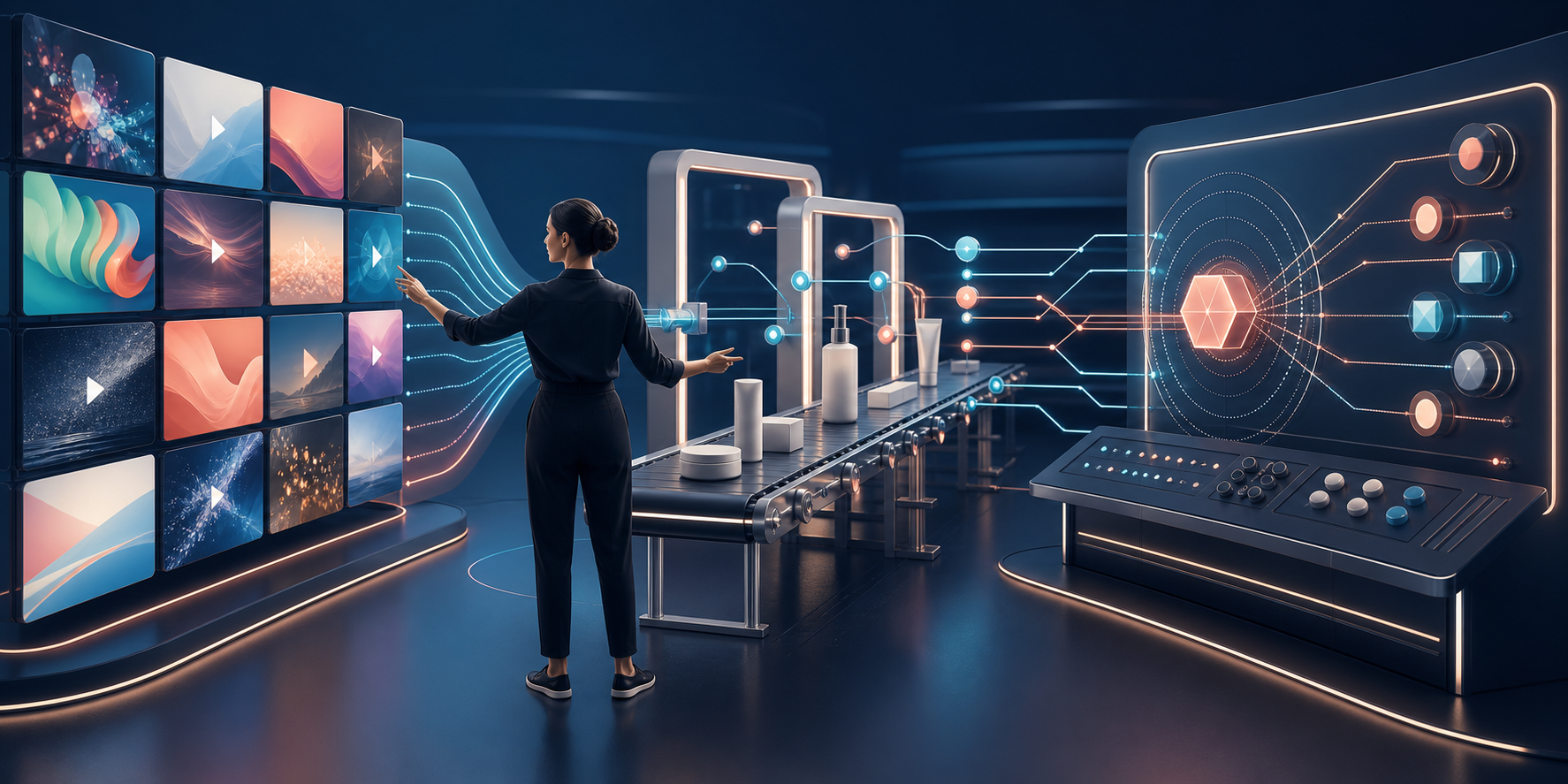
Let me walk you through how we got to this point. In Q2 2025, Google began serving CTV ads using standard product feed images. This meant that even advertisers without video assets began generating TV impressions simply from their existing catalog photos. Then, in January 2026, Google announced shoppable CTV ads. Now, viewers can browse products and even purchase directly from their TV screens using QR codes that link to the Google Merchant Center product feeds.
As someone invested in digital advertising, I care a lot about these changes. CTV is no longer a niche investment. If you’re running Performance Max, chances are you’re already on the big screen, and Google has been ramping up what this means for commerce. They’re automatically turning your product feed images into TV ads and allocating your budget to CTV impressions without needing action on your part.
Without actively checking your channel performance breakdown, you could be unaware of where your budget is going or whether the auto-generated creatives are appealing enough for a 65-inch screen. Here’s what I recommend advertisers do right now:
Firstly, pull your Channel Performance report. Google’s native channel breakdown will give you a clear picture of how much of your PMax spend and impressions are directed toward CTV. You might be surprised by the findings.
Next, audit your feed images. Since Q2 2025, these product photos are being used automatically to create CTV ads. Images that worked well in a Shopping context might not translate perfectly to a 65-inch TV, so it’s essential to clean them up.
Furthermore, check if shoppable CTV applies to you. If your campaigns are linked to a Merchant Center feed, they might already qualify for shoppable CTV formats. Google reports that Demand Gen campaigns including TV screens have driven 7% more conversions while maintaining the same ROI. Understanding whether this inventory benefits you or is just wasted is vital.
Finally, consider the creative aspect. Using feed images as CTV ads should be seen as a starting point, not the end goal. Advertisers who develop purpose-built video assets specifically for TV screens will undoubtedly have an advantage over those who rely on auto-generated formats.
Looking at the bigger picture, YouTube CEO Neal Mohan recently confirmed that TV has now surpassed mobile as the primary device for YouTube viewing in the United States by watch time. YouTube continues to be the number one streaming platform in the U.S. for the second year in a row. Many PMax advertisers are already taking part in this large-scale shift. However, the real question is whether they’re doing so intentionally or just following the current trends blindly.
I’m excited to share that Google has launched a dedicated Merchant Center hub for agencies in the U.S. and Canada. This hub allows us, as agency professionals, to use a single login to efficiently manage all of our merchant clients. It’s designed to provide proactive alerts, making it easier than ever to catch and address issues quickly.
With the new Merchant Center, I have access to a unified dashboard that keeps all client accounts seamlessly integrated, saving time and reducing complexity in monitoring and optimization tasks.
What’s included:
This platform includes a comprehensive dashboard, which allows me to manage all client accounts from a single login experience. In addition to this convenience, it offers proactive diagnostics that help surface critical alerts across the entire client portfolio.
Another significant feature is the merchandising opportunity tools, which enable us to identify areas for performance improvement that feeds directly into Google Ads. These tools are indispensable for enhancing return on investment for our clients.
Why we care. Managing multiple merchant accounts across Google’s ecosystem has traditionally been a logistical headache, switching between various logins and dashboards. This centralized approach ensures that potential issues are flagged and resolved more swiftly, preventing unnoticed revenue drains. Moreover, the built-in merchandising tools enable me to actively enhance performance across all client portfolios, making it much more than just a monitoring platform.
Early results. I learned about Socium, a digital marketing agency that tested this product during the holiday rush. By consolidating client promotions, inventory, and diagnostics into one place, they managed to resolve monitoring tasks 50% faster.
The big picture for agencies. Every minute spent on account monitoring and diagnostics detracts from strategic planning. Tools that streamline these processes, especially during peak times like Q4, allow us to focus on high-value tasks that truly benefit our clients. Agencies managing large retail portfolios should definitely consider integrating this system before the next busy season.
What’s next. For those interested in diving deeper, full details are available on Google’s Help Center. The rollout of this innovative hub is live now in the U.S. and Canada.
PPC is becoming an increasingly difficult landscape to navigate, and even though AI provides some help, it doesn’t save the day. Meanwhile, platform transparency continues to decline, leaving us in the dark about budget management.
The latest survey of PPC professionals reveals a challenging environment characterized by less transparent platforms, diminishing effectiveness of traditional measurement methods, and AI tools that have yet to revolutionize our daily routines.
Why I care. As someone deeply invested in PPC, it’s notable that over half of practitioners (53%) believe PPC has become tougher compared to two years ago. The issue isn’t just competition; it’s the increasing number of decisions being made by platforms out of advertisers’ view, which contributes to this growing complexity.
Considering that a whopping 89% of digital ad spend goes to just three companies, those of us who don’t have private measurement tools are essentially navigating without a compass.
By the numbers:
1,306 respondents participated in the survey conducted between November and December 2025, representing agency, freelance, and in-house roles.
62% identified platform opacity as the main reason for increased PPC complexity, with 53% pointing to the loss of effective measurement tools.
5.2 hours/week are saved on average with AI tools, though the majority of us (55%) save only 1–5 hours; almost nobody reports saving over 20 hours.
59% are now using LLMs for ad copy, up significantly from 42% the previous year, marking it as the fastest-growing AI use case.
73% of in-house teams now manage PPC entirely in-house, a significant increase from 44% two years ago.
20% of clients are considering replacing agency work with AI, compared to just 12% planning to switch agencies.
$1 trillion was spent globally on digital ads in 2025, with 89% directed towards Google, Meta, or Amazon.
What they’re saying. Among PPC features, exact match keywords remain the most reliable, with 75% of us using them frequently. However, AI Max for Search sees minimal adoption, with 34% never having used it, possibly due to it being one of Google’s newest updates. Across the board, auto-apply recommendations are viewed with skepticism.
Between the lines. The underlying theme in the report revolves around agency survival. Many of us (62%) highlight the challenges of finding talent and increasing revenue, with the real threat being clients opting to manage PPC internally using AI.
The big picture. We’ve developed a cautious yet practical approach to incorporating AI — leveraging it for tasks like copywriting and research while being wary of its ability to make autonomous decisions. The more pressing issue that remains unaddressed is that platforms are gaining control and giving us less control over visibility, with no easy solution on the horizon.
Recently, I discovered that Google has started adding AI-generated conversion cards at the end of video ads. This automatic feature effectively overrides any existing end screens that we might have set up.
Google’s new auto end screens append an interactive, auto-generated card to eligible video ads. It’s designed to guide viewers toward converting, making our job as advertisers a bit simpler.
How it works: Right after the video concludes, an interactive screen pops up for a few seconds.
What’s impressive is how it automatically pulls in campaign details like app name, icon, price, and even a direct install link for app promotions.
The convenience doesn’t stop there; these end screens appear by default on any eligible ads, so we don’t have to spend time setting them up manually.
Why we care: This change means no more manual post-roll calls-to-action. However, it also alters the end of our video ads, replacing any custom YouTube end screens we might have built without warning. This can be a crucial point since the last thing viewers see can significantly impact their decision to convert.
With Google planning to roll this out more extensively, it’s crucial we understand these changes before they apply to more of our campaigns.
The catch: When we enable auto end screens, any manually added YouTube end screens will be overwritten, an important point to remember for maintaining control over our branding.
Current limitations: As of now, this feature is only available for in-stream ads in mobile app install campaigns. Broader rollout plans are in the works, but no definite timeline has been set.
What stays the same: Rest assured, auto end screens don’t affect our billing or view counts. They’re simply an added layer of engagement after our video has completed playing.
Next steps: It’s essential for those of us running mobile app campaigns to review our video ads. We should ensure auto end screens are working as expected and that our custom YouTube end screens aren’t being unexpectedly replaced.
As Google expands this feature, establishing an early review process will prepare us well for broader eligibility.
Dig deeper: For more details on auto end screens for video ads, click here.
As a marketing professional, I’ve experienced various identity crises in my journey. Initially, I was just a channel expert, then an integrated marketer, and eventually evolved into roles like growth and performance marketing. And then, AI became a buzzword that sneakily entered everyone’s job description.
Now, I find myself stepping into the era of the full-stack marketer, especially as a media leader. It’s strikingly similar to adopting a product management mindset.
Don’t worry, this doesn’t mean writing Jira tickets for fun (though some of us might enjoy it). It actually signifies that the most successful media leaders will not just focus on campaign optimization. They’ll take ownership of outcomes, foster cross-team connections, and holistically enhance the entire user experience, from first contact to final conversion and beyond.
In the sectors I’ve engaged with, especially those with extensive consideration cycles and rising acquisition costs, the link between marketing performance and the user experience is evident.
Let’s explore what spurs the rise of the full-stack marketer, what it truly means to “think like a product manager,” and why this mindset is essential for media leaders today.
What is a full-stack marketer, anyway?
From my perspective, a full-stack marketer knows the importance of how various elements mesh together, rather than trying to juggle everything solo, which inevitably leads to burnout.
Reflecting on my career, truly impactful media decisions are never born from expertise in a single channel. Instead, they stem from a broad fluency, inclusive of:
Media and channels: Understanding paid search, paid social, SEO, email, SMS, and staying abreast of upcoming trends and platforms.
Creative and messaging: Grasping what resonates, where, and why.
Data and analytics: Diving beyond dashboards by asking insightful questions.
UX and CRO: Identifying friction, intent, and behavior patterns.
Technology and platforms: Utilizing CRMs, CMSs, automation tools.
The full-stack marketer’s goal isn’t to become an all-knowing expert in every facet. Instead, we aim to gather sufficient knowledge to connect insights and make informed decisions by consistently zooming out and then zooming in whenever necessary.
Why media leaders are evolving into product thinkers
As I reflect on my earlier career, media leadership often revolved around meeting CPA targets and efficiently allocating budgets. These metrics mattered, and they still do.
Yet now, the landscape demands tackling larger, more complex questions like declining conversion rates or mysterious pipeline drop-offs, which oftentimes are product questions by nature.
Product managers focus heavily on the comprehensive experience — the user journey, friction points, trade-offs, and ultimate outcomes. Adopting this mindset encourages media leaders to view campaigns as part of a larger ecosystem, influencing our decision-making significantly.
Media doesn’t live in a vacuum
Marketing performance isn’t isolated. In many sectors, particularly those with extended decision cycles, a click represents merely the beginning of an intricate journey.
Industries such as financial services, healthcare, and education involve buyers moving through nonlinear paths, impacted by numerous interactions. This scenario is where the full-stack mindset becomes crucial.
Example 1: When media isn’t the problem, the experience is
I’ve frequently heard the claim “The platform is getting more expensive” when performance metrics drop. But as a product-minded media leader, I delve deeper into possible reasons, asking:
Has the conversion path recently changed?
Were additional steps or fields introduced?
Is mobile traffic directed to a non-responsive desktop?
In numerous instances, I’ve observed promising intent followed by a sharp decline at the conversion breather, a sign of a flawed product experience rather than a media issue.
For example, in higher education, potential students exhibiting strong intent may encounter roadblocks due to lengthy or unclear application processes. This often has less to do with the marketing campaign and more with the experience provided.
Here, the role of a full-stack marketer is to highlight these challenges, bring data insights to the table, and work cross-functionally to tackle and resolve these issues.
Example 2: Different audiences, different ‘products’
One vital product lesson is that not every user is the same, and thus, shouldn’t be lumped together.
Different audiences possess distinct motivations, risk profiles, and decision timelines. Viewing them as a homogenous group often leads to mediocrity.
I’ve discovered industries like healthcare — where patients, caregivers, and referring providers require individualized approaches — are perfect examples. Similarly, in financial services, decisions vary greatly depending on the individual’s life stage and goals.
A full-stack marketer tailors their media strategy, from messaging to channel selection, understanding that product-market fit is key, not just audience targeting.
Example 3: What happens after the conversion
A common blind spot in media strategies is post-conversion tracking. Product thinkers probe into the depths of:
How prompt and personalized the follow-up is.
Whether the messaging aligns with campaign promises.
I’ve witnessed enhanced performance with simple changes like improving lead response times or ensuring follow-up messages match campaign intentions.
Healthcare stands out in illustrating these principles, showing how vital immediate follow-up and aligned customer experiences can be across workflows.
Thinking in roadmaps
Roadmap thinking — prioritizing initiatives by impact — is another core aspect of product management. Similarly, full-stack media leaders prioritize marketing efforts accordingly.
Instead of pursuing every new shiny channel, we focus on sustainable progress, often by mapping out phases, such as:
Product managers don’t merely view metrics at face value; they challenge them. Being similar in nature, media leaders should mirror this approach, asking:
“Which segments convert faster?”
“How does performance vary across regions or stages?”
“Are engagement signals reflecting readiness or curiosity?”
In higher education, for example, dissecting performance by program or brand intent helps sharpen our strategies, turning data into actionable insights.
Collaboration is the new superpower
Full-stack marketers are naturally collaborative. In education, achieving success requires coordination across various departments including admissions and IT. In this role, we don’t just fulfill requests; we help partners navigate choices and establish shared objectives.
Translating data into actionable narratives becomes part of our collaborative toolbox and is essential in breaking down silos.
So, what does this mean for tomorrow’s media leaders?
The rise of the full-stack marketer doesn’t mark the end of specialization. It’s about seeing the broader structure rather than just optimizing single elements.
In my view, tomorrow’s media leaders should:
Understand the business driving their campaigns.
Think beyond their specific channels.
Advocate sincerely for user experiences.
Use data thoughtfully for influence.
Embrace change and unpredictability.
In industries where trust, timing, and transformation are integral, this mindset is vital. Marketing is about more than just campaigns — it’s about guiding pivotal life choices. If you feel like your media leadership role is expanding, that’s because it is — and rightfully so!
Have you heard the news? Google Ads is taking the advertising world by storm with its latest feature: AI voice-over for Performance Max video ads! They’re rolling out this innovative enhancement, automatically narrating video ads with realistic voice-overs, unless, of course, we choose to opt out by March 20.
Google is enhancing viewer engagement and ad performance by utilizing advanced AI voice models. This update will make ads more appealing without any additional creative output on our part. Exciting, isn’t it?
Why this matters to us. If we don’t actively opt out by March 20, our video ads will automatically benefit from Google’s AI voice models. This could transform how our ads sound to viewers, all without any creative effort on our part.
How does it work?
This feature kicks in only when videos lack a voice track.
Google’s AI chooses text from the headlines and descriptions we’ve provided and crafts a realistic voice-over from it.
The voice-over is seamlessly layered onto the original video, transforming it into a new asset.
The catch. This process is set to default, meaning our ads will be automatically eligible for voice enhancements unless we opt out proactively.
Key dates. We have until March 20 to decide if we want to exclude our ads from this feature. To step back from this feature, we need to adjust the video enhancement control settings. After the deadline, any ad with video enhancement control will be open to voice-enhanced updates automatically.
Action steps for us as advertisers. Configuring our video settings is simple. Just visit your Google Ads portal to make any necessary adjustments.
First seen. This update was brought to light by Paid Search specialist Arpan Banerjee in a LinkedIn post. Take a look at his insights here.
I recently received thrilling news about Google Marketing Live 2026, which is officially scheduled for May 20. I’m eagerly anticipating the event where Google will unveil the latest enhancements in advertising, AI, and campaign automation.
In fact, I discovered the date through an email from the Accelerate with Google program. This communication not only confirmed the event date but also invited entries for the prestigious Google Ads Impact Awards.
You might be interested to know that the winners of these awards will be announced during the event, adding an extra layer of excitement.
Why it matters to me. As a user of Google Ads, I’m always on the edge of my seat for this annual event. It’s the moment Google reveals its groundbreaking innovations—new AI features, campaign types, and measurement tools that will hugely impact how I manage and optimize my campaigns.
Each year, the most pivotal updates in Google’s advertising strategies are first introduced at this event. It provides invaluable insights into the future of digital advertising.
The bigger picture. This year’s event aligns with Google I/O 2026 (May 19–20), which goes beyond just advertising. I/O covers the broader Google ecosystem including AI and Search technologies, which often guide the direction of advertising products.
What to watch for. I’m eagerly expecting announcements related to AI-driven advertising, automation, and enhanced performance metrics. It’s a must-watch for any marketer keen on staying ahead of Google’s ad strategy for the coming year.
First heard about it. The PPC News Feed by Hana Kobzová was where I initially got the scoop. It’s always exciting to find such vital information from reliable sources I trust.
I’ve been keeping an eye on the latest developments in AI advertising, and it’s time to prepare for something big: ChatGPT ads are on the horizon. As consumers shift towards shopping through AI prompts, ChatGPT could potentially rival search as a powerful demand-capture channel, leading to a redirection of ad budgets.
Recently, OpenAI began testing ads in ChatGPT for a limited group of U.S. users, clearly marking these placements as sponsored content. Based on the platform’s internal dynamics, it won’t be long before this feature becomes widely available.
As advertisers, we have a unique opportunity to tap into a fresh demand-capture channel. However, it’s crucial to approach this space with clear expectations and understanding.
For ChatGPT advertising to truly succeed, consumer behaviors will need to evolve. And even if they do, remember that ChatGPT won’t expand the market but rather, redistribute it.
Why ChatGPT is Embracing Ads
It’s no shock that ChatGPT is moving towards advertising. Running an LLM query is estimated to be ten times the cost of a simple search query. With users generating 2.5 billion prompts daily, expenses pile up swiftly.
The core difference here isn’t just a model shift; it’s the data landscape. Over the years, users have fed personal information into ChatGPT, giving it insights unmatched by traditional advertising tools. The burning question is how ChatGPT will use this data to target its users effectively.
Advertisements have traditionally relied on repetition to generate demand, whereas search meets buyers with intent. ChatGPT might forge a similar path, equipped with more user context.
Imagine this: asking which security camera works with a certain system and receiving an informed answer and purchase link because the platform already knows about your existing setup.
Should this happen, ChatGPT could be the first new demand-capture channel since Google’s PPC ads launched two decades ago. Yet, obstacles remain.
Today’s AI queries largely lack buying intent, serving more informational needs. When buying happens, the conversion tracking might fall short due to users completing purchases on platforms like Amazon or Google after doing their research on ChatGPT.
Don’t be discouraged; such challenges are surmountable. Google’s journey from a homework help tool to shopping powerhouse wasn’t overnight. Likewise, ChatGPT will need time to educate consumers about shopping through AI.
While a brand-new demand-capture platform is exciting, have realistic expectations about its potential.
Market Share Reality Check
Despite the capabilities of AI, it won’t expand the advertising marketplace. ChatGPT ads won’t magically bring a wave of new consumers.
Instead, it will capture pieces of the existing market shared by Google, Meta, and Amazon. It’s more about shifting budgets rather than expanding them.
Competition will be fierce, particularly with Google’s AI platform, Gemini, presenting a formidable challenge. Market consolidation seems inevitable as AI races towards profitability.
The Differentiator: Hyper-Personalization
AI’s true edge might be in hyper-personalization. With their vast knowledge of user preferences, these platforms can deliver perfectly tailored recommendations.
This feature could make AI incomparable, offering personalized results seamlessly. However, this comes with risk, as hyper-personalization might feel invasive to some users.
If AI can maintain trust and avoid crossing privacy boundaries, its personalized convenience will likely be favored by most.
Steps to Take Now
While widespread ChatGPT advertising is still on the horizon, preparation is key. Here’s how to get ahead:
Align on Measurement: Consider research-heavy metrics and assisted conversions.
Optimize Mobile UX: Ensure a smooth, fast purchasing experience to avoid loss in demand capture.
Plan Early Tests: Testing carries risks but can provide an early competitive edge.
Being strategic now will set the stage for success when ChatGPT advertising becomes fully operational.
Automation and AI are revolutionizing the PPC landscape. Now, PPC teams are transforming into data teams, mastering data infrastructure, measurement, analysis, and experimentation.
Like many people, I worry about AI taking over jobs. Where do my ‘old school’ PPC skills fit in an AI-dominated landscape?
Relax. It’s not a binary situation. The shift is towards data and strategy. Media buying might look automated from the outside, but don’t be misled. The role is simply evolving once more.
Having been in PPC for over 15 years, I’ve learned that there’s nothing to fear. The real question is: am I riding the wave or getting left behind?
Let’s explore what the current PPC landscape looks like with ad network automation, and more importantly, where today’s PPC teams truly add value.
The Return of the Technical PPC Team
A decade ago, technical PPC agencies distinguished themselves by developing scripts, managing data on a large scale, and overseeing complex structures. As automation matured, many teams pivoted towards strategy and creativity.
Now, with AI’s help, producing quality creatives or analyzing massive datasets to create strategies is easier than ever. However, these outputs aren’t flawless.
From a client’s perspective, the typical creative-centric or strategy-focused agency might be out of the game. Therefore, rejoice, PPC folks: the technical edge is back, albeit in a different form. It’s time to bring back the spreadsheet enthusiasts from the 2010s who can now drive the PPC industry forward.
Still skeptical? Let’s rewind and get a clearer view of the necessary skill sets.
The PPC Edge: From Spreadsheet Skills to Data Nerds
Today, successful PPC agencies sell something vastly different than a decade ago, though the core mindset remains the same.
Why? Let’s consider the key performance drivers nowadays:
Integrating down-funnel data into strategy.
Building a data infrastructure to support strategy.
Providing accurate signals to ad algorithms.
Building systems to scale operations, including creative tasks.
See the pattern? A broken data model can’t be solved just by prompts. This is your advantage, what clients value most. Automation enhances the value of technical literacy rather than diminishing it.
Who do you turn to for technical literacy? The seasoned PPC marketers who thrived on manipulating paid search ads using custom Excel macros or managing extensive product feed items. They have the mindset: a love for automation, data, and math.
1. Data Engineer
The data engineer builds and maintains the infrastructure. Although they might come after the tracking specialist in the data chain, they are central, which is why we mention them first.
In today’s multi-platform world, think of CRM integration with Google Ads or blending online and offline data sets to strategize effectively.
Without a comprehensive data model, strategies become vague gut feelings needing constant reality checks. The data engineer’s role is to set a strong foundation to prevent such situations.
Without this role, you face repetitive manual exports and inconsistent numbers across teams, leading to sluggish decision-making.
What is the Data Engineer’s Scope?
Building a data infrastructure follows an ETL process: extract data, manipulate it, and make it usable in tools like Looker Studio, Power BI, or Tableau.
Build data pipelines from ad platforms, analytics, or CRM tools into the warehouse for data like spend and revenue.
Structure tables for these sources and merge them for specific use cases.
Maintain datasets and perform automated QA, including refresh schedules.
What Skill Sets and Tools Does the Data Engineer Use?
In a Google-centric world, we often hear about BigQuery, but there are alternatives like Microsoft Azure. The essential skills are coding, particularly SQL and Python.
These languages are used to structure tables within the data warehouse (using SQL) and to create data pipelines (using Python).
2. Tracking and Measurement Architect
Some might think this role overlaps with data engineers, but I strongly disagree. This person focuses solely on maintaining signal quality within tight deadlines when issues arise.
Tracking failures mean lost conversion data, impacting ad platforms’ performance because they’re built on conversion data insights.
Notice this when CPAs fluctuate unexpectedly or in-platform data varies drastically from your ‘source of truth’ (GA, CRM, others). These architects help stabilize bidding and improve event match quality for better data in Google Ads.
What is the Tracking Architect’s Scope?
They design comprehensive, regulation-compliant data collection mechanisms, making sure everything is aligned with privacy compliance.
Align tracking with privacy regulations.
Design client- and server-side tracking.
Implement GTM and server containers.
Co-manage Conversions API integrations with the data engineer.
Co-ensure deduplication logic with the media buyer.
What Skill Sets and Tools Does the Tracking Architect Use?
While many PPCs have used Google Tag Manager, few have set up server-side tagging. This role needs a deep understanding of Consent Mode frameworks, CAPI, among other tools.
3. Data Analyst
If data engineers build the pipes and tracking architects secure the signals, data analysts interpret what the data implies. It’s a role quite affected by AI, yet crucial due to the risk of misinterpretation.
Wrong interpretations can lead to costly errors. Fully relying on AI over data analysts could be a grave mistake, as misinterpreted metrics like ROAS versus actual contribution margins or CPA disparities can derail strategies.
What is the Data Analyst’s Scope?
While outsiders might think they only build dashboards, data analysts handle much more, like designing models aligned with KPIs and rigorous analysis, all while questioning platform narratives.
Align data models with business KPIs.
Analyze performance cohorts, churn rates, and profitability.
What Skill Sets and Tools Does the Data Analyst Use?
Think of data analysts as translators; understanding numbers doesn’t mean you’re ready to interpret them correctly. They need SQL for warehouse queries and modeling skills for strategic planning, along with strong statistical reasoning.
4. CRO and Experimentation Lead
Once data is cleaned and analyzed, CROs leverage insights to enhance visitor economics. A low conversion rate can mean higher CPA, which no one wants. Their expertise helps scale operations efficiently rather than throwing money at inefficient processes.
What is the CRO’s Scope?
CRO roles are not just about landing pages but full-funnel optimizations, identifying friction points, structuring tests, and working with creative teams to position offers effectively.
Navigate from impression to revenue.
Utilize heat maps to locate friction points.
Use proper methodologies instead of random experiments.
Coordinate with creative and product teams for best offer placements.
What Skill Sets and Tools Does the CRO Lead Use?
Core tools include GA4 and heat mapping software, with options to scale based on needs. Critical skills involve a firm grasp of statistical reasoning and translation of business metrics into actionable insights.
From Media Buyers to Data Teams
Today’s PPC teams resemble hybrids of marketing, data, and product roles rather than mere media buyers. Successful teams deliberately build capabilities around understanding algorithms, data dynamics, and economics, enabling AI to become a strategic asset rather than a threat.
I recently received an email from Google reminding advertisers about a critical deadline. They’re reaching out directly, requiring us to confirm if our campaigns include EU political ads by March 31st.
Why this matters to us. This requirement isn’t optional. The EU regulation mandates Google to verify the political ad status of every active campaign, and missing this deadline could mean compliance issues for us.
Here’s what’s happening. Google needs each advertiser to declare whether their current campaigns involve EU political ads. This request applies across all campaigns, and we must act by March 31, 2026.
How can we comply? Google offers three ways to submit our confirmation:
Campaign level — In the campaign settings, we can select ‘EU political ads’ to confirm for individual campaigns.
Multiple campaigns — By visiting the Campaigns tab, we can use the ‘EU political ads’ option to confirm multiple campaigns simultaneously.
Account level — We can confirm for all existing and new campaigns at once. Opting ‘No’ at the account level applies to every campaign, but we can override this anytime.
Read between the lines. The account-level option seems the most efficient for most of us who know our campaigns don’t involve EU political ads. Google makes it hassle-free to reverse our choice later, so there’s no harm in acting early.
The takeaway. It’s time to check our inboxes because Google is contacting us. If you’re targeting EU audiences, ensure you log in and complete the confirmation before the deadline to remain compliant.
First noticed. This update was first observed by Paid Search expert, Arpan Banerjee, who shared the communication details on LinkedIn.