B2B buyers start their journey long before they even search for us. I’ve learned that AI-powered Google Ads campaigns can ignite early demand and reward patience over time.
If I’m relying solely on brand and non-brand keywords in Google Ads, my growth becomes limited. A decline in performance isn’t due to the platform but the strategy behind it.
Discovering a brand doesn’t begin with a non-brand search. Buyers are researching on platforms like Reddit, ChatGPT, Facebook, LinkedIn, and YouTube. They watch demos, read testimonials, and become familiar long before actively searching for us.
For complex sales processes with lengthy customer journeys, this transformation is crucial, demanding a strategic shift. Here’s how I can make it effective in B2B.
AI-powered Campaigns: Your Growth Treasure
Over the years, Google has innovated with multi-channel, multi-asset campaigns like Performance Max and Demand Gen. These campaigns place my brand front and center as audiences research and evaluate options.
When my audience is ready to choose vendors, they’ve already built trust in my brand. They’ll search specifically for me because of the trust I’ve cultivated through consistent visibility.
A well-rounded Performance Max campaign includes diverse ad types, like image and video ads displaying demos or testimonials on YouTube. These ads also engage audiences across the web via the Display Network and retarget them as they continue their research. This process naturally leads to branded searches that ultimately convert.
Such campaigns are cost-effective, allowing me to leverage customer data alongside keywords as intelligent signals, not replacements. It’s about smarter keyword usage.
As AI Overviews and AI Mode transform Google’s search results pages, it’s time I reconsider my ad strategies to align with these changes.
I’m fond of the 4S framework: search, scroll, stream, and shop.
Adding “ask” captures how people now engage with AI tools. They consult ChatGPT or Gemini, search on Google, scroll through LinkedIn, stream videos on YouTube, and shop across numerous platforms. If my strategy focuses on only a couple of these behaviors, I’m missing the full growth opportunity.
Solely targeting keywords means missing the larger narrative. Brand keywords undoubtedly convert better, but how do people arrive at searching my brand? Consistent visibility ensures they notice my brand in their feeds.
Embrace Testing and Learn with Patience
This strategy requires time, especially in B2B settings with protracted sales cycles.
For example, it took almost a year to appreciate how Performance Max contributed to one of my life science client’s success, whose deals typically take months to finalize. There was a moment where our account manager nearly paused the campaign because initial data wasn’t promising.
Integrating sales data changed the perspective. As revenue figures rolled in, the campaign’s value became transparent.
If I can sync beyond MQLs with data like Proposal Sent, it keeps Google well-informed and offers reassurance until the sales data solidifies our insights.
Patience is key when providing the system quality data. I must remain steadfast and avoid quitting prematurely, accepting the complexity of B2B cycles.
An event might draw 100 people, some catch a webinar email later, and months pass before they search for us and request a proposal, eventually becoming customers. With long sales cycles, phenomena like this unfold subtly.
If testing funds are limited, I can designate 5% to 10% for AI-forward campaigns. Strategic testing without major commitments at peak times allows room to maneuver while the system adjusts.
Investing time in this strategy ensures sustainable growth. Those who master it gain an enduring competitive edge, unlike those focused on diminishing demand.
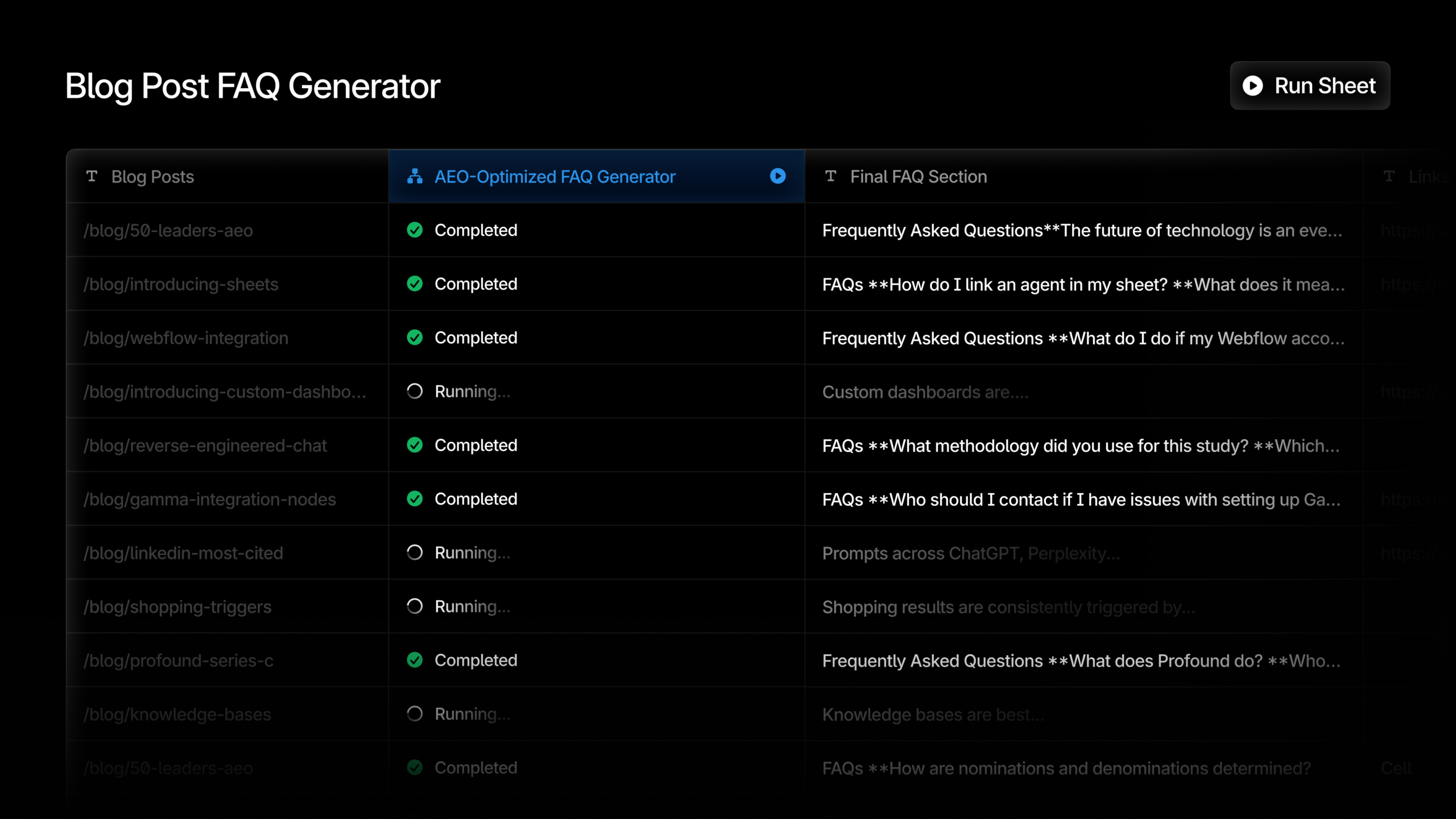
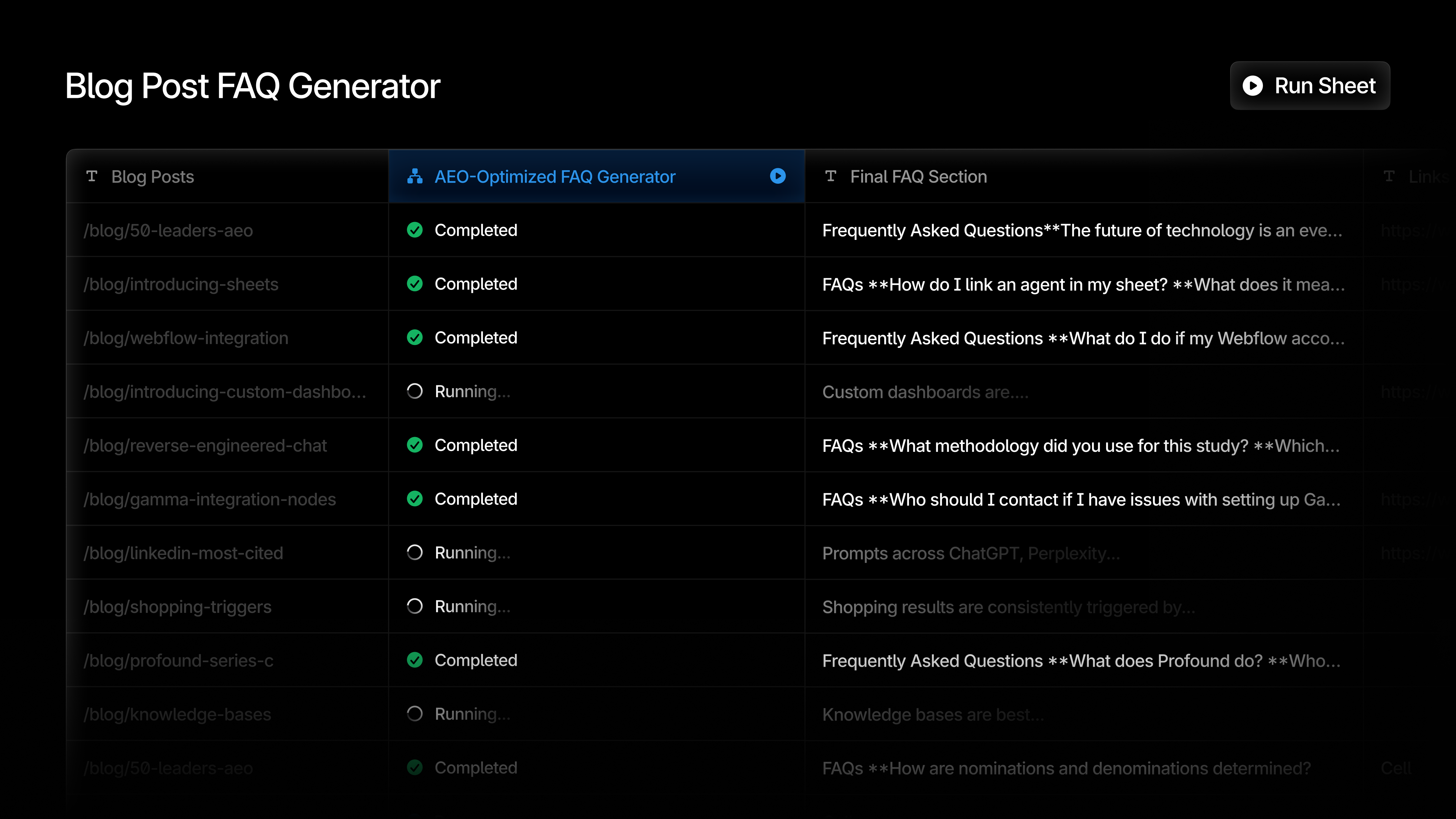
Have you ever wished for a tool that makes orchestrating AEO efforts a breeze? Let me introduce you to Profound Sheets, a game-changer that brings efficiency to new heights. Imagine a spreadsheet-like interface where every row acts as its own Agent run, each with its unique context. This innovative system allows me to process hundreds of inputs simultaneously, amplifying my marketing strategies beyond imagination.
By leveraging structured workflows, I’m able to accomplish what once took weeks in mere minutes. The time saved means more opportunities to focus on crafting creative strategies and optimizing performance. It’s like multiplying my marketing team’s capabilities overnight!
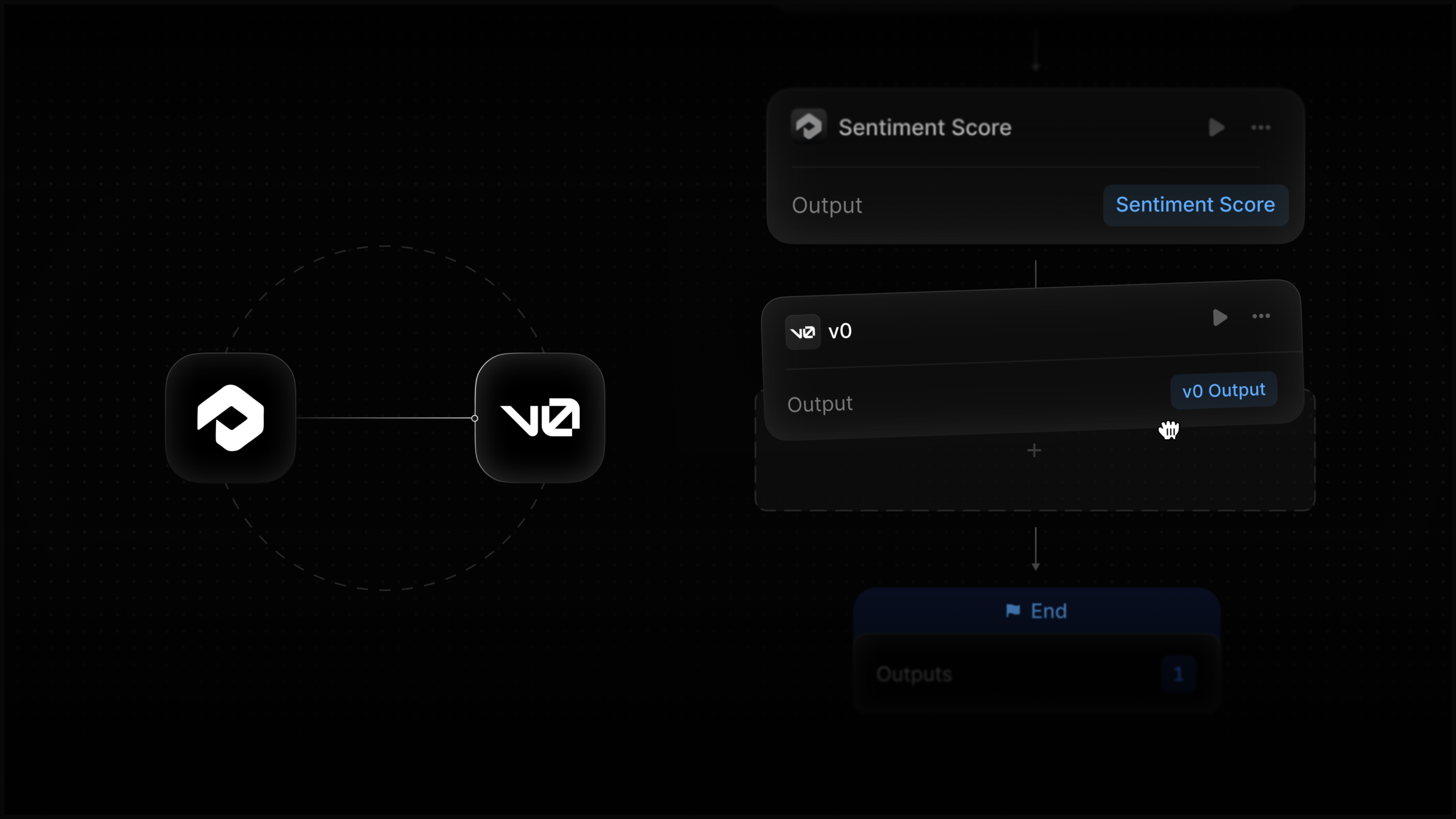
Hey there! I’m thrilled to share something exciting: Profound Agents now seamlessly connect with Vercel v0. This means I can generate and deploy stunning landing pages without writing a single line of code.
By leveraging my Profound AEO data as a solid foundation, deploying these pages has never been easier. It’s a game-changer for anyone looking to enhance their digital presence effectively and efficiently.
Your AI dashboard can look busy while the P&L remains unchanged. Faster drafts, more creative variants, rising AI visibility, and a lower apparent cost per task do not prove that AI created economic value.
If you need to defend an AI marketing budget, you need a credible answer to three questions: what changed compared with what would otherwise have happened, how that change became profit or cash savings, and what the change cost in full. The framework below gives you a practical way to answer them before a promising pilot becomes an expensive permanent line item.
Key takeaways
Classify every AI investment as an operational-efficiency bet, a marketing-performance bet, or a distribution-channel bet. Each requires different evidence.
Calculate ROI from verified economic benefit, not output volume, model usage, impressions, mentions, or hours theoretically saved.
Include implementation, data preparation, quality assurance, training, governance, measurement, and rework in the cost base.
Compare results with a credible counterfactual. A before-and-after improvement alone does not show that AI caused the change.
Keep released capacity separate from cash savings. Time saved has economic value only when you remove a cost or redeploy the capacity productively.
When a platform cannot provide adequate performance data, fund it as a capped learning experiment rather than presenting it as a proven acquisition channel.
Define the AI bet before you calculate its return
AI marketing is not one investment category. The label often hides three economically different bets. Combining them in one dashboard produces an attractive blended number that nobody can audit.
Operational-efficiency bets
An operational bet uses AI to reduce the resources needed for research, briefing, production, analysis, reporting, or quality control. Its first useful measures are cost per approved deliverable, cycle time, rework, throughput, and error rates.
The word approved matters. Producing twice as many drafts is not a productivity gain if editors reject more of them or senior staff spend the saved time correcting unsupported claims. Measure the complete path from request to usable output, including human review.
Marketing-performance bets
A performance bet uses AI to improve an existing marketing activity: audience selection, creative development, content optimization, lead qualification, conversion, or budget allocation. The economic question is not whether the AI produced more activity. It is whether the intervention created incremental qualified demand or contribution profit.
Pair the business outcome with a guardrail. If AI-generated landing pages increase initial conversions but attract poorly matched leads, conversion rate alone will overstate the return. Depending on your funnel, the guardrail may be qualification rate, sales acceptance, cancellation, return rate, retention, factual accuracy, or brand compliance.
Distribution-channel bets
A channel bet pays for access to an audience or invests in visibility inside an AI-mediated discovery environment. ChatGPT advertising and programs intended to improve a brand’s presence in AI answers belong here, even though one is paid distribution and the other may involve content, technical, and authority work.
Write a one-sentence investment claim before approving any of these bets: Because we will use AI to change a named process for a defined audience, a named business outcome should improve through a stated mechanism. If the team cannot complete that sentence without using words such as engagement, innovation, scale, or efficiency as substitutes for an outcome, the proposal is not ready for an ROI calculation.
Then record seven fields on an investment card:
The decision the measurement must support: scale, continue, redesign, or stop.
The exact AI intervention and the workflow or channel it changes.
The mechanism that should connect the intervention to value.
The eligible audience, campaign, account, content group, or business unit.
The baseline and the best available counterfactual.
One primary business outcome and the relevant quality guardrails.
The maximum cost, evidence standard, decision owner, and decision point.
This card prevents metric drift. A team should not begin with qualified pipeline as its goal, fail to influence pipeline, and later declare success because the model generated a large number of assets.
Build a cost and value ledger that survives scrutiny
The clean formula is simple:
AI marketing ROI = (verified economic benefit – fully loaded AI cost) / fully loaded AI cost x 100.
The difficult work sits inside the two inputs. Verified economic benefit should normally consist of incremental contribution profit and realized cash savings. Fully loaded cost should include every material resource required to produce, govern, measure, and maintain the result.
Count more than the software invoice
Your cost ledger may need the following entries:
Subscriptions, model usage, API charges, media, and platform fees.
Integration, workflow design, prompt development, and automation maintenance.
Data preparation, permissions, tagging, analytics configuration, and CRM work.
Employee and contractor time spent operating or supervising the workflow.
Editorial review, factual verification, brand review, security review, and legal or compliance review where applicable.
Training, documentation, adoption support, and process redesign.
Experiment design, holdout management, reporting, and analysis.
Rework caused by incorrect, inconsistent, duplicated, or unsuitable output.
Replacement costs for tools or services that the new system does not fully eliminate.
Use an internal labor-cost basis consistently. A billable agency rate, an employee’s loaded cost, and the opportunity value of an hour are different numbers. Switching among them to make a project look attractive turns the model into advocacy rather than measurement.
Separate profit, savings, and capacity
Incremental revenue is not incremental profit. Convert additional revenue into contribution profit by applying the relevant contribution margin and subtracting variable fulfillment costs that arise with the new business. Keep the measurement period consistent across the revenue, cost, and margin inputs.
Cash savings require an expense to disappear. A cancelled vendor contract, eliminated overtime, reduced external production spend, or a role that no longer needs to be added can create a realizable saving. A team finishing a task earlier while payroll remains unchanged creates capacity, not an immediate cash saving.
Capacity can still be valuable, but you need to show where it went. If marketers use released time to run additional experiments, improve sales enablement, or serve more accounts, measure the resulting throughput and economic outcome. If the time simply becomes slack, record the operational improvement without booking it as profit.
Avoid double counting. Suppose AI reduces editing time and the team uses that time to launch an additional campaign. If the campaign produces verified incremental contribution profit while payroll stays constant, credit that contribution profit. Do not also claim the same editing hours as a payroll saving.
Calculate the breakeven outcome before launch
A breakeven calculation gives the team a concrete hurdle before optimism enters the reporting:
Required incremental outcomes = fully loaded AI cost / contribution profit per incremental outcome.
An outcome might be a completed purchase, a retained customer, a qualified opportunity, or another event with defensible economic value. Match the event to the investment. A campaign intended to create qualified pipeline should not use raw leads as its breakeven unit merely because leads are easier to count.
If contribution varies widely, calculate more than one scenario using your own documented assumptions. Label those results as forecasts until observed outcomes replace them. The purpose is not to predict the future precisely. It is to expose what the investment must accomplish to pay for itself.
Use an evidence standard the channel can support
Attribution and incrementality answer different questions. Attribution assigns credit to a touchpoint under a chosen rule. Incrementality estimates what happened because of the marketing intervention and would not otherwise have occurred. ROI needs the second answer, even if attribution data helps you investigate the first.
Choose the strongest feasible design before the campaign begins. The following ladder runs roughly from stronger causal evidence to weaker directional evidence:
A randomized holdout in which eligible units are assigned to treatment and control.
A matched comparison using similar regions, accounts, audiences, or content groups, with known differences documented.
A staggered rollout that compares early and later groups across the same period.
An instrumented journey using permitted campaign parameters, dedicated destinations, CRM fields, offer paths, or customer-reported discovery.
An adjusted before-and-after comparison that explicitly accounts for other material changes.
Platform-reported attribution, AI visibility, impressions, mentions, citations, or production volume without a counterfactual.
Report what the design supports. A controlled test may justify a causal estimate. An instrumented path can show that a tracked interaction preceded a conversion, but it does not automatically show that the interaction caused the conversion. A visibility increase is evidence of increased presence, not evidence of revenue.
Before-and-after reporting is especially easy to misread. Pricing, promotions, seasonality, sales follow-up, product availability, competitor activity, media mix, and site changes can all move during the same period. Document those factors and use a concurrent comparison when feasible.
Measure AEO and GEO as a connected outcome chain
For AI search, answer engine optimization, and generative engine optimization, visibility belongs near the beginning of the outcome chain. Define a stable prompt set around your actual audience and buying questions. Record the model, date, conditions, brand mentions, citations, cited pages, and competitor presence. Sample consistently instead of treating one favorable response as a benchmark.
Next, connect visibility to behavior where observable: qualified referral sessions, engaged visits, branded demand, assisted leads, direct inquiries, sales conversations, and customer-reported discovery. Then connect those behaviors to qualified pipeline, purchases, retention, or contribution profit.
Do not assign revenue to an AI mention merely because a conversion occurred later. When the click trail is incomplete, present the visibility result, the observed business movement, and the uncertainty between them as separate facts. That is more useful than forcing an exact return from incomplete data.
Treat low-observability advertising as a learning purchase
When an advertising platform cannot provide the performance data needed for an incrementality analysis, cap the spend at an amount the business can afford to treat as experimentation. Write down the learning objective, the permitted instrumentation, the audience or placement being explored, and the evidence that would justify another round.
Where the format permits, use a dedicated landing path, campaign parameters, a distinct offer, CRM source fields, and a customer-reported discovery question. None of these creates a perfect counterfactual, but they can produce more decision-useful evidence than aggregate traffic and anecdotal sales feedback.
An AI pilot can improve production economics and still weaken the surrounding business model. This is particularly visible in agencies: automation reduces delivery effort, while clients expect the efficiency to lower their fees. SparkToro’s worldwide survey of agency owners put concern about AI as a potential threat at 53% in 2025, up from 44% in 2024.
Reporting only tokens consumed, assets produced, or hours removed reinforces the idea that the service is a commodity. The durable value sits in diagnosing the commercial problem, choosing the right intervention, creating defensible evidence, interpreting exceptions, and taking responsibility for the decision that follows.
Choose a pricing model that matches measurability
AI does not make every engagement suitable for performance pricing. Use the model that matches the amount of control and measurement available:
Use a fixed fee when the deliverable, quality standard, scope, and acceptance criteria are clear.
Use a retainer when the client is buying continuing strategy, experimentation, governance, and decision support rather than a predetermined volume of output.
Use time-based pricing for ambiguous discovery work where the necessary scope cannot yet be defined responsibly.
Use a performance component only when both parties agree on the eligible outcome, system of record, baseline, attribution or incrementality rule, measurement window, exclusions, data access, and payment limits.
Performance fees create disputes and potentially uncapped financial exposure when those terms are vague. Put the definitions, adjustment rules, caps, termination conditions, and audit rights in the contract, and have qualified counsel review material compensation changes.
Track contribution margin by account or service line: revenue minus direct labor, AI usage, contractors, and appropriately allocated delivery support. If efficiency improves, decide explicitly whether the gain will fund a lower price, higher quality, greater throughput, or a healthier margin. Assuming one workflow change will deliver all four at once usually hides an unpriced tradeoff.
The commercial pressure is not hypothetical. Some agency sales cycles have lengthened from 7-8 weeks to more than 12 weeks as buyers question what AI should do to price and value. Answer that question directly in proposals: disclose where automation supports delivery, define the human accountability that remains, and tie the fee to scope and economic responsibility rather than an inflated count of manual hours.
Include quality control and talent development in the model
Redesign junior work instead of deleting development. Have less-experienced marketers verify AI output against source material, document recurring failure modes, prepare experiment readouts, observe senior decision reviews, and own bounded tests under supervision. Include the supervision and training time in the investment ledger. A margin that depends on unrecorded senior rework is not a real margin.
Put every investment through a scale, continue, or stop gate
A pilot does not need perfect attribution, but it does need a precommitted decision process. At the decision point:
Scale when verified economic benefit exceeds the fully loaded cost, quality guardrails remain inside approved limits, and the evidence is strong enough for the amount of money at risk.
Continue as an experiment when the signal is promising, the uncertainty is material, and the next test has a realistic way to resolve that uncertainty.
Redesign when the mechanism appears plausible but adoption, data quality, workflow fit, or measurement prevented a fair test.
Stop when the benefit remains below the economic hurdle, guardrails fail, or the evidence gap cannot be closed at a proportionate cost.
Start with the largest AI-related line in your current marketing budget. Label it as an efficiency, performance, or channel bet. Rebuild its fully loaded cost, write down the counterfactual, and identify the strongest evidence you can obtain. If you cannot do those three things yet, move the spend into a capped experiment. Scale it only when the economic benefit and the quality of evidence can withstand the same scrutiny as any other marketing investment.
I’ve discovered that the most successful GEO and AEO strategies are deeply rooted in traditional SEO. It’s fascinating how these foundational principles seamlessly translate to AI visibility. Let me share why it’s crucial not to overlook these basics.
In our quest to harness the power of AI, many of us might feel tempted to skip straight to advanced strategies. However, without a solid SEO foundation, even the best AI-driven tactics can fall short. The rules that govern traditional SEO are critical to unlocking AI’s full potential in search visibility.
Consider this: AI systems thrive on structured data and clear content hierarchies. It’s precisely these elements that traditional SEO prioritizes, ensuring that our websites are not only user-friendly but also AI-ready. This is why every AI optimization journey should begin with tried-and-true SEO practices.
As someone who loves diving into the nuances of AI and SEO, I’ve seen firsthand how these two fields complement each other. Embracing the basics doesn’t merely prepare us for AI; it catapults our strategy into an era of smarter, more efficient digital marketing.
You do not need another AI announcement in your backlog. You need to know whether Google’s direction changes what your advertising team should build, who should control it, and how much authority an AI agent should receive.
The immediate answer is not to rebuild your Google Ads integration around agents. Treat the update as an architectural signal: prepare for AI systems to propose and invoke advertising actions, but keep permissions, validation, approvals, execution, and audit controls outside the model.
The update is a learning channel, not an API release
Google has introduced Ads DevCast as a bi-weekly pilot hosted by Cory Liseno from its Advertising and Measurement Developer Relations team. Its technical scope includes Google Ads, Google Analytics, and Display & Video 360. Google is also inviting feedback while the pilot develops.
That positioning matters. Ads Decoded, hosted by Ginny Marvin, addresses campaign strategy. Ads DevCast is intended for the people building, configuring, debugging, and governing the systems beneath that strategy. Subscribe the technical owner of your advertising stack, not only the person who manages campaigns.
A new developer show does not, by itself, change an endpoint, schema, authentication flow, or deprecation date. Do not turn an episode into a production migration ticket merely because an idea sounds important. Use three separate lanes:
Discovery: Use Ads DevCast to notice technical themes, emerging capabilities, and the problems Google expects developers to encounter.
Verification: Confirm implementation details in the relevant official API documentation, release notes, schemas, and account controls before changing code.
Delivery: Create an engineering task only after you can name the affected platform, resource, operation, permission, test case, and rollback path.
This distinction prevents two common errors. One is ignoring a directional signal until it becomes an urgent implementation problem. The other is treating a discussion of future architecture as though it were a released feature with stable production behavior.
Model Context Protocol, or MCP, is relevant because it gives AI systems a common way to discover and invoke tools. A consistent tool interface can make an API easier for an agent to reach. It does not make the requested action correct, authorized, affordable, or reversible.
The safest mental model is simple: the agent is a planner and operator working inside a control system. It is not the control system. A production workflow should separate intent from execution:
Observe: Retrieve only the account and campaign data needed for the task.
Propose: Produce a structured change showing the target resource, current value, proposed value, rationale, and expected scope.
Validate: Check the proposal against the API schema, account state, internal policy, and allowed operations.
Approve: Require the appropriate human or policy-based approval before any consequential write.
Execute: Pass the approved action to deterministic code that calls the advertising API.
Verify: Read the affected resource again, record the result, and surface any difference between the approved proposal and the final state.
Put hard limits outside the prompt
A prompt can tell an agent not to make risky changes. It should not be the only thing preventing them. The enforceable rules belong in the gateway between the agent and the ad platform.
Allowlist the accounts, resource types, fields, and operations the agent may access.
Use read-only access by default and grant write access per workflow rather than per agent.
Reject requests that omit the target account, current state, proposed state, or approval record.
Place budget, bid, scheduling, targeting, and deletion constraints in code or platform policy.
Use idempotency or equivalent duplicate protection where the operation supports it.
Log the request, tool call, actor, approval, API response, and resulting resource state.
Maintain a tested way to reverse mutable changes and a separate recovery procedure for actions that cannot be cleanly undone.
This is a money-sensitive system. An agent with broad write access can alter live delivery before a person notices the mistake. For any action that can increase spend, narrow reach, pause revenue-producing activity, remove data, or change measurement, use a preview-and-approval flow until you have evidence that a more automated policy is safe for that exact operation.
Turn each episode into an engineering decision
A bi-weekly technical program can quickly become background noise unless someone owns the intake process. Give one person responsibility for converting each relevant item into a decision, including a deliberate decision to take no action.
Capture the claim precisely. Write down the named product, capability, resource, or workflow. Avoid tickets such as “investigate AI for ads” because they have no testable boundary.
Classify its status. Mark it as a concept, directional signal, pilot, documented capability, released change, or deprecation. Do not let enthusiasm silently upgrade its maturity.
Map the affected surface. Identify whether it touches Google Ads, Google Analytics, Display & Video 360, or more than one system. Then name the relevant integration, credential, data flow, and owner.
Verify implementation facts. Check the authoritative documentation for availability, supported operations, permissions, quotas, version requirements, and known limitations.
Record the decision. Choose watch, prototype, adopt, migrate, or reject. Include the evidence needed to revisit that choice.
Your decision record does not need to be elaborate. It should include the topic, status, affected system, documentation link, owner, next review trigger, test environment, approval requirement, and rollback method. That is enough to distinguish a useful technical signal from an unverified idea circulating in team chat.
Use a prototype when the value is plausible but the operational risk is unclear. Start with a read-only workflow that answers one bounded question, then let the agent draft a change without executing it. Compare its proposal with the decision a qualified operator would make. Only after that should you test an approved write in a controlled account or environment.
Because Ads DevCast is a pilot seeking community input, document where explanations leave an implementation gap. Useful feedback is specific: name the platform, operation, missing detail, and decision you could not safely make. That gives Google a clearer request than a general demand for more examples.
Your ownership model must evolve with the integration
Google is broadening the frame from a specialist Ads Developer Community toward a wider Ads Technical Community. That makes room for marketers to perform more technical work without waiting for a full development cycle. It does not erase the need for engineering ownership; it changes where the handoffs occur.
Before connecting an agent to advertising tools, assign these responsibilities by name:
Business owner: Defines the campaign objective and decides which tradeoffs are acceptable.
Platform owner: Controls credentials, permissions, API configuration, and production access.
Workflow owner: Defines the agent’s tools, inputs, outputs, validation rules, and failure behavior.
Approver: Reviews consequential changes and has enough context to reject a technically valid but commercially poor action.
Incident owner: Can stop execution, assess affected resources, restore safe state, and preserve the audit trail.
Do not collapse all five roles into “the AI team.” The business owner knows what should happen. The platform owner knows what can happen. The workflow owner controls how a request becomes an API call. The approver evaluates the actual change. The incident owner handles the moment when the system behaves differently from the plan.
This division also makes low-code and agent-assisted work more practical. A marketer can describe or initiate a task without receiving unrestricted platform access. Engineering can provide constrained tools and reusable policies instead of implementing every request from scratch. The speed comes from a safer interface between roles, not from removing the roles.
Key takeaways for your next working session
Use Ads DevCast as a technical discovery channel; verify every implementation detail in authoritative product documentation.
Treat Google’s agentic direction as a reason to prepare your architecture, not as permission to automate every campaign action.
Keep the agent focused on observation and structured proposals before granting narrowly scoped write capability.
Enforce permissions, spend constraints, approvals, logging, and recovery outside the model and its prompt.
Assign business, platform, workflow, approval, and incident ownership before connecting an agent to a live advertising account.
Convert each relevant update into a recorded decision: watch, prototype, adopt, migrate, or reject.
Start with one existing Google Ads workflow that consumes too much operator time but has a clear input and output. Draw the six stages from observation through verification. Mark every place where a bad decision could affect spend, delivery, measurement, or data. Those marks define the controls your agent needs before it gets write access.
Then build the smallest read-only version and require a structured proposal. That gives you a concrete way to evaluate Google’s agentic direction without betting a live account on an immature design.
If you run ecommerce SEO, product feeds, or shopping infrastructure, your next visibility problem may not begin on a search results page. It may begin when an AI shopping agent tries to identify the right variant, confirm that it is available, calculate the correct price, and place it in a working basket.
Google’s Universal Commerce Protocol, or UCP, is intended to connect those steps. Your practical task is to make product and customer data usable across discovery, selection, and checkout without assuming that protocol adoption will automatically produce rankings, recommendations, or sales.
UCP moves product visibility closer to the transaction
That does not make product pages irrelevant. It changes where accuracy has to survive. A persuasive description cannot compensate for an unavailable variant. Valid page markup cannot repair a cart that calculates the wrong price. A feed can expose a product, but the transaction can still fail if customer benefits disappear after identity linking.
This gives you four connected layers to manage:
Page content and structured data explain the product in a crawlable, understandable form.
Catalog data supplies current commercial facts such as price, inventory, and available variants.
Cart logic turns selected items into a valid basket.
Identity and account logic determine whether the shopper receives eligible benefits.
Keep these layers aligned, but do not treat them as interchangeable. UCP is not merely another name for JSON-LD, a product feed, or an ad format. It reaches into live commerce functions that page-level optimization alone cannot perform.
Google has said it plans to use UCP capabilities in AI-enhanced experiences across Search and the Gemini app. That establishes a direction, not a promise that every retailer, market, capability, or product will receive the same access or exposure. Build readiness around documented availability and your own eligibility rather than an assumed rollout.
Map each UCP capability to a real retail responsibility
The useful way to evaluate UCP is capability by capability. Each one touches a different system, failure mode, and internal owner.
Capability
What it enables
What you should verify
Likely owner
Catalog
Access to current product information, including pricing, inventory, and variants
Stable identifiers, variant mapping, update freshness, and agreement between catalog, product page, and checkout
Merchandising, feed operations, or commerce platform team
Cart
Multiple products from one retailer can be assembled into one basket
Add, update, remove, reprice, and out-of-stock behavior across a multi-item order
Ecommerce engineering
Identity linking
Eligible benefits such as member pricing and free shipping can continue across connected experiences
Authentication, consent, entitlement rules, session handling, and safe failure behavior
Identity, security, loyalty, and legal or privacy teams
Modular adoption
A retailer or platform can adopt selected capabilities instead of implementing everything at once
A rollout sequence tied to system readiness and a clear dependency map
Commerce product owner or program lead
The capability names do not answer every implementation question. For example, knowing that an agent can create a cart does not by itself define how your taxes, promotions, substitutions, shipping restrictions, or returns work. Treat those as test cases that need authoritative documentation and validation in your own stack. Do not invent behavior from the protocol’s high-level description.
Modularity is especially important for planning. You do not need to frame UCP as an all-or-nothing rebuild. If your identity system is not ready, that does not erase the value of repairing catalog inconsistencies. If your catalog cannot reliably distinguish variants, however, adding an agent-facing cart simply moves bad data closer to checkout.
Audit product data as if it were the storefront
An agent cannot walk a virtual aisle and infer that a stale price is probably wrong. It receives representations of your inventory and has to make decisions from them. Because the catalog capability is designed to expose real-time pricing, inventory, and variant information, conflicting product facts become a commercial problem, not merely a feed-cleanup task.
Start with one product family that has meaningful variation. A product with size, color, configuration, or member pricing will reveal more than a simple item with one price and one stock state. Trace it through every system an agent-assisted purchase could touch.
Resolve the identity chain. Confirm that the parent product, each purchasable variant, the catalog record, the product page, and the cart line resolve to the intended item. A parent identifier should not silently stand in for a specific variant at purchase time.
Name the source of truth for each commercial fact. Decide which system owns price, sale price, inventory, variant attributes, and account benefits. If two systems can overwrite the same fact, document precedence and failure handling.
Compare anonymous and authenticated states. Check whether public pricing, member pricing, shipping benefits, and eligibility rules remain distinguishable. The agent should not present a conditional benefit as universal.
Test change propagation. Change a price or inventory state in the owning system and observe every downstream representation. Record your actual delay and failure points rather than relying on the intended architecture.
Inspect contradictions. Compare the catalog, rendered product page, structured data, basket, and logged-in experience. Any disagreement can lead to a poor recommendation, a rejected add-to-cart action, or an unpleasant price change at checkout.
Log failed and stale updates. A synchronization process that usually works is not enough. Your team needs a way to identify which products failed, when the last successful update occurred, and which downstream surfaces may still carry old information.
This is also where SEO, GEO, and feed teams should coordinate. Keep descriptive content and structured data consistent with commercial systems, but do not add unsupported claims to markup merely to make the product look more complete to an AI system. The safest machine-readable answer is the same answer the shopper will receive in the cart.
Do not call the audit complete because a sample record validates syntactically. A valid record can still identify the wrong variant, carry an old price, or point to inventory that cannot be purchased. Validation checks form; transaction tests check truth.
Roll out the smallest capability you can verify end to end
Catalog readiness is usually the sensible first workstream because cart and identity experiences depend on accurate merchandise data. That is a sequencing recommendation, not a protocol requirement. Your architecture may justify a different order, but every pilot should have one defined capability, one accountable owner, and an observable pass or fail condition.
Choose a bounded product set. Select products that expose the problems you need to solve, including variants or conditional benefits, while keeping the pilot small enough to inspect manually.
Capture a baseline. Record current catalog mismatches, failed add-to-cart actions, unavailable variants presented as purchasable, and benefit-entitlement failures. Without a baseline, protocol activity can look like progress while customer-facing accuracy remains unchanged.
Define acceptance tests before integration. Write expected results for price changes, inventory changes, variant selection, multi-item baskets, account linking, and entitlement loss. Include negative cases, not just a successful purchase.
Test the cart as a changing object. The new cart capability is intended to let agents place multiple products from one retailer into a single basket. Verify what happens when quantity changes, one line becomes unavailable, a promotion expires, or the shopper switches variants.
Isolate identity testing. Identity linking can preserve member pricing and free shipping, but it also touches account access and personal data. Use controlled test accounts and obtain security, privacy, and legal approval before exposing real customer identities. The specific downside of rushing this step is not just a broken discount; it can be unauthorized account access or inappropriate data sharing.
Monitor outcomes by failure stage. Separate catalog retrieval, variant resolution, cart creation, cart mutation, authentication, entitlement, and checkout failures. A single conversion total will not tell you which capability needs repair.
Your ownership model matters as much as the integration. Feed operations can correct a variant mapping but should not define authentication policy. SEO can identify contradictions visible to search systems but should not own checkout integrity. Ecommerce engineering can make a cart function without knowing whether member benefits are represented correctly. Put these teams behind one shared test plan rather than handing UCP to whichever team first notices it.
Google has also indicated that it plans to simplify UCP onboarding through Merchant Center. Use that as a reason to prepare your data and test cases, not as a reason to assume that implementation is already automatic. When onboarding becomes available to you, confirm supported capabilities, required fields, market coverage, permissions, and reporting from the documentation presented in your account.
Most importantly, do not report UCP adoption as an SEO win by itself. There is no basis here for calling it a guaranteed ranking factor or recommendation boost. Measure what you can actually observe: eligibility, accurate product representation, successful basket creation, preserved benefits, completed purchases, and the failure rate at each handoff.
Key takeaways
UCP connects product discovery with live commerce functions; it is broader than page markup, feeds, or advertising alone.
Catalog accuracy is foundational because price, inventory, and variant errors can follow an agent directly into the cart.
Cart, catalog, and identity linking should be treated as separate capabilities with separate owners and tests.
Modular adoption lets you start with a bounded capability instead of waiting for a complete commerce-stack rebuild.
Identity linking requires controlled testing and security, privacy, and legal review before real customer accounts are involved.
Protocol adoption does not establish a ranking or recommendation benefit. Evaluate transactional accuracy and measurable outcomes.
Your best next step is concrete: take one high-value product family with variants, compare its catalog record, product page, structured data, cart, and logged-in benefits, then document every contradiction. That exercise will tell you whether your first UCP project is an integration project or, more likely, a product-data repair project that needs to happen before integration can deliver anything useful.
As I explore the ever-evolving landscape of Google’s AI Mode, it’s fascinating to witness how ad formats, reporting, and control are taking shape. Google seems to have a master plan in place that competitors just can’t keep up with.
I find myself intrigued by Google’s entry into this next phase of conversational search. It’s not just about user numbers but who can effectively monetize them. Google’s mature ad systems and extensive advertiser base offer a significant edge.
The initial panic surrounding Google’s position is over. Google’s long-standing advantages and huge investments have leveled the playing field with ChatGPT in LLM search.
Back in December 2025, when Google declared code red, it became clear that they were serious. Apple’s decision to partner with Google for its AI needs is indeed telling.
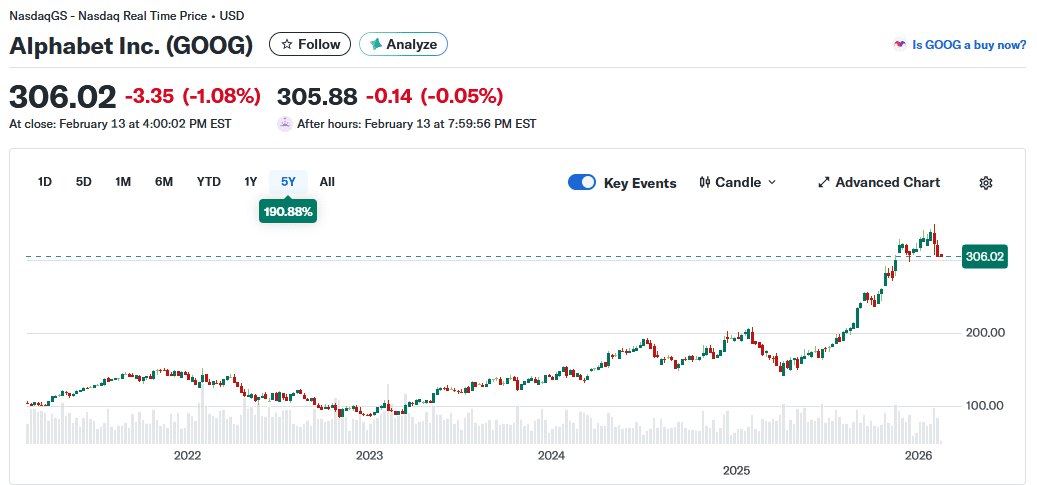
Initially, it seemed plausible that Google would struggle against ChatGPT, but the market has since adjusted its views. The company’s valuation reflects renewed confidence, rivaling even Apple at a substantial $3.6 trillion.
As I dive deeper into how monetization will shape this race, I’m struck by how Google’s recent advances have significantly boosted its valuation.
It’s clear that the visibility of financial projections plays a massive role in how the company is perceived financially. Google’s approach to shifts in user behavior is crucial in maintaining its robust business model.
From my perspective, much of your digital advertising budget likely goes to Google. Its prominence demands attention, not just in search but also in emerging AI platforms like ChatGPT and Claude.
The competition in LLM conversations is intriguing. Google and ChatGPT are vying for different monetization models, a fascinating case study of differing strategies.
For those of us in advertising, it’s essential to monitor developments like ad formats, rollout pace, and public reception to ads within these platforms.
OpenAI’s current monetization model is intriguing but still nascent, reliant on a small group of major advertisers. We’ll see how they expand and fine-tune this model over time.
Outsourcing inventory to programmatic partners is a smart move for OpenAI but highlights their early stage in building an ads business.
For Google advertisers, the shift to AI Mode need not be alarming. I’m watching for the ways these LLM sessions are shaping user experiences and ad placements.
One thing is for sure; the enhancements in AI Mode continue, promising more seamless and user-friendly interactions. The potential for ads remains, though their form is still evolving.
Monitoring key areas like the extent of monetization, advertiser control, and campaign types becomes more important as we navigate this new landscape.
Ultimately, the future of advertising in AI-driven search is one of adaptability and strategic planning, aligning closely with user and advertiser behaviors in this exciting yet challenging era.
As I look back on 2025, it’s astonishing to see the AI search traffic growth leap by an impressive 180% year-over-year. I’m diving into the data to better understand how this impacts our visibility strategies. We’ll explore insights on ChatGPT, Gemini, Perplexity, and Claude usage trends in this review.
With AI technologies rapidly advancing, I’ve noticed how they continue to reshape how we think about search and brand visibility. The increased use of AI-powered tools signifies a pivotal shift in the way we approach digital marketing strategies.
In 2025, ChatGPT saw a remarkable surge in use, closely followed by interest in platforms like Gemini and Claude. This data is crucial as we plan for future visibility tactics, ensuring that our brand remains competitive in an ever-evolving digital landscape.
How does this data affect your brand’s approach? I believe understanding and leveraging these trends will be key to optimizing AI-driven search capabilities and visibility while crafting more personalized and effective content strategies.
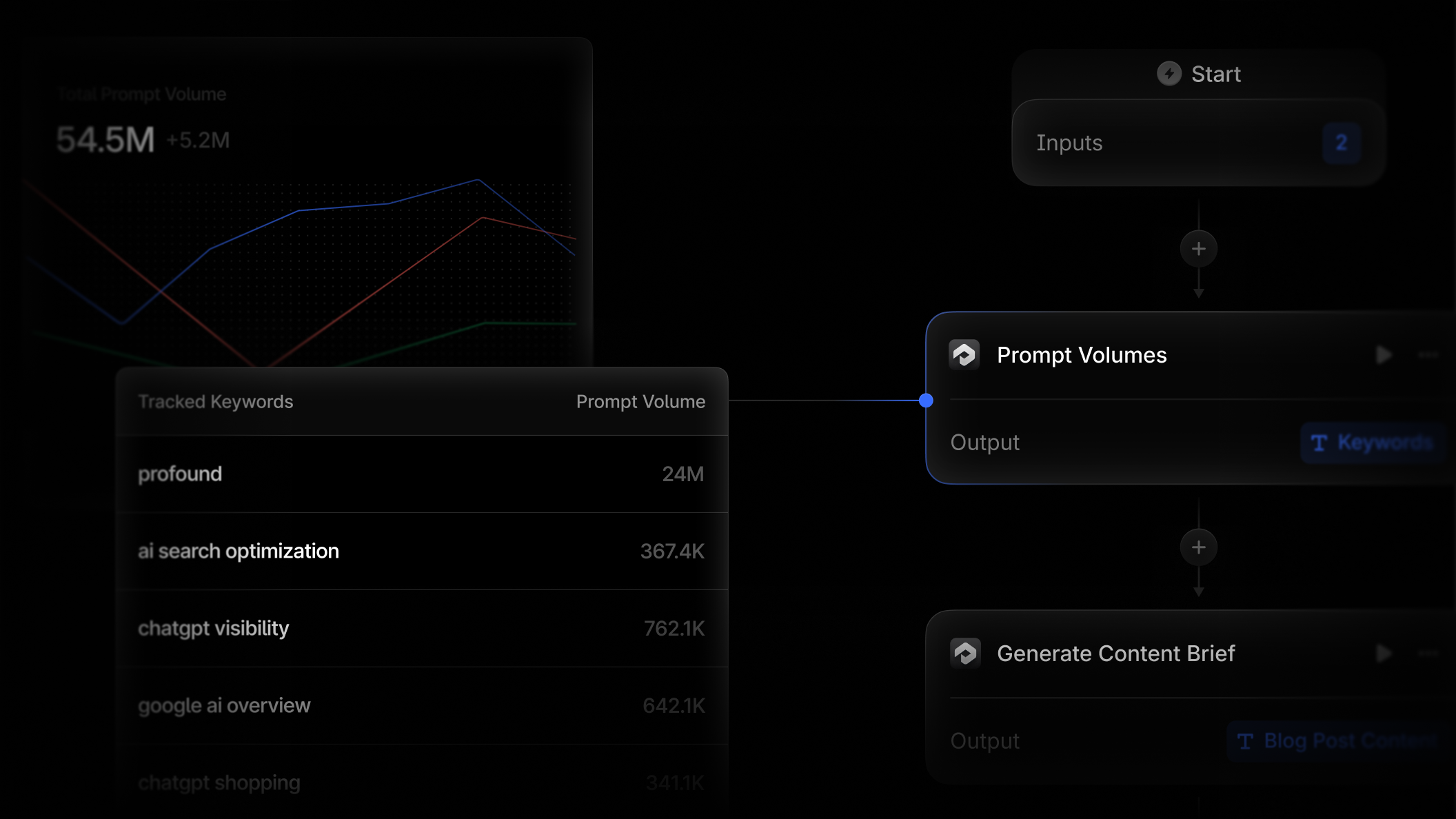
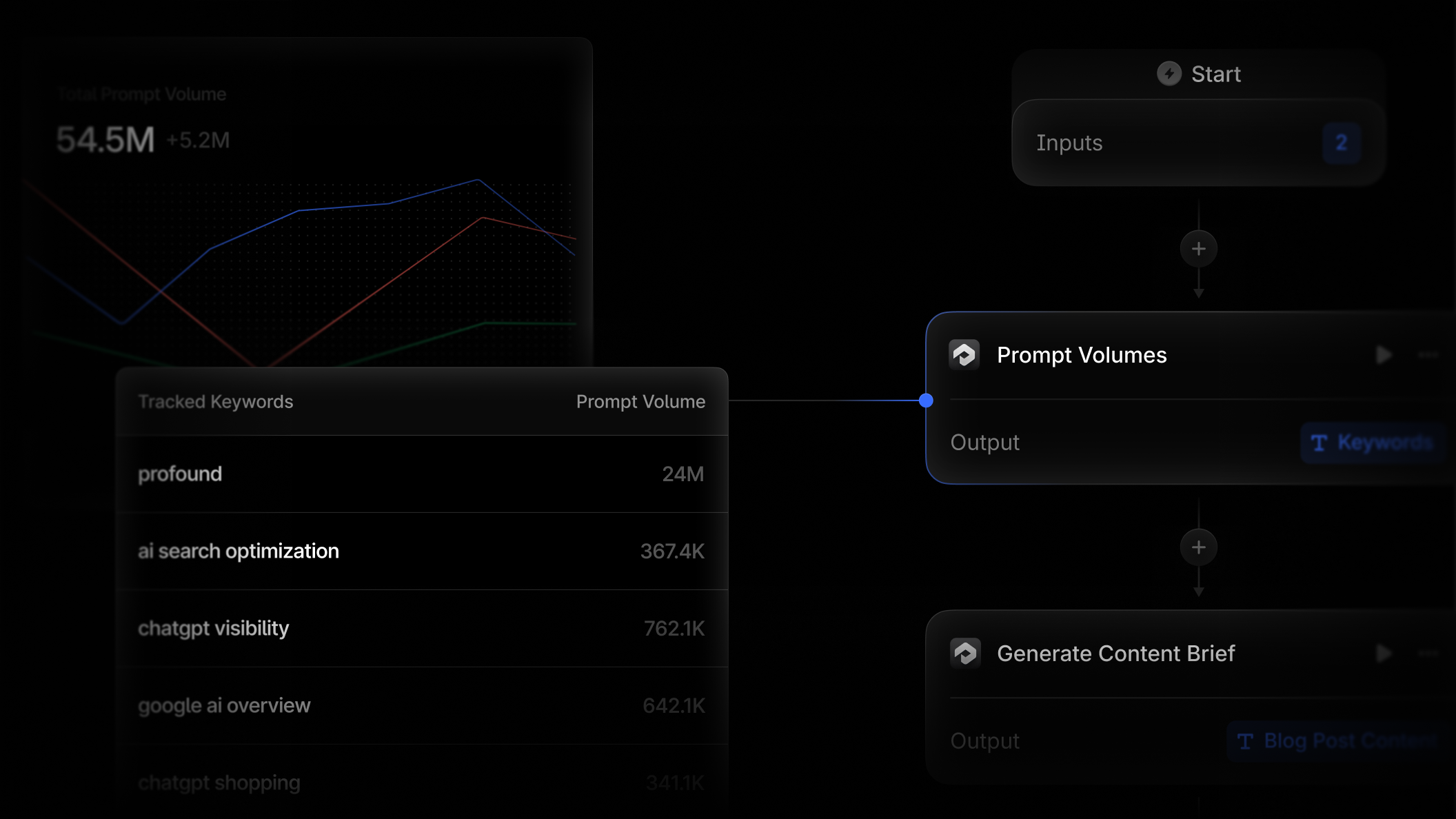
I’ve found an incredible new way to streamline content creation, competitive analysis, reporting, and monitoring with the latest Profound Agents feature. We can now effortlessly integrate prompt volume data directly into any Profound Agent, bringing together all our workflows into a single platform. This innovation is perfect for marketers looking to enhance efficiency.